
The plaque at Eidsvatnet glistens wet in the rain. It shows the face of a man with a stern gaze and provides information in Norwegian and English. Ludwig Wittgenstein came to Norway in 1913 to work far away from it all. He travelled here six times until 1950. A quote in green, October 1936: “It is the silence and perhaps also the beautiful landscape; I mean, it is this quiet solemnity.”
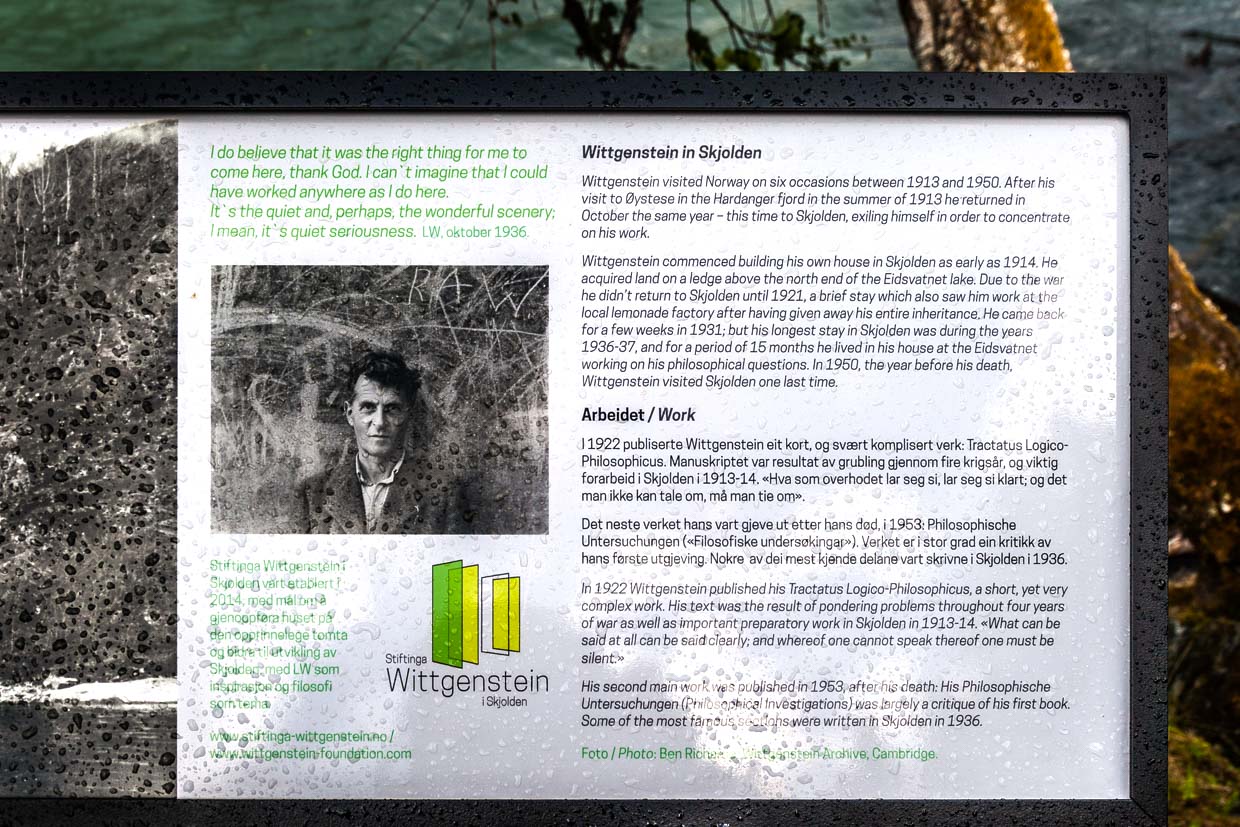
Ludwig Wittgenstein was born in 1889, the son of one of Vienna’s wealthiest men. In October 1913, he travelled to Skjolden, rented two rooms from the postmaster and learnt Danish. Bertrand Russell, his tutor at Cambridge, warned him that it was dark there. Wittgenstein replied that he hated daylight. In winter, the building materials were transported across the frozen lake, and by autumn 1914 his house stood above the water. By then he had already left, as the First World War had begun.
He gave away his inheritance. In 1919, he also left the house to a neighbour. He taught village children in Lower Austria and worked as a gardener. However, he returned to Skjolden on several occasions.
What can be said
The *Tractatus Logico-Philosophicus* (TLP) was compiled from notes made between 1914 and 1918 and was published in 1921. Wittgenstein served as a volunteer in the Austro-Hungarian Army and was taken prisoner by the Italians in 1918. The book asserts that a proposition represents a fact in the logical sense. According to Wittgenstein, anything beyond this can only be shown. What can be shown cannot be said. (TLP 4.1212ff. / 6.522). In doing so, Wittgenstein draws a line between logic and the realms of ethics and aesthetics. The final sentence reads: ‘Whereof one cannot speak, thereof one must be silent.’
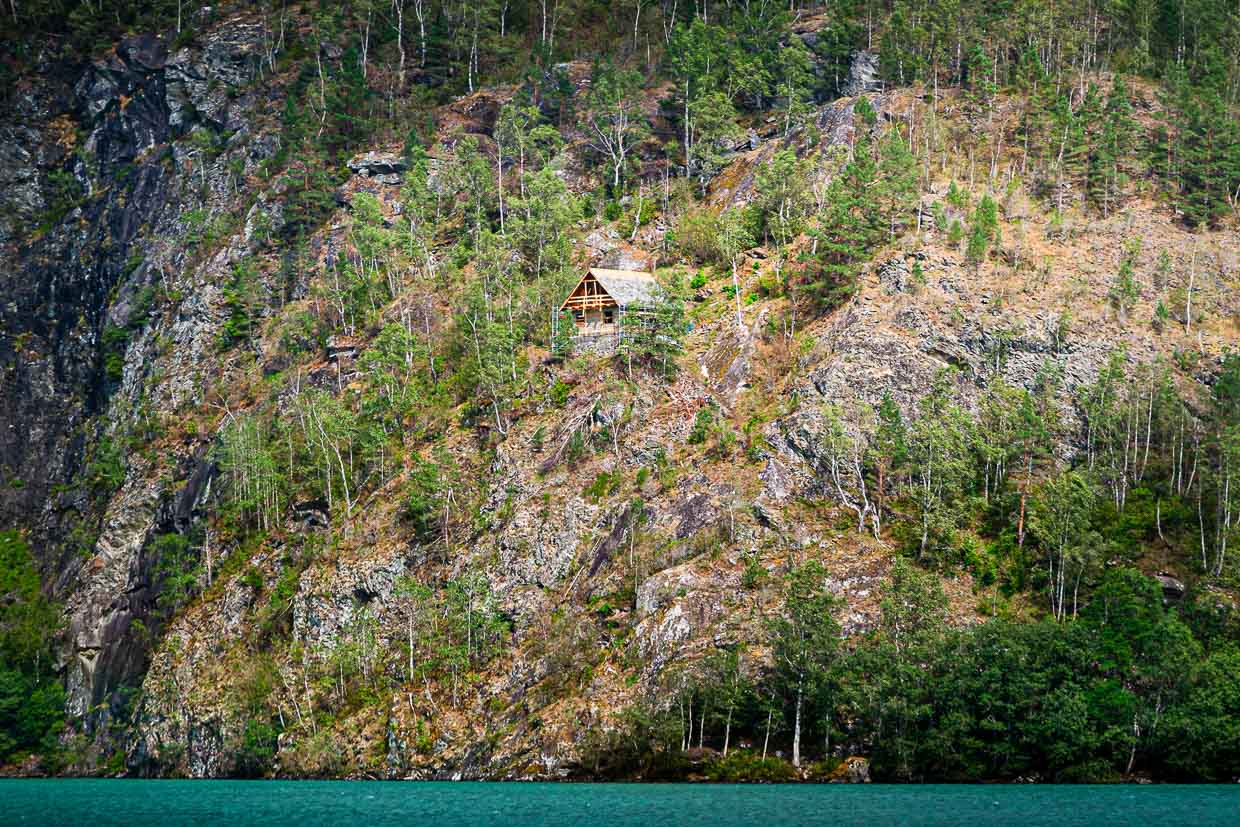
The Wittgenstein House stands on the other side of the water. You can see it. Nothing more. Anyone who wishes to describe it cannot go beyond pointing it out. This interpretation seems obvious.
The hard rock
With the *Tractatus*, he considered the problems of philosophy to have been solved. In 1929, he returned to Cambridge and submitted the book as his doctoral thesis. His examiners were Russell and Moore, and Moore called it the work of a genius. Wittgenstein had fought on the side of England’s enemies during the World War. In Cambridge, however, he became a Fellow of the College, and later a professor. He then began to examine his own assumptions. From 1936 to 1937, he spent 16 months in Skjolden and wrote the first 188 paragraphs of the *Philosophical Investigations*. They were published in 1953, two years after his death. In them, meaning is no longer a representation, but a use.
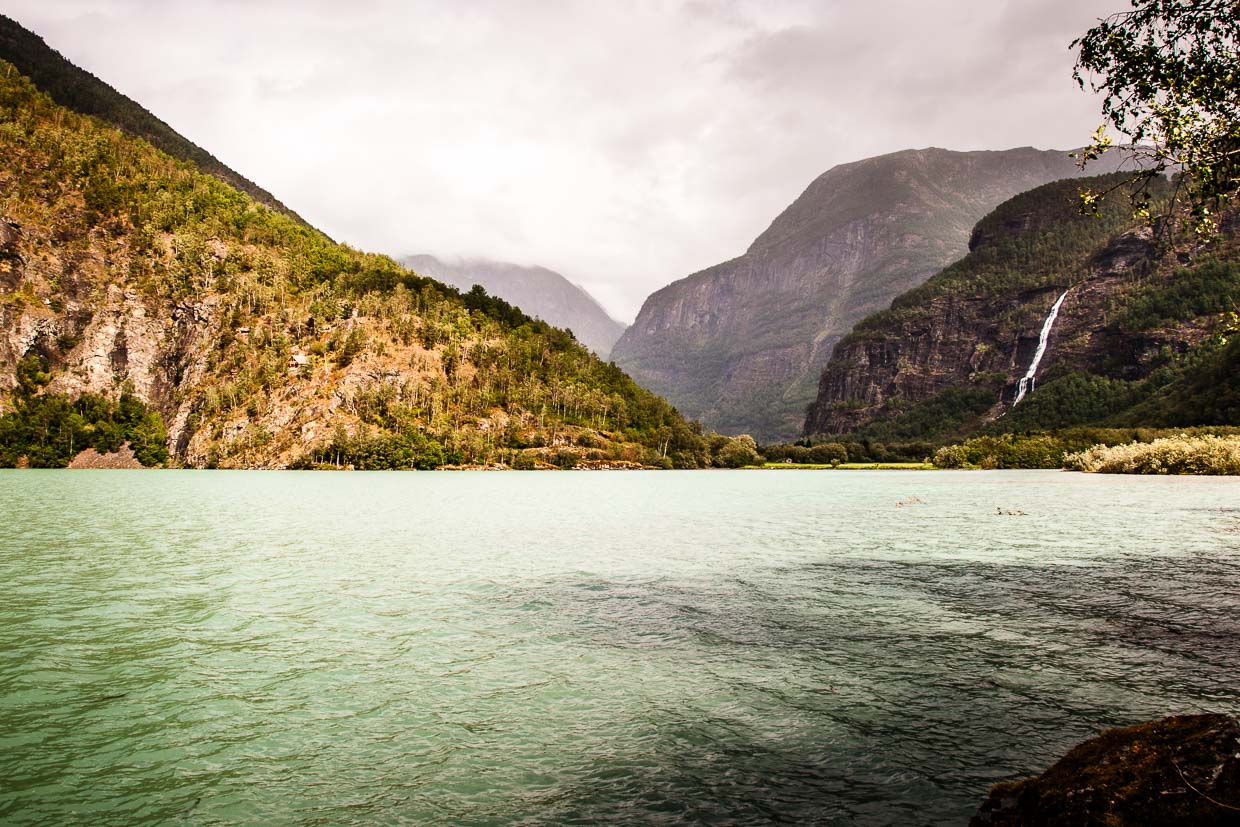
‘One has reached the hard rock, and my spade bends back’ (PU § 217). In this book, he describes where justification ends. He means the following of a rule. He does not speak of houses.
The moss-covered stone in the foreground serves as a reminder of this. That is how I see it. The rock holds firm, and the spade bends.
The same, seen differently
The views are similar. The water, the waterfall and the steep slopes remain the same everywhere. Only the framing and the light change, and with them the image.
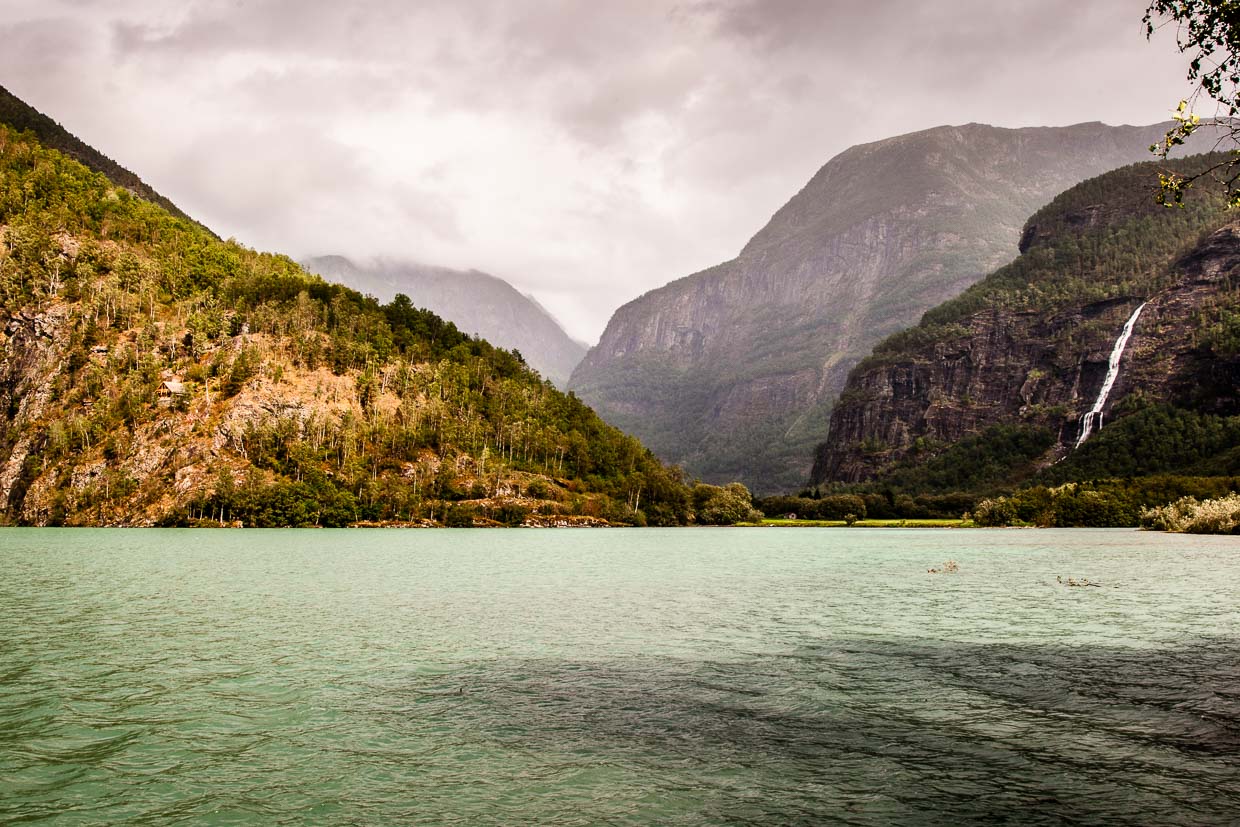
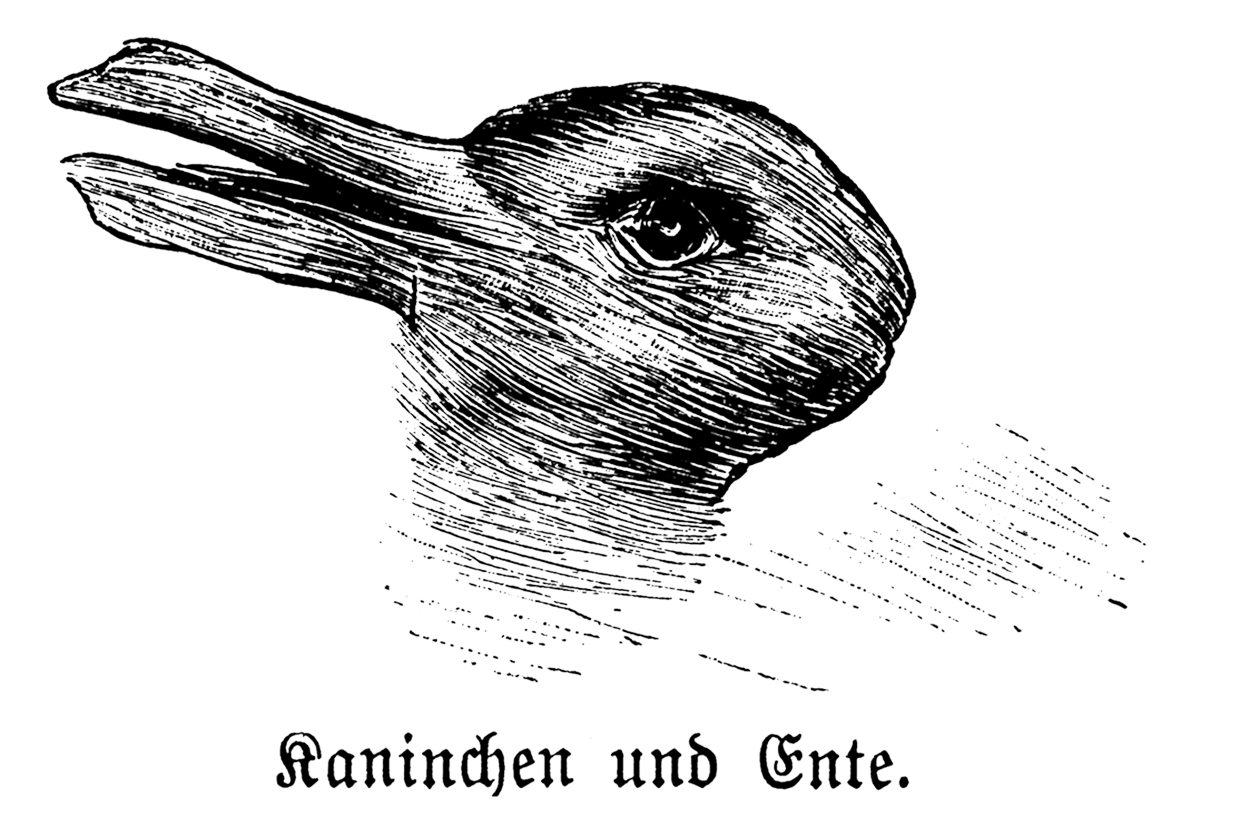
This is precisely where Wittgenstein’s late question comes in. A drawing depicts a duck’s head or a rabbit’s head, and the lines remain the same. It is known as the ‘rabbit-duck ’. He called this ‘seeing an aspect’ and spoke of an aspect ‘lighting up’ when the image suddenly shifts. Scholars note that from 1946 to 1949 he engaged almost continuously with the philosophy of psychology, and ‘aspect-seeing’ was one of his main themes.
Ireland
In 1947, he gave up his chair at Cambridge and moved to Ireland. He stayed in a hotel in Dublin, in a guesthouse in Wicklow, and, in the spring and summer of 1948, in Rosroe on Killary Harbour in Connemara, in a former coastguard station on the village jetty. Killary Harbour is regarded as Ireland’s only fjord. Wittgenstein sat there, once again by a narrow inlet flanked by steep slopes, once again alone.
From October 1948 to March 1949, he continued writing in Dublin. From these manuscripts, he selected more than half of the remarks for the second part of the *Philosophical Investigations*. Its central thesis is set out in §43: ‘The meaning of a word is its use in language’.
A plaque in Dublin and another in Rosroe commemorate Wittgenstein. In 1950, he travelled to Skjolden for the last time. The house was too cold, so he moved in with Anna Rebni on the farm. Wittgenstein died on 29 April 1951 in Cambridge.
On the shore
During my philosophy studies, which were a long time ago, I believed that I might be able to understand the aloof Wittgenstein better in Norway. To do so, I had to travel there. What I was looking for could not be put into words – only seen.
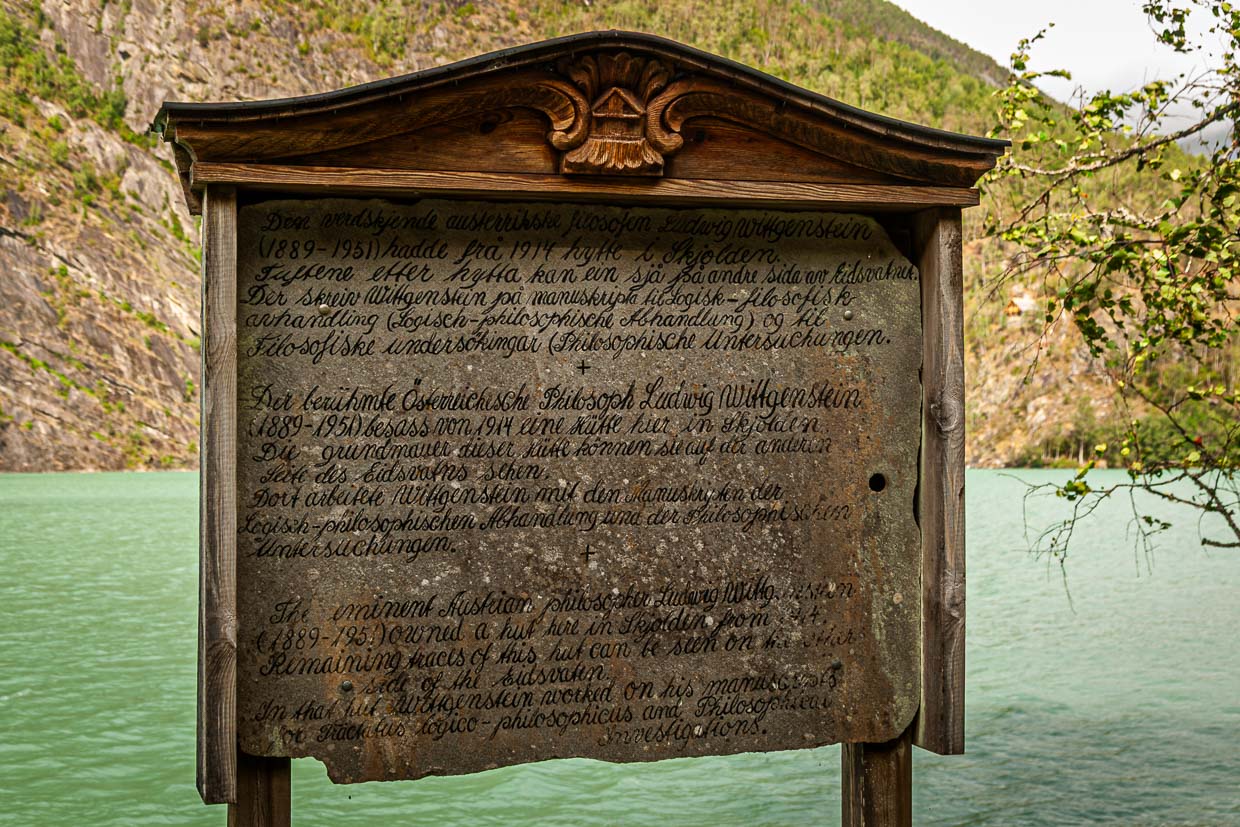
Ludwig Wittgenstein’s texts are freely available online as part of the Ludwig Wittgenstein Project, as their copyright protection period expired 70 years after the author’s death.


