The shepherd’s run in the Black Forest

Barefoot across a stubble field, a sheep as a prize and an unusual headdress as a crown – this is how the shepherd’s run in Wildberg in the northern Black Forest can be described at first glance. But this 300-year-old tradition is much more than that. Every two years, on the third weekend in July, Wildberg celebrates a cheerful festival that honors the shepherd’s profession in all its facets: from herding and sheep shearing to the festival play and cock dance. Whether you have grown up with this tradition or are experiencing it for the first time – everyone will find something to enjoy here. And anyone who has questions will get answers: the knowledgeable audience is happy to explain the strange rituals, and the participants in the procession are also talkative. Whether it’s a lady from the high nobility of 1860, a farmer from a foot group or the devil’s puppeteer in dark make-up – they all talk about the old customs and the life of times gone by.
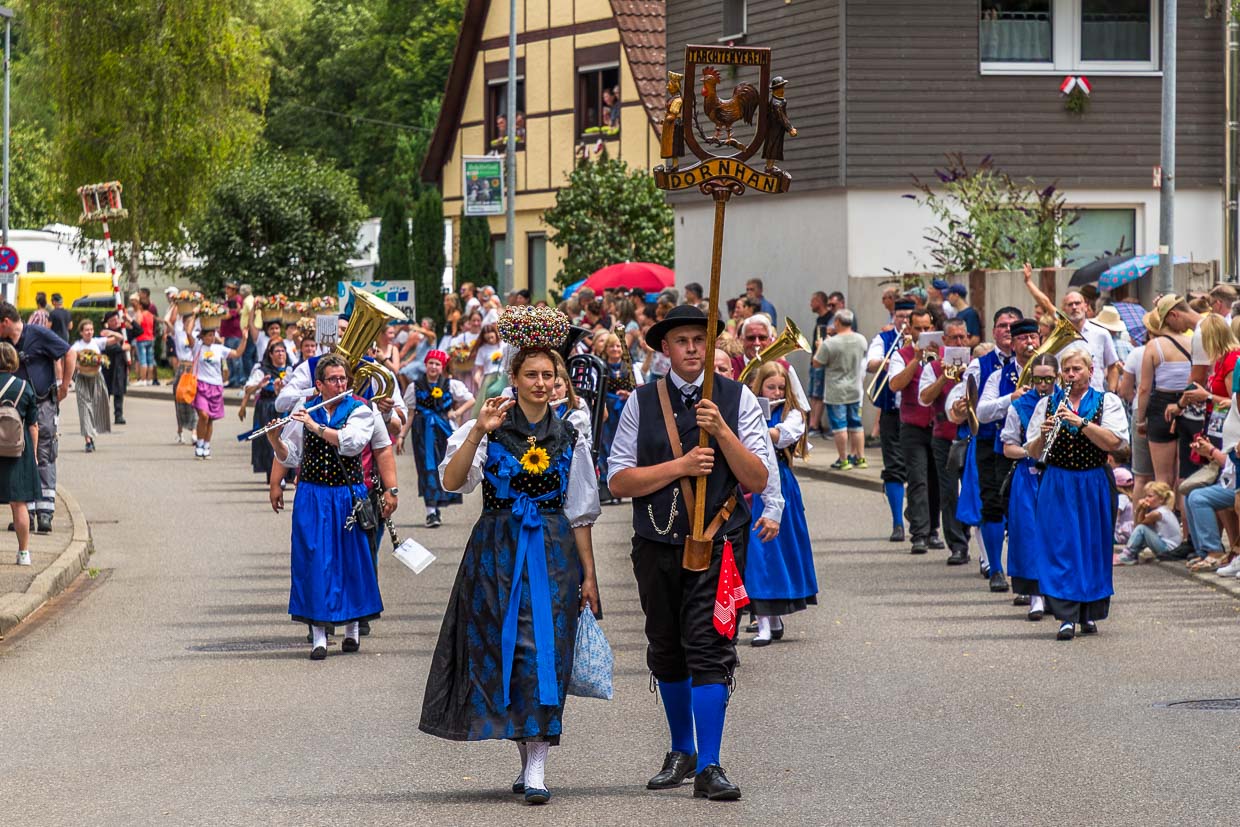
Musik- und Trachtenverein Dornhan auf dem Festzug Schäferlauf Wildberg - 300 Jahre Tradition seit 1723 / © Foto: Georg Berg
Musik- und Trachtenverein Dornhan auf dem Festzug Schäferlauf Wildberg – 300 Jahre Tradition seit 1723 / © Foto: Georg Berg

Working meetings since 1723

At six o’clock sharp in the morning, the Wildberg town band marches through the small town in the northern Black Forest and wakes up the residents with its sounds. Two hours later, the square at the market fountain in front of the town hall fills up. The mayor hands over the shepherd’s flag and the guild chest to the representatives of the shepherd’s guild – a solemn moment that underlines the importance of shepherding and its history. The guild chest, a wooden chest, once held the guild’s most important documents, seals and funds. The basis of this tradition is the guild regulations of the shepherds’ guild from 1651, issued by Duke Eberhard III of Württemberg.
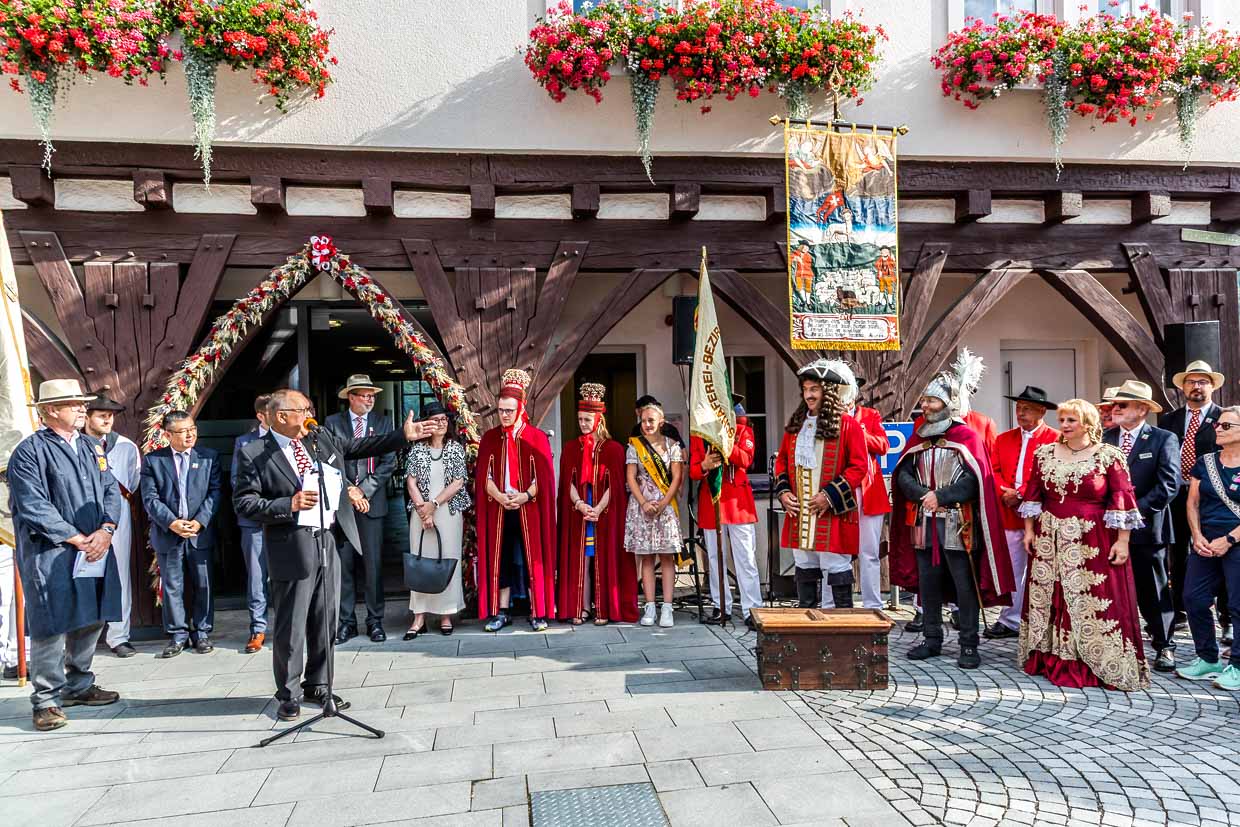
Ulrich Bünger, the mayor of Wildberg, hands over the shepherd's flag and the guild ark to the shepherds. It is a solemn act that symbolizes the importance of the craft of shepherding and its history. The guild chest is a wooden chest that was used to store the most important documents, seals and money of a guild / © Photo: Georg Berg
First act on a long day of celebration: the mayor hands over the guild chest and guild flag. The reigning shepherd king and queen are present, as is Duke Eberhard III of Württemberg / © Photo: Georg Berg

Originally, Markgröningen was the headquarters of the Württemberg shepherds’ guild. Since 1495, all shepherds had to travel there every year for the guild day. They took part in meetings and voted on important matters. However, for many shepherds, especially those from remote areas such as the Black Forest, the journey meant a great deal of effort, expense and risk for their flocks. To alleviate this burden, at the urging of the Black Forest shepherds and with the approval of the Duke of Württemberg, a subsidiary store was set up in Wildberg in 1723. At the same time, further ancillary stores were established in Bad Urach and Heidenheim. These regional facilities enabled the shepherds to carry out their guild business locally.
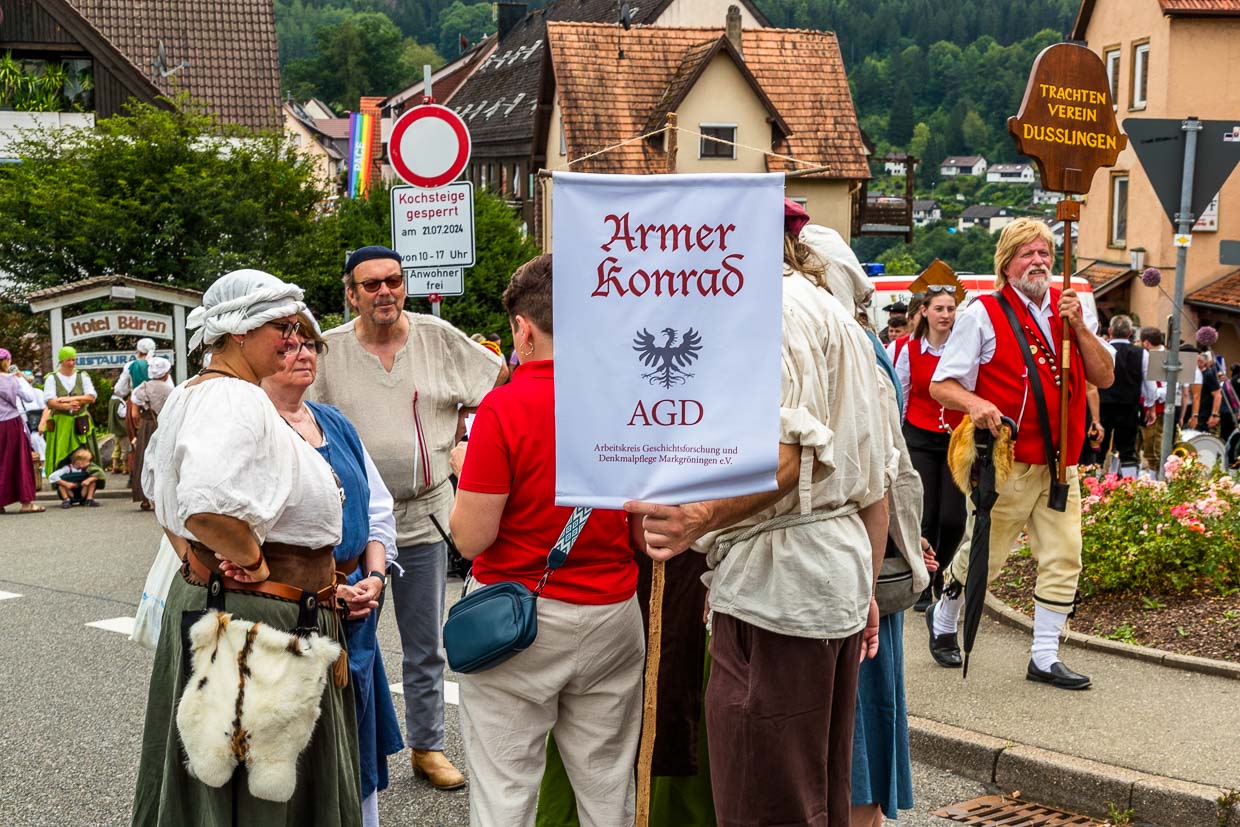
Traditional costume group
Trachtengruppe Armer Konrad auf dem Schäferlauf in Wildberg, Schwarzwald / © Photo: Georg Berg

From economic factor to cultural asset

A shepherd with his flock remains a positive image to this day. But in the past, shepherding was much more than that: it shaped the economy and society. Shepherds played a central role in the rural economy, their flocks supplied wool, meat and milk. Shepherds’ guilds represented the interests of their members, set rules for the trade and took on social tasks.

The shepherd’s run was not only a social event, but above all an important meeting place. Here, shepherds exchanged ideas, traded, dispensed justice and competed against each other. Such gatherings strengthened the community and preserved the traditions of the trade. The races, especially the one for the shepherd’s crown, stood for the pride and efficiency of the shepherds.

In 2018, UNESCO recognized this unique tradition as Intangible Cultural Heritage – in the towns of Markgröningen, Bad Urach and Wildberg in Baden-Württemberg.
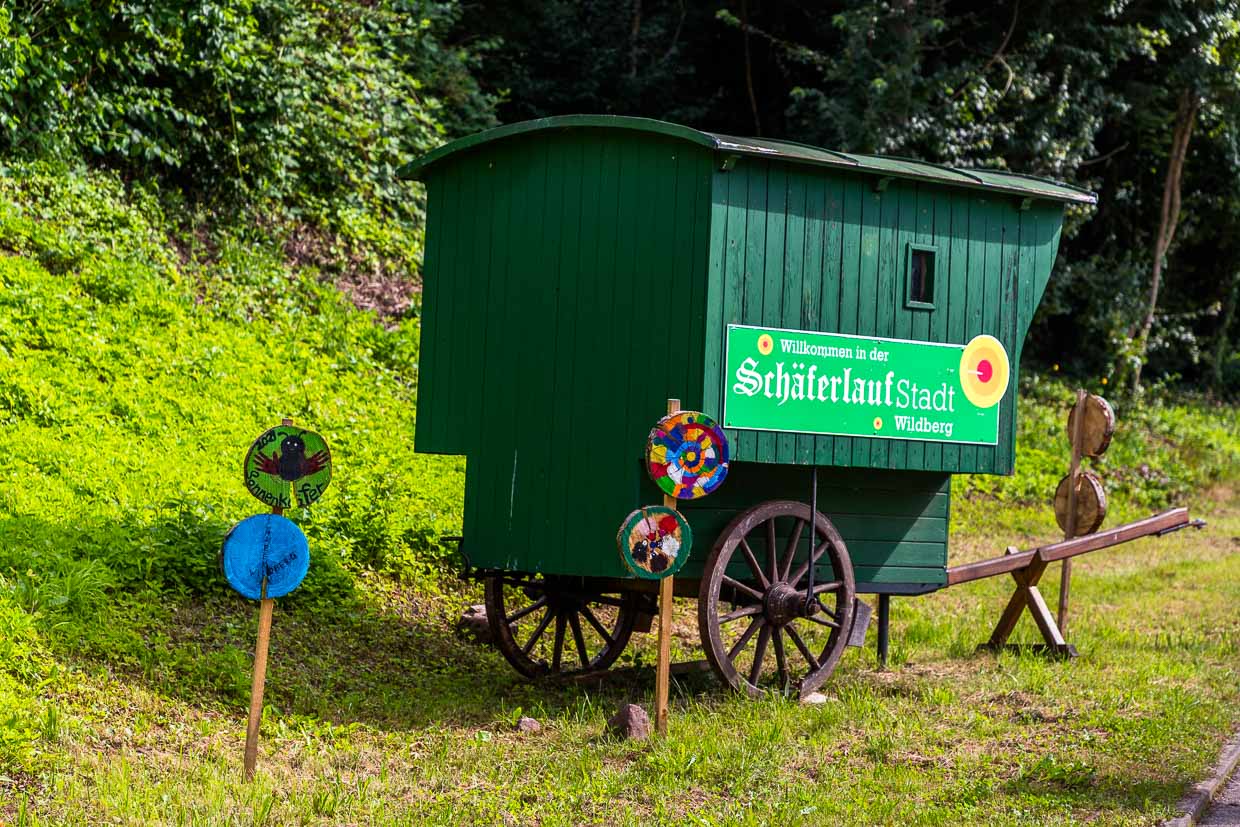
Decoration on the wayside: an old shepherd's cart at the shepherd's run in Wildberg / © Photo: Georg Berg
Decoration on the wayside: an old shepherd’s cart at the shepherd’s run in Wildberg / © Photo: Georg Berg

Time travel with sheep and scoop

For hours, more and more foot groups have been streaming into the upper town of Wildberg. People dance traditional dances at the town hall fountain, the Wildberg polka echoes through the alleyways, and children dressed in traditional costumes or as poor farmers run around laughing. Around midday, after the shepherds have received their insignia of power, a long procession sets off. The order is historically documented: The herald with the town flag is followed by the historical figures Duke Eberhard von Württemberg and Count Burkhard III von Hohenberg with daughter Gertrud von Hohenberg, followed by the first fanfare procession.
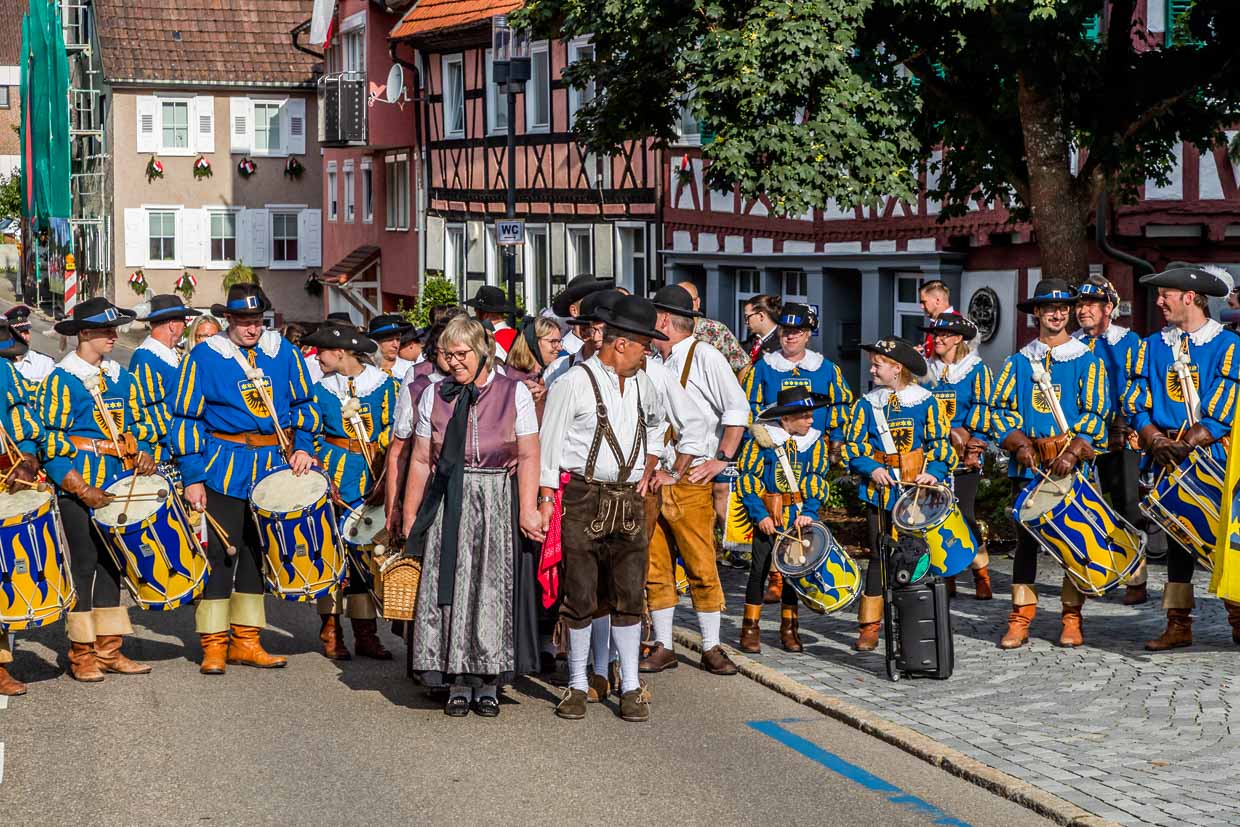
Music bands and traditional dances have been part of the supporting program of the Wildberg shepherd's run since 1723 / © Photo: Georg Berg
Music bands and traditional dances have been part of the supporting program of the Wildberg shepherd’s run since 1723 / © Photo: Georg Berg

After this, other groups line up for the historical procession, which winds its way from the upper town to Schäferlaufplatz over the next two hours. The diversity of the participants is particularly impressive, bringing the rich culture and customs of the region to life. Shepherds and shepherds’ wives, historical vigilantes, raftsmen, cuckoo clock bearers and many others depict scenes from times gone by.
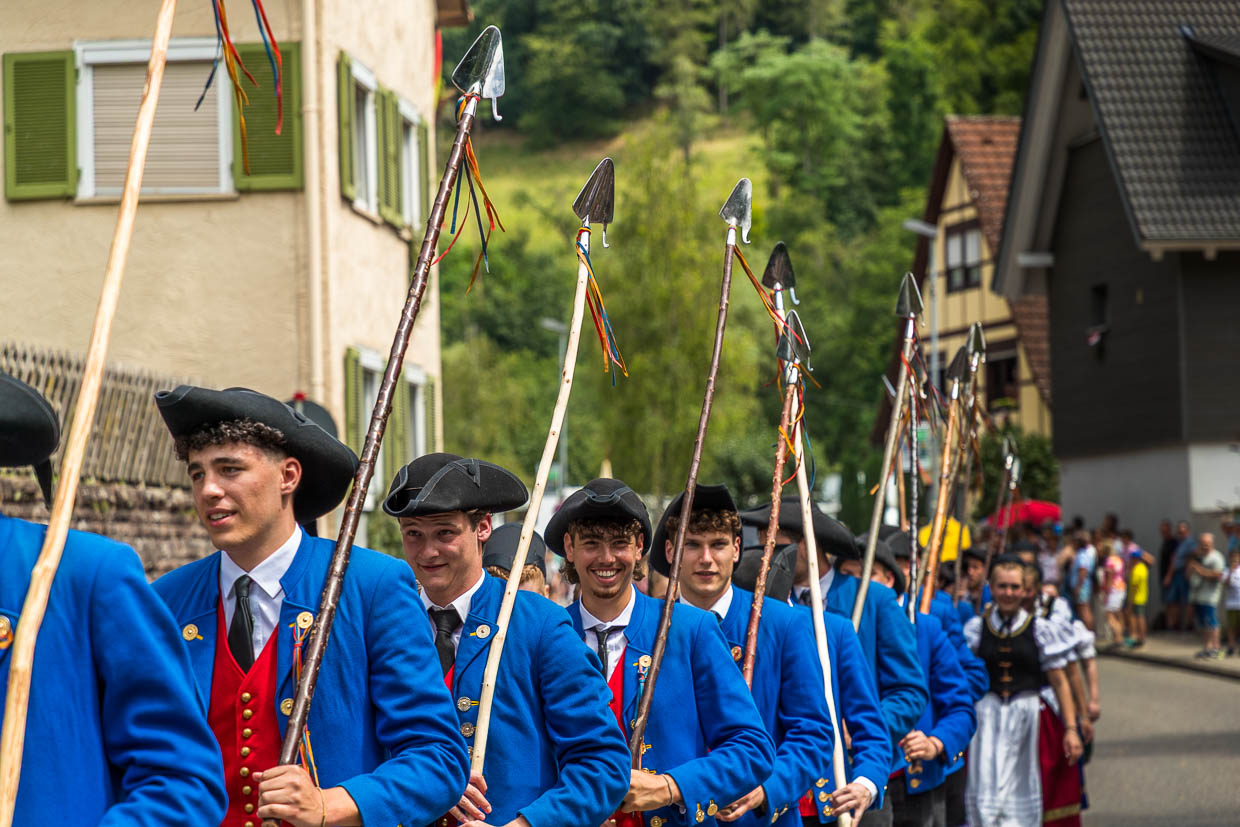
Shepherd's group with traditional shepherd's shovels, the so-called shepherd's shovel, 300 years of shepherd's run in Wildberg. The small shovel at the lower end of the shepherd's crook performs several practical tasks in the everyday life of a shepherd: guiding the flock, signaling the herding dog, taking dung samples, removing plants, cutting out poisonous or troublesome plants. The shovels also have a so-called bycatch hook, which the shepherd can use to catch the sheep by the legs / © Photo: Georg Berg
Shepherd group with traditional shepherd shovels / © Photo: Georg Berg

A group of shepherds carry the traditional shepherd’s shovels, the so-called shepherd’s shovels. This small shovel at the lower end of the shepherd’s crook serves as a tool in everyday life: it guides the flock, signals the herding dog or cuts out poisonous plants. A bycatch hook on the shovel helps to catch sheep by the legs. 
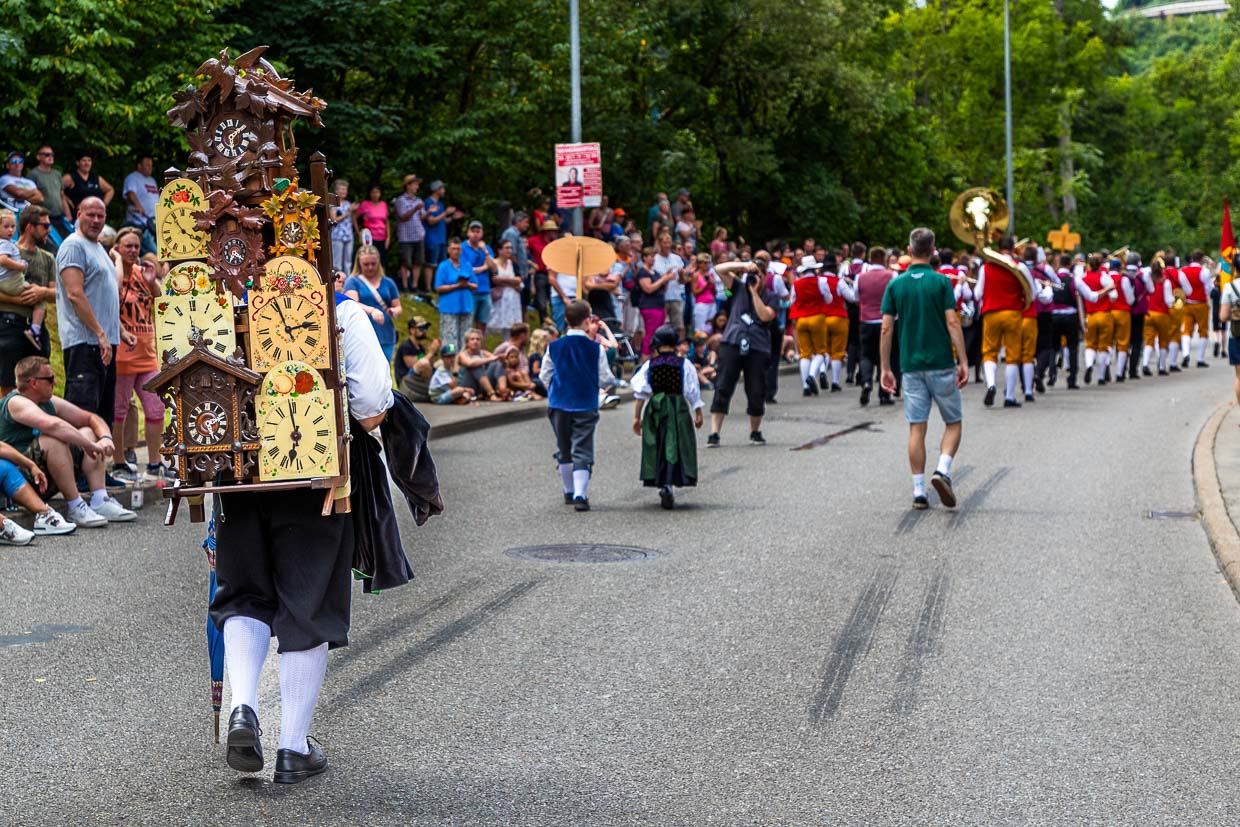
The tradition of **cuckoo clock carriers** originates from the Black Forest and goes back to the time when the famous Black Forest clocks - including the cuckoo clock - were transported and sold over long distances by so-called clock carriers on their backs. These clock carriers used a special back carrier, the
Cuckoo clock carrier with scabbard / © Photo: Georg Berg

The cuckoo clock carriers are reminiscent of a tradition from the Black Forest. Back then, traders carried the famous Black Forest clocks – including the cuckoo clock – on their backs over long distances to markets and customers. They used a special back carrier, the scabbard, to transport the delicate clocks safely.
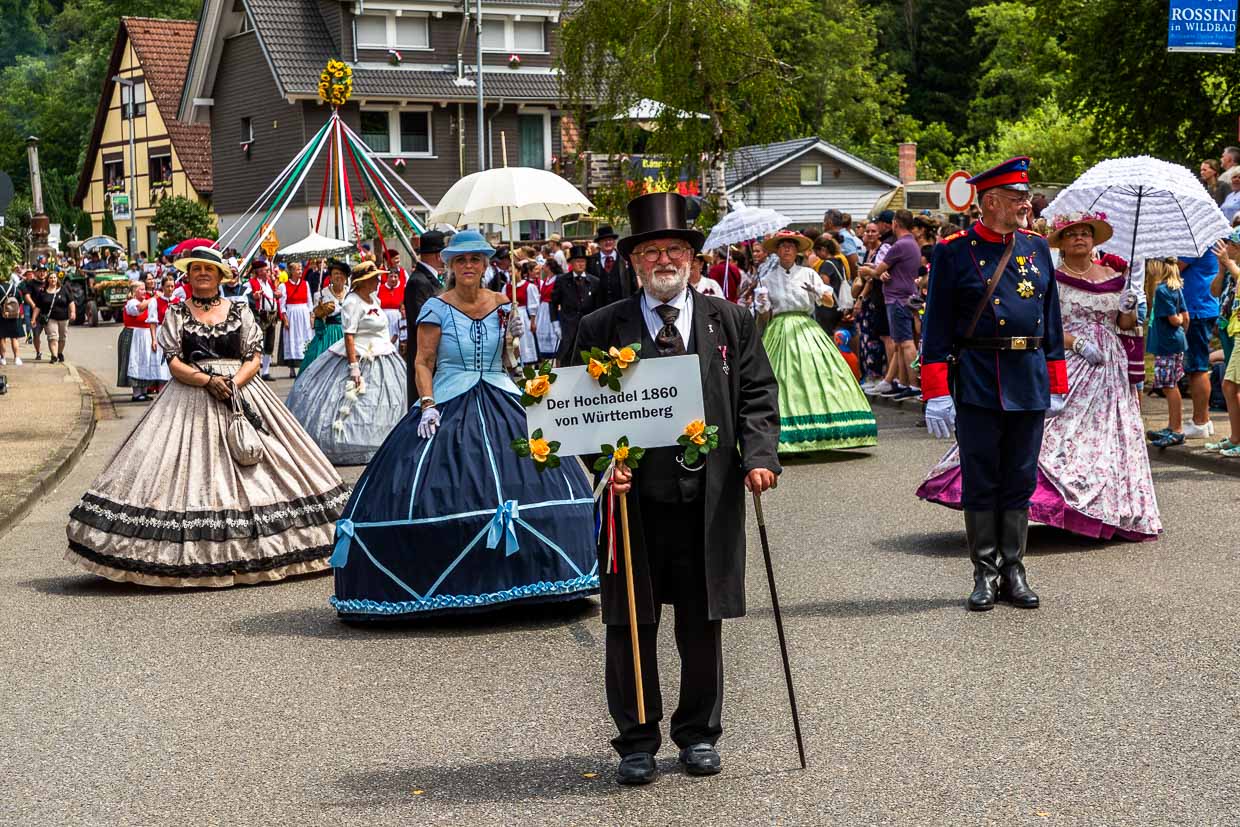
Trachtengruppe Hochadel von 1860 auf dem Festumzug in Wildberg / © Foto: Georg Berg
The Württemberg high nobility as a traditional costume group from 1860 is also present at the parade in Wildberg / © Foto: Georg Berg
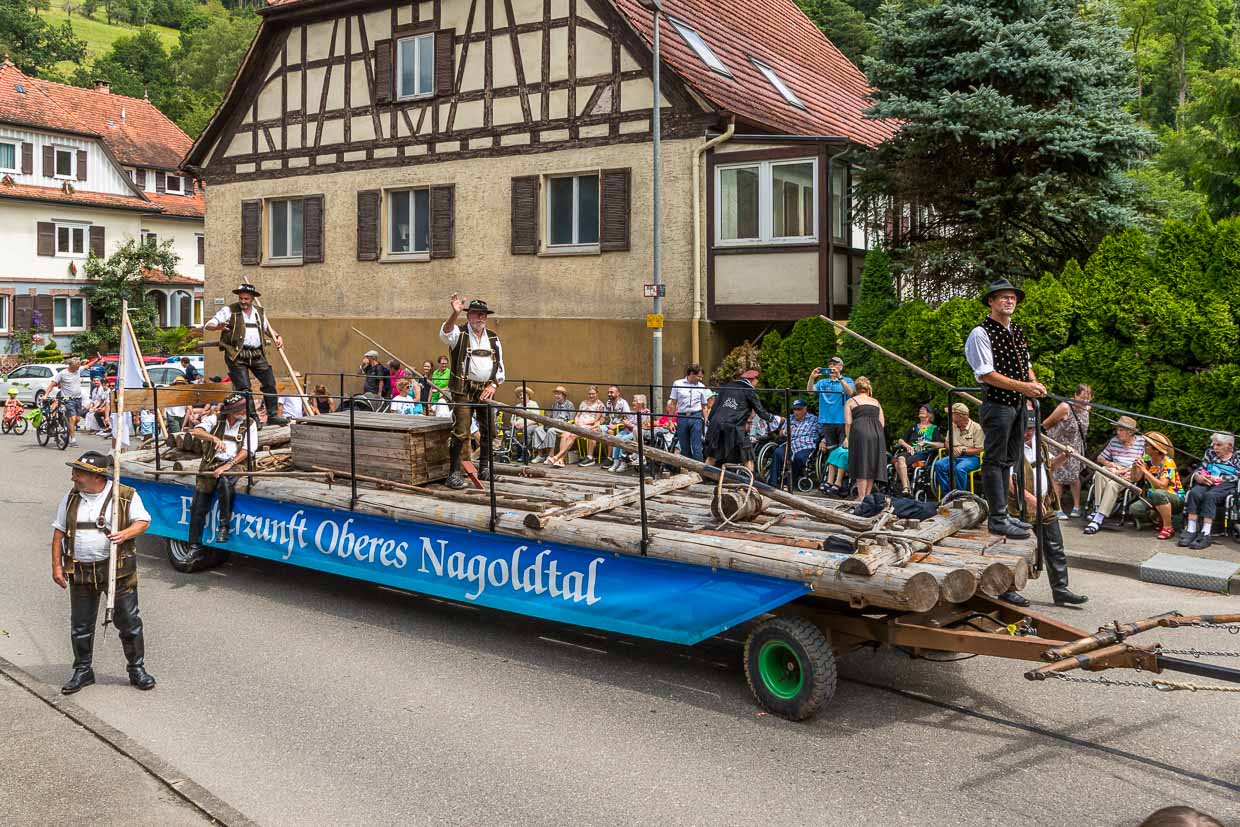
Festwagen der Flößerzunft Oberes Nagoldtal mit einem echten Floß auf der Ladefläche des Anhänger / © Foto: Georg Berg
An important trade of its time: The Oberes Nagoldtal raftsmen’s guild with a real raft on the trailer’s loading area / © Foto: Georg Berg

Highlight shepherd run

In the early afternoon, the action shifts from the upper town to the Schäferlaufplatz. The grandstands fill up, but before the new Shepherd Queen and Shepherd King are determined in the race, traditional program items such as the water carrying and the cock dance are on the agenda.
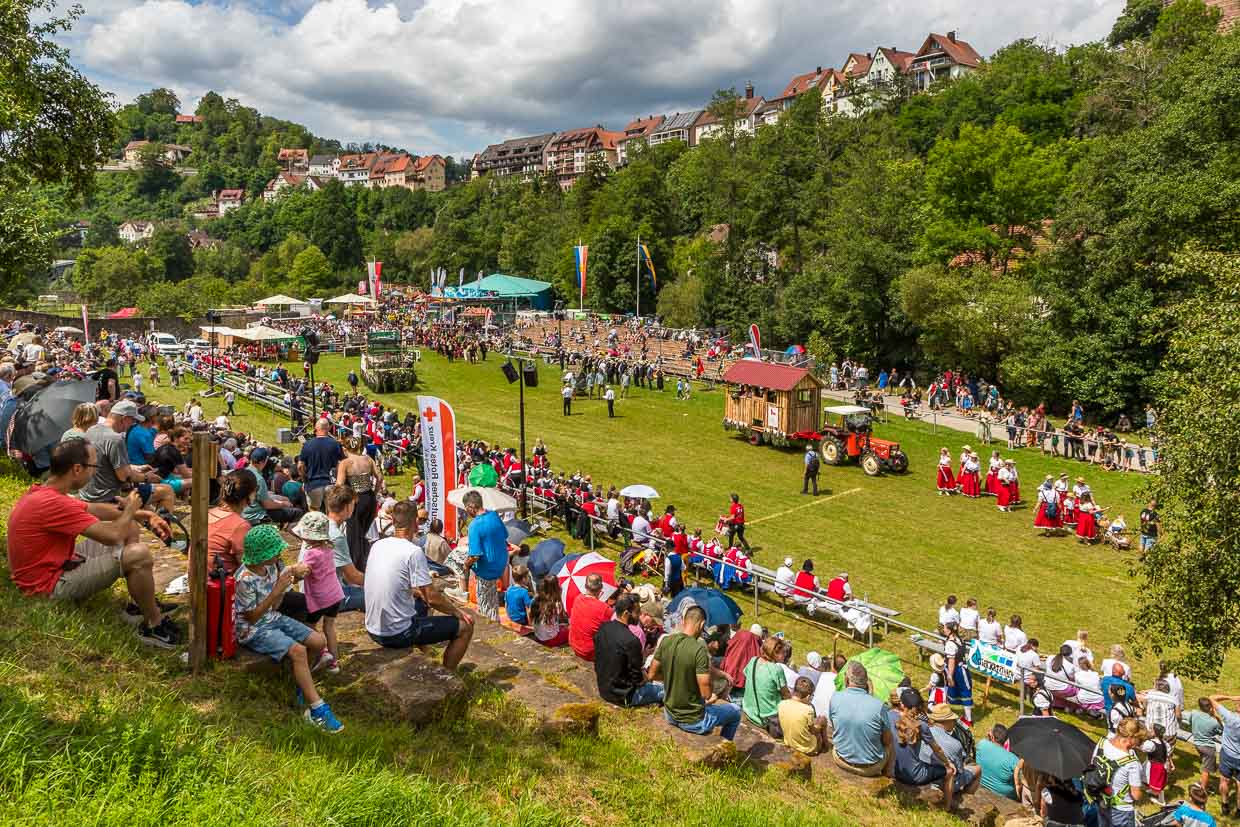
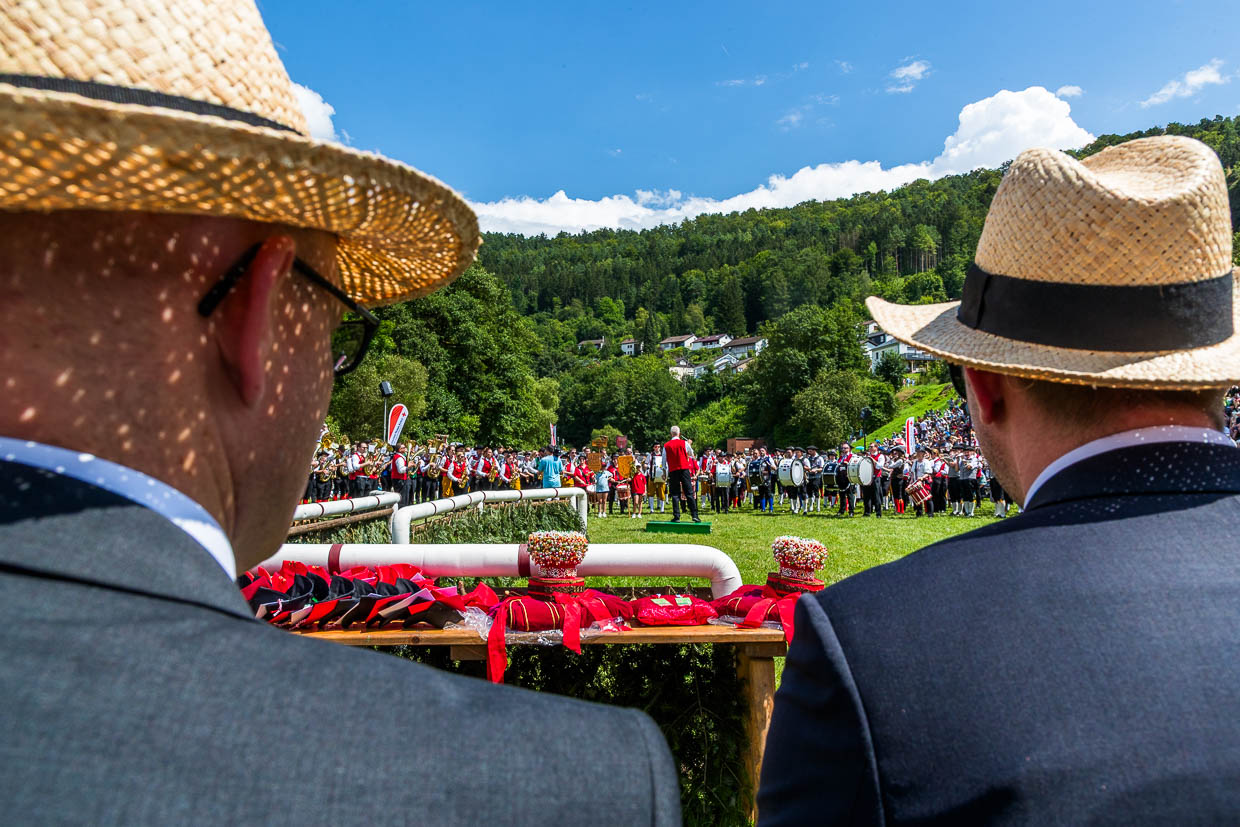
View of the Schäferlaufplatz below the village of Wildberg. Entry of the floats and traditional costume groups as well as shepherd groups and audience on the grandstand / © Photo: Georg Berg
View of the Schäferlaufplatz below Wildberg with entry of the floats and traditional costume groups / © Photo: Georg Berg
Schäferlaufplatz in Wildberg, view of the shepherds' crowns, the so-called "Schäppel"which are placed on the winners after the shepherds' race / © Photo: Georg Berg
Shepherds’ race course in Wildberg, the shepherds’ crowns, the so-called Schäppel are already waiting for the winners of the shepherds’ races / © Photo: Georg Berg

The cock dance is an integral part of the supporting program. This symbolic game is reminiscent of the earlier cockcrowing, in which a live rooster was the center of attention. With the advent of animal welfare, cock tipping was replaced by knocking over a glass of water. Whoever successfully knocks the glass off the board by lifting their partner wins the cock dance.
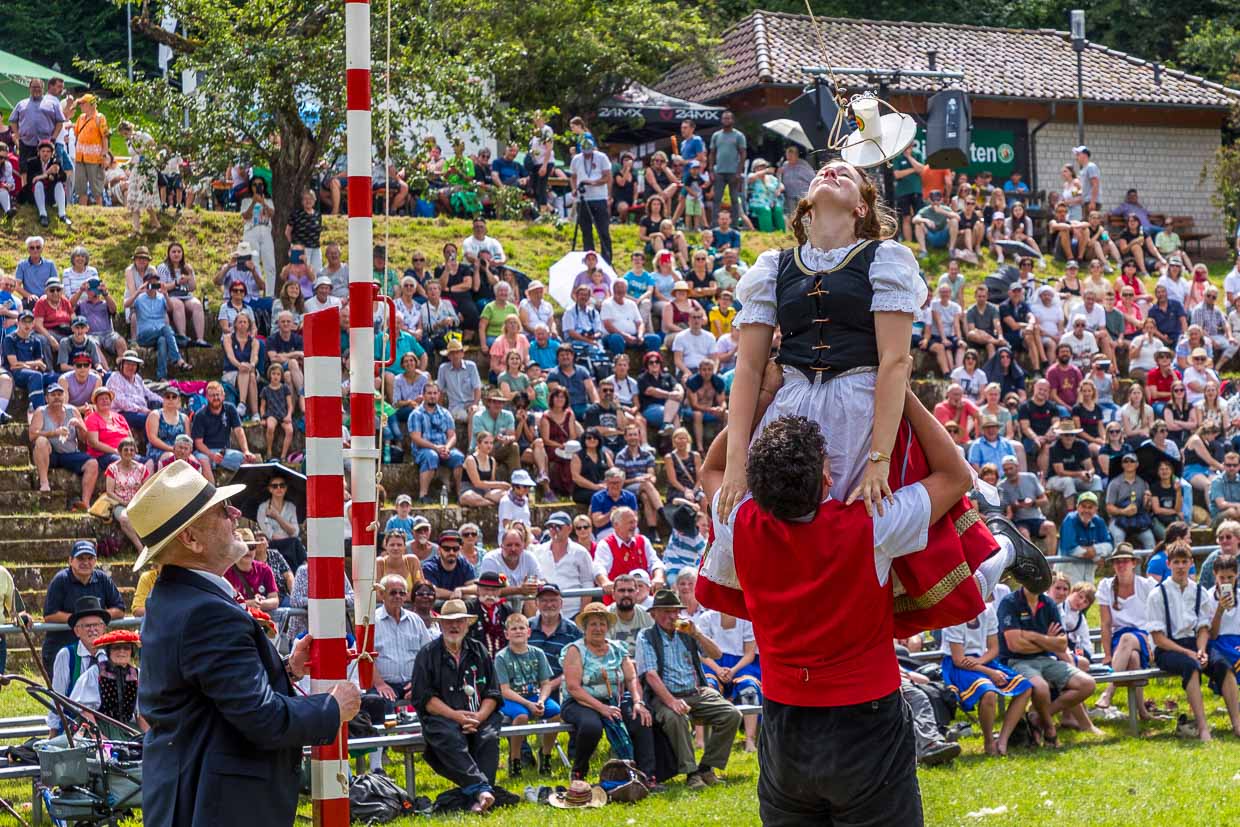
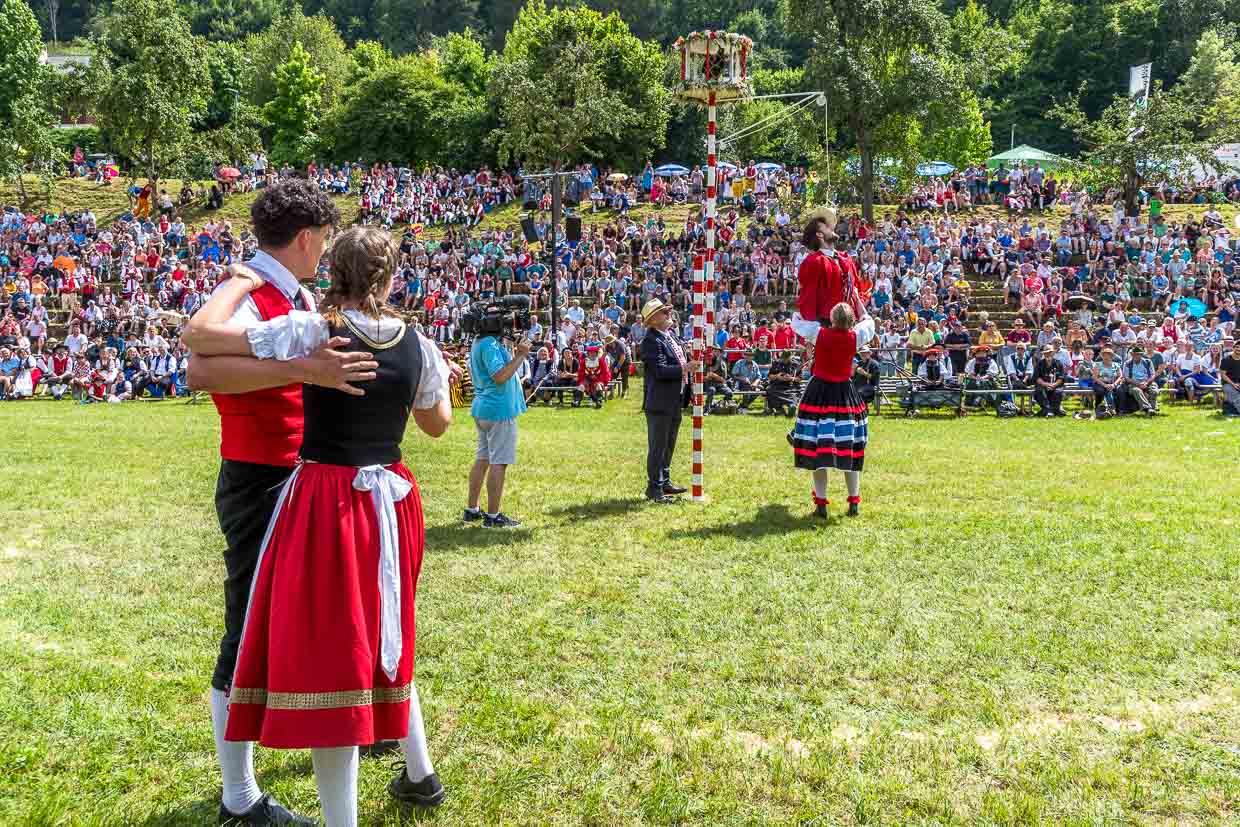
A couple at the cock dance on the Schäferlaufplatz in Wildberg. The dance is an integral part of the supporting program. The rooster dance is a symbolic game that goes back to the formerly widespread practice of
A couple doing the cock dance on the Schäferlaufplatz in Wildberg / © Photo: Georg Berg
At the rooster dance, women also lift up their male dance partners to knock the water glass that symbolizes the rooster off the board / © Photo: Georg Berg
Equality is a top priority in Wildberg. During the rooster dance, women also lift up their male dance partners to knock the glass of water that symbolizes the rooster off the board / © Photo: Georg Berg

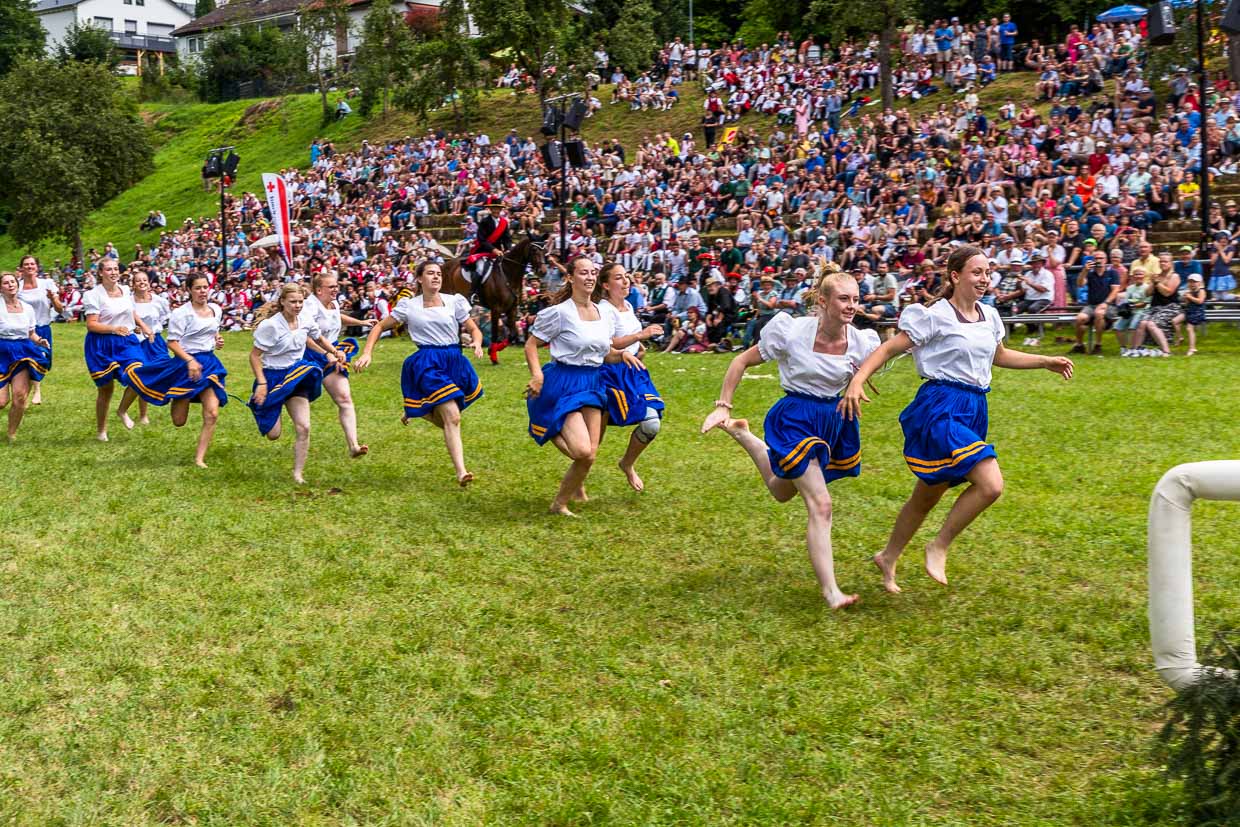
Young women from the ninth and tenth grades of the Wildberg Education Center compete against each other in the water-carrying competition. They race against each other with buckets of water on their heads. This competition, which is also an integral part of the Shepherd’s Run, is reminiscent of the shepherd girls’ and shepherdesses’ tasks in the past. They had to fetch water for people and animals – hard work that required skill and strength.
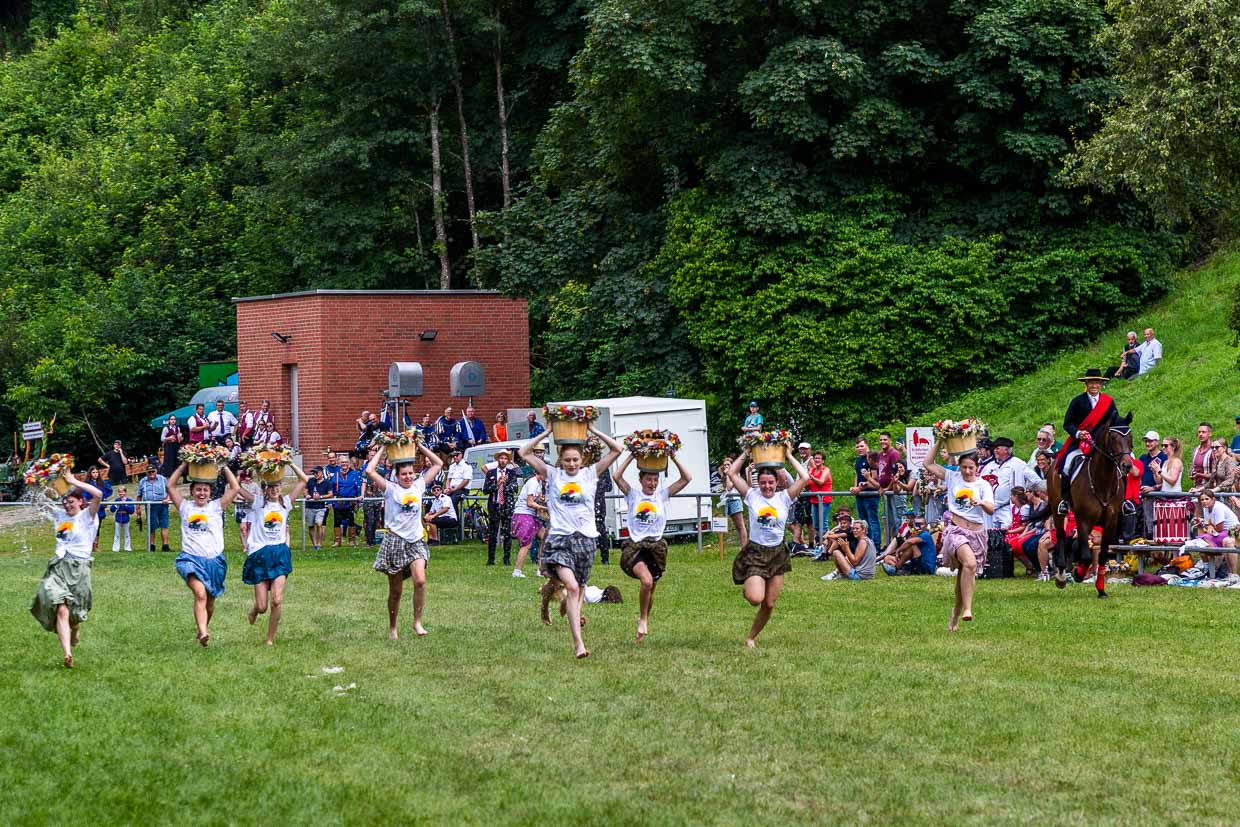
Schoolgirls at the Water Globe Run. In the race, young women from the ninth and tenth grades of the Wildberg Education Center compete against each other with water buckets on their heads. This race is an integral part of the Shepherd's Run and symbolizes the former tasks of the shepherdesses and shepherdesses, who had to carry water for people and animals. It is a reminder of the hard physical work and skill that was necessary in the everyday life of shepherding / © Photo: Georg Berg
Schoolgirls at the water bucket run / © Photo: Georg Berg

Barefoot for the crown

Who will wear the Schäppel, the bright red shepherd’s crown made of pearls and glass, for the next two years and represent the shepherds’ guild? This question is answered during the shepherd’s run, in which only members of shepherd families are allowed to compete – both men and women. The conditions of participation are strict and have remained unchanged for centuries: Minimum age 14, full-time shepherd or shepherdess, or child of a sheep farmer residing in Baden-Württemberg and at least 200 registered sheep. The runners now include women who have trained as shepherds or work in agriculture. It is all the more remarkable that the shepherdess run has been around since 1723, when the Nebenlade began in Wildberg. More about women at the shepherdess run.
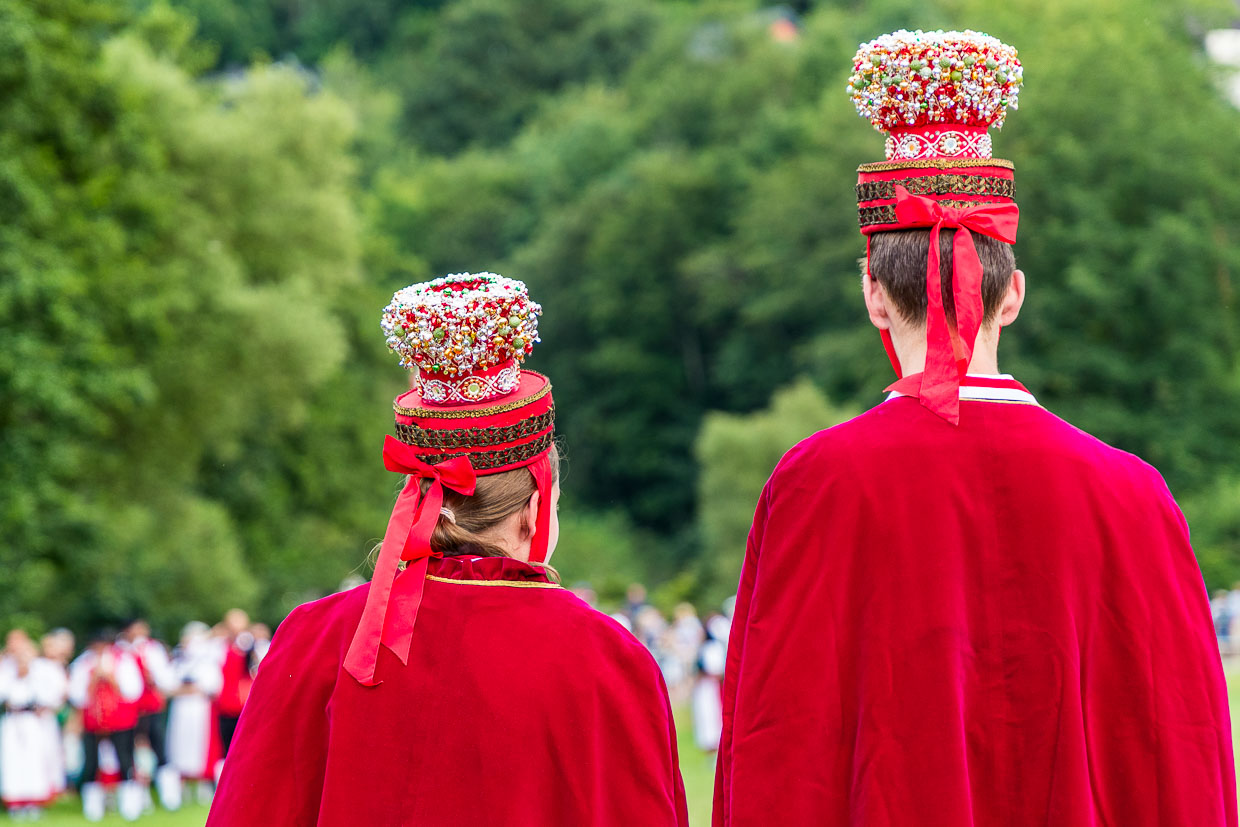
The newly crowned shepherds with the Schäppel, the traditional headdress, a crown made of pearls and pieces of glass / © Photo: Georg Berg
Queen shepherd and king shepherd with the Schäppel, the traditional headdress, a crown made of pearls and pieces of glass / © Photo: Georg Berg
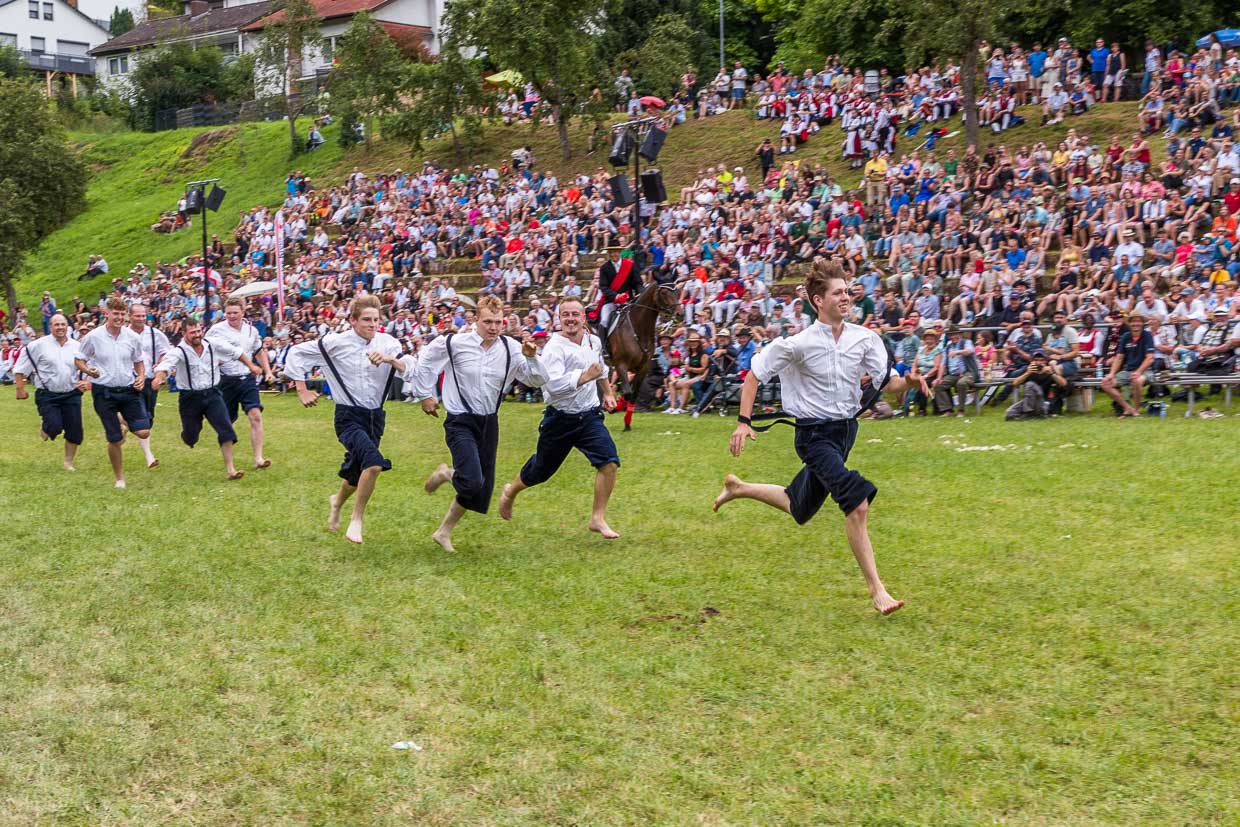
The highlight of the traditional festival in Wildberg is the shepherd's run. The young men, who all have to come from shepherd families, run barefoot for the title of Shepherd King / © Photo: Georg Berg
The highlight of the traditional festival in Wildberg is the shepherd run. The young men, who must all come from shepherd families, run barefoot for the title of Shepherd King / © Photo: Georg Berg
13 shepherdesses at the finish of the Shepherdess Run 2024 in Wildberg. The participants are no longer shepherdesses, but trained shepherds, animal farmers or in training to become veterinarians / © Photo: Georg Berg
13 participants at the finish line of the 2024 Shepherdess Run in Wildberg / © Photo: Georg Berg
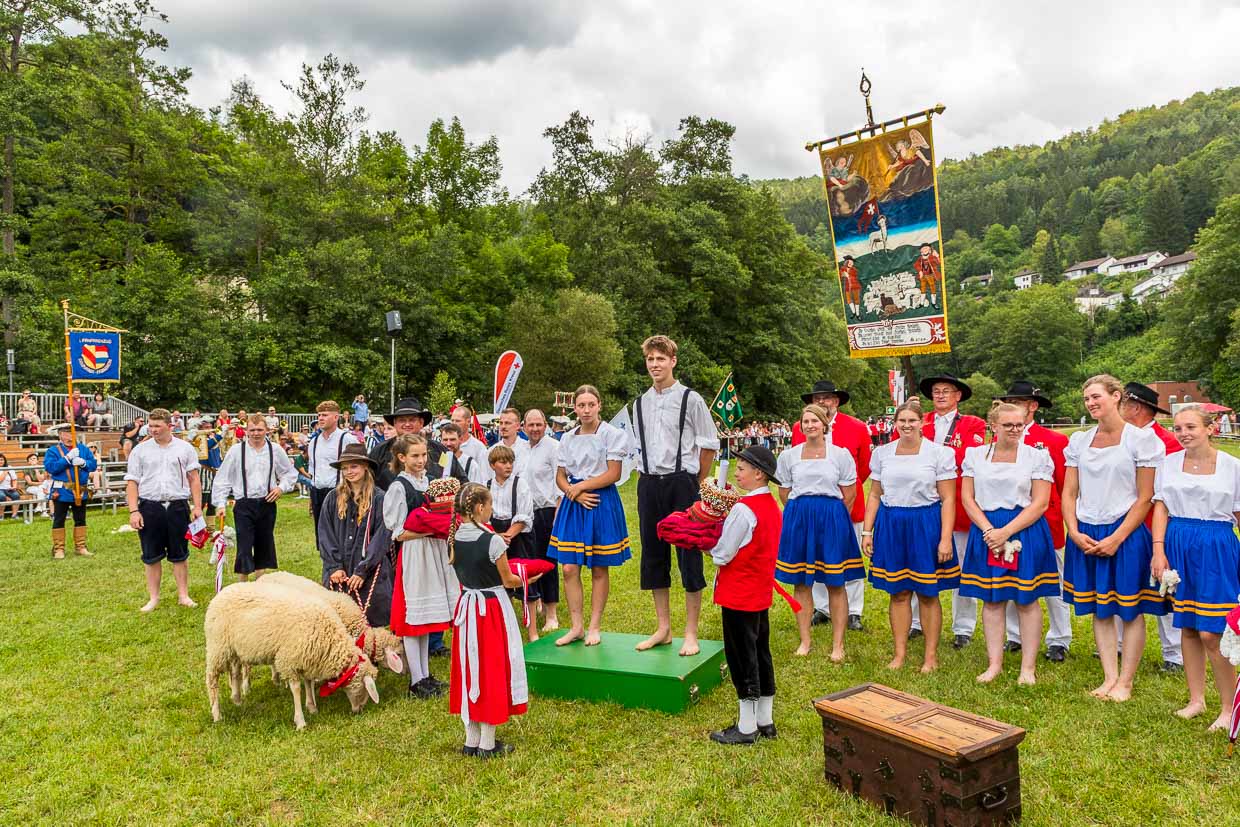
Award ceremony Schäferlauf 2024 in Wildberg. In addition to the shepherd's crown, the prize is a sheep for the queen and king / © Photo: Georg Berg
Award ceremony Schäferlauf 2024 in Wildberg. In addition to the shepherd’s crown, the prize is a sheep for the queen and king / © Photo: Georg Berg

Fixed point in the shepherds’ annual calendar

The dissolution of the shepherds’ guild in the Kingdom of Württemberg in 1828 did not change the festivities. The meeting of professional shepherds became increasingly open to the public and developed more and more into a folk festival. Today, over 60 groups parade through the streets of Wildberg. Only members of shepherd families are allowed to take part in the run for the shepherd’s crown. In Wildberg, the children of these families traditionally start the races.

If you want to experience living tradition up close, you should make a note of this date: The Schäferlauf in Wildberg alternates with Bad Urach and always takes place in even years – next time from July 17 to 20, 2026. It’s well worth a visit!
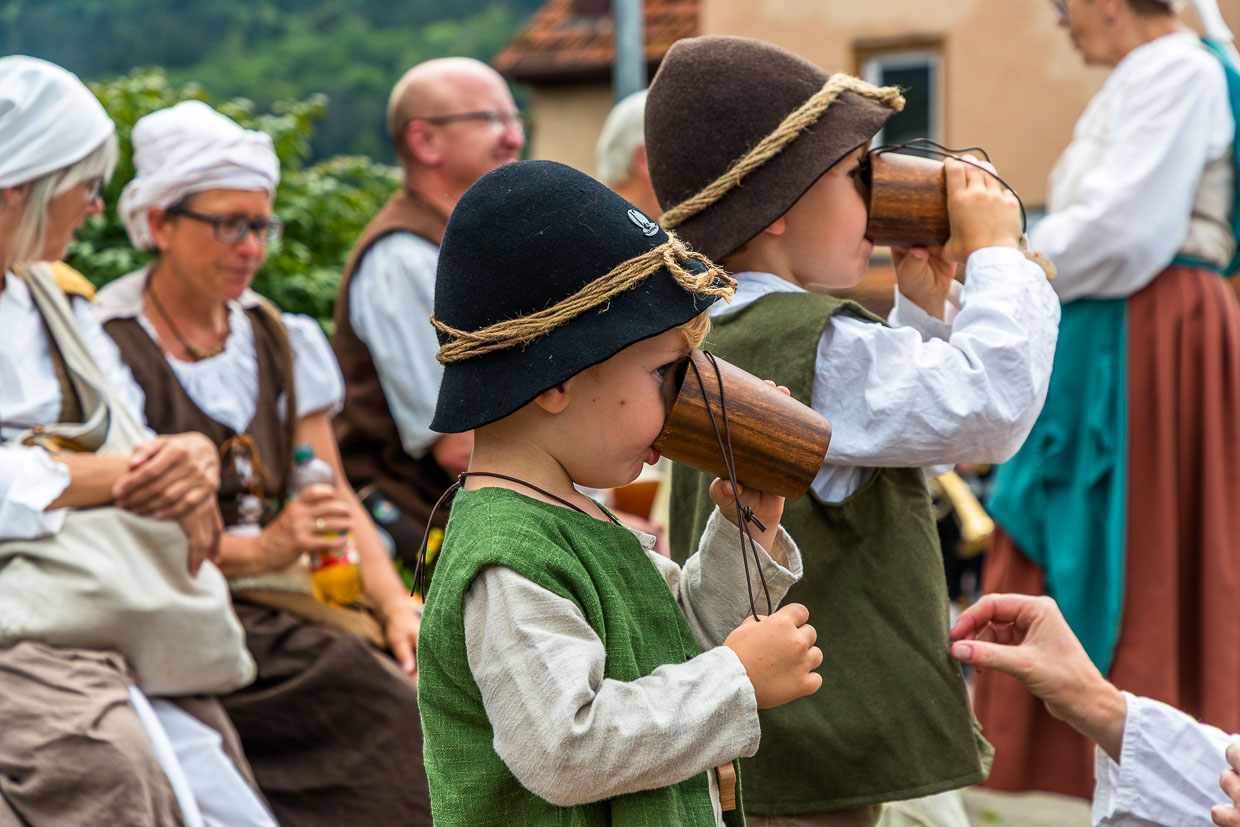
Two little boys from a traditional costume group drink from wooden cups, 300 years of the Wildberg shepherd's run, Black Forest / © Photo: Georg Berg
Two little boys from a traditional costume group drink from wooden cups, 300 years of the Wildberg shepherd’s run, Black Forest / © Photo: Georg Berg

From shepherd’s daughter to professional shepherdess: Something is happening in the male domain, as the Shepherd Run Days in Wildberg show.

The research trip was supported by Schwarzwald Tourismus

Content Protection by DMCA.com

This post contains advertising links (also called affiliate or commission links) that lead to intermediaries of goods or services.

More Travel Stories

When the water was the road

Singer’s green houses

Azulejos in Portugal

Extreme tides in Nova Scotia

From Birchtown to Freetown

The Settlers of Nova Scotia

Halifax Waterfront and Museums

Lobster fishing in Nova Scotia

The Golden Route of Hakone

Nancy: Mad about Stanislas

Salzburg: Grand opera on 12 strings

On the bus to Sound of Music bliss

Sun Salutation with Mozart

Three notches for the goddess

The Ama – Women of the sea

World of Onsen in Yunomine

The lucky pearl from Ise-Shima

Duisburg: On the road in the district

Pilgrimage to Anatolia

Japan and the plush charms

Mia Hesse and Hermann Hesse

Vinyl from Detroit

Angoulême – City of comics

George Sand: Fighter from the country

In the carpet universe of Aubusson

A carpet for George Sand

Porcelain worlds in Limoges

Porcelain tour through Limoges

Poitiers: city, country, cinema

Eleonore in Poitiers

Cycling through the Charente

Volcanoes and visions on Lanzarote

Aix Island: Pebble in the ocean

The shepherd’s run in the Black Forest

The shepherd queen of Wildberg

Thomas Mann was already here

Semana Santa – Easter in Cuenca

The dual leadership of San Marino

City tour through Bremen

Pilgrimage to Nevers

Bathing fun on Usedom

Curaçao: an island full of color

Ven Island in the Öresund

Pullman City near Chicago

Legendary train routes

Open House Chicago

Summer on the mountain pasture

Stockholm’s secret eye-catchers

The talking stones of Uppsala

Cult and culture in Uppsala

Potsdam and the German dream factory

Mackinac Island in Lake Huron

Chicago Riverwalk & Pedway

Good vibes from Detroit

Highlights in Detroit – the classics

Bethlehem f’Għajnsielem on Gozo

Caspar David Friedrich in Dresden

Georgia’s turbulent history

Thawale Lodge in Majete

Bush Experience Kutchire Lodge

Special hotels in Lilongwe

Vacation at Lake Malawi

Salzburg’s Monastery Worlds

Nicosia. City with border experience

Neuzelle Monastery. The baroque miracle

Experience whales in Iceland

Mysterious Royston Cave

Avignon, the popes and a lot of theater

Hof van Twente on the Overijssel

Japan can also be Mediterranean

Kawaii. Oh how cute!

Travel to Japan possible again

Holland and the Hanseatic

Digital Detox in Ticino

Mourèze – beautiful and spectacular

Footpath to the Moulins-de-la-Foux

Palace of the Popes in Avignon

Varosha ghost town

No trip without a monument

Travel for a better world

Rituals from around the world

Lumbung leitmotif of documenta fifteen

The documenta in Kassel

In Alsace on foot from hotel to hotel

Glamping and Hide Aways

Special hotels

Esch-sur-Alzette is Capital of Culture

Country outing in the heart of Denmark

A trip to Saint Chamond

Hoge Veluwe National Park in Gelderland

Hotel Hohenwart high above Merano

Hiking in the Danish South Sea

Heath village Visperterminen

Luxembourg – City full of contrasts

Bad Kissingen is Unesco World Heritage

Otto von Bismarck in Bad Kissingen

The rich history of Bulgaria

Culture and Architecture in Luxembourg

Green hiking country Luxembourg

Iceland, where wasabi grows

Our mode of operation is characterized by self-experienced, well-researched text work and professional, vivid photography. For all stories, travel impressions and photos are created in the same place. Thus, the photos complement and support what is read and carry it further.

Never miss new Tellerrand-Stories again! Mithilfe eines Feed-Readers lassen sich die Information über neue Blogartikel in Echtzeit abonnieren With the help of a feed reader, all stories about the Tellerrand (edge of the plate) can be subscribed to in real time.

Permalink of the original version in German: https://tellerrandstories.de/tradition-schwarzwald-schaeferlauf