
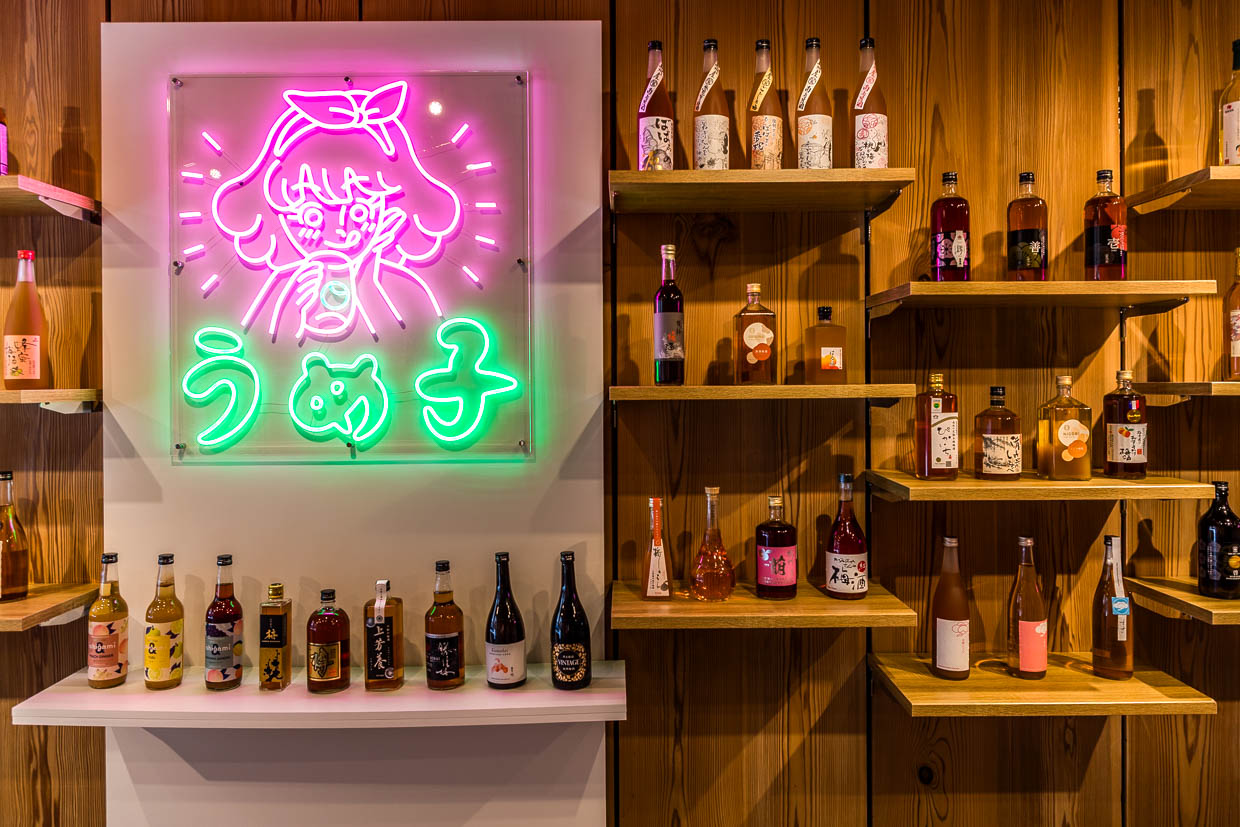
In a small bar in the centre of Tanabe, close to the bus station and tourist information office, everything revolves around one drink: umeshu, the plum liqueur. The room is bright and simple, more showroom than classic bar. The wooden shelves along the walls are lined with bottles in a wide variety of shapes. Their contents shimmer in shades of yellow, gold and amber. The labels bear calligraphed characters – sometimes playful, sometimes austere, sometimes modern. But they all have one thing in common: their origins in Wakayama Prefecture.
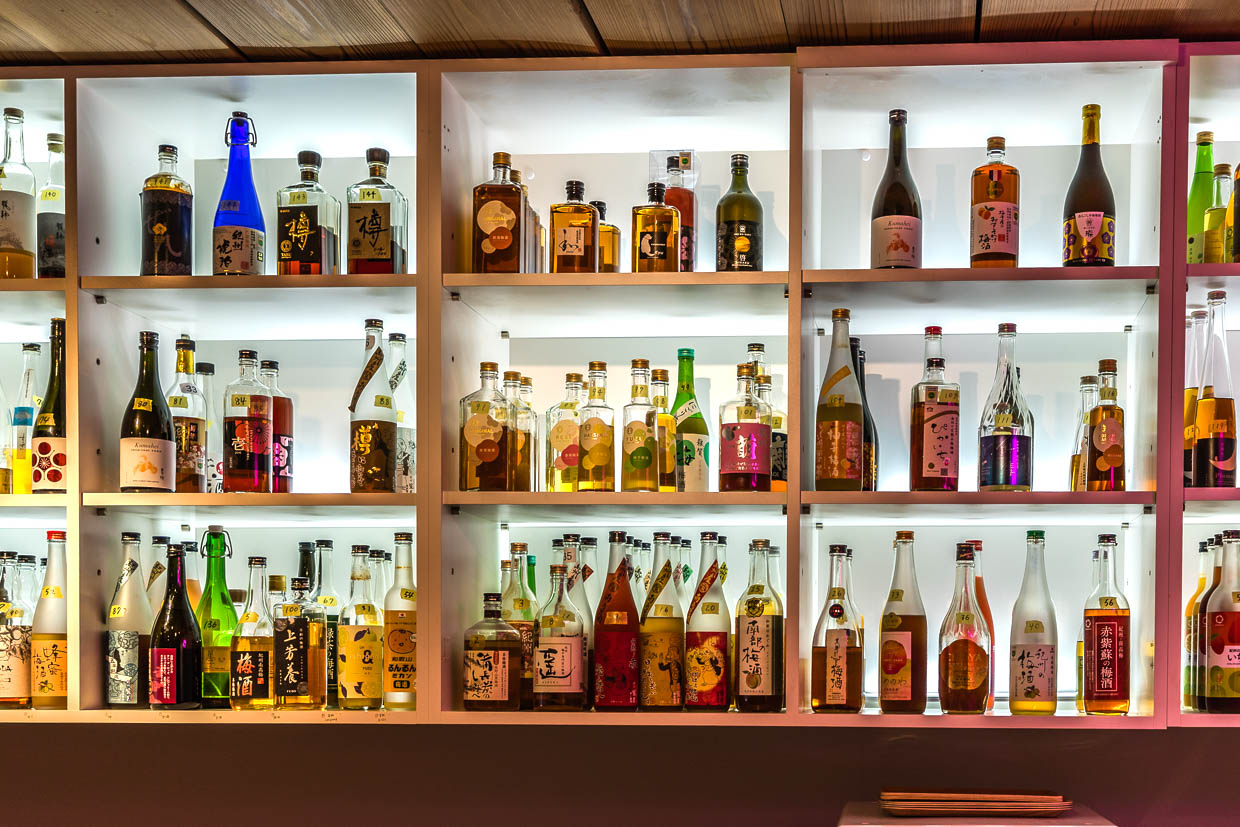
The bar is part of the regional Umeshu Experience, with which Tanabe emphasises its role as the centre of the Kishu-Ume region. The Tanabe Tourist Organisation has set it up to introduce visitors, who come because of its proximity to the Kumano Kodo pilgrimage route, to the variety of plum liqueur through tastings and workshops. We take a seat at a simple wooden counter with a view of the bottle wall. A card explains the most important umeshu styles: there are three basic alcohols – shochu (Japanese brandy), brandy or whisky. Other criteria are sweetness and flavour. Even before the first glass is poured, employee Daiki Sako tells us the story of the Nanko ume: how it grows on the slopes around Tanabe, its importance for the region and how you can taste the different nuances of the fruit in this bar.
Why Tanabe became the centre of Umeshu production
While preparing for the tasting, Daiki Sako tells us about the roots of the region. In the early 17th century, during the Edo period, Tanabe and neighbouring Minabe became the centre of ume cultivation. The steep, nutrient-poor soils and damp slopes were perfect for the fruit. Rice did not grow here, but ume did. The ruler at the time, Naotsugu Ando, declared the stony land tax-free and encouraged the cultivation of wild yabu ume. This led to a boom: Tanabe-Umeshu was brought to Edo, today’s Tokyo, in barrels and became popular as an aperitif.
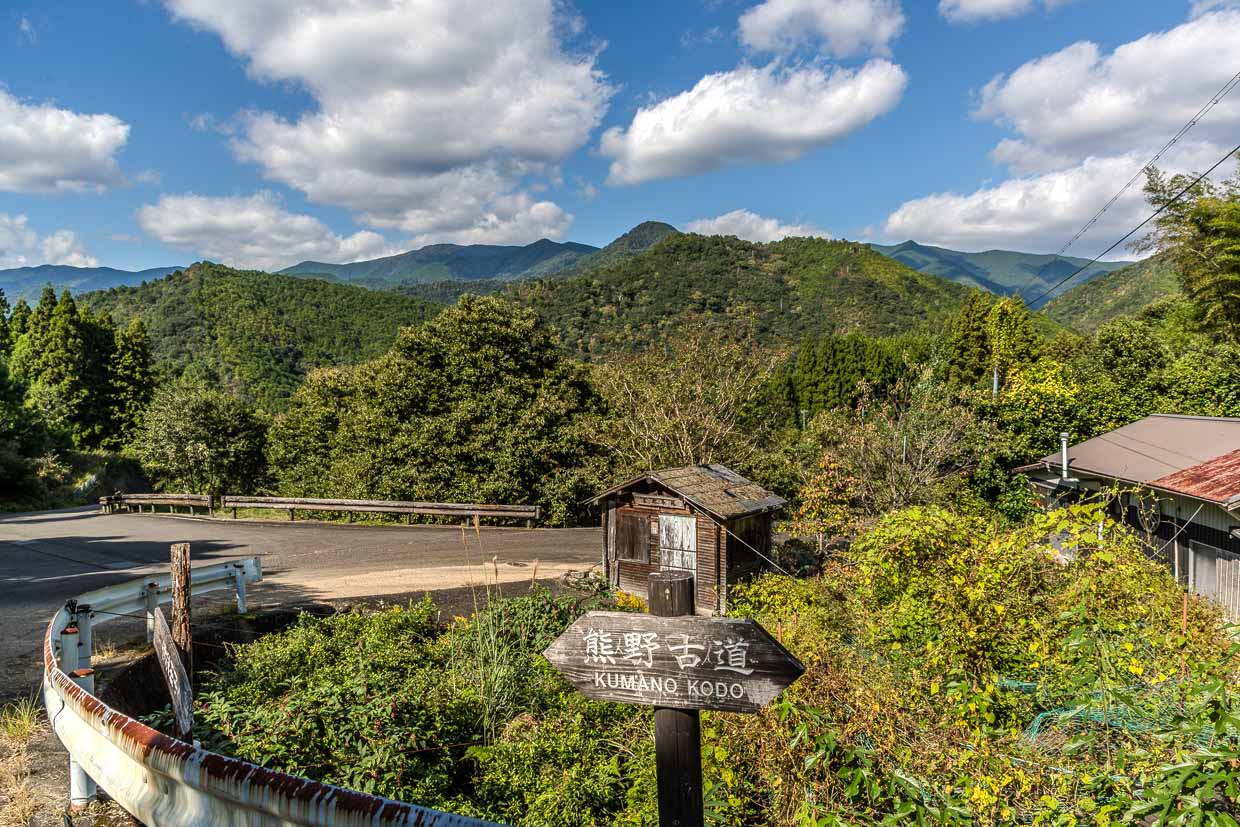
Today, Wakayama, together with Tanabe and Minabe, supplies over 60 per cent of the Japanese ume harvest of around 40,000 tonnes per year. Nanko ume in particular is grown here. It has a thin skin, soft flesh and an intense flavour – ideal for plum liqueur, making it soft, fruity and aromatic.
The diversity of Umeshu varieties
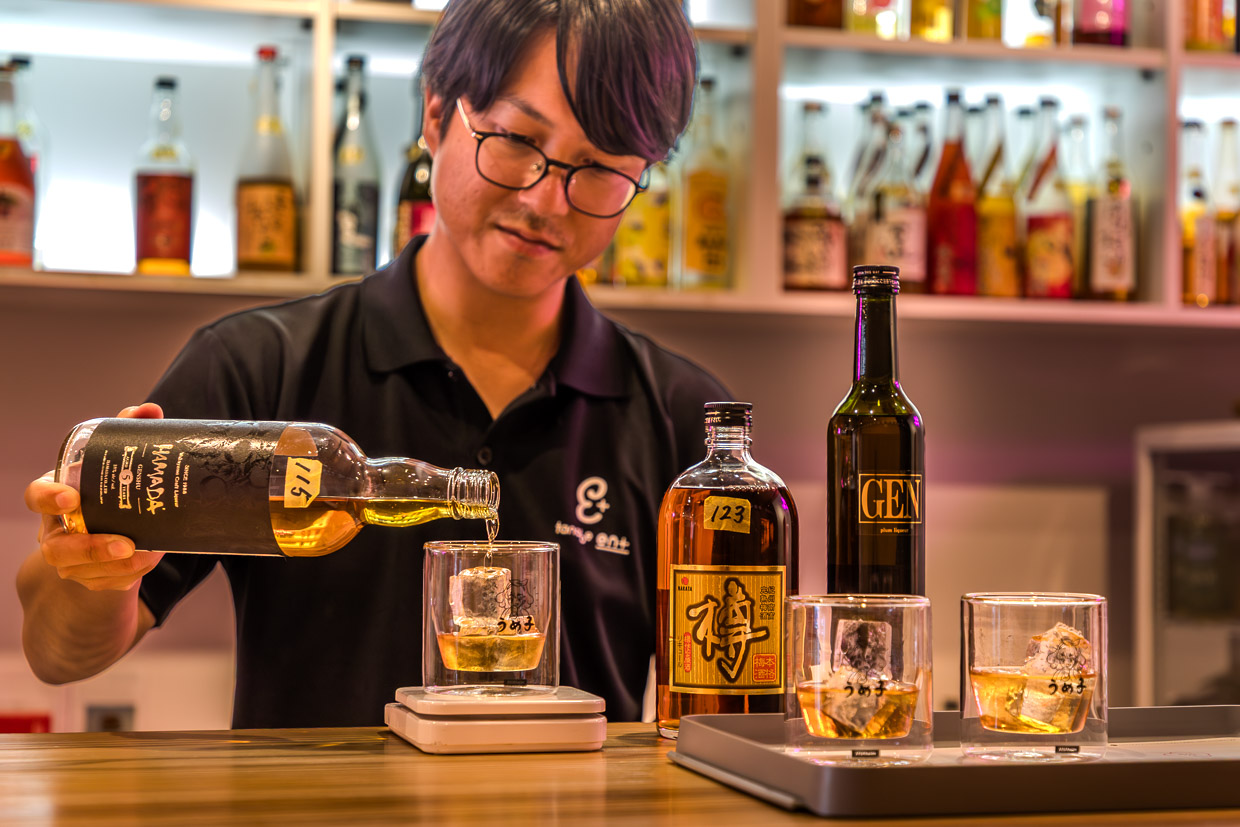
The production of plum liqueur has a 400-year tradition in the region. At the bar in Tanabe, visitors can sample 140 varieties from 30 producers in Wakayama. A tasting comprises three rounds with three samples each. The first round focuses on the basic flavours of nanko ume: acidity, stone fruit and a slight almond note. The second round is dedicated to the classics. Umeshu based on shochu tastes light and moderately sweet. On a tasting sheet, you mark sweetness, acidity and intensity on a scale of 1 to 5. Then two umeshu are tasted side by side: one with a strong sweetness, made with more sugar and matured for longer, and a lighter, almost refreshing umeshu that is good to drink “on the rocks”. In the third round, things get experimental: an umeshu with brown sugar develops caramel notes, while a whisky-based umeshu surprises with depth and a subtle woody note in the finish. Finally, a personal favourite is poured into the glass to enjoy in peace and let the freshly gained impressions linger.
Workshop. Making your own umeshu
After the tasting, the workshop begins. Now it’s time to put what you’ve learnt into practice. A jar with a screw cap, Nanko-Ume, different types of sugar and several bottles of base alcohol are laid out on a table. I decide in favour of the whisky version. Daiki Sako explains the differences in the production process: the degree of maturity of the ume, the amount of sugar, the duration of maceration and the choice of base alcohol – and how all of this influences the flavour.
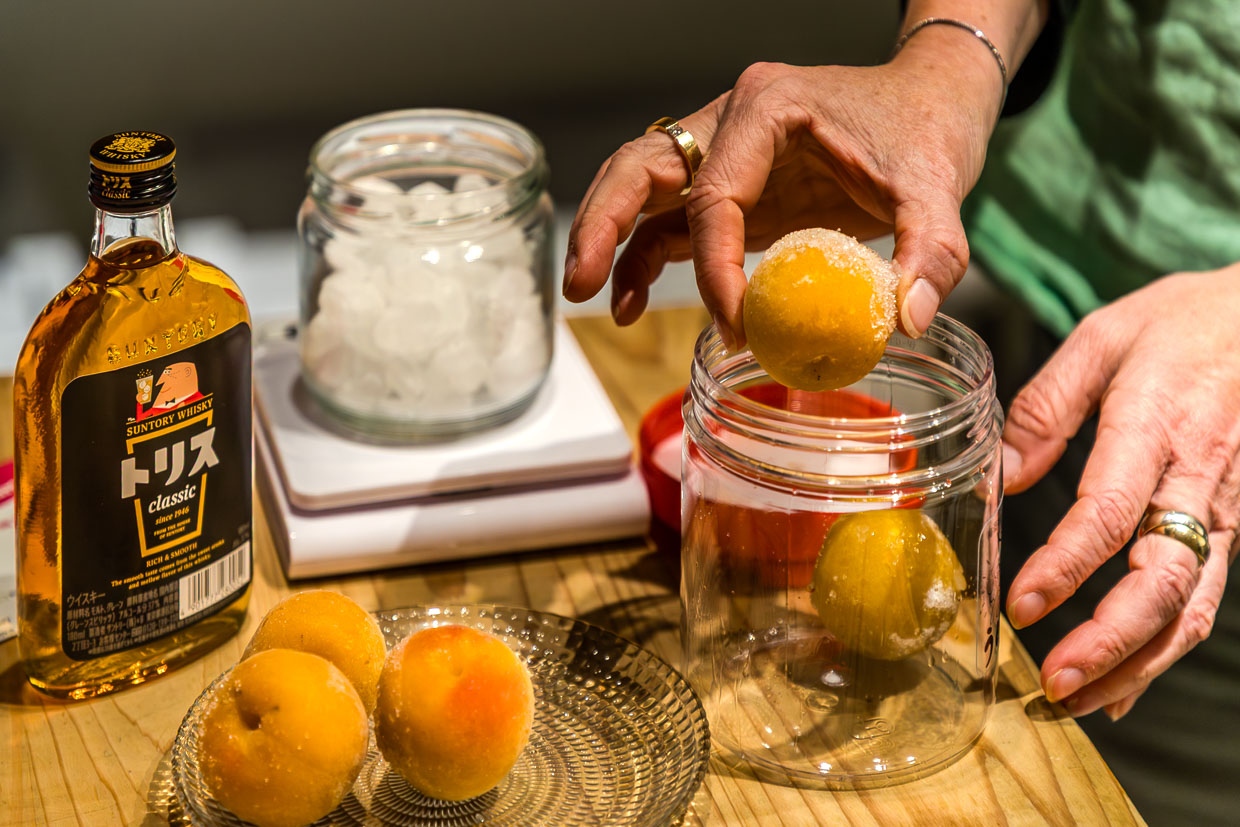
It’s October and the plum harvest is long over. The fruit for the workshop is therefore frozen. Sako shows me the differences: unripe, greenish hard fruits and fully ripe, yellow ones that would be very fragrant if they weren’t frozen. For my Umeshu, we choose the riper fruit to achieve more depth and a rounder sweetness. Only flawless fruit without bruises goes into the jar. I then fill the container with clear rock sugar, which ensures a clean sweetness, as Sako emphasises. Finally, I pour whisky over it – a round, not too smoky one, so that the flavour of the ume is not overpowered by peat and smoke notes. I slowly cover the fruit and sugar with whisky, but leave enough space at the top.
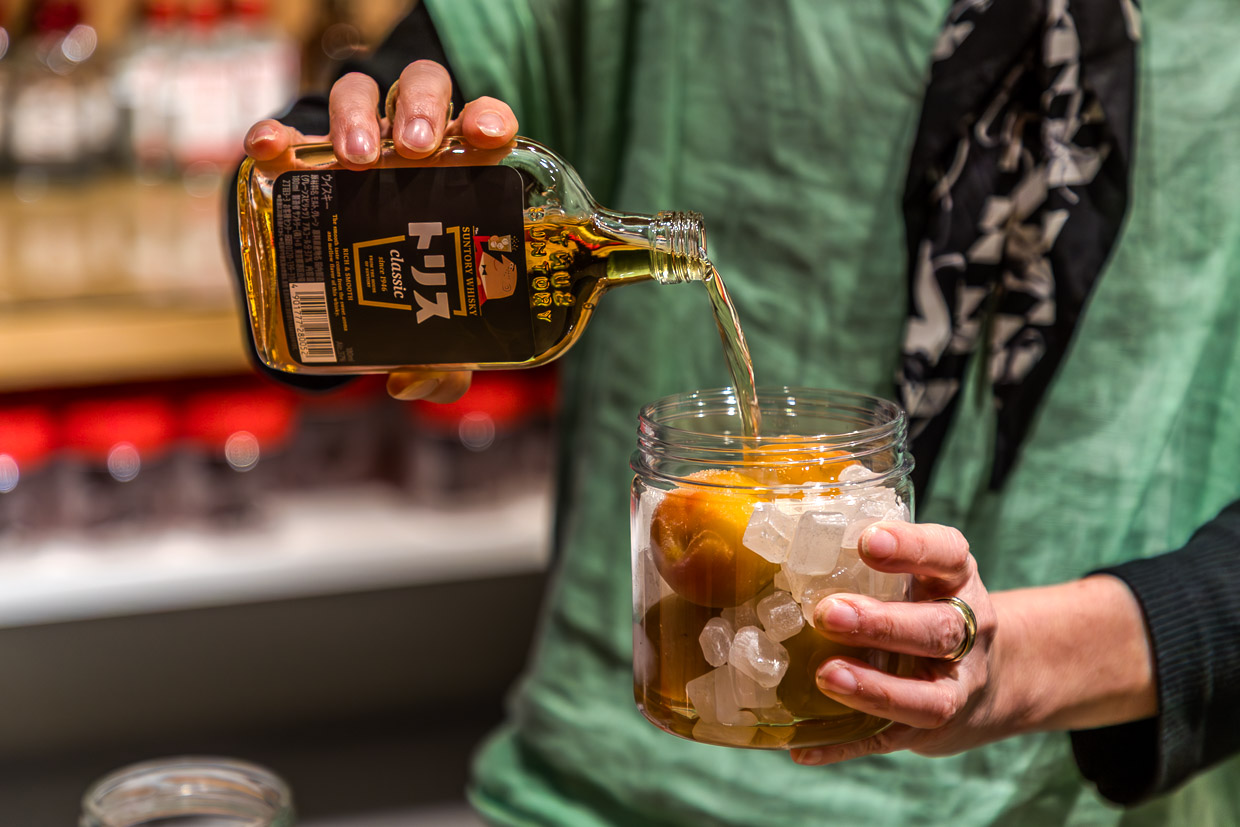
Now it’s time to wait – and that presents me with a problem. My umeshu will be ready to drink in ten weeks’ time at the earliest, for the Oshōgatsu New Year festival. But the container is unsuitable for a long-haul flight. I decide to leave the liqueur to my friend Noriko . It will be in good hands there, and I will find out whether my workshop umeshu can compete with the traditional plum liqueurs from Tanabe. You can’t buy umeshu in the bar itself, but the local shops are prepared for souvenir purchases.
The research trip was supported by Visit Wakayama