
The Mirabell Gardens in the heart of Salzburg hold a magical appeal for fans of the cult film *The Sound of Music *. Here, people from all over the world run up the steps by the unicorn statue – just as Julie Andrews did with the Trapp children in 1965. The musical, which won five Oscars, became a global hit in Hollywood.
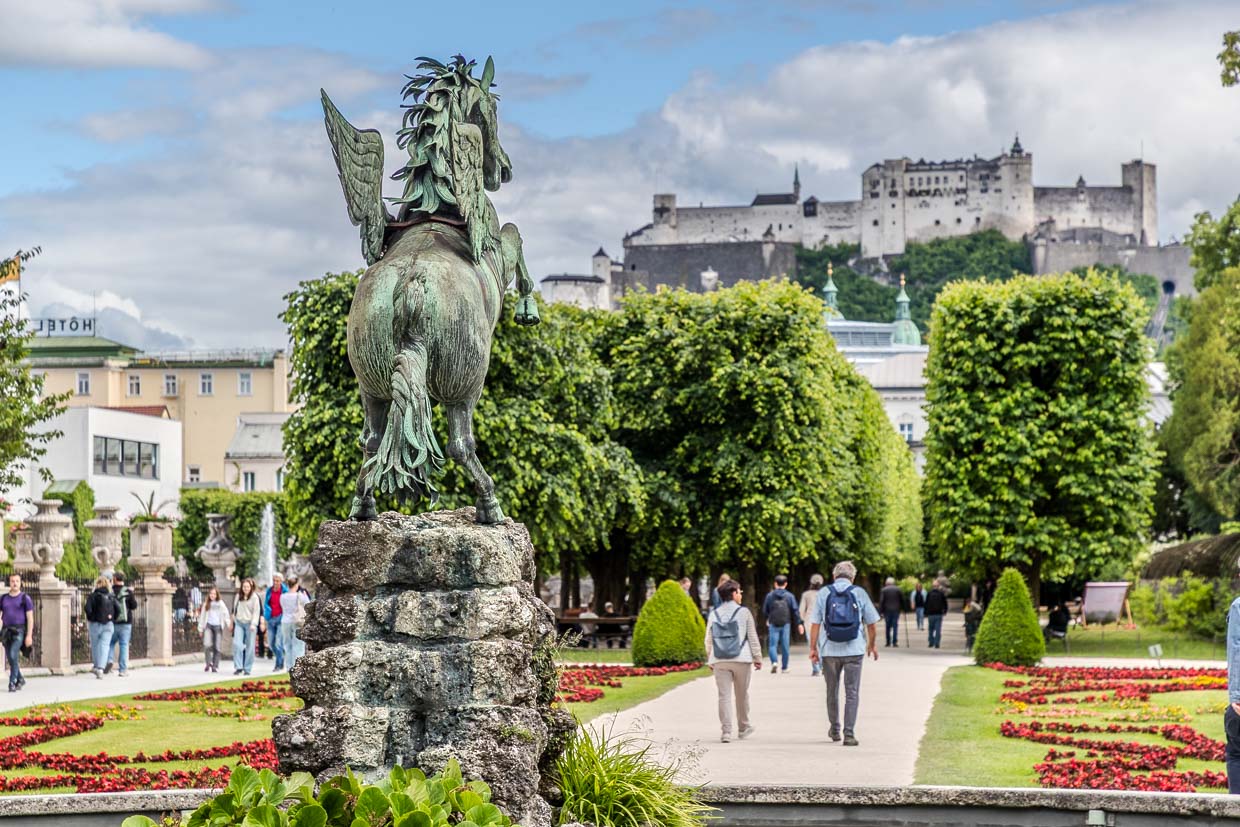
But true fans want more than just to stroll through the Mirabell Gardens and hum ‘Do-Re-Mi’. They want to see the filming locations. The Original Sound of Music Tour makes it possible: a four-hour drive to the Salzkammergut, four hours full of emotion and singing at locations that are part of many people’s lives, even if they’ve never been there before. The global hype, passed down from generation to generation, remains a mystery to us German speakers. Time to explore the phenomenon. We hop on board, with little prior knowledge and having seen the film just once.
The bus sets off early in the morning. Tour guide Stephanie Hinterbuchner takes the microphone. The English and music student welcomes her group in fluent English. A combination of subjects that could hardly be more fitting for this holiday job.
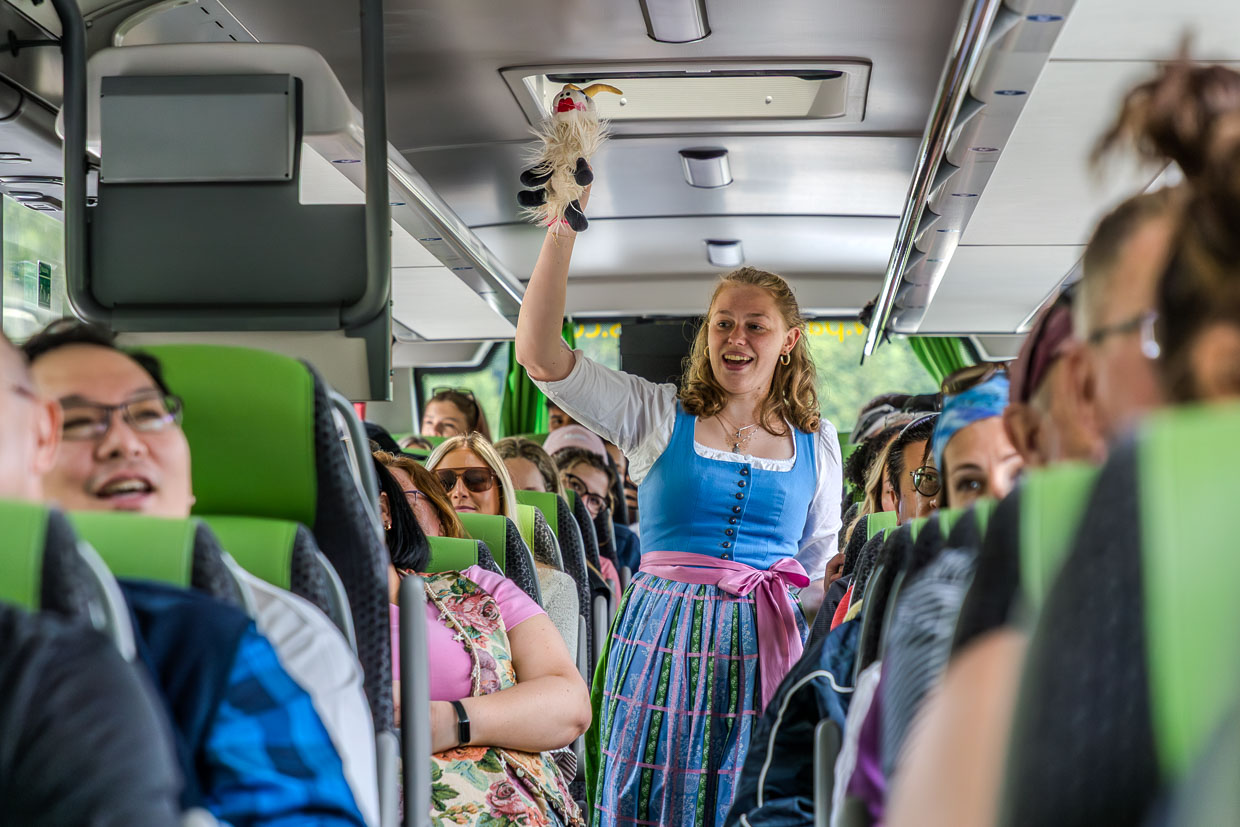
Do-Re-Mi for advanced learners
Stephanie doesn’t start with Hollywood, but with Salzburg. She talks about the old word for salt, ‘Hall’, and the River Salzach, which once brought wealth to the city. Since the Middle Ages, the river has carried the ‘white gold’ all the way to Bavaria. The prince-archbishops used it to finance their churches and palaces. That Baroque splendour through which the group is about to stroll, as yet without the musical’s filter.
The bus drives past the Hotel Sacher, where Julie Andrews stayed whilst filming. Shortly afterwards, it crosses the little Mozart Bridge, which Maria walks across with the children in the film. The passengers have long since started humming the song that goes with it, ‘Do-Re-Mi’. Stephanie also offers a glimpse behind the scenes: in the film, Maria and the children walk across the picturesque bridge and, seconds later, find themselves in a meadow with a panoramic view of the mountains. The real picnic spot, however, is forty kilometres away. That’s Hollywood for you.
From novice nun to film legend
Time and again, the tour guide compares the Hollywood film with the true story of the Trapp family. All the main characters really did exist – one of the reasons for the worldwide enthusiasm. The real Maria, Stephanie explains, was born in 1905 during a train journey. Perhaps an early indication of her eventful life: a novice in Salzburg, a governess for a widowed baron with seven children, a wife, mother of three more Trapp children, and, following the ‘Anschluss’ of Austria in 1938, a refugee. The family fled on foot across the mountains to Italy and later emigrated to the USA.

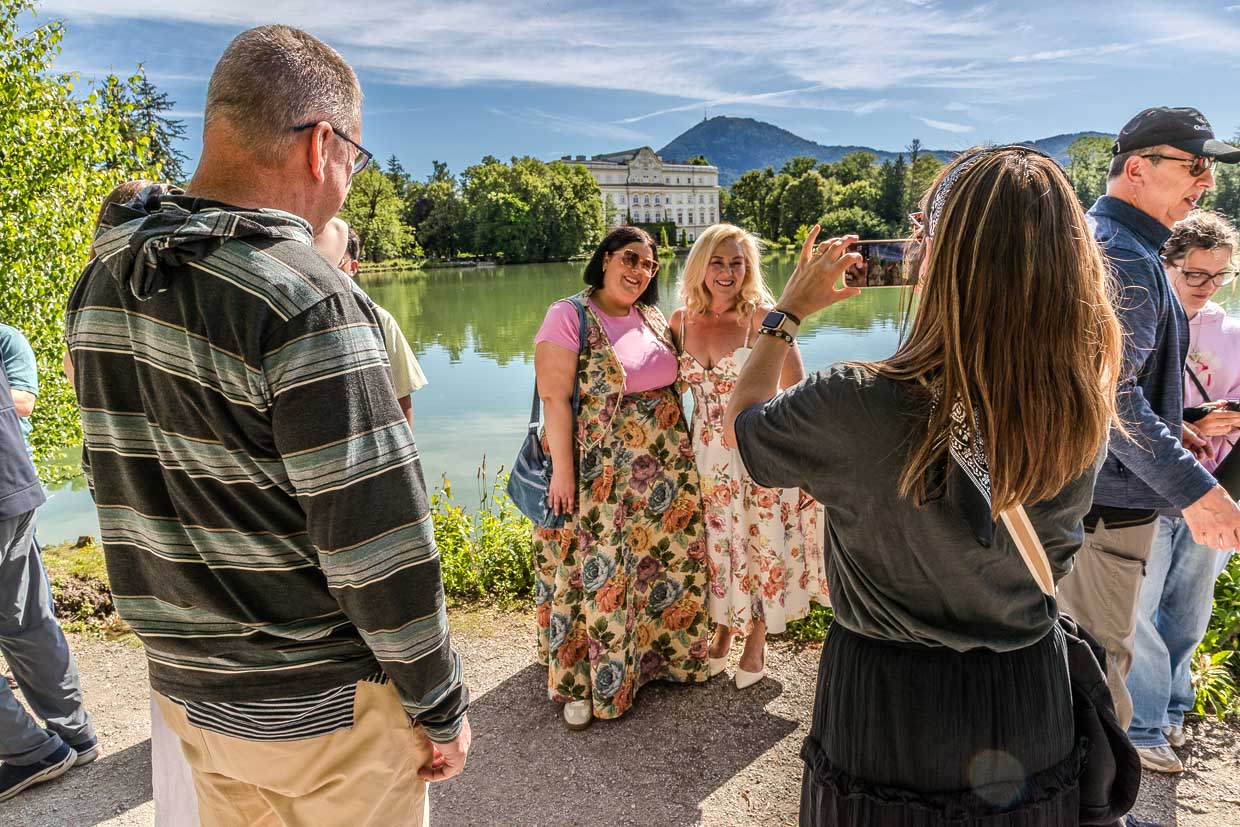
The bus makes its first stop at Leopoldskron Castle and the pond of the same name, now a hotel. From the opposite bank, you can see the view that served as the rear of the Trapp estate in the film. The group walks down to the lake and looks at the palace from a distance. That’s enough, as the focus is on the scene by the stone steps: the children and Maria capsize in the boat, whilst the Baron watches on with a stern look. A war of words ensues between the couple who will later fall in love. Director Robert Wise, Stephanie explains, found the castle too ostentatious for an impoverished aristocrat. That is why he used only the garden setting, not the building itself.
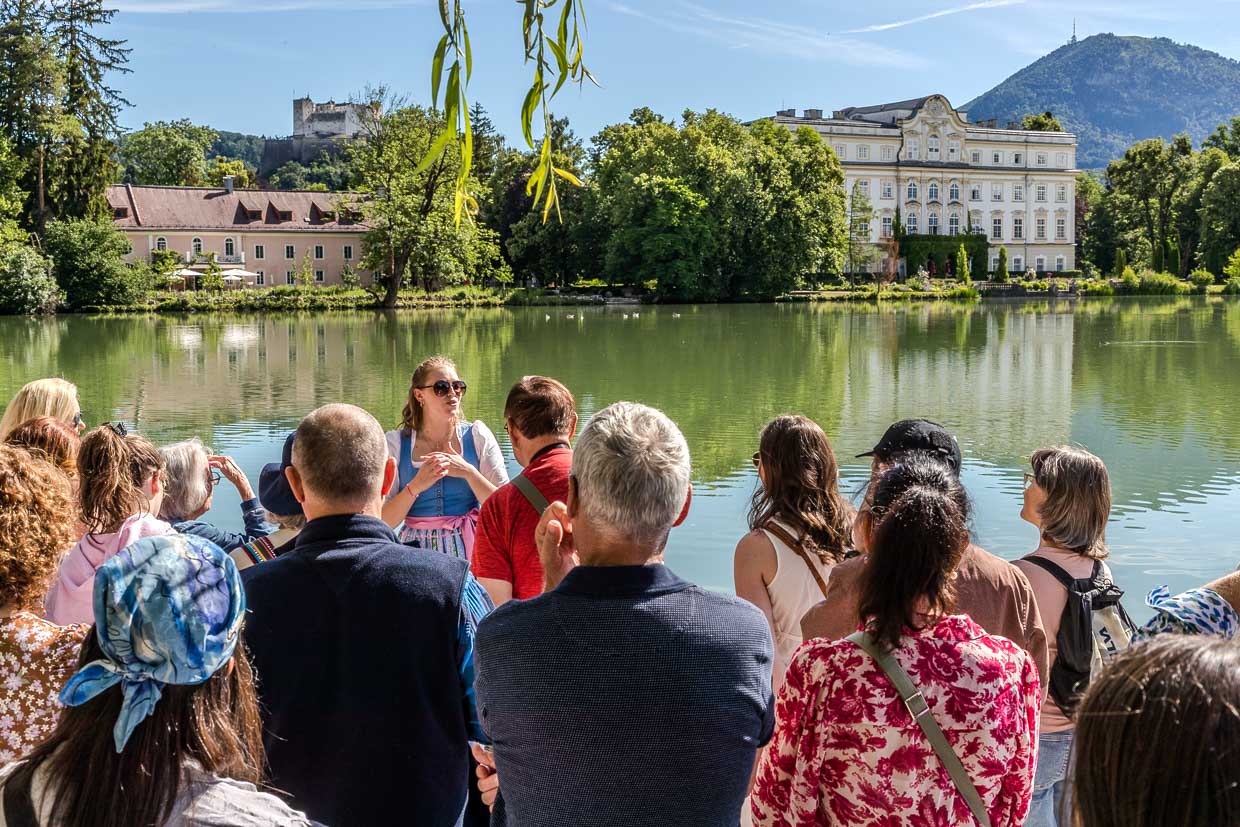
Stephanie has mastered the art of keeping an eye on the group whilst walking backwards and continuing her narrative. She analyses film scenes, provides background information and weaves in anecdotes from the filming. This is an advantage rooted in the history of the coach company: founder Stefan Herzl personally drove the film crew to the various filming locations in 1964. The group learns, for instance, that the young actress playing Gretl developed a lifelong fear of water after falling out of the boat. Or that Christopher Plummer and Julie Andrews couldn’t stand each other. During the kissing scene, their mutual dislike was so palpable that Wise bathed them in dim light.
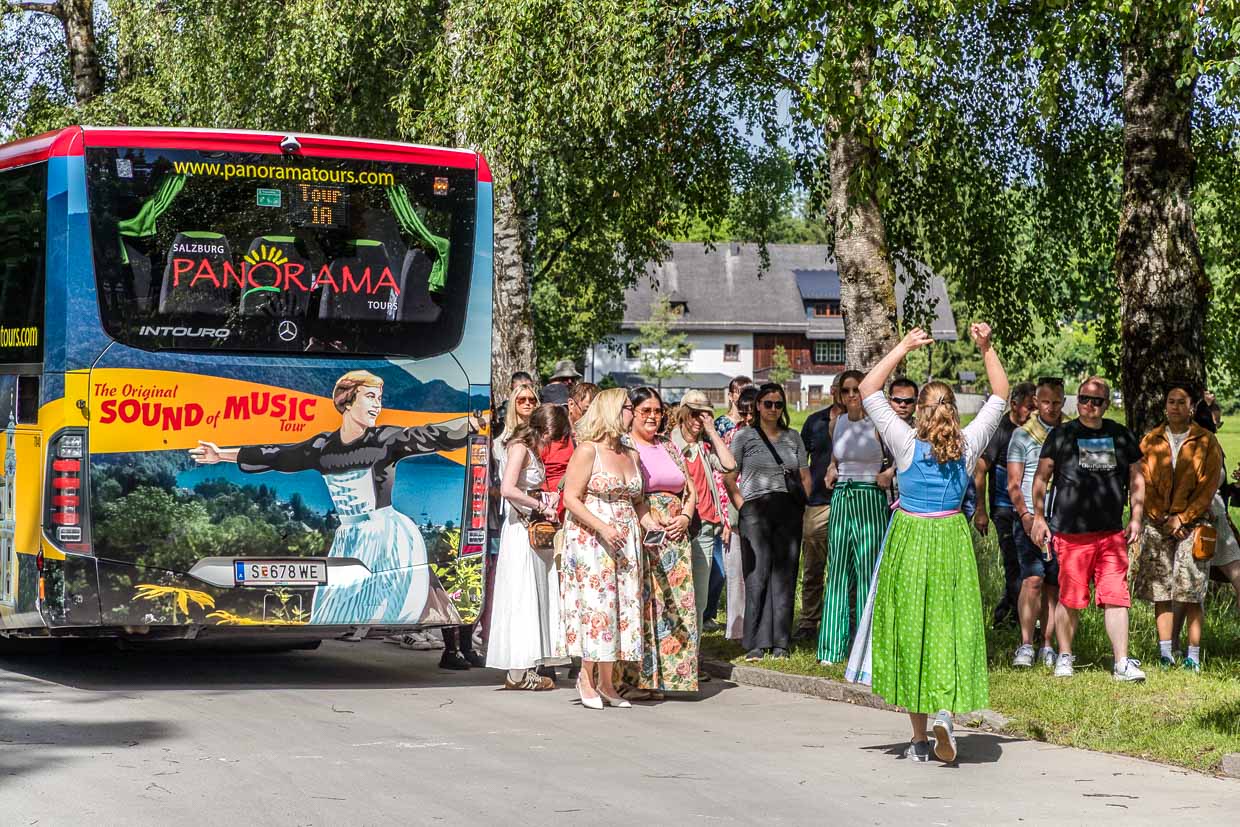
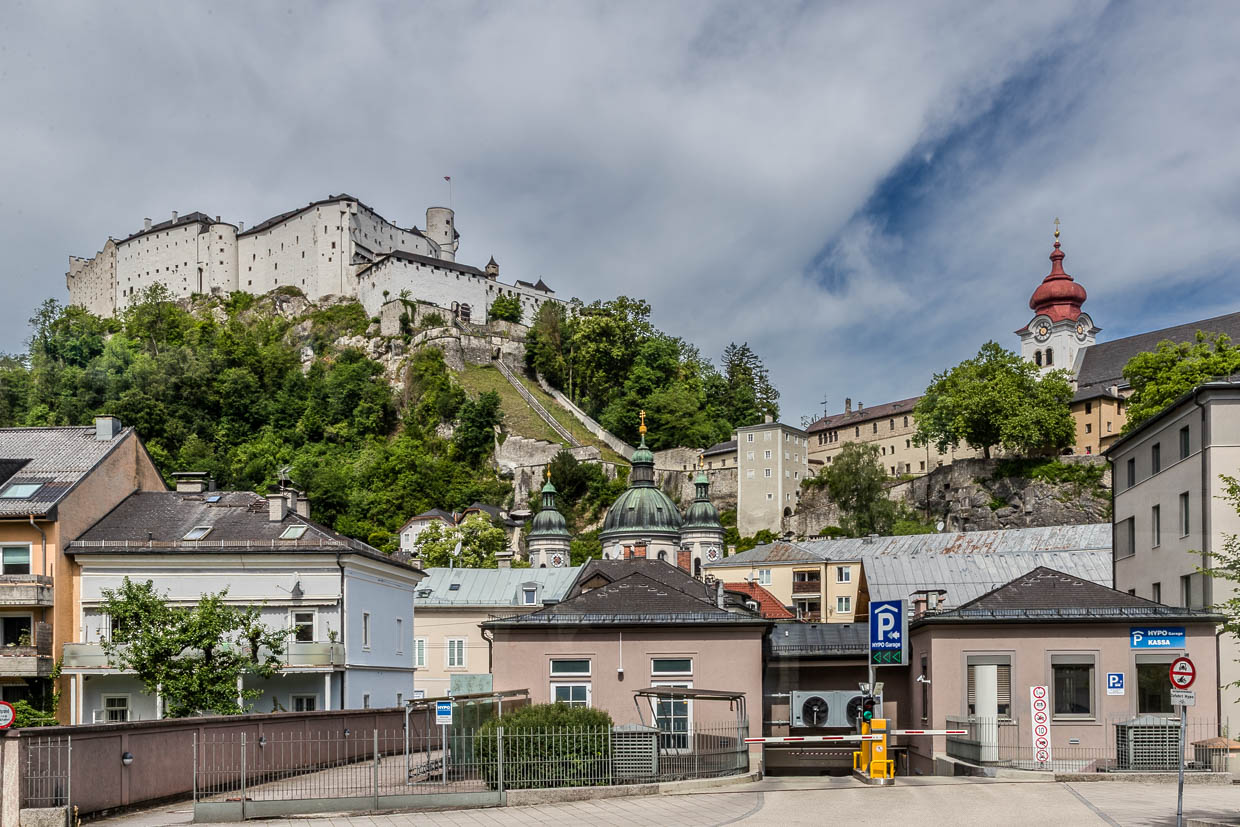
The tour continues past Nonnberg Abbey, where the real Maria was a novice, to Hellbrunn Palace. In the park stands the original glass pavilion, the gazebo, the setting for the ‘Sixteen Going on Seventeen’ scene. The song from the film plays on the bus. The pavilion was initially open to the public, Stephanie explains, until too many fans of the sixteen-year-old Lisl started re-enacting the dance, jumping from stone bench to stone bench and injuring themselves. Since then, the doors have remained locked. It remains a popular photo spot nonetheless.
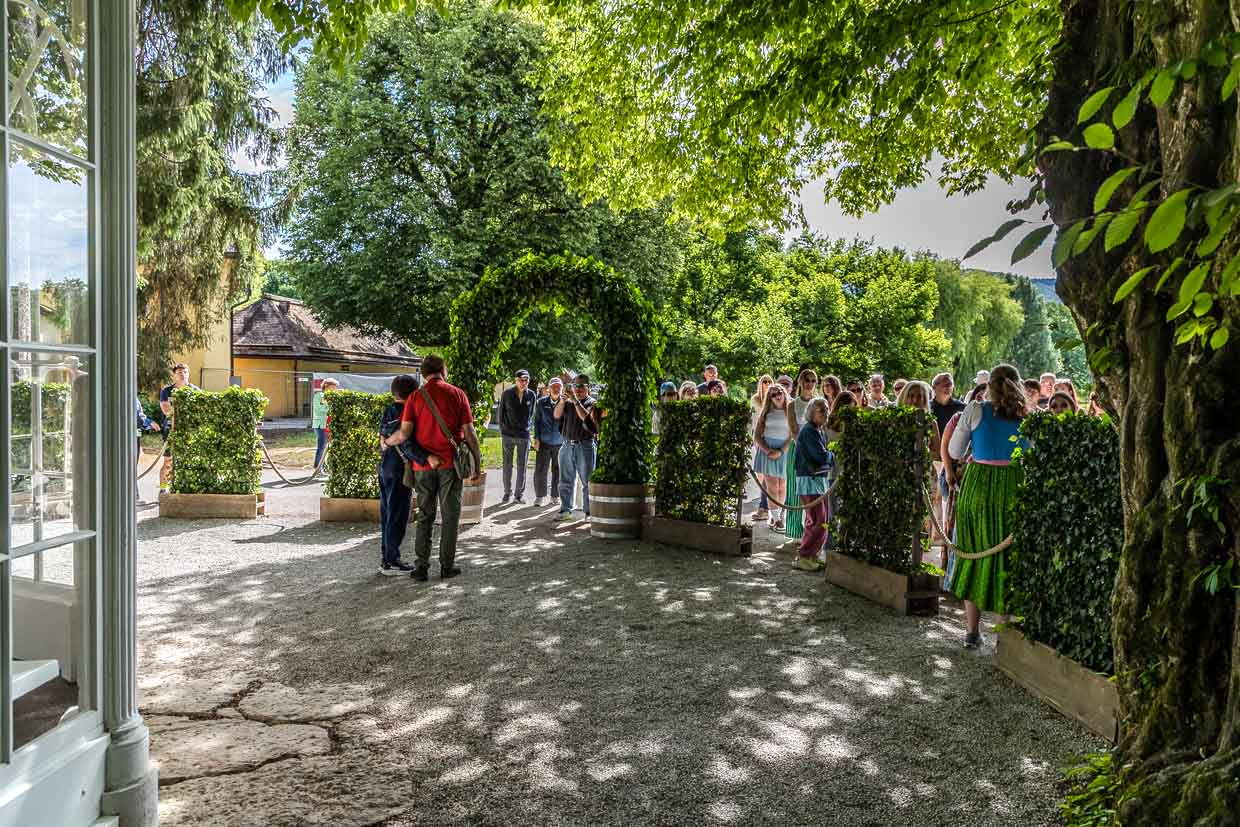
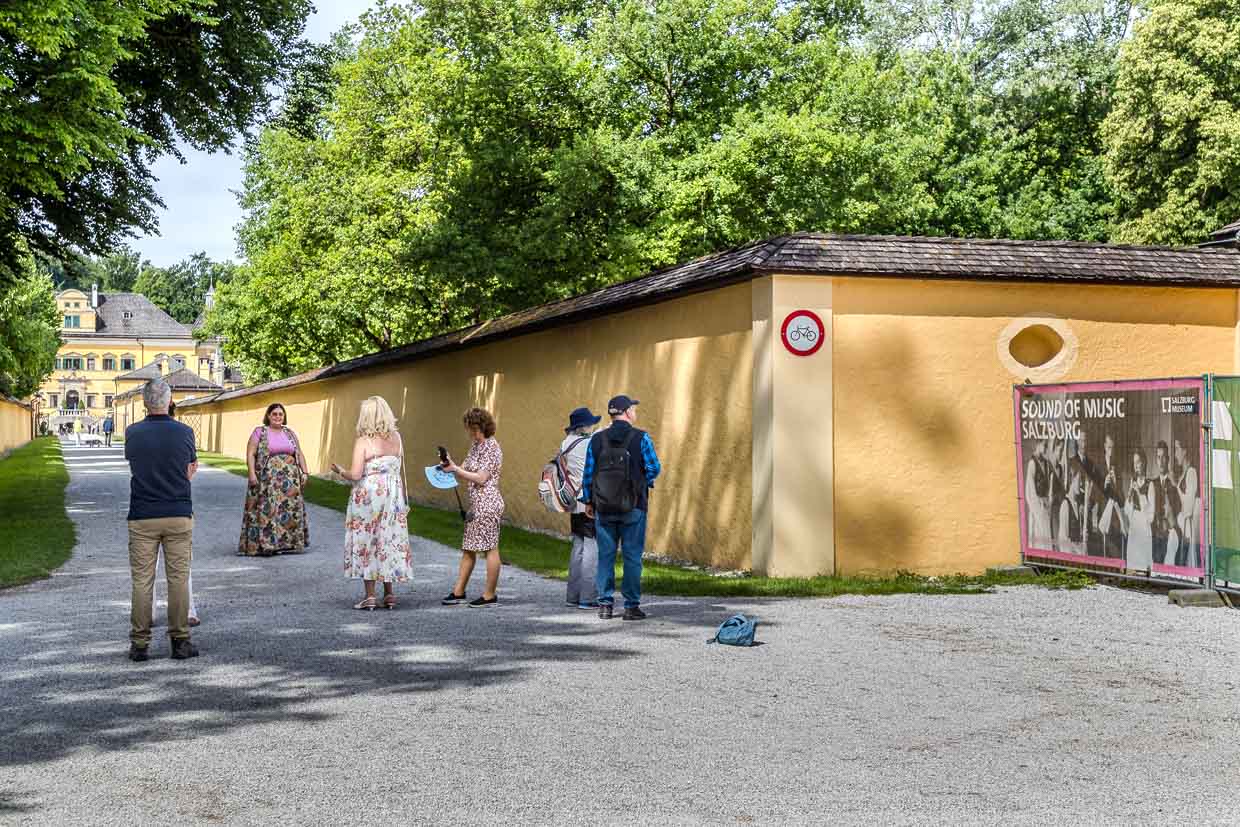
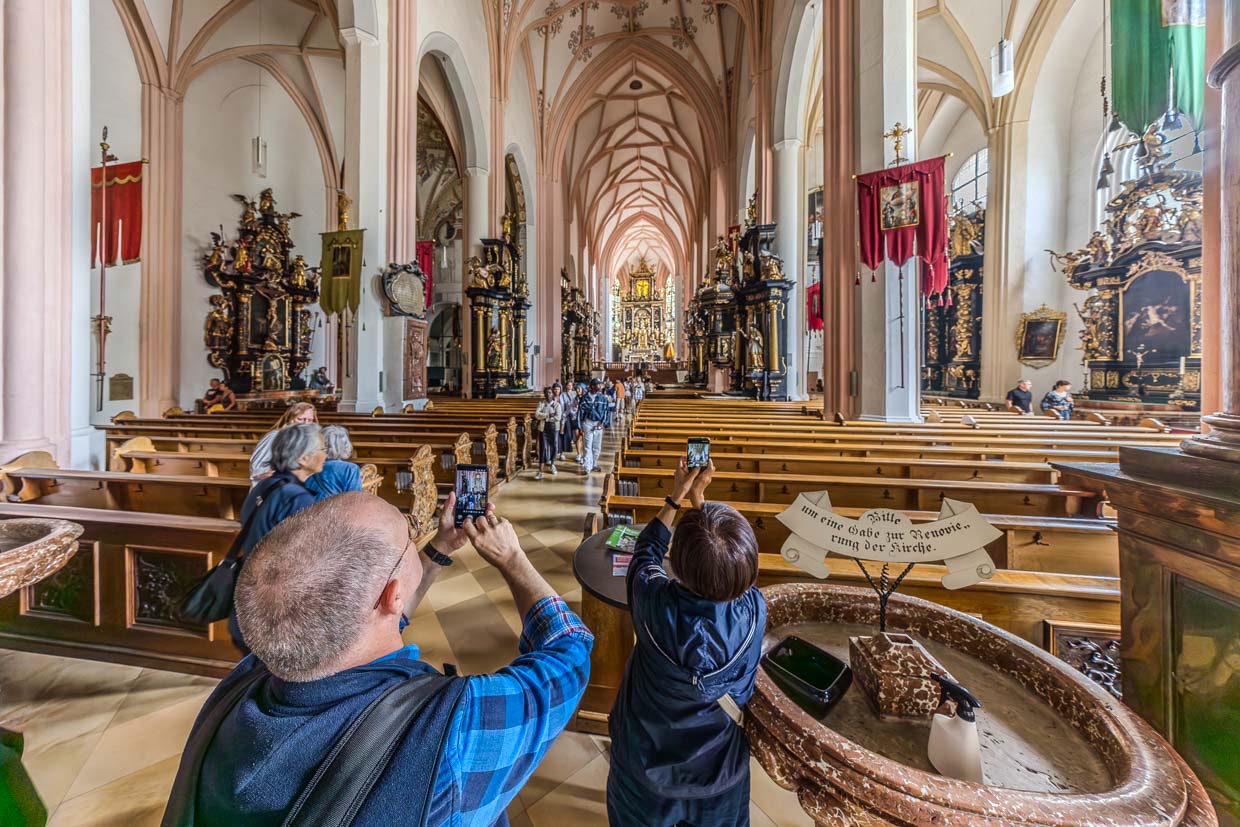
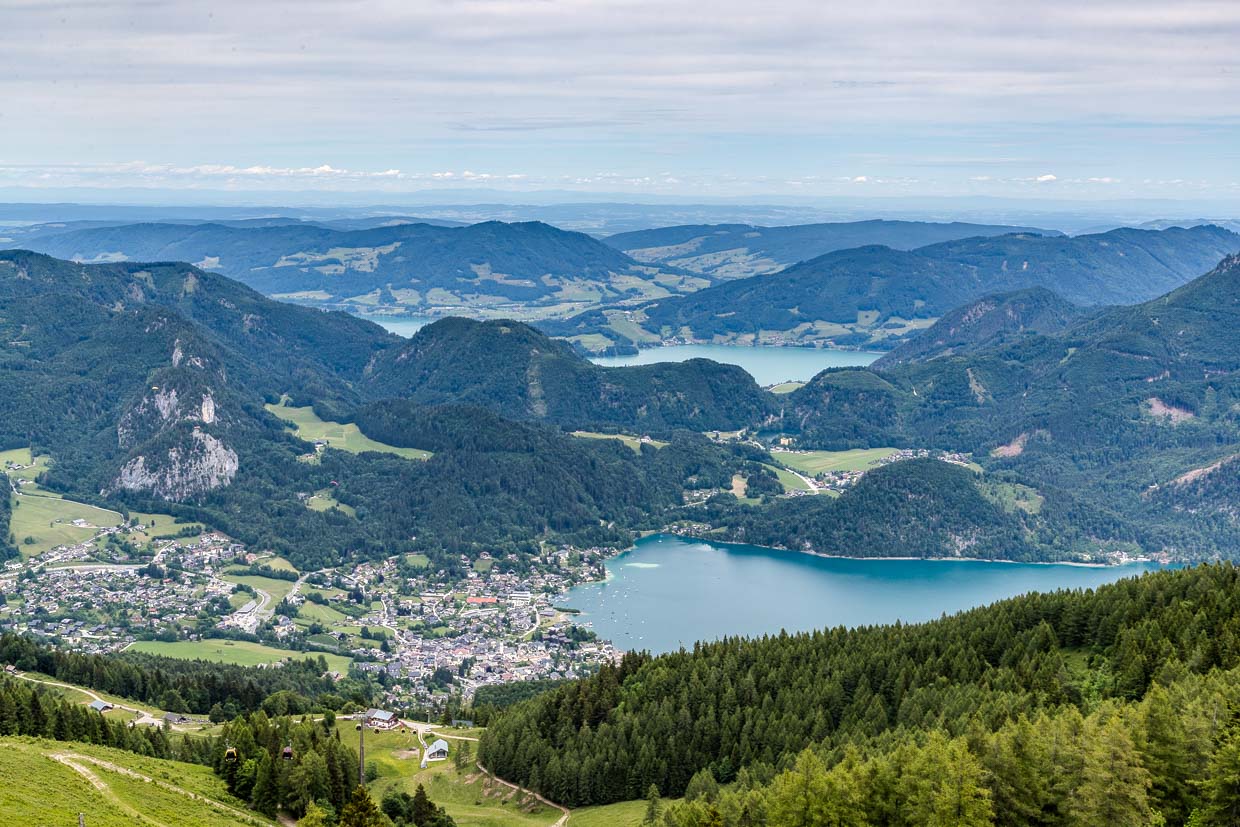
From September 2026, a dedicated ‘Sound of Music’ museum in Hellbrunn will explore this global phenomenon and the historical truth behind it. Just as Stephanie explains during the journey. There’s plenty of time for this on the way to the Salzkammergut. Passing through the lakeside landscape around Lake Fuschl, the route heads towards Mondsee, with a photo stop above St Gilgen. The highlight in Mondsee: the collegiate church, St Michael’s Basilica, where Maria and the Baron von Trapp’s wedding scene in the film takes place. After a leisurely stay in the town, the group returns to Salzburg.
Why is it that hardly anyone in this country knows this film?
Anyone in Salzburg who orders “schnitzel with noodles” or is determined to eat “apple strudel” has, in all likelihood, seen *The Sound of Music*. And is probably from the USA, Canada, Japan or India. In America, the film is part of popular general knowledge. It’s as much a given as *Little Lord Fauntleroy* is at Christmas time in Germany. In Austria, Germany and Switzerland, however, it remains virtually unknown to this day. The German title *Meine Lieder – meine Träume* flopped at the box office in 1965. The local films *Die Trapp-Familie* and *Die Trapp-Familie in Amerika* were more successful. For almost fifty years, Austria, too, failed to recognise the tourist potential of its own filming locations. It wasn’t until around 2015 that this changed. The catalyst was the fiftieth anniversary and a much-acclaimed medley by Lady Gaga at the Oscars. Since then, film tourism has transformed from a niche market into a major source of revenue. Salzburg has become a globally sought-after destination for film fans.
Global success with a blind spot
The paradox is particularly evident on the bus. On board are guests from the USA, Canada, the UK, Australia, New Zealand, Singapore, Finland, Sweden, Poland, Iran and Israel. We seem to be the only German speakers. We feel like outsiders.
A mother and her daughter – born in Israel and now living in London – tell me: for them, the film is a feel-good film. You watch it when you want to forget everything around you. It’s like meeting an old friend again. The daughter, who lives in the Netherlands, confirms this. Young people there love the musical too.
A young Finnish woman sings along to all the lyrics confidently and with palpable passion. A woman from Iran, who now lives in Germany, has known the film since her childhood. Her father studied in Germany in the 1970s. Back in Iran, he used the film to bring the Alps closer to his family. ‘The Sound of Music’ is also available dubbed into Persian. For the daughter, the trip to Salzburg is therefore also a childhood memory of her father.
Two Australian women, a mother and daughter, have seen the film dozens of times. Not for any particular occasion, but whenever they fancy a feel-good film. In the US and Canada, “The Sound of Music” is traditionally shown around Christmas and New Year. A TV channel there reliably shows it every year. And a Swedish woman says she used to watch it often as a child. Always in the original English version, of course.
A successful blend of Hollywood and contemporary history
Our initial scepticism – as we felt like outsiders amongst a crowd of ‘Sound of Music’ connoisseurs – quickly vanished. The tour was a pleasant surprise. However, it’s only really worth taking part if you’ve seen the film at least once. It won’t make you an expert on the lyrics, but it does help you follow the storyline. The film’s plot remains simple, yet the structure of the bus tour is compelling: the catchy tunes from the film play precisely as the corresponding scenery passes by. Sightseeing and a history lesson are skilfully combined. This excursion shows why millions of people worldwide dream of Salzburg, whilst the people of Salzburg themselves were long unaware of this.
Escape drama invented, resistance documented
The light-hearted musical touches upon a kernel of truth, which Stephanie mentions during the journey: Georg von Trapp did indeed oppose the Nazi regime. Following the annexation of Austria in 1938, the German Navy offered him command of a submarine, which the former Austro-Hungarian naval officer and successful submarine commander of the First World War turned down. He also declined an invitation to perform with his family choir at Hitler’s birthday celebrations in Munich. Unlike in the film, the family did not flee hastily on foot over the mountains. Instead, in August 1938, they used a concert tour to Italy as an opportunity to leave the country for good, with dozens of suitcases in their luggage. From there, they emigrated to the USA. Hollywood turned it into a drama of escape. The true story unfolded more quietly, but no less resolutely.
New: the Trapp Family Mini Museum
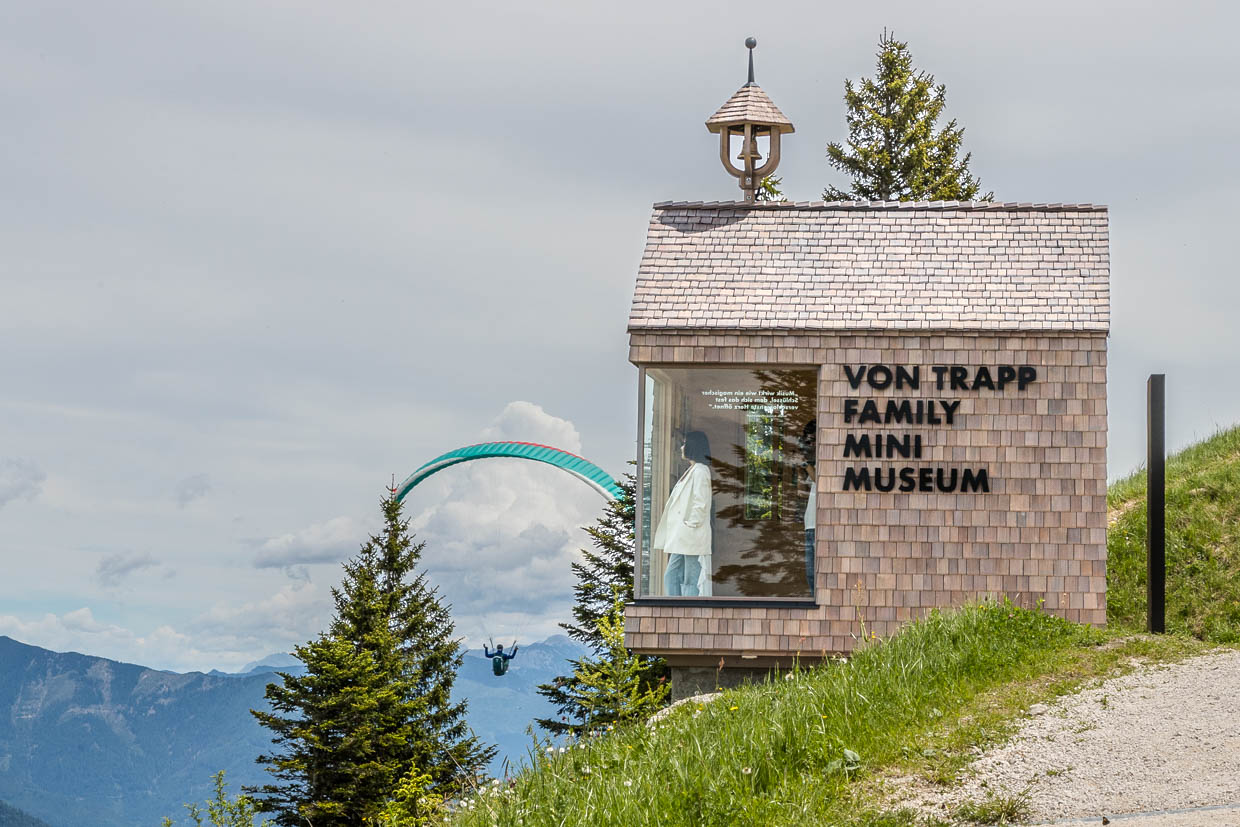
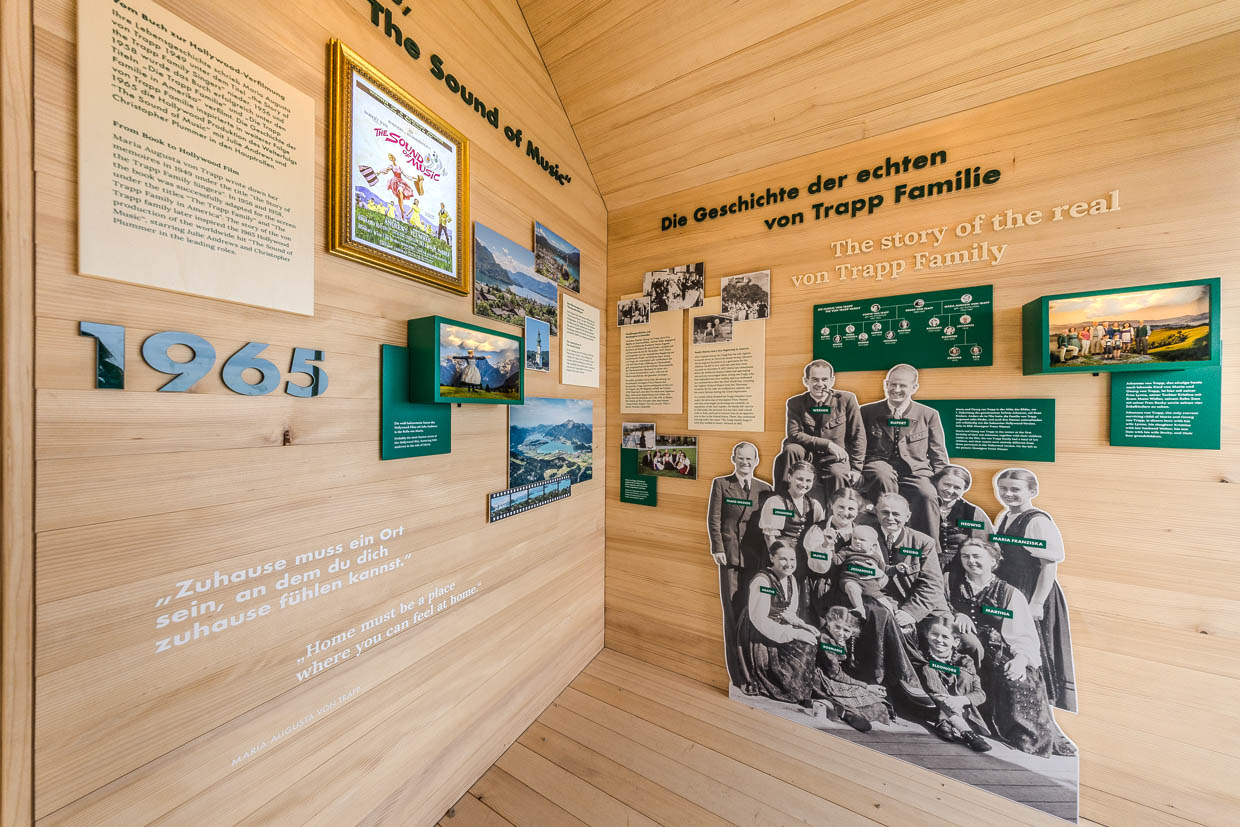
Anyone wishing to get to know the real Trapp family better will find a place dedicated to them: the Von Trapp Family Mini Museum at the top station of the Zwölferhornbahn in St. Gilgen, at 1,522 metres, with an unobstructed view of Lake Wolfgang. It opened in May 2026, with Kristina von Trapp, a granddaughter of Maria and Georg, attending as a guest of honour. Within a small space, the museum chronicles the career that ends with an escape in the film, but in reality was only just beginning. As early as 1936, Maria founded a chamber choir in Salzburg, with Father Franz Wasner serving as its musical director. A year later, the ensemble won first prize at the Salzburg Folk Singers’ Competition. After arriving in New York in September 1938, the Trapps spent eight months touring across the USA, initially with limited success. It was only when the Trapp Family Singers switched their repertoire from sacred choral music to English-language folk songs and established a regular Christmas concert at New York’s Town Hall that their breakthrough came. Over the next one and a half decades, this was followed by tours of South America, Australia and New Zealand. In 1950, they performed at the Salzburg Festival. It marked a return to a stage that had once become too small for the family. By the time the choir disbanded in 1956, they had given around two thousand concerts.
Trapp Family Lodge
Family remains central to the Trapps’ lives to this day. Their home became a farm in Stowe, Vermont, which they bought in 1942. The farmhouse, which the Trapps named Cor Unum, was converted into a 27-room guesthouse in 1950; following a fire in 1980, it became a 96-room Alpine lodge set on more than a thousand hectares of land. Johannes von Trapp, the youngest and last surviving child of Maria and Georg, born in 1939 shortly after their arrival in America, still lives there today. The estate is now run by the next generation: his daughter Kristina and her husband. To this day, the Trapp Family Lodge & Resort offers American guests a taste of the Salzburg region.
Stories from Salzburg
Several times a week, the Baroque Hall hosts the Mozart Dinner at St Peter’s Stiftskuliarium, which is very popular with tourists and always concludes with the classic dessert, Salzburger Nockerln. Find out more about this and other specialities in the feature ‘Sweet Salzburg’. The article ‘A City Walk with Mozart’ reveals the mark Mozart left on his home city of Salzburg. The Salzburger DomQuartier is breaking new ground and invites visitors to the state rooms of the Residenz for a yoga flow session accompanied by live music by Mozart. A visit to the Augustiner Bräu for a drink and a cool Märzen under the old chestnut trees or in the historic Stockhammer Hall should also be part of any tour of Salzburg.
This research was supported by SalzburgerLand