
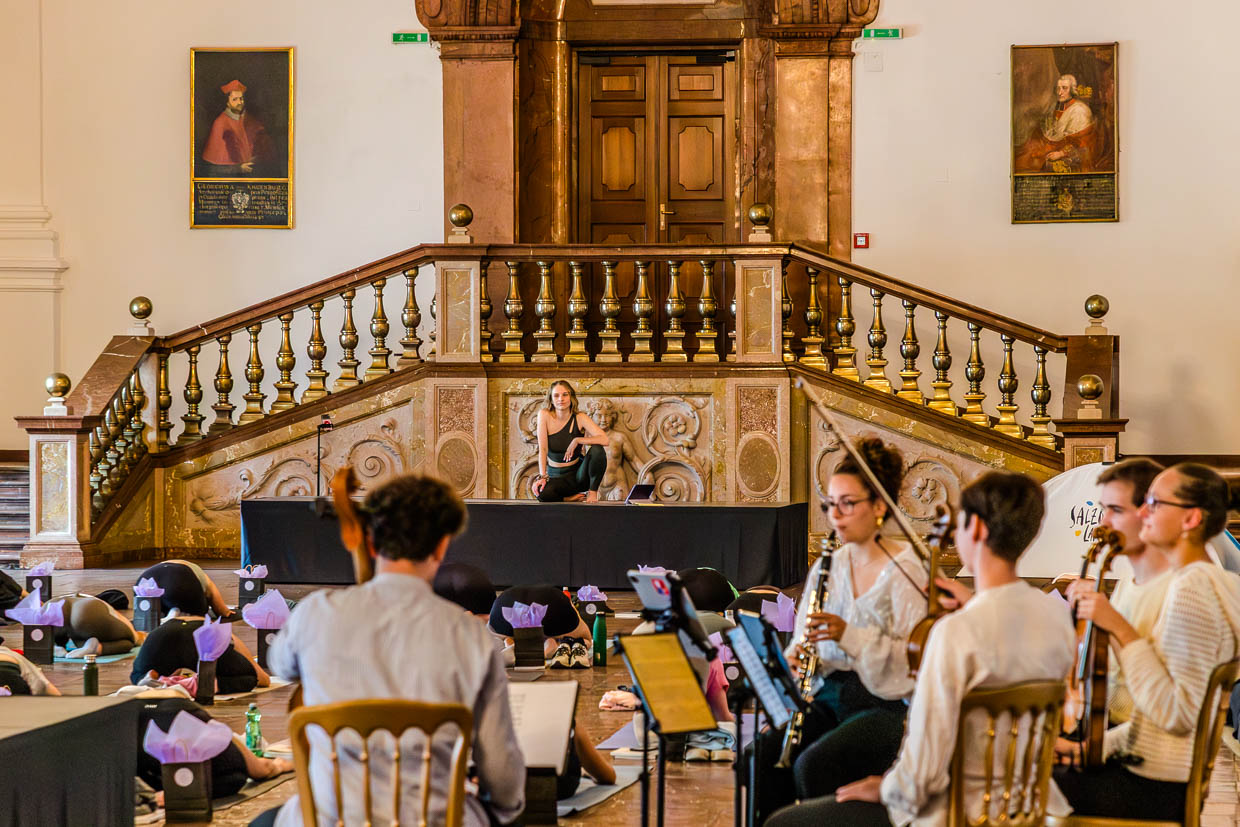
A Sunday morning in early June. The first rays of sunshine stream through the tall windows of the Carabinieri Hall in the Salzburg Residenz. Around 90 people, mostly women, are lying on mats amongst sparkling chandeliers and stone tiles with a subdued sheen. In the centre of the ceremonial hall, the Bella Musica ensemble from the Mozarteum University is tuning their instruments. A yoga session is about to begin, accompanied by music that was composed right here more than 250 years ago.
Salzburg Divertimenti
This unusual format is called Pop-Up Yoga – Mozart Edition. It forms part of the Mozart 270 programme, with which Salzburg 2026 is celebrating the 270th birthday of Wolfgang Amadeus Mozart. The figure 270 seems a bit contrived; after all, the city has always honoured its greatest star with grand gestures. Yet the new format brings a sense of light-heartedness and good cheer: the string players pluck the first delicate notes, the participants murmur expectantly, and the two yoga instructors take their places on their platforms. Over the next 75 minutes, it is not just the body that is at work; the space and the music enhance the experience. With skilful dramatic flair, yoga instructor Olivia Schweiger makes use of the deep toll of the bells at Salzburg Cathedral to begin with. Only then does a finely tuned mix of Pilates and yoga exercises set to the music of Mozart’s Salzburg Divertimenti begin.
Ninety mats, one chamber ensemble
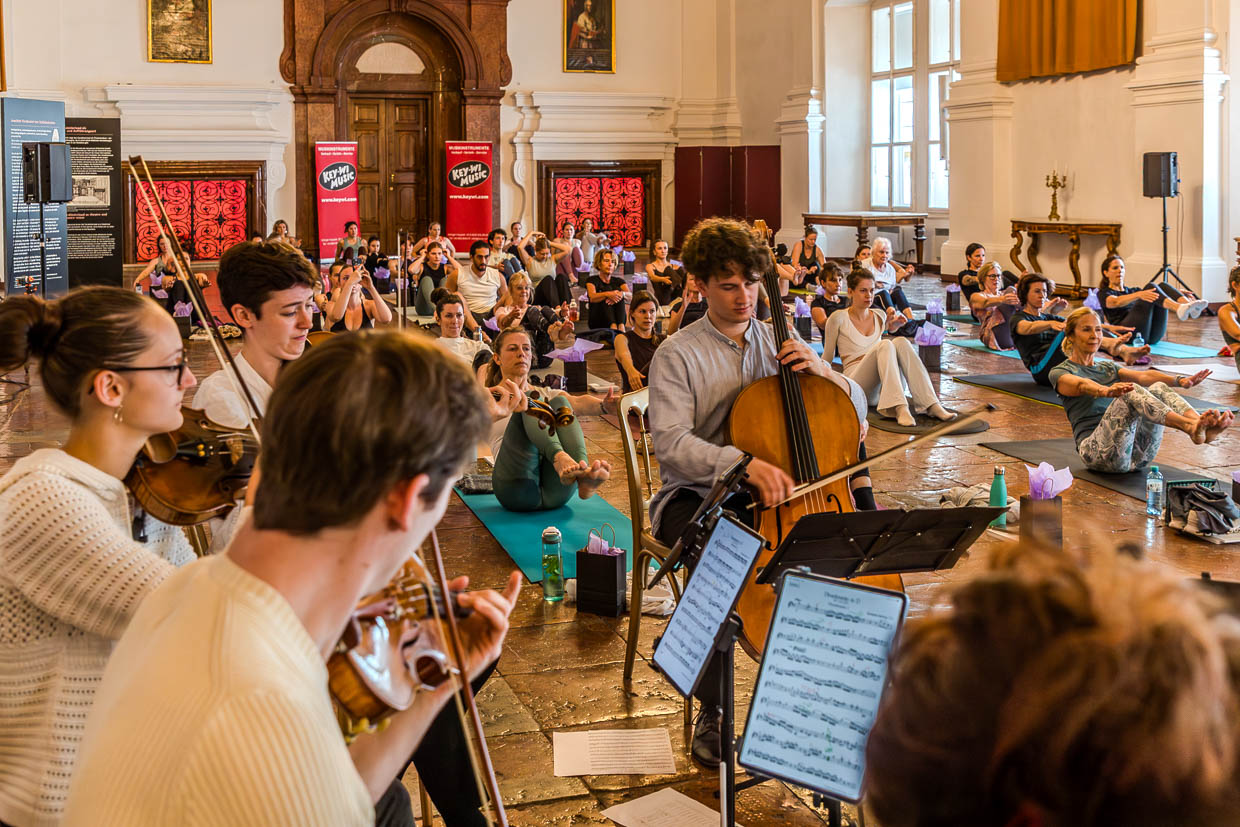
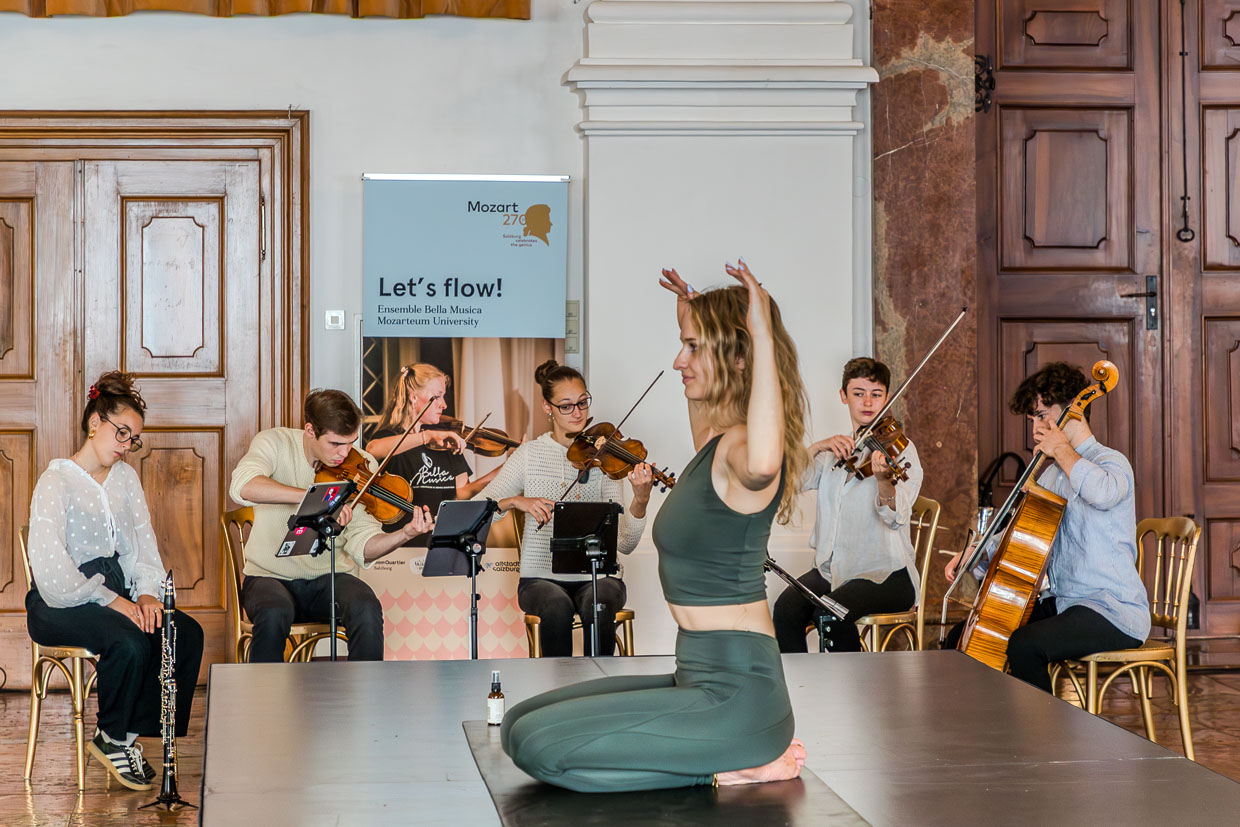
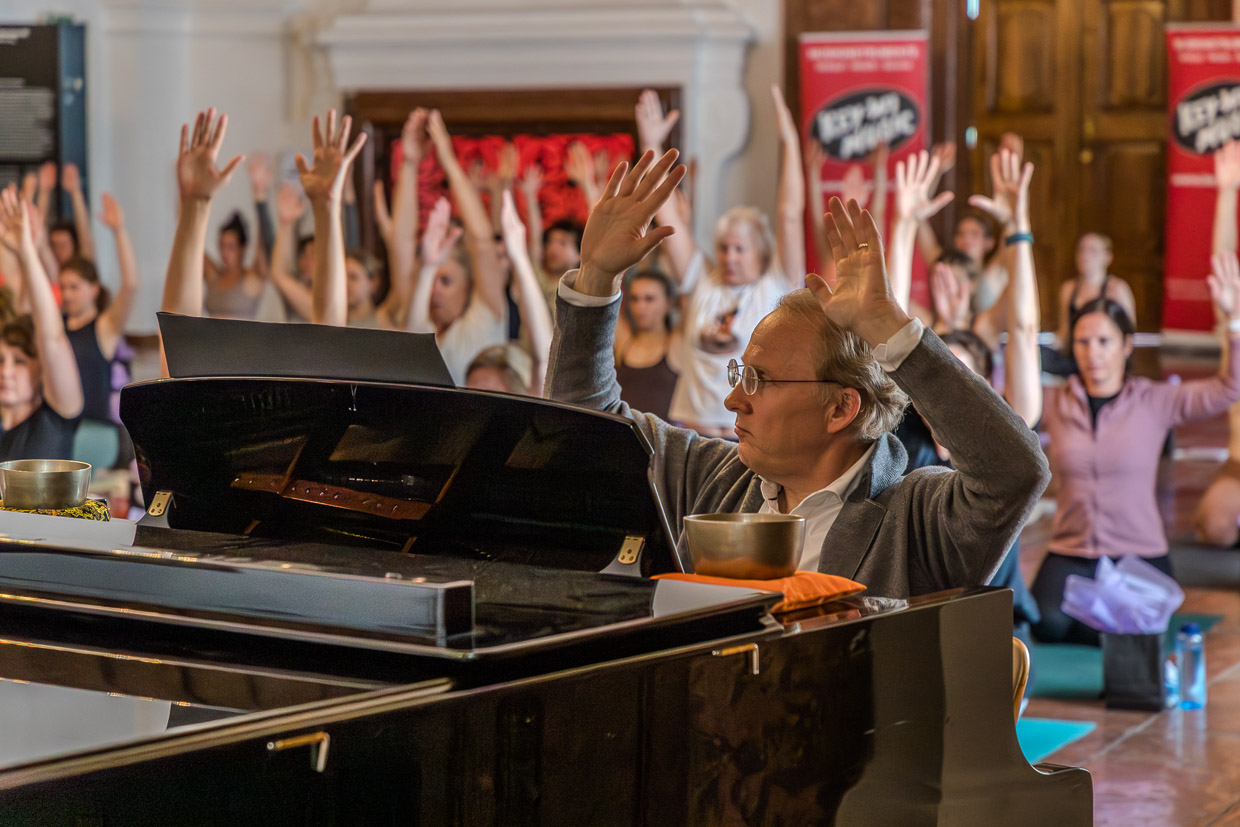
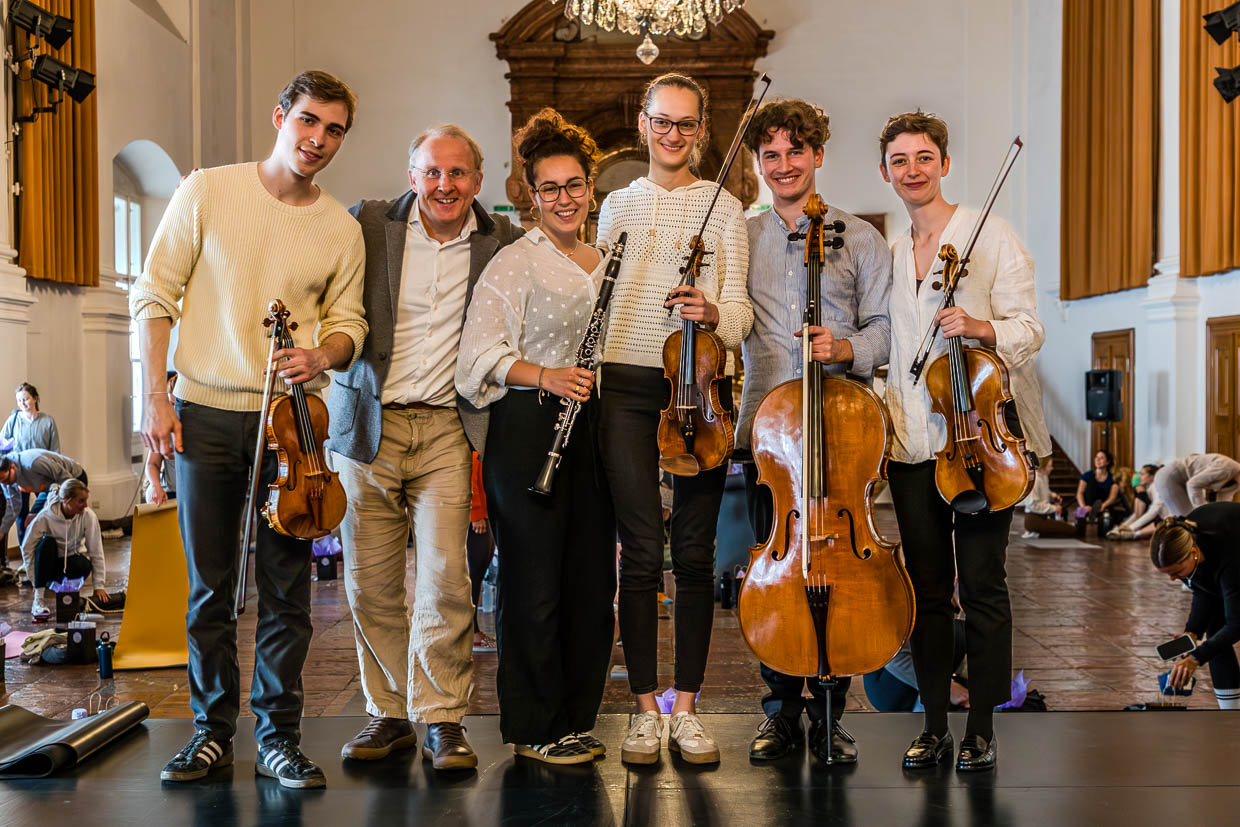
Ninety people on yoga mats – for a single hour. An impressive number by the standards of typical pop-up yoga sessions. But the Prunkraum offers plenty of space and excellent acoustics, explains Julia Schamanajew of Popup-Yoga Salzburg. Interest in this special Mozart edition has been enormous. Schamanajew leads the session from a podium, whilst the student ensemble, conducted by Stefan David Hummel, plays live: clarinet, two violins, viola and cello. Hummel himself improvises on the piano to bridge the transitions between the yoga flows and the cool-downs.
The DomQuartier seeks a new audience
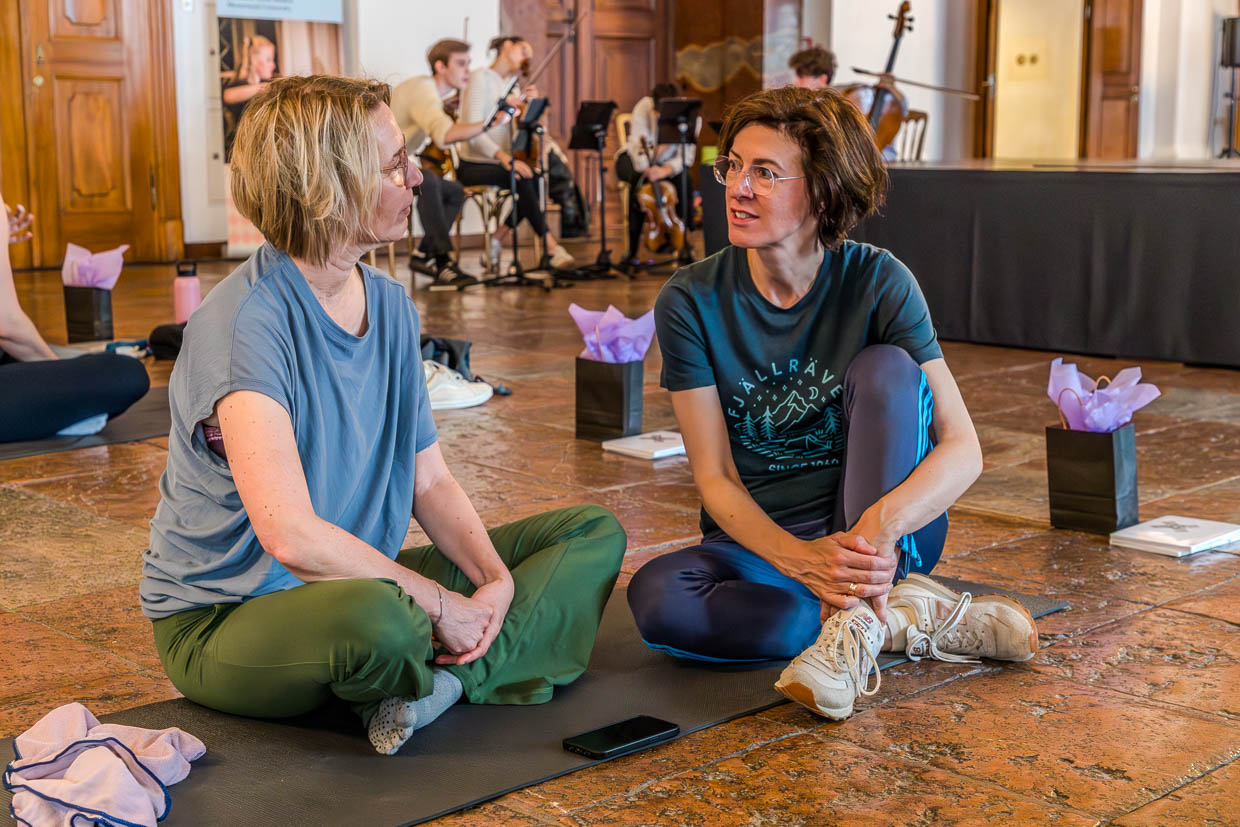
Since 2014, the DomQuartier Salzburg has linked four venues into a single tour: the State Rooms of the Residenz, the Cathedral Museum, the Residenzgalerie and the Museum St. Peter. All are situated within the UNESCO World Heritage Site of Salzburg’s Old Town. This network allows visitors to experience the historic Residenz and Cathedral area as a single entity: art, music, architecture and the history of the Prince-Archbishops all under one roof. But are enough visitors coming? Dr Andrea Stockhammer and her team are trialling new formats. The managing director of the DomQuartier has even taken her place on a yoga mat herself. “My passion is to bring people into this building,” she says. “We’re opening up the DomQuartier and creating access points that don’t put up barriers. Especially for young people, who often have little prior knowledge. Mozart belongs to all generations. We don’t just want to appeal to tourists, but also to reach more people from Salzburg.”
Music as a daily companion
Even Prince-Archbishop Wolf Dietrich used to let music accompany him throughout the day, explains Andrea Stockhammer. From the specially composed “Festlicher Lärm” (Festive Noise), intended to drown out the sounds of dining, to trumpet and trombone fanfares, which served as a means of communication in public spaces. Seen in this light, live music accompanying yoga asanas is simply a modern variation on the Prince-Archbishop’s use of music. How would Mozart have liked that? Judging by everything we know about him, he would probably have liked it very much indeed. In any case, the young musicians of the Bella Musica ensemble and their conductor Stefan David Hummel find the format inspiring and enriching.
Mozart repertoire at the DomQuartier
Guided tours exploring Mozart’s life and work, as well as chamber concerts in the state rooms of the Residenz, have been a regular feature of the venue’s programme for years. What’s new is the attempt to appeal to a target audience that would otherwise have little to do with historic state rooms: people who come for yoga, not for a cultural tour.
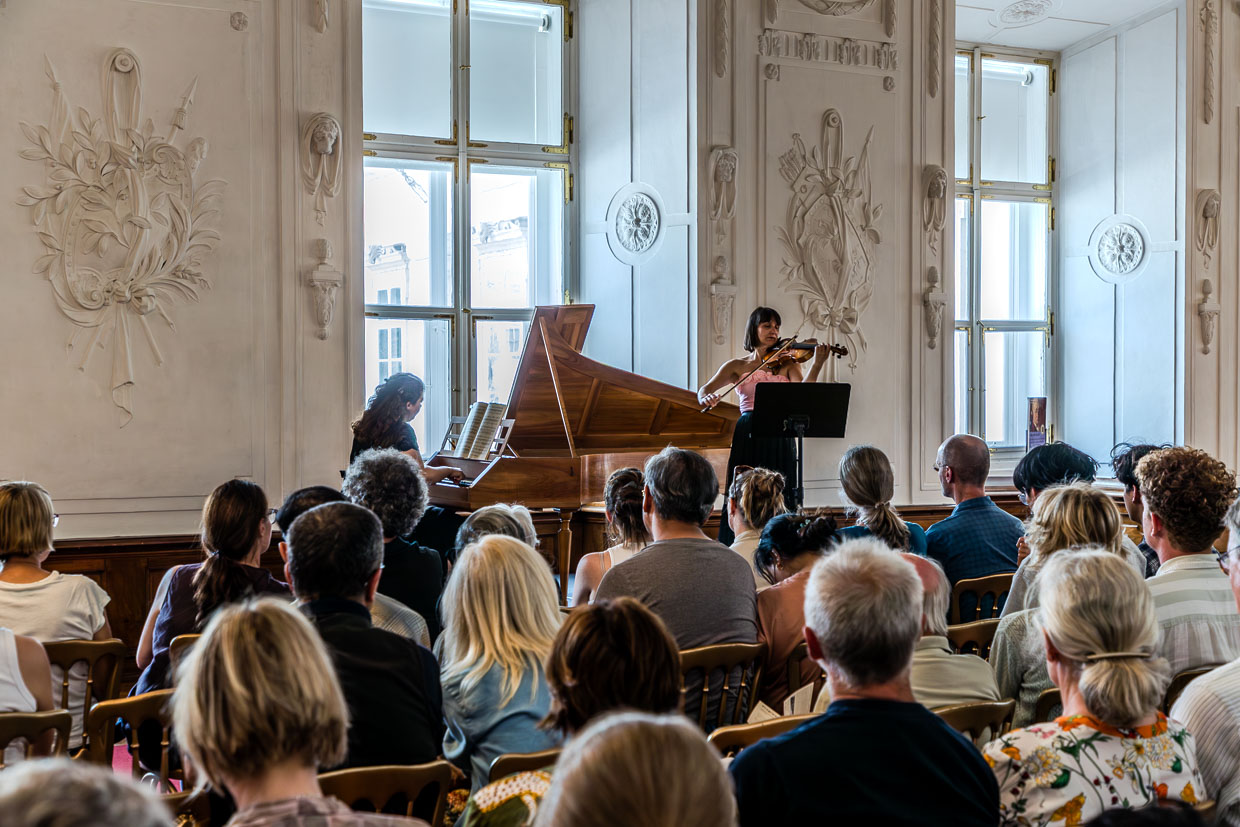
The “Date with Mozart” series continues to bring the harpsichord and violin to the state rooms of the Archbishop’s Residence. Before an audience of around 60 seated listeners on gilded chairs, it offers classical chamber concerts in a classical setting. This is complemented by themed guided tours focusing on Mozart’s years in Salzburg.
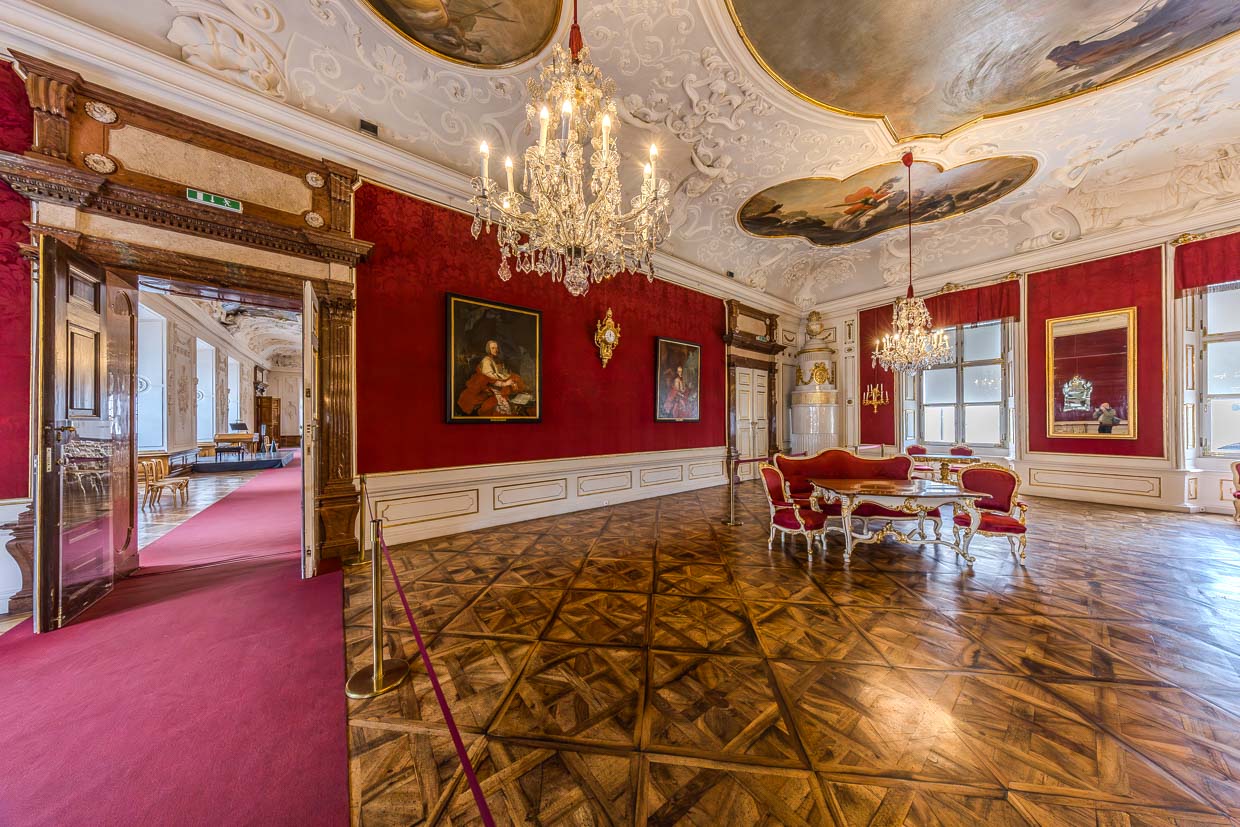
Mozart himself gave his first concert at the Residence at the age of seven. Later, the Residence served as his workplace for many years. It was here that he composed and gave concerts for his employer, the Prince-Archbishop.
Getting into the flow with Mozart?
Does live music actually alter what happens in the body during a yoga session? Studies on the effect of classical music on heart rate and breathing suggest so. This morning, however, it is almost impossible to measure objectively. Nevertheless, it is palpable. In yoga, music works primarily through attention, emotion and bodily regulation. It makes it easier to enter a calmer state, supports the ‘flow’ and reduces tension. However, music can also be distracting if the tempo, volume or style do not suit the exercise.
This morning, everything is just right. The Bella Musica ensemble has tailored the passages from Mozart’s Salzburg Divertimenti precisely to the exercises. The warm-up in C major is followed by repetitive Pilates exercises in a serene Andante and a lively Allegro, the most physically demanding yoga poses in Presto, and the final relaxation in a tranquil Larghetto. The hall, with its Baroque staircase and ceiling frescoes, does the rest: it draws one’s attention to the moment.
In Shavasana, I open my eyes and gaze up at Neptune and the wind gods above me. The young musicians play one final piece. Tears run down my cheeks, and I realise: I’m not the only one.
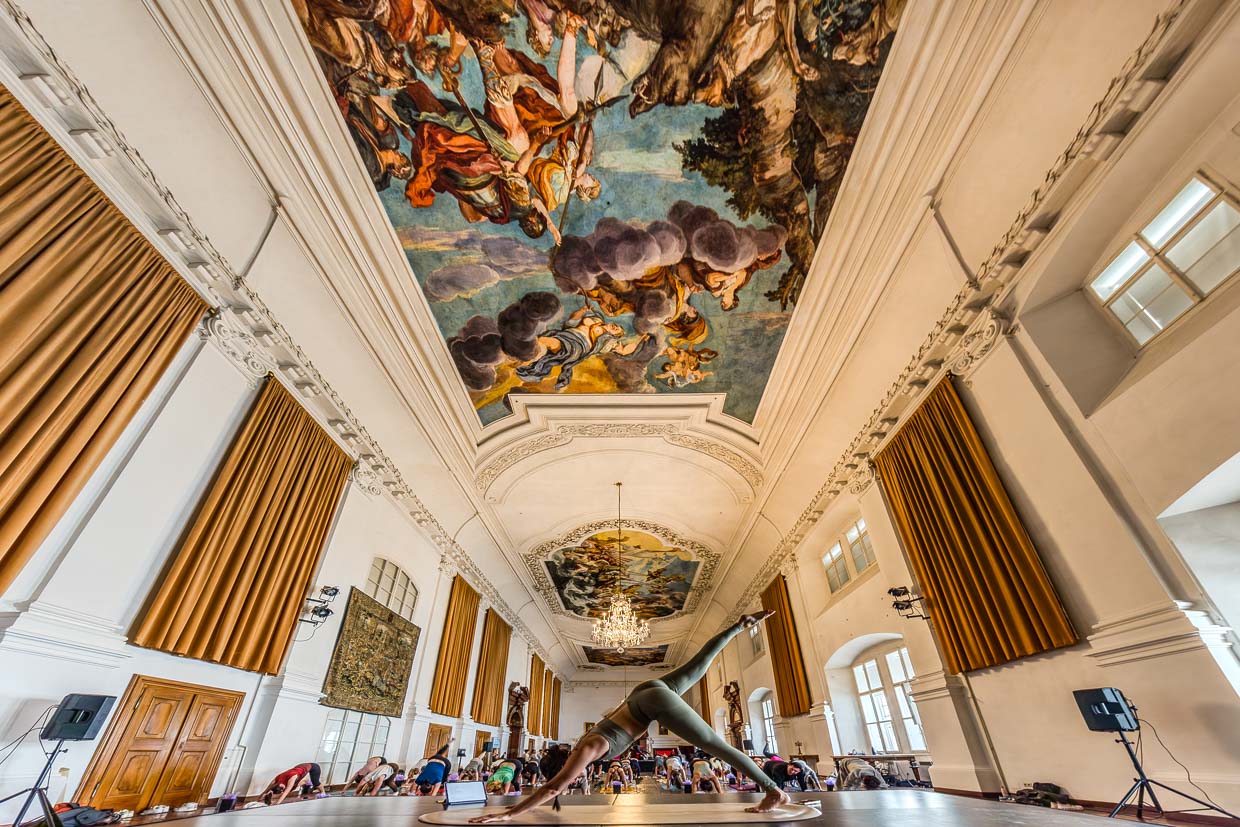
For the music students, the usual situation is turned on its head. They are playing to an audience that listens to their music whilst practising asanas and, as the aim of the session, turning their attention inwards. No applause after each movement, no focused faces in the stalls. Instead, people in Downward-Facing Dog or Mountain Pose. For the young musicians, this is uncharted territory. There is no applause, but they recognise the effect of their music in the many relaxed faces smiling at them.
To be continued
The yoga series at the DomQuartier is set to continue. Two sessions in September and November are still scheduled for 2026. But everyone involved agrees that yoga and Mozart should come together again at the Residenz in 2027 as well.
Stories from Salzburg
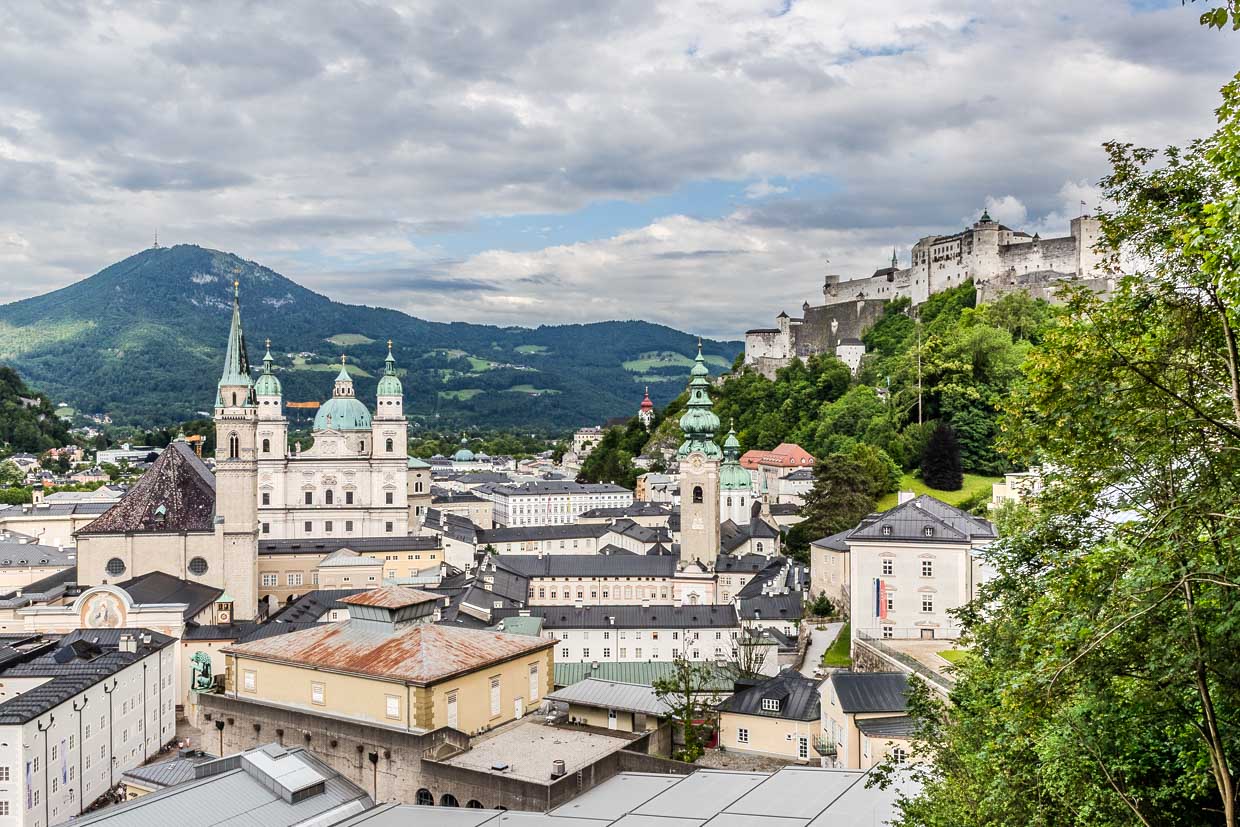
Several times a week, the Baroque Hall hosts the Mozart Dinner at St Peter’s Stiftskuliarium, which is very popular with tourists and always concludes with the classic dessert, Salzburger Nockerln. Find out more about this and other specialities in the feature ‘Sweet Salzburg’. The article ‘A City Walk with Mozart’ reveals the mark Mozart left on his home city of Salzburg. The Salzburger DomQuartier is breaking new ground and invites visitors to the state rooms of the Residenz for a yoga flow session accompanied by live music by Mozart. A visit to the Augustiner Bräu for a drink and a cool Märzen under the old chestnut trees or in the historic Stockhammer Hall should also be part of any tour of Salzburg.
This research was supported by SalzburgerLand