
Maximilian Kiener leads us into a small room behind the stage of the Salzburg Marionette Theatre. It is cramped and dark; stairs lead up and down, and the smell of wood and a workshop hangs in the air. Mozart’s The Magic Flute is about to begin. There is no sign of the bird-catcher Papageno, but three versions of the High Priest Sarastro hang at the edge of the room, as if in a queue. Kiener does not show us any other puppets at first. Most of them are locked away in the ‘puppet chamber’, protected from light and dust, he explains. Instead, Kiener reaches for a piece of the set: a column, solid in appearance, yet as light as a feather in his hand. Even before a character appears, the first impression is clear: nothing here is as it seems, and that is precisely where the art lies.
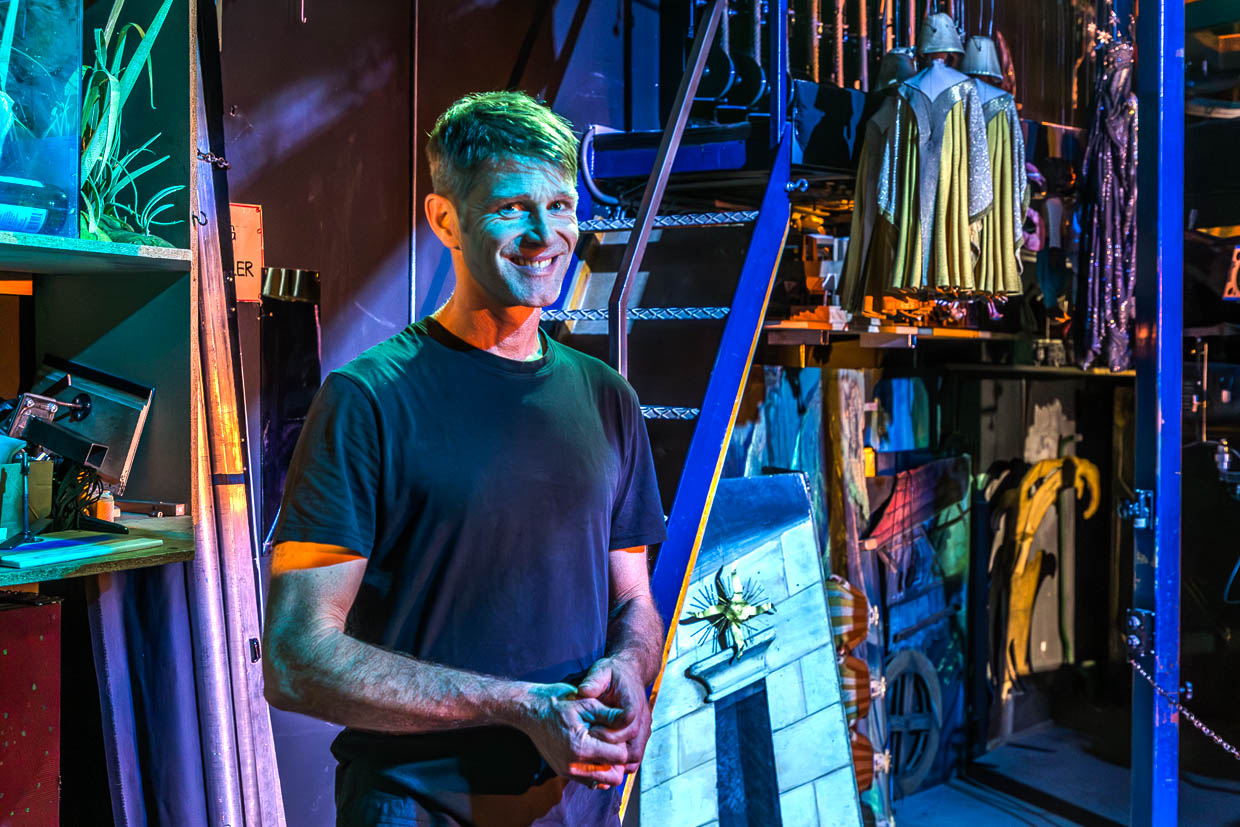
Maximilian Kiener talks about the craftsmanship required of every puppeteer. He himself is a trained opera singer, not a trained craftsman, but a versatile tinker with skilful hands. It is precisely this combination, he says, that is needed here: musicality meets practical skill – something many only acquire once they’re at the theatre. “Puppetry is like learning to play an instrument,” he explains, “and once we’ve mastered our marionette, we infuse it with emotion.” A few steps further on, costumes hang on the walls, lined up as if in a tailor’s workshop with a passion for detail: tiny embroidery, trimmings that can only be seen with a magnifying glass, fabrics gathered and draped as if they had to fit a real singer. The care that goes into an object the size of a toddler arouses curiosity about the production.
One sculptor, three generations, a World Heritage site
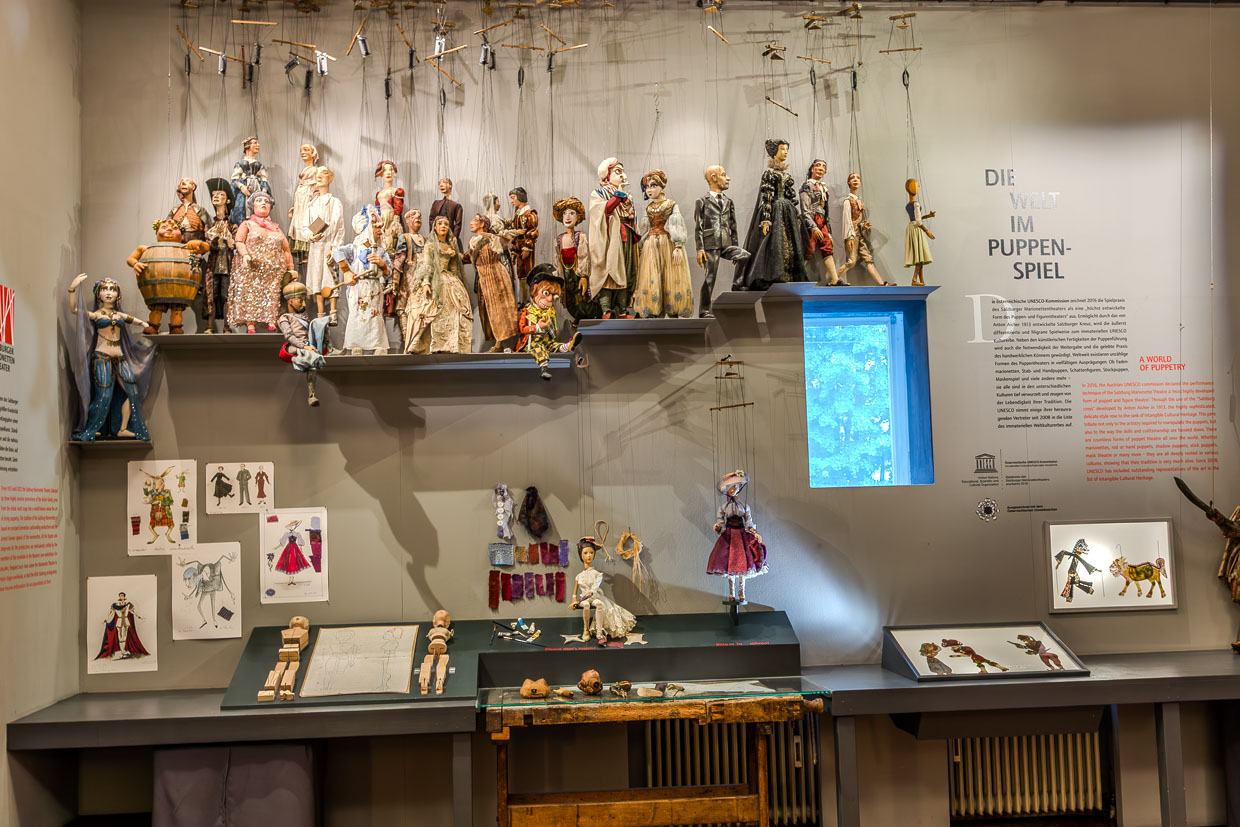
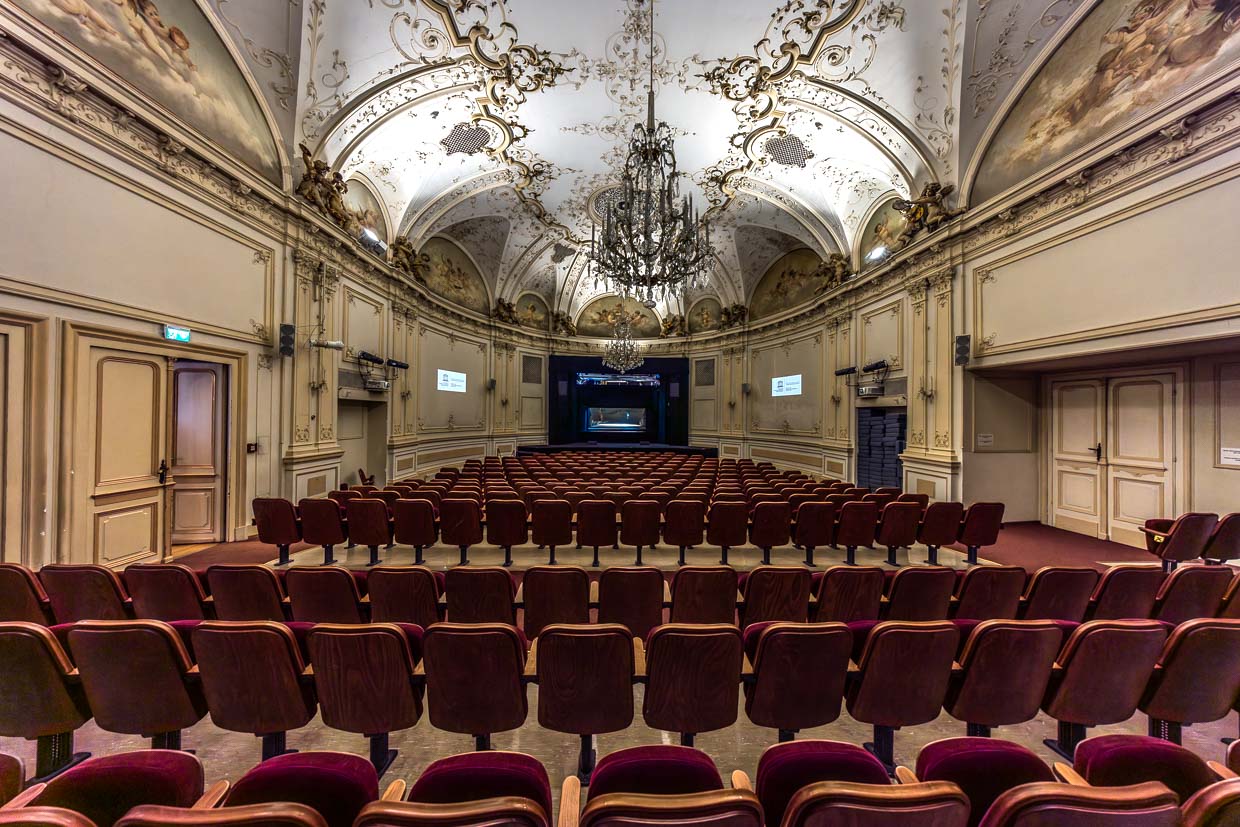
The Salzburg Marionette Theatre traces its origins back to the sculptor Anton Aicher. On 27 February 1913, he presented his hand-carved figures for the first time at a carnival event organised by the Gral Artists’ Cooperative, featuring Mozart’s *Bastien and Bastienne*. Aicher had previously trained with Munich-based puppet makers and, following the example of Josef Leonhard Schmid’s Munich Marionette Theatre, wanted to found his own artists’ marionette theatre in Salzburg. The theatre remained in the family for almost a hundred years: After Anton Aicher, his descendants ran the theatre for a further two generations. Since 1971, the company has been performing in its current home between the Mozarteum and the Landestheater, a Baroque-style auditorium with 350 seats. Today, the theatre is managed by Susanne Tiefenbacher.
In 2016, the Austrian UNESCO Commission included the performance practices of the Salzburg Marionette Theatre in the national register of intangible cultural heritage. The reason given was the extraordinary combination of artistic skill and traditional craftsmanship, from carving the heads to manipulating the strings. The Salzburg theatre is the only marionette theatre in the world to stage entire operas.
The Magic Flute, part of the repertoire since 1952
The ensemble did not premiere its production of The Magic Flute in Salzburg, but in Boston on 8 October 1952, during an early US tour. New productions followed in 1960 and 2015; the piece has been on the programme continuously ever since. Between twenty and ninety puppets are used for a single performance; the theatre owns a total of more than seven hundred marionettes. Sarastro and the Queen of the Night, Pamina and Tamino, the Three Ladies who save Papageno from the snake, and the Three Boys who later lead him to Sarastro’s palace: a puppeteer often takes on several roles, as the ensemble has only ten permanent members.
Musically, the performance is played from a recording. In the case of *The Magic Flute*, this has been the same historical recording for many years: Ferenc Fricsay conducts the RIAS Symphony Orchestra Berlin, recorded in 1954–55 for Deutsche Grammophon. Papageno is sung in this recording by a 29-year-old Dietrich Fischer-Dieskau, just a few years after his breakthrough at the Salzburg Festival and still a long way from his fame as the ‘singer of the century’. So anyone sitting in the auditorium is listening to one of the most significant recordings in the history of opera. The singers remain out of sight; the puppets convey the music solely through their movements.
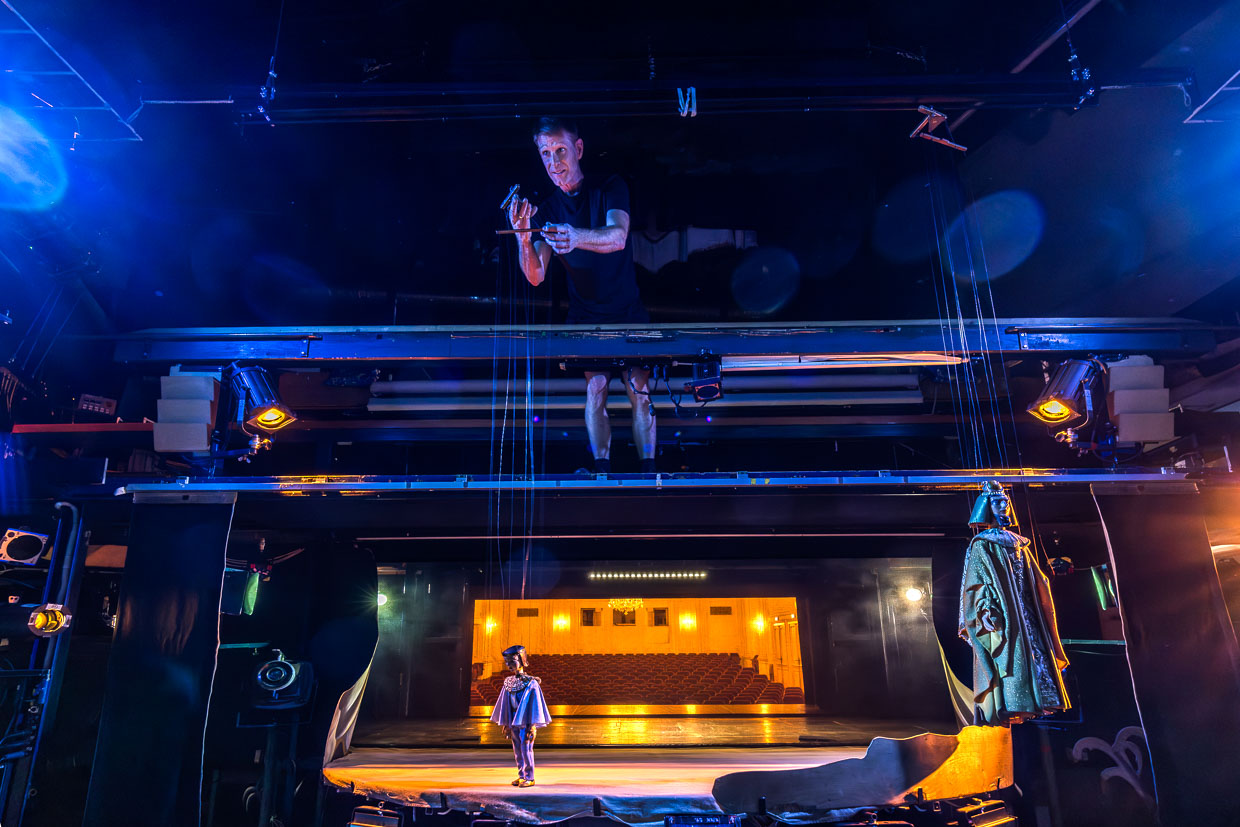
12 strings and a kilo of wood
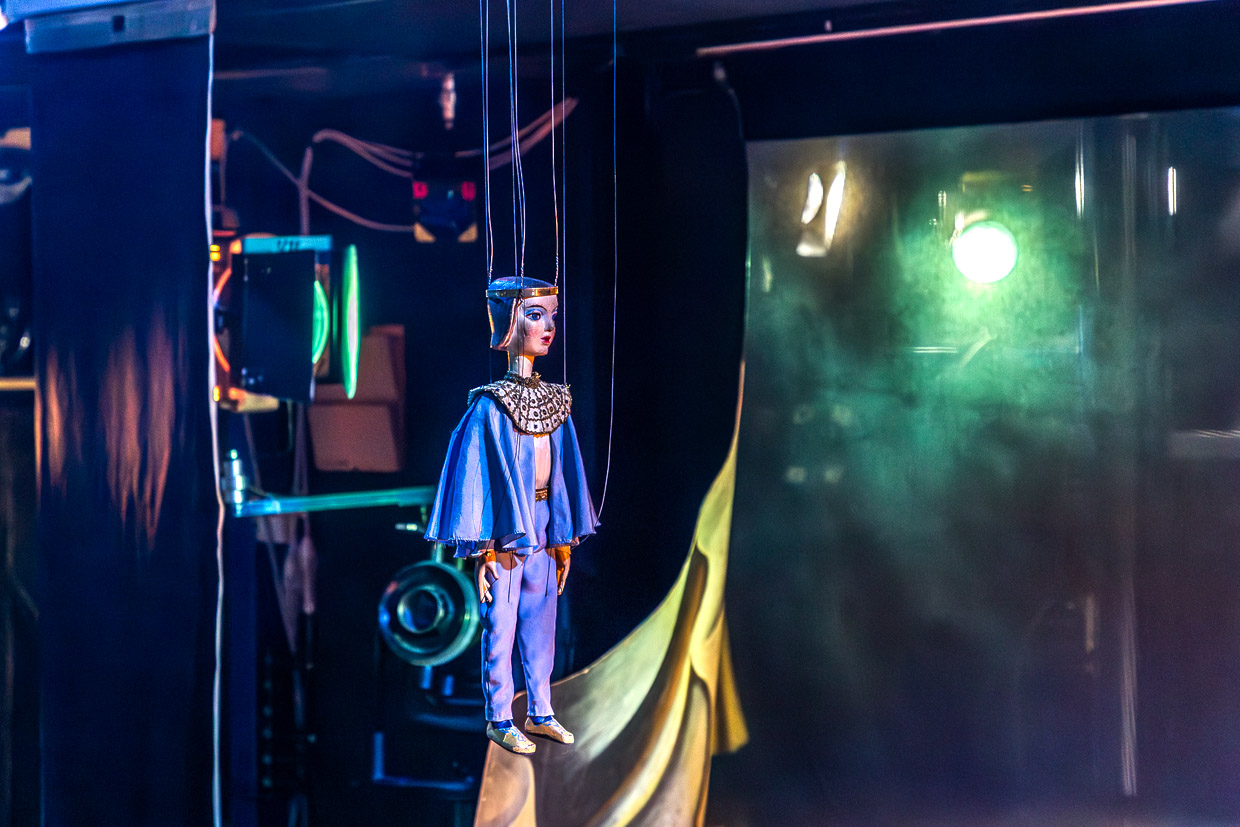
On the so-called ‘Spielsteg’ – a narrow bridge above the stage – the puppeteers manoeuvre their figures whilst standing, often bent over. Maximilian Kiener, who has been with the company for seven years, demonstrates the technique with his arms outstretched, holding the so-called ‘Salzburg control cross’ – the control mechanism developed by Anton Aicher over a hundred years ago and still in use today, unchanged. Normally twelve, sometimes even more than 20 strings control a single puppet weighing up to one kilogram. Each string moves a specific part: an eyelid, a fingertip, the rotation of the hip joint. Even simple objects such as Papageno’s birdcage hang from strings as individual elements; this is the only way the bird-catcher can lift the cage from his shoulders with a flourish and set it down again. Minor mishaps do occasionally occur on stage. Once, Kiener recounts, Baron Georg von Trapp left his foot on stage during a production of The Sound of Music. The audience laughed, the foot was retrieved, and the performance continued.
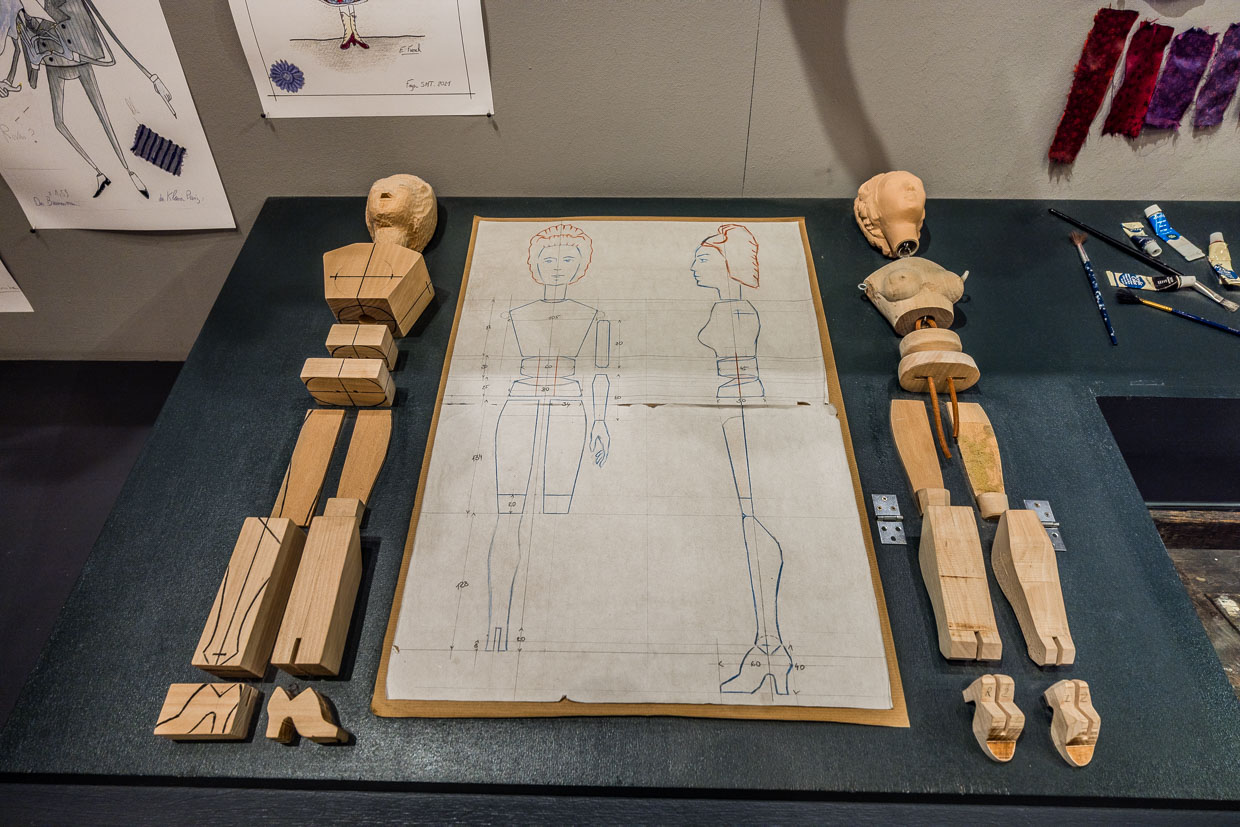
Puppeteers at the Salzburg Marionette Theatre are also craftspeople. The ensemble runs its own tailoring workshop, joinery and metalwork shop, as well as the puppet workshop. Anyone working here must be musically gifted, have a feel for movement and, at the same time, be able to sew, carve and solder. Backstage, props are piled high, set pieces lean against the walls, and spotlights cast their cold blue glow onto half-painted costumes. The room feels both improvised and highly professional at the same time.
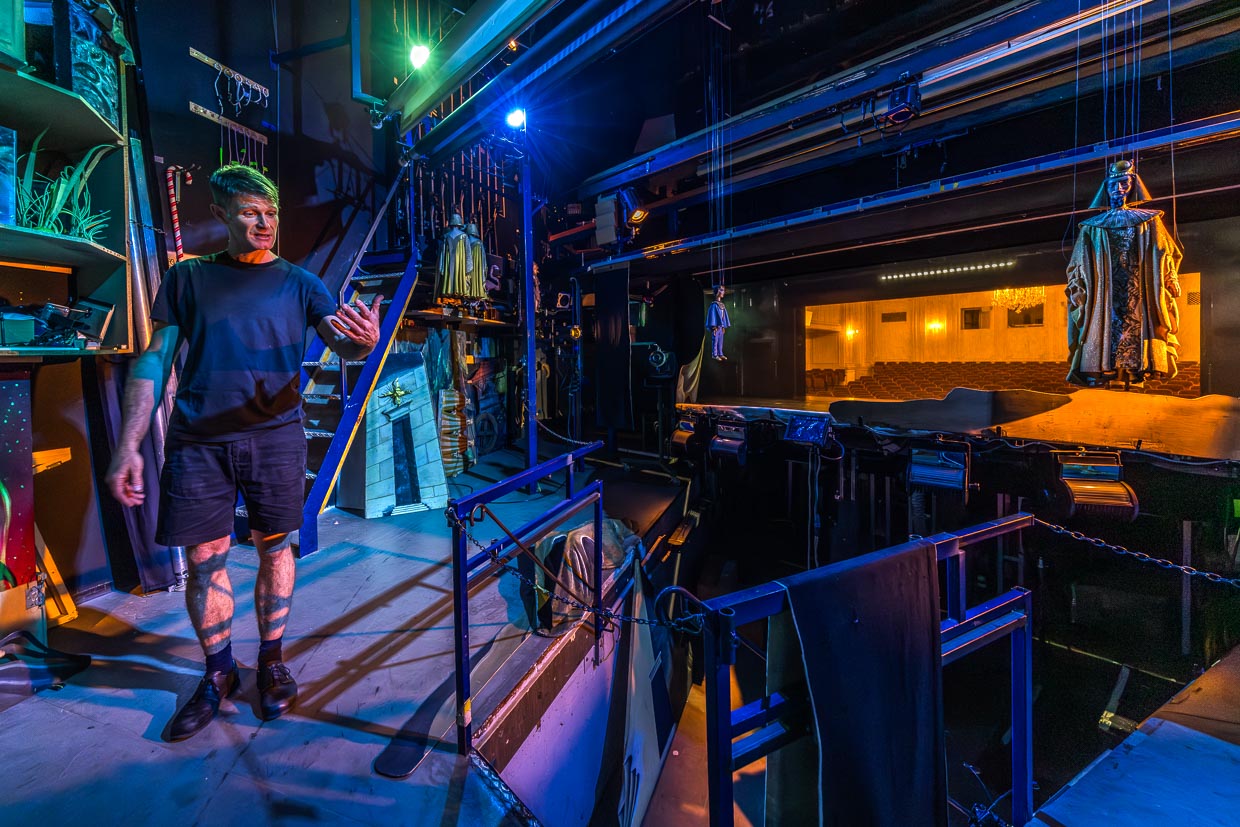
Curtain up: a glimpse behind the scenes
As the curtain rises and the first bars of the overture ring out, you see two puppeteers looking like giants in an aquarium. They set up the scenery, position the marionettes and prepare the first scene of Mozart’s The Magic Flute; only then do the black curtains close, so that the audience sees nothing but the stage world and the characters. This is no glitch, but part of Thomas Reichert’s 2015 production. It begins by showing how theatre is created, only to make the audience believe all the more strongly in the magical world of the marionettes. This fits in with the philosophy of the Salzburg Marionette Theatre, where the puppets are the actual leading actors on stage.
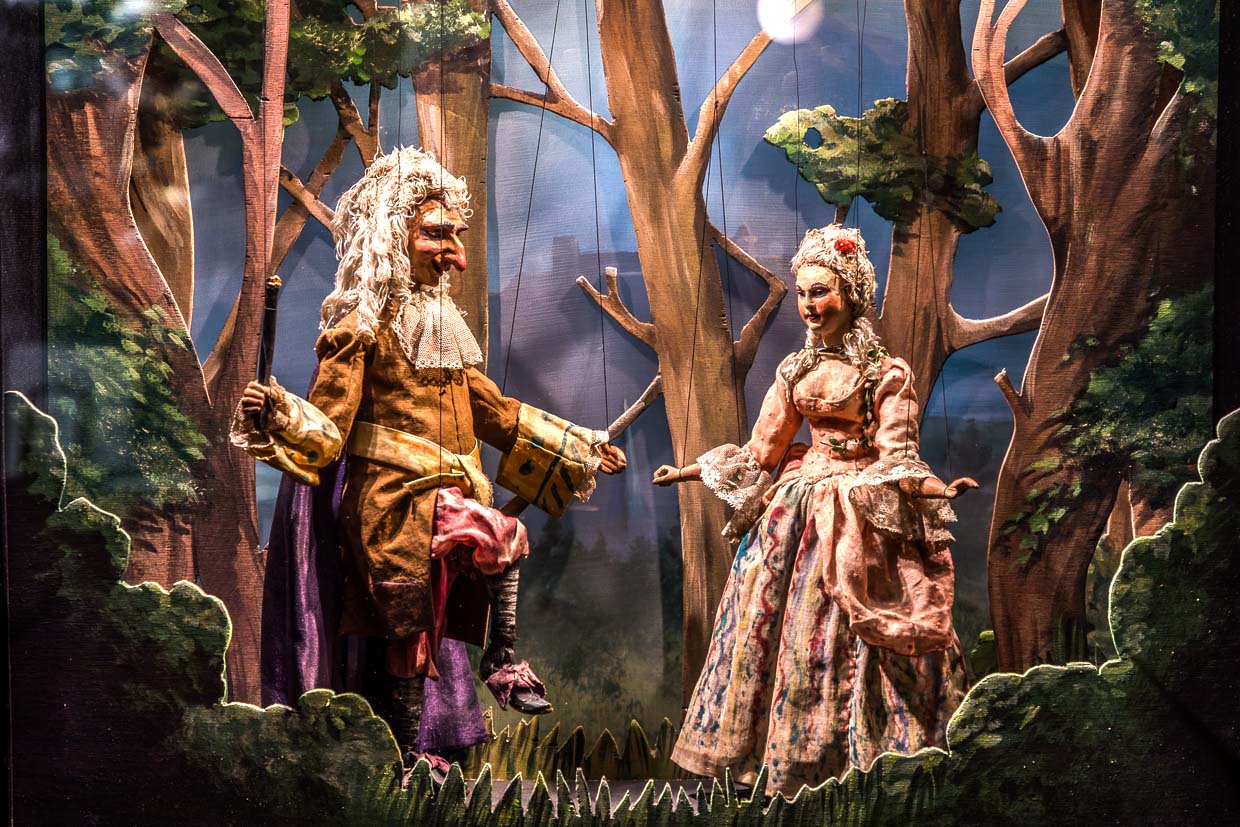
The figures move with a suppleness one would not expect from wood: Papageno stumbles, hesitates, looks around – at a pace that seems comical, not mechanical. The Queen of the Night glides towards us, her blue costume catching the light, whilst her coloratura fills the auditorium. The folds in the puppets’ robes make their movements appear more fluid, as puppeteer Kiener had previously revealed to us. The strings fade into the background; the characters take on a life of their own. Adults in the audience laugh at the same moments as the children sitting next to them. This is the true achievement of marionette theatre: an art form that excludes no one, neither by language nor by age.
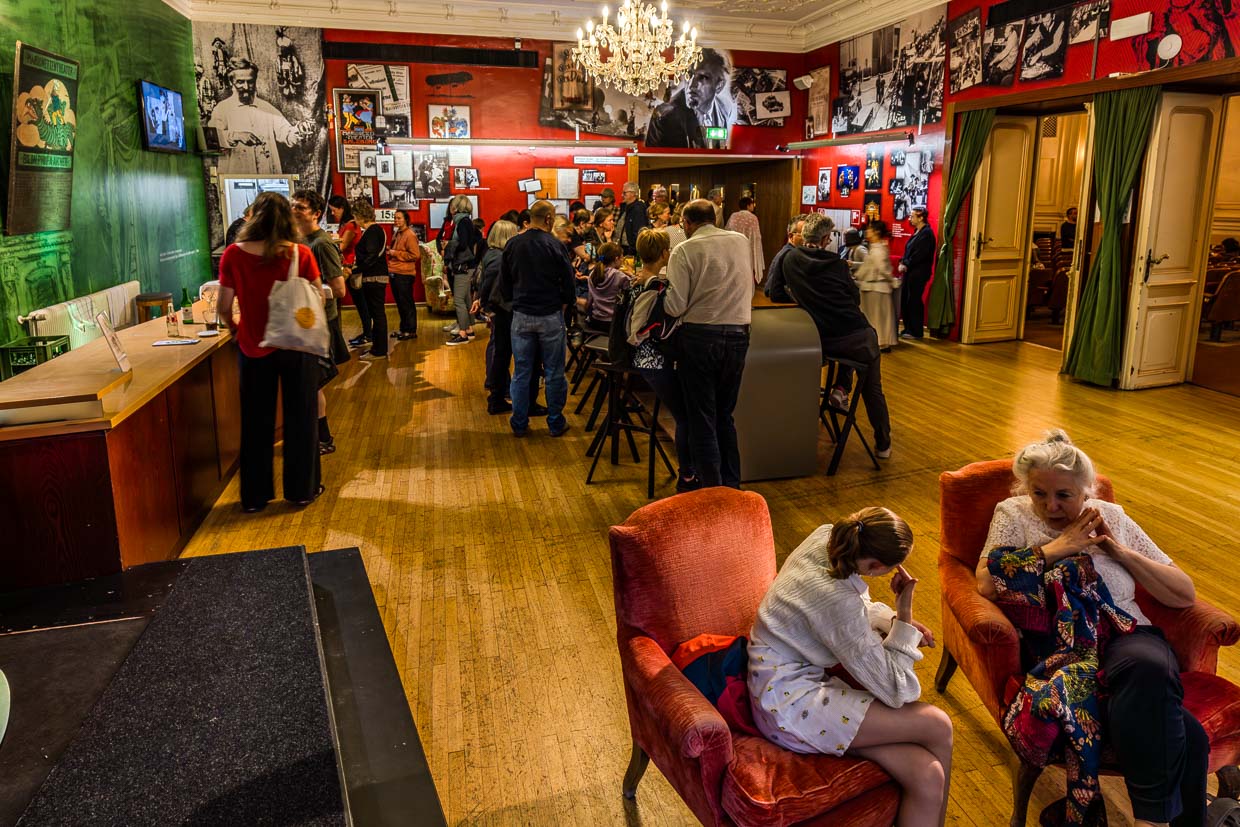
From Salzburg to the world
The theatre stages around one hundred and sixty performances a year at its own venue, in addition to international guest performances. The Salzburg Marionettes have travelled as far afield as China, Japan, Taiwan and South America, and have performed in Paris, London and Rome before royalty.
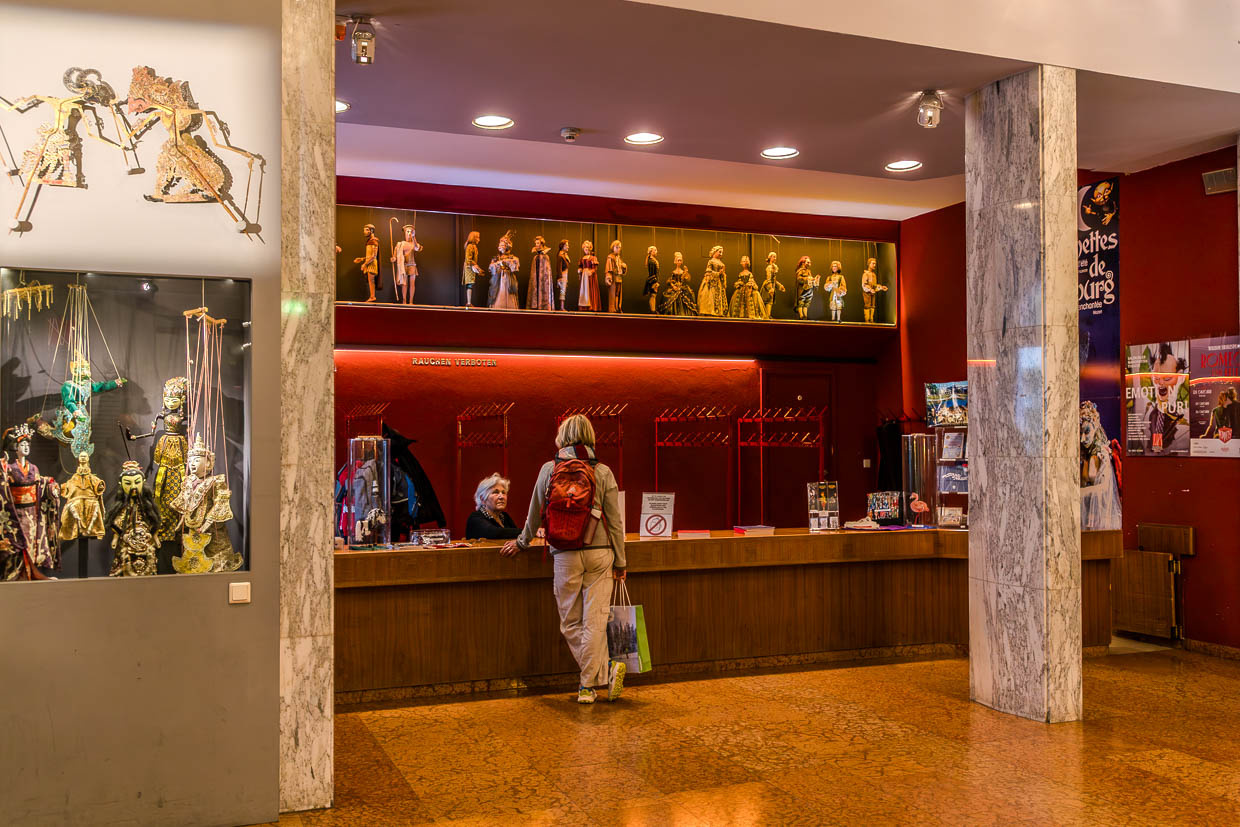
In autumn 2026, a co-production with the Salzburg Festival will go on tour: Stravinsky’s The Soldier’s Tale, directed by Matthias Bundschuh, with marionettes and set design by Georg Baselitz. For the theatre, this marked the first collaboration in its history with a major contemporary artist: Baselitz dispensed with faces and costumes in the classical sense and instead constructed his figures from cardboard tubes, wire and sheet metal, with abstract, colour-coded heads of an idiosyncratic, almost archaic conciseness. These puppets are a special treasure of the theatre. On 30 April 2026, Georg Baselitz died at the age of 88. The marionettes for Stravinsky’s The Soldier’s Tale were his final commissioned work.
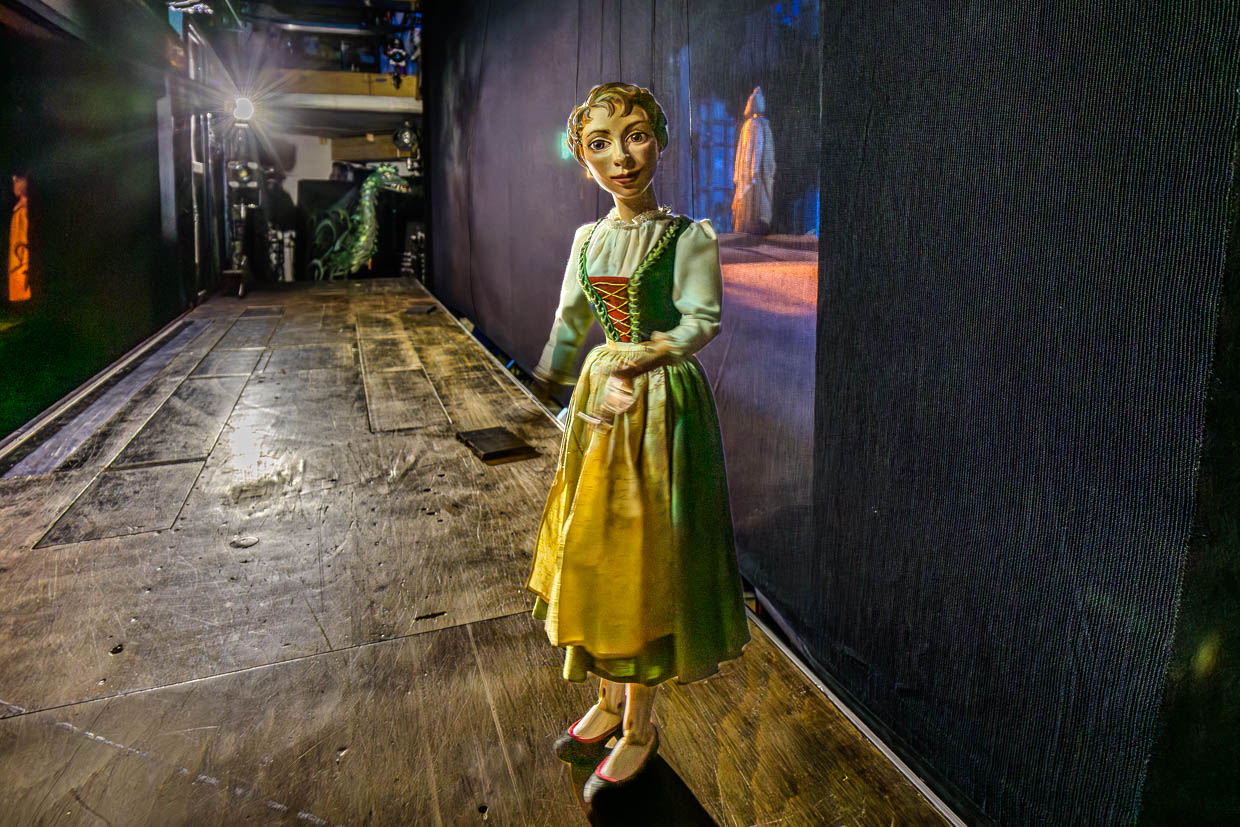
Two productions in the repertoire remain the most reliable crowd-pullers: Mozart’s The Magic Flute, which has been in the programme for over seventy years, and The Sound of Music. Since 2007, the adaptation of the Oscar-winning Hollywood film has been a permanent fixture in the programme. For many international fans, these two productions are the main reason for visiting the Salzburg Marionette Theatre.
Stories from Salzburg
Several times a week, the Baroque Hall hosts the Mozart Dinner at St Peter’s Stiftskuliarium, which is very popular with tourists and always concludes with the classic dessert, Salzburger Nockerln. Find out more about this and other specialities in the feature ‘Sweet Salzburg’. The article ‘A City Walk with Mozart’ reveals the mark Mozart left on his home city of Salzburg. The Salzburger DomQuartier is breaking new ground and invites visitors to the state rooms of the Residenz for a yoga flow session accompanied by live music by Mozart. A visit to the Augustiner Bräu for a drink and a cool Märzen under the old chestnut trees or in the historic Stockhammer Hall should also be part of any tour of Salzburg.
This research was supported by SalzburgerLand