
Fortunately, our day out with National Park ranger Martha Hutter didn’t fall through. It had poured with rain for hours the day before. The next day stayed dry – for the time being, at least. Our meeting point: the car park at the Schütthof inn. Martha is already waiting: green jacket, sturdy shoes, a funny hat. We set off along the path into the Untersulzbachtal, one of the impressive trough valleys of the Eastern Alps, untouched by human hands.
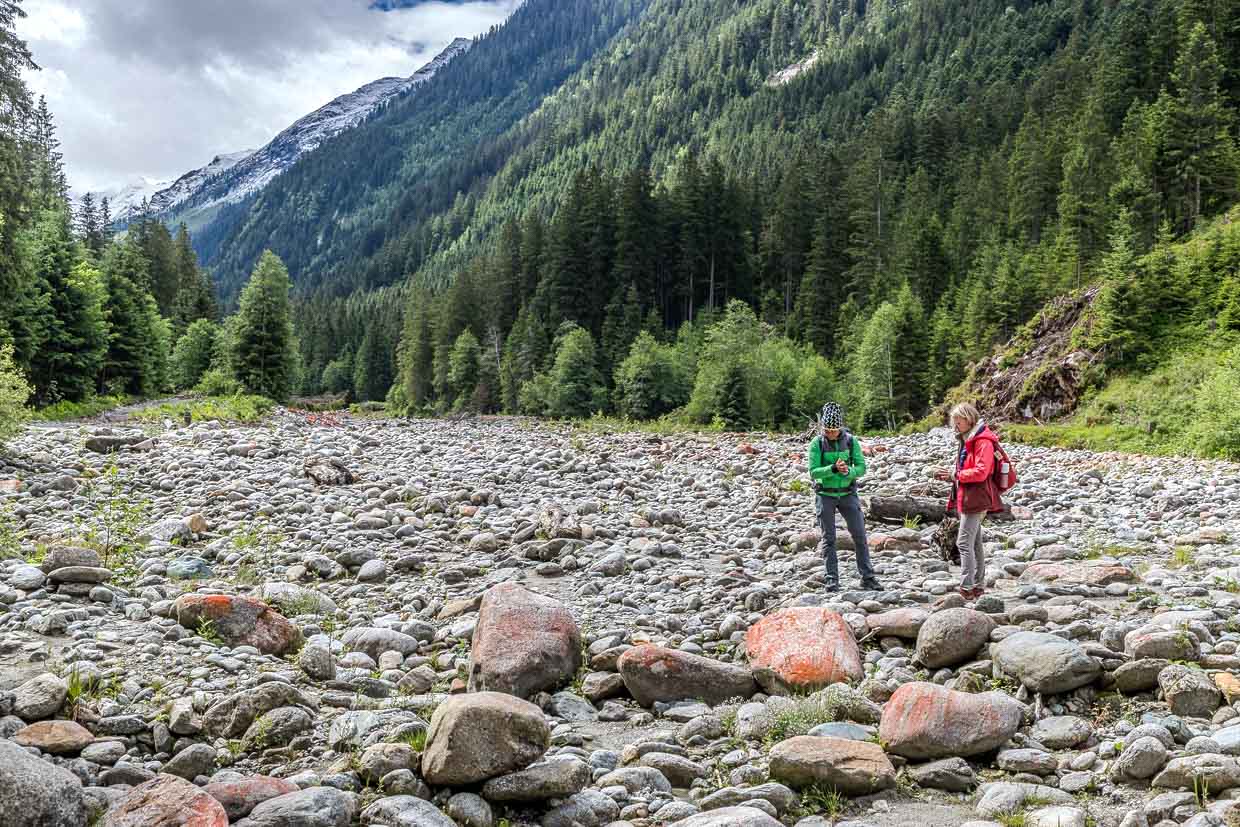
A trough valley is the result of hard work – just not human labour. Thousands of years ago, a glacier pushed its way through the rock here, smoothing the flanks and turning a pointed V into a broad U. Steep walls, with a flat floor in between. This is how you can still recognise a trough valley today, even though the ice has long since receded. Together with the Obersulzbachtal, the Untersulzbachtal has formed the Sulzbachtäler Wilderness Area since 2019. The International Union for Conservation of Nature (IUCN) has classified it under the highest European protection category: 6,728 hectares where nature alone calls the shots. Humans no longer intervene here, neither to guide nor to correct. Along our route, the footpath is well signposted, and the bridges and viewing platforms over the roaring stream are well looked after and maintained. At the very heart of the wilderness area, however, the paths come to an end. Anyone wishing to go there needs a ranger. Or a bit of luck.
From mountain hut landlady to ranger
Martha Hutter comes from the Fuschertal, one of the thirteen side valleys of the Salzachtal, right in the heart of what is now the Hohe Tauern holiday region. She is a ski instructor by profession and has also been a national park ranger for many years, from May to the end of October. In between lies another story: for six summers, Martha ran the Schwarzenberghütte in the Fuschertal. It can only be reached on foot and remains one of her ‘places of power’, as she puts it. In 2003, she applied to join the ranger service. The training programme, spread across several of Austria’s six national parks, lasts two to three years. Even the very first rangers were ski instructors, Martha explains. The combination makes sense: on the slopes in winter, in the valley in summer. She herself, as she puts it, ‘threw herself into the training at full throttle’.
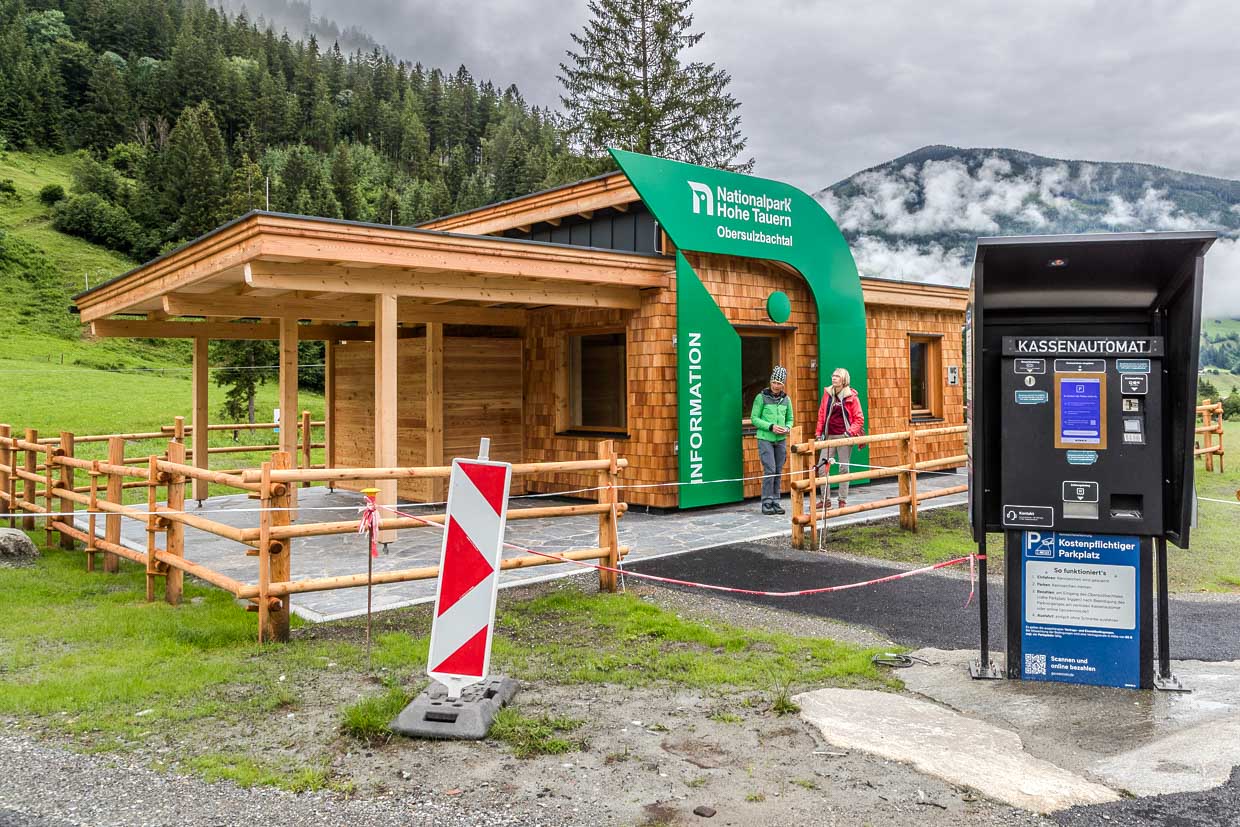
Twelve rangers currently work in the Hohe Tauern National Park, three of whom are women. Four rangers are employed year-round; the rest, including Hutter, work during the summer season. “We’re a good team,” she says. Each ranger is deployed where they know their way around best. For Martha Hutter, this means her home valley and the neighbouring valleys. In summer, her colleagues are out and about from Krimml to Hüttschlag. At the entrances to the valleys, new information points enhance the visitor experience. Here, trainees advise guests on the attractions and special features of each valley.
By the wayside
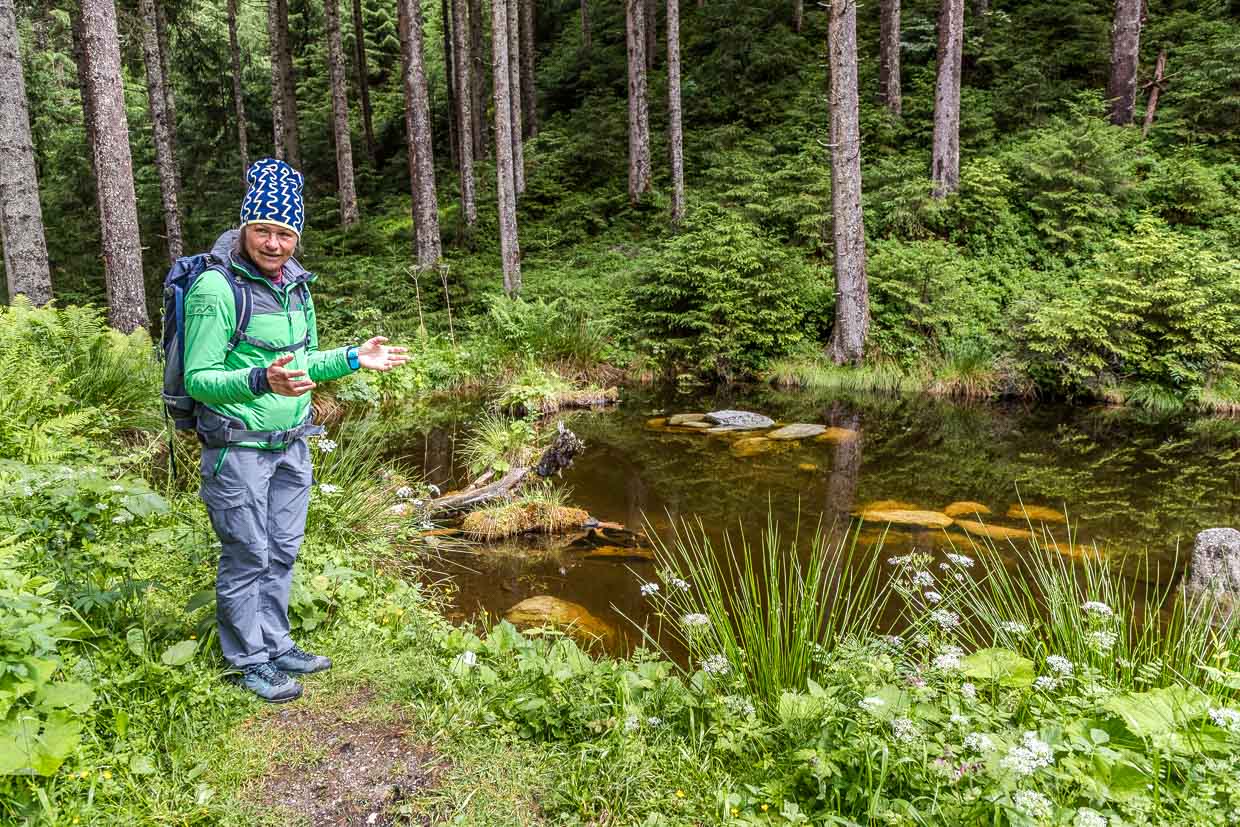
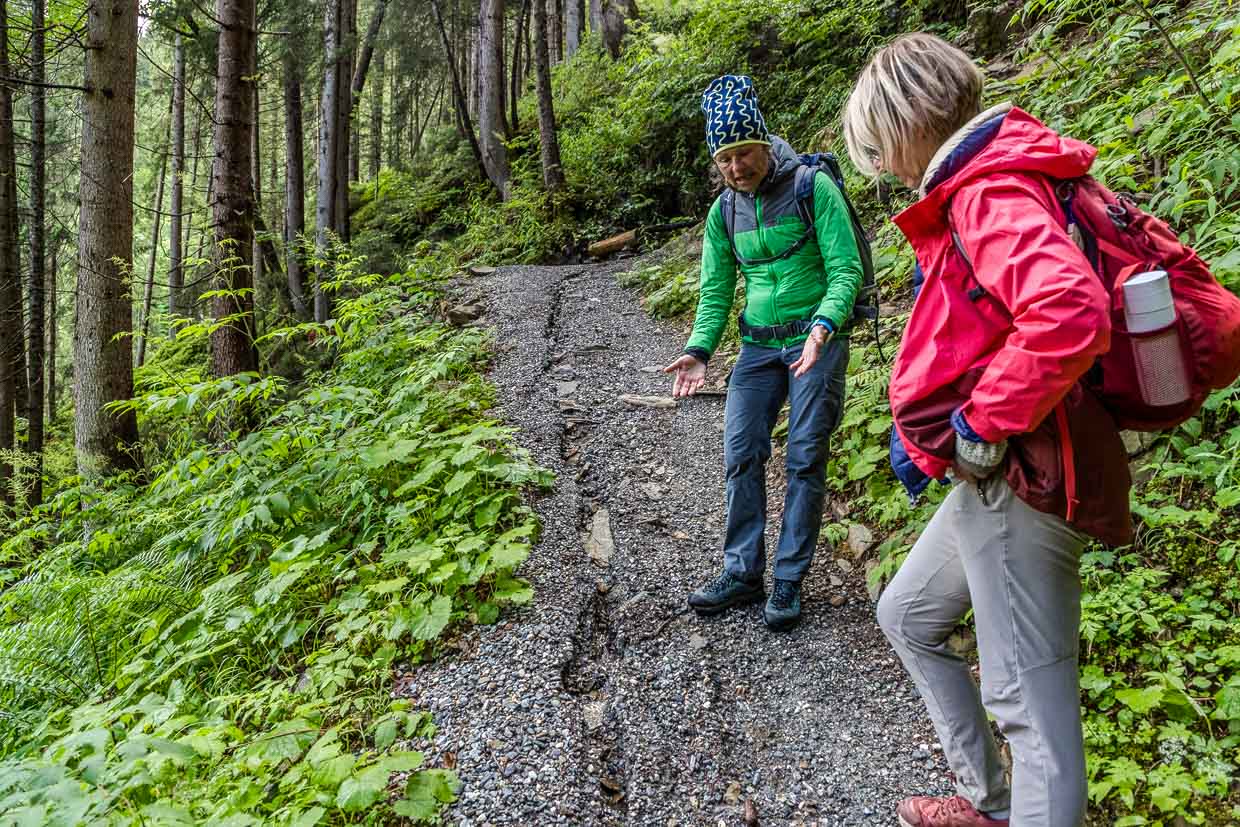
The first few kilometres are a leisurely walk. This is partly because Martha can scarcely take three steps without stopping. Horsetail, snake clubmoss and hairy cow-head grow by the wayside. To us city-dwellers, this is a foreign language, which she patiently translates. The spruce trees in the valley, she explains, were planted by humans; they are not part of the original forest. They flower every seven years, when yellow pollen drifts over the treetops. She points out the difference between spruce and fir by looking at the cones: the spruce lets its cones hang down; they fall to the ground whole. The fir holds its cones upright, like little candles on the branches, and keeps them until they disintegrate up there. Only the individual scales drift away; the spindle remains on the twig. That is why you never find a whole fir cone in the forest. Which, as Martha points out, does not stop people from always referring to any cones they find as ‘fir cones’.
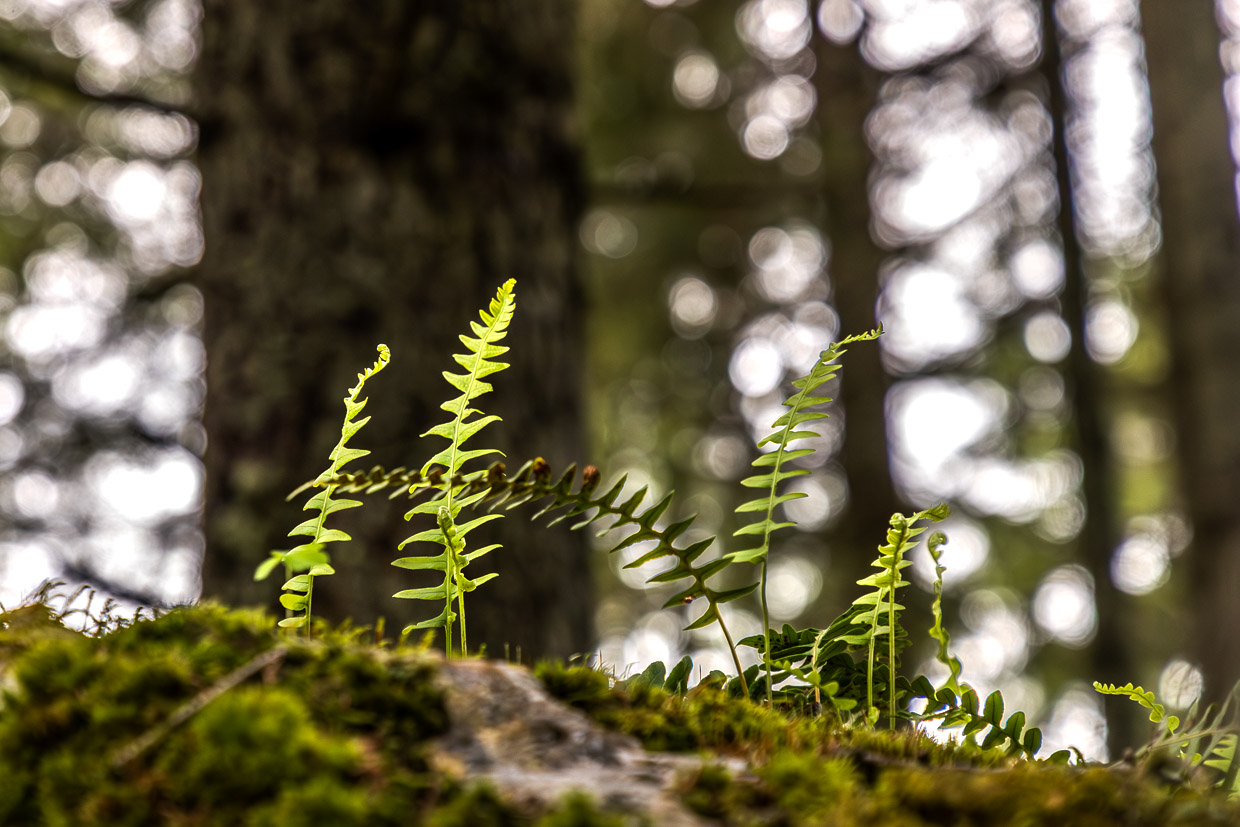
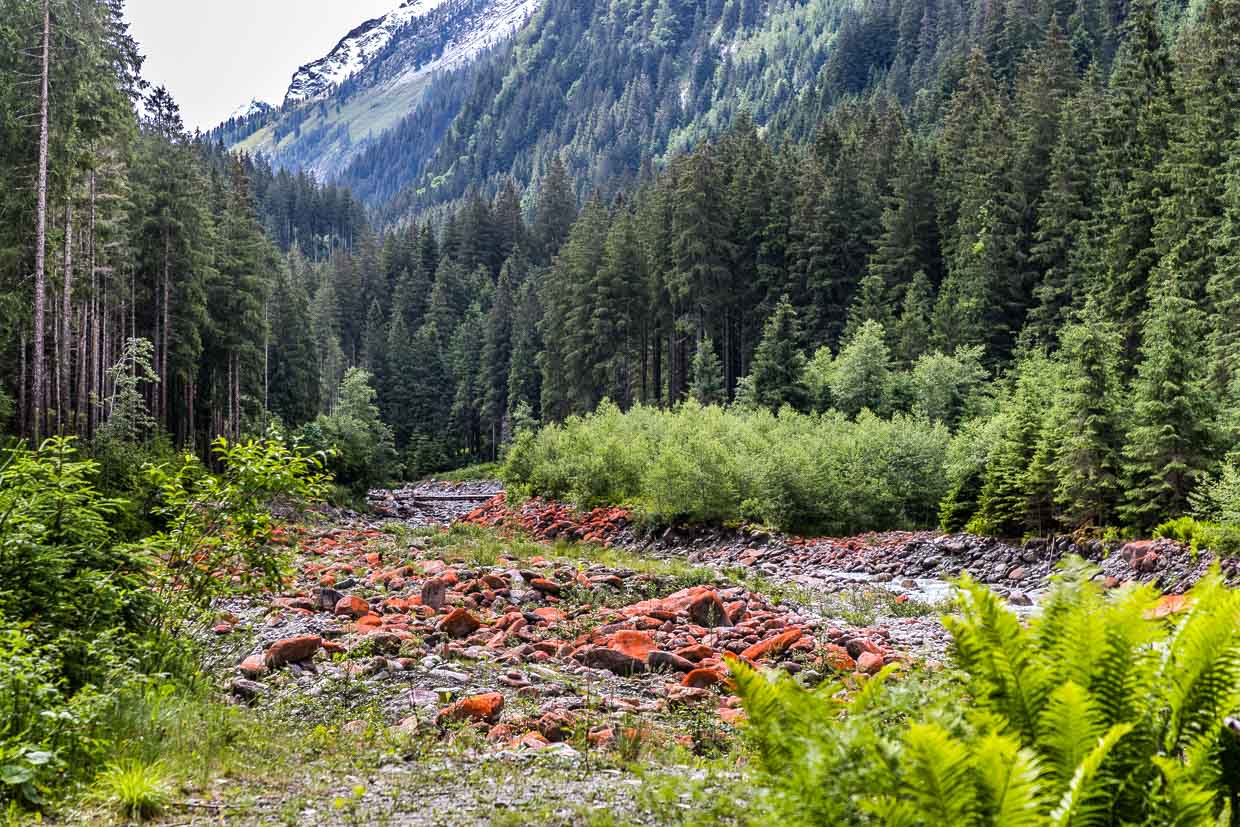
A tiny fern is growing on a tree stump, right at eye level. I am utterly enchanted by this delicate plant, and Martha tells me the story behind it: it is a spotted fern, also known as ‘angel’s sweet’. Its thin rhizome, when tasted on the tip of the tongue, actually tastes sweet, almost like liquorice. In the past, she explains, the root was used as a sugar substitute in times of need. A little later, we come across a dry stream bed, strewn with strikingly red stones. “As strange as it sounds,” says Hutter, “that’s red green algae.” An algae that is actually green, but whose chlorophyll is masked by a red pigment, making it look like a rust stain on the rock. And as the mineralogy of the Tauern Window is also on the agenda today, the old miners’ saying comes into play: ‘Feldspar, quartz and mica – those three I’ll never forget.’ A mnemonic from the 19th century that has stood the test of time. It names the three main minerals found in gneiss and granite.
What is the Tauern Window?
In the Hohe Tauern, you’re walking on geologically unique ground. The highest peaks consist of rock that lies deeply buried elsewhere in the Alps. 100 million years ago, the African Plate collided with the Eurasian Plate. Older rock layers were pushed upwards. Today, the Tauern Window lies exposed here. It is a 160-kilometre-long strip stretching from the Brenner to the Katschberg, at the centre of which stand four massive gneiss cores, including that of the Großvenediger. Experts call it a geological sensation. For laypeople, it suffices to realise that whoever climbs here is ascending through the history of the Earth.
Despite the rushing stream and the bright green trees, climate change has also reached the Obersulzbachtal valley. Hutter’s colleagues in research, she explains, have been documenting for years how animals and plants in the national park are moving further up the mountain in search of the temperatures to which they have become accustomed over millennia. Climate change, she says, is no longer an abstract issue, but something that can be observed with one’s own eyes at this altitude. A little further up, year after year.
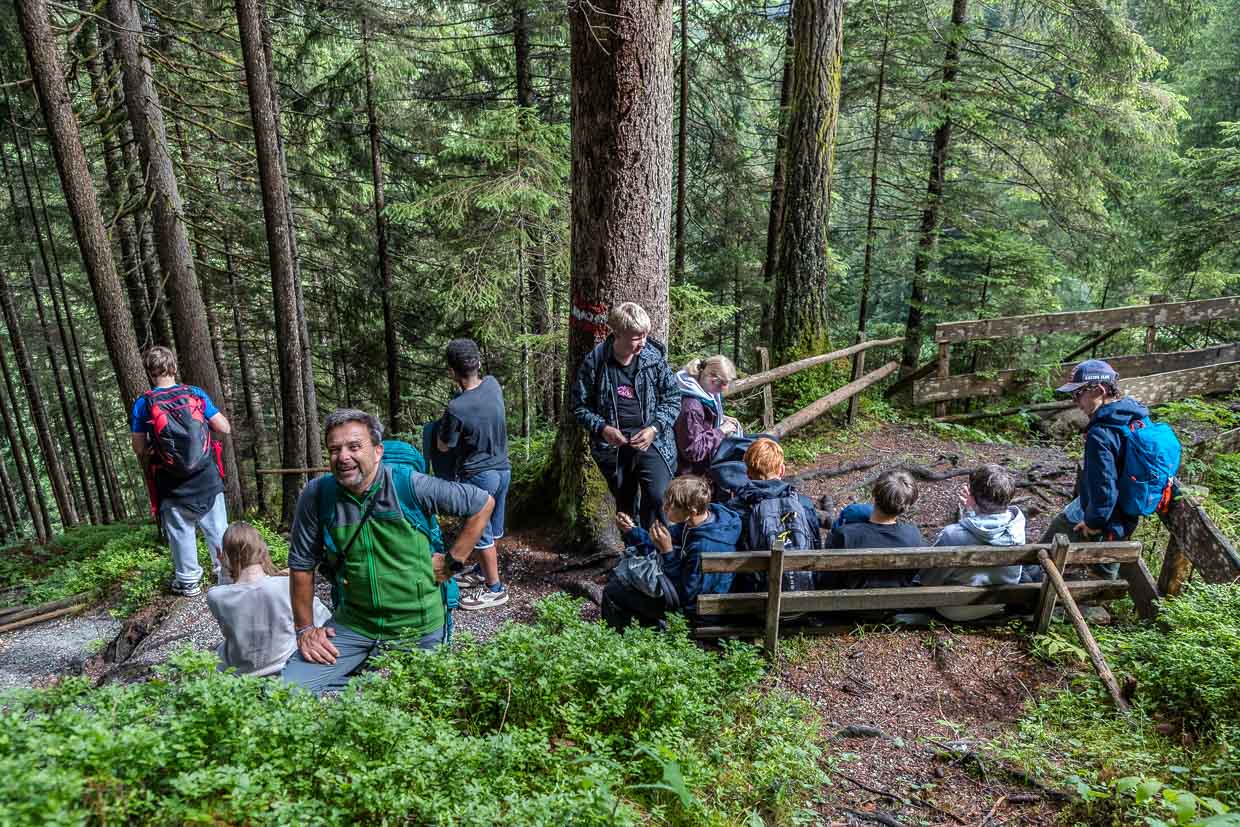
Colleague Hannes and the school class
Halfway along the trail, we meet Hannes, one of Martha’s colleagues, who is leading a school group today. The pupils are being shown the ferns and bushes along the path and are listening attentively to the ranger. It’s a small scene, but a typical one: guided tours with holidaymakers and school classes make up a significant part of the rangers’ work. Ideally, the school classes come to the national park, but “we also go into the school classes”. The national park’s twelve rangers see themselves explicitly as ambassadors, not merely as supervisors. However, their duties also include patrols. “We are the mountain and nature conservation authorities,” says Hutter. “Sometimes we have to issue warnings when people behave inconsiderately or leave their rubbish behind.” The guided tours into the wilderness area of the Sulzbach valleys are particularly popular; they take in a landscape untouched by humans, featuring pioneer vegetation near the glacier forefields. Such a tour lasts nine hours, following the roaring stream. Precious time, filled with knowledge about plants, animals and the work being done to protect them.
Tough negotiations, then acceptance
In 1971, the area was declared a protected area; the national park was officially established in 1981 – in between, as Hutter explains, lay ten years of tough negotiations, particularly with the landowners. Those who left their land fallow received compensation – for example, if they thatched their roof with traditional wooden shingles or erected a Pinzgau fence, that dense, nail-free wooden fence which can still be found in the landscape today. Today, says Hutter, there is a high level of acceptance throughout the long, winding Tauern Valley; the national park communities stand united behind the concept. Covering 1,856 square kilometres, the Hohe Tauern National Park is the largest in the Alps, spanning Salzburg, Tyrol and Carinthia. Around 3,500 plant species are found here, along with some 15,000 animal species – including the ‘Big Five’ of the Alps: ibex, chamois, marmot, golden eagle and bearded vulture.
Saint Barbara and the fox
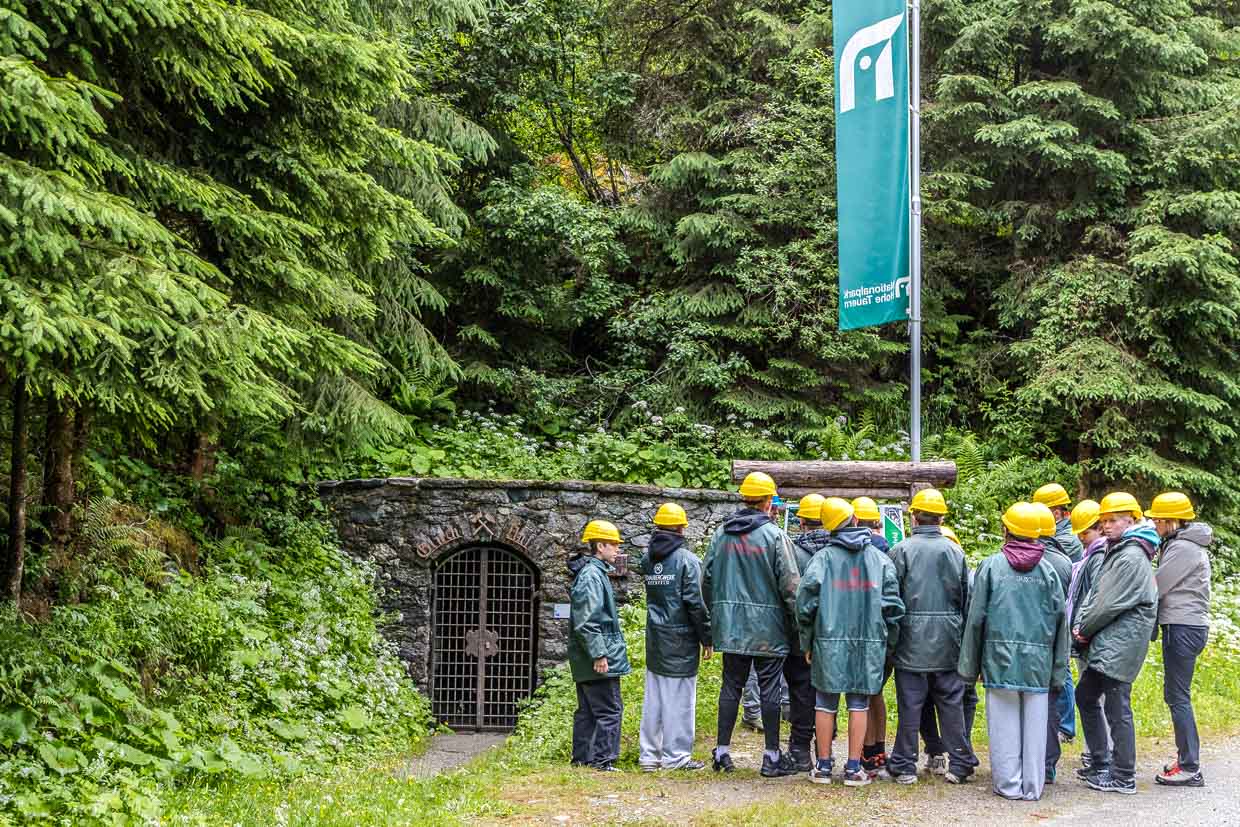
After about two hours, we reach the Knappenhütte, the service building in front of the tunnel entrance. Rain jacket, safety helmet, miner’s lamp – Hutter hands out the equipment with the ease of someone who has done this many times before. Linguistically, too, we enter a different world: you ‘drive into’ the tunnel, says Hutter, even if the entrance, as here, is above ground – a legacy of miners’ parlance that has endured to this day. Directly behind the iron gate stands Saint Barbara, the patron saint of miners. On 4 December, her feast day, it is traditional to cut a cherry branch, the ‘Barbara branch’: if it blooms by Christmas, the custom promises good luck in the coming year.
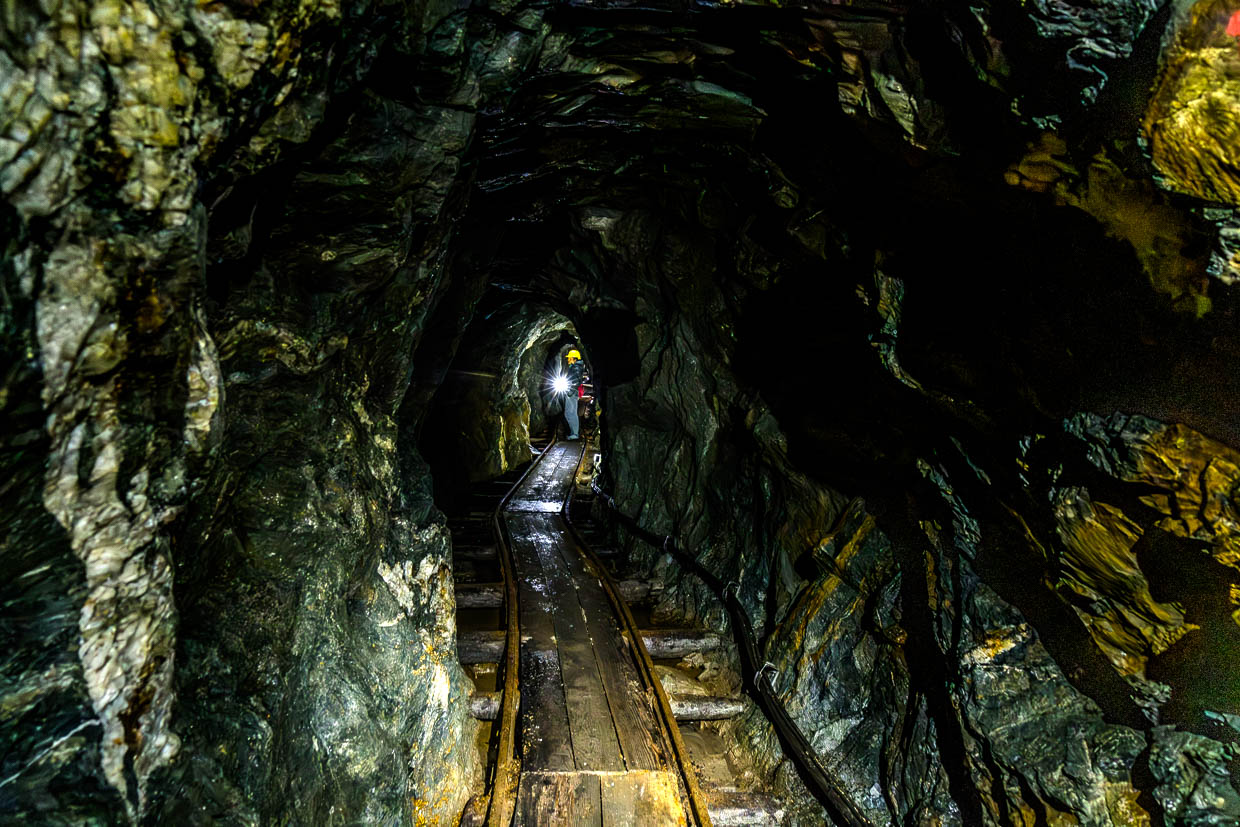
The path leads 136 metres through scree and coarse rock. It is quite wet today. It had rained for hours the day before, and the mountain takes longer to get rid of the water than one might think. At one point, Hutter points to a crossbeam in the door frame, known as the ‘Fuchs’: if it tilts, the mountain is shifting – a simple, centuries-old warning system. From the 16th century until 1954, copper was mined here, with interruptions. In its heyday in the 18th century, around forty miners worked underground, whilst another forty – often women – were busy outside crushing and transporting the ore. Of the former buildings, only the miners’ hall remains today. The so-called ‘Erbstollen’, through which we are walking, took about thirty years to blast through and chisel out by hand. It was passed down from one generation of miners to the next. In summer, it is possible to walk the entire circuit, from the ‘Morning Section’ in the east to the ‘Evening Section’ in the west, at one point thirty metres below the Untersulzbach stream. In certain weather conditions, you can hear the stream rushing above you.
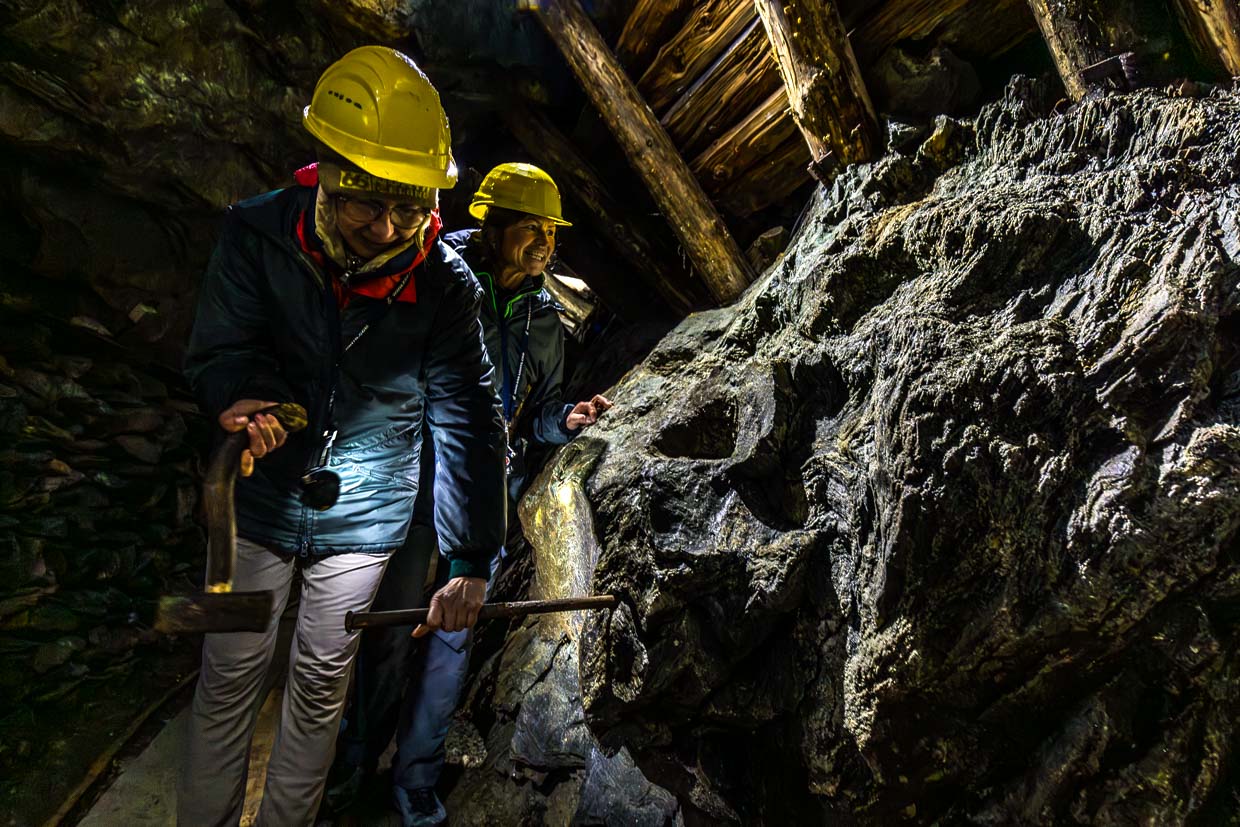
On this day, a helmet is not merely a concession to regulations, but simply a necessity. In some places, you walk bent over as a precaution; your feet plough from puddle to puddle. The ventilation doors remain open so that a draught can pass through the tunnel and oxygen can flow in. Narrow tracks once carried the ‘mine dogs’ – small wooden boxes which, in another chapter of mining history, children used to haul out the ore. After a few hundred metres, water rushes down almost from the ceiling – an echo of the previous day’s rain seeping through the rock strata. Fortunately, the tunnel is designed in such a way that the water finds its own way back out.
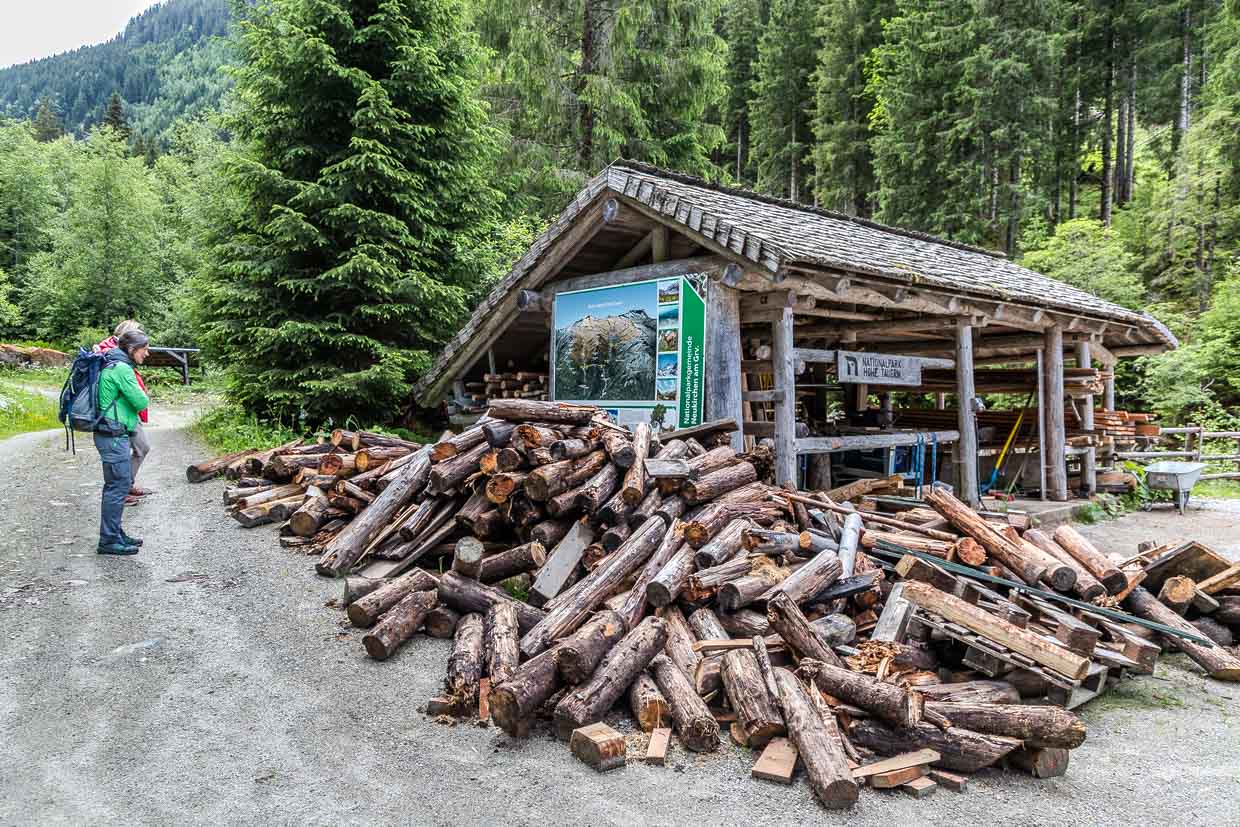
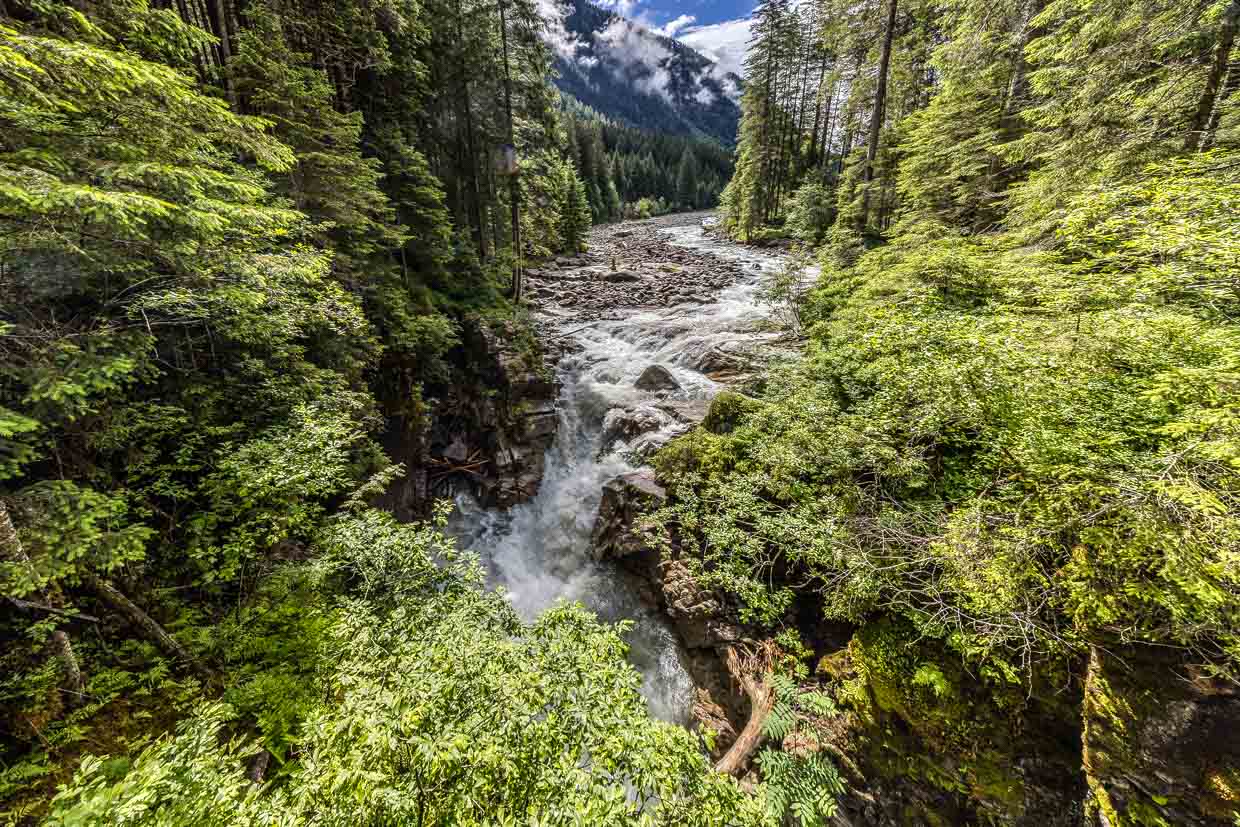
As we step back into the daylight, the sky has changed. The clouds are hanging lower, gathering above us. We set off on our return journey. After a while, our path crosses the waterfall circular trail again. This time, we take the side we skipped earlier in the morning. Wooden platforms jut out over the roaring Untersulzbach. The first raindrops mingle with the spray from the waterfall, and we realise with wonder: today we’ve seen this stream from both sides of the valley – from above, where it roars, and even from below, thirty metres beneath its bed, where we could hear it rushing. Experiencing the Obersulzbach with all our senses – just one of many fascinating encounters with nature that Martha, as an ambassador for the Hohe Tauern, has introduced us to. Click here for an overview of the National Park ranger tours.
Stories from Salzburg
Several times a week, the Baroque Hall hosts the Mozart Dinner at St Peter’s Stiftskuliarium, which is very popular with tourists and always concludes with the classic dessert, Salzburger Nockerln. Find out more about this and other specialities in the feature ‘Sweet Salzburg’. The article ‘A City Walk with Mozart’ reveals the mark Mozart left on his home city of Salzburg. The Salzburger DomQuartier is breaking new ground and invites visitors to the state rooms of the Residenz for a yoga flow session accompanied by live music by Mozart. A visit to the Augustiner Bräu for a drink and a cool Märzen under the old chestnut trees or in the historic Stockhammer Hall should also be part of any tour of Salzburg.
This feature was supported by the Hohe Tauern National Park and SalzburgerLand