
On one of the oldest gravestones of Père Lachaise are two words that promise everything: Concession à Perpétuité. Eternal resting place. In the 19th century, this sounded like a solemn promise from the city of Paris. Today, Paris knows that eternity is negotiable – especially when no one is paying.
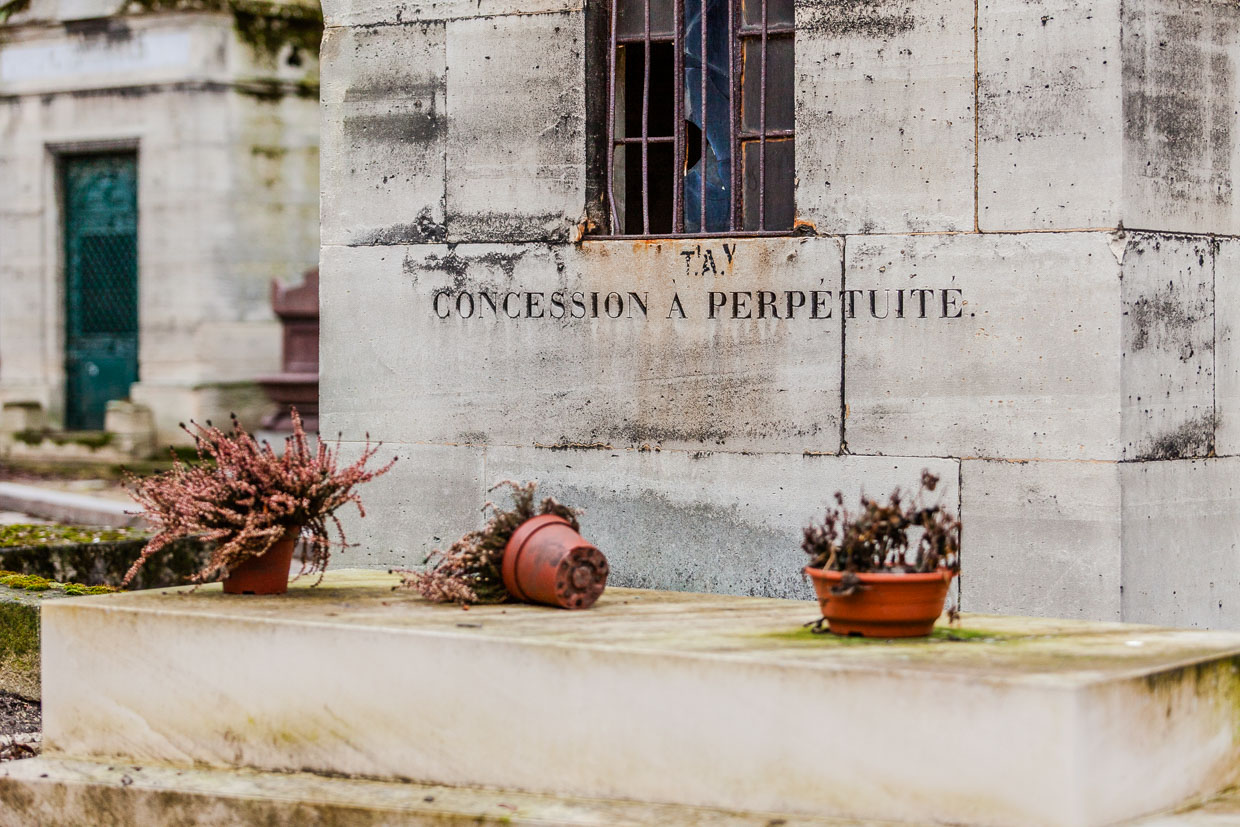
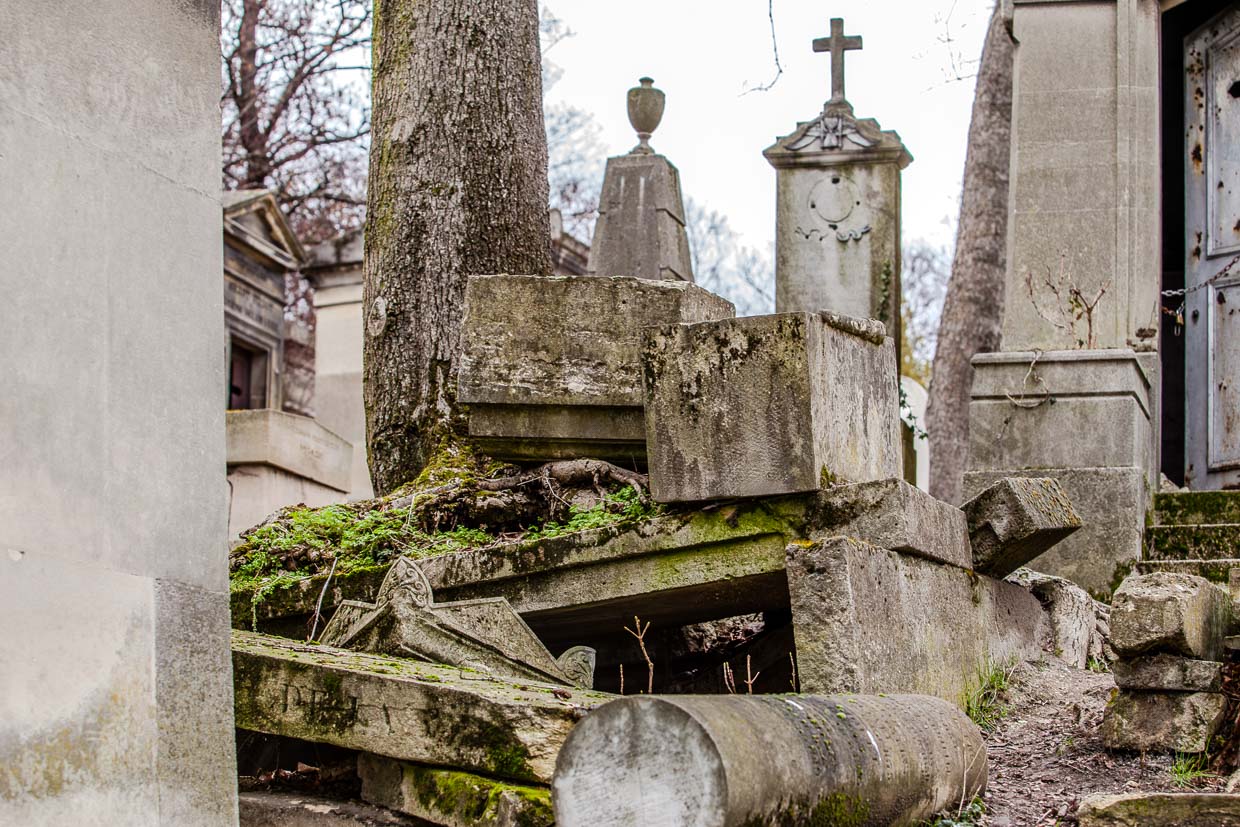
There are around 70,000 orphaned grave monuments in the three large Parisian cemeteries of Père Lachaise, Montparnasse and Montmartre alone. Monumental graves from the 19th century whose concessions have long since expired, whose families have disappeared or died out, whose names have been obliterated by time. Some graves have been reclaimed by nature: the roots of a mighty tree have blasted, lifted and shifted the thick stone slabs of a grave – as if the cemetery had decided to take what belongs to it.
Scarce commodity: the final resting place
The three central cemeteries have been full since the beginning of the 20th century. Those who want to be buried in Paris usually have to move to the outskirts of the city. The opposite was true for the decaying monuments: they were listed as historical monuments. Demolition was bureaucratically complicated, tricky in terms of monument preservation and expensive. The city was in a tight spot.
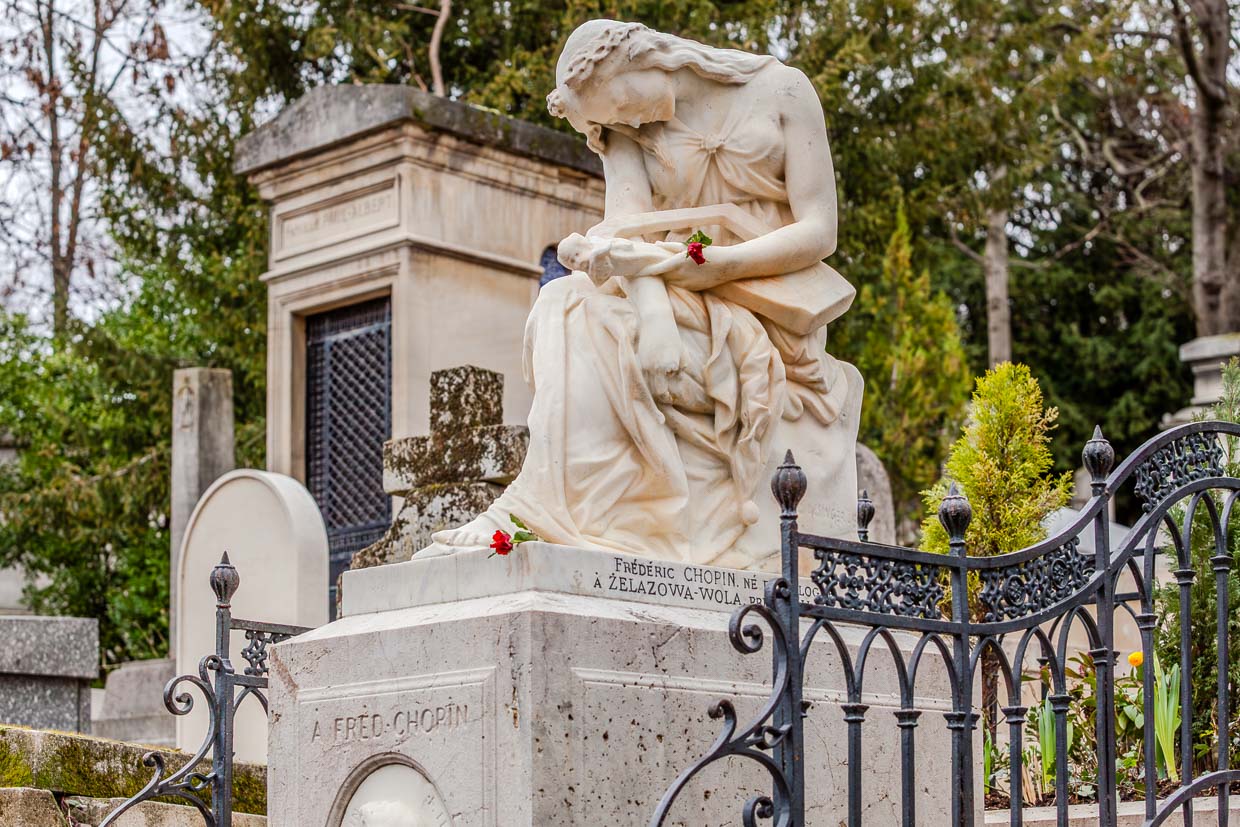
In April 2025, the Paris City Council came up with an elegant and unusual solution. The programme is called parrainage patrimonial – grave sponsorship. Anyone who faithfully restores a forgotten, listed grave at their own expense is allowed to use it as a family grave. For the test phase, the city selected 30 graves, ten per cemetery. Only Parisians were allowed to apply. To be laid to rest next to Édith Piaf or Frédéric Chopin? Possible – if the luck of the draw plays along.
The drawing of lots as the last word
Those who wanted to take part paid a registration fee of 125 euros and submitted two restoration offers from specialised companies. Some of the work had to be carried out under the supervision of the monument protection authorities. The purchase price of the licence was between 500 and 5,000 euros, depending on the condition and location – the restoration costs were added to this. On 19 January 2026, a bailiff drew the winning tickets. Those who came away empty-handed can hope: The programme is a test and will be continued if successful. Paris has enough forgotten monuments for further rounds.
Light my Fire. The time to hesitate is through!
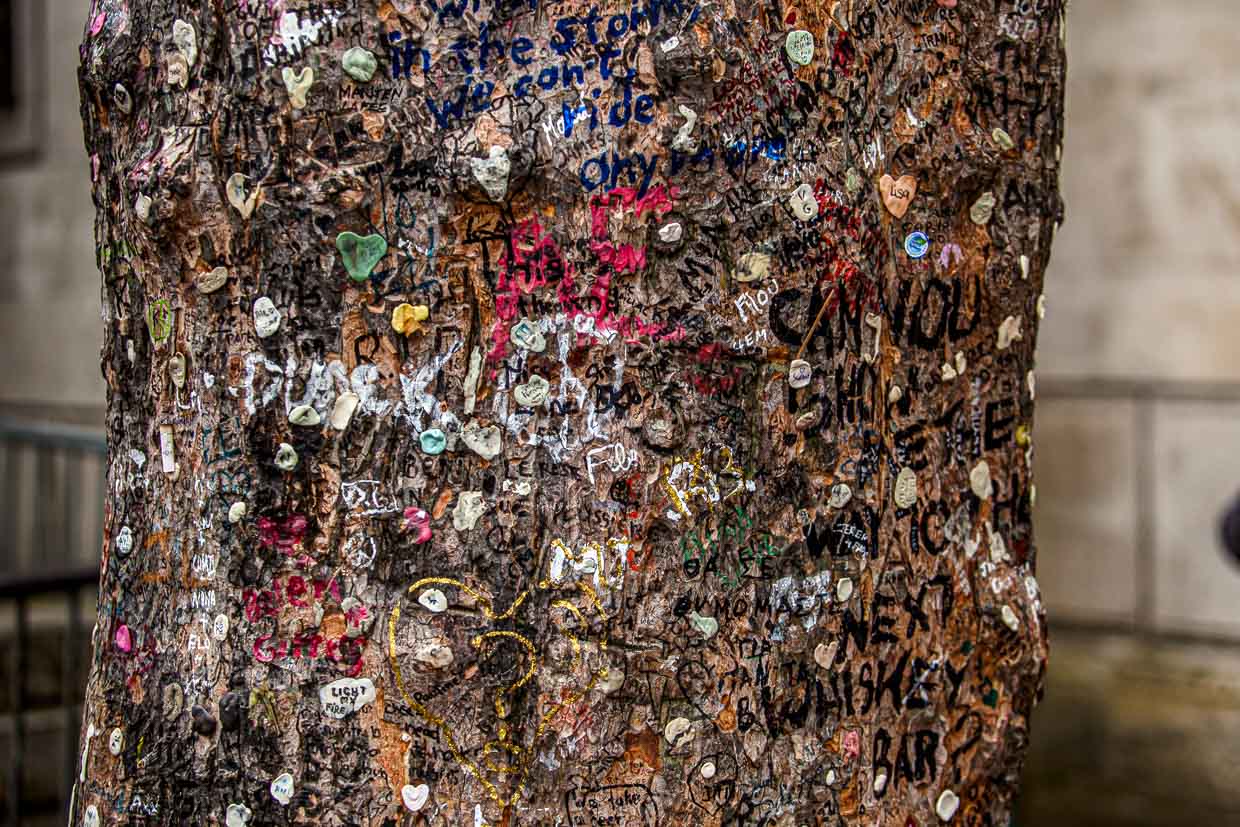
Other graves at Père Lachaise do not need municipal care. Jim Morrison, for example, has been buried here since 1971 – if you are looking for his grave, simply follow the tourists who still pay homage to the charismatic lead singer of the rock band The Doors. A nearby tree bears an unconventional tribute: its bark is covered in chewing gum, some of which is labelled. It remains unclear which heritage office is responsible for this.
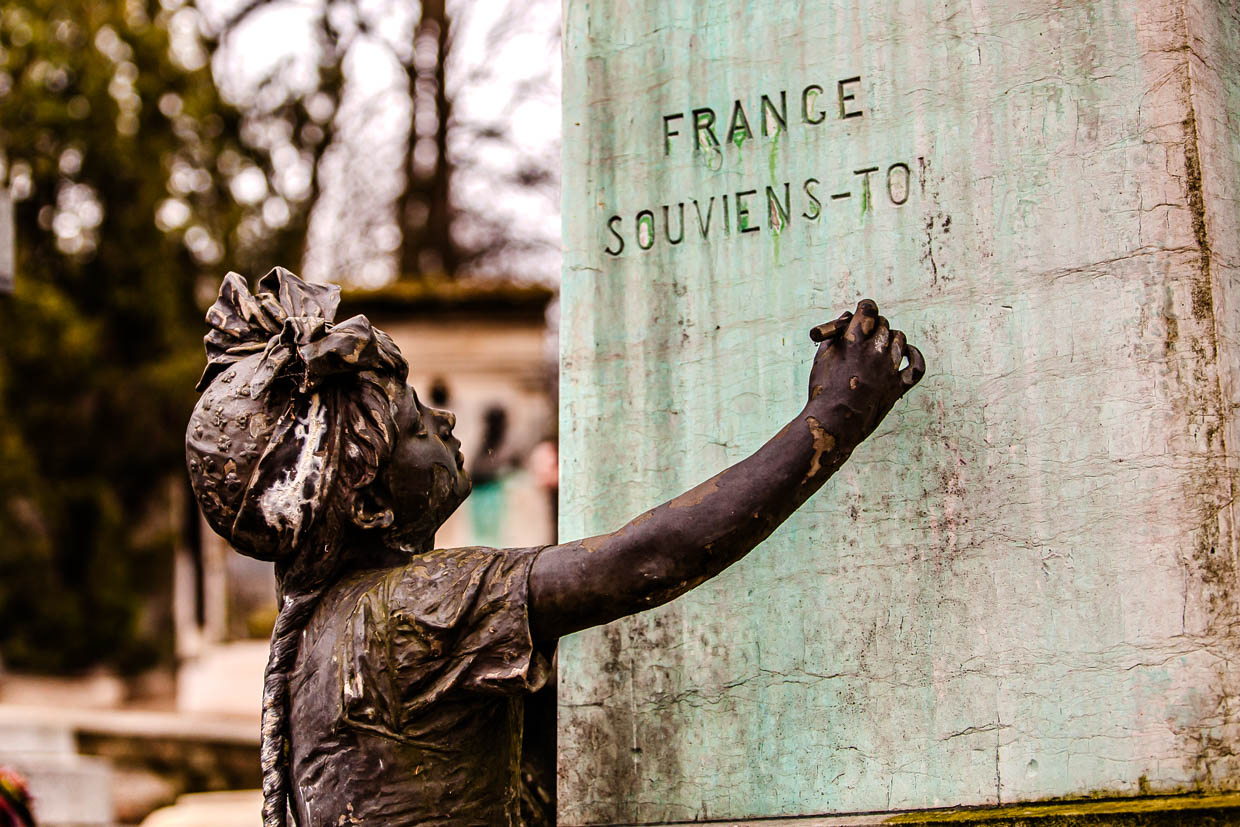
France, souviens-toi
Between the sprawling graves of Père Lachaise are monuments that no one has forgotten and those that have been forgotten even though they don’t deserve to be. On one stone tomb, a child’s sculpture has left the words: France souviens toi – France, remember. The monument does not reveal what exactly.
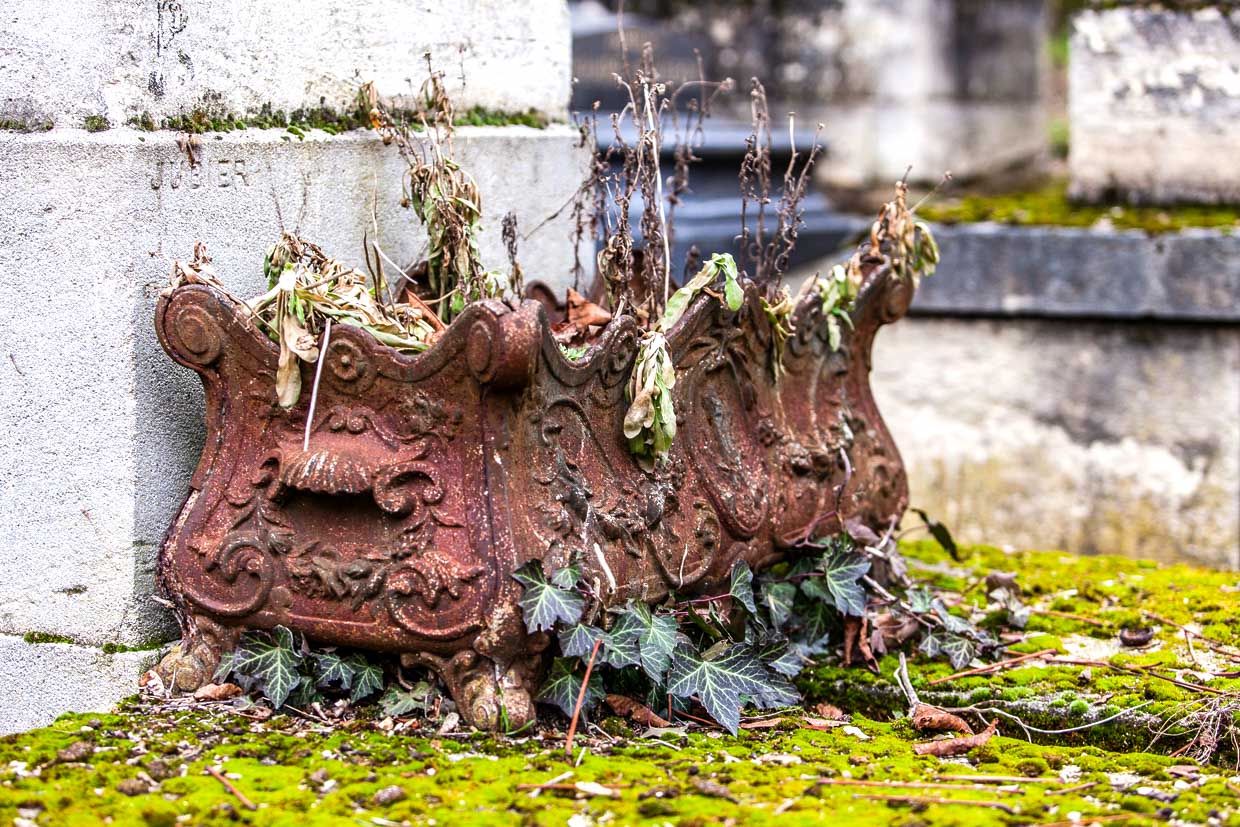
A few steps further on: a neglected flowerpot in front of a gravestone. There is a name on the stone – Jubier. No first name, no date, no dedication. Just the name and the empty tub in front of it.
Anyone who votes on the parrainage patrimonial in the Paris City Council today is fulfilling an old promise – that of the concession à perpétuité. Only in a different way: It is not the family that provides for eternity, but a stranger chosen by lot. On 19 January 2026, the lot was drawn in the presence of a huissier de justice – so that eternity can begin with legal certainty.
A look at the official records of the City of Paris shows what this looks like in practice. The Service des cimetières has prepared a multi-page exposé for each of the 30 funerary monuments for sale – with a floor plan, photos, a description of their condition and two access routes. Monument no. 3 in Père Lachaise, division 44, cadastre 378: purchase price 4,000 euros, restoration period 6 months, year of construction approx. 1884. The caveau has four chambers – but they are too narrow for modern coffins. It really says so.
We encounter monuments everywhere – when travelling, in the city, in the country, in museums. But what makes a monument? Who decides what we remember? No journey without a monument opens up a journey through the diversity of what people put on pedestals. In the city, the monuments crowd together: Monument and city shows how you can walk past a monument in Bamberg – and still become wiser. In the countryside, on the other hand, a single monument draws you in from afar: Monument in the countryside tells of the quiet magic of such places. Nature and Monument asks what happens when nature reclaims the monument. Where art and monument merge, the path leads to Kassel: Monument and art looks at the documenta city. And who is a monument themselves? Everyone is a monument – so claims a red sandstone pedestal in Kassel, on which “ICH” is written in large letters. Finally, Paris is rethinking the monument: whoever restores a forgotten, listed grave in Père Lachaise is then allowed to lie beneath it – Monument Seeks Heirs tells of a lottery procedure that combines monument protection and eternity.