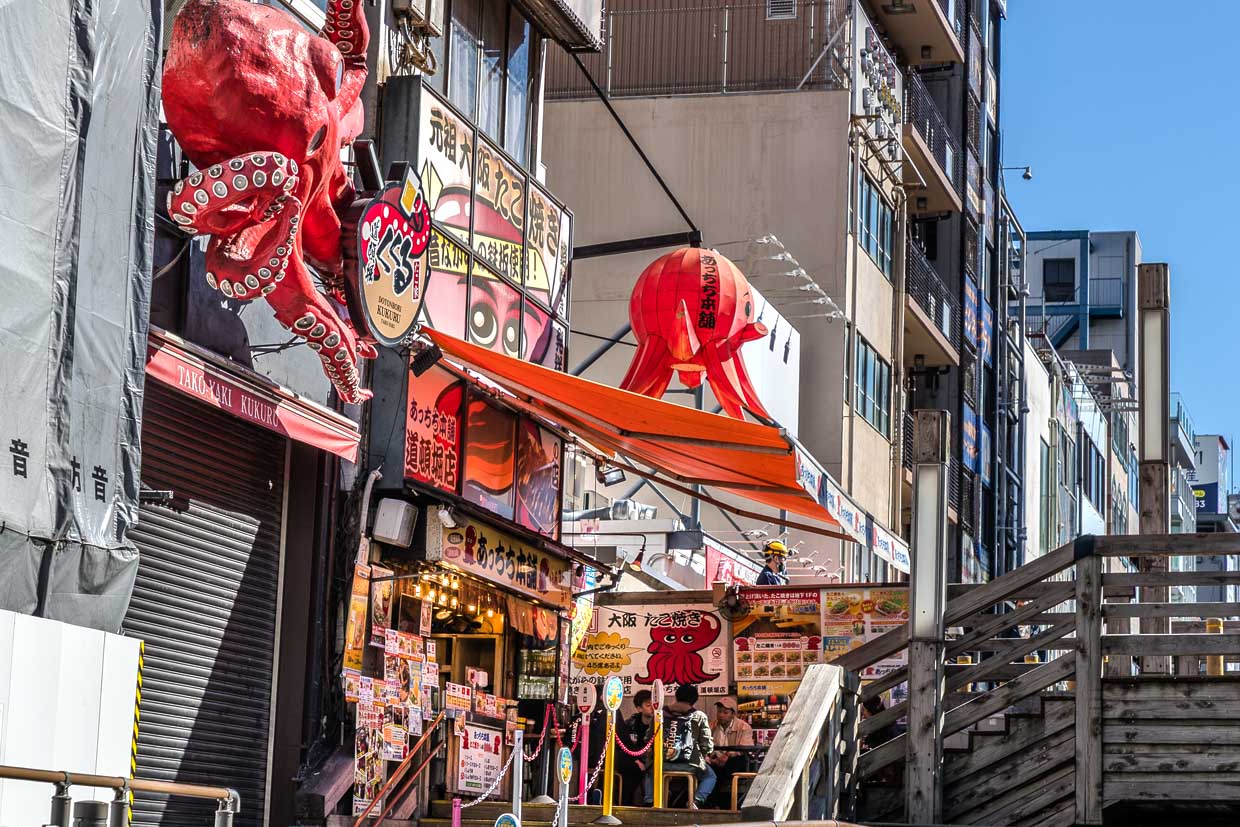
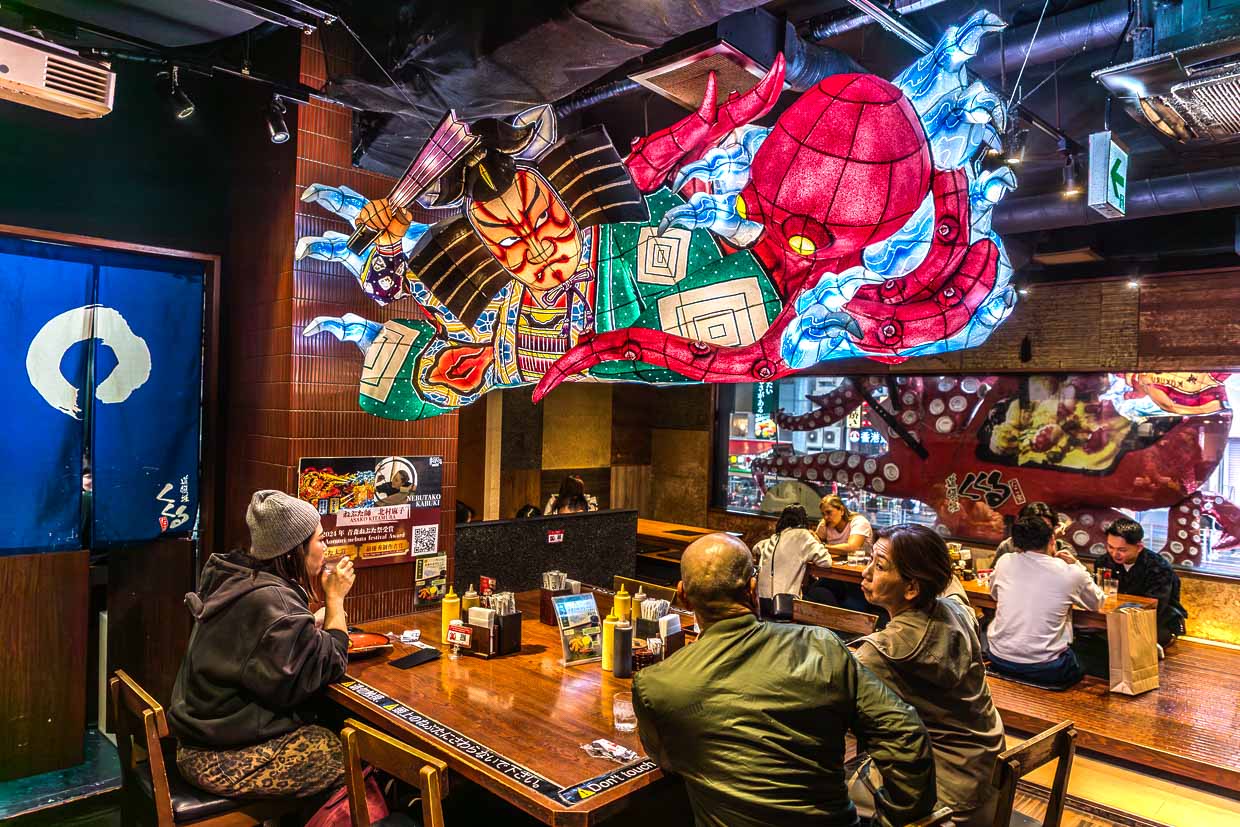
In Osaka, there is no way around the bright red octopus. On the Dotonbori shopping street, octopus arms loll on the walls of buildings, flashing and shining at passers-by. But while the decorative octopuses are huge, a takoyaki ball contains just a tiny piece of octopus. Takoyaki is the city’s street food speciality, invented around 1935 by street vendor Tomekichi Endo.
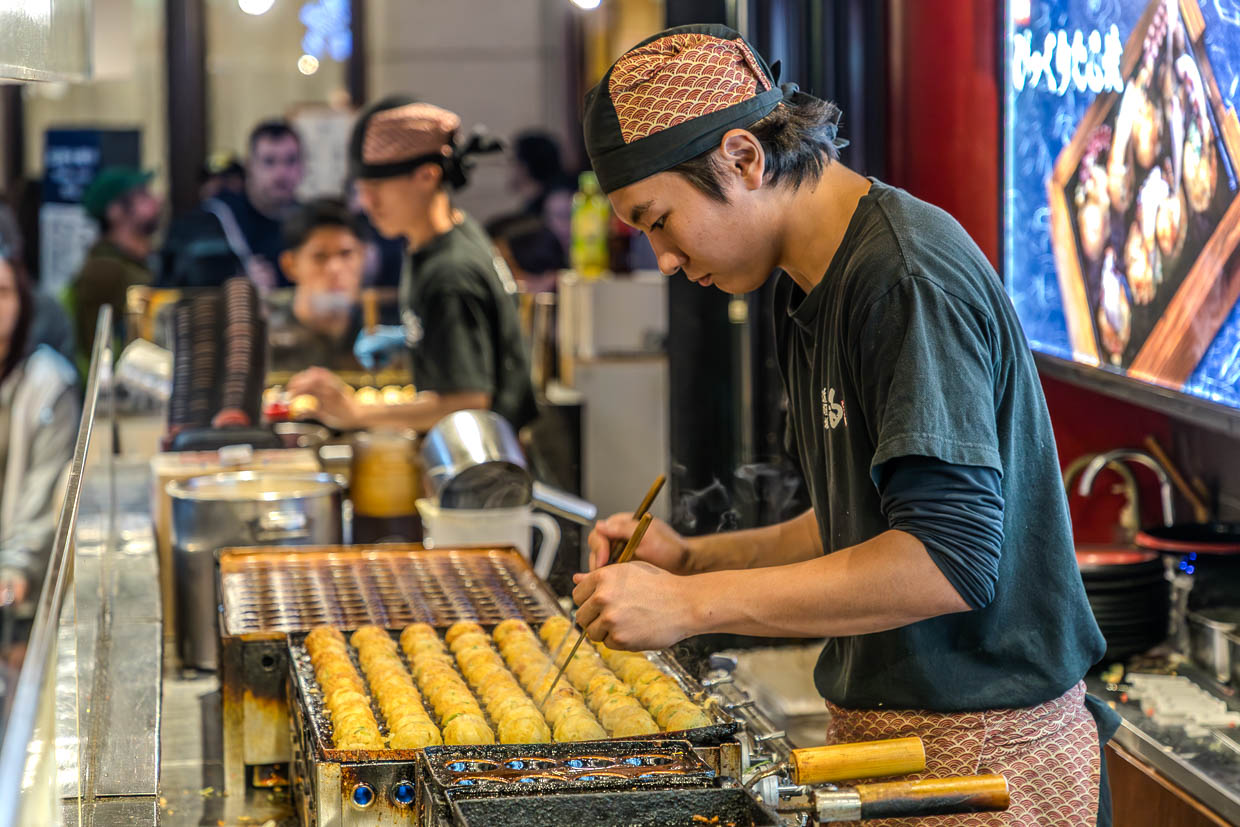
As is so often the case in Japan, takoyaki is prepared in open kitchens. Whether in the restaurant or at a street stall – guests can watch the chef. Using two thin chopsticks, he skilfully turns the balls until they are crispy on the outside and still creamy and soft on the inside.
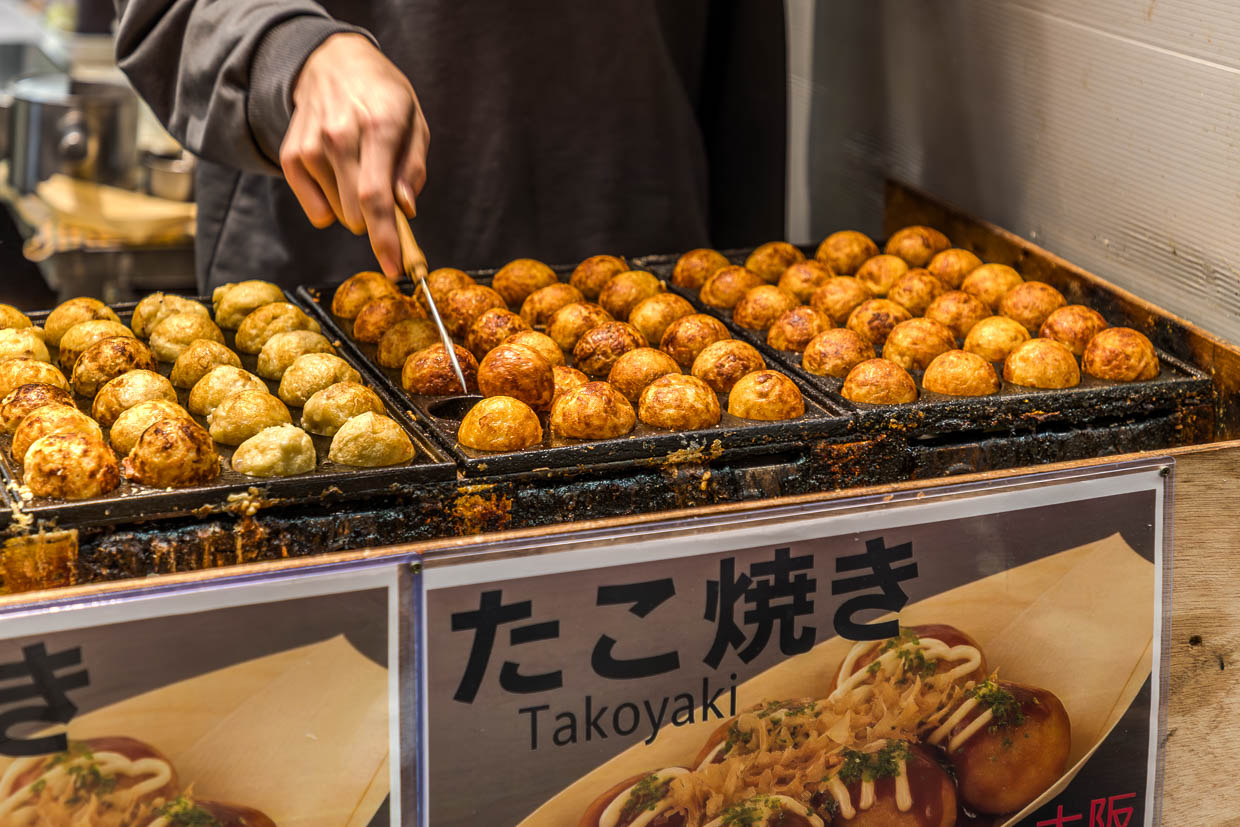
The dough made from flour, eggs and dashi broth is baked in a special pan with hemispherical indentations. Small pieces of octopus, green onions, pickled ginger (beni shoga) and sometimes tenkasu (tempura crumbs) are added. The balls, three to four centimetres in size, are traditionally garnished with takoyaki sauce, kewpie mayonnaise, katsuobushi (bonito flakes) and aonori (dried seaweed). The mix of crunchy octopus, soft batter and crispy coating is what makes them so popular.
Dough balls as a snack are actually rare in Japan. Takoyaki became popular in a time of need: rice was scarce due to the First World War and after the great Kanto earthquake in 1923, while flour was cheap. Today, takoyaki are popular throughout Japan. They even have their own museum in Osaka.
Despite being very filling, takoyaki are not considered a full meal in Japan. No wonder, after all, they come from a street vendor. They are still mainly sold as finger food. On a quiet Sunday in the fishing village of Taiji in Wakayama Prefecture, takoyaki stalls saved our day twice. After a hike along the coast, the hot balls satisfied our hunger perfectly.
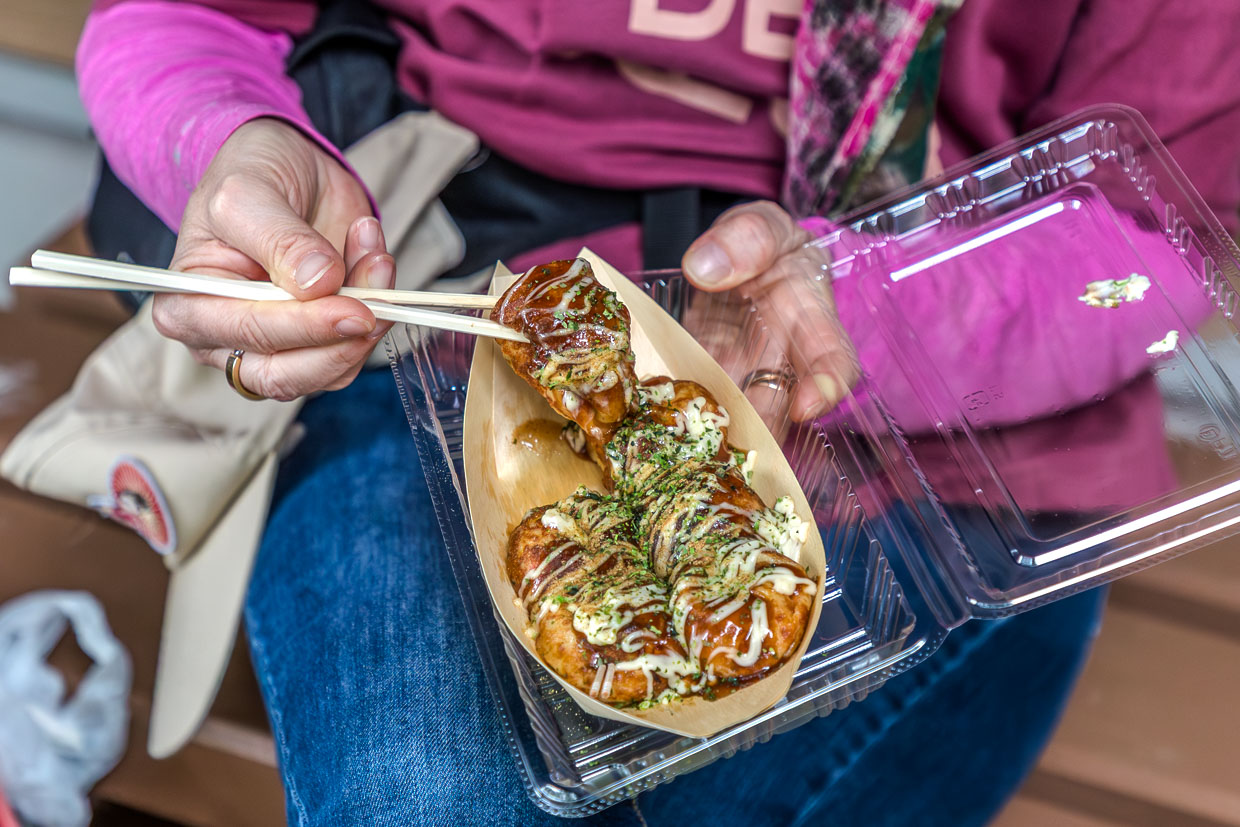
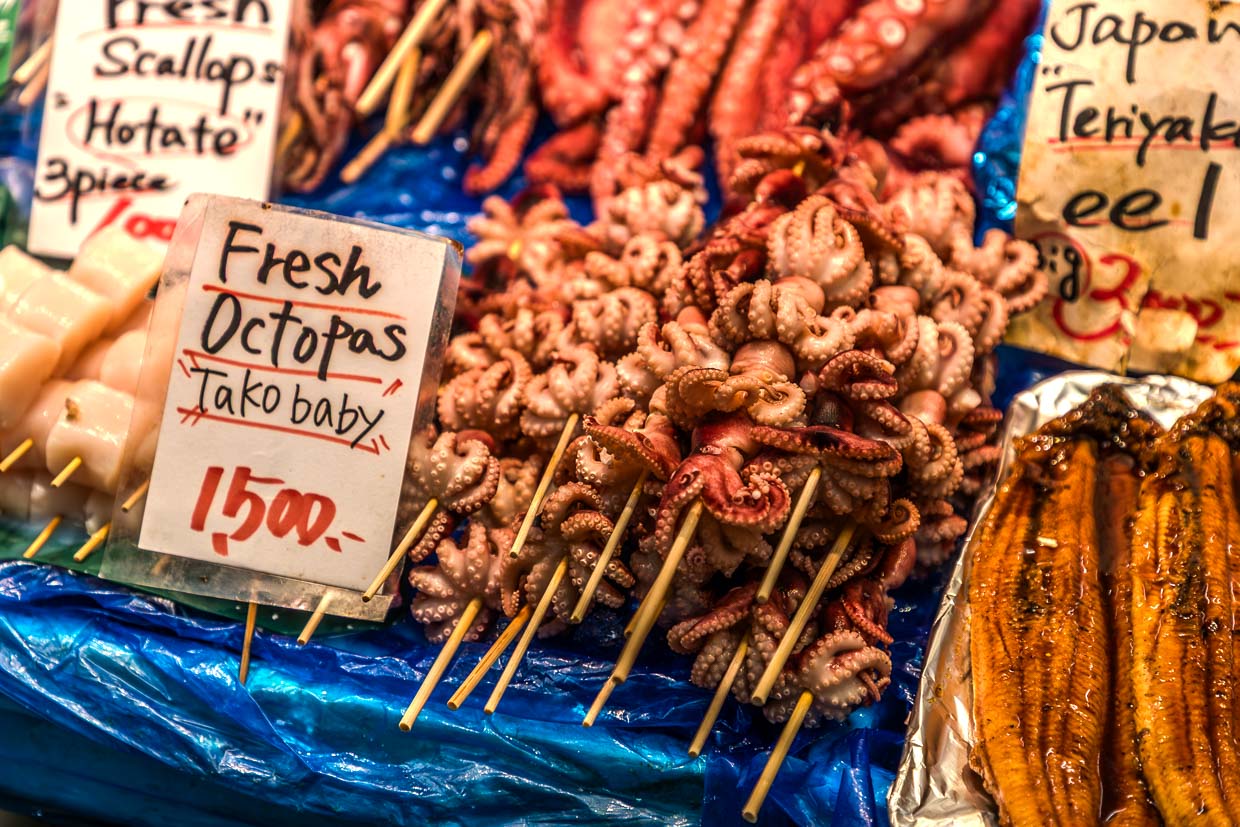
Takoyaki is usually served to six people, hot from the pan, in a small, boat-shaped bowl. The many toppings – from the Worcestershire-like sauce and mayonnaise to seaweed and bonito flakes – make the crispy shell collapse quickly. However, the interplay of the ingredients provides a real umami kick. For my taste, the batter remains too runny on the inside. When I had my first portion, I thought the chef had been in a hurry. But in Japan, they love it undercooked. If you like it well done, you have to ask for it. And if you want more octopus, you’ll also find it: At the Kuromon market in Osaka, there is fresh octopus and countless stalls selling delicious street food.