Stargazing has become a tourist attraction. There are stargazing parks, stargazing hotels and glass domes where you can spend the night. We’ve signed up too: in Canada, for the Nocturnal Sky Theatre at the Deep Sky Eye Observatory, about 30 kilometres from Yarmouth. The booking confirmation recommends a warm blanket, a hot drink and mosquito repellent.
I’m sceptical. The world’s major observatories are situated on mountain peaks: on Mauna Kea in Hawaii at an altitude of around 4,200 metres, and on La Palma at just under 2,400 metres. Up there, the air is cold, thin and dry. Quinan, on the other hand, lies in the flat south-west of Nova Scotia, amongst woodlands, moors and lakes. The Atlantic Ocean is not far away either. Yarmouth has around 190 days of fog a year. What is there to see here?
Arrival at mosquito time
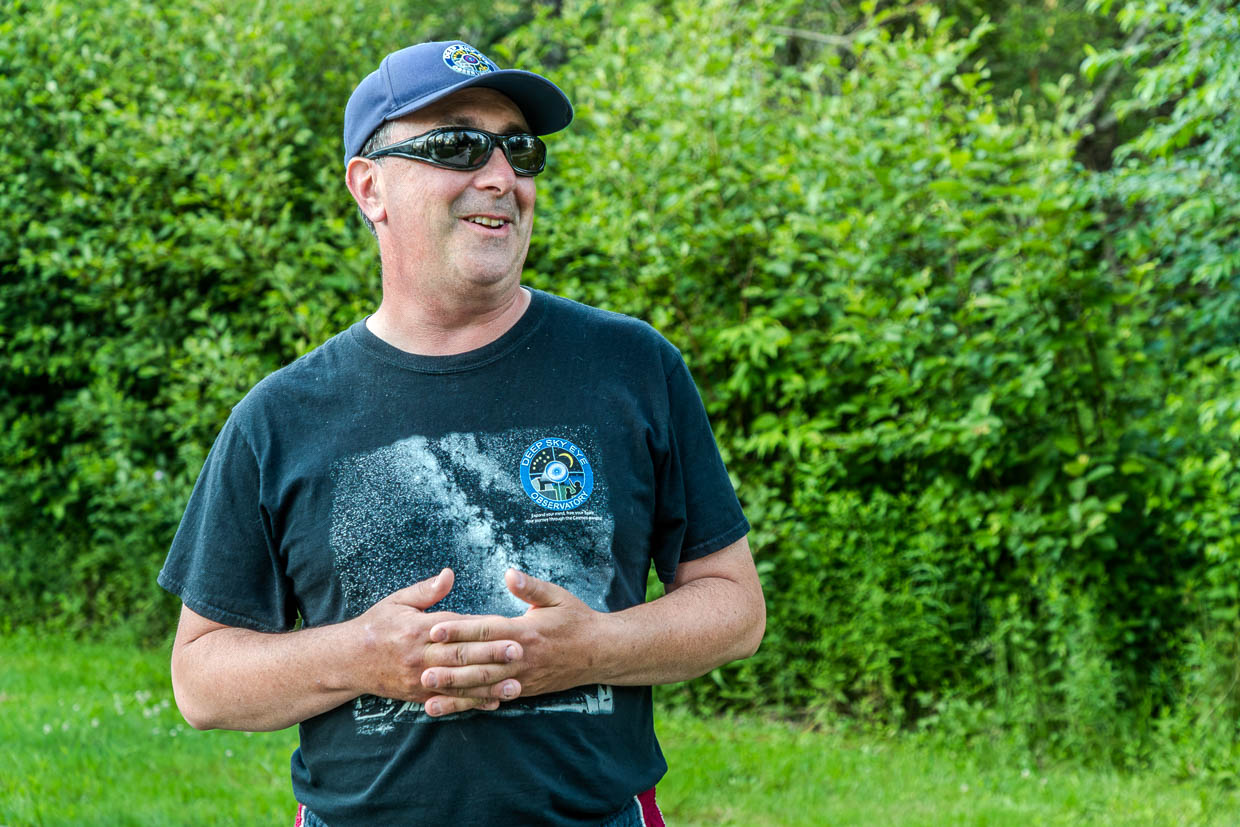
We arrive as the sun disappears behind the spruce trees. Tim Doucette welcomes us wearing a T-shirt bearing the logo of his observatory. He designed it himself and has been guiding guests through the night for ten years.
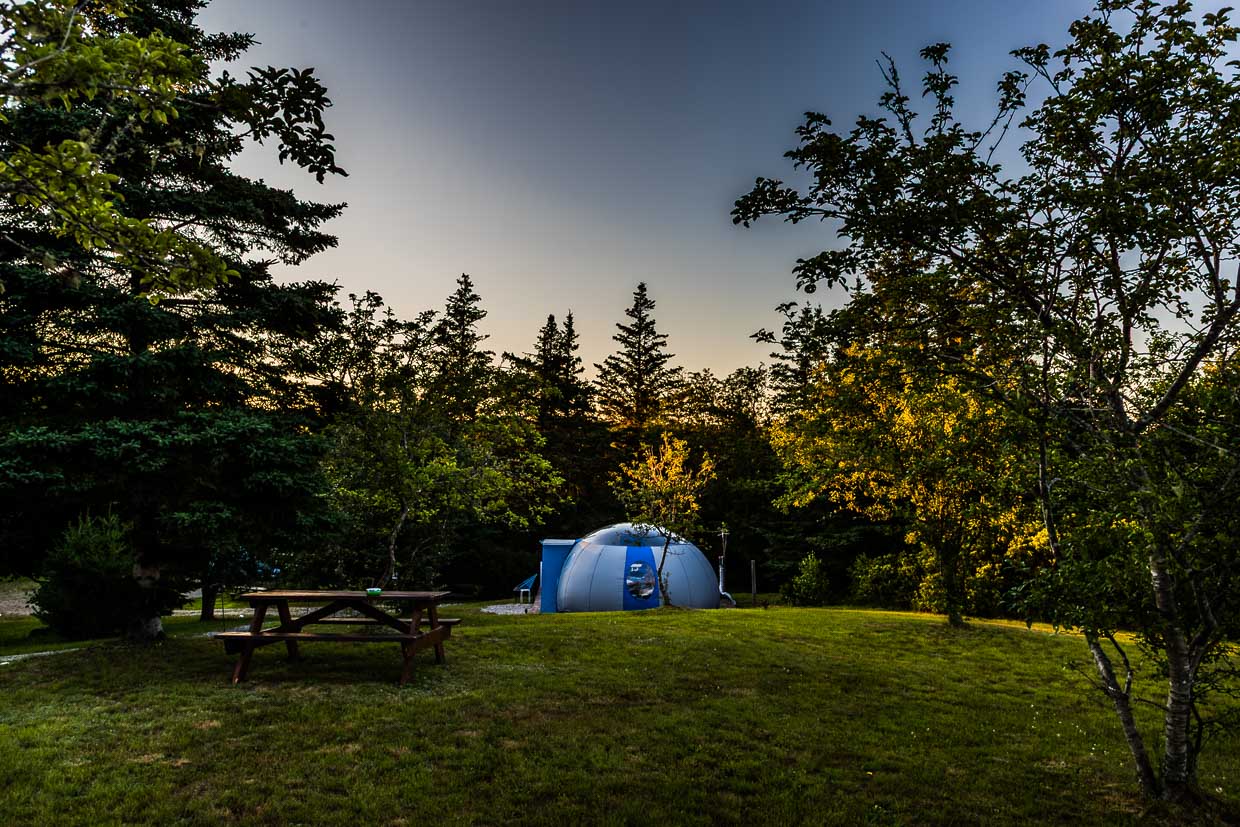
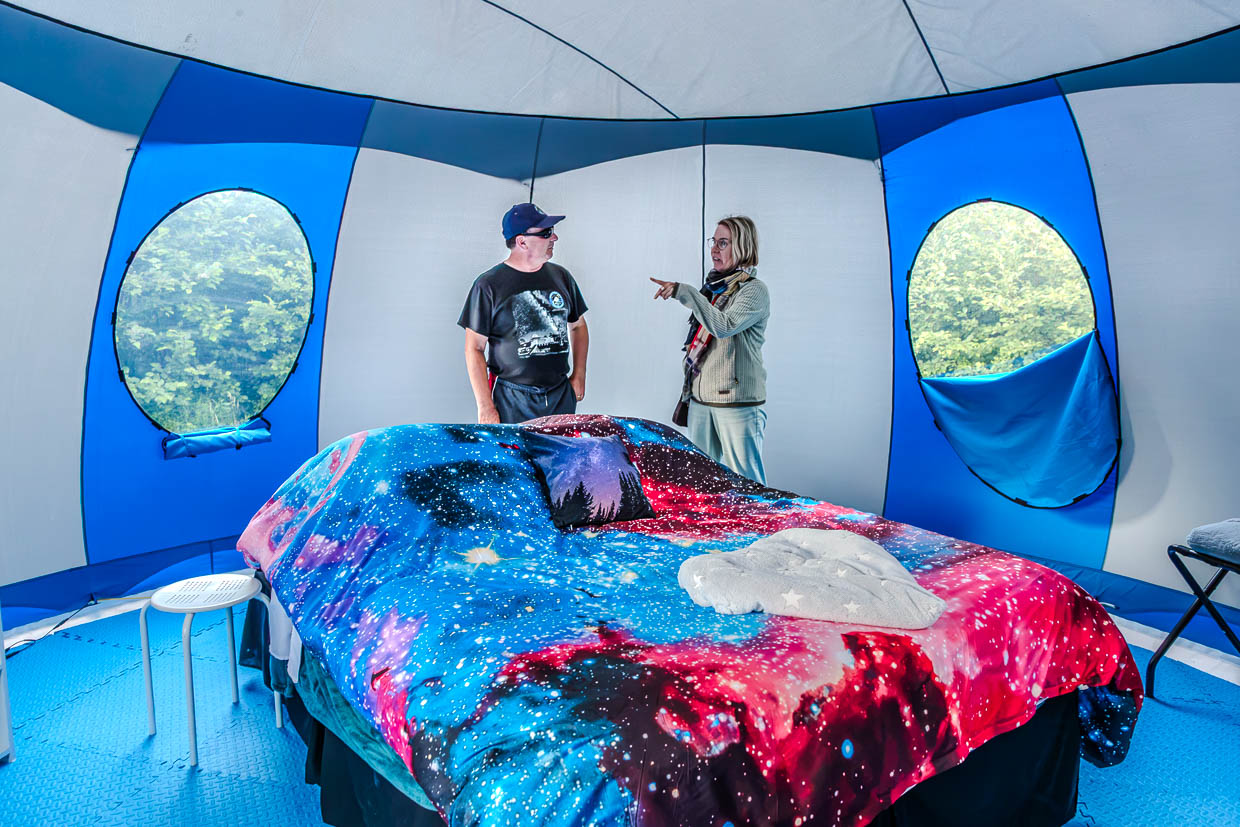
First, Tim shows us the accommodation options. In the meadow stand inflatable Sky Bubble Domes – tents with transparent roofs. Inside each one is a hotel bed. The bed linen features images of galaxies and nebulae. One night costs 300 Canadian dollars. Anyone staying for two nights gets a stargazing tour included. Tim’s wife Amanda sets up the tents.
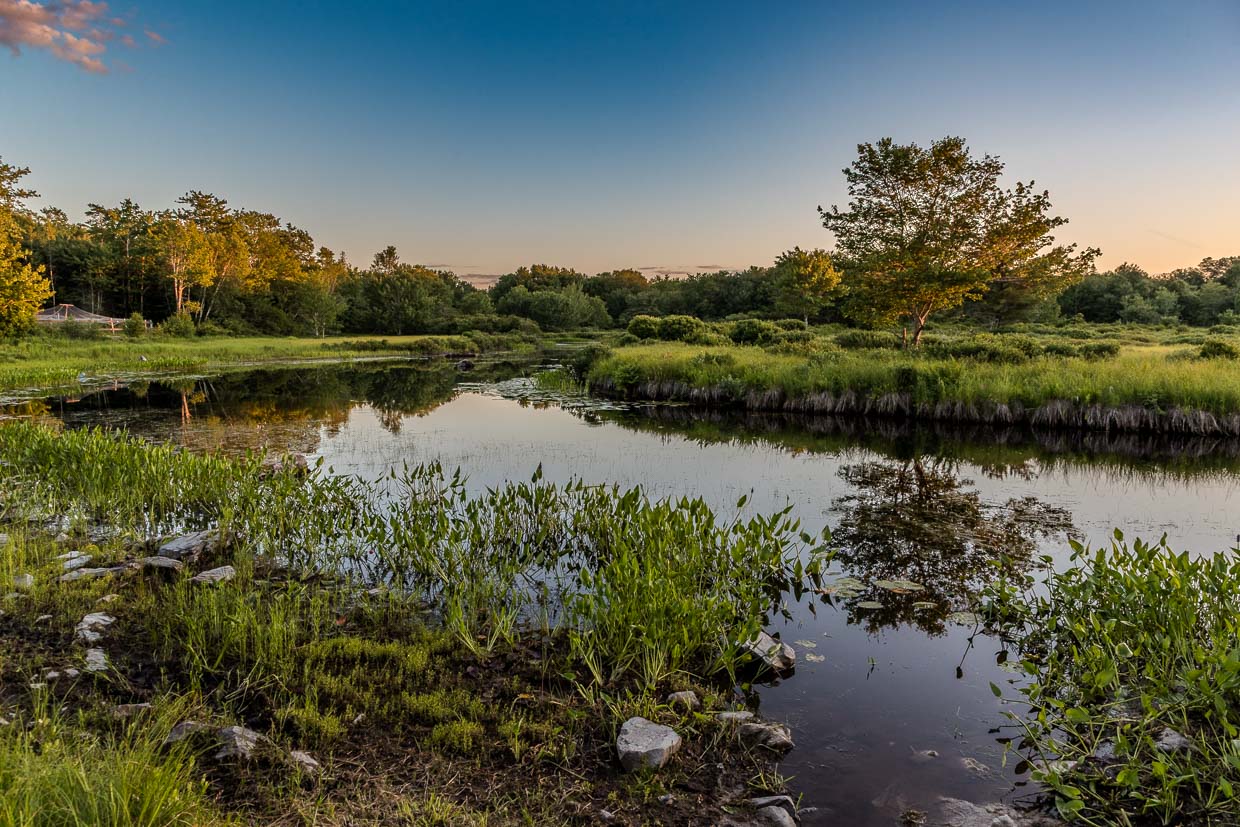
Behind the tents lies a pond. It reflects the evening sky – and explains the need for mosquito repellent. No sooner have we reached the bank than a buzzing sound fills the air around our heads. We reapply the spray. It keeps the mosquitoes at bay. The buzzing continues until the stars distract us.
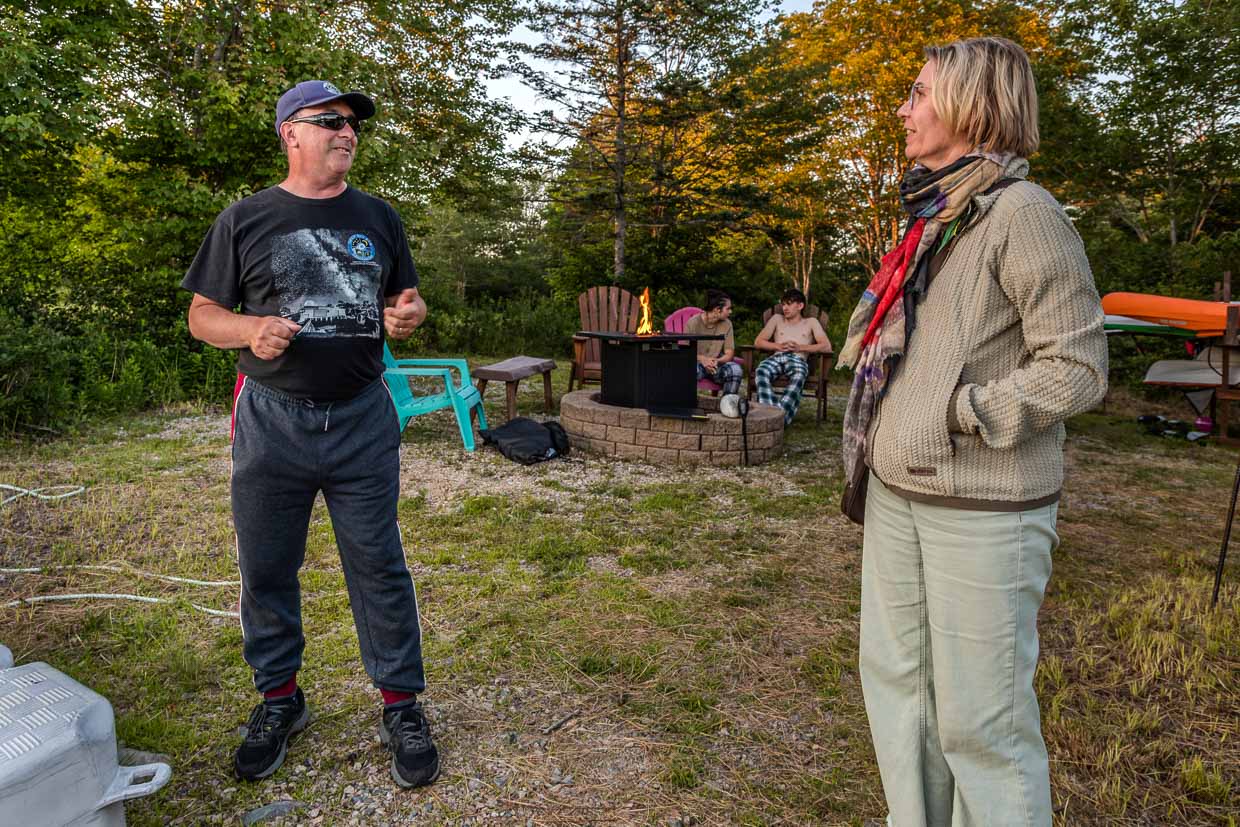
A few overnight guests are still sitting round the campfire. A dozen people from China, India, Halifax, Toronto, Edinburgh and San Diego have come, including several children. Tim asks the group who has never looked through a telescope before. Many raise their hands. Angela says what she’s hoping for from the night: she’d like to see the Milky Way.
First the theory, then the sky
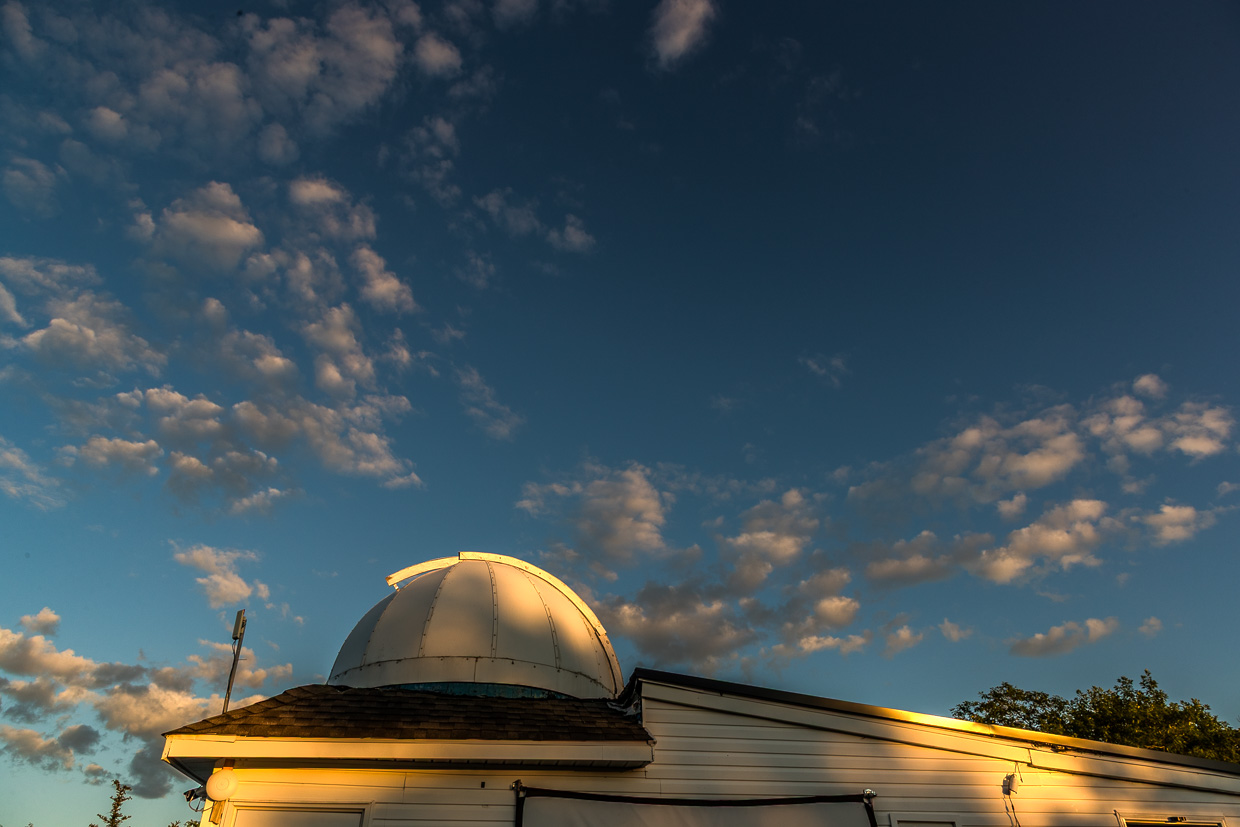
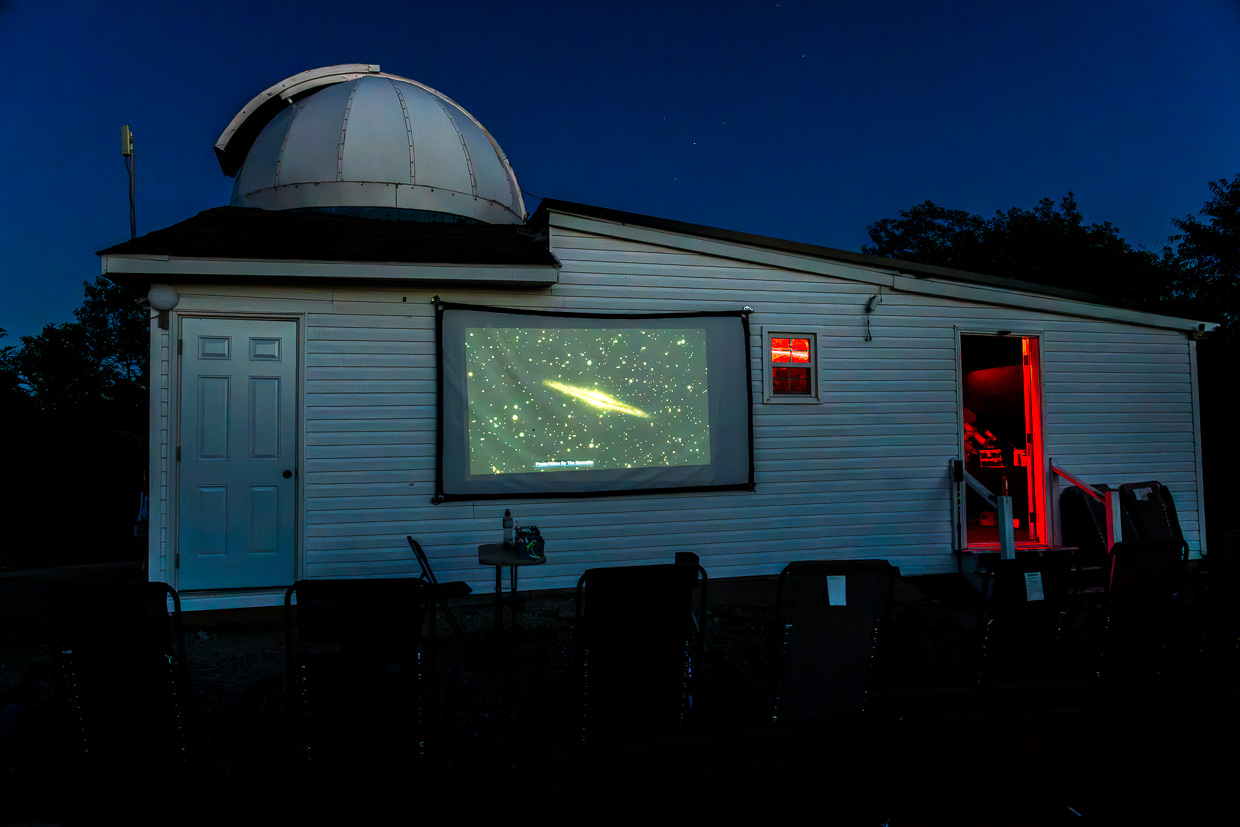
At ten o’clock, we’re sitting in deckchairs in front of the white wooden house with the dome. A projector is casting images onto the wall of the building. Tim devised this open-air programme during the COVID-19 pandemic. There was no longer enough room for groups inside the cramped dome.
First, we learn how to look through a telescope. Tim’s rules are simple. Anyone who wants to observe the stars in the evening should wear sunglasses during the day. Otherwise, a chance glance at the sun will leave a spot on the retina for 24 to 48 hours. The eyes need 15 minutes in the dark for the pupils to open fully. You shouldn’t blink, cover your unobstructed eye with your hand, or touch the eyepiece. If you can’t find an object, looking out of the corner of your eye helps. Anyone who needs to use their mobile as a torch is given red insulating tape by Tim to cover the LED.
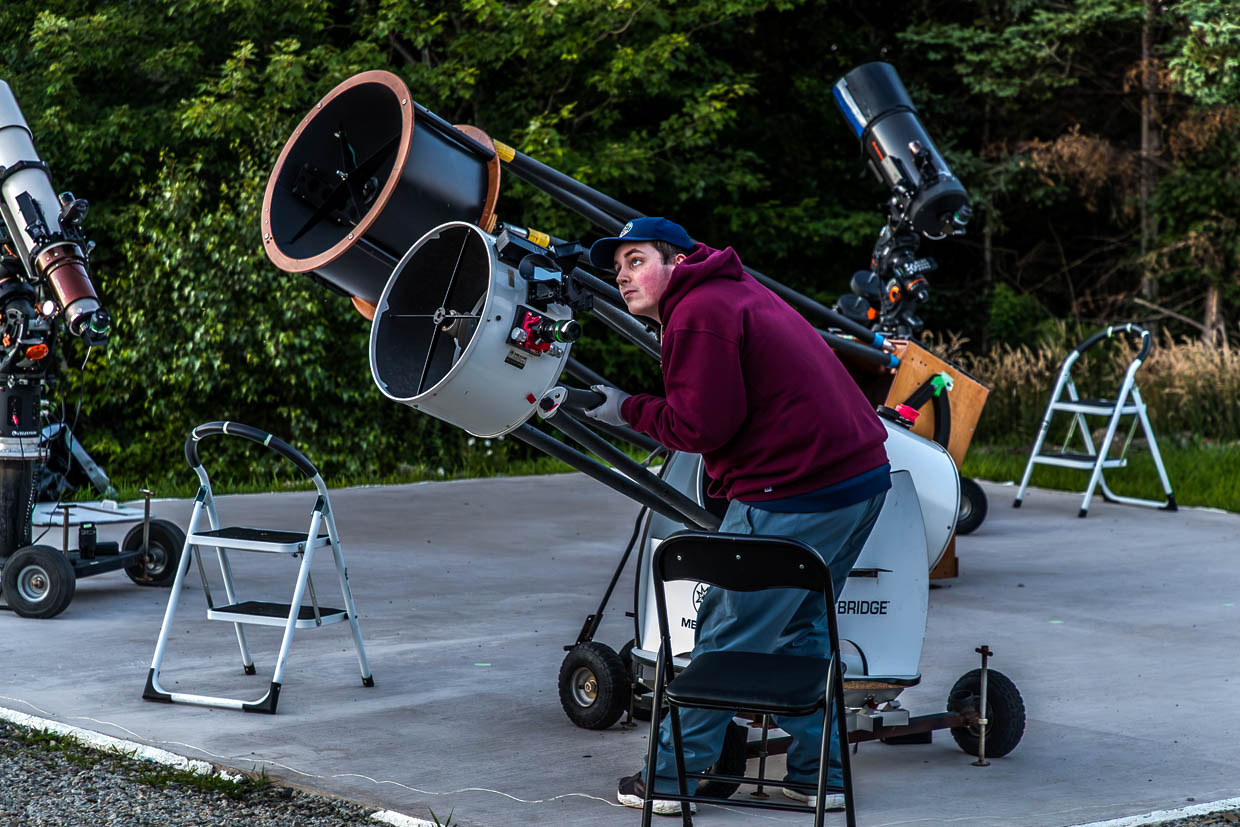
Next to the platform, Liam is aligning the telescopes. This year, he graduated from the Department of Astronomy and Physics at Saint Mary’s University in Halifax. He is now helping Tim with the demonstrations.
The curtain rises
The round of introductions serves a purpose. Tim asks us how it would feel if someone said: ‘You’ll never achieve your dream because you’re different.’ Then he tells his own story.
He was born with congenital cataracts. “For the first year and a half of my life, I had no sight,” he says. Many operations followed. Today, he retains about ten per cent of normal vision.
As a child, Tim wanted to be an astronaut or an astronomer. In the night sky, he could see only a few bright dots. At 16, he gave up on that dream. His eyesight deteriorated, and the doctors operated again. After the operation, he travelled home from Halifax in three hours. It was a cool autumn night. Tim got out of the car and looked up. “It was as if a curtain had been lifted.” At first, he feared a detached retina. Then his mother said: “I think you can see the stars.”
Tim became a software developer. He works at a screen that magnifies everything. Fifteen years later, his wife Amanda gave him a small telescope as a present. A friend from the Royal Astronomical Society of Canada took him to a dark spot near Moncton in New Brunswick. He let Tim look through his telescope and asked what he could see. “A doughnut with sprinkles and something like a puddle of water in the middle.” The friend was taken aback: “You can’t possibly see that with this telescope.” Tim thought it was a joke. As the night went on, the others began to believe that he could see more than they could.
His optician later explained why. At the age of 16, doctors had permanently dilated his pupils. A healthy pupil measures about two millimetres during the day, and seven and a half to eight millimetres at night. Tim’s pupils are always 12 millimetres wide. Mathematically, this means two and a half to three times as much light enters his eye as it does a normal eye that has adapted to the dark. He also lacks lenses. They were removed and never replaced. The lens normally filters out ultraviolet light. Tim perceives some of it. “Yes, I really do have a superpower,” he says.
So Tim doesn’t see more clearly than we do. He can see objects that are dimmer. By day, this is a burden; by night, an advantage.
The doughnut in the eyepiece
The ‘donut’ that night in Moncton was the Ring Nebula in the constellation Lyra. A dying star there has shed its outer layers. Its hot core emits ultraviolet light, causing the surrounding gas to glow.
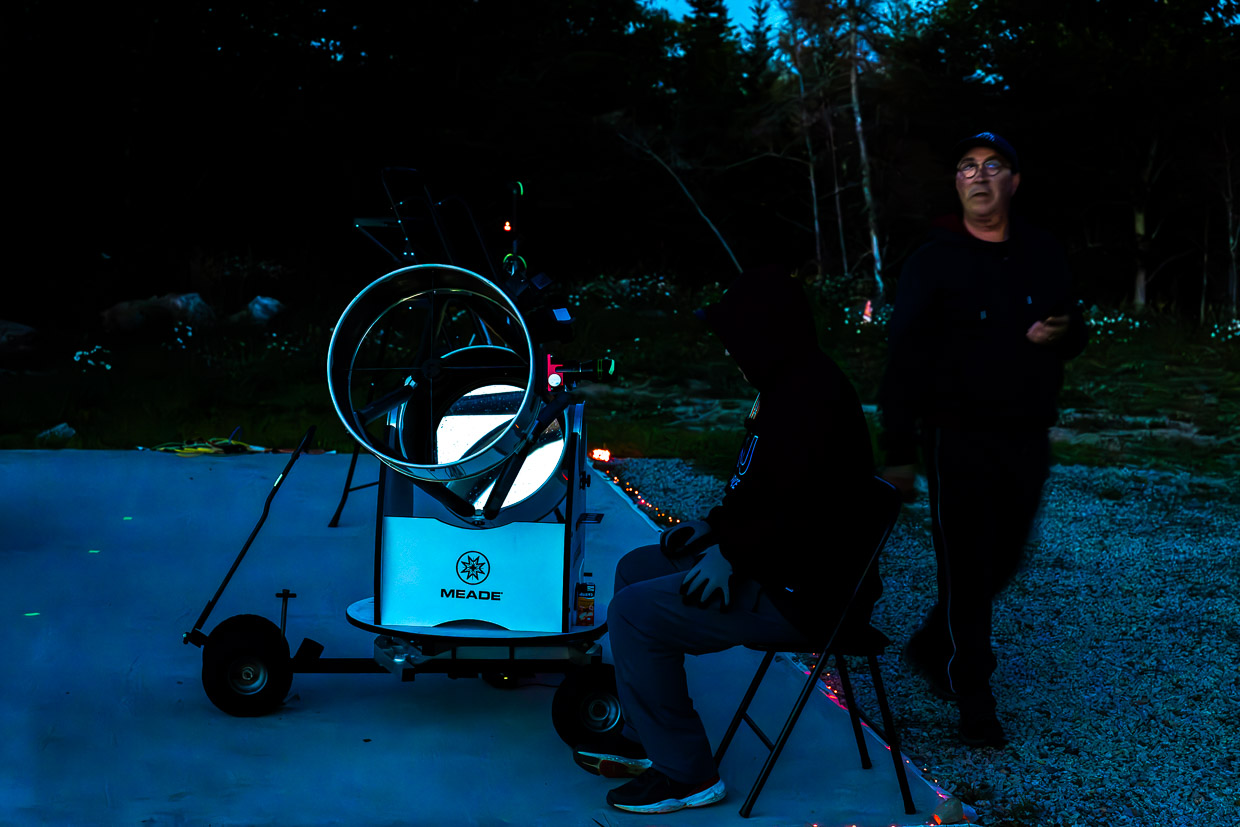
Tonight we get to look inside it ourselves. There are four telescopes on the platform. The largest shows a nebula in the Milky Way – a cloud of gas and dust where new stars are forming. Another shows a binary star consisting of two suns of different colours. Tim claims that he can estimate the age of the observer from the colour they see.
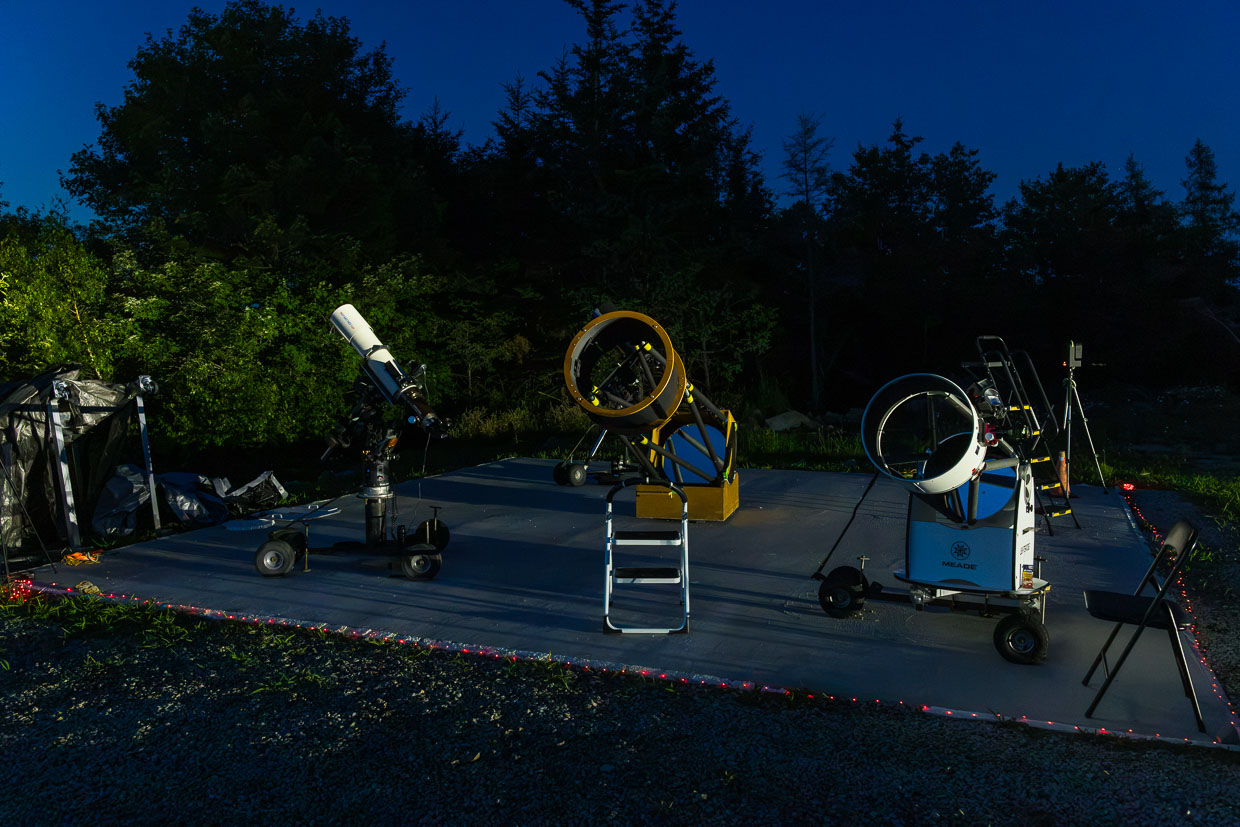
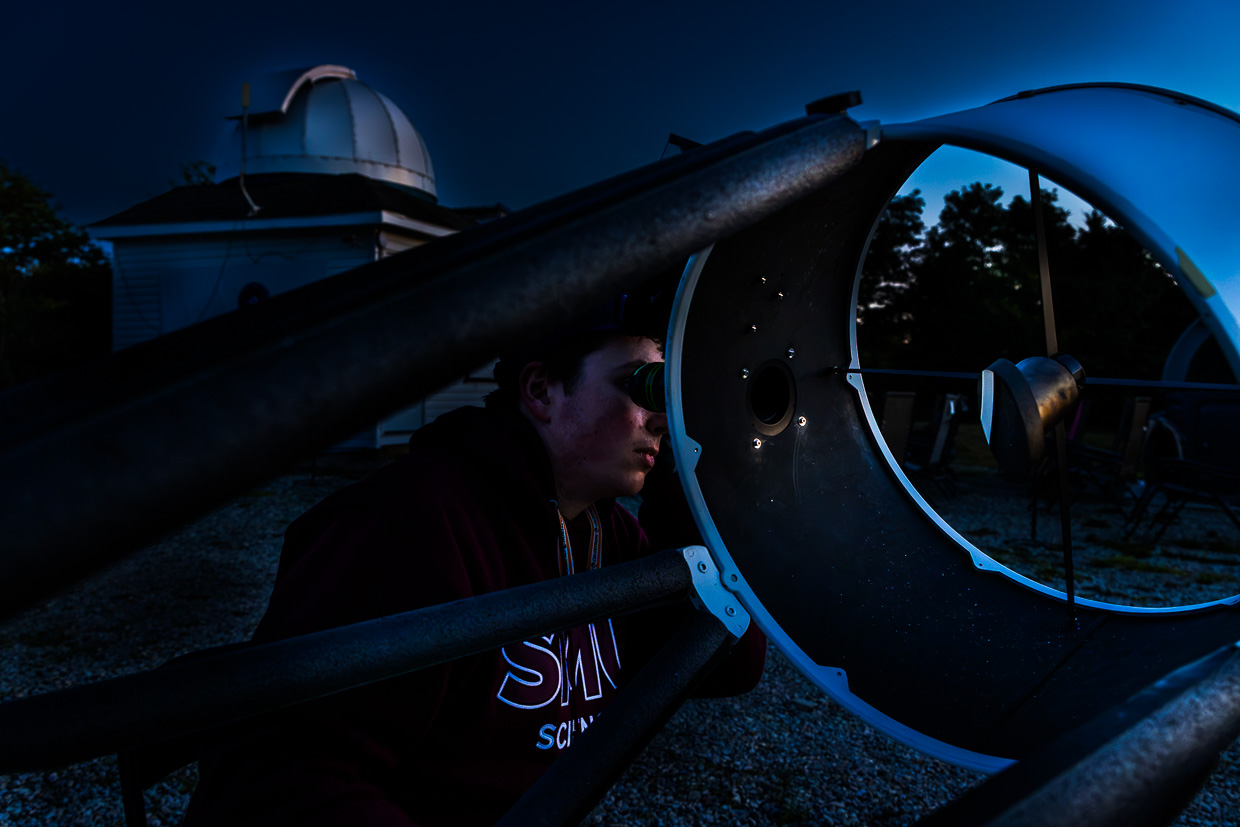
We join the queue. For some telescopes, you have to kneel on a foam cushion; for others, climb a ladder. I keep my distance from the eyepiece – a finger’s width, as Tim demonstrated. Then I move closer slowly. A small grey ring appears in the eyepiece. Tiny, but distinct: Tim’s doughnut.
The fourth telescope shows the Whirlpool Galaxy M51, Tim’s favourite object. It uses an electronically assisted eyepiece that magnifies the image. The technology is designed for visitors who can’t see much through a standard eyepiece. Tim lets it run for everyone anyway. That way, everyone can see something, even those looking through a telescope for the first time.
I’ve set up the tripod for my photos a little way away from the group. To mount the camera, I switch on the torch on my mobile. Even this light is a nuisance to the other visitors’ eyes. They’ve only just got used to the darkness. A short while later, Tim is standing next to me, holding a piece of red adhesive tape. He sticks it over the torch on my mobile. Practical solutions like this, offered in a friendly manner, characterise the atmosphere of the evening.
No mountain top, but dark
And my scepticism? It’s not unfounded. Large research telescopes are situated on mountains because there is less air above them. Less water vapour absorbs less light. Less atmospheric turbulence means the stars twinkle less. That matters for sharp images and for infrared measurements. For the naked eye and small telescopes, however, something else matters above all: how dark the sky is.
Darkness has become a rarity. According to the 2016 World Atlas of Artificial Sky Brightness, more than a third of humanity lives in places where the Milky Way is no longer visible. In Europe, this affects around 60 per cent of people; in North America, almost 80 per cent.
South-western Nova Scotia is sparsely populated. At the end of 2014, the Spanish Starlight Foundation recognised the region as North America’s first Starlight destination. The area is called Acadian Skies & Mi’kmaq Lands and encompasses the municipalities of Argyle, Yarmouth and Clare. Tim moved back here that same year. He built the observatory to find out whether astro-tourism could be a viable business. His father and brother, both carpenters, built it according to his plans. In 2026, Deep Sky Eye will celebrate its tenth anniversary. According to Tim, he has never received any government funding. Since 2025, he has been working exclusively for Deep Sky Eye.
It isn’t completely dark here either. On the horizon, car headlights flit through the trees. But above them, the sky is clear. No fog, no haze.
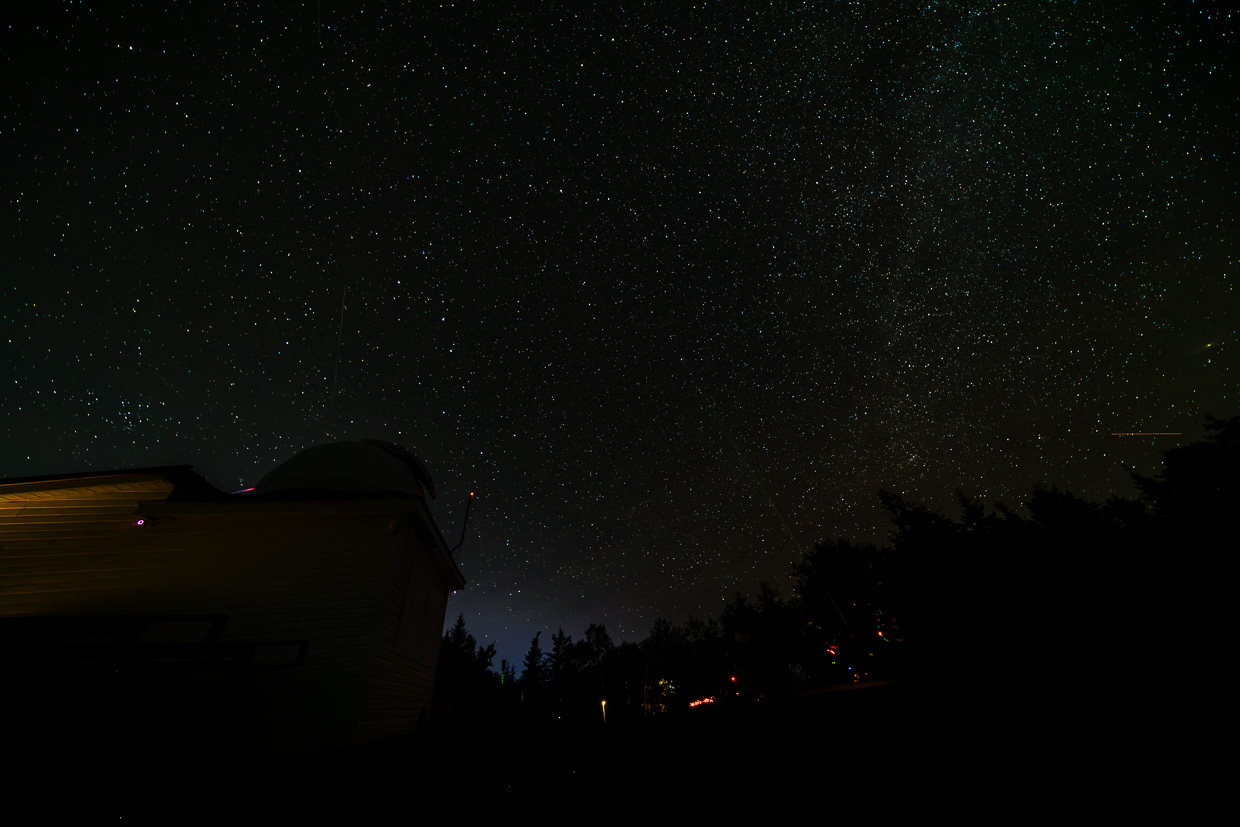
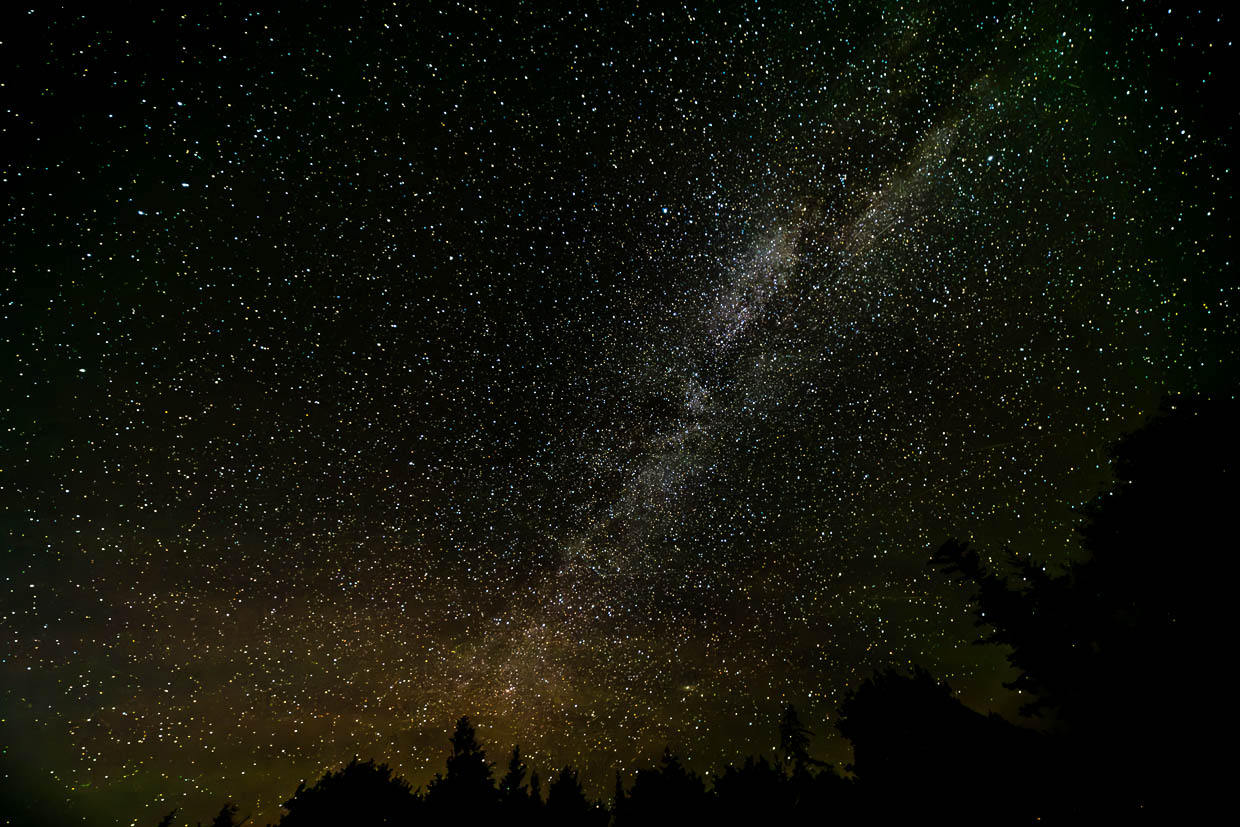
The projector is off. After a quarter of an hour, our eyes have adjusted to the darkness. Above the forest, the Milky Way appears as a bright streak across the sky. My scepticism has been dispelled, at least for this night. It’s dark enough here, and Angela is seeing what she’d hoped for.
Practical information
The Deep Sky Eye Observatory is situated at 338 Frotten Road in Quinan, near Tusket, about 30 kilometres from Yarmouth. The organiser advises against taking shortcuts via gravel tracks suggested by sat-navs, as these are not maintained. The Nocturnal Sky Theatre takes place in summer, starts at 10 pm and lasts around two hours. It costs 60 Canadian dollars per person. A night in the Sky Bubble tent costs 300 Canadian dollars. Those staying for two nights receive the stargazing programme free of charge. Whether the sky cooperates depends on the weather. The south-west coast of Nova Scotia is known for its fog. Further information is available at deepskyeye.com.
This research was supported by Visit Nova Scotia