
At three o’clock in the morning, we leave our hotel in Baddeck, the gateway to the breathtaking Cape Breton Highlands. Our meeting point with lobster fisherman Dale is at Jersey Cove, a small harbour on St Ann’s Bay. It is pitch black as we approach. A light is on aboard the Lonestar, which is gently rocking on the water. Crates of frozen bait fish are being brought on board. Dale’s German Shepherd is running excitedly back and forth along the quay. She has no idea yet that she’ll have to stay on land today. We are the guests taking our places.
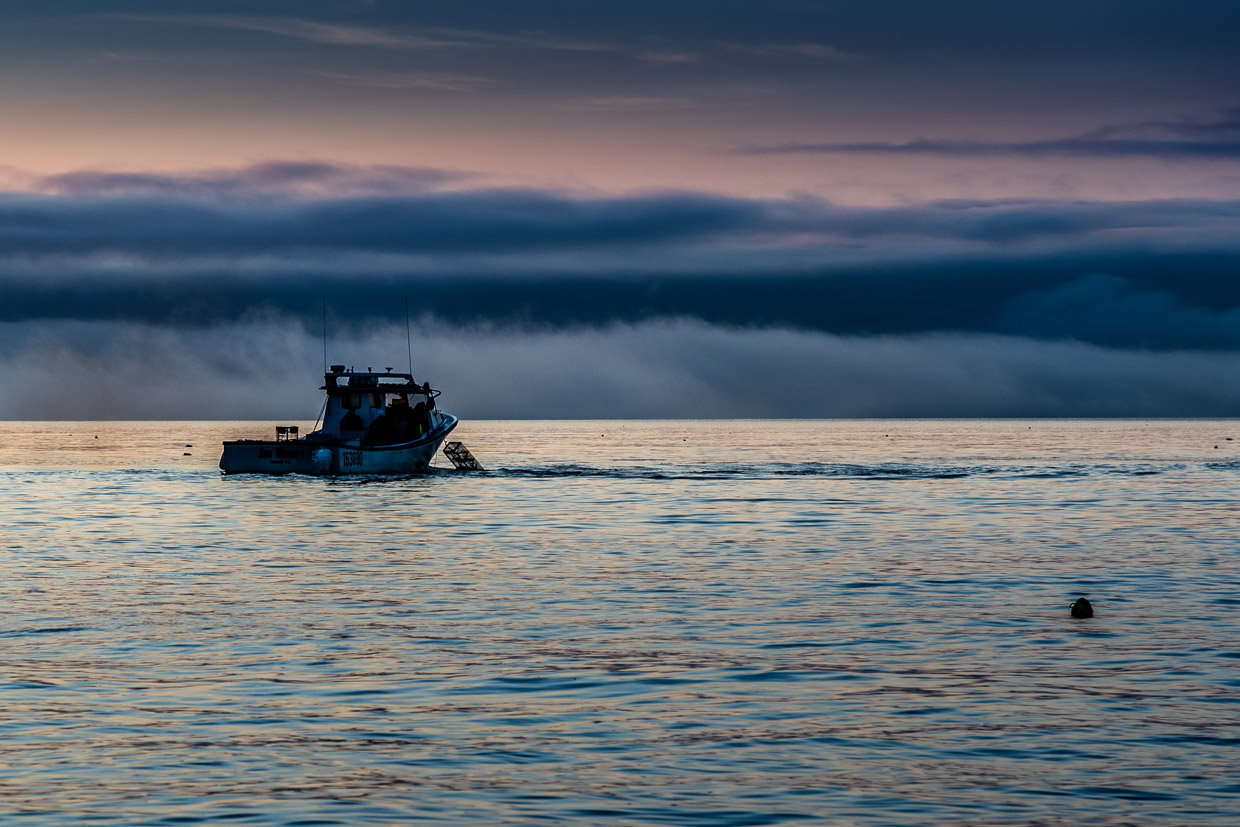
A night shift on the Lonestar
It is the final week of the lobster season on the Cabot Trail when Dale Stewart-Smith welcomes us aboard the Lonestar. The tour through St Ann’s Bay near Englishtown in the province of Nova Scotia lasts six hours. To this day, Atlantic Canada divides its coastline into more than forty lobster fishing districts with over twenty different fishing seasons. Around Cape Breton, in Cheticamp, Baddeck or Iona, fishing takes place only from early May to early July.

Over 200 lobster traps need to be checked today, just as they have almost every day since May. The crew consists of Stewart, who is actually a carpenter, and Dale’s eldest nephew, Owen. The three of them know the necessary procedures inside out.
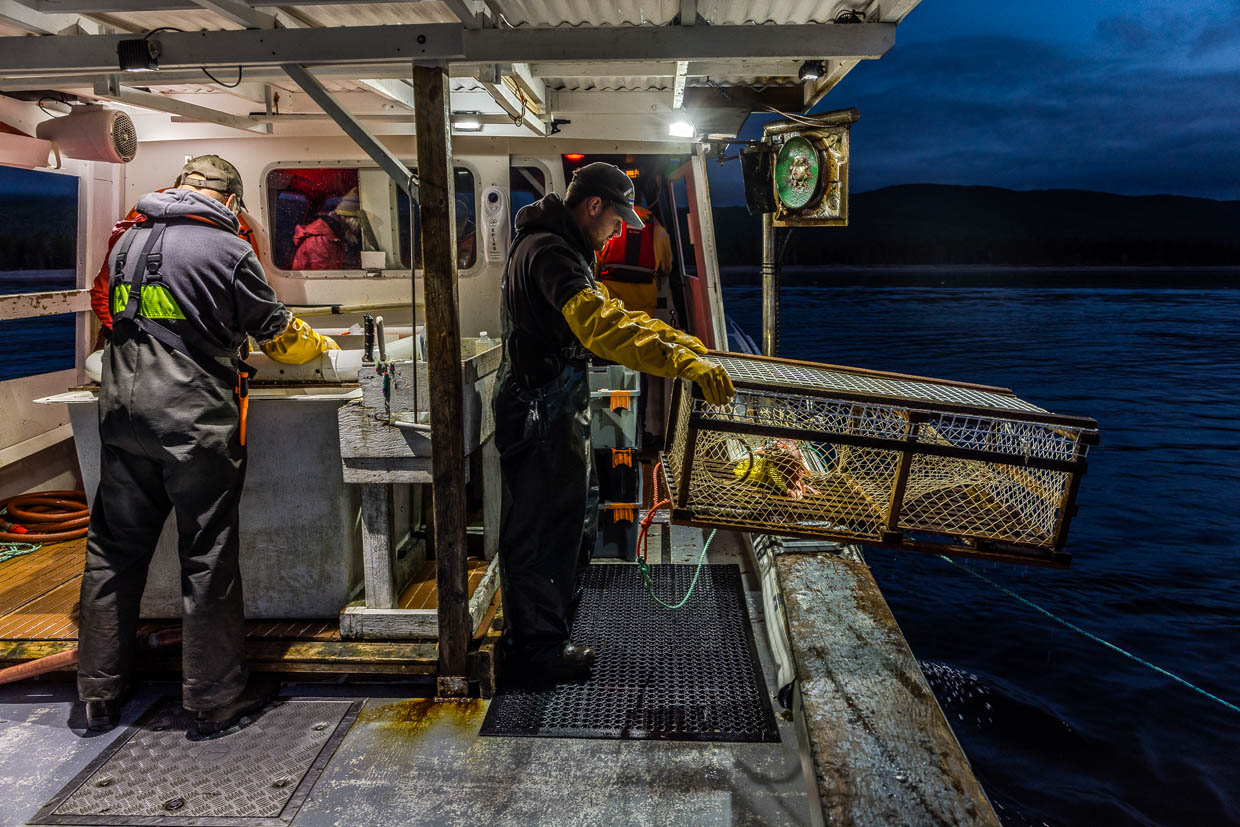
Then everything happens quickly. Dale hands me rubber trousers and a life jacket. No sooner have I put them on than the boat sets off. Dale is at the helm in the cabin, Stewart is arranging the bait boxes, and Owen takes up position at the winch on the far right. I watch their well-rehearsed movements briefly through the cabin window and then strike up a conversation with Dale.
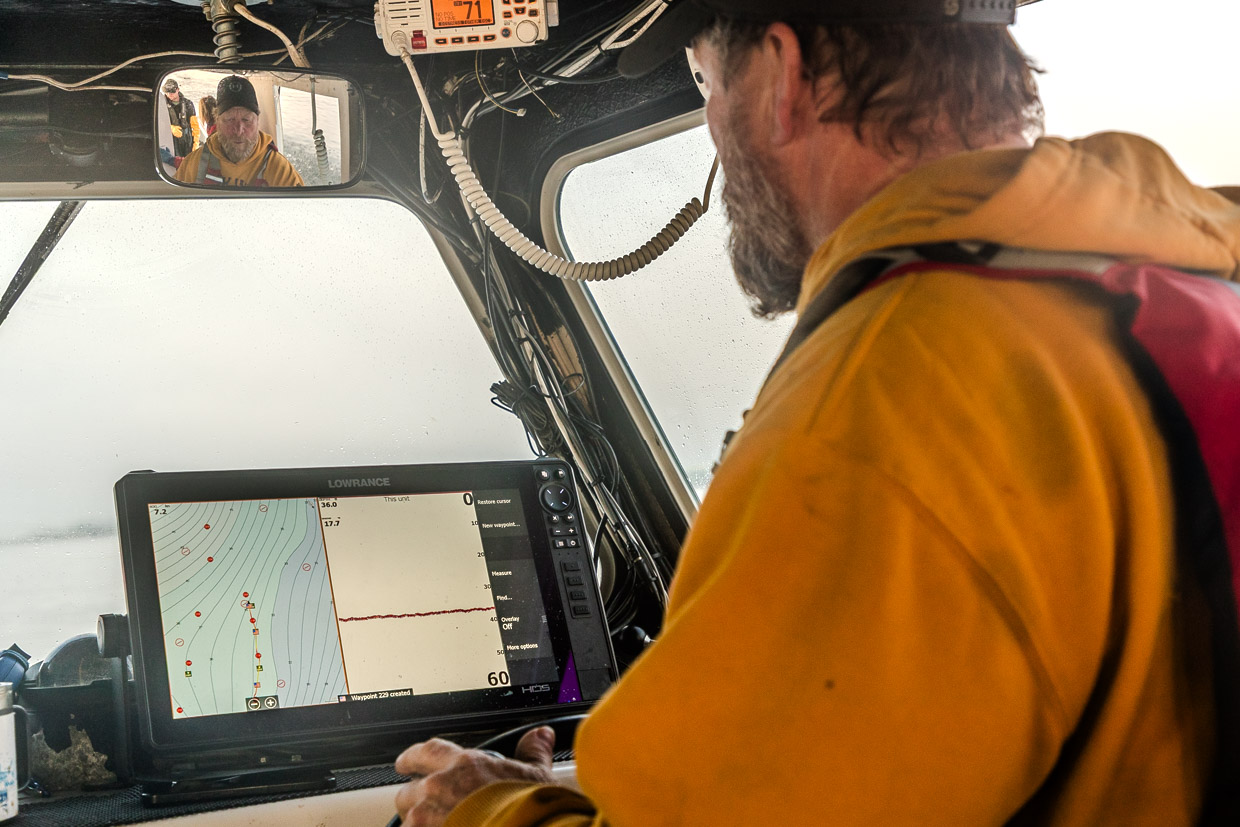
At the helm, from buoy to buoy
It is still dark outside. Dale looks at the monitor, a GPS chart plotter that shows the boat’s position, measures the water depth using the echo sounder and displays his own 275 lobster pots as saved waypoints. We’re sailing through St Ann’s Bay, where halibut and mackerel are also traditionally fished. Dale took over his fishing licence from his father. In 1960, he explains, his father paid 50 cents for it. Back then, lobster still had the reputation of being a poor man’s meal. According to Dale, anyone wanting to get into the lobster business today has to pay 17,500 Canadian dollars. Fresh lobster from Nova Scotia is now a major economic factor, and the lobster roll is the national dish.
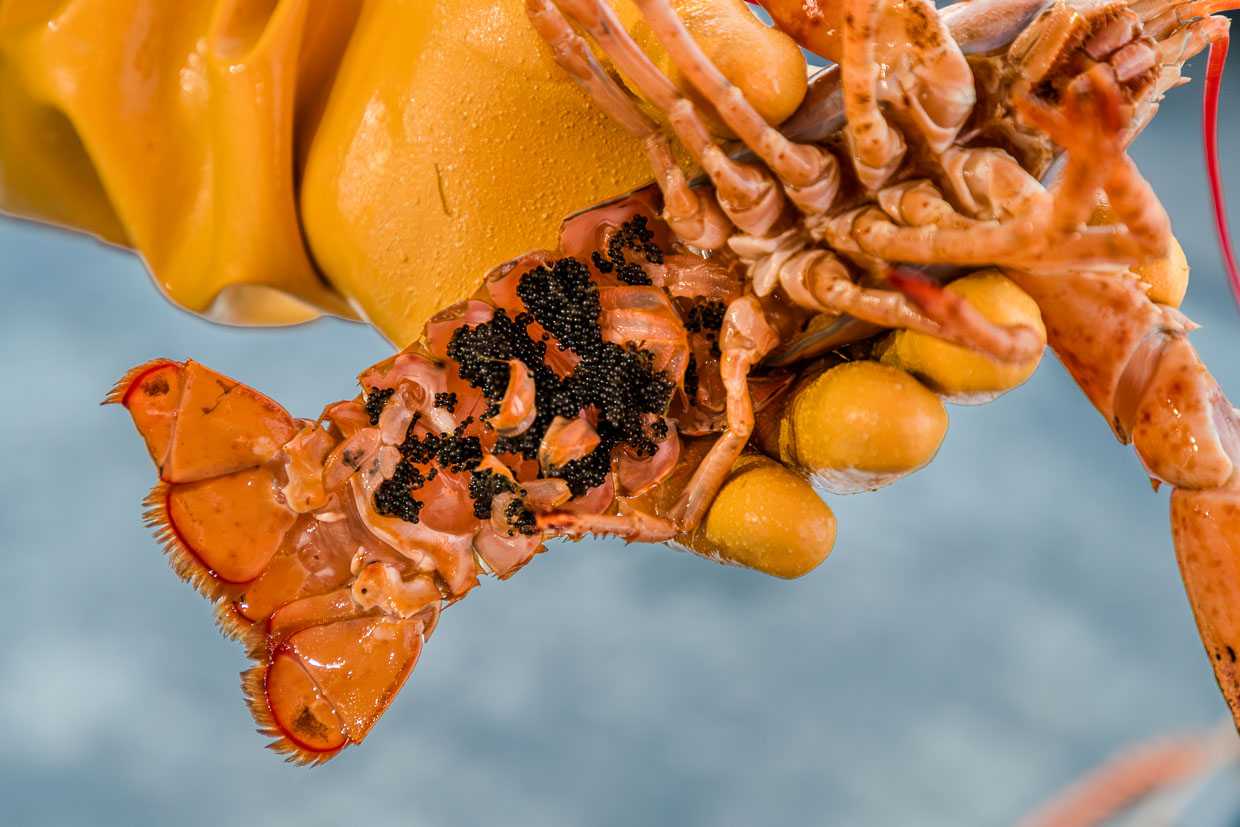
Sustainable fishing, securing the future
The tide is high, and the water is beginning to recede from the bay. Lobsters like to hide in the tall seaweed on the seabed, explains Dale. He estimates that the largest lobsters in his traps are around 40 years old. For him, sustainability is more than just lip service: he repeatedly releases large, egg-bearing females, sometimes elsewhere in the bay, so that the stock is spread across his entire fishing grounds. Towards the end of the season, they take only one in ten lobsters from a trap; nine out of ten remain in the sea.
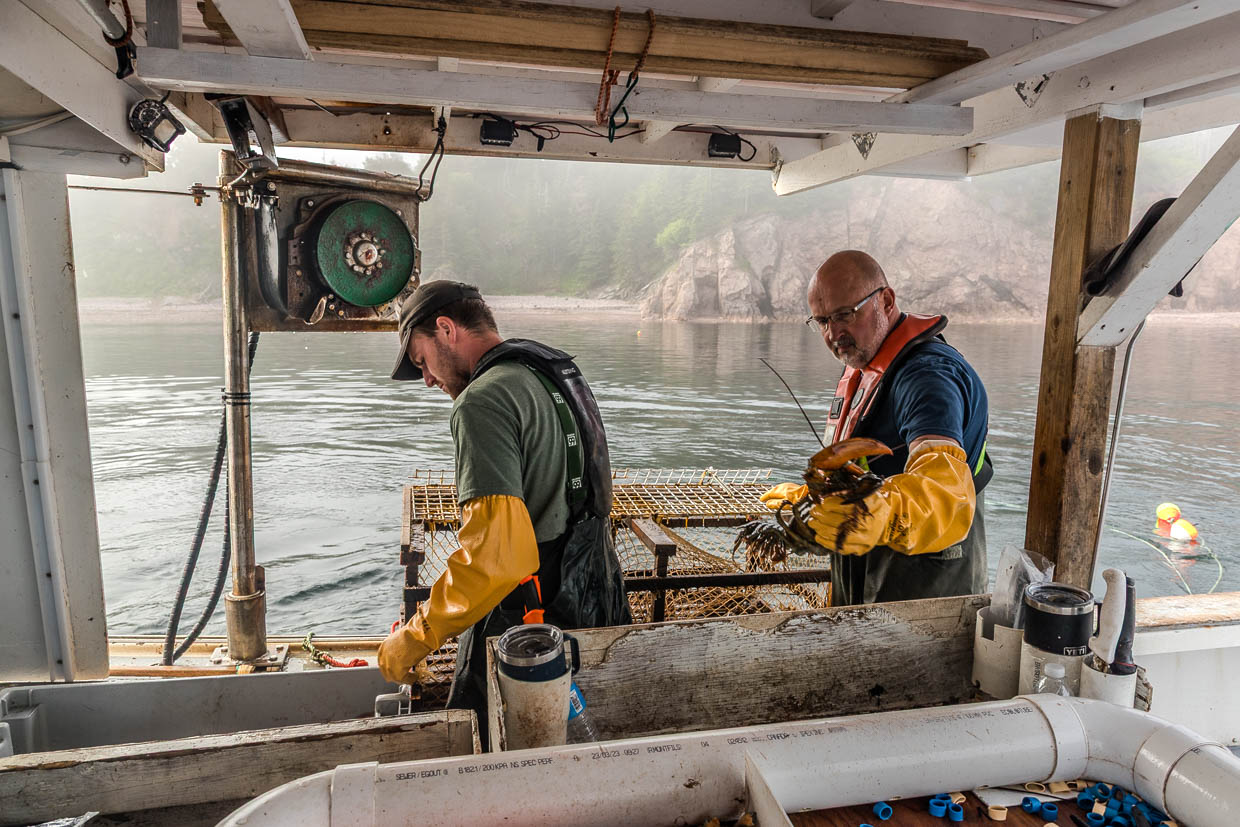
He wants to pass on this attitude. He has set up a trap especially for his young nephew, which he stocks from time to time with particularly plump lobsters. Whenever the boy checks his own trap, the same lesson follows every time: The creature is valuable and would fetch a top price of 100 dollars, but together they release it back into the water to safeguard the stock. The boy receives the notional sale value as pocket money, with the lesson in sustainability thrown in for free.
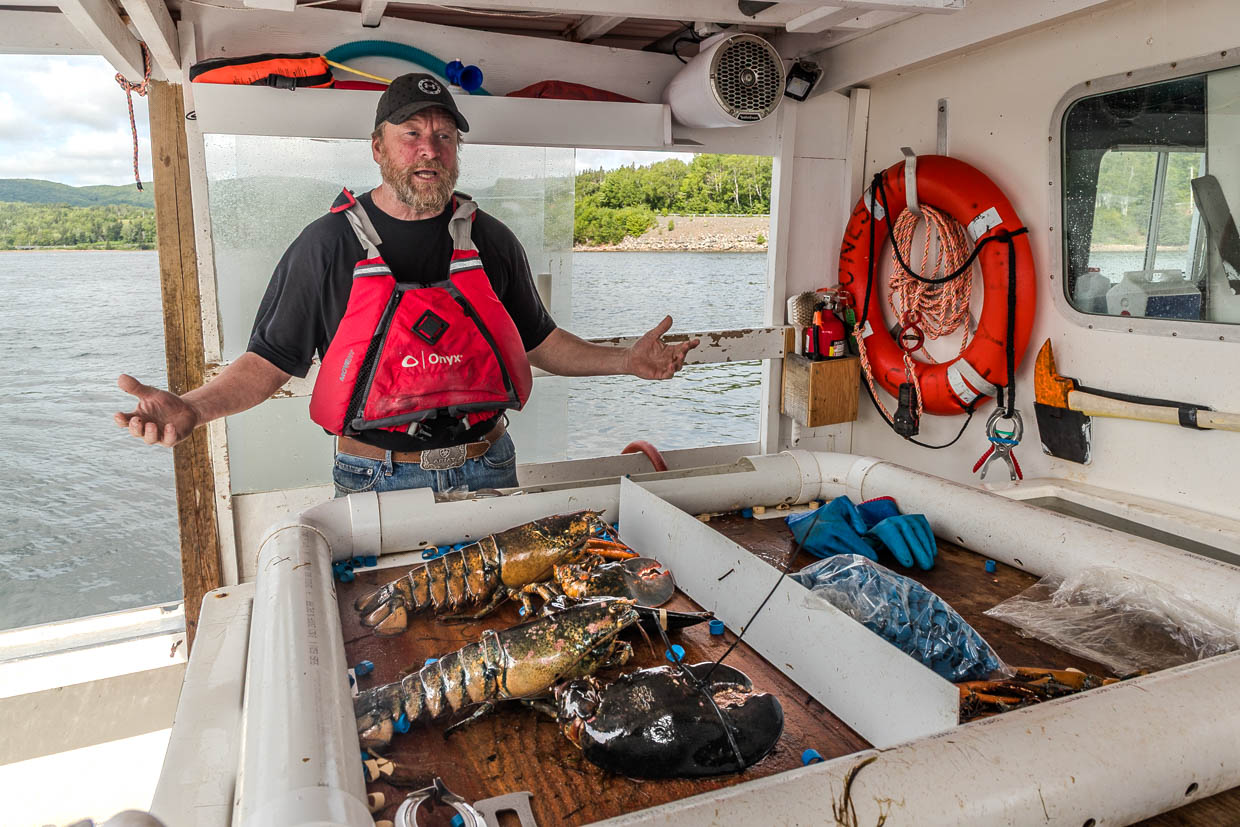
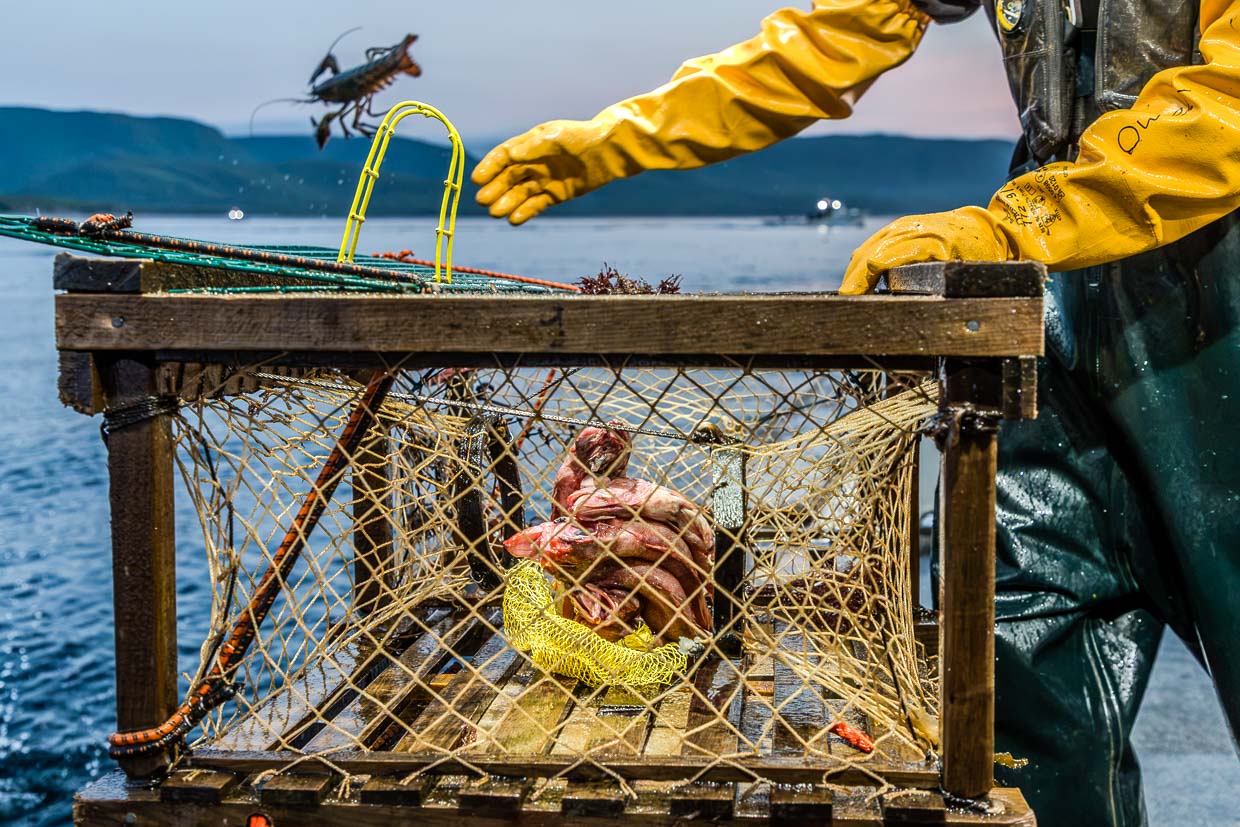
When Dale took over his father’s licence, he swapped the wire cages for traditional wooden traps. The lobsters don’t mind, he says; they’ll crawl into any sort of trap as long as the bait entices them. But for him, it’s a matter of style – the wooden traps simply look nicer.
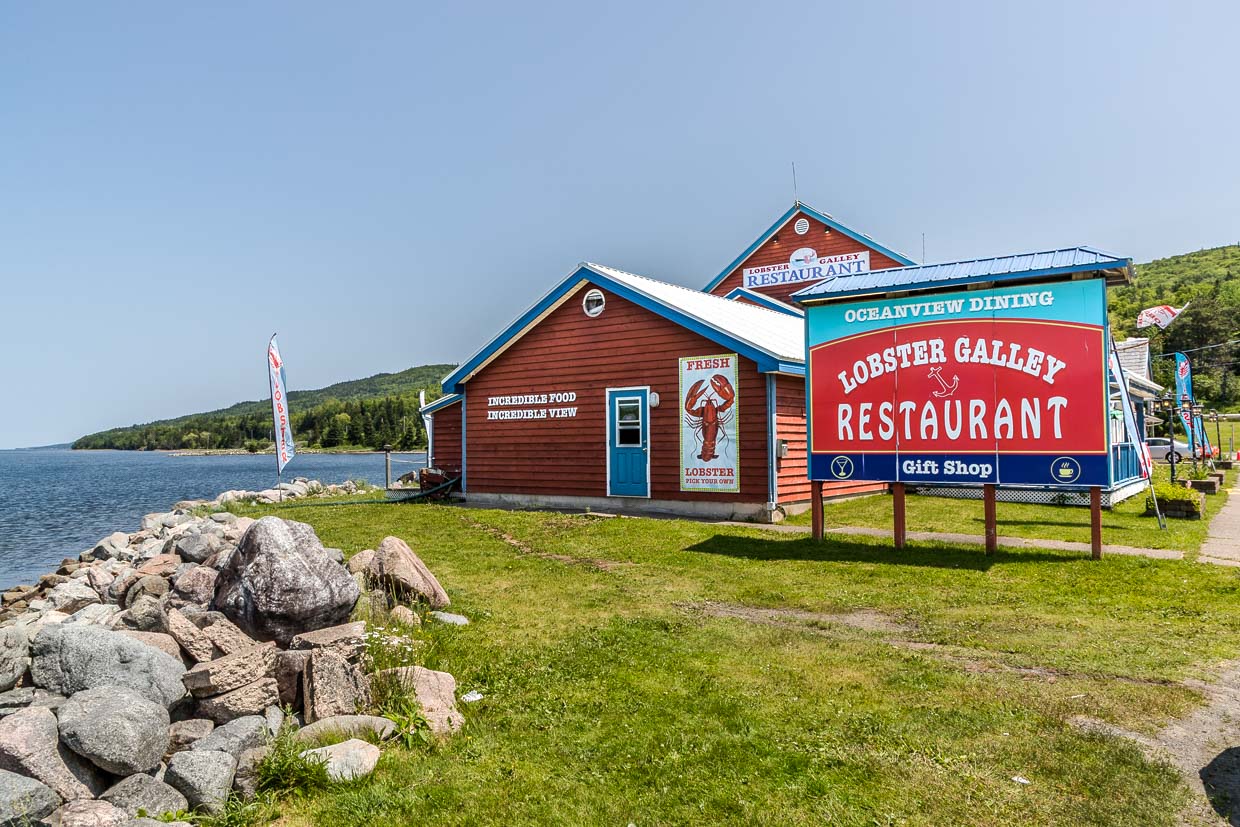
Dale, who has also been the owner of a lobster restaurant since 2025, hardly ever eats lobster himself. Only on Saturdays does he take a few fine lobsters round to his mother. After the season – which lasts just two months at Baddeck – he works at his restaurant, the Lobster Galley, which is picturesquely situated at the head of St Ann’s Bay. For him, it’s the logical complement to his catch: what he hauls out of the water himself doesn’t end up in wholesale markets, but in the restaurant’s freshwater tanks and from there onto guests’ plates. It was precisely where the Lobster Galley stands today that the first Scottish settlers in this region once arrived. Right next to his restaurant is the Gaelic College of Arts & Crafts, which preserves the region’s Scottish heritage.
From poor man’s food to an economic force
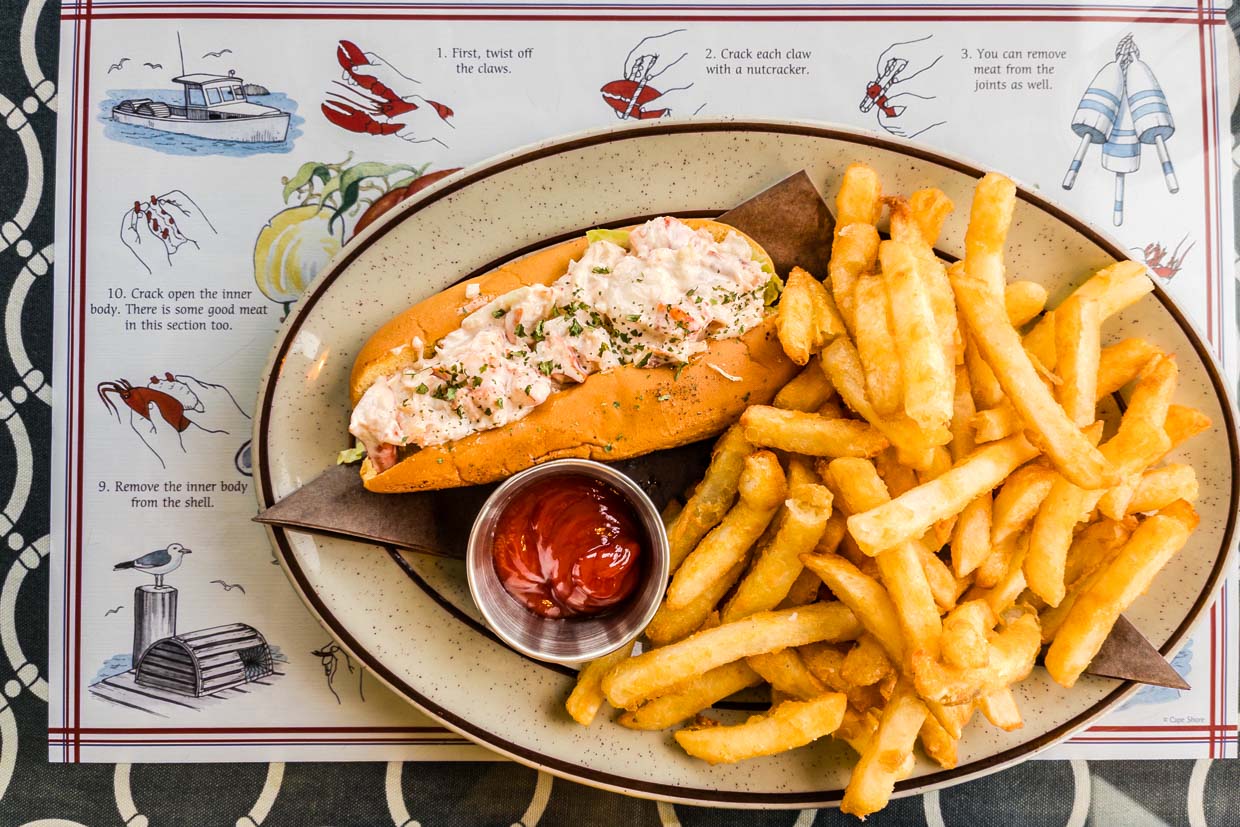
The history of lobster in Nova Scotia did not begin as a delicacy. Domestic servants and prison inmates were served it because it was caught in such vast quantities that nobody considered it a luxury. Farmers used the creatures as fertiliser; fishermen used them as bait for more valuable catches. Dale recounts that, back in the 1950s, his uncle was still ashamed to have lobster on his school lunch. Anyone with lobster shells lying outside their house was considered poor, not a connoisseur. With the rise of tourism, the lobster also began to gain prestige as a high-quality seafood. Yet unlike in Europe, where the lobster is associated with fine-dining experiences, in Atlantic Canada it can be found at almost every takeaway stall. Often simply served in a lobster roll, or sometimes more elaborately with saffron rice and green asparagus. Apart from the price, little has changed in the craft of lobster fishing.
Work on board
Dale steers towards trap after trap, each marked with a buoy and visible on the monitor. Owen reels in the rope, feeds it through the winch, and at breakneck speed the trap comes out of the water; one final tug pulls it up against the ship’s side. Owen hoists the trap onto the bench in front of him.
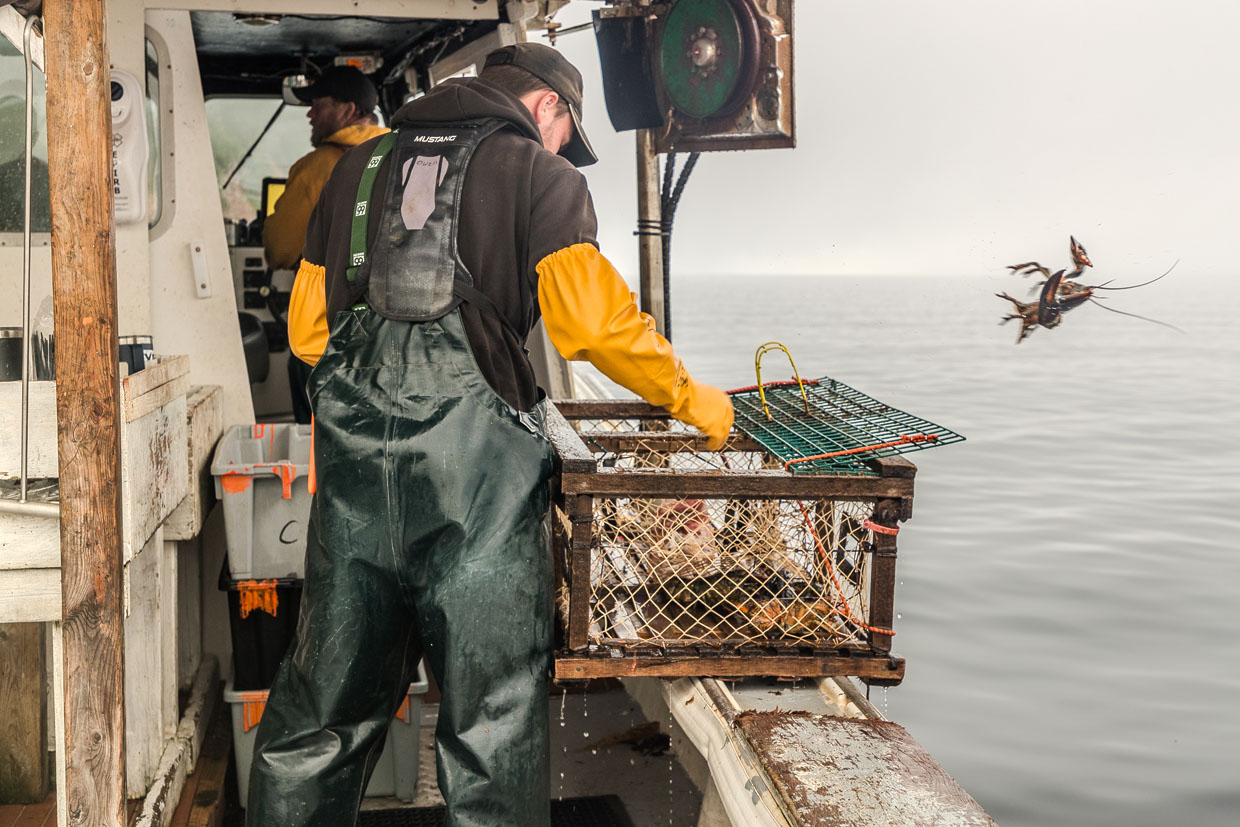
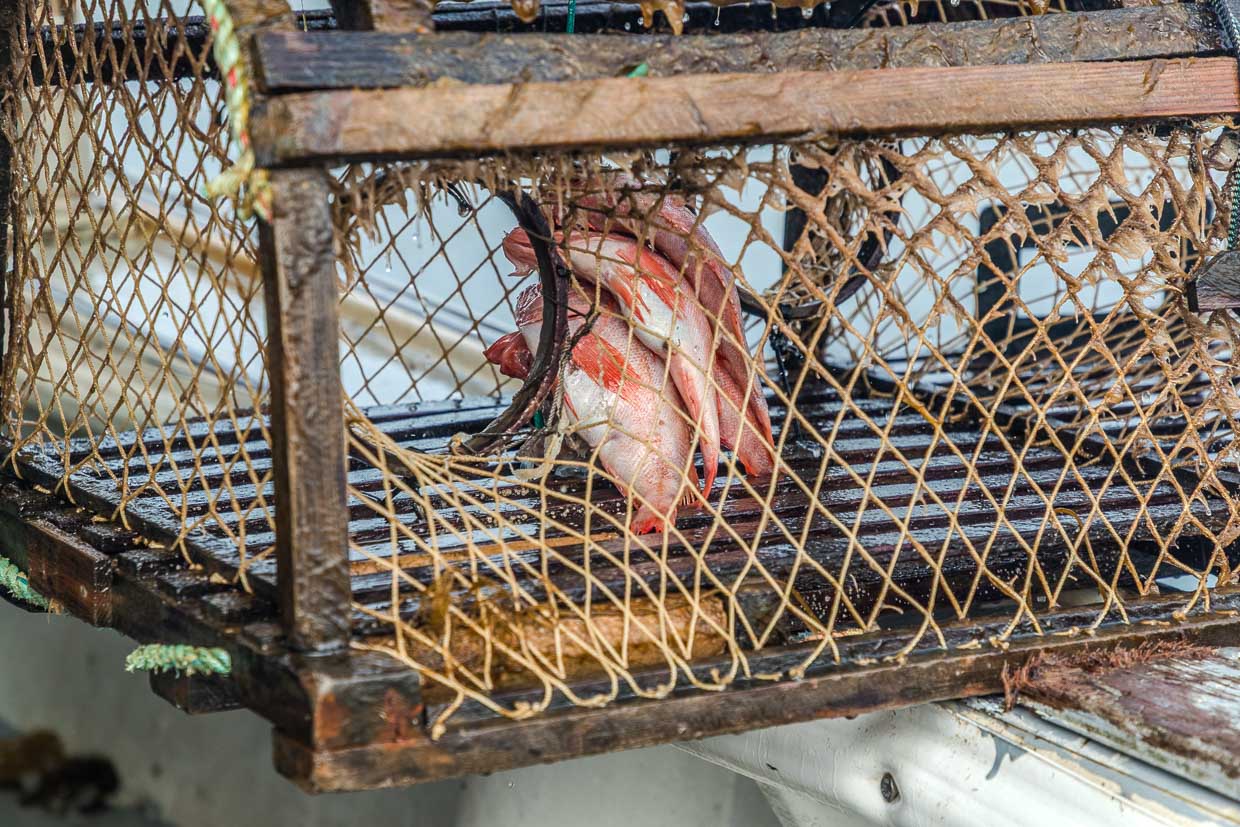
A lobster trap has two chambers, each with a specific purpose. Through a funnel-shaped section of netting – the ‘head’ – the lobster first enters the ‘kitchen’, where the bait is suspended. From there, it squeezes through a second, narrower opening into the ‘parlour’, from which it can hardly find its way out. Owen immediately refills the ‘kitchen’ with fresh bait, whilst Stewart removes the lobsters from the ‘parlour’. He throws the smaller ones straight overboard, whilst the larger ones end up on the workbench in the middle of the boat.
Lobster in hand
Stewart waves me over and tosses me some gloves. Kitted out in full rubber gear, I make myself useful, although the gloves offer little real protection against the powerful claws. A lobster has two different claws: the massive ‘crusher’ claw for crushing its prey and the narrower ‘pincher’ claw for tearing it apart. I wouldn’t want to get my fingers caught in either the crusher or the pincher. Both sound painful. On the workbench, the lobsters are thrashing their tails frantically. Stewart picks up a large lobster by the body and turns it so it’s lying on its back. I grab one myself and am surprised by the force with which it arches its back and thrashes its tail.
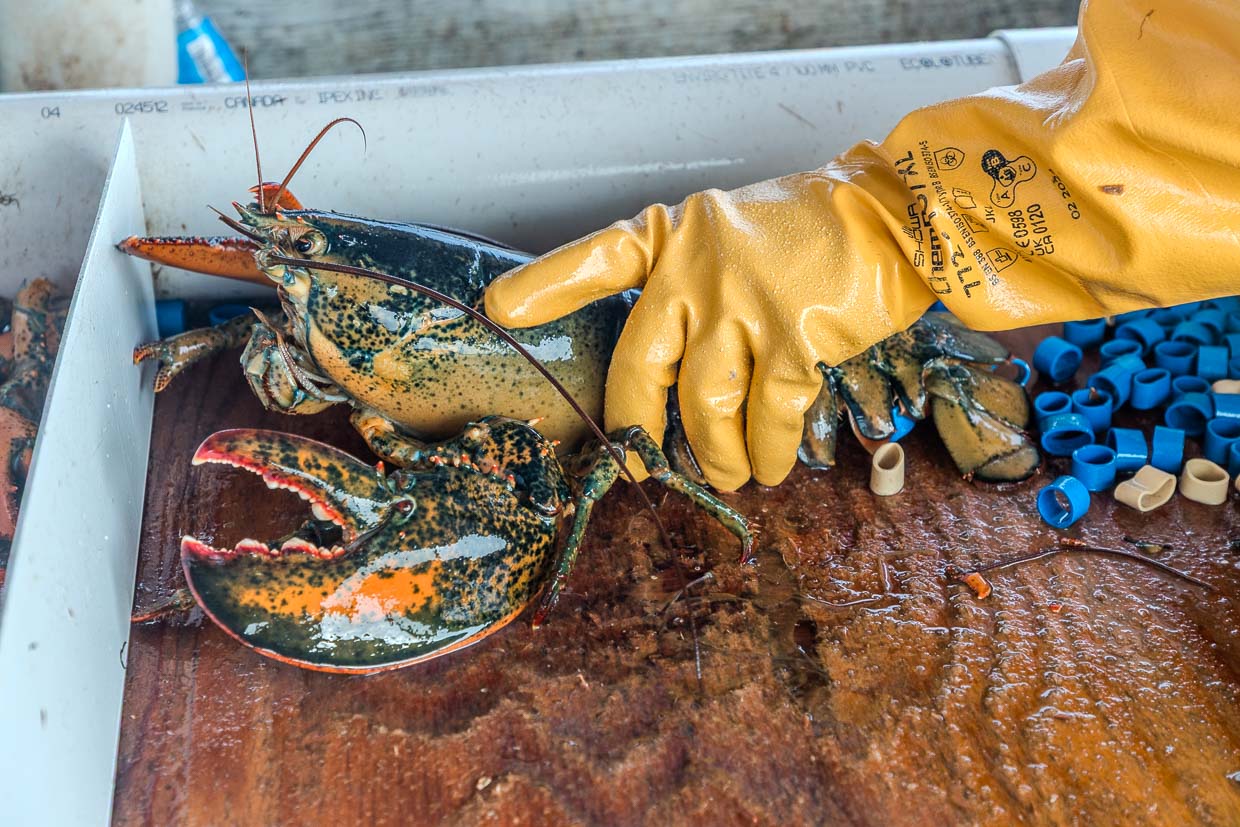
Now speed is of the essence: a rubber band must be placed over both claws. My left hand moves the lobster towards the base of the claws, where the creature has hardly any room to manoeuvre. In my right hand I hold a banding plier, a simple tool that stretches a silicone band as soon as you squeeze the handles, allowing it to be slipped over the claw. First up is the pincher claw, because it makes a lobster quicker and more agile when grasping, explains Stewart, and he describes very vividly just how painful a grip from this claw can be. Once that one has been tamed, the wider ‘crusher’ claw can also be fitted without any rush.
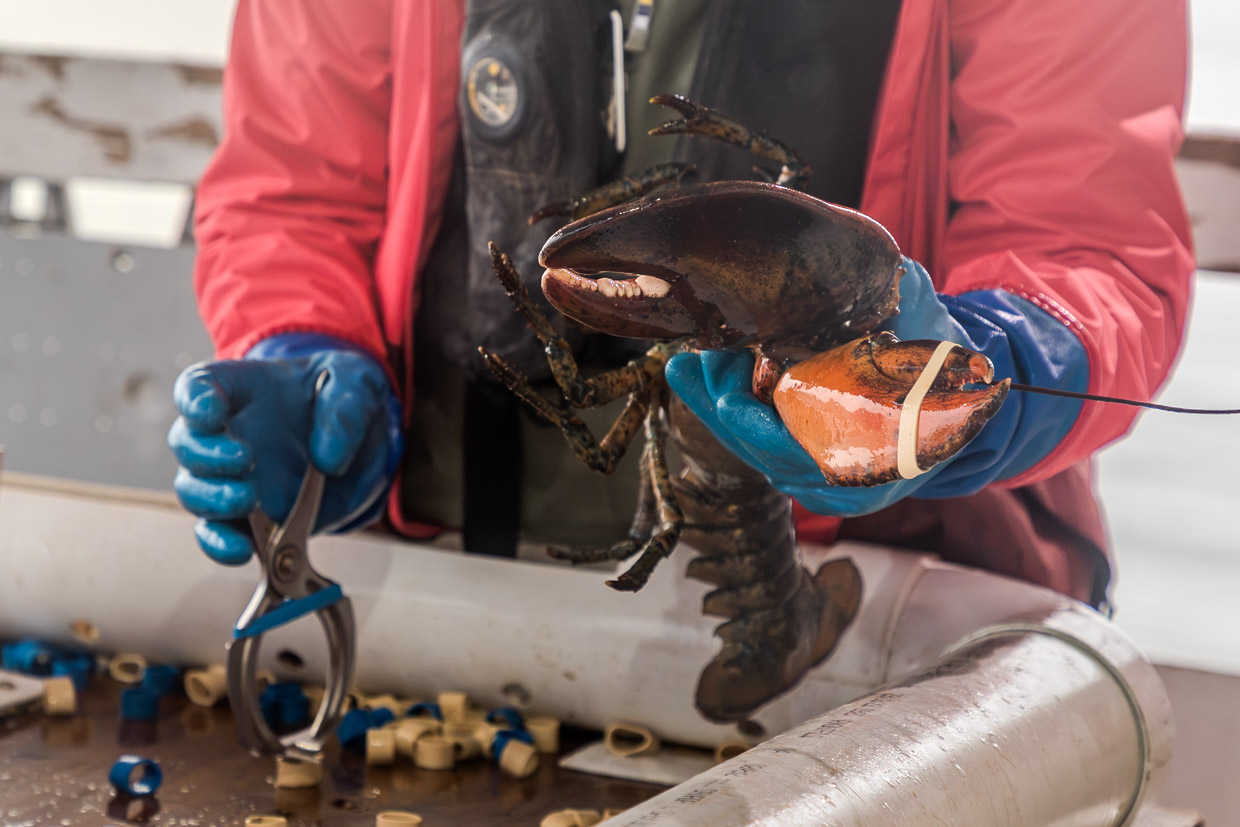
Whilst I approach the creatures with the utmost caution, you can tell from Stewart’s demeanour just how many seasons he has already spent on the Lonestar. He loves this break between early May and early July, the contrast to his work as a joiner. The shift in the middle of the night is gruelling, but the water and the air – sometimes calm, as on this day, sometimes rough – make all the difference to him.
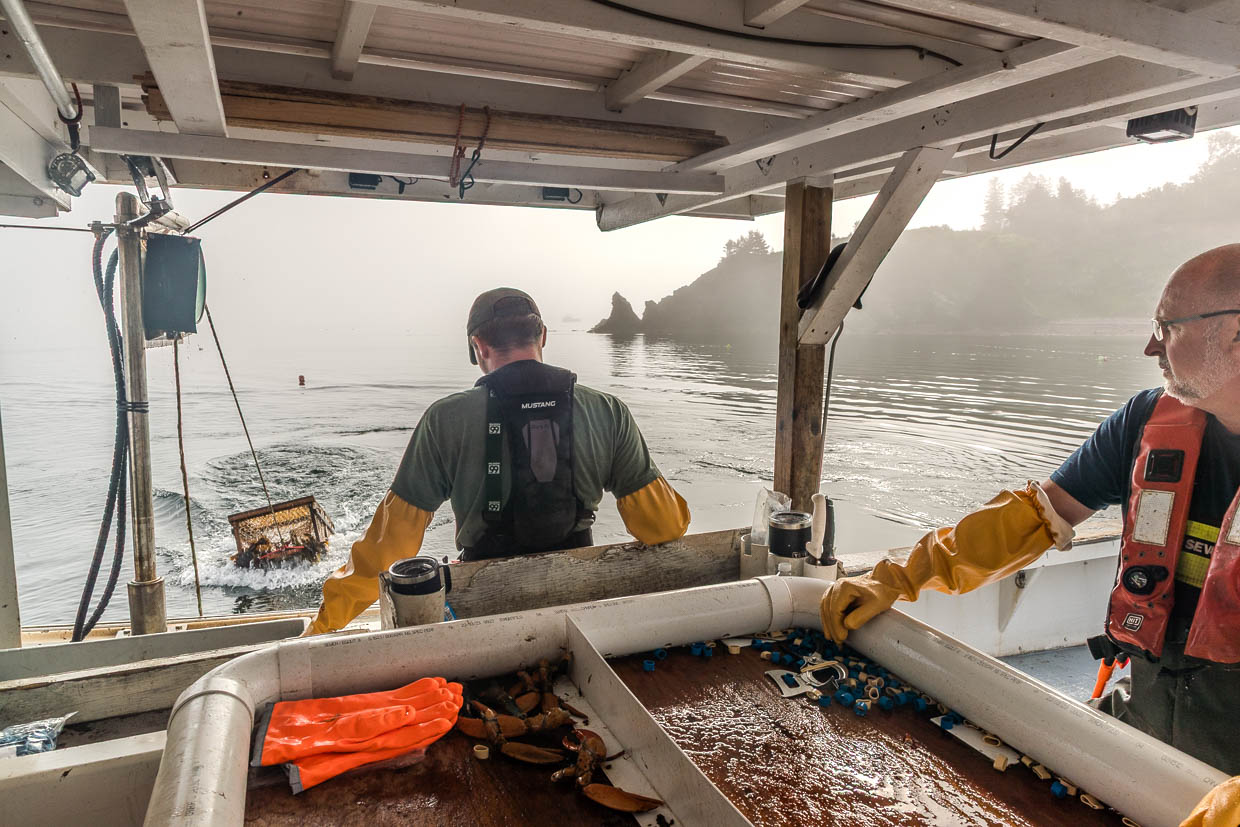
By now the sun has risen, and the water is turning purple. In a bay with rocky cliffs, a pair of ospreys are waiting for some fish scraps. Dale places them at the stern and calls out to them; the ospreys snatch them from the planks in an elegant dive. They wait for the boat every morning and know the routine inside out.
Voracious shell-crackers
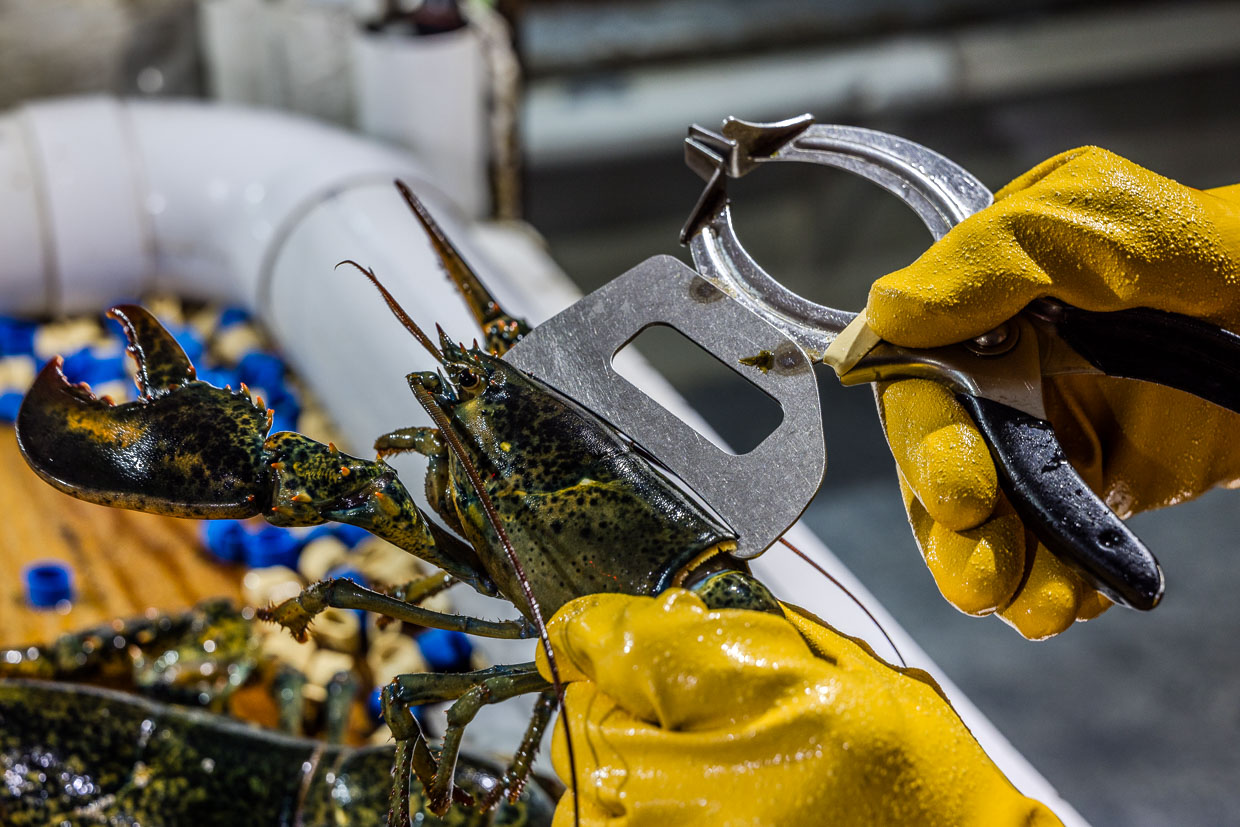
Stewart checks the lobsters’ size using a measuring tool which he places at the eye socket and runs along to the end of the carapace. Animals that are too small are immediately returned to the sea; those of sufficient size are, on average, ten years old. Lobsters aren’t particularly clever, explains Stewart; I’ll probably be throwing the very same ones back overboard tomorrow that were already in the parlour today.
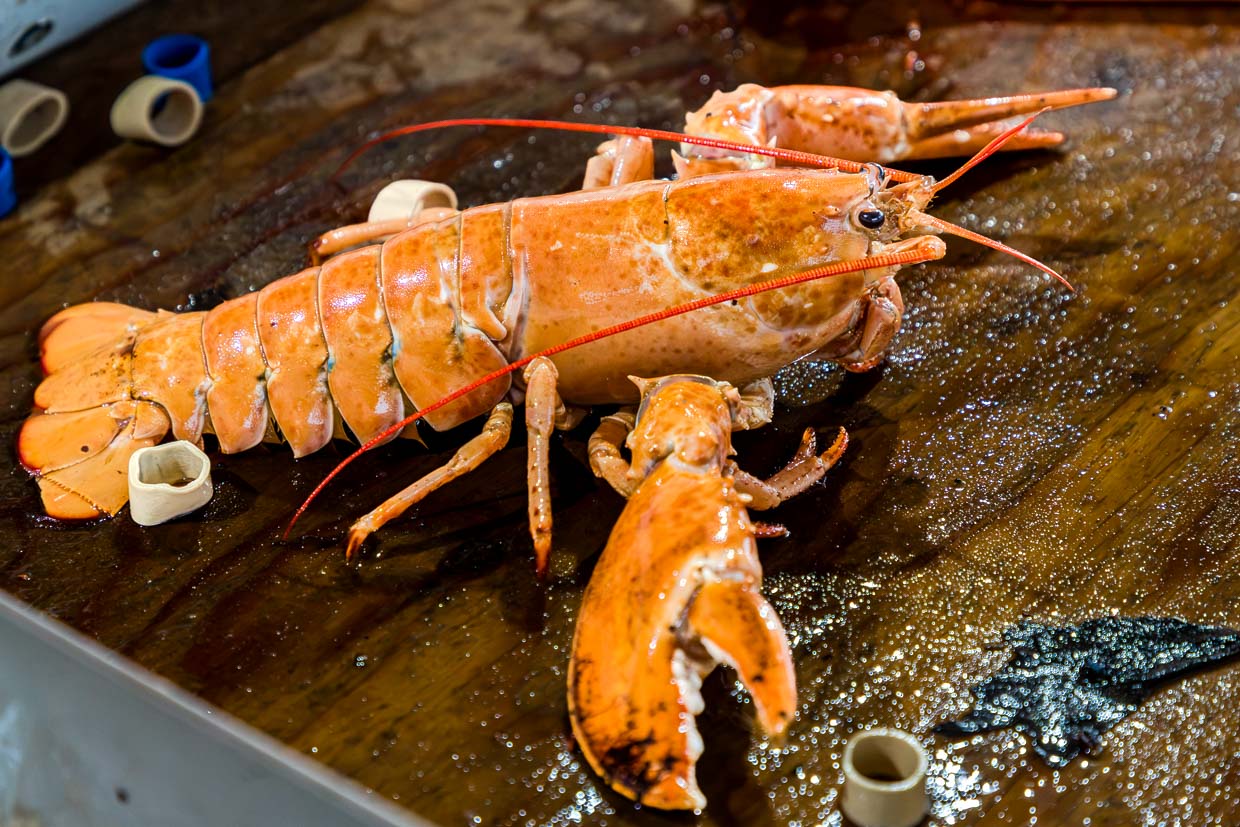
Once a lobster is in the trap, its fellow lobsters’ food jealousy attracts others. Lobsters are extremely competitive when it comes to food. They fight amongst themselves; occasionally, they even eat their own kind. In the scuffle, a lobster may let go of a claw – a reflex known as autotomy: The animal detaches the claw at a designated breaking point to escape an enemy, with minimal blood loss. It can only regrow through moulting. A lobster has a rigid shell that does not grow with it, so it must shed it regularly. Immediately after moulting, the animal is soft and defenceless and hides away for one to two weeks. At the break point of the lost claw, a new, initially smaller claw forms with each moult, which grows to full size over several cycles.
Return to Jersey Cove
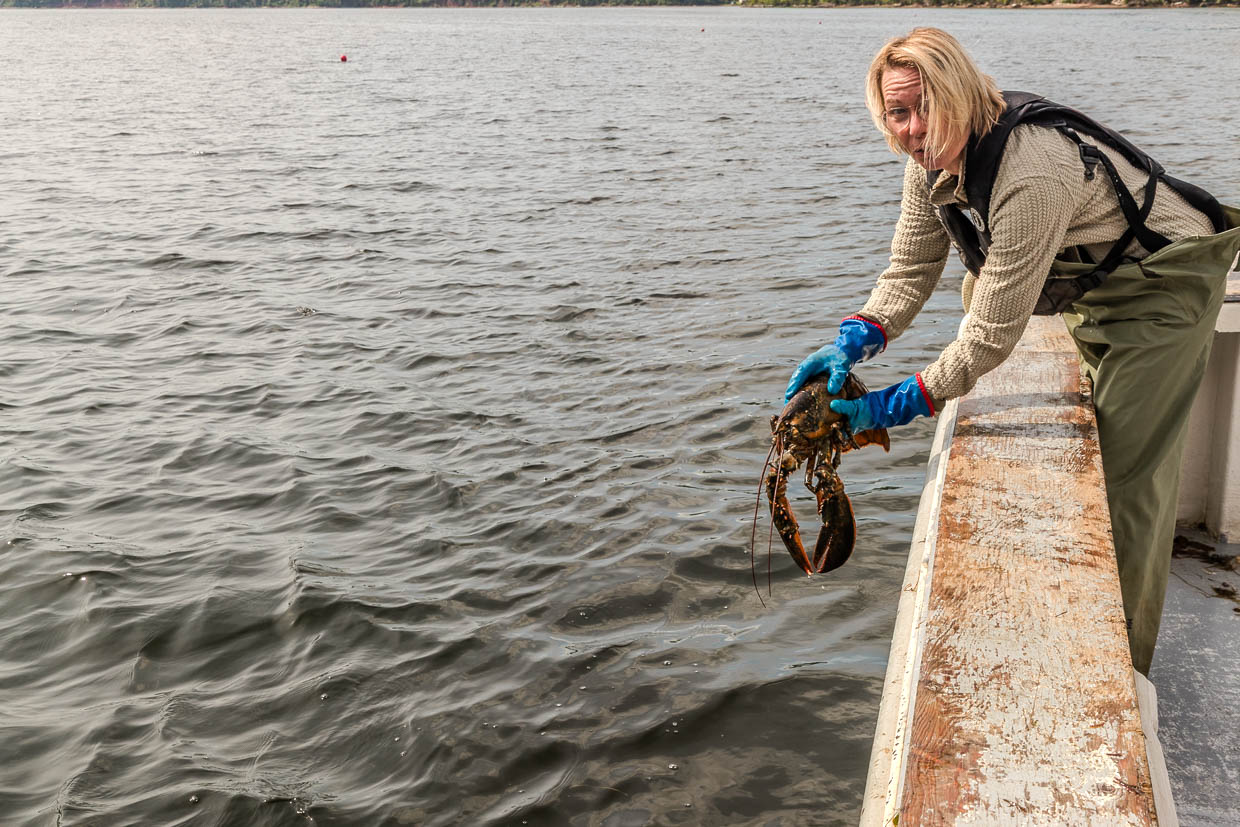
Our shift is drawing to a close. I am allowed to release a huge female, estimated to be 30 years old, back into the water myself in a cove. She was never fitted with a rubber band; for half the morning, the creature sat motionless on my workbench. The longer a lobster is on land, the calmer it becomes, so that by the end, the lady lobster’s mighty claws hardly made me nervous at all.
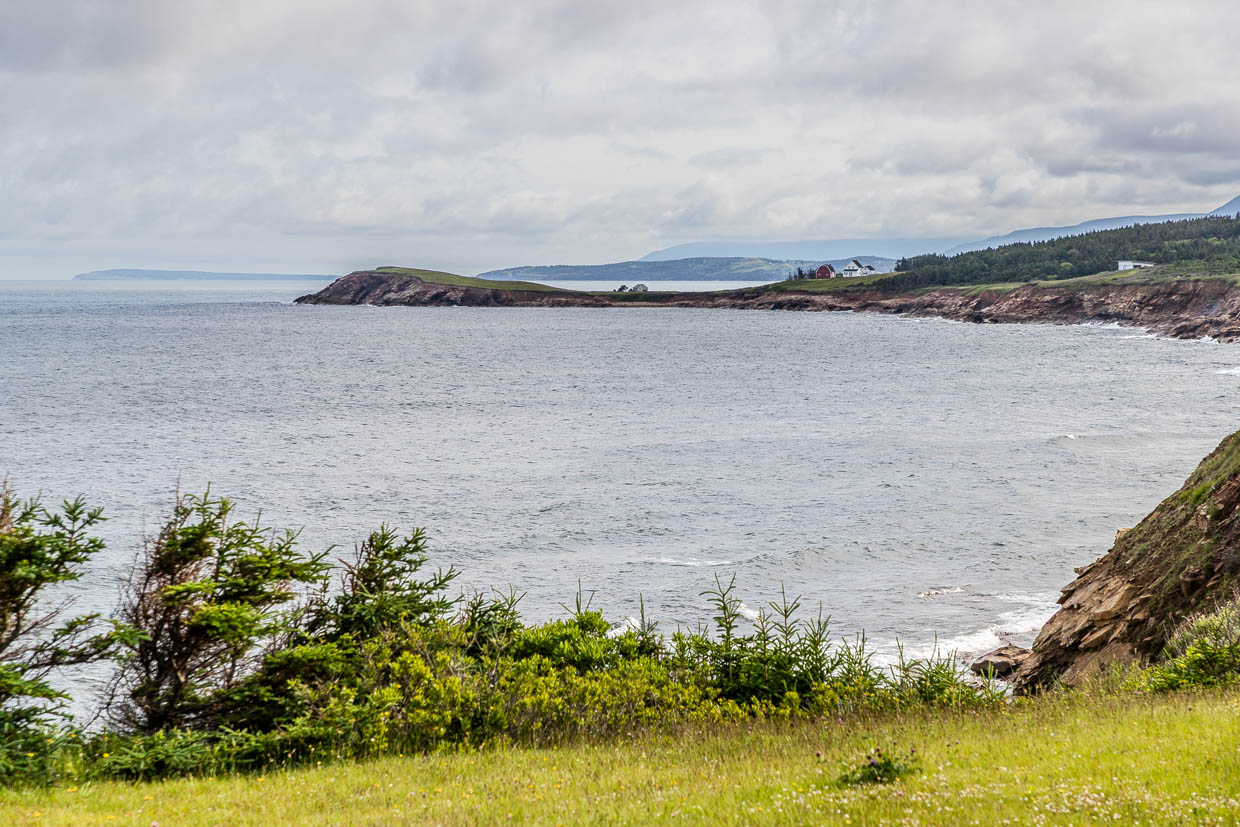
We spent more than six hours on board the Lonestar, yet there was never a dull moment. On the night we boarded, I had no idea just how close the lobsters would get to me. I was impressed by the animals’ strength, as well as by the determination with which Dale safeguards the stock. The Lonestar is heading back to Jersey Cove. At the Lobster Galley restaurant, a lobster breakfast is already being served with a view of picturesque St Ann’s Bay, home to the lobsters.
This feature was supported by Visit Nova Scotia