
Canada sees itself as a country of immigrants. The people we meet on our journey through Nova Scotia are correspondingly open and curious. If you want to strike up a conversation with Canadians, ask about their family: which generation arrived when, and from where? The answers often go back a long way.
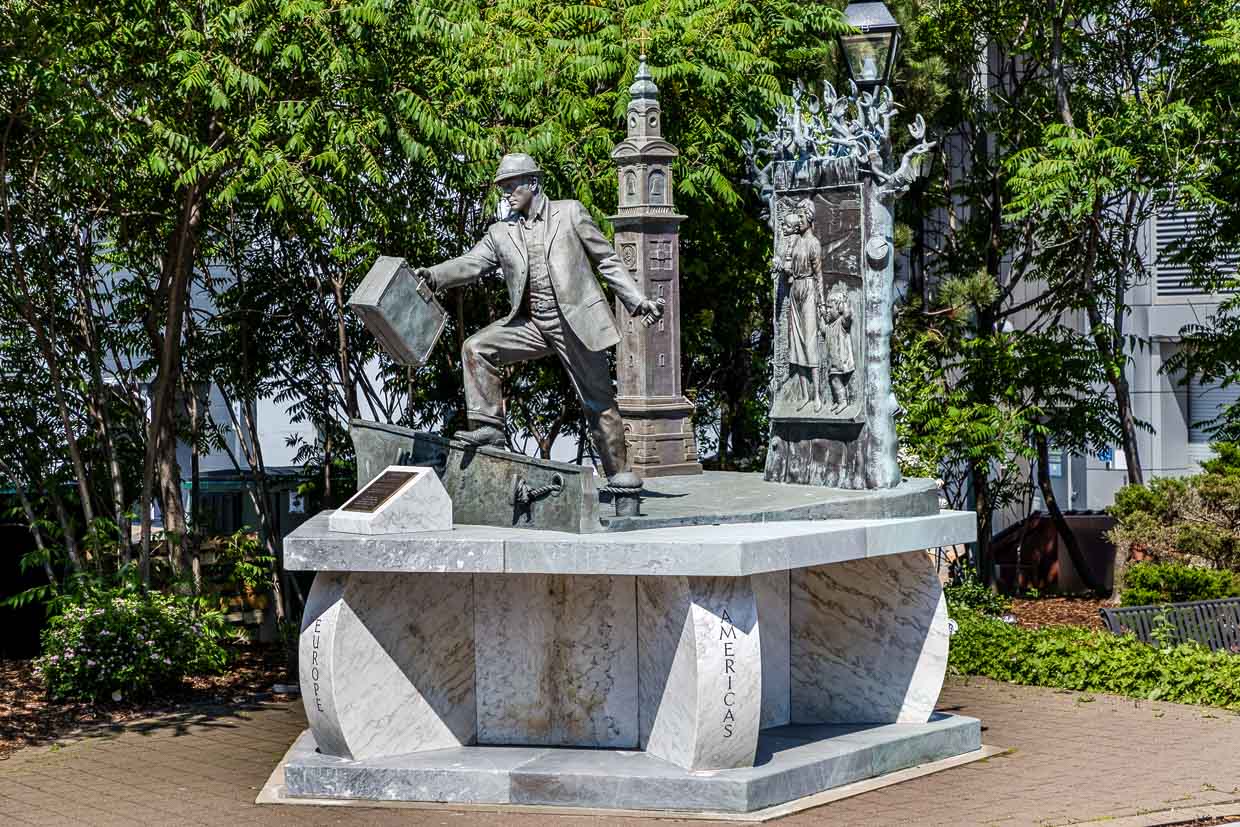
Today, Canada presents itself as cosmopolitan and tolerant. Even at Halifax Airport, it welcomes visitors in three languages: English, French and Mi’kmaq. It visibly and consciously addresses its history of immigration, displacement and oppression. There are museums and memorials, communities and reserves. Travellers can come to understand here just how complex the early coexistence between immigrants and Indigenous peoples was. This is often not light reading for a holiday trip. In Nova Scotia, you can also practise the art of escapism, enjoy lobster rolls, play on breathtakingly beautiful golf courses and visit vineyards. But you can also immerse yourself in the province’s turbulent history and discover parallels with our own times. Then as now, the decisions of a few powerful individuals can turn the lives of many upside down.
New Scotland. Old conflicts.
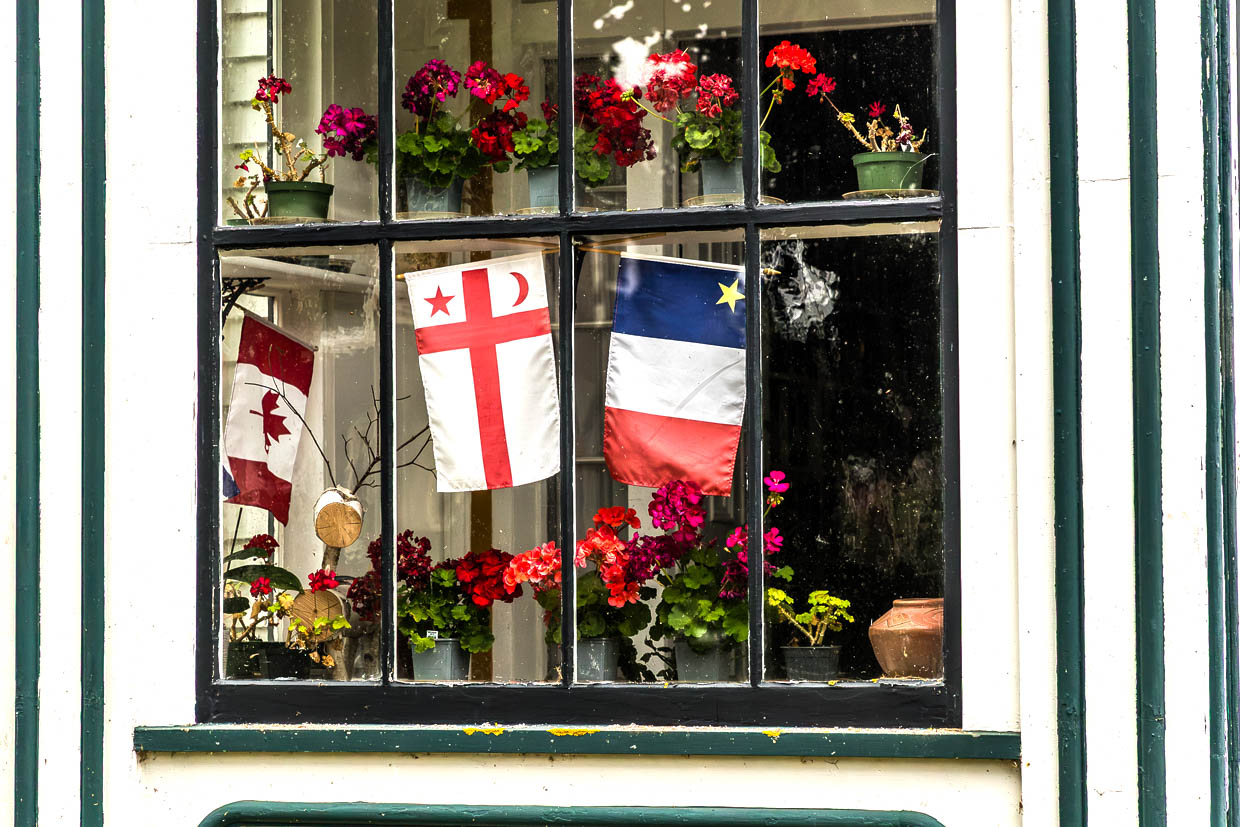
Nova Scotia is a good example of this. The name suggests that it was mainly Scots who settled here. In fact, long before them, the Mi’kmaq and other Indigenous groups lived in a region now known as Atlantic Canada or The Maritimes. The first permanent European settlers were the Acadians. They emigrated from France. Then the English gained the upper hand. They distrusted the Acadians and began to expel them from 1755 onwards. The deportation lasted until 1762. They were replaced by the New England Planters. Later, Scots from the Highlands arrived, in large numbers in the late 18th and early 19th centuries. The name Nova Scotia, however, predates this wave of settlement and was initially merely an entry on paper. In 1629, King James VI of Scotland and I of England granted a large area in North America to Sir William Alexander, naming it Nova Scotia. A settlement at Annapolis Basin was short-lived. The province’s eventful settlement history was further shaped in 1783 by the arrival of Black Loyalists – former slaves who had fought on the British side, originally from Sierra Leone, and who sought freedom in Nova Scotia.
A patchwork on the Atlantic
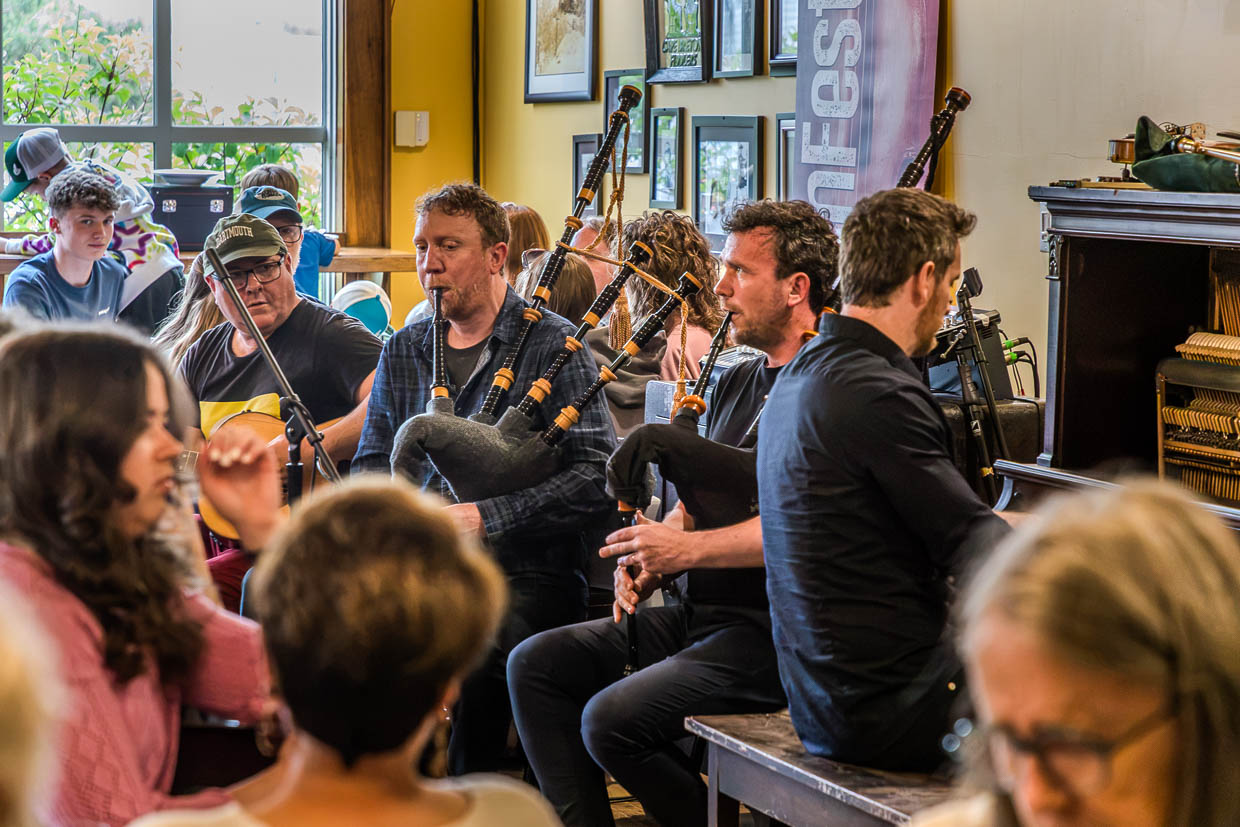
Today, a journey through the province is like looking at a multi-layered patchwork quilt. Scottish heritage, with its ceilidhs and bagpipes, gives way to the cultural landscapes of the Acadians; the fortresses of the French and English armies are followed by the cultural institutions of the Mi’kmaq and the largest community of Black Loyalists. Many stories have their roots in the conflicts of the Old World. In the New World, they led to displacement and suffering. On our journey through the province, we therefore repeatedly encounter a complex history of settlement. Like a jigsaw puzzle, with every memorial site and museum we visited, another piece fell into place, and the bigger picture became increasingly clear. The following overview lists the settlers, so to speak, ‘in order of appearance’ and names the most important institutions that make this heritage accessible.
Who were here first: the Mi’kmaq
The Mi’kmaq are the Indigenous people of Mi’kma’ki. Their homeland lies in Atlantic Canada and encompasses what is now Nova Scotia. Their culture lives on in language, song, drumming, storytelling and spirituality. And in their close connection to the land and water.
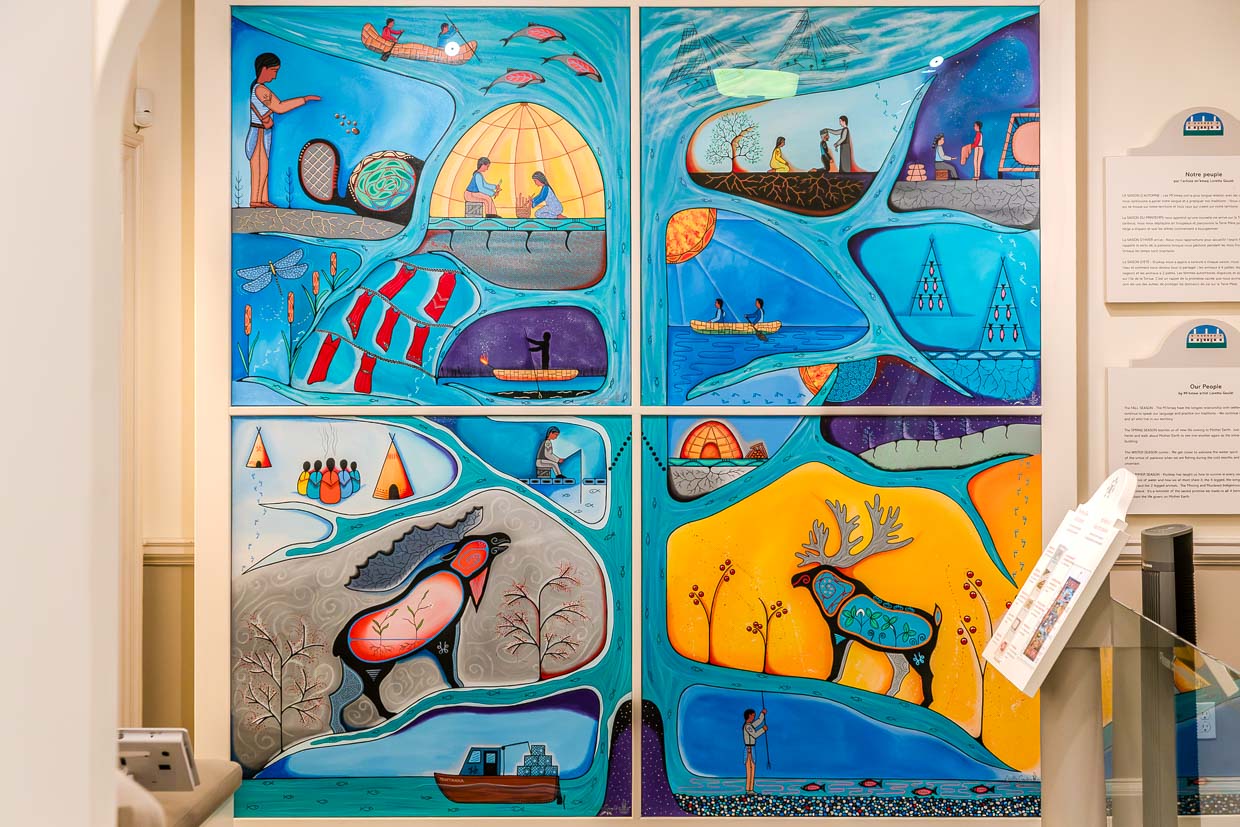
It calls itself the largest Mi’kmaq community in the world. Eskasoni on Cape Breton is one of the most significant communities. In 2021, it had almost 5,000 members. The Canadian state and the churches long sought to dispossess the Mi’kmaq, assimilate them and break their cultural autonomy. The tool used for this was the Indian Act of 1876. From 1884 to 1951, it banned ceremonies such as the potlatch and the Sun Dance. People were imprisoned for taking part in them. The ban applied throughout Canada. Boarding schools, known as residential schools, tore children away from their families. They were expected to give up their language and identity. For the Mi’kmaq, there was one in Nova Scotia. The Shubenacadie Indian Residential School was the only one in the Maritimes from 1930 to 1967. Reports on the residential schools document physical, psychological and sexual abuse. In 2015, the Truth and Reconciliation Commission characterised this policy as cultural genocide. The last school closed in 1996.
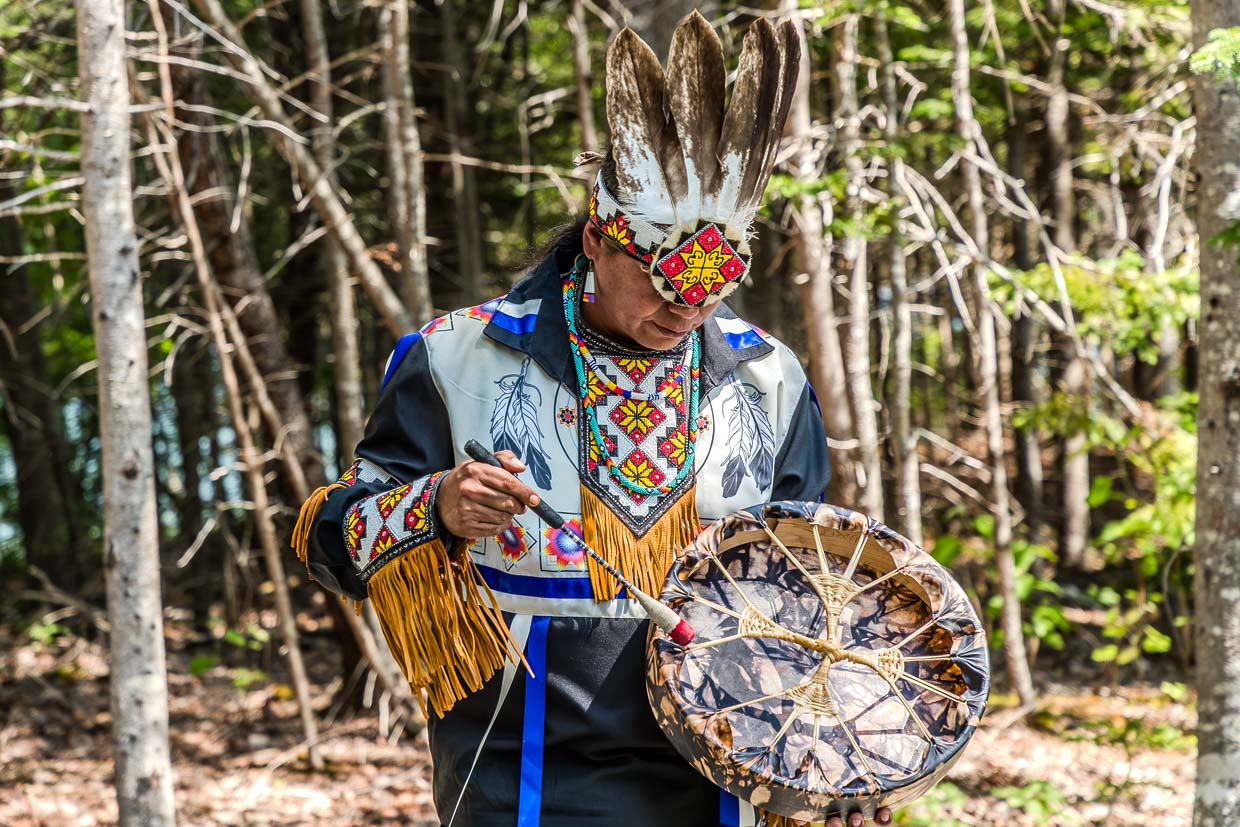
Support for the language also came late. On 17 July 2022, the Mi’kmaw Language Act came into force at a ceremony in Potlotek First Nation. It recognises Mi’kmaw as the province’s indigenous language. Anyone travelling through Nova Scotia today will find information boards at historic sites in English, French and Mi’kmaq. During guided tours of museums, it is explicitly stated that all the land was originally Mi’kmaq land. They were here first; everyone else came after them.
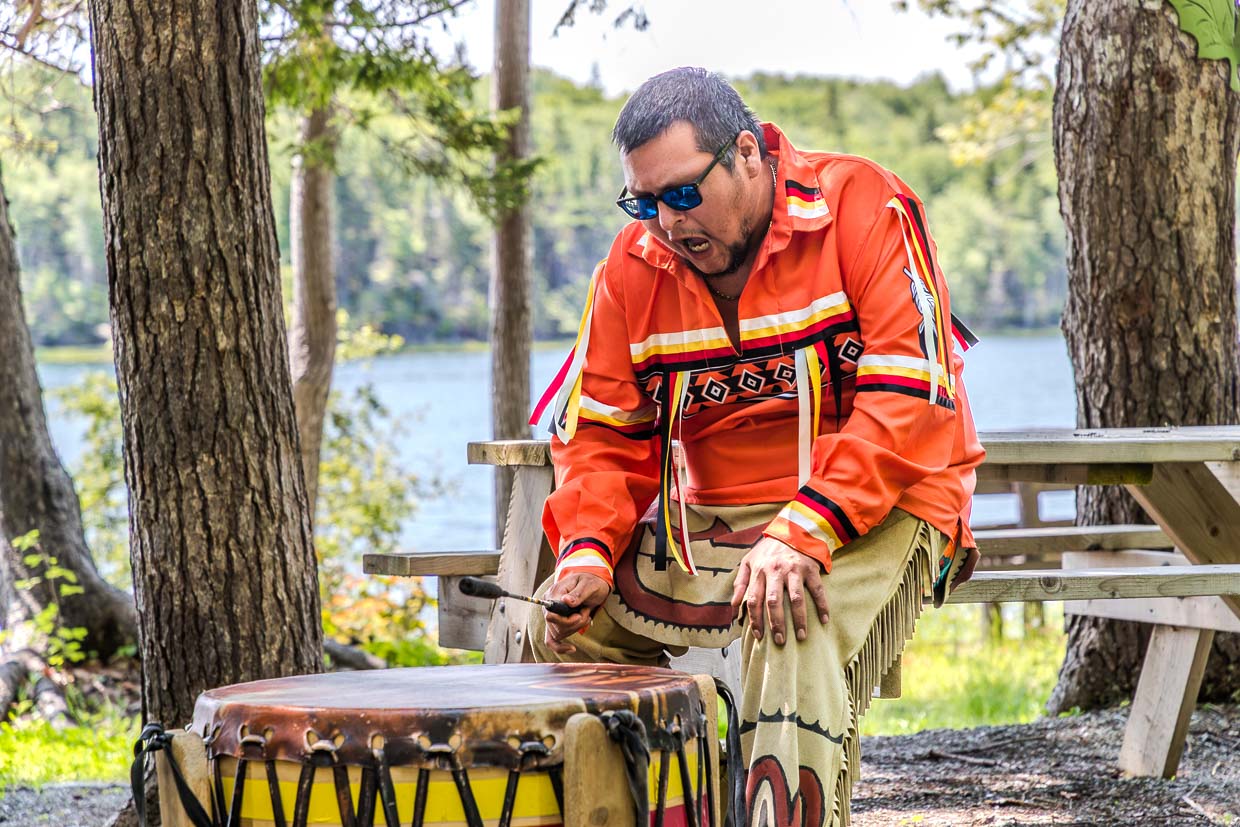
On Goat Island, Eskasoni Cultural Journeys brings culture and people closer together. Mi’kmaq guides lead visitors along a cultural trail approximately 2.5 kilometres long. They recount the history and present-day life of their community from their own perspective. Ryan demonstrates how to hunt with an axe and a spear, and how beaver fur is used to make waterproof boots. A few hundred metres further on, Elisa explains the game of Waltes. It dates back much further than the arrival of the Europeans; Elisa speaks of 5,000 years. It was played at weddings and used to settle disputes over hunting grounds or other conflicts. Diva and Tilda dance to the sound of the tschidemahang – clapper spoons struck against one another. Drummer Steven is glad that he can play at festivals with his band today. Near the lake, Theresa Bernard stands by a wooden table; red dresses hang from the trees. She recalls Red Dress Day and draws attention to the disproportionate levels of violence against Indigenous women that persist to this day.
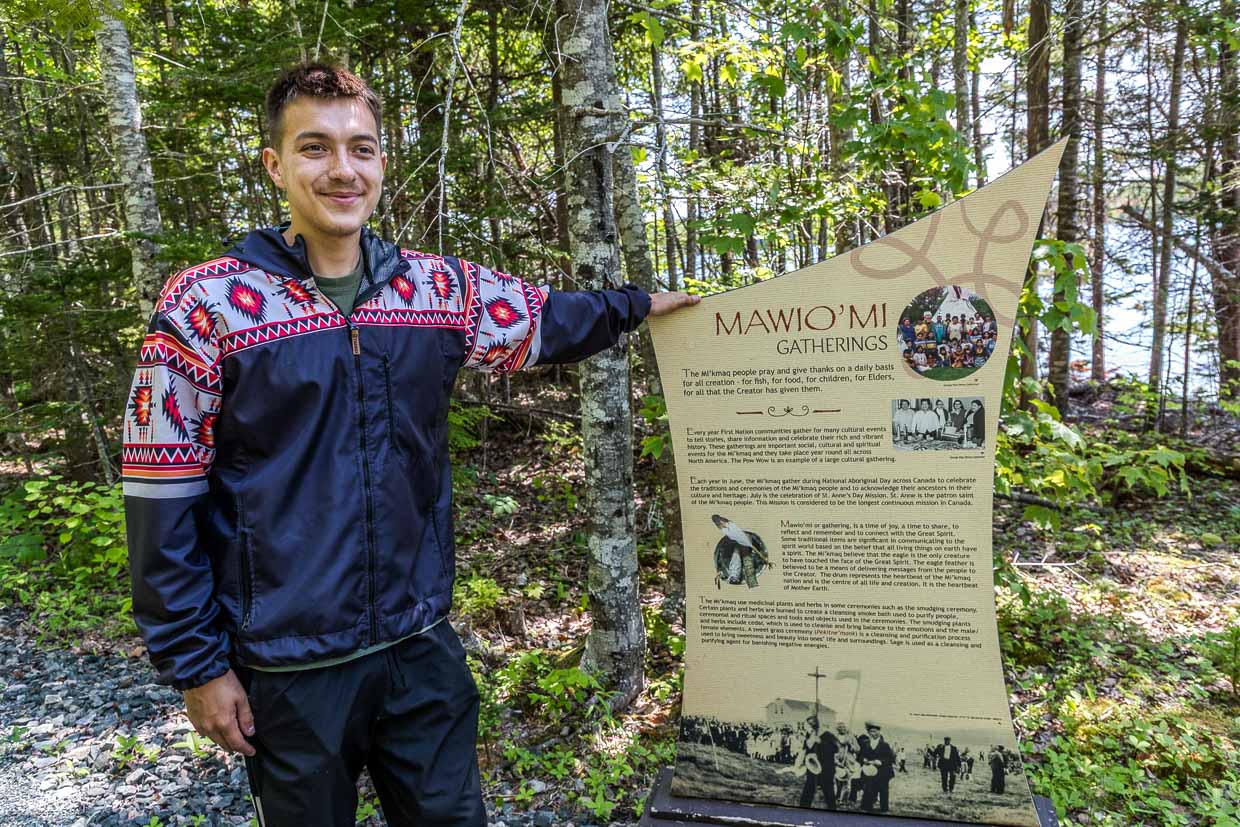
The Eskasoni Cultural Journey illustrates how long and on how many levels Canada’s Indigenous peoples have been oppressed. One can sense the efforts being made to come to terms with this history. Many people we met brought up the subject of their own accord. As a result, the history of the Mi’kmaq is also featured in many museums dedicated to immigrant history.
In addition, there is a medicinal plant tour and a kayaking tour on Goat Island. In this way, Mi’kmaq culture is not confined to the past, but is brought to life through language, music, family traditions and everyday customs. Important to note: An Eskasoni Cultural Journey must be booked in advance. Location: Goat Island, 1 Goat Island Trail, Eskasoni, Cape Breton eskasoniculturaljourneys.ca
The Acadians in Grand Pré, Annapolis and Pubnico
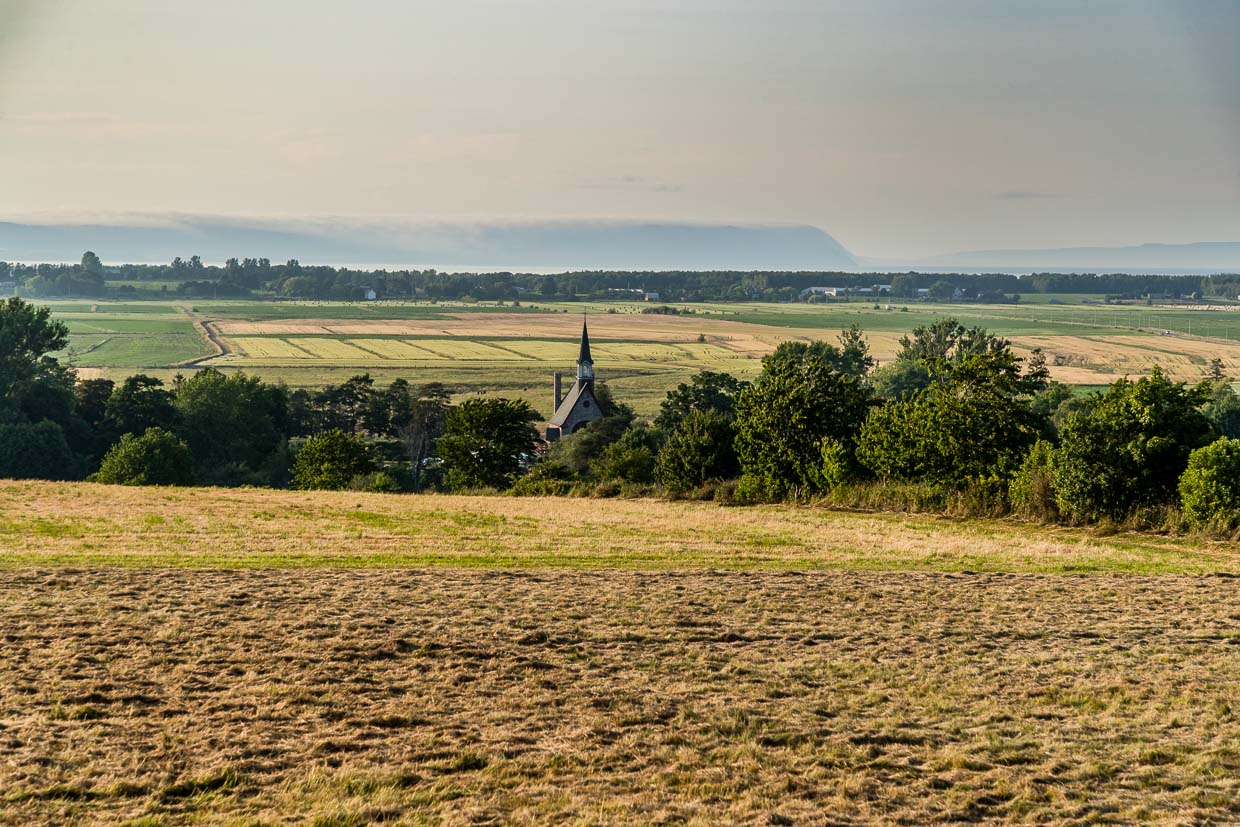
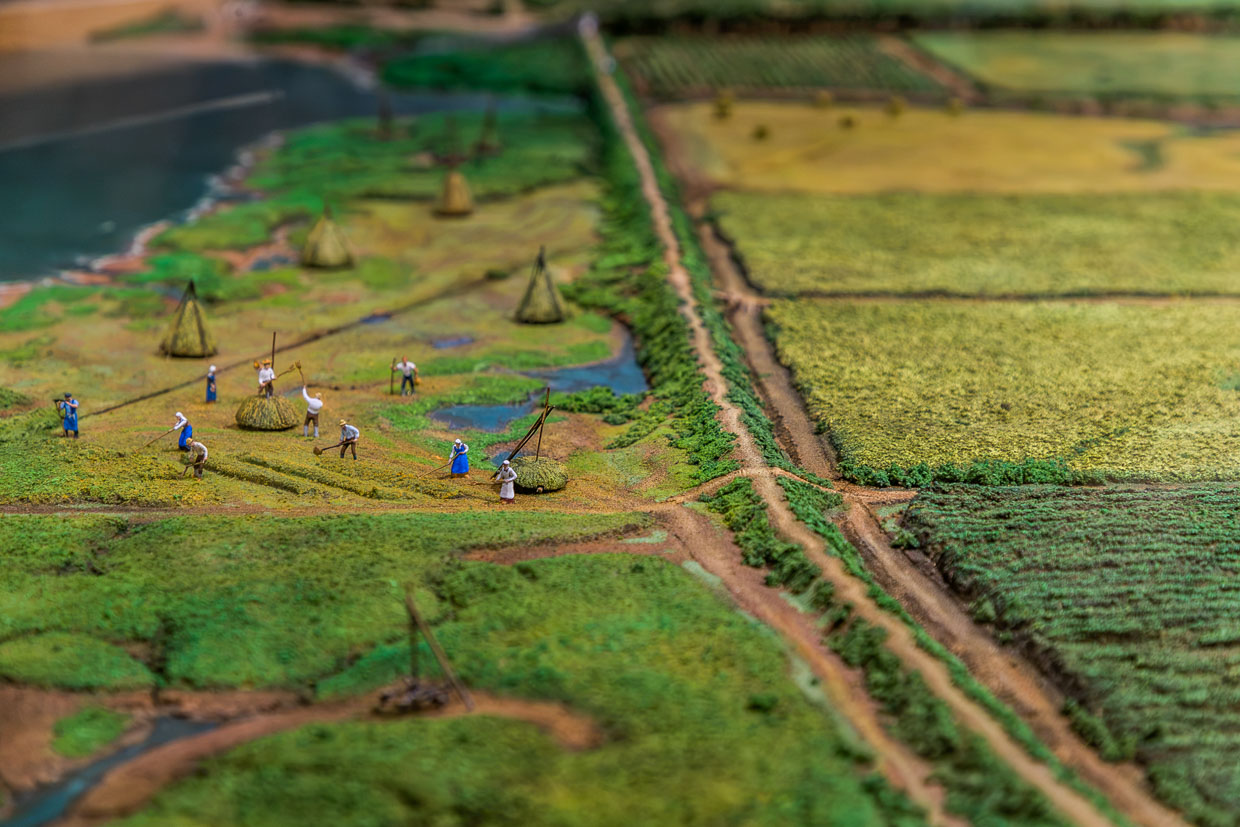
The Acadians are descended from French settlers. Families from western France settled in what is now Nova Scotia in the 1630s. They brought with them valuable knowledge of dyke construction from their homeland. On the Bay of Fundy, the Acadians encountered one of the world’s strongest tidal ranges. They dug drainage ditches and installed ‘aboiteaux’: sluice gates that open and close automatically with the tide. In this way, salt marshes were transformed into arable land. Grand-Pré is the prime example. The village grew to become the largest settlement in Acadia. Around 1750, an estimated 1,350 people lived there. Today, the cultural landscape is its greatest legacy and a UNESCO World Heritage Site.
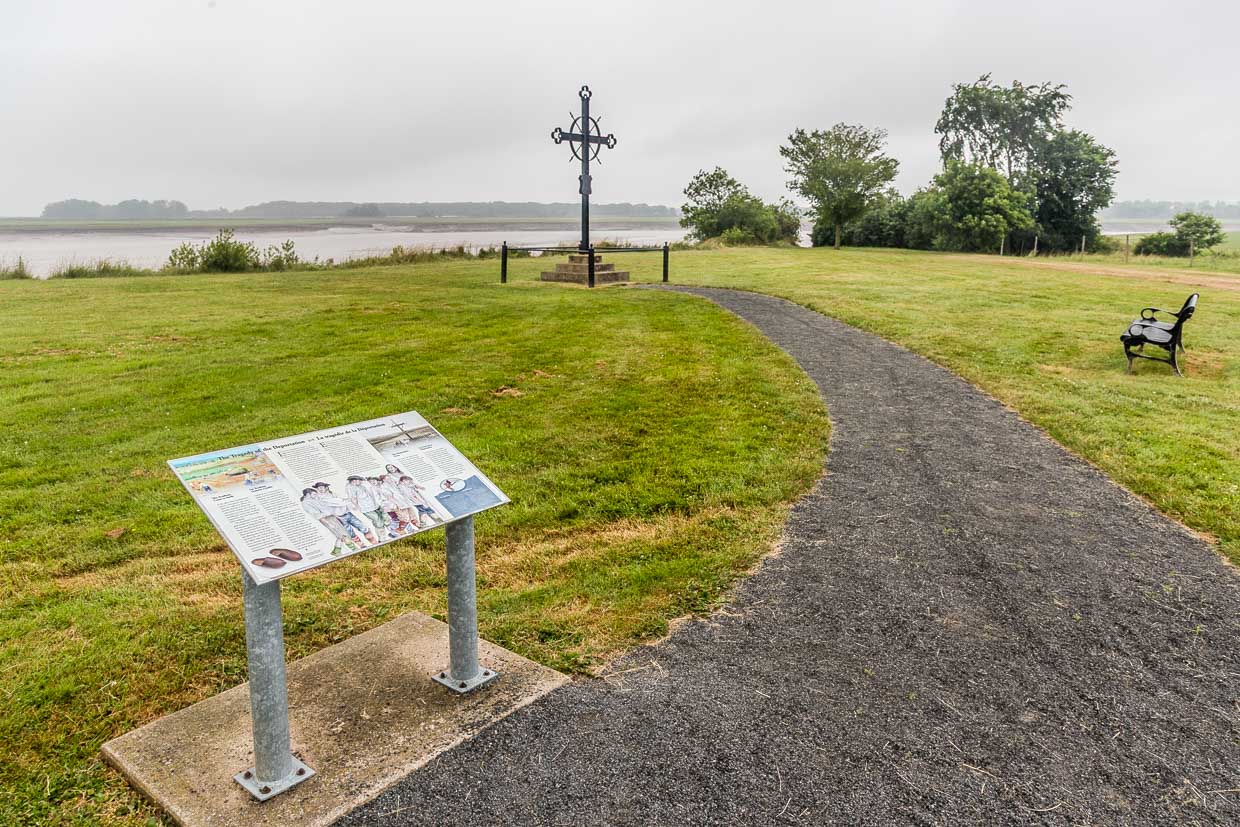
Relations between the Acadians and the Mi’kmaq are considered to have been good. The Mi’kmaq welcomed the first settlers, traded with them and renewed an alliance every year. The Acadians cleared their own farmland, so they did not have to compete for resources. There were many marriages between the two groups. Before 1755, there were more families of mixed heritage living in Grand-Pré than in any other Acadian community. It is difficult to say exactly how much the Acadians learnt from the Mi’kmaq. Tapping maple sap and boiling it down to syrup was certainly one of the things they learnt. Nevertheless, it was no idyll. In 1755, the British demanded an unconditional oath of allegiance. The Acadians refused. Almost 6,000 were deported from Nova Scotia to distant regions, and their homes were burnt to the ground. The Acadians’ fertile fields still exist today.
Grand-Pré National Historic Site and the Landscape of Grand-Pré
Grand-Pré is the place where the Acadians commemorate their history. The site tells the story of the settlement from 1682 to 1755 and of the deportation that began in 1755 and lasted until 1762. The complex comprises a visitor centre, the Memorial Church, the Deportation Cross and the statue of Evangeline. Evangeline is the heroine of Longfellow’s 1847 epic poem. The girl from Grand-Pré loses her fiancé and has since been regarded as a symbol of Acadian perseverance. The church was built in 1922 by the Acadians themselves, using donations from across North America. The surrounding landscape was recognised as a World Heritage Site by UNESCO in 2012.
Location: 2205 Grand Pré Road, Grand Pré, Annapolis Valley
Fort Anne National Historic Site, Annapolis Royal
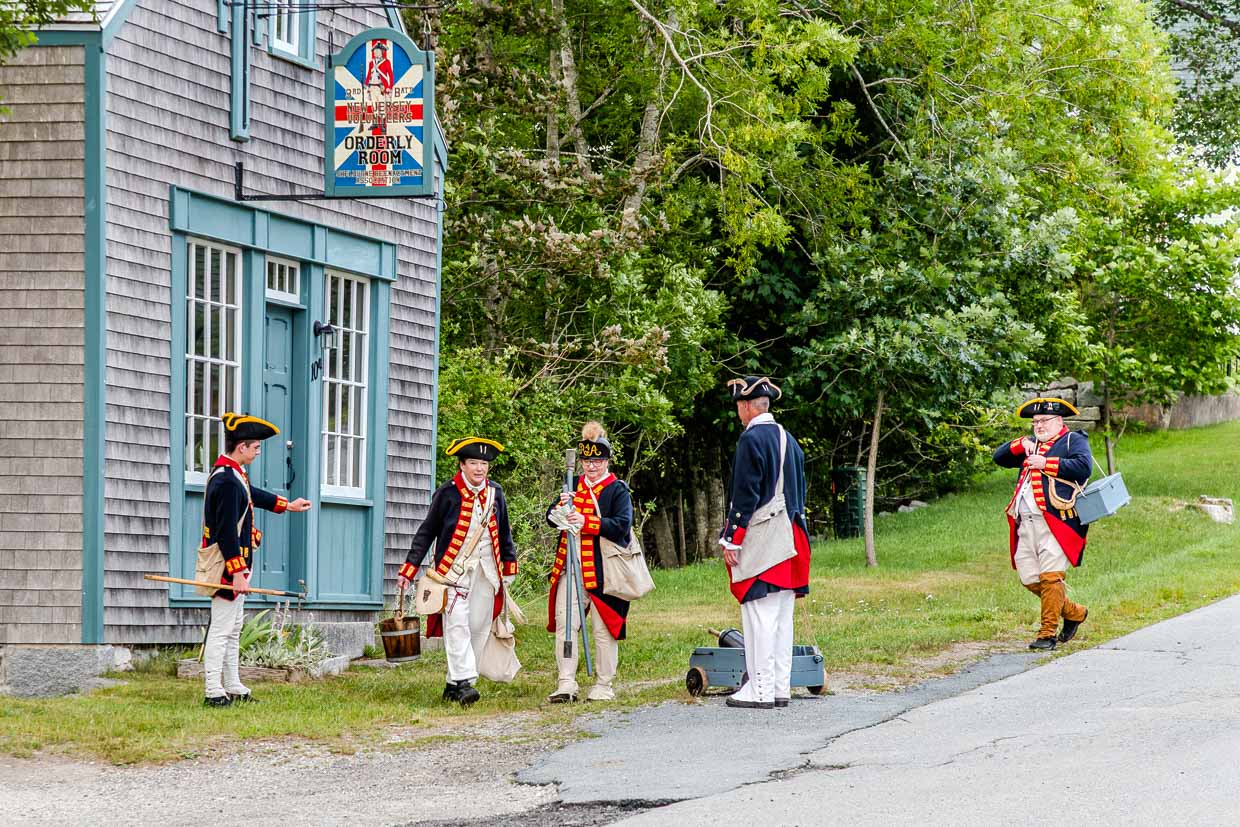
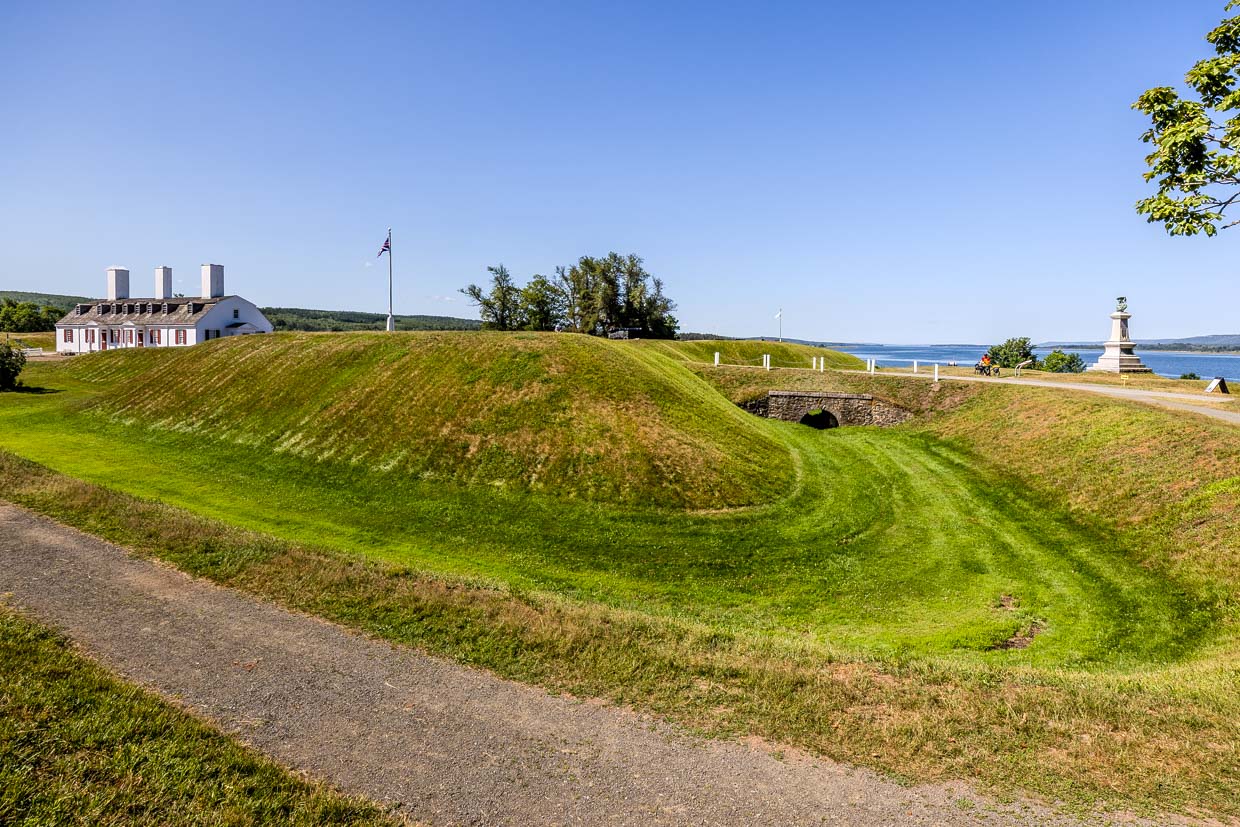
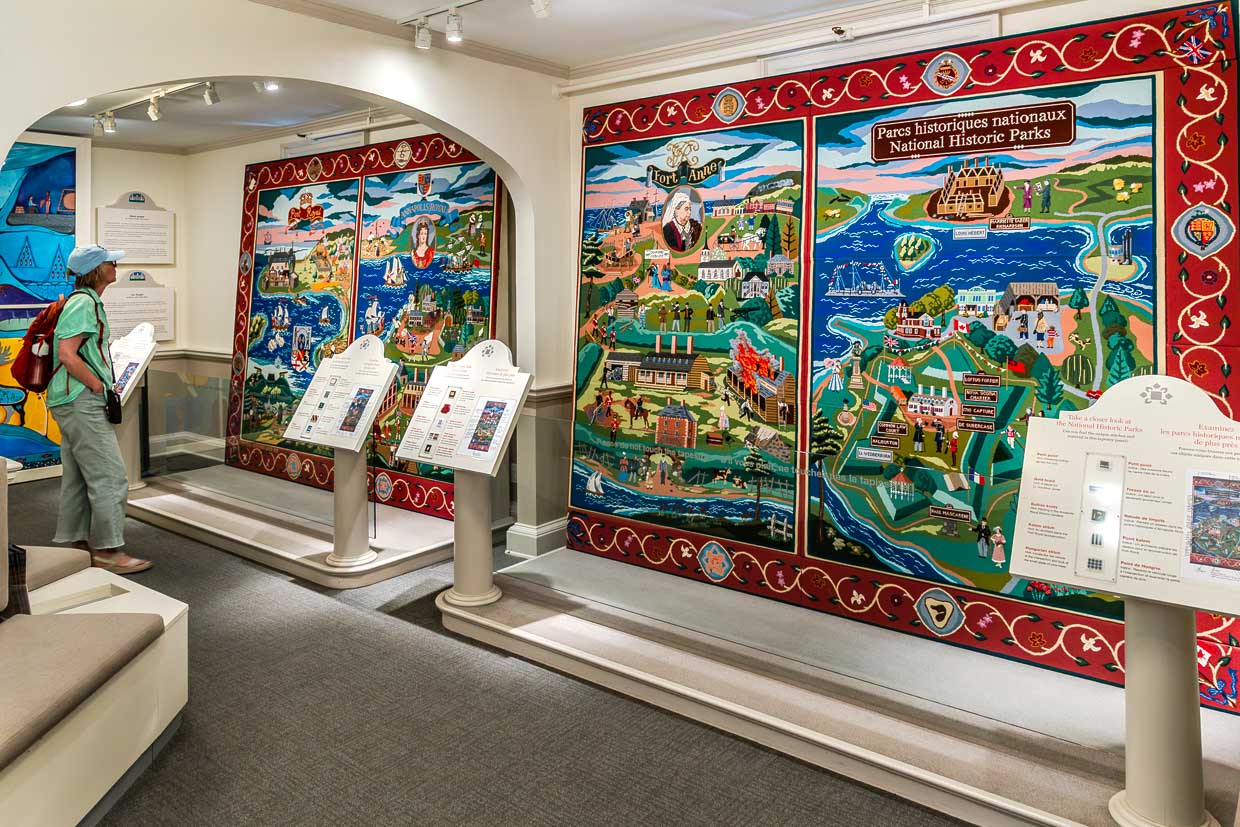
A fascinating stop. Parks Canada manages Fort Anne as the country’s first National Historic Site and as one of the most contested sites in North America. The Scots, French and English fought over the land, often drawing the Mi’kmaq into the conflict. The small exhibition at the Officers’ Quarters Museum brings all these groups together – the settlers and the First Nations. It tells the stories of the Mi’kmaq, Scots, French, British, Acadians and African Nova Scotians.
Address: 323 St George Street, Annapolis Royal
The Acadian Historical Village of Nova Scotia
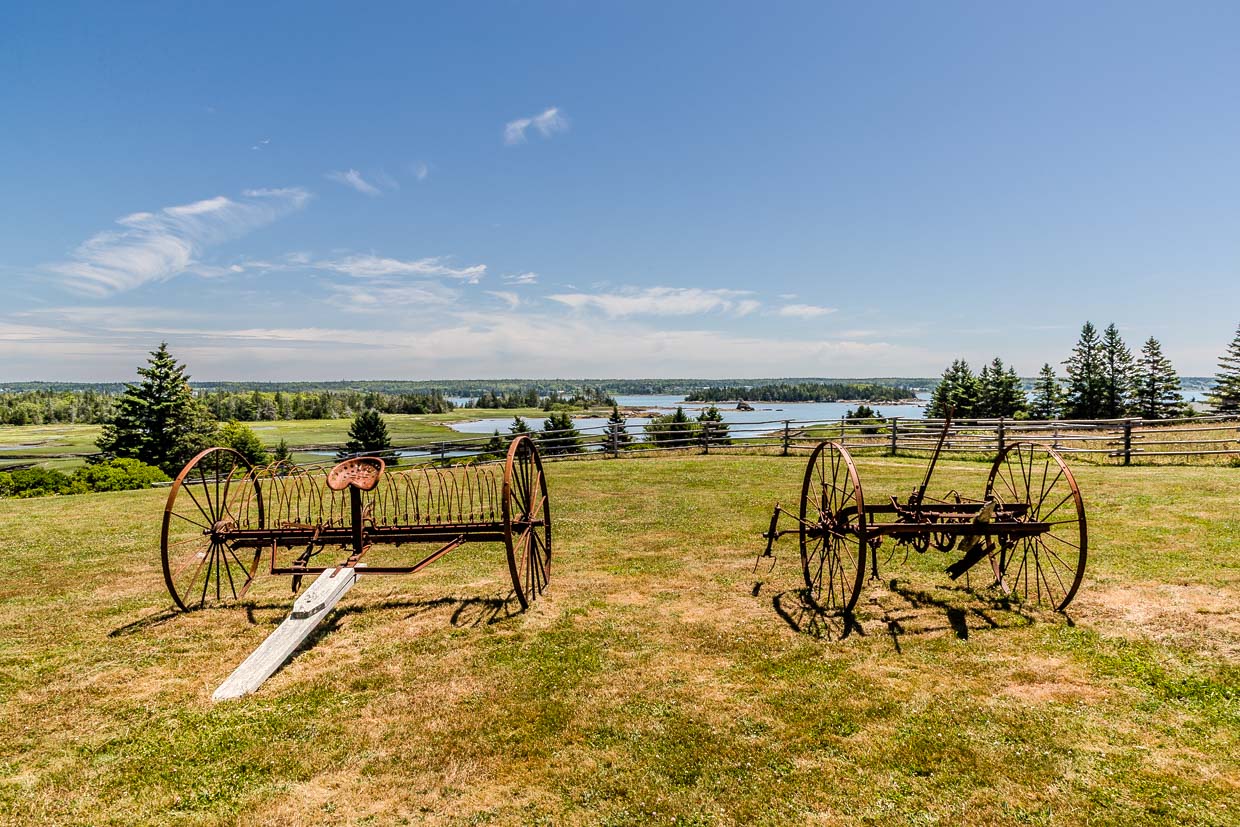
Pubnico has a unique feature. It was founded in 1653 by Sieur Philippe Mius d’Entremont. It is the oldest Acadian region still inhabited by descendants of the founder. However, the museum does not showcase a 17th-century settlement. Instead, it recreates an early 20th-century village on a 17-acre site overlooking Pubnico Harbour. Visitors can see original timber-framed houses, a lighthouse and a cemetery, as well as examples of fishing and farming as practised over a hundred years ago. In the modern café, which overlooks the historic village, you can also enjoy Rappie Pie, a traditional Acadian dish, every day. Location: 91 Old Church Road, Lower West Pubnico, Website: levillage.novascotia.ca
Musée des Acadiens des Pubnicos
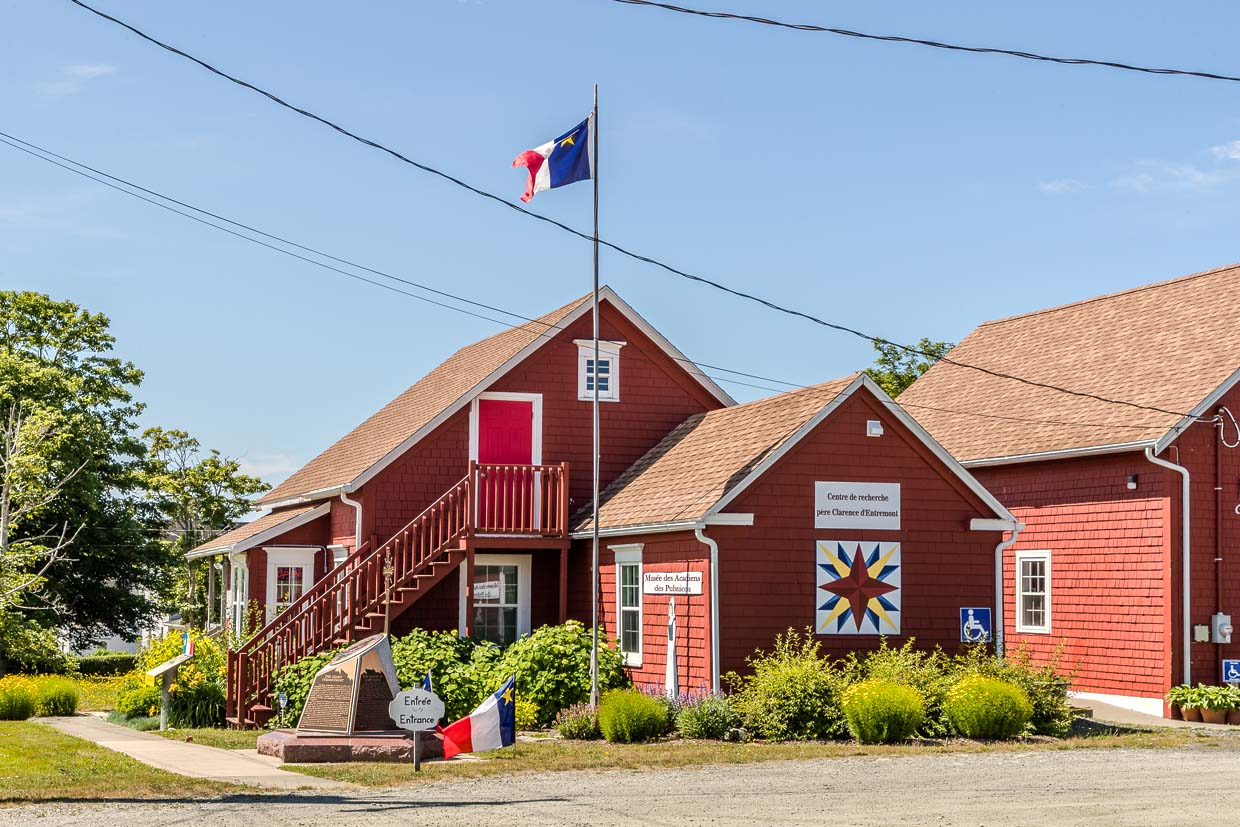
It’s worth stopping off even before reaching the open-air museum. In West Pubnico, there is a smaller museum that also tells the story of Acadian settlement. In 1977, the Société historique acadienne de Pubnico-Ouest purchased a house in the village, converted it into a museum and opened it in 1979. The house itself dates from 1864. You walk across creaking floorboards through the small rooms. At one point, you see an old kitchen. Then you come across artefacts from Acadian farming, including an old ‘aboiteau’. This sluice gate, which closes automatically at high tide and allows the fresh water to drain from the marshland at low tide, transformed salt marshes into arable land. The small museum also focuses on the language. Many old expressions have been preserved in the Acadians’ French. To native French speakers, it sounds old-fashioned. In the attic, exhibits tell the story of fishing and lobster trapping. A remarkable documentary film from the 1940s depicts the lives of whalers.
Location: West Pubnico, Highway 335, Yarmouth County. Website: museeacadien.ca
Scottish heritage
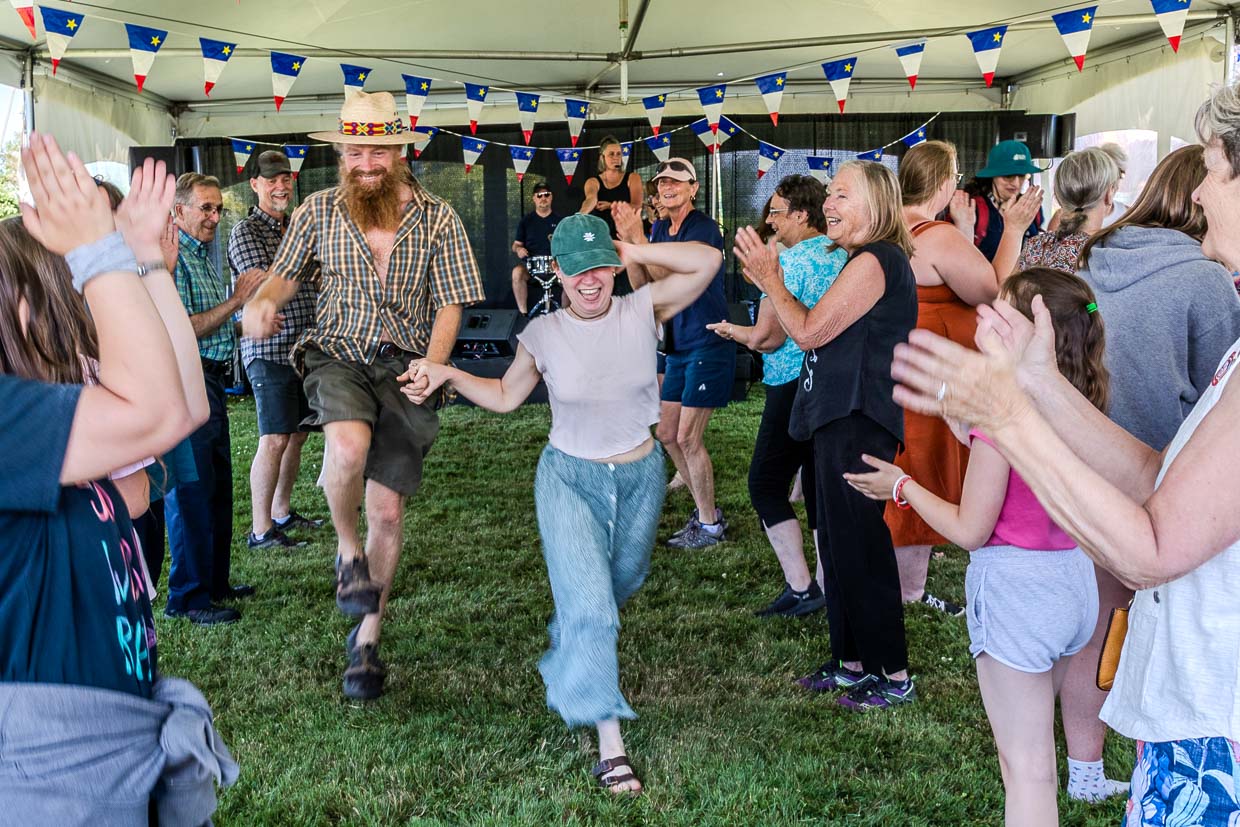
Anyone exploring Nova Scotia by car will pass along the Ceilidh Trail. This cultural route intersects with the Cabot Trail, so you inevitably follow in the footsteps of the Scottish settlers. Several venues keep their heritage alive. If you want to experience fiddlers and dancers at lunch or in the legendary Red Shoe Pub, it’s best to plan ahead. Four places well worth a stop.
The Ceilidh Trail begins in Port Hastings, just beyond the Canso Causeway, which connects Cape Breton to the mainland. The name refers to the region’s Scottish-Gaelic music and festival culture. The route follows Route 19 along the island’s west coast, running alongside the Gulf of St Lawrence. After around 112 kilometres, it ends in Margaree Harbour, where it joins the Cabot Trail. Along the way, it passes through Port Hood, Judique, Mabou and Inverness.
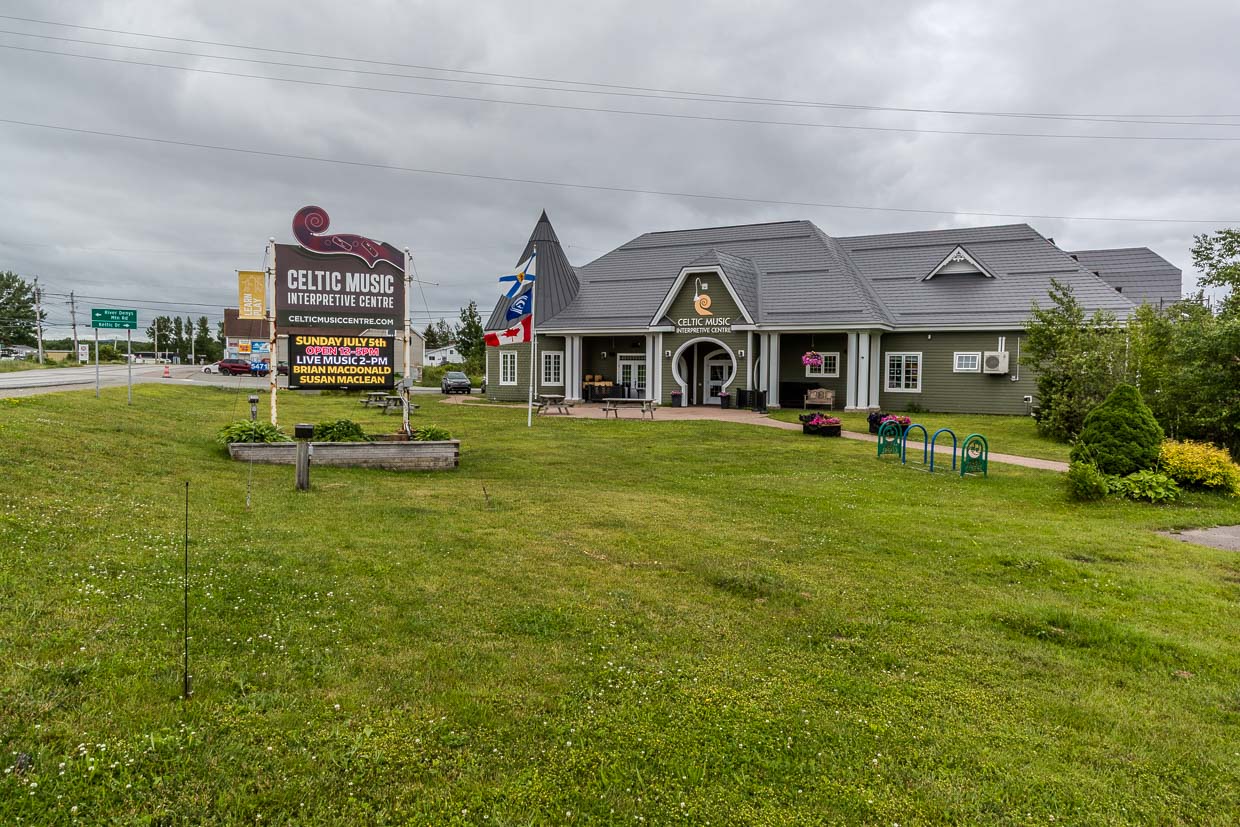
Celtic Music Interpretive Centre in Judique
From June to October, the centre puts on performances on several days. During the peak season, the Lunch Céilidh usually takes place from Monday to Friday, from 11.30 am to 2.00 pm. There is no charge for the music; you only pay for your meal in the restaurant. The Sunday Céilidh takes place all year round, usually from 2.00 pm to 5.00 pm.
Red Shoe Pub in Mabou
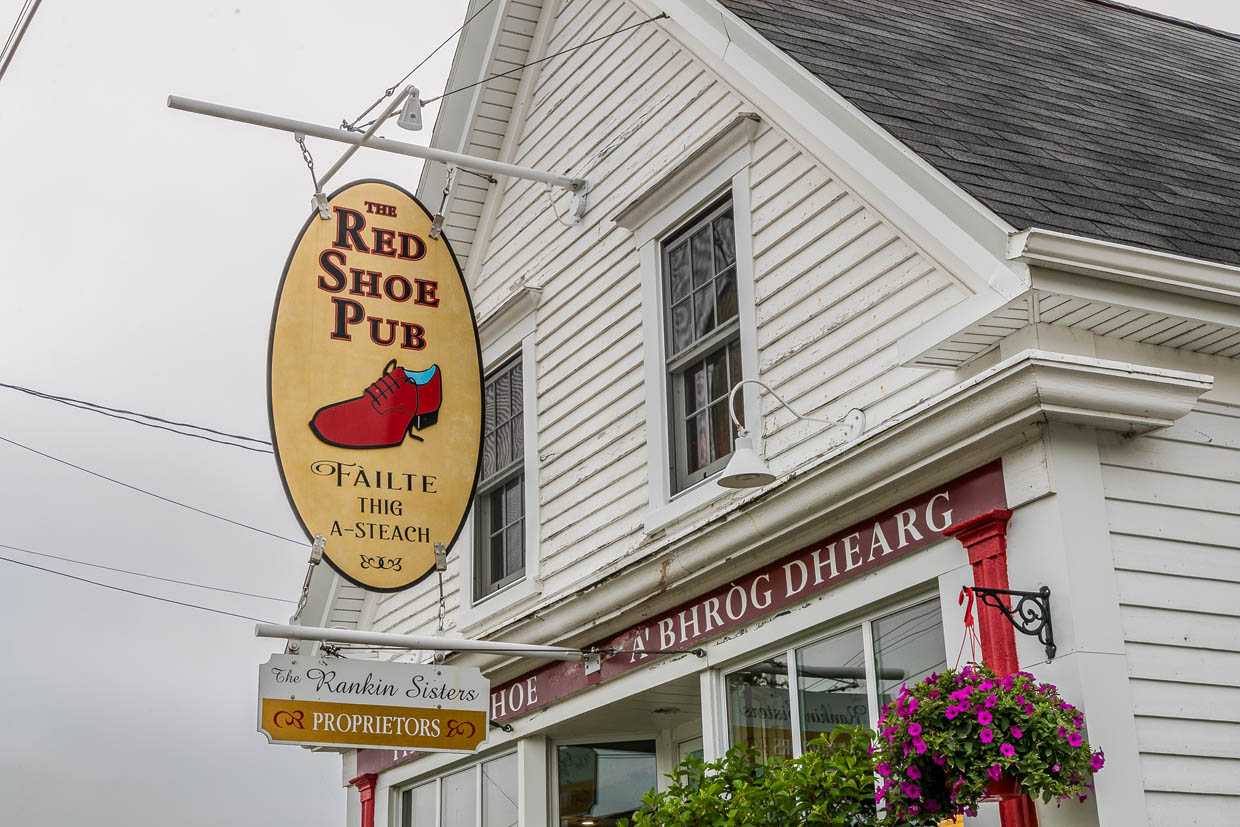
The Rankin Sisters, well-known musicians in Nova Scotia, founded the pub in 2005. They wanted to give something back to their home community: good regional cuisine combined with traditional music. In the peak season, they serve home-style cooking featuring local fish and seafood, accompanied by local beer. On stage, the sounds of the Cape Breton fiddle, piano and singing fill the air, and occasionally someone breaks into a tap dance. The atmosphere remains intimate, with professional performances and spontaneous sessions blending seamlessly. If you want a good table, arrive early. Some evenings have an admission charge, and the programme is set seasonally.
Highland Village Museum Baile nan Gàidheal in Iona
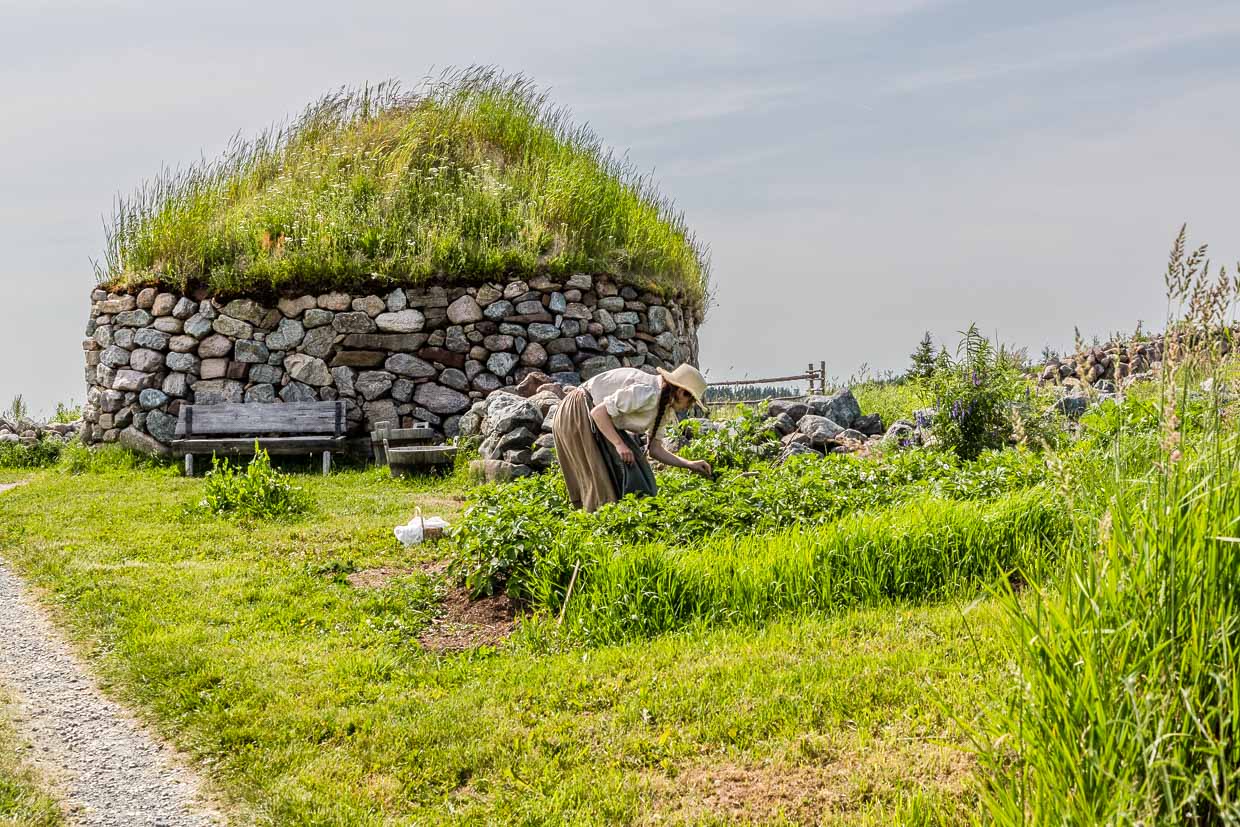
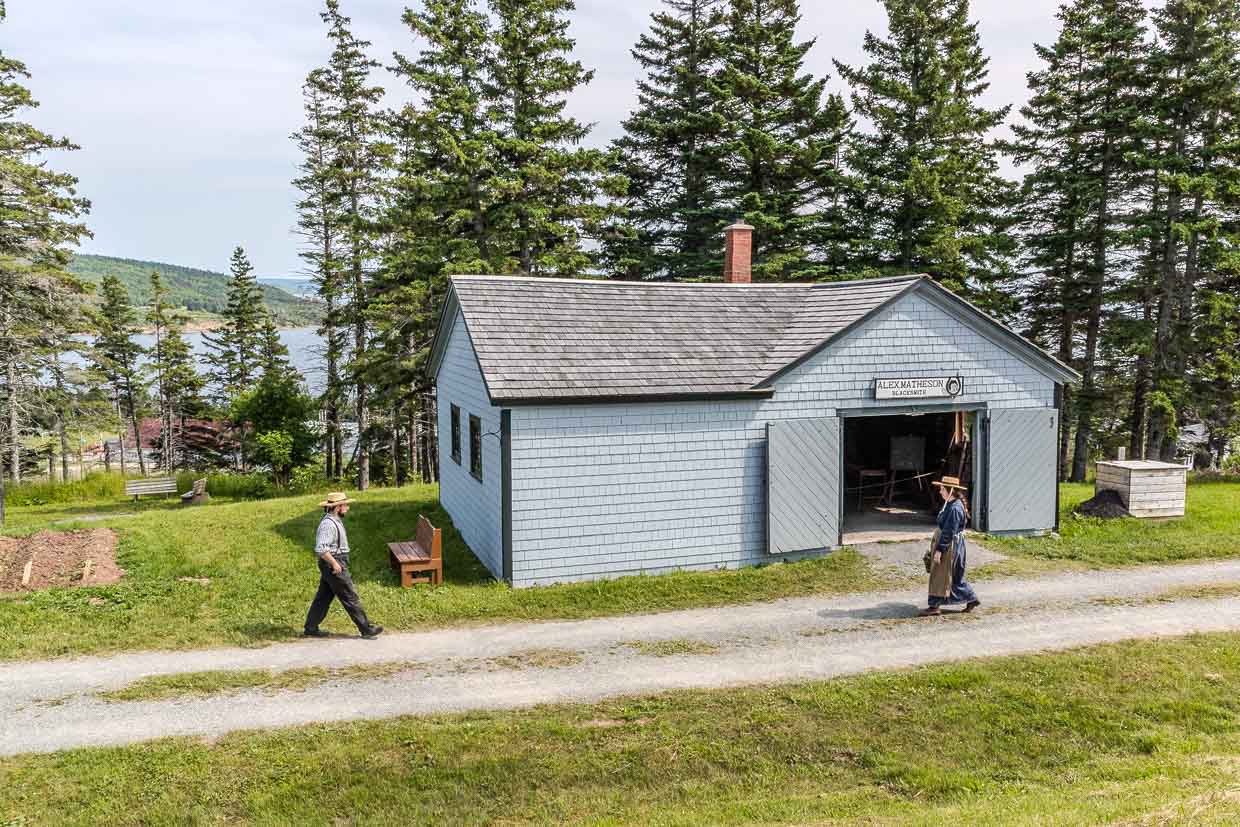
The entrance building to the Highland Village Museum stands modern on a hill. You walk past the ticket office, through a simple museum shop and a corridor lined with display boards. The corridor feels like a time portal. At the end, a heavy metal door awaits. You push it open and find yourself outdoors. The path leads uphill, and the view opens out across Bras d’Or Lake. A woman in a dress and white apron is weeding a flowerbed; behind her stands a stone house with a thatched roof, typical of the Highlands. It feels as though you’ve stepped back to the year 1770. The open-air museum tells the story of the history, culture and identity of the Gaels in Nova Scotia. Eleven historic buildings are spread across 43 acres, with costumed guides leading visitors through them. The museum operates bilingually, in English and Gaelic.
Gaelic College of Arts & Crafts in St Ann’s
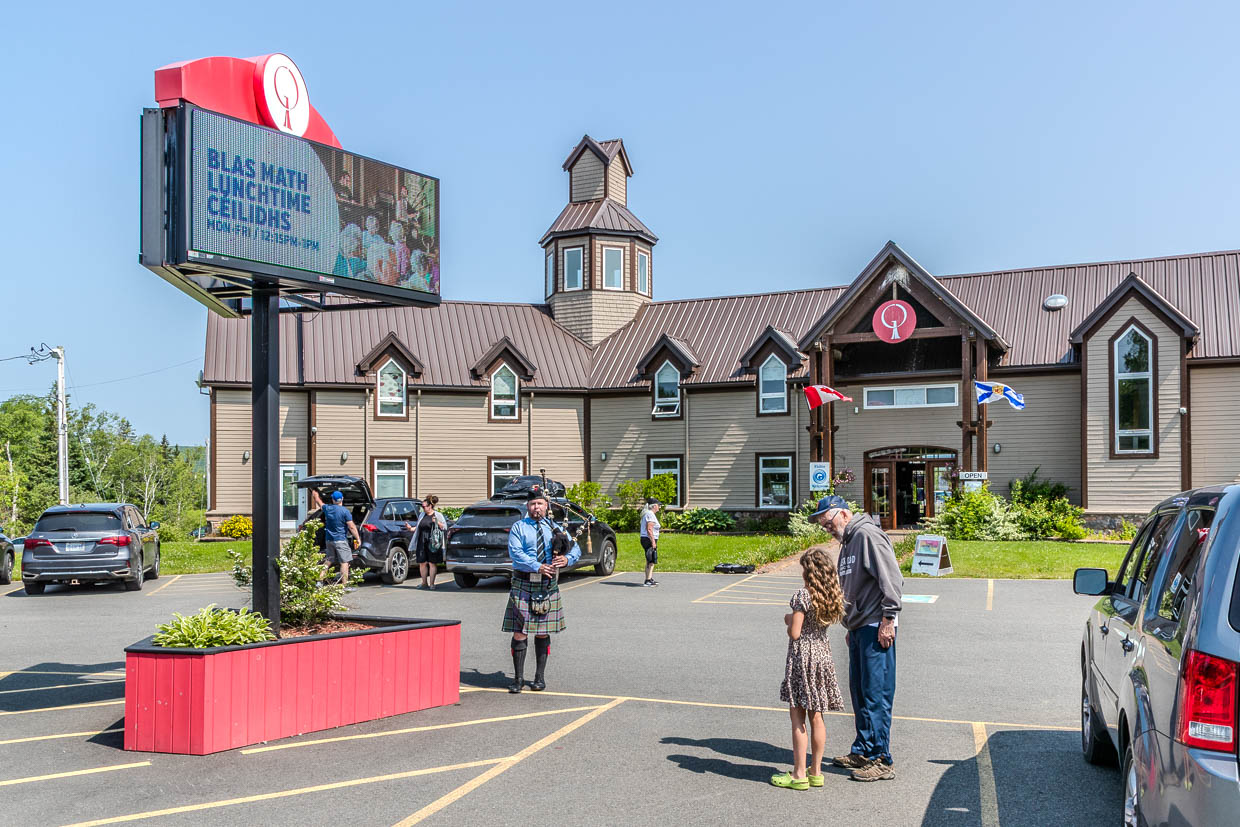
The college near Baddeck on the Cabot Trail is not a tourist attraction, but an educational institution that operates all year round. It promotes Scottish-Gaelic culture: language and songs, Cape Breton fiddle, piano, bagpipes, tap dancing, Highland dancing, weaving and other crafts. We were drawn in by Keith MacDonald’s bagpipe playing. During the peak season, there is a céilidh every Wednesday evening featuring fiddle, piano, tap dancing and storytelling, occasionally incorporating Gaelic terms or songs.
The Black Loyalist in Birchtown
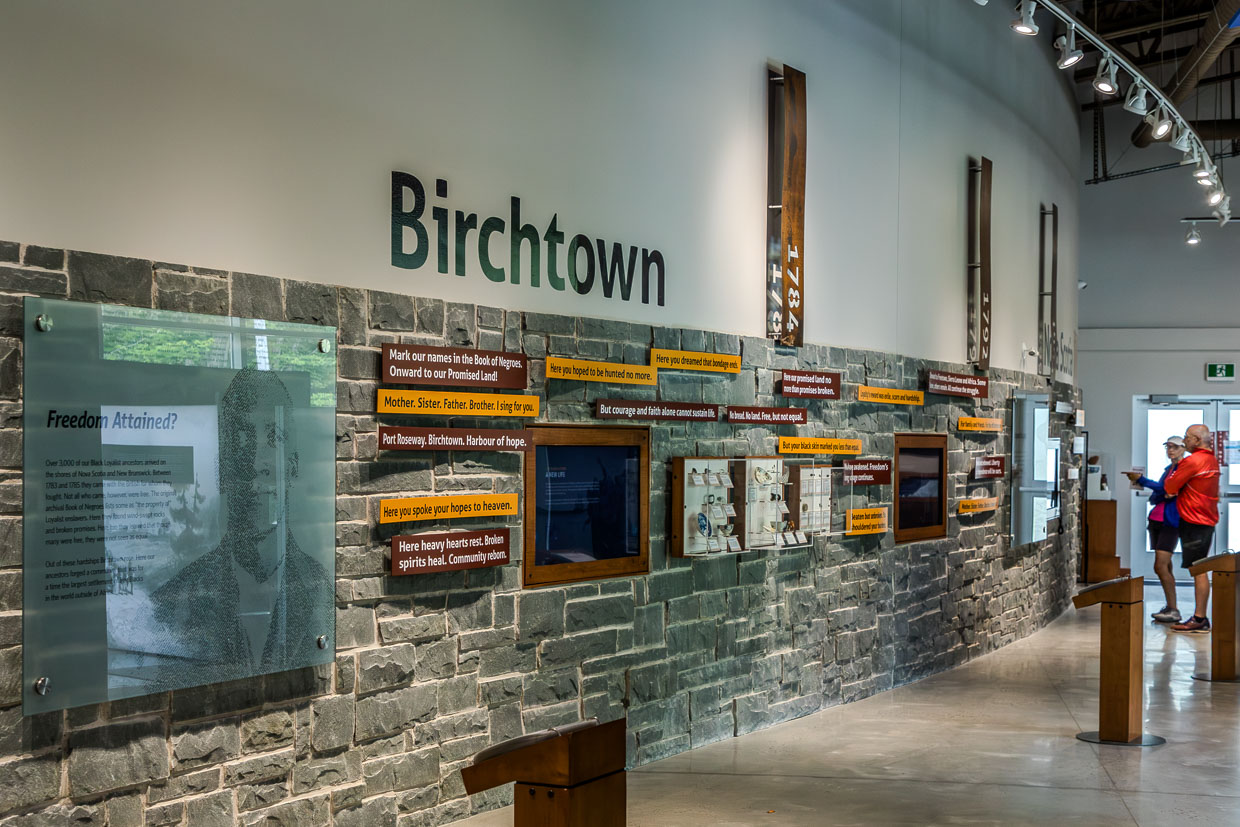
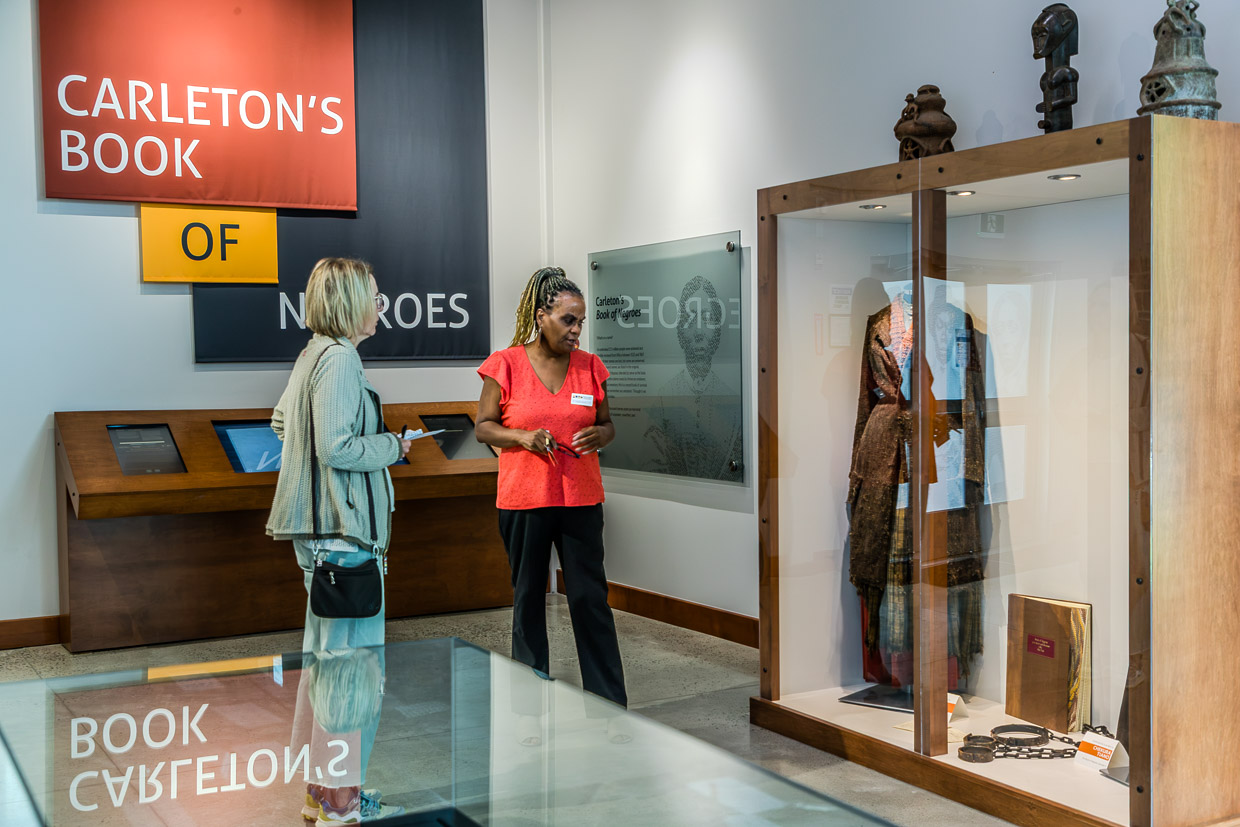
The name is puzzling. Loyal to whom? To the British Crown. During the American War of Independence, the term ‘Loyalists’ was used to describe all those who remained loyal to the British. Birchtown is no coincidence. In the 1780s, according to the centre, the largest free settlement of Black people was located here, on Birchtown Bay in Shelburne Harbour. They had left slavery behind and were building a new life for themselves. Conditions were harsh. The promised reward for their loyalty failed to materialise. The centre tells their story in America, in Nova Scotia and in Sierra Leone. Staff guide visitors through the exhibition, whilst interactive digital displays provide further insight. In a virtual edition of the Book of Negroes, the names of the first Black Loyalists can be found amongst more than 3,000 entries. The Heritage Trail , ‘Aminata’s Walk’, is named after the heroine from Lawrence Hill’s novel *The Book of Negroes* and passes a replica of a pit house. This was the name given to the makeshift accommodation of the first settlers. The site also includes the restored Old Birchtown Schoolhouse, dating from 1835, which remained in use until 1961.
A community initiative is behind the Heritage Centre. In 1989, a small group gathered in Shelburne around Elisabeth Cromwell – who would later become the founder – most of whom were descendants of the first settlers, to compile the history of the Black Loyalists. Today, Executive Director Andrea Davis runs the centre. She is an eighth-generation descendant of the Black Loyalists.
Group: Black Loyalists. Location: 119 Birchtown Road, Birchtown. Website: blackloyalist.com
Pier 21 Canadian Museum of Immigration
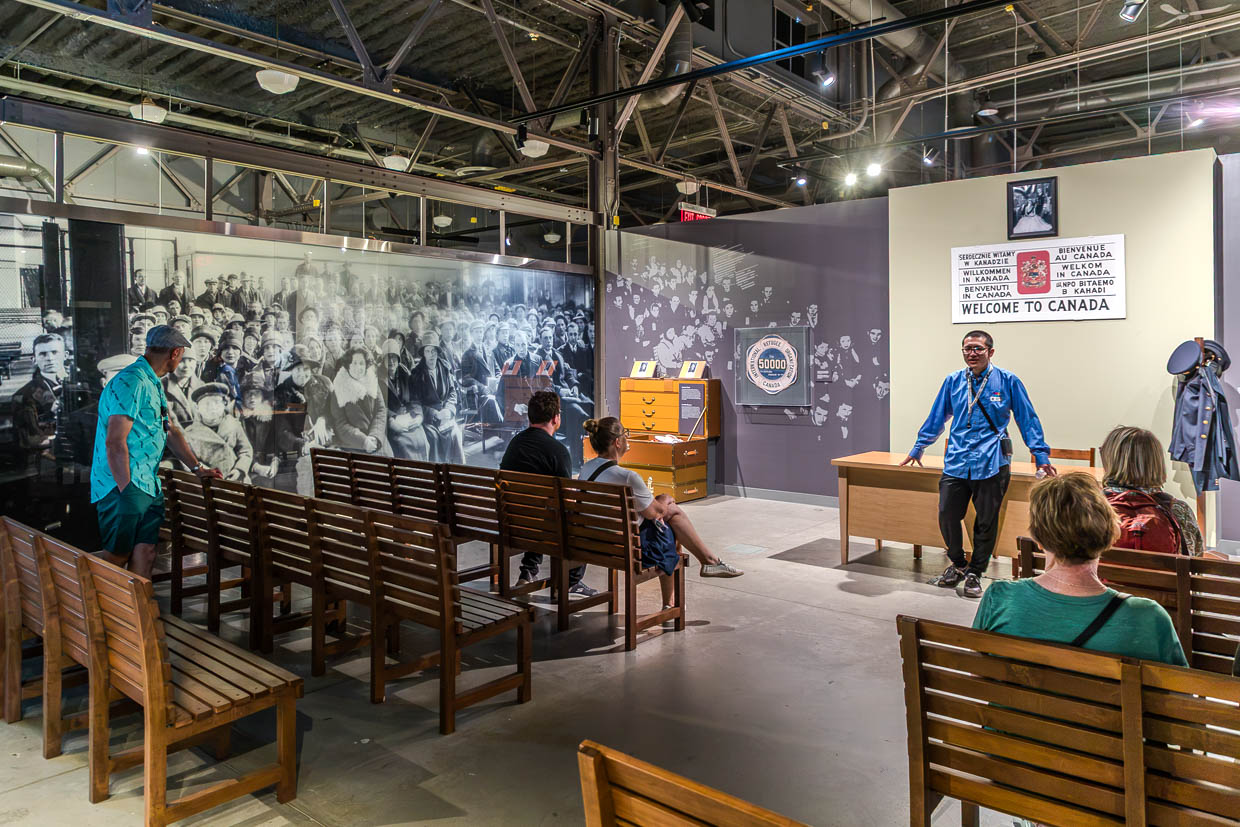
The final major chapter in the history of immigration took place between 1928 and 1971. Pier 21 in Halifax was one of the most important arrival points for immigrants in Canada. After the Second World War, the pier became the country’s busiest seaport for immigration. Nearly 400,000 returning Canadian soldiers also came ashore here. The museum works with eyewitnesses. Short films recount individual stories, whilst maps show almost all the shipping routes between Europe and Canada. Owing to its significance, the museum is one of Canada’s national museums.
More about Nova Scotia
If you want to know how the Mi’kmaq, Acadians, Scots and Black Loyalists came to shape modern-day Nova Scotia, read The Settlers of Nova Scotia. In Atlantic Canada, lobster was long considered a poor man’s food. Today, the lobster roll is a national symbol. Anyone wanting to know how the catch is made should join a night shift: Lobster Fishing in Nova Scotia shows what stock conservation means. Canada is also the land of maple syrup. Most of it comes from Quebec, but Nova Scotia also taps sugar maple trees. In Halifax, the provincial capital, there’s plenty on offer. The culinary guide to Halifax points you towards the best places to eat. But the city offers more than just food. The sightseeing guide ranges from the 7 Virtues perfume workshop to the immigration tour at the Museum of Immigration at Pier 21. Halifax has also been the scene of several tragedies. When the Titanic sank in 1912, it was the nearest major port. Many of the victims were brought here. At Fairview Lawn Cemetery, their graves serve as a reminder of the disaster. The skies are becoming clearer. The Deep Sky Eye Observatory offers views of the Milky Way at North America’s first Starlight Destination. Stargazing at sea level here means: mosquito repellent for the Milky Way.
This research was supported by Visit Nova Scotia


