Farewell to Mercator?

On 4 September 2026, the UN General Assembly voted 164 to 1 in favour of the ‘Correct the Map’ resolution. Six states – Estonia, Georgia, Lithuania, Moldova, Serbia and Ukraine – abstained. The resolution recommends that governments, schools, the media and technology companies use area-preserving projections such as Equal Earth for size comparisons in future, rather than the projection developed in 1569 by the Duisburg geographer Gerhard Mercator. This projection continues to dominate most digital maps to this day. The recommendation is not binding. The Mercator projection remains permitted.

Togo tabled the resolution on behalf of the African Union. The reasoning is geometrically sound: the Mercator projection enlarges areas the further they are from the equator. Africa, which lies largely near the equator, thus appears smaller than Greenland, even though, according to the French Foreign Ministry, it is almost fourteen times as large.

The US was the only country to vote against it. Its UN delegation described the resolution as a “radical ideological project” and accused the General Assembly of distracting itself from its core responsibilities. There is no statement from US President Donald Trump on the resolution itself. Nevertheless, geography professors Jack Swab and Derek Alderman from the University of Tennessee see a link to his policy on Greenland: Trump’s repeated claim that the island is “massive” in size, whilst calling for its annexation by the US, is likely influenced by the distortion of the Mercator projection, they write in an analysis for The Conversation. On Mercator maps, Greenland appears greatly enlarged due to its proximity to the Pole – almost as large as the entire African continent, which is in reality fourteen times larger.

Why we’re sticking with Google Maps anyway

For our travel atlas – the interactive world map featuring around 280 destinations from Tellerrandstories – this resolution could, at first glance, have had consequences. But that hasn’t been the case: our map continues to run on Google Maps – and Google Maps still uses the Mercator projection.

The reason lies in the technology, not in editorial decisions. Interactive map services such as Google Maps load the world in square tiles, which are reloaded as you zoom in. This method, which has been the industry standard for a decade and a half, only works with an angle-preserving projection – that is, one that accurately preserves shapes and directions, regardless of scale. This is precisely what the Mercator projection achieves. It was developed in 1569 for navigation, because a course that appears as a straight line on the map corresponds to a constant compass bearing at sea.

AAAWgmp1bWIAAAAeanVtZGMycGEAEQAQgAAAqgA4m3EDYzJwYQAAABZcanVtYgAAAEdqdW1kYzJtYQARABCAAACqADibcQN1cm46YzJwYTowYTlhMzViMC0wOGZmLTRmMmItOWRmOC04OGQwNWIyNTRiMjAAAAADl2p1bWIAAAApanVtZGMyYXMAEQAQgAAAqgA4m3EDYzJwYS5hc3NlcnRpb25zAAAAALxqdW1iAAAARGp1bWRjYm9yABEAEIAAAKoAOJtxE2MycGEuaW5ncmVkaWVudC52MwAAAAAYYzJzaA23GZtGZUdvDPzYJmdlzmUAAABwY2JvcqNpZGM6Zm9ybWF0bWltYWdlL3N2Zyt4bWxqaW5zdGFuY2VJRHgseG1wOmlpZDpmOTMxY2U0OS0wMGNjLTQ1MTAtOThmNi01MTU5YTEzNGI1OGRscmVsYXRpb25zaGlwaHBhcmVudE9mAAAB4mp1bWIAAABBanVtZGNib3IAEQAQgAAAqgA4m3ETYzJwYS5hY3Rpb25zLnYyAAAAABhjMnNojQYKsxPlg4+kt4XFvLF4kQAAAZljYm9yomdhY3Rpb25zgqJmYWN0aW9ua2MycGEub3BlbmVkanBhcmFtZXRlcnOha2luZ3JlZGllbnRzgaJjdXJseC1zZWxmI2p1bWJmPWMycGEuYXNzZXJ0aW9ucy9jMnBhLmluZ3JlZGllbnQudjNkaGFzaFggujnVpAv7bNcuFq1HlOi8+6nLhhaOhvcXnVIswFv2A/2kZmFjdGlvbngdY29tLmFudGhyb3BpYy5jbGF1ZGUucHJvdmlkZWRqcGFyYW1ldGVyc6F4H2NvbS5hbnRocm9waWMub3JpZ2luLWNvbmZpZGVuY2VndW5rbm93bmtkZXNjcmlwdGlvbnhmQ2xhdWRlIHByb3ZpZGVkIHRoaXMgZmlsZSBhdCB0aGUgcmVxdWVzdCBvZiBhIHVzZXIgYW5kIG1heSBoYXZlIGNyZWF0ZWQgb3IgbW9kaWZpZWQgdGhlIGZpbGUgY29udGVudHMubXNvZnR3YXJlQWdlbnShZG5hbWVmQ2xhdWRlcmFsbEFjdGlvbnNJbmNsdWRlZPUAAADIanVtYgAAAEBqdW1kY2JvcgARABCAAACqADibcRNjMnBhLmhhc2guZGF0YQAAAAAYYzJzaGkAwyNRtbrIvIsLg00cJ8IAAACAY2JvcqVjYWxnZnNoYTI1NmNwYWRNAAAAAAAAAAAAAAAAAGRoYXNoWCBy/V6kEFiQdjZBcR5ClF5Yk47pfT5J6aUUAB/SpahNy2RuYW1lbmp1bWJmIG1hbmlmZXN0amV4Y2x1c2lvbnOBomVzdGFydBivZmxlbmd0aBkeBAAAAj5qdW1iAAAAJ2p1bWRjMmNsABEAEIAAAKoAOJtxA2MycGEuY2xhaW0udjIAAAACD2Nib3KlY2FsZ2ZzaGEyNTZpc2lnbmF0dXJleE1zZWxmI2p1bWJmPS9jMnBhL3VybjpjMnBhOjBhOWEzNWIwLTA4ZmYtNGYyYi05ZGY4LTg4ZDA1YjI1NGIyMC9jMnBhLnNpZ25hdHVyZWppbnN0YW5jZUlEeCx4bXA6aWlkOjY3YTEyZmEzLTQ0MjYtNDk2Mi05ZGU2LTQ5OWJjODM4NDM2N3JjcmVhdGVkX2Fzc2VydGlvbnODomN1cmx4LXNlbGYjanVtYmY9YzJwYS5hc3NlcnRpb25zL2MycGEuaW5ncmVkaWVudC52M2RoYXNoWCC6OdWkC/ts1y4WrUeU6Lz7qcuGFo6G9xedUizAW/YD/aJjdXJseCpzZWxmI2p1bWJmPWMycGEuYXNzZXJ0aW9ucy9jMnBhLmFjdGlvbnMudjJkaGFzaFggMO45EMNFhOUVLYV5Hkgbo9/0o6CToN2naVqtauQC6TiiY3VybHgpc2VsZiNqdW1iZj1jMnBhLmFzc2VydGlvbnMvYzJwYS5oYXNoLmRhdGFkaGFzaFgg0siXXOulpy1O2TLXvZZ1ObvQHCI4Zc9ns0OSSLjdZXt0Y2xhaW1fZ2VuZXJhdG9yX2luZm+jZG5hbWVvQW50aHJvcGljIEZpbGVzZ3ZlcnNpb25lMS4wLjBrc3BlY1ZlcnNpb25lMi40LjAAABA4anVtYgAAAChqdW1kYzJjcwARABCAAACqADibcQNjMnBhLnNpZ25hdHVyZQAAABAIY2JvctKEWQISogEmGCFZAgowggIGMIIBjaADAgECAhRA5aAK7sI50L64g/oGQgU9Z1UTADAKBggqhkjOPQQDAzBJMRcwFQYDVQQKEw5BbnRocm9waWMsIFBCQzEuMCwGA1UEAxMlQW50aHJvcGljIENvbnRlbnQgQ3JlZGVudGlhbHMgUm9vdCBDQTAeFw0yNjA4MDcxODQzNTZaFw0yODA4MDYxOTQzNTZaMEQxFzAVBgNVBAoTDkFudGhyb3BpYywgUEJDMSkwJwYDVQQDEyBBbnRocm9waWMgQ2xhdWRlIENvbnRlbnQgU2lnbmluZzBZMBMGByqGSM49AgEGCCqGSM49AwEHA0IABJh6CmvLUBgFFNU0vUKlOVtE6djd17L5SuwX0LemFisBM3dkd/3cyjxFA3Qo5S46fX0/ihY0VZ7mfb9KF703t5OjWDBWMA4GA1UdDwEB/wQEAwIHgDAVBgNVHSUEDjAMBgorBgEEAYPoXgIBMAwGA1UdEwEB/wQCMAAwHwYDVR0jBBgwFoAUzlHiBIFOZFsj+OPEz5o+nMHXXMIwCgYIKoZIzj0EAwMDZwAwZAIwMXMdFJ4BetLLVY7ORuE9noqbbAZOZn/aArXyTwFAZfKrPzxF2vPoJNf1+UCdg1XGAjBwX1zd9WGqYkqmL5SFqw1QySjr1zJfpJM9+1rdDwSPLMOPOjKuiXjoU/pUUeG9RwmhY3BhZFkNngAAAAAAAAAAAAAAAAAAAAAAAAAAAAAAAAAAAAAAAAAAAAAAAAAAAAAAAAAAAAAAAAAAAAAAAAAAAAAAAAAAAAAAAAAAAAAAAAAAAAAAAAAAAAAAAAAAAAAAAAAAAAAAAAAAAAAAAAAAAAAAAAAAAAAAAAAAAAAAAAAAAAAAAAAAAAAAAAAAAAAAAAAAAAAAAAAAAAAAAAAAAAAAAAAAAAAAAAAAAAAAAAAAAAAAAAAAAAAAAAAAAAAAAAAAAAAAAAAAAAAAAAAAAAAAAAAAAAAAAAAAAAAAAAAAAAAAAAAAAAAAAAAAAAAAAAAAAAAAAAAAAAAAAAAAAAAAAAAAAAAAAAAAAAAAAAAAAAAAAAAAAAAAAAAAAAAAAAAAAAAAAAAAAAAAAAAAAAAAAAAAAAAAAAAAAAAAAAAAAAAAAAAAAAAAAAAAAAAAAAAAAAAAAAAAAAAAAAAAAAAAAAAAAAAAAAAAAAAAAAAAAAAAAAAAAAAAAAAAAAAAAAAAAAAAAAAAAAAAAAAAAAAAAAAAAAAAAAAAAAAAAAAAAAAAAAAAAAAAAAAAAAAAAAAAAAAAAAAAAAAAAAAAAAAAAAAAAAAAAAAAAAAAAAAAAAAAAAAAAAAAAAAAAAAAAAAAAAAAAAAAAAAAAAAAAAAAAAAAAAAAAAAAAAAAAAAAAAAAAAAAAAAAAAAAAAAAAAAAAAAAAAAAAAAAAAAAAAAAAAAAAAAAAAAAAAAAAAAAAAAAAAAAAAAAAAAAAAAAAAAAAAAAAAAAAAAAAAAAAAAAAAAAAAAAAAAAAAAAAAAAAAAAAAAAAAAAAAAAAAAAAAAAAAAAAAAAAAAAAAAAAAAAAAAAAAAAAAAAAAAAAAAAAAAAAAAAAAAAAAAAAAAAAAAAAAAAAAAAAAAAAAAAAAAAAAAAAAAAAAAAAAAAAAAAAAAAAAAAAAAAAAAAAAAAAAAAAAAAAAAAAAAAAAAAAAAAAAAAAAAAAAAAAAAAAAAAAAAAAAAAAAAAAAAAAAAAAAAAAAAAAAAAAAAAAAAAAAAAAAAAAAAAAAAAAAAAAAAAAAAAAAAAAAAAAAAAAAAAAAAAAAAAAAAAAAAAAAAAAAAAAAAAAAAAAAAAAAAAAAAAAAAAAAAAAAAAAAAAAAAAAAAAAAAAAAAAAAAAAAAAAAAAAAAAAAAAAAAAAAAAAAAAAAAAAAAAAAAAAAAAAAAAAAAAAAAAAAAAAAAAAAAAAAAAAAAAAAAAAAAAAAAAAAAAAAAAAAAAAAAAAAAAAAAAAAAAAAAAAAAAAAAAAAAAAAAAAAAAAAAAAAAAAAAAAAAAAAAAAAAAAAAAAAAAAAAAAAAAAAAAAAAAAAAAAAAAAAAAAAAAAAAAAAAAAAAAAAAAAAAAAAAAAAAAAAAAAAAAAAAAAAAAAAAAAAAAAAAAAAAAAAAAAAAAAAAAAAAAAAAAAAAAAAAAAAAAAAAAAAAAAAAAAAAAAAAAAAAAAAAAAAAAAAAAAAAAAAAAAAAAAAAAAAAAAAAAAAAAAAAAAAAAAAAAAAAAAAAAAAAAAAAAAAAAAAAAAAAAAAAAAAAAAAAAAAAAAAAAAAAAAAAAAAAAAAAAAAAAAAAAAAAAAAAAAAAAAAAAAAAAAAAAAAAAAAAAAAAAAAAAAAAAAAAAAAAAAAAAAAAAAAAAAAAAAAAAAAAAAAAAAAAAAAAAAAAAAAAAAAAAAAAAAAAAAAAAAAAAAAAAAAAAAAAAAAAAAAAAAAAAAAAAAAAAAAAAAAAAAAAAAAAAAAAAAAAAAAAAAAAAAAAAAAAAAAAAAAAAAAAAAAAAAAAAAAAAAAAAAAAAAAAAAAAAAAAAAAAAAAAAAAAAAAAAAAAAAAAAAAAAAAAAAAAAAAAAAAAAAAAAAAAAAAAAAAAAAAAAAAAAAAAAAAAAAAAAAAAAAAAAAAAAAAAAAAAAAAAAAAAAAAAAAAAAAAAAAAAAAAAAAAAAAAAAAAAAAAAAAAAAAAAAAAAAAAAAAAAAAAAAAAAAAAAAAAAAAAAAAAAAAAAAAAAAAAAAAAAAAAAAAAAAAAAAAAAAAAAAAAAAAAAAAAAAAAAAAAAAAAAAAAAAAAAAAAAAAAAAAAAAAAAAAAAAAAAAAAAAAAAAAAAAAAAAAAAAAAAAAAAAAAAAAAAAAAAAAAAAAAAAAAAAAAAAAAAAAAAAAAAAAAAAAAAAAAAAAAAAAAAAAAAAAAAAAAAAAAAAAAAAAAAAAAAAAAAAAAAAAAAAAAAAAAAAAAAAAAAAAAAAAAAAAAAAAAAAAAAAAAAAAAAAAAAAAAAAAAAAAAAAAAAAAAAAAAAAAAAAAAAAAAAAAAAAAAAAAAAAAAAAAAAAAAAAAAAAAAAAAAAAAAAAAAAAAAAAAAAAAAAAAAAAAAAAAAAAAAAAAAAAAAAAAAAAAAAAAAAAAAAAAAAAAAAAAAAAAAAAAAAAAAAAAAAAAAAAAAAAAAAAAAAAAAAAAAAAAAAAAAAAAAAAAAAAAAAAAAAAAAAAAAAAAAAAAAAAAAAAAAAAAAAAAAAAAAAAAAAAAAAAAAAAAAAAAAAAAAAAAAAAAAAAAAAAAAAAAAAAAAAAAAAAAAAAAAAAAAAAAAAAAAAAAAAAAAAAAAAAAAAAAAAAAAAAAAAAAAAAAAAAAAAAAAAAAAAAAAAAAAAAAAAAAAAAAAAAAAAAAAAAAAAAAAAAAAAAAAAAAAAAAAAAAAAAAAAAAAAAAAAAAAAAAAAAAAAAAAAAAAAAAAAAAAAAAAAAAAAAAAAAAAAAAAAAAAAAAAAAAAAAAAAAAAAAAAAAAAAAAAAAAAAAAAAAAAAAAAAAAAAAAAAAAAAAAAAAAAAAAAAAAAAAAAAAAAAAAAAAAAAAAAAAAAAAAAAAAAAAAAAAAAAAAAAAAAAAAAAAAAAAAAAAAAAAAAAAAAAAAAAAAAAAAAAAAAAAAAAAAAAAAAAAAAAAAAAAAAAAAAAAAAAAAAAAAAAAAAAAAAAAAAAAAAAAAAAAAAAAAAAAAAAAAAAAAAAAAAAAAAAAAAAAAAAAAAAAAAAAAAAAAAAAAAAAAAAAAAAAAAAAAAAAAAAAAAAAAAAAAAAAAAAAAAAAAAAAAAAAAAAAAAAAAAAAAAAAAAAAAAAAAAAAAAAAAAAAAAAAAAAAAAAAAAAAAAAAAAAAAAAAAAAAAAAAAAAAAAAAAAAAAAAAAAAAAAAAAAAAAAAAAAAAAAAAAAAAAAAAAAAAAAAAAAAAAAAAAAAAAAAAAAAAAAAAAAAAAAAAAAAAAAAAAAAAAAAAAAAAAAAAAAAAAAAAAAAAAAAAAAAAAAAAAAAAAAAAAAAAAAAAAAAAAAAAAAAAAAAAAAAAAAAAAAAAAAAAAAAAAAAAAAAAAAAAAAAAAAAAAAAAAAAAAAAAAAAAAAAAAAAAAAAAAAAAAAAAAAAAAAAAAAAAAAAAAAAAAAAAAAAAAAAAAAAAAAAAAAAAAAAAAAAAAAAAAAAAAAAAAAAAAAAAAAAAAAAAAAAAAAAAAAAAAAAAAAAAAAAAAAAAAAAAAAAAAAAAAAAAAAAAAAAAAAAAAAAAAAAAAAAAAAAAAAAAAAAAAAAAAAAAAAAAAAAAAAAAAAAAAAAAAAAAAAAAAAAAAAAAAAAAAAAAAAAAAAAAAAAAAAAAAAAAAAAAAAAAAAAAAAAAAAAAAAAAAAAAAAAAAAAAAAAAAAAAAAAAAAAAAAAAAAAAAAAAAAAAAAAAAAAAAAAAAAAAAAAAAAAAAAAAAAAAAAAAAAAAAAAAAAAAAAAAAAAAAAAAAAAAAAAAAAAAAAAAAAAAAAAAAAAAAAAAAAAAAAAAAAAAAAAAAAAAAAAAAAAAAAAAAAAAAAAAAAAAAAAAAAAAAAAAAAAAAAAAAAAAAAAAAAAAAAAAAAAAAAAAAAAAAAAAAAAAAAAAAAAAAAAAAAAAAAAAAAAAAAAAAAAAAAAAAAAAAAAAAAAAAAAAAAAAAAAAAAAAAAAAAAAAAAAAAAAAAAAAAAAAAAAAAAAAAAAAAAAAAAAAAAAAAAAAAAAAAAAAAAAAAAAAAAAAAAAAAAAAAAAAAAAAAAAAAAAAAAAAAAAAAAAAAAAAAAAAAAAAAAAAAAAAAAAAAAAAAAAAAAAAAAAAAAAAAAAAAAAAAAAAAAAAAAAAAAAAAAAAAAAAAAAAAAAAAAAAAAAAAAAAAAAAAAAAAAAAAAAAAAAAAAAAAAAAAAAAAAAAAAAAAAAAAAAAAAAAAAAAAAAAAAAAAAAAAAAAAAAAAAAAAAAAAAAAAAAAAAAAAAAAAAAAAAAAAAAAAAAAAAAAAAAAAAAAAAAAAAAAAAAAAAAAAAAAAAAAAAAAAAAAAAAAAAAAAAAAAAAAAAAAAAAAAAAAAAAAAAAAAAAAAAAAAAAAAAAAAAAAAAAAAAAAAAAAAAAAAAAAAAAAAAAAAAAAAAAAAAAAAAAAAAAAAAAAAAAAAAAAAAAAAAAAAAAAAAAAAAAAAAAAAAAAAAAAAAAAAAAAAAAAAAAAAAAAAAAAAAAAAAAAAAAAAAAAAAAAAAAAAAAAAAAAAAAAAAAAAAAAAAAAAAAAAAAAAAAAAAAAAAAAAAAAAAAAAAAAAAAAAAAAAAAAAAAAAAAAAAAAAAAAAAAAAAAAAAAAAAAAAAAAAAAAAAAAAAAAAPZYQIDMJ3r9g/tN+wY8FlBcO8uvIR3AXJDmpvoYcOBugo7fdRZYpIWMR19IR3cHmLEKZ2SGLJoyE1x692QeRuQnl/I= Mit den Brittany Ferries über die Irische See Grüner Tee aus Shizuoka – das Lebenselexier der Japaner Auf dem Pamir-Highway durch Kirgistan und Tadschikistan Exotik, Macht und Handel auf der Seidenstraße Basecamp am Pik Lenin Mit Special Adventures auf der Seidenstraße unterwegs Interrail mit Fahrrad – funktioniert das? Geschichte(n) der Aborigines im Outback Transformativer Tourismus ist echter Luxus Jimmy Shu, der beste Chef Nord-Australiens Sri Lanka als lohnendes Reiseziel Zugfahrt im langsamsten Express der Welt Unterwegs mit der Mega-Yacht True North Down Under als europäischer Tourist Vulkane, Drachen und eine Hochzeit auf den indonesischen Sunda-Inseln Australien Outback Floatplane Adventures Cresta Palace – ein ehrwürdiges Luxushotel Lenkerhof – Luxushotel auf den Fundamenten eines Heilbades Sab Lord, die australische Outback-Legende Bamurru Plains Lodge im Northern Territory Spannend: Der Norden Australiens Costa Rica: Biosphere Expedition zu den riesigen Lederschildkröten Außergewöhnliche Bushaltestellen: Mach mal Halt – Kulturregion Bregenz Sterne Koch Marco Müller auf dem Schleswig-Holstein Gourmet Festival Brittany & Spa: Das Relais & Châteaux Haus setzt auf lokale Frische und verbindet Tradition und Moderne La Ferme du Vent – Eine Unterkunft im Einklang mit der Natur Das beste und teuerste aller Salze – Fleur de Sel Brittany Ferries verbinden die Welten der Kelten Einer der größten Diamanten in Sierra Leone gefunden Fès, Marokko – eine Reise ins Mittelalter Sierra Leone – ein Paradies für Köche Reisebericht: Sierra Leone und seine Kulturen – die Volksgruppe der Mende Sierra Leone auf dem Weg zum besonderen Reiseziel Riad oder Hotel – Ein Besuch in Fès, Marokko Das neue Hotel Okura in Tokio Kulinarisches Bad Kissingen Prominente Kurgäste – Fürst Otto von Bismarck in Bad Kissingen Great Spas of Europe – Bad Kissingen auf dem Weg zum Weltkulturerbe Das Märchen vom Brückenbaron Caspar Plautz – Angesagter Kartoffel-Imbiss auf dem Viktualienmarkt Hinter den Kulissen der Kartoffel-Szene Fischauktion, Weingut und Salvador Dalis schräges Museum mit optischen Täuschungen Alàbriga Hotel & Home Suites Costa Brava Hotel Krone in Weil am Rhein Absinth – legendär, verboten und von der Bar-Szene wiederentdeckt Besuch im Kavaliershaus Schloss Blücher in Mecklenburg-Vorpommern Kochmesser, Schnitttechnik und die richtige Haltung beim Kochen Halle-luja! Foodtrend Markthallen Burgund und seine Spezialitäten – optimales Terroir für Wein und Trüffel Wie ein Kochbuch entsteht Der wohl bekannteste Senf der Welt Verborgener Schatz: Wilder Spargel der Toskana Toskanische Kulisse: Hotel Adler Thermae Miso – Die Quelle des Geschmacks sprudelt im Schwarzwald Hotel Blow Up Hall 5050: Kunst und Luxus in Polen Sternekoch Michael Kempf auf dem Schleswig-Holstein Gourmet Festival Besuch auf dem Weingut Hans Wirsching in FrankenSüdafrika Lunch, Sebastian Prüßmann auf dem Rheingau Gourmet und Wein Festival Die Oberpfalz und ihre Zoigl-Kultur Ein Besuch auf der Wies’n: Manufaktur Jörg Geiger Romantik Hotel Freiberg – Kulinarische Vielfalt unter einem Dach Hugo Roellinger – über Horizonte, Hummer und handgetauchte Jakobsmuscheln Ein Blick nach Kassel – das lohnt nicht nur zur documenta Der Renthof in Kassel – neues Haus im alten Gewand Hotel Tresanton in Cornwall Pasta-Wissen: Die Carraturo – Urmutter der Nudelmaschine Safran: Hier reden wir über Gold Entdeckungen in der Oberpfalz Nippondaira Hotel Shizuoka und die schüchterne Schöne Besuch in der ältesten Rum Manufaktur Yamamoto Wrack im Dschungel von Bougainville Typisch Japan – Berufe und Berufung Karibisches Wochenende auf Grenada Papua Neuguinea hautnah erleben Waldhaus Sils – Schneereiche Tage im Oberengadin The Dunloe Hotel & Gardens Zu Besuch bei Mr. Slow Food Mount Fuji. Yasuhisa Seriwaza wendet die älteste Methode der Fischkonservierung an Fujinomiya, die Stadt am Fuße des Mount Fuji Speerfischen bei Mondschein auf dem Lake Hamana in Japan Sojasauce aus einer traditionellen japanischen Manfaktur Bougainville bald jüngster Staat der Welt Basel am Rhein Romantik Hotel Hittisau Sammlung Oskar Reinhart, Winterthur Auf Foodtour durch Basel Swiss Classics – auf Foodtour durch Zürich Zoigl-Bier – Der traditionelle Brauprozess Kulinarische Rarität – Safran aus der Schweiz Olivenöl vom 51. Breitengrad – Der nördlichste Olivenhain Europas Die keinen Inseln Malta und Gozo Speisen aus dem Mittelalter – nach Originalrezepten aus dem ältesten deutschsprachigen Kochbuch Bamberg und das Bier – ein ganz besonderer Sud voll Brauerei-Geschichten Das Restaurant Nikkei Nine in Hamburg lädt ein zu japanisch-peruanischer Fusionküche Bamberg – die Stadt, wo der Gärtner zum Welterbe wurde Hopfen, Malz und Zuversicht Keine Reise ohne Denkmal Flamenco in Les-Saintes-Maries-de-la-Mer Champagne Nicolas Feuillatte trifft auf Maultaschen aus Schwaben Eintauchen in die reiche Geschichte Bulgariens Pasticceria Marnin im Tessin Tessiner Küche am Luganer See Land Luxemburg Stadt Luxemburg Achterhoek und Veluwe in Holland Roggenbrot aus dem Wallis Wandern in den Vogesen Trüffel aus dem Département Var Die dänische Insel Fyn Olivenanbau an der Côte d’Azur Geldingadalir Crazy Reykjavik Under Cover Outdoor-Pool Troll oder Dino? Das P-Wort Soundtrack of the Day Zypern, geteilte Insel und Varosha ihre Geisterstadt Verbaute Kunst Cassoulet. Eintopf mit Geschichte Montpellier feiert Palast der Päpste in Avignon Frigoulette Schokolade aus São Tomé Fußweg zu den Moulins-de-la-Foux Handwerksbrauerei Pfefferlechner Mourèze – schön und spektakulär Halloumi? Hellim? Grillkäse aus Zypern Lavendelblüte in der Drôme Provençale Ein Marathon für Genießer Laugh in Translation Digital Detox im Tessin Kuchen aus der Hansestadt Deventer Fußball-Idole auf Wandbildern Holland und die Hanse Yayoi Kusama. Kunst am Meer Japan kann auch Mittelmeer Austern aus dem Mittelmeer Wandern rund um Schloss Twickel Die Heimat und das Klima Hof van Twente an der Overijssel Frankreich und die Lust auf Bier Avignon, die Päpste und viel Theater Royston Cave – die rätselhafte Höhle Die Markthalle von Avignon Avignon – alles nur Fassade Hákarl. Haifisch-Snack aus Island Gefängnis mit bester Aussicht Wie Isländer Brot backen Wale in Island erleben Island und das Bier Bierpulver aus Brandenburg Ein Tesla ist ein Tesla. Wer ist Tesla? Kloster Neuzelle. Das Barockwunder Plädoyer für Eisenhüttenstadt Seltene Tulpen auf Zypern Leader Sheep Wandern auf Zypern Auf einen Kaffee in der Karawanserei Nikosia. Stadt mit Grenzerfahrung Der Dorftrutz Zyperns traditionelle Küche Mozartstadt Salzburg Malawi Bethlehem f’Għajnsielem auf Gozo Meersalz aus Gozo und Malta Karpfen-Abfischen in der Oberpfalz Caspar David Friedrich in Dresden Mit Packpferden durch den Kaukasus Georgiens bewegte Geschichte Funkelnder Lake Malawi Teeanbau in Malawi Busch-Erlebnis Kutchire Lodge Naturschutz als Erfolgsmodell Hotels in Lilongwe Good Vibes aus Detroit Michigan Central Station Dünen und Legenden am Lake Michigan Leben im Leuchtturm Charlevoix: Steinreich und schön Vom Alpabzug bis zum Schafscheid Bénichon, Kilbi? Auf jeden Fall Fribourg! HR Giger und das Alien im Schloss Architektonisches Highlight in Tbilisi Papua Neuguinea: Bidens umstrittene Kannibalen-Anekdote Potsdam und die deutsche Traumfabrik Michigan und die Schwerindustrie Maltas uralte Megalithen-Tempel Tropfsteinhöhle auf der Insel Gozo Wann ist ein Schloss ein Schloss? Die sprechenden Steine von Uppsala Kult und Kultur in Uppsala Stockholm und die Kunst im Untergrund Jausenbrett an Zirbenduft The Sound of Music-Trail Sommer auf der Alm Paula Modersohn-Becker in Paris, Chicago, Bremen Open House Chicago Chicago Riverwalk & Pedway Made in Chicago: Snacks & Sweets Ta’ Rosina auf Gozo Dezerter Markt in Tbilisi Spirituelle Erleuchtung auf maroden Schienen Pullman. Die Arbeiterstadt bei Chicago Hering, Aal und Schillerlocke Parlamente unter freiem Himmel Insel Ven im Öresund Selma Lagerlöf in Landskrona Curaçao: Insel voller Farben Badevergnügen auf Usedom Kobras abgelegenes Wandgemälde San Marino und der Monte Titano Kulinarisches aus San Marino Seefahrerküche in Bremen Kapitänin unter weißen Segeln Verdrängte Geschichte: Das Arisierungs-Mahnmal in Bremen Kullaberg – Wandern am Kattegat Stadtrundgang durch Bremen Pilgerreise nach Nevers Krukmakeri: das besondere SternelokalDie Doppelspitze von San Marino Semana Santa – Osterwoche in Cuenca Thomas Mann war schon da Der Schäferlauf im Schwarzwald Der Schäferlauf im Schwarzwald Wer erfand die Oase hinterm Lattenzaun? Wallonie: Heiliges Bier an Bullette Die Wasserwelten der Wallonie Cognac – Der Elegante Die Schwebefähre von Rochefort Insel Aix: Kieselstein im Ozean Vulkane und Visionen auf Lanzarote Mit dem Rad durch die Charente Poitiers: Stadt, Land, Kino Tellerrand, Nase oder der Frosch im Brunnen Porzellan-Welten in Limoges Ein Teppich für George Sand Heidelbeerglück im Schwarzwald Die Food-Szene von Tbilisi Im Teppich-Universum von Aubusson Kaiseki-Essen mit Atsuko Kato Wie Flößer die Logistik erfanden George Sand: Kämpferin vom Land Angoulême – Stadt der Comics Third Man Records – Vinyl aus Detroit Küss die Kuh beim Alpbeizli! Auf dem Landart-Pfad Engelberg Titlis – Gipfel der Träume Insel Reichenau: Gedichte und Gemüse Mia Hesse und Hermann Hesse LAGA Neuss: Grünes Herz, altes Geläuf Ürgüps Frauenkooperative im Michelin Osakas berühmter Oktopus-Snack Ballonfahrt über Kappadokien Deutschland siehst du das nicht? Ein Warnruf. Pilgerfahrt nach Anatolien Kumano Kodo im Kimono Paris sucht Friedhofs-Paten Pilgerweg zum Hongu Taisha Umeshu Tasting in Tanabe World of Onsen in Yunomine Deutsche Nationalbibliothek vergisst nichts Duisburg: Unterwegs im Revier Die Glücksperle aus Ise-Shima Die Ama – Frauen des Meeres Ende gut! Hedwig Courths-Mahler Denkmal der Schwarzfahrer Bananensprayer auf Niederrhein-Tour Shichimi und die rote Dose aus Nagano Drei Kerben für die Göttin Frischvermählt auf 43 Kilometern Auf dem Nakasendō nach Tsumago Sonnengruß mit Mozart Sound of Music – Im Bus zum Musicalglück Salzburg: Große Oper an 12 Fäden Hohe Tauern. Im Tal der Täler Wanderung ins Tauernfenster Nova Scotia und der Hummer Nancy: Verrückt nach Stanislas Der Feinschmecker-König von Nancy Die Goldene Route von Hakone Tellerrandstories — Reiseatlas 279 Orte · Equal-Earth-Projektion

Area-preserving projections such as Equal Earth cannot do this. They show continents in their correct proportions, but in doing so distort shapes and angles – to varying degrees, depending on their position on the map. That is why no interactive map service currently offers an area-preserving alternative, not even providers that rely on OpenStreetMap or other tile servers. We have tried to make the area-preserving projection interactive. However, the plotted points are difficult to hit because you cannot zoom into the Equal Earth projection.

The real problem: no map can do everything at once

The debate about the Mercator projection distracts from a more fundamental problem, one that even Equal Earth does not solve: a spherical surface cannot be transferred onto a plane without distortion. Carl Friedrich Gauss proved this in the 19th century with his Theorema Egregium. Every projection must sacrifice one property: area or angular fidelity. No map can represent both accurately at the same time.

The extent to which this compromise is visible is particularly evident at the poles. In the Mercator projection, the distortion increases to immeasurable levels towards the poles; the North Pole lies mathematically at infinity and remains representable. In the Equal Earth projection, which we use for our static travel atlas, the same point appears as a short line – visible evidence that whilst the projection accurately reproduces areas, it stretches shapes near the poles.

For readers, this means there is no ‘correct’ world map, only maps serving different purposes. Mercator remains useful for navigation, a fact even recognised by the UN resolution. Equal Earth is better suited for comparing the sizes of continents. For interactive maps with a zoom function, Mercator remains the only technical option for the time being, as long as there is no area-preserving map engine with comparable zoom capability.

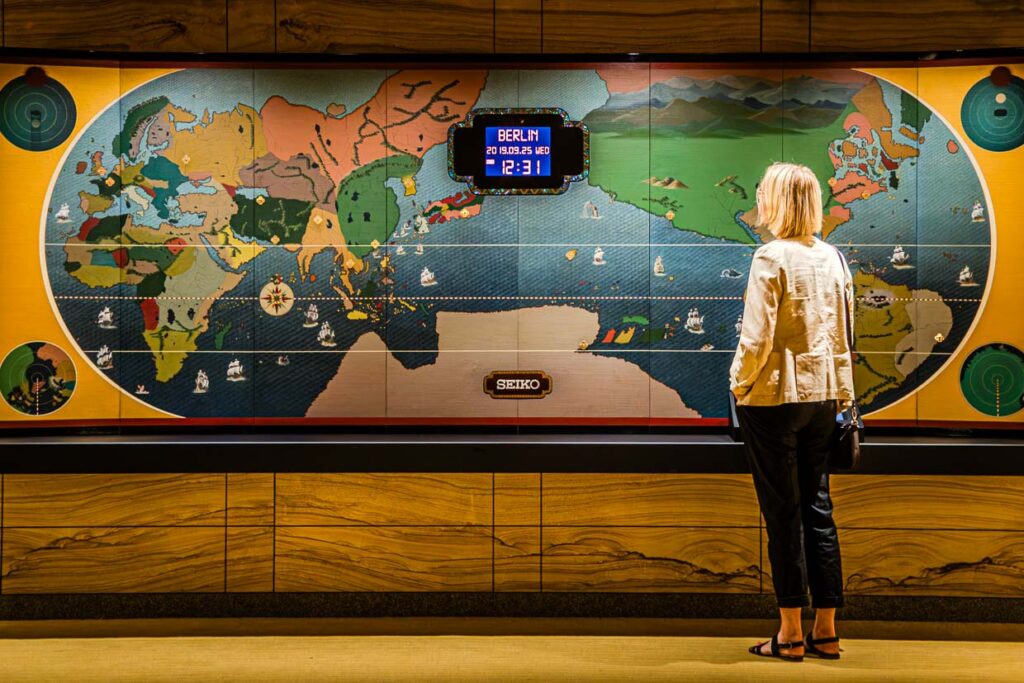
Eine interaktive Weltzeituhr im The Okura Tokyo zeigt auf Knopfdruck die Uhrzeit für Berlin an: 02:31 Uhr, sieben Stunden hinter Tokio.
The centre point also determines the impression given by a map section: a section centred on Japan makes the Pacific appear to be the centre of the world. World map in the style of 1962 from the Hotel Okura. / © Photo: Georg Berg
Content Protection by DMCA.com
Wait a minute! Photos on Tellerrand-Stories

Our mode of operation is characterized by self-experienced, well-researched text work and professional, vivid photography. For all stories, travel impressions and photos are created in the same place. Thus, the photos complement and support what is read and carry it further.

Never miss new Tellerrand-Stories again! Mithilfe eines Feed-Readers lassen sich die Information über neue Blogartikel in Echtzeit abonnieren With the help of a feed reader, all stories about the Tellerrand (edge of the plate) can be subscribed to in real time.

Permalink of the original version in German: https://tellerrandstories.de/mercator-abschied