
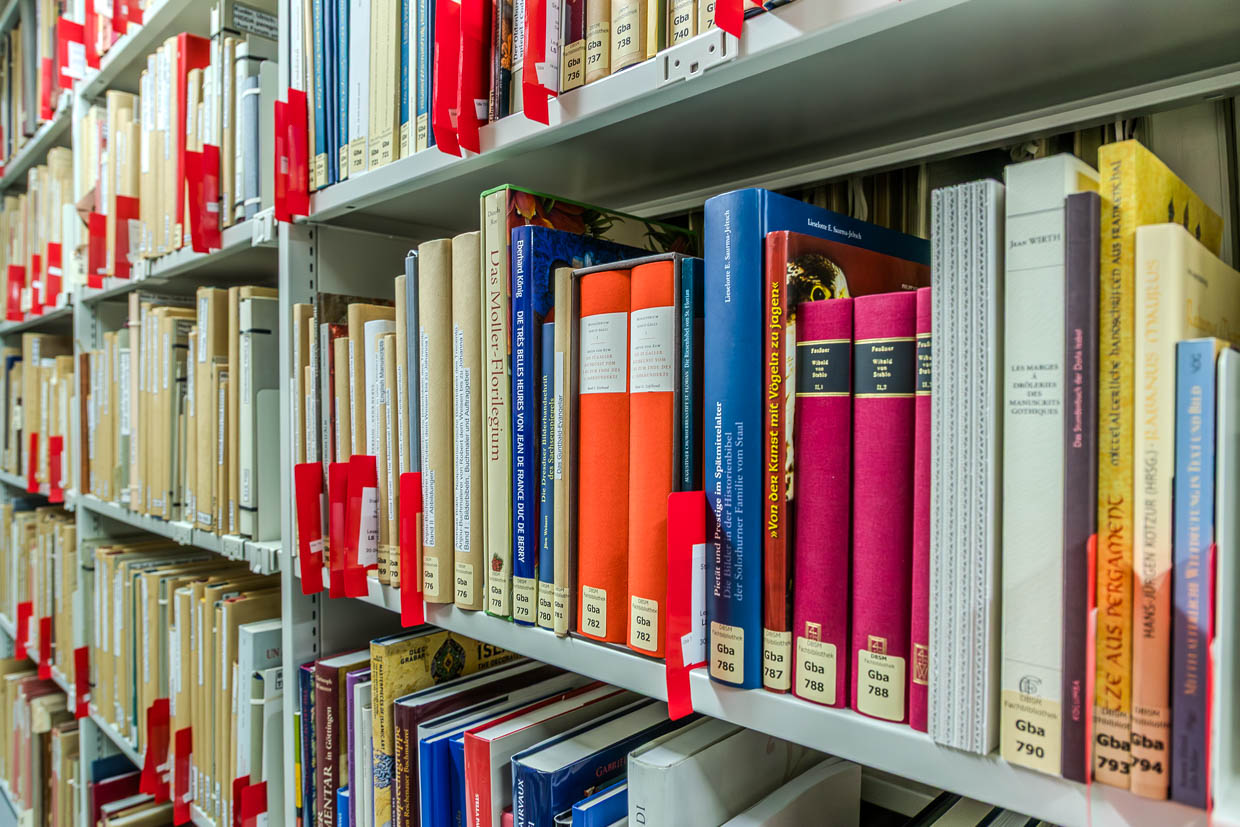
Around 2,000 new books and magazines arrive every day. Everything that is published in German and contains at least one third text must end up here – prescribed by law, without exception, without evaluation. The German National Library (DNB) is one of the few institutions in the world that does not select anything. It is the nation’s complete memory.
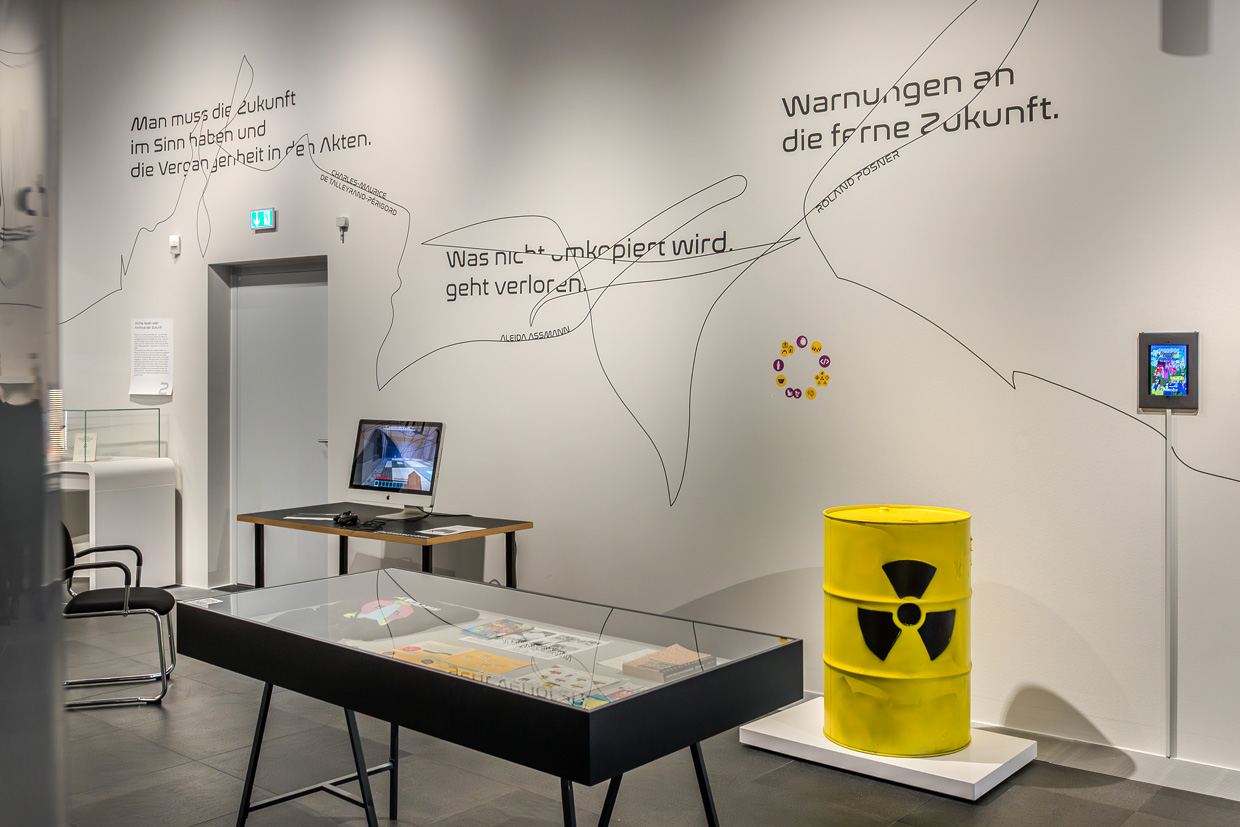
It is all the more remarkable that the German Museum of Books and Writing, part of the DNB in Leipzig, recently put on an exhibition that began with a counter-question: Forget it?!
A journey through time and saving
Forget it?! Futures and histories of knowledge storage was the title of the exhibition, which the museum presented from October 2025 to March 2026. Its starting point was simple: for thousands of years, humans have been looking for ways to preserve knowledge. But for how long, in what form, on what material – and above all: for whom?
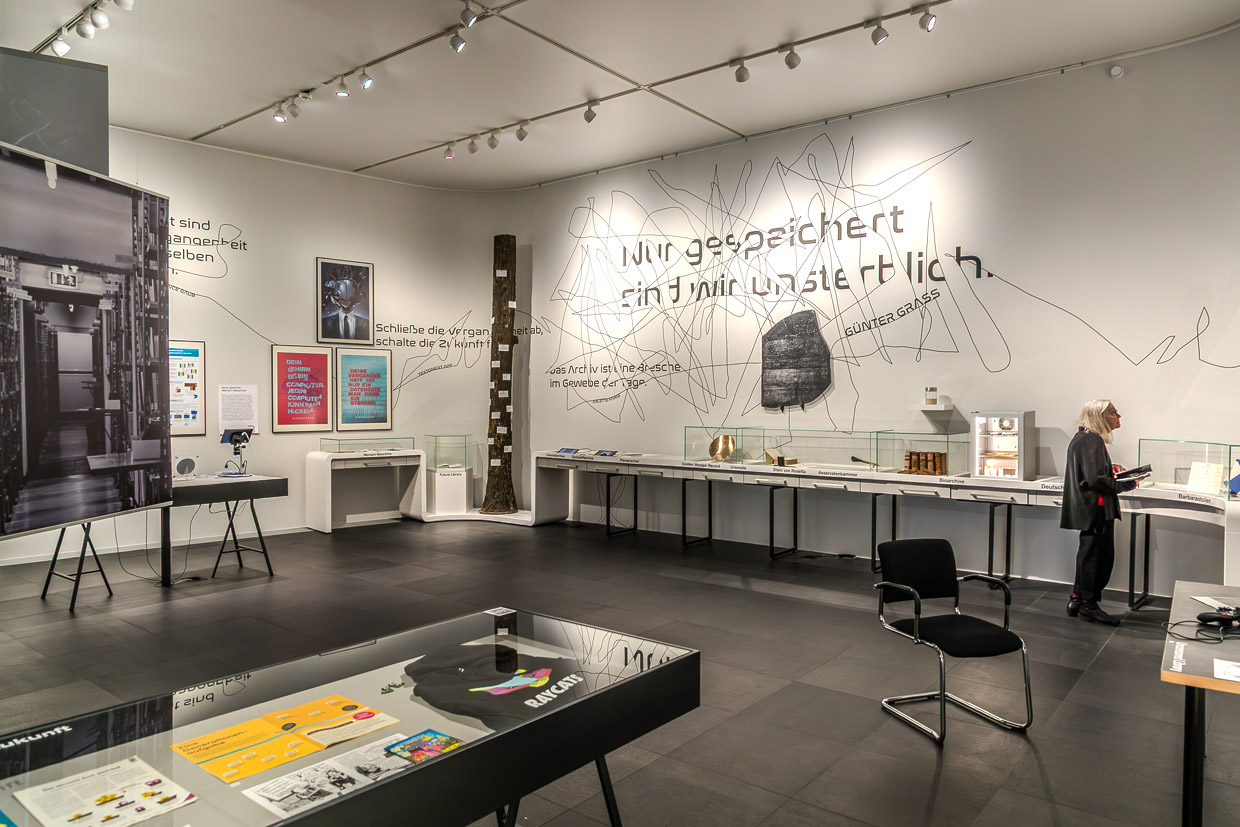
The exhibition catalogue quotes the Argentinian writer Jorge Luis Borges: “Only those who can forget are equipped for this world.” The fact that a library of all places, which is not allowed to forget anything, writes this sentence on the wall is not a contradiction – it is intentional. The exhibition did not ask whether remembering is good, but what it costs to remember everything and what is lost when remembering fails.
The thematic range was broad: from hunger stones in the Elbe, which have warned of drought for centuries, to sourdough cultures as living memory carriers, to the Norwegian Future Library, which has been storing an unpublished manuscript every year since 2014 – to be read only in 2114. The Internet Archive’s Wayback Machine, which fights daily against the disappearance of websites, also found its place.
The central realisation of the exhibition: saving always means making decisions – about material, duration, access. And every decision excludes what is not saved.
An institution without choice – and unique in this respect
This is where the DNB’s speciality becomes apparent. Other archives make selections. Curating museums. Libraries recommend. But the German National Library collects everything: the bestselling non-fiction book and the very small edition, the pamphlet and the commemorative publication, the grey literature and the digital publication without ISBN.
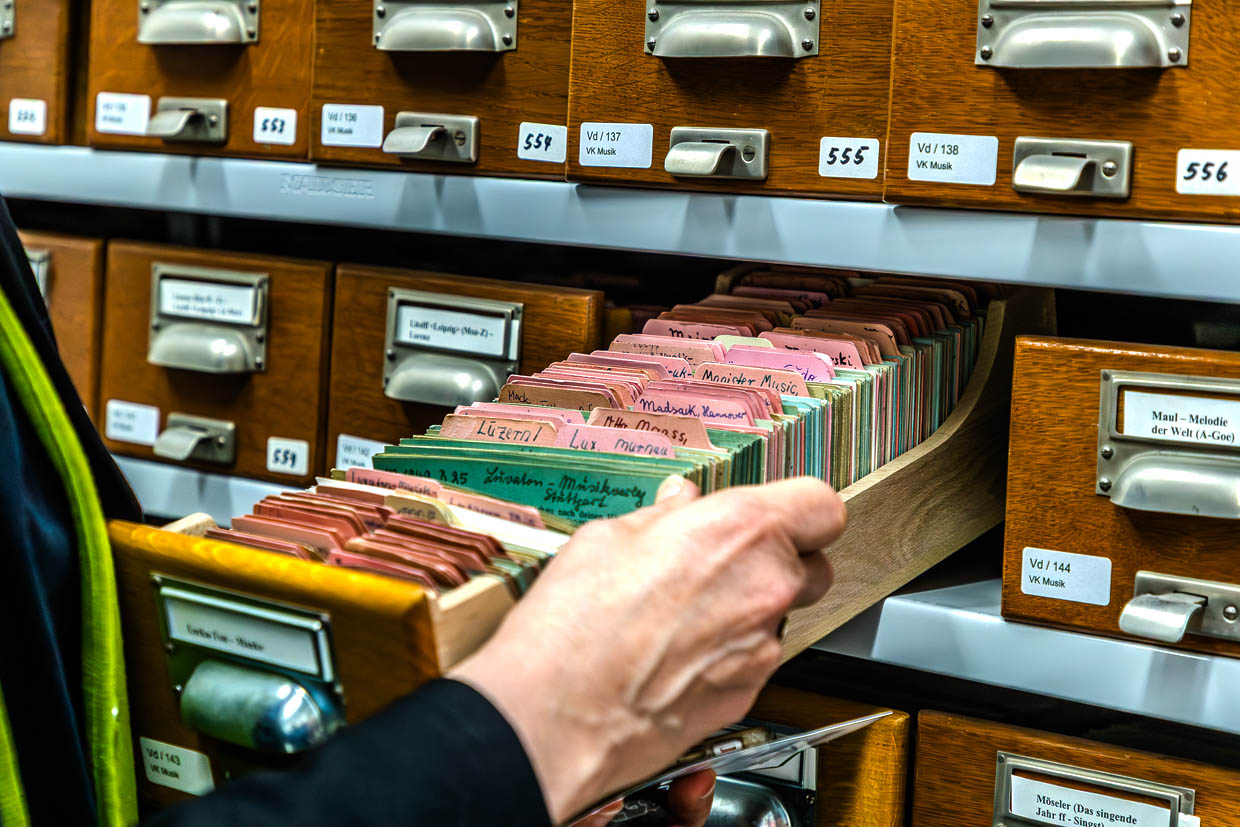
The DNB thus reflects German language production – without filters, without aesthetic judgement, without an expiry date. Everything that was thought and printed in German ends up here. And remains.
Signs – books – networks: from cuneiform to binary code
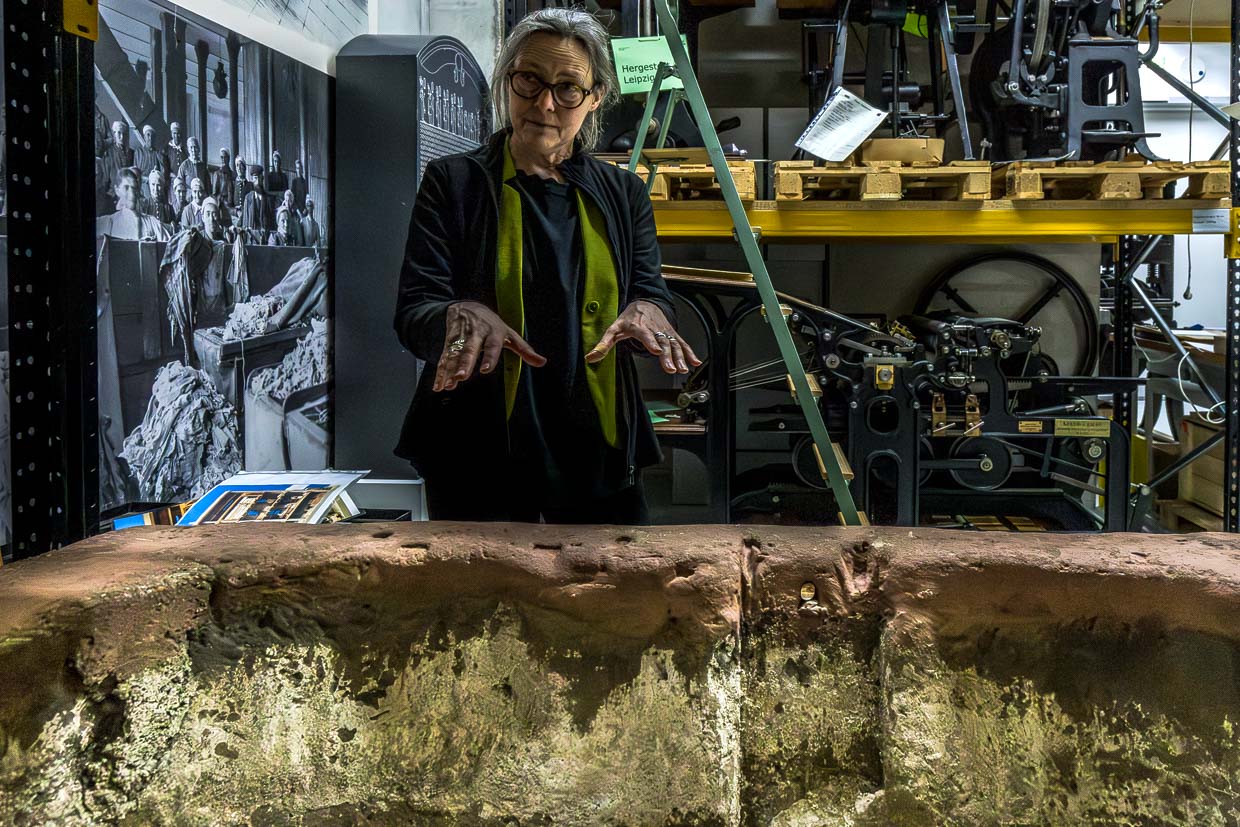
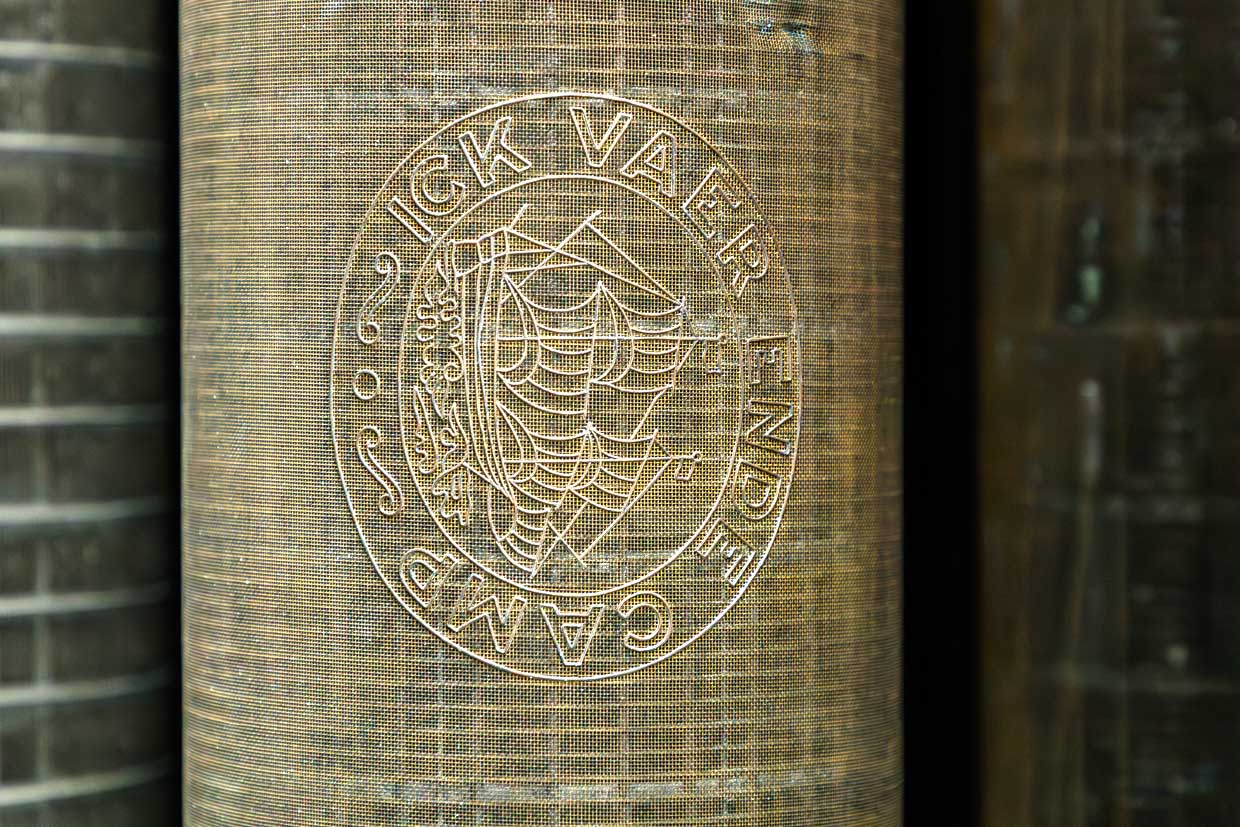
The cultural history collection displays printing machines of all kinds: a stone trough in which rags were pulped into paper 250 years ago can also be seen, as well as a collection of dandy rollers used by papermakers to emboss watermarks into wet paper. Today, these watermarks make it possible to trace the origin of paper. Today, the collection has over half a million proofs of origin, used by Bach researchers, historians and lawyers.
Visitors welcome!
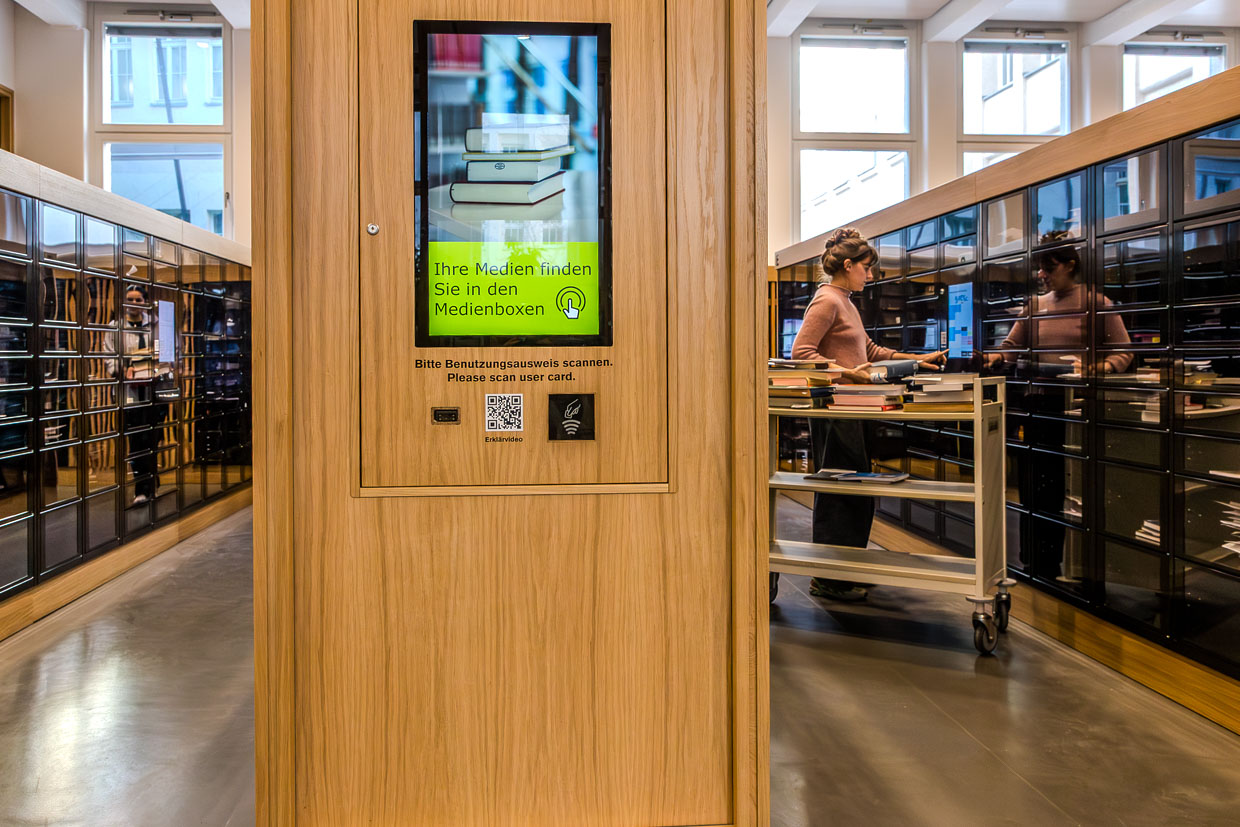
The name “German National Library” sounds awe-inspiring, but it is well worth a visit. The first impression is of a welcoming building. The reading rooms are well filled, but offer enough space to feel at home. Free guided tours are available and the library card for the reading rooms is affordable.
Eight reading rooms, five eras
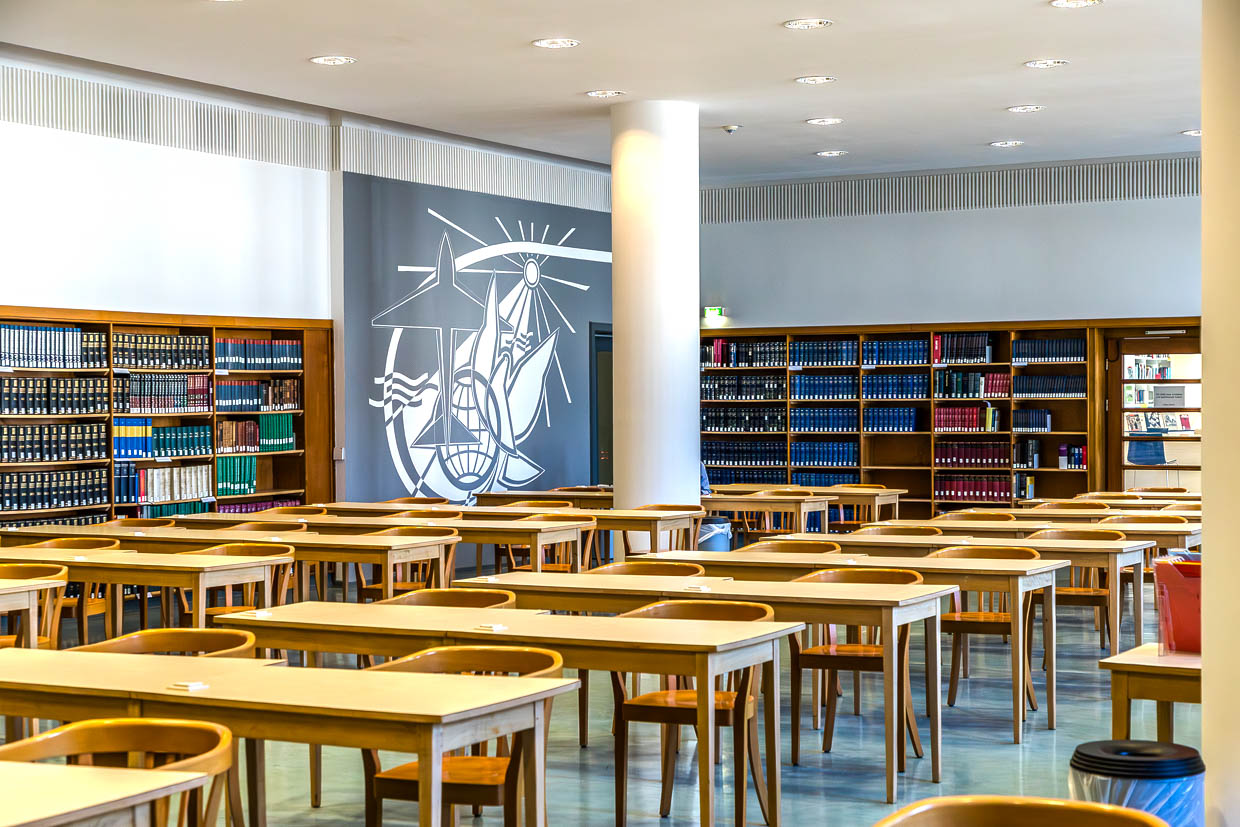
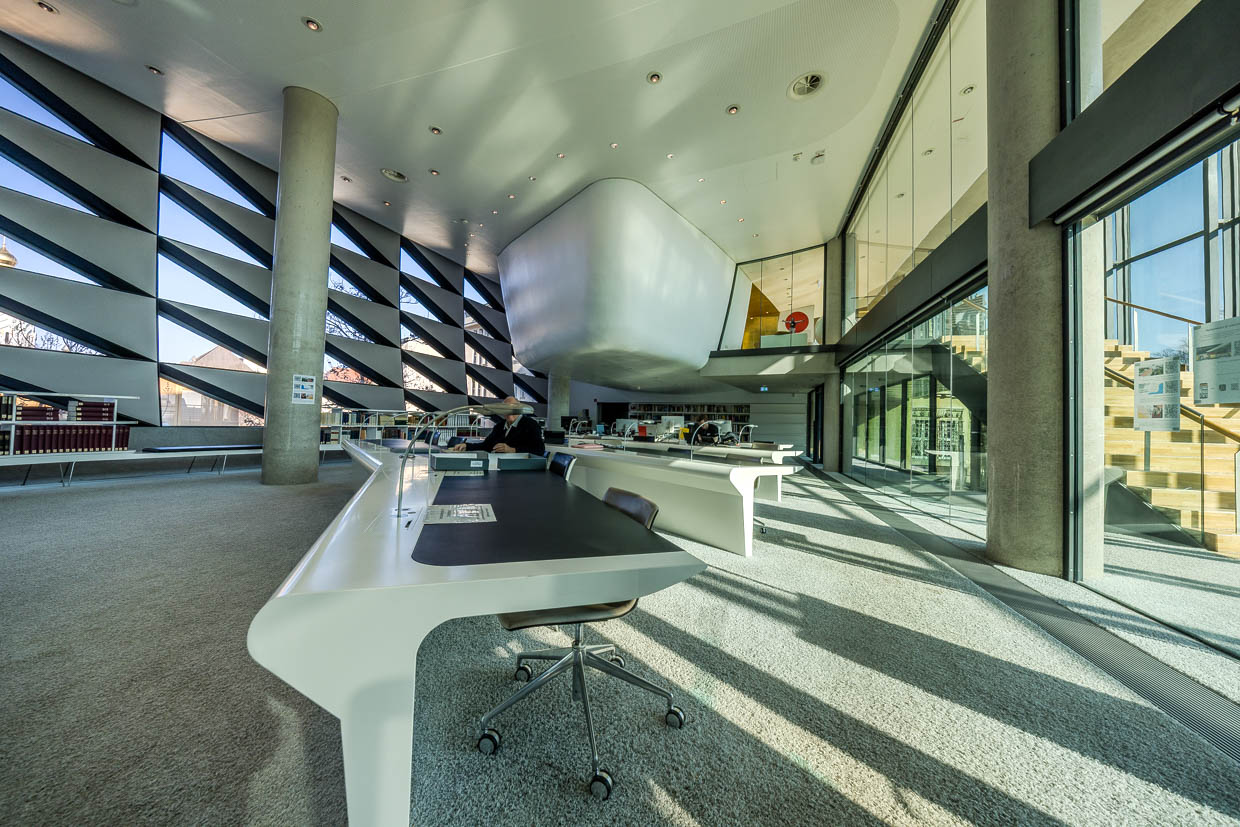
Anyone walking through the reading rooms of the DNB Leipzig will experience the history of reading. The first room, with its green table lamps and late Nazarene frescoes, is reminiscent of a sacred building. The second room, created in 1935/36 in the spirit of the Bauhaus, houses 106 cantilever chairs designed by Mart Stam – still in use today. Then there are the angular kidney-shaped tables from the 1960s and the music reading room from 1972. The newest room, opened in 2012, offers workstations with miniature versions of the Leipzig whip lamp as reading lamps – a detail that shows that someone here is thinking about the people who come back every day.
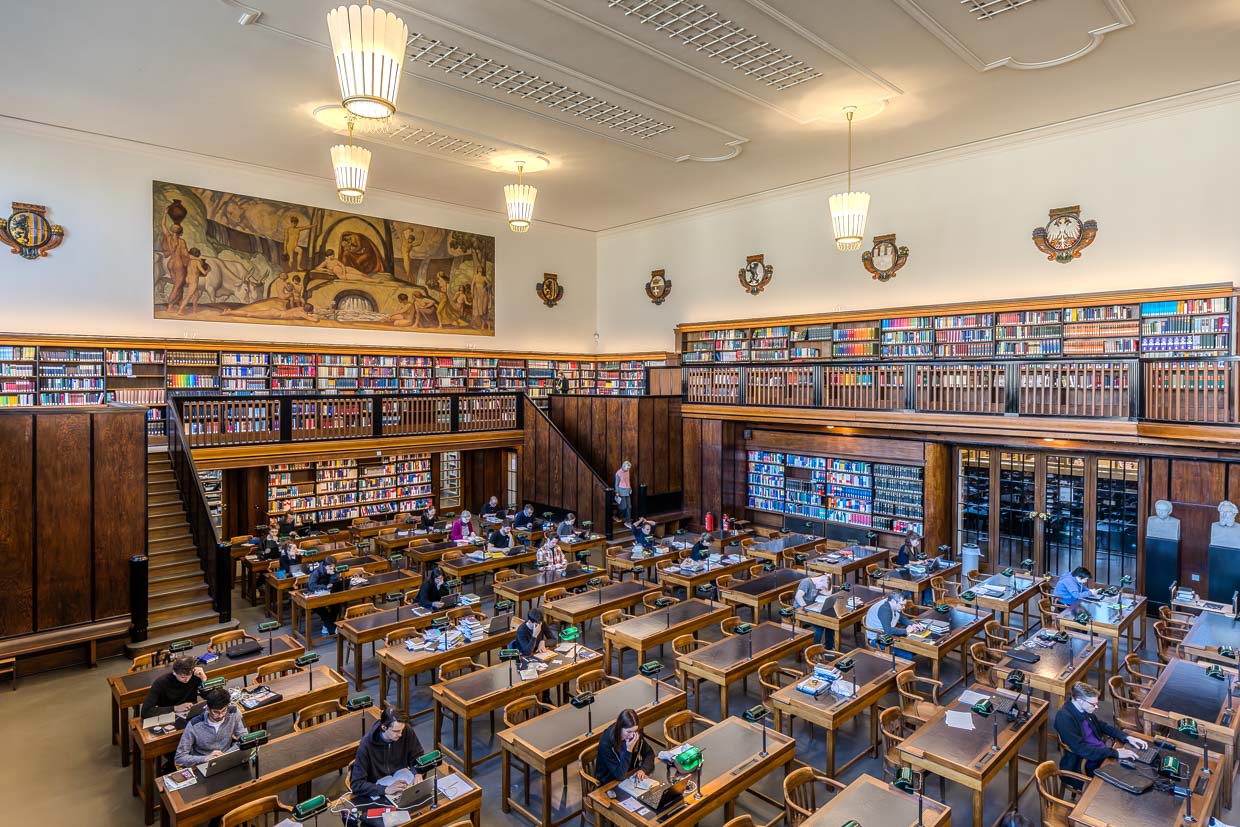
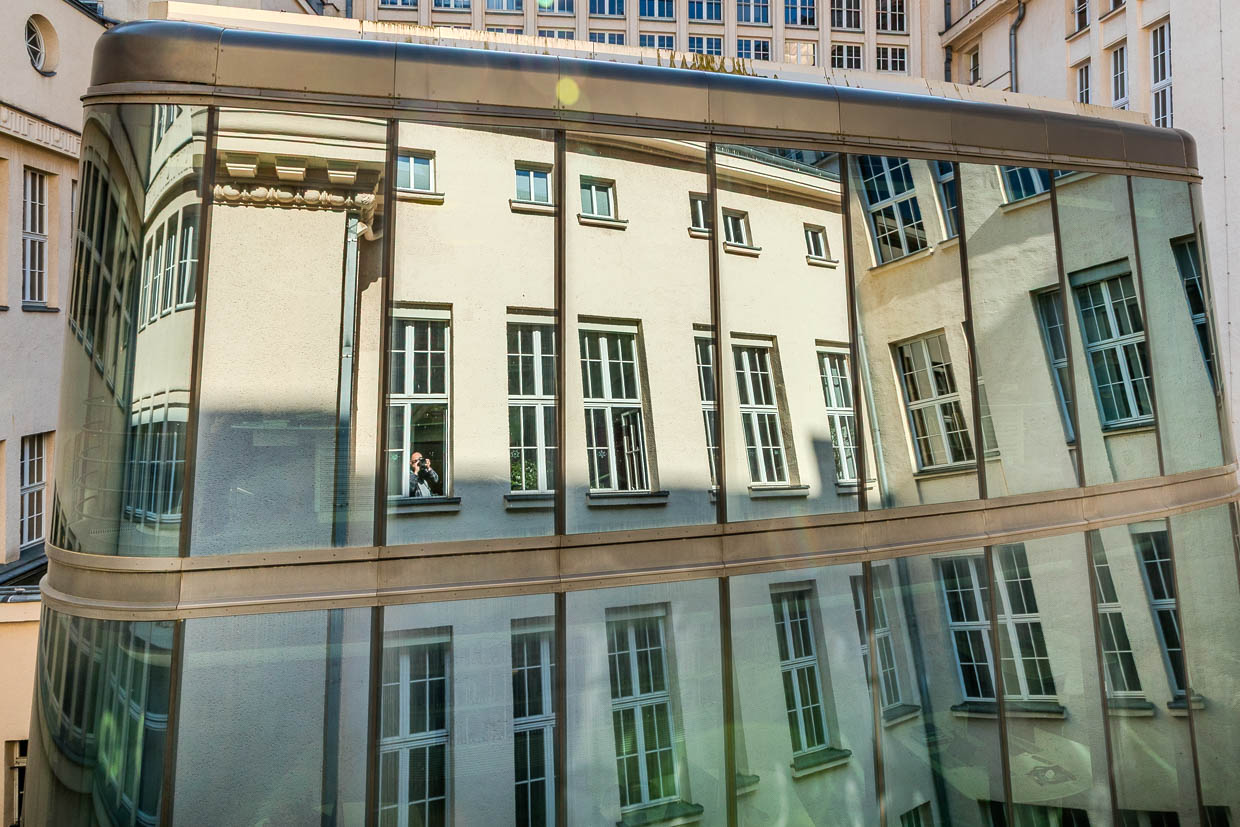
Each extension brought a new reading room. The original building from 1914, designed by Oskar Pusch, was intended from the outset as a project for generations – with a vision up to the year 2212.
The map reading room
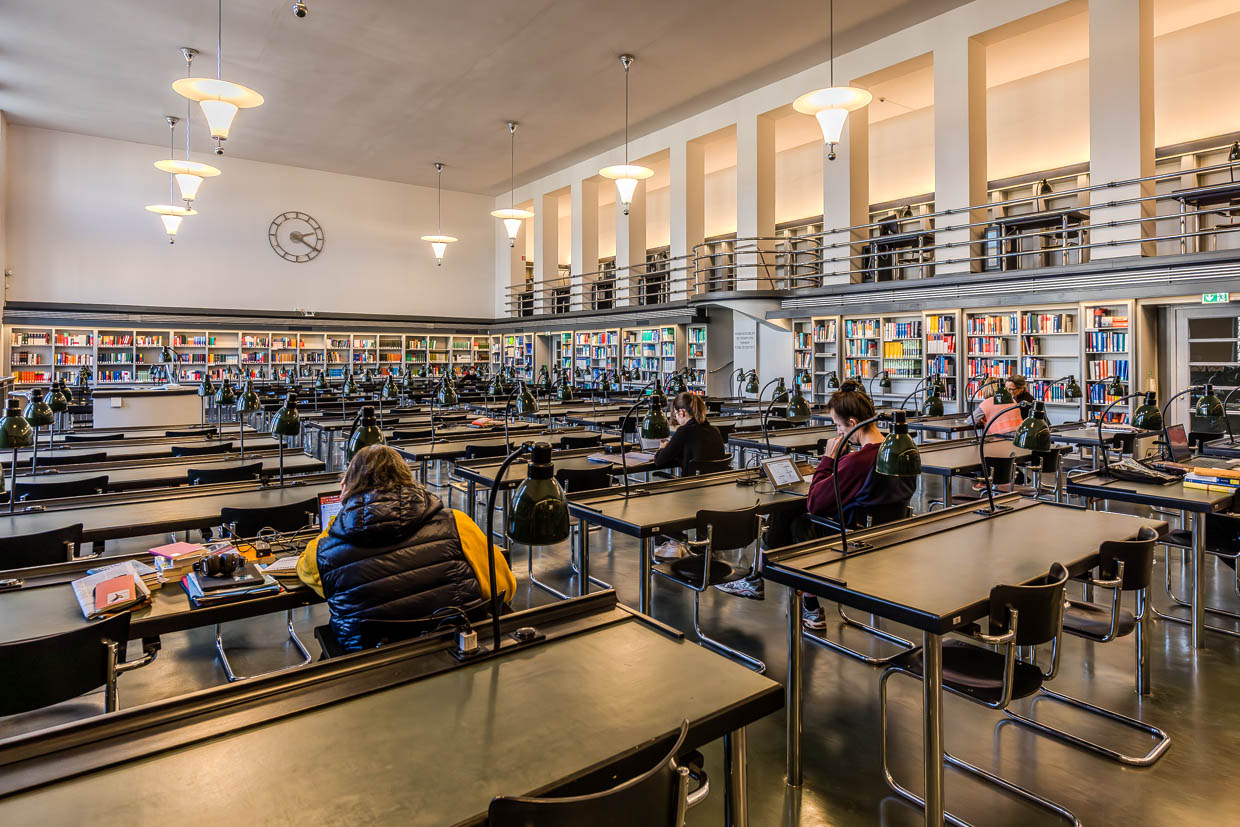
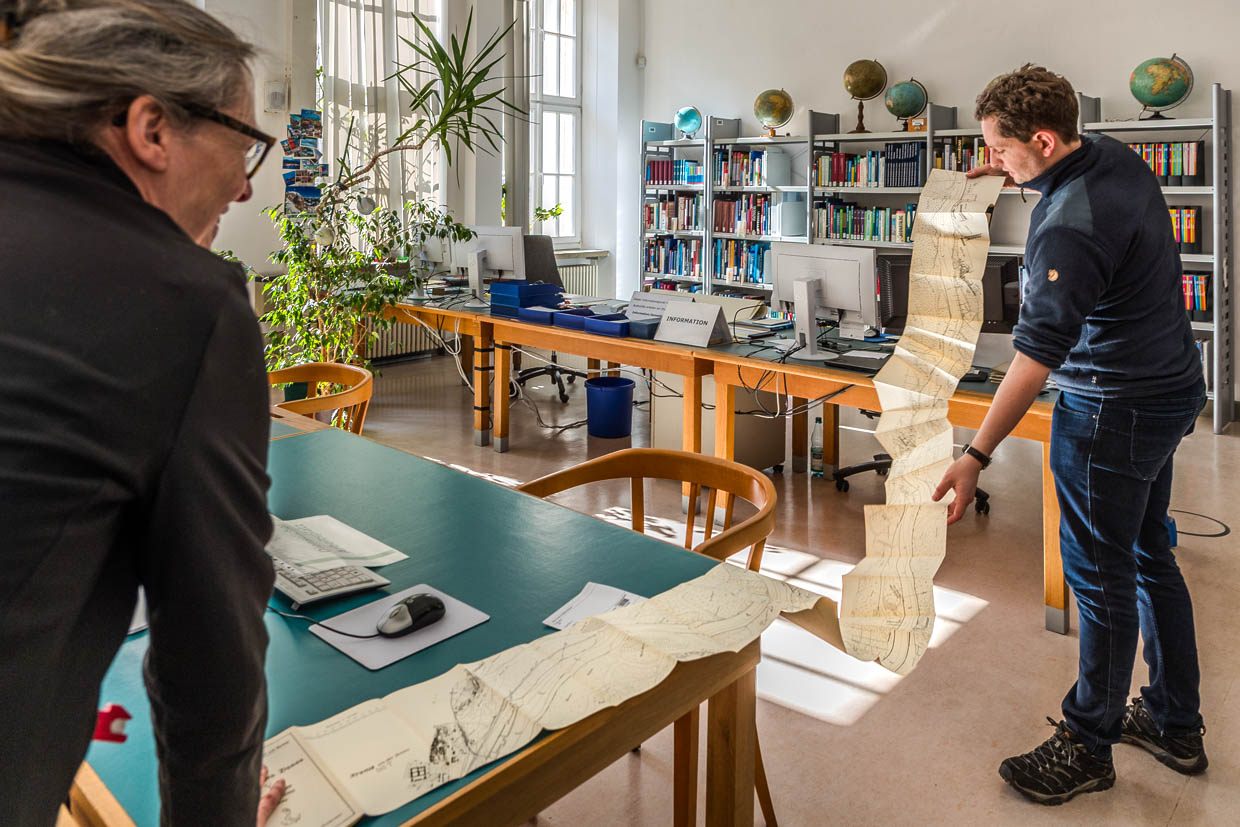
The DNB’s map collection, also established in 1913, comprises over 285,000 sheets and atlases. Historians and town planners, among others, use them to show how landscapes have changed over the centuries. The value of this collection lies in its continuity: a map alone says little. A hundred years of maps in series tell the story of change. In the map reading room, there are special tables for carefully analysing the materials, some of which are quite large.
What is not copied is lost
The exhibition Forget it?! quoted the cultural scientist Aleida Assmann: “What is not copied is lost.” This applies to analogue collections that age. To digital formats that become obsolete. For websites that disappear. And for institutions that are no longer built.
The DNB is growing every day. The question of how it will manage this in the long term is a concrete one – as concrete as the floor plan of Oskar Pusch’s 1914 vision, which left room for future generations. The fifth extension is planned on the south-east flank of the original.
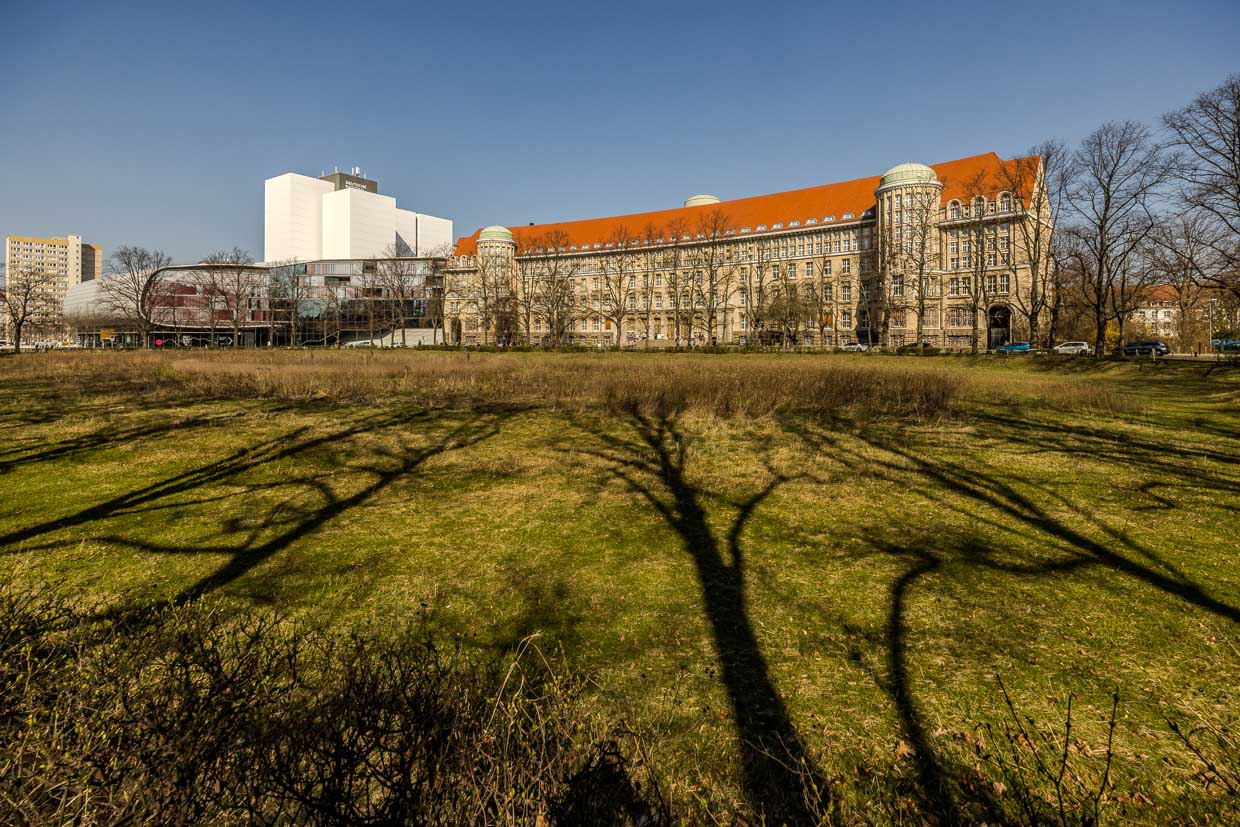
Whether the planned extension will be built remains to be seen following the statements made by Minister of State for Culture Wolfram Weimer. One thing is certain: the DNB will continue to answer the questions posed by the Forget it?! exhibition – without exception. The DNB is also archiving this text, together with everything that Tellerrand-Stories has published under ISSN 2750-4069: backed up three times, in Leipzig, Frankfurt am Main and Göttingen.
The German Museum of Books and Writing at the German National Library in Leipzig, Deutscher Platz 1, is open to visitors. Information on using the DNB and on current exhibitions: dnb.de
The research trip was supported by Tourismus Marketing Gesellschaft Sachsen