
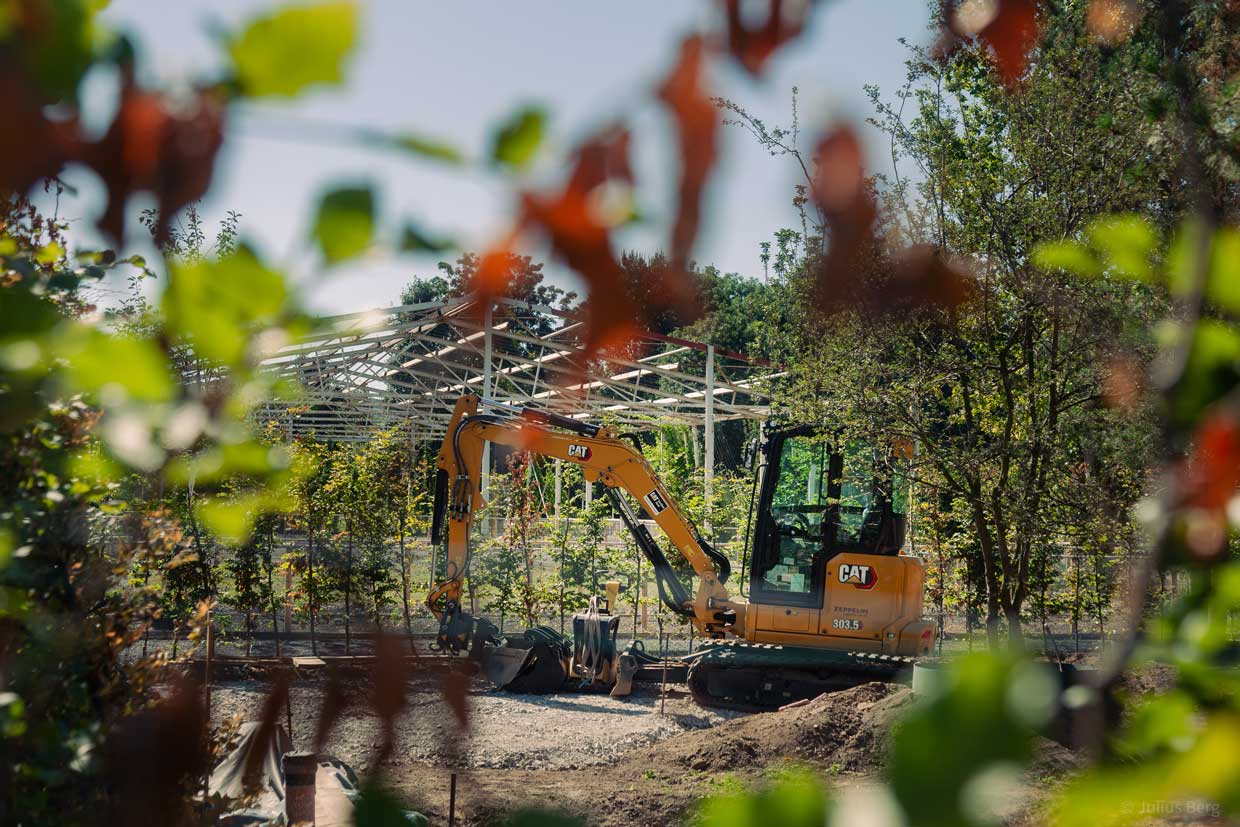
A local recreation area is being created on the former racecourse in Neuss. What will begin in April 2026 as the State Garden Show will remain a green heart for the people of Neuss and the surrounding area: close to the city centre, close to the history of the place and close to the idea of the circular economy. One example of this is the skater pavilion. We photographed the construction and spoke to architect Franziska Müller from Simple Architecture about sustainable construction and recycling as an architectural statement.
Keep it simple!
Simple Architecture, founded by Jan Glasmeier, was commissioned to build the skater pavilion. The German architect favours social and ecological construction methods using simple, local materials. “We combine traditional techniques with modern architecture to create robust, cost-effective and aesthetic buildings,” explains Franziska Müller, who is working on the project as a freelancer. The participatory approach is characteristic: planning and construction are carried out together with local craftsmen. This not only creates knowledge transfer, but also a stronger identification with the buildings. This principle works worldwide. What has already proved successful for the architects at Simple Architecture in Thailand and Africa can also be implemented at the old racecourse. Fortunately, much was preserved after the end of racing in Neuss.
From horse stable to skater pavilion
In August 1875, horses galloped around the racecourse in Neuss for the first time. After 144 years, racing ended in December 2019. Where jockeys once climbed out of the saddle, walkers will soon be strolling through green spaces. The sand track, the centrepiece of the racecourse, will be preserved as a biotope. Floodlight masts and camera towers will also be integrated into the new park concept.
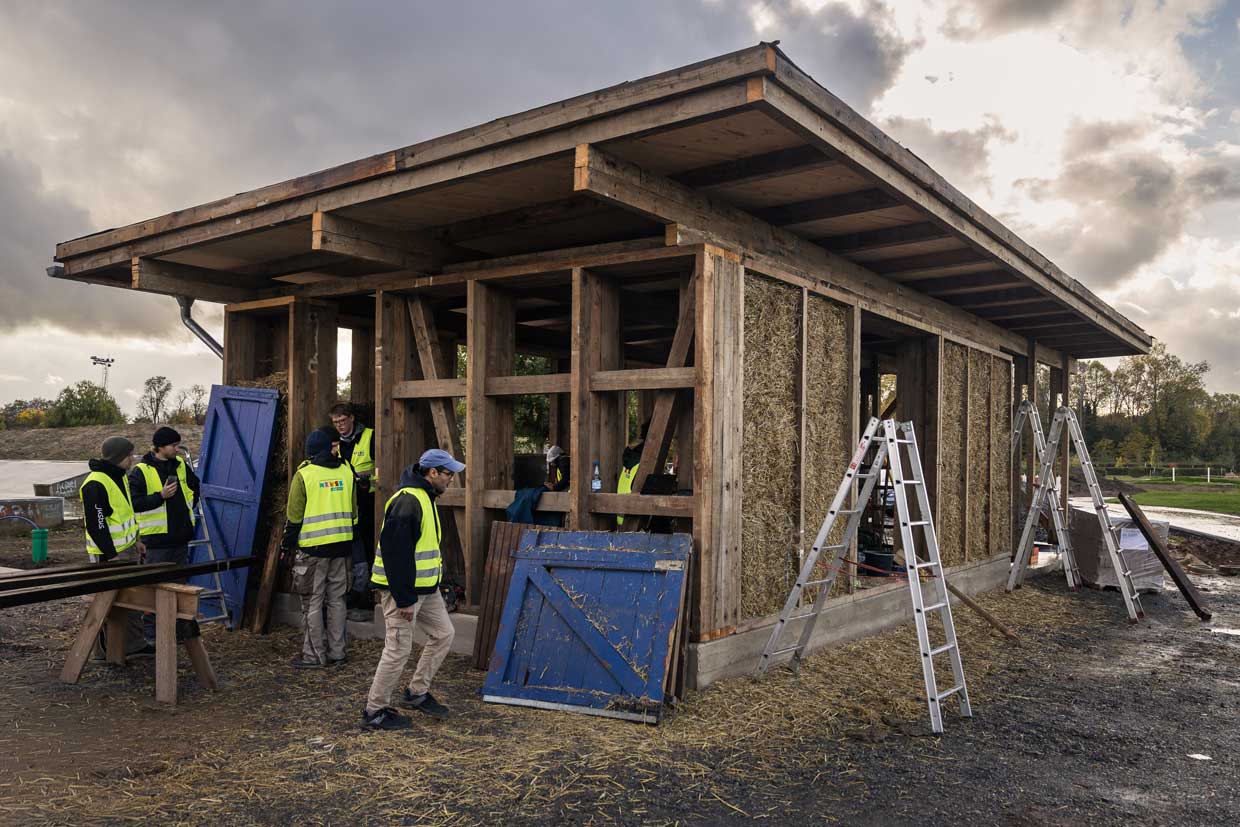
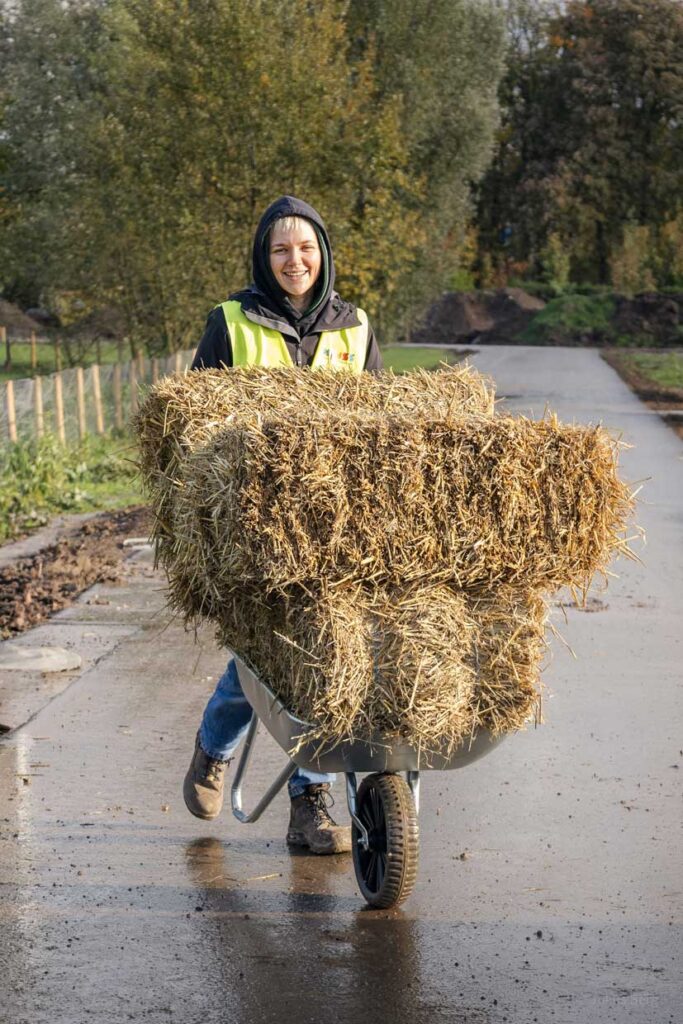
The betting hall, the grandstand building and the old totalisator will also be retained with their 1950s charm. The skater community will have a new pavilion next to the existing bowls and ramps. Although this will be new, it will largely be made from old materials: the wooden doors of the former horse stables will be given a second life, the walls will be insulated with straw and the plaster will be made from clay. With this resource-saving approach, a building is being created that will serve as an exhibition space and covered meeting place during the State Garden Show – and later as a new meeting point for skaters.
Architect Franziska Müller on ecological building
Since studying architecture in Aachen, Franziska Müller has dedicated herself to ecological and practical building. “It was clear to me from the very beginning that architects bear responsibility for the social and ecological compatibility of their projects,” she says. This awareness led her to specialise in precisely this area, and the young architect is also involved in the Social Architecture association. She is currently working on a project in Kenya that primarily uses clay and recyclable wood. Müller explains that these materials are not only ecologically sound, but also locally available and easy to work with – ideal conditions for sustainable and socially acceptable architecture.
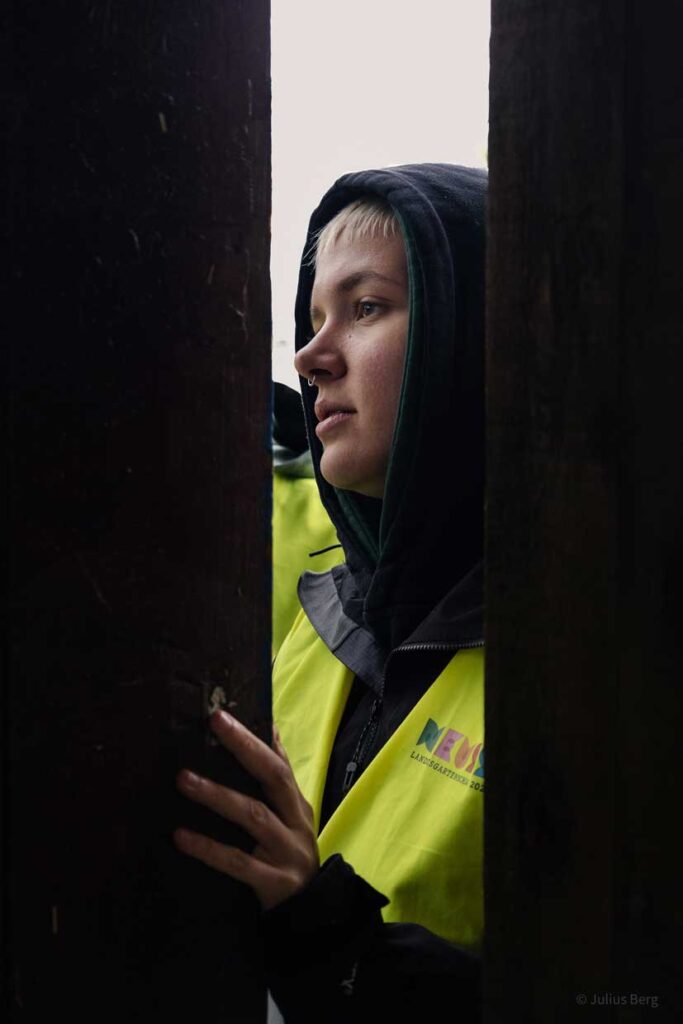
One particularly exciting project for her is the skater pavilion on the former racecourse in Neuss. “Many levels come together here: dealing with existing buildings, the use of natural materials and collaborative, self-organised construction,” she explains. The starting point was the old horse stables, whose wooden structure they first had to analyse in detail. Müller reports that they drew up timber surveys, completed authorisation procedures and established that the timber loads were not critical. This made it clear that they could build on the existing structure.
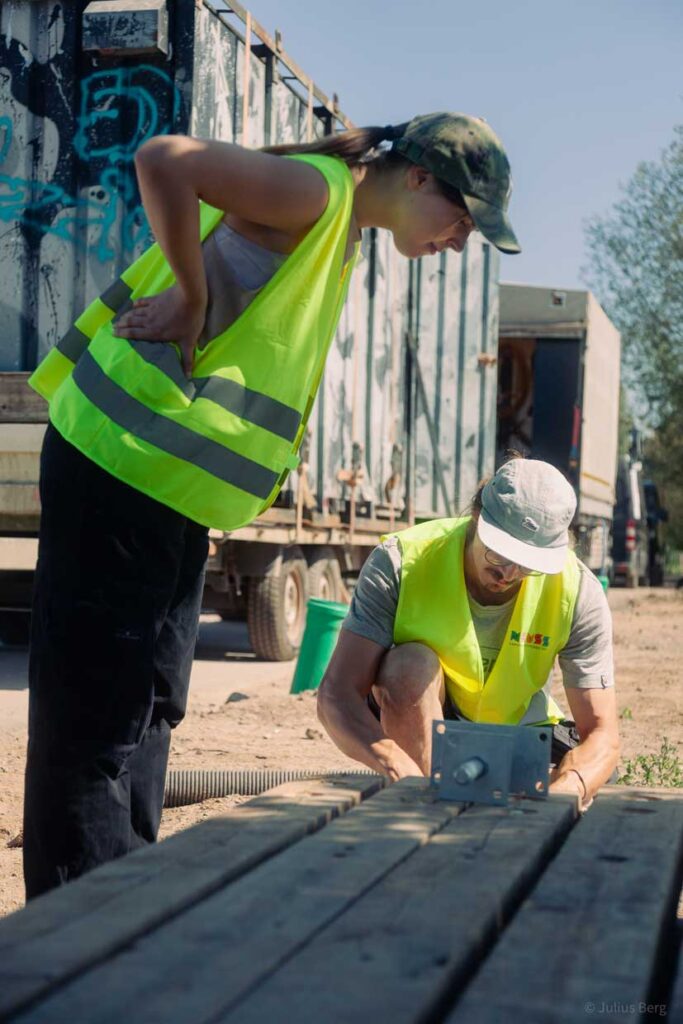
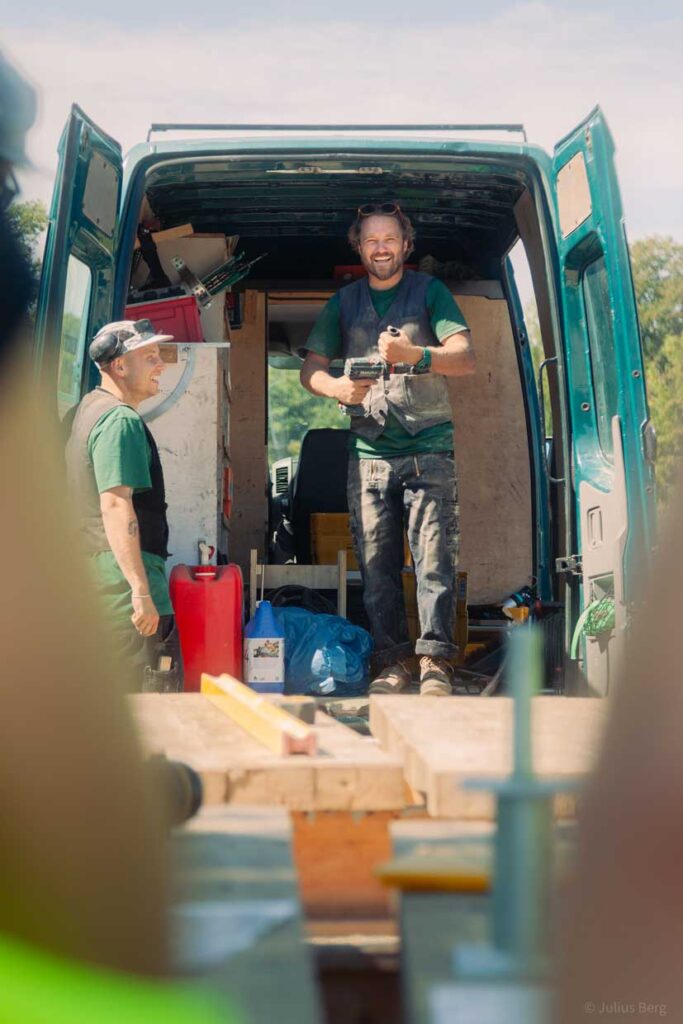
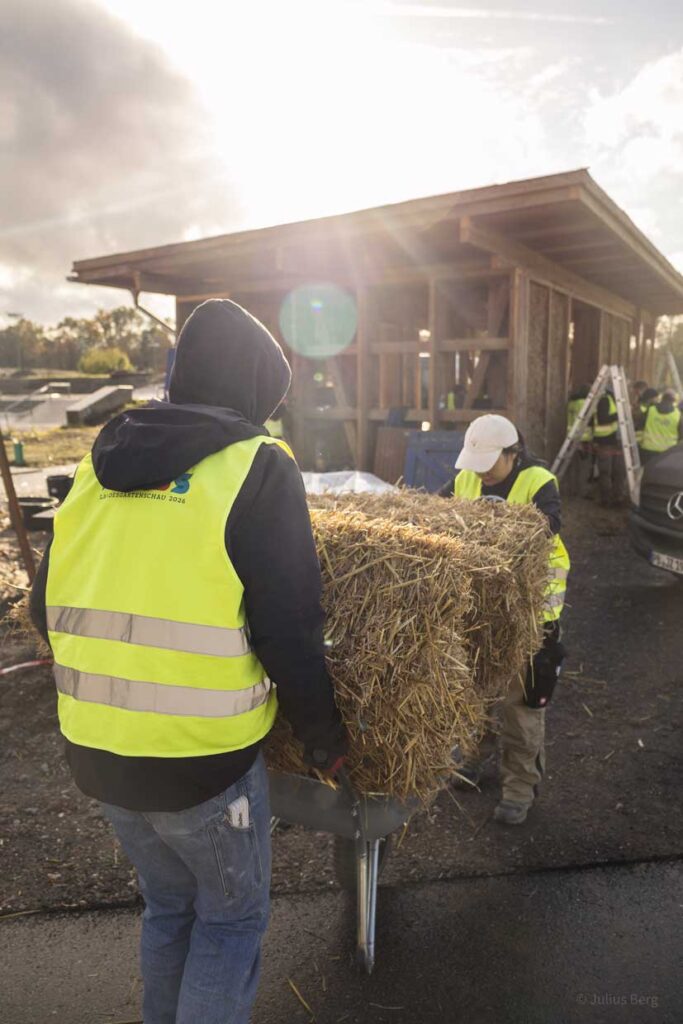
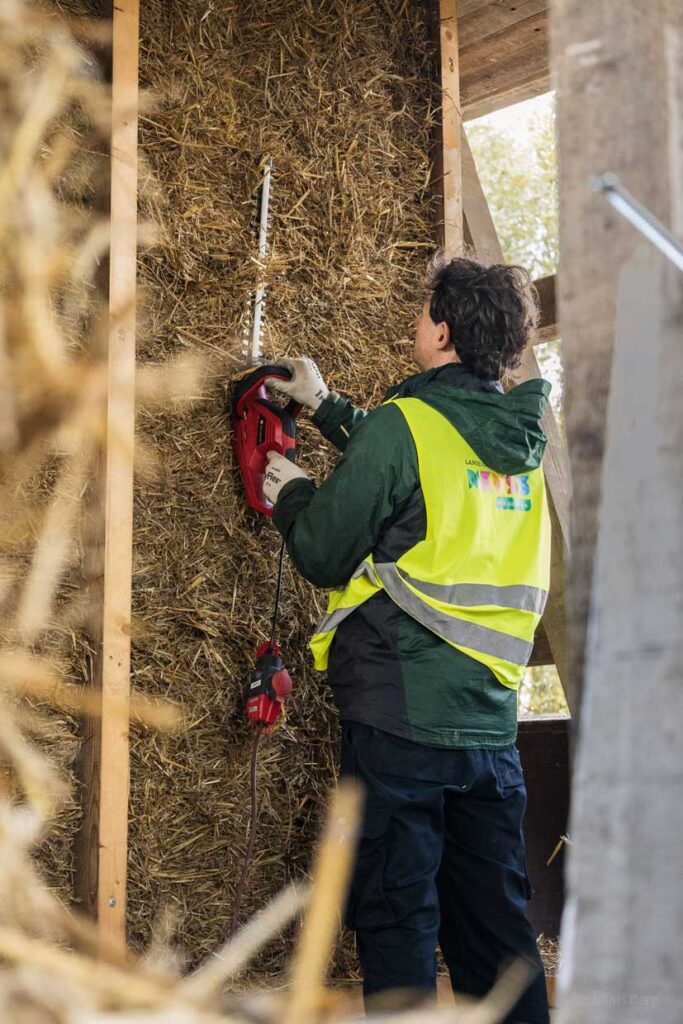
Work meeting at the halfpipe
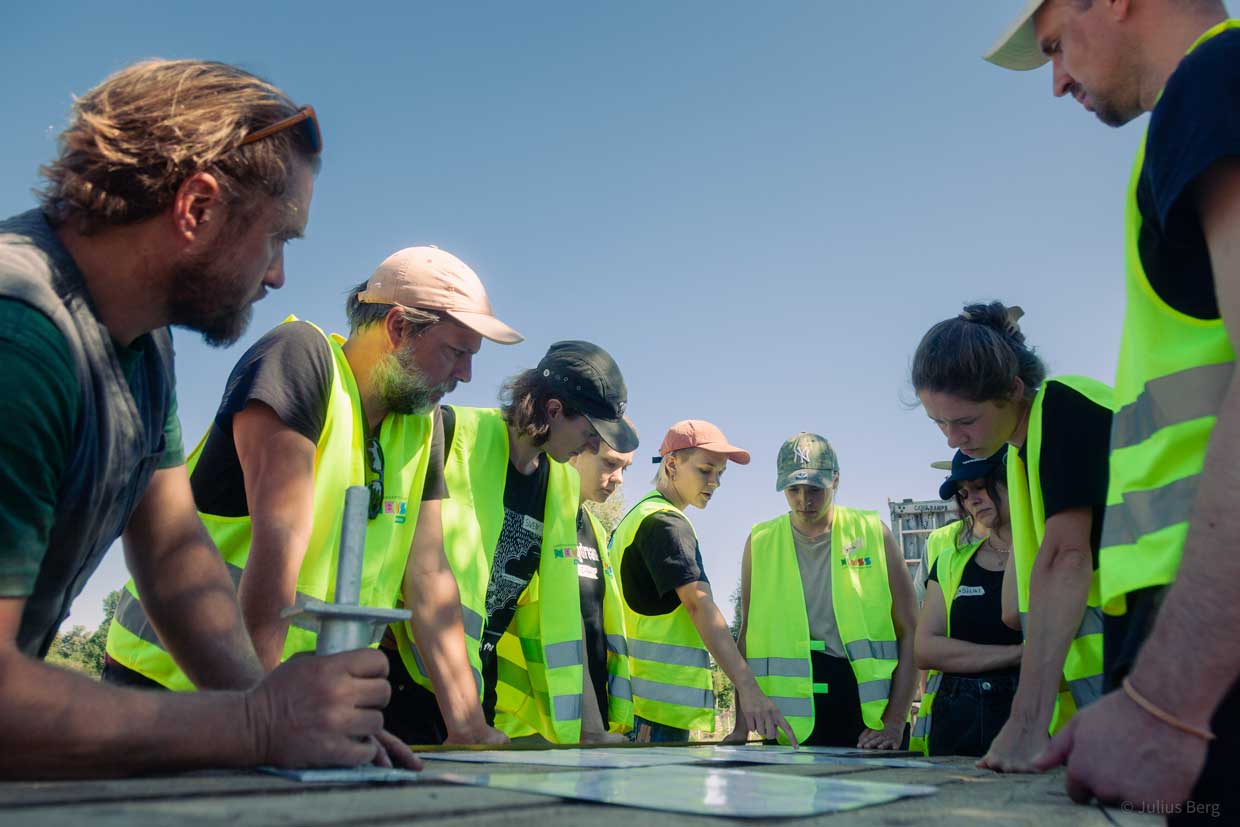
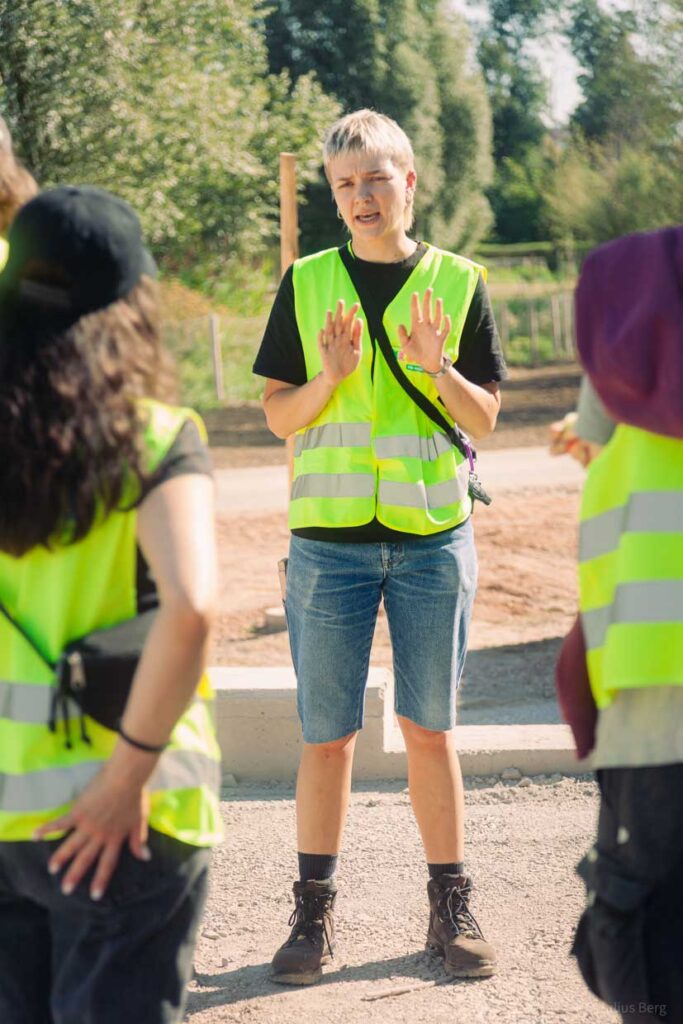
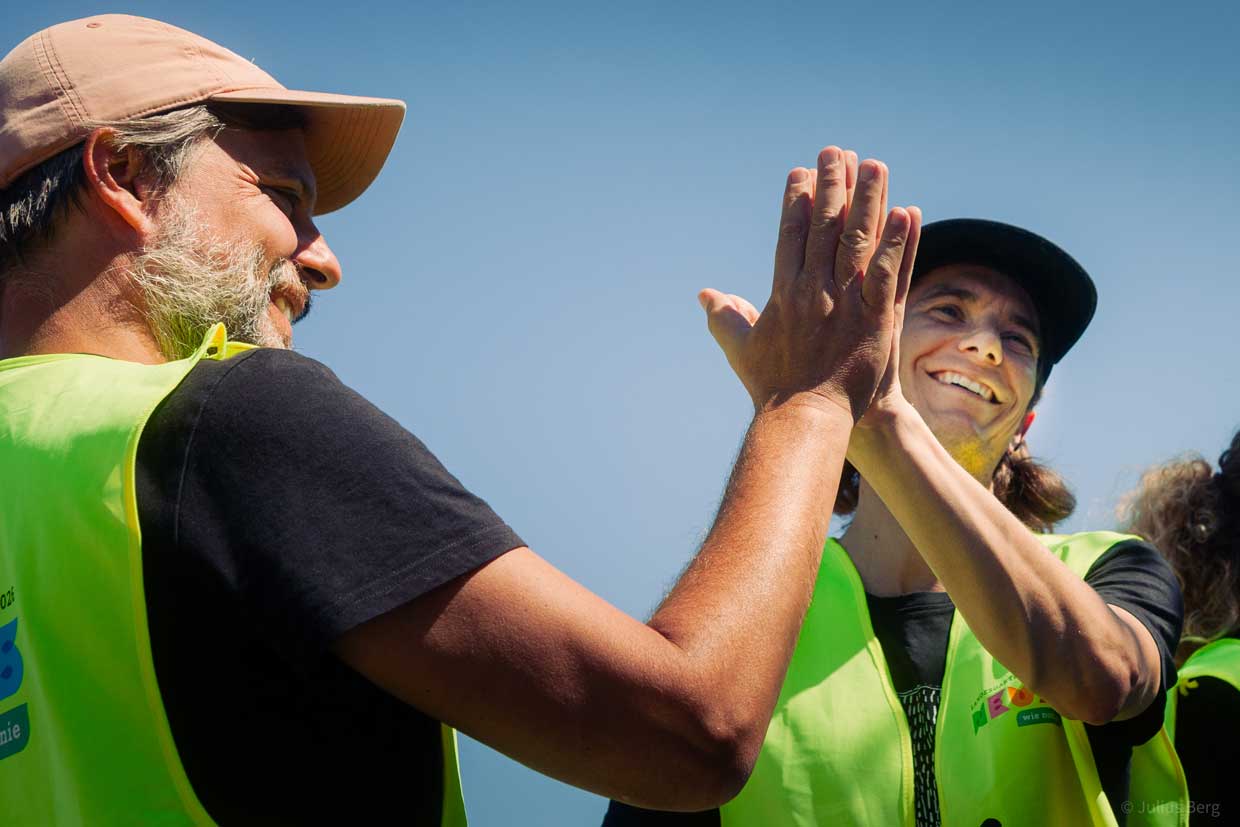
“We advertised for participants for the workshops in August and October 2025 via social media: One third were students, two thirds were young professionals – including a trained clay builder and an industrial climber,” reports Franziska Müller. There were two workshops for the construction of the skater pavilion: one for the construction and one for the use of straw and clay. Müller emphasises that “build it yourself and join in” fits in perfectly with ecological building. It shows that sustainable architecture is a collective process that also includes the unplanned. As an example, she cites old stall doors from horse stables that were suddenly two centimetres too wide after being reworked. Such situations require improvisation and sharpen the eye for dealing with existing substance.
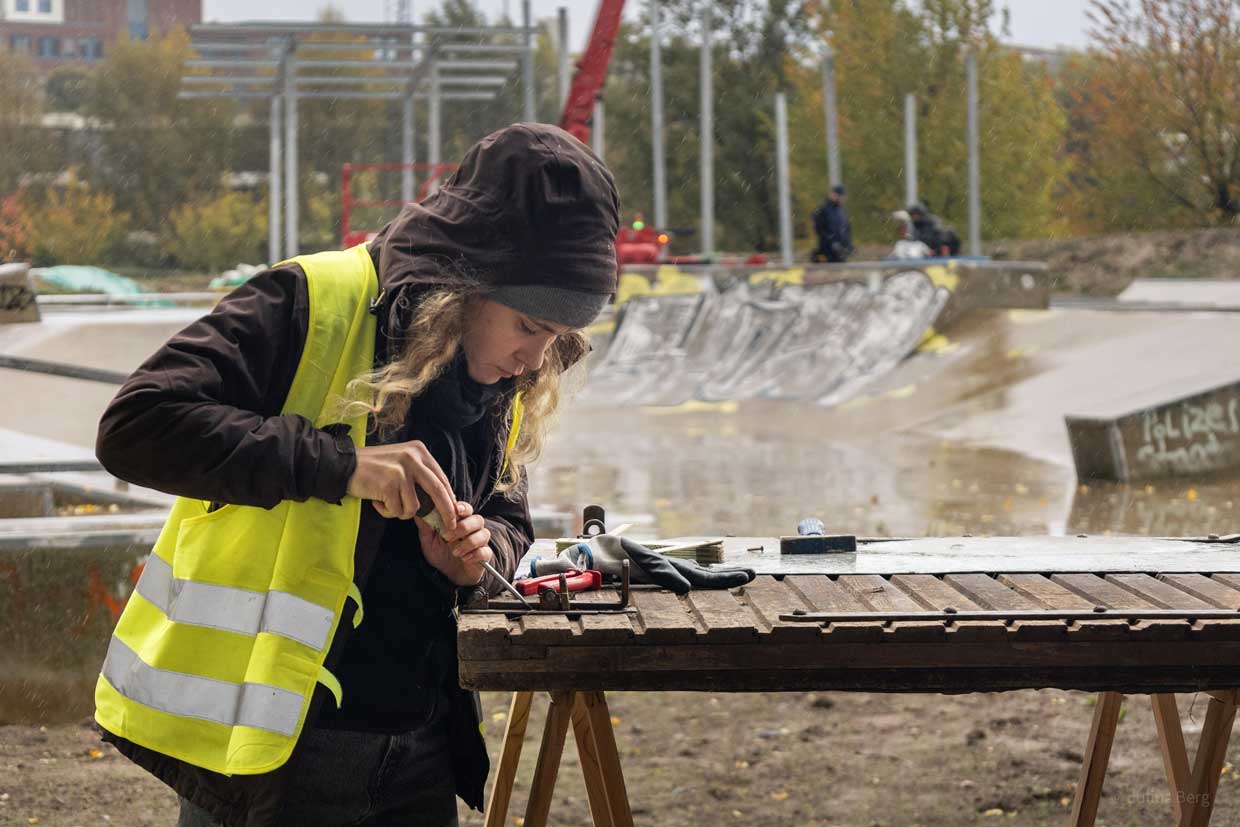
Everyone was able to help each other and share their knowledge, which made the construction site a real place of learning and encounter. For each workshop, they spent four days and three nights at the Haus der Jugend in Neuss, living and working there. This created a sustainable, social connection – a network of pure initiative and interest, without any university credits or grade pressure, enthuses the architect.
Facts about the Neuss 2026 State Garden Show
The LAGA Neuss runs from 16 April to 11 October 2026 – 179 days of blooming splendour on around 20,000 square metres. This includes 3,500 perennials and a 1,000 square metre rose garden. More than 2,000 new trees have been planted and a kilometre of hedges planted. Species-rich meadows have been created on an area the size of 18 football pitches. A large pond has also been created. Events and guided tours of the site can be found on the Neuss State Garden Show website.