
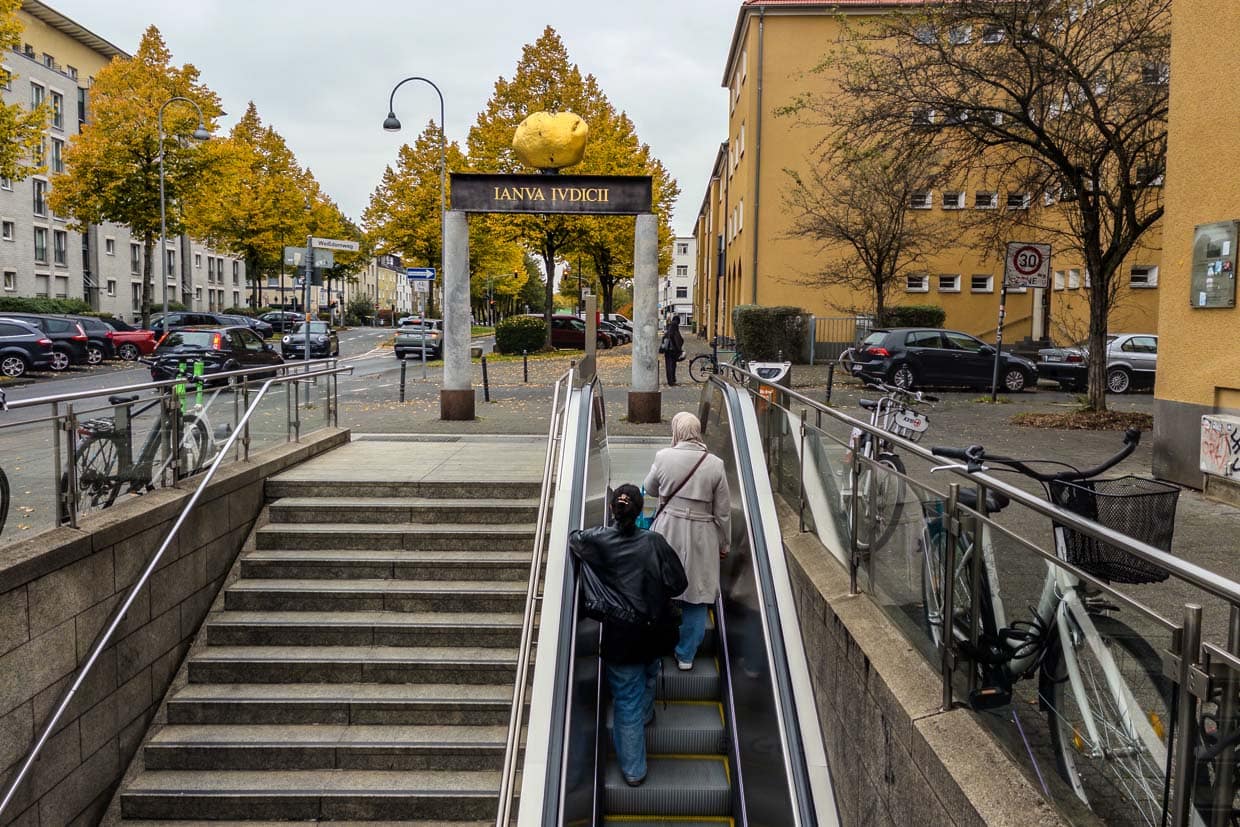
No travel guide leads to Cologne-Bickendorf. The Akazienweg underground station is a long way from Cologne city centre. There you come across layers of 2,000 years of history at every turn: Roman ruins under the pavement and the cathedral, which has been rising into the sky since the 13th century. But Bickendorf is not one of these layers. Bickendorf is simply there. Under Venloer Straße is a supporting portal designed jointly by Heinrich Brummack and Jochen Scharf. It looks like a load-bearing structure – and actually carries a golden stone. A person is sleeping in the niche below.
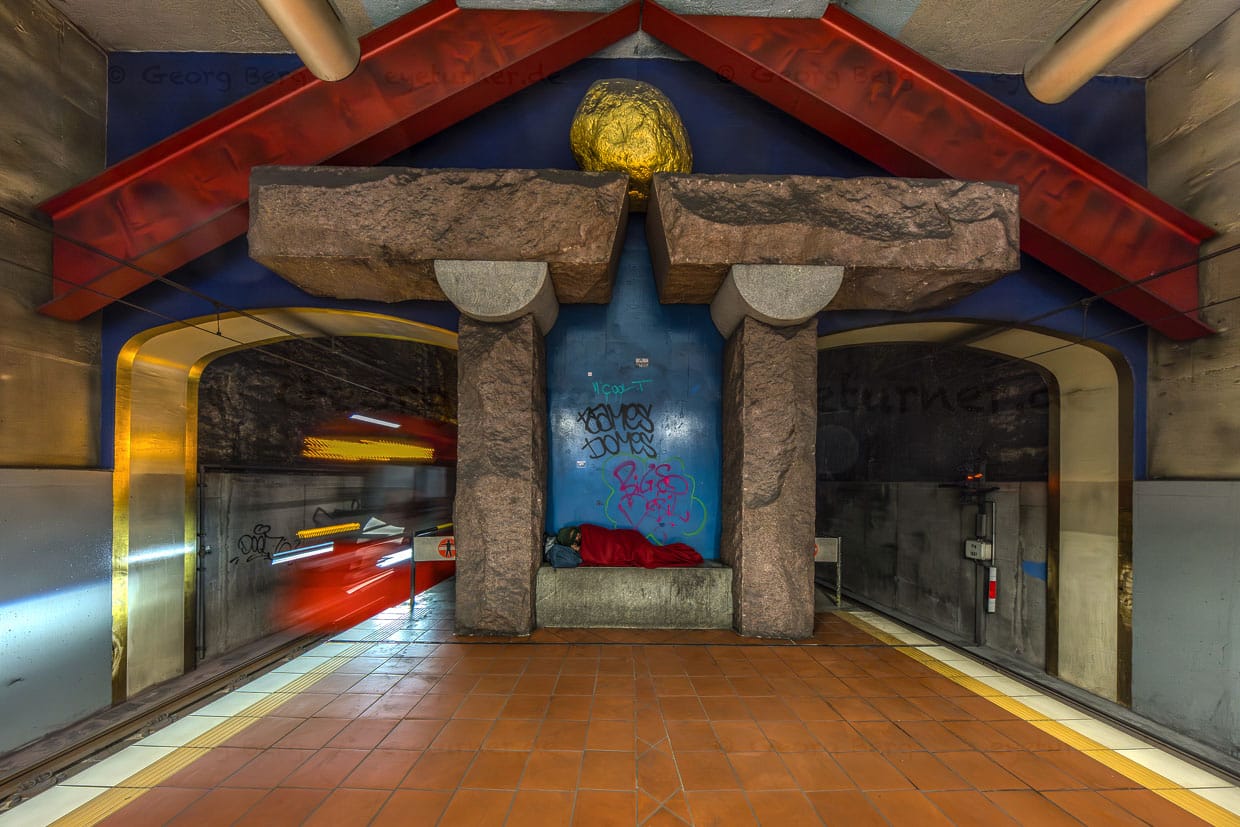
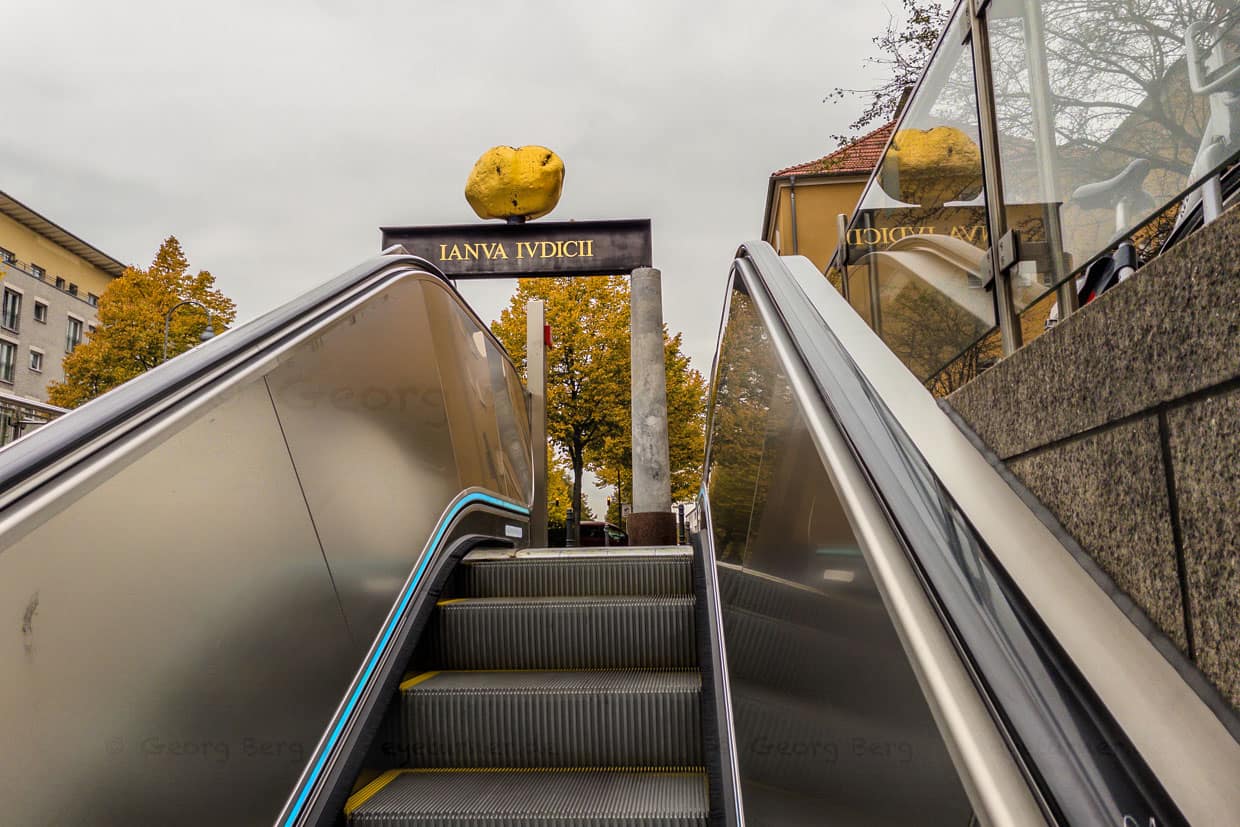
Anyone travelling up the escalator at the Akazienweg KVB station will see a golden boulder. It balances loosely on a gate. Then an inscription appears: IANVA IVDICII. The gate of judgement. On the other side is an inscription for those who pass through: VIATORI ILLEGALI – the unlawful traveller.
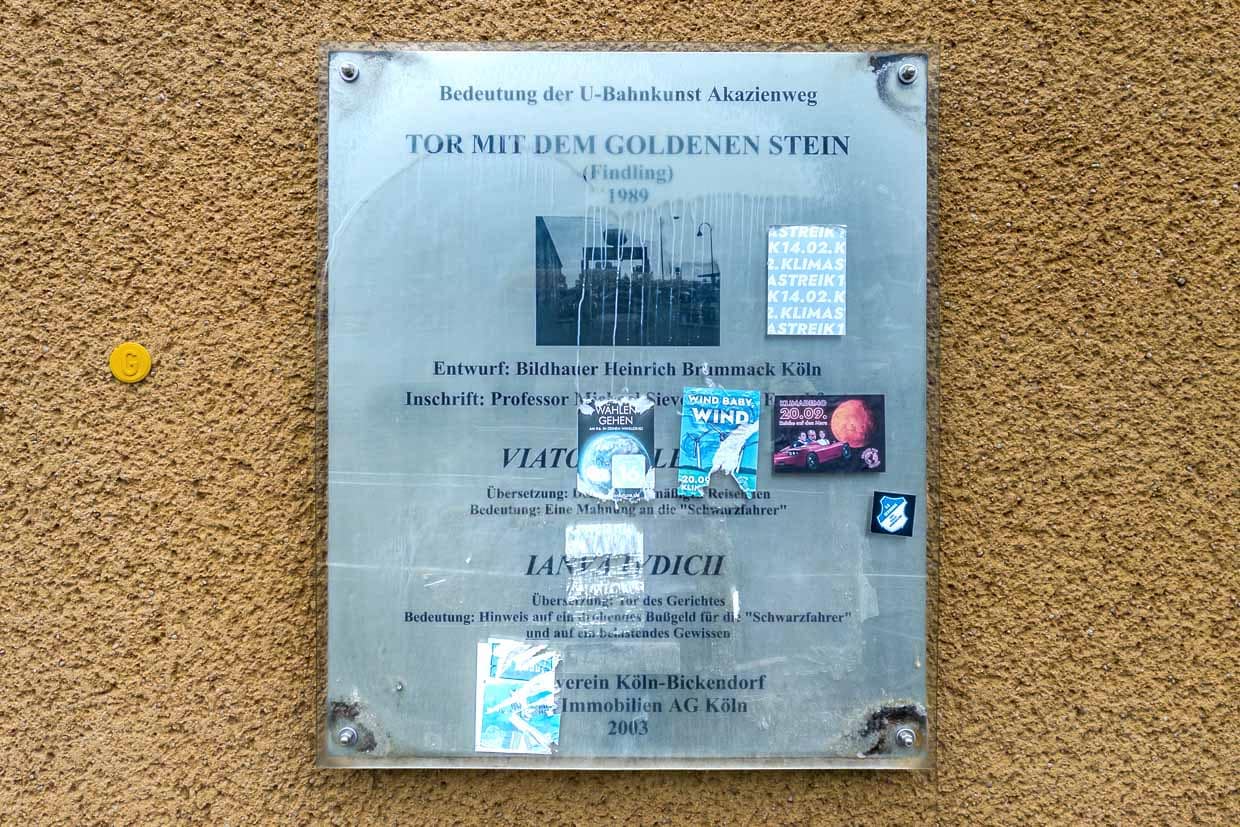
The sculptor Heinrich Brummack designed the monument with the architect Jochen Scharf. The Latin inscription was written by Professor Michael Sievernich SJ from Frankfurt. The gate was erected in 1989 as part of a municipal programme for the artistic design of the new Ehrenfeld underground stations. Between 1989 and 1992, six stations received works of art by various artists.
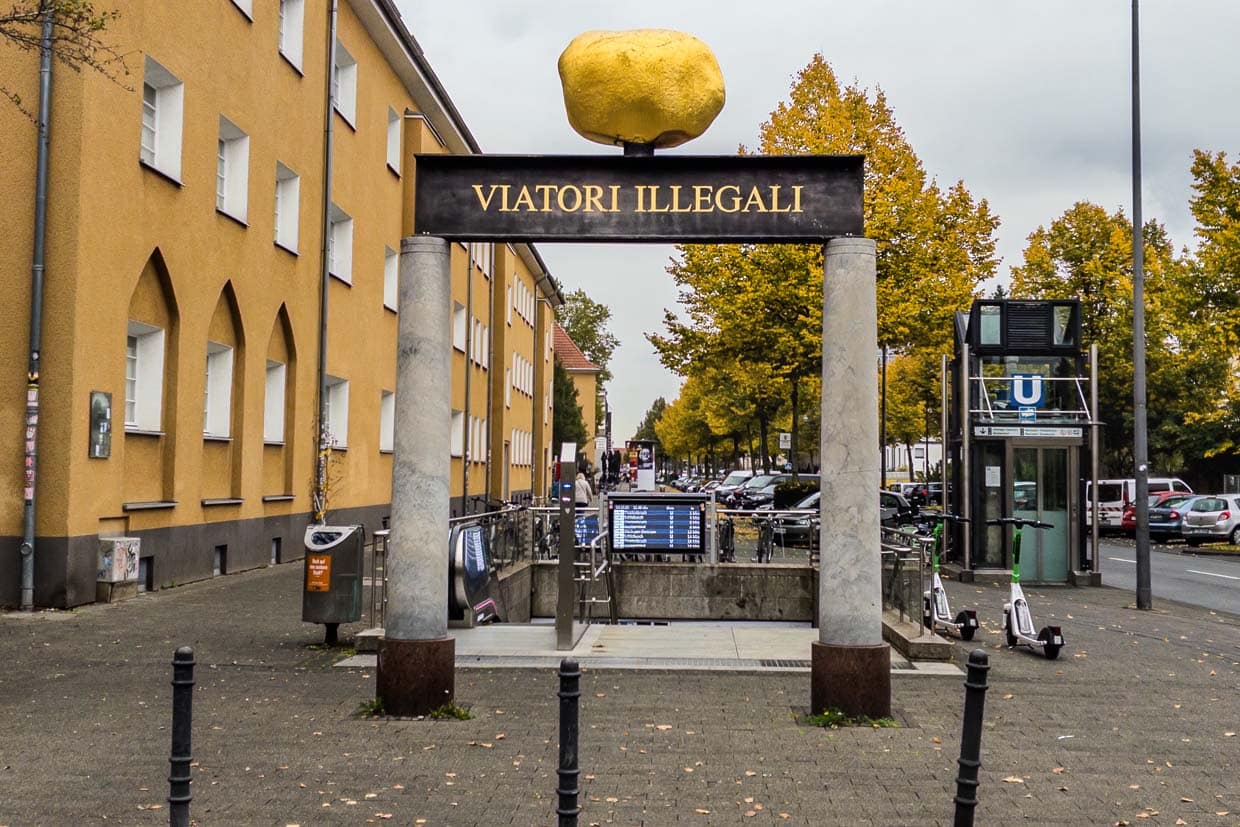
It is popularly known as the Monument to the Illegal Traveller. The official title is simply Gate with the Golden Stone. It is the least known and perhaps the cleverest of all. The work is designed as a reminder and conscience symbol for fare dodging. The inscriptions “VIATORI ILLEGALI” and “IANVA IVDICII” combine the passenger’s experience with a moral and legal judgement: anyone travelling without a ticket should feel addressed and at the same time insecure. The golden stone is the strongest symbol. It is positioned in such a way that it appears to hover unstably above the portal, creating the impression of a possible penalty that could “fall” at any time in a figurative sense.
The looming golden stone is intended to symbolise a guilty conscience – a sword of Damocles made of sandstone. A triumphal arch for breaking the law. In a city that knows what real triumphal arches are. And that doesn’t take itself too seriously. The Cologne Basic Law – that counter-draft to all constitutional texts – regulates such cases with article six: “We don’t know, we don’t need, we don’t want.” What we don’t know, we don’t need. Get rid of it.
Fott domet
In 1993, the then Federal Minister of Justice, Leutheusser-Schnarrenberger, tried for the first time to decriminalise fare dodging – presumably without knowing the Cologne Basic Law. Since then, there have been five more attempts. Each time they failed. Around 7,000 people are sent to prison every year because they cannot pay the fine.
Without much ado, the city of Cologne stopped reporting fare dodgers in 2024. Et hätt still jot jejange. It has always gone well. Article three of Cologne’s Basic Law. The Goldstein is still on top.
The Cologne Basic Law has helped our Japanese guest author to enlightenment on Schinen.
We encounter monuments everywhere – when travelling, in the city, in the country, in museums. But what makes a monument? Who decides what we remember? No journey without a monument opens up a journey through the diversity of what people put on pedestals. In the city, the monuments crowd together: Monument and city shows how you can walk past a monument in Bamberg – and still become wiser. In the countryside, on the other hand, a single monument draws you in from afar: Monument in the countryside tells of the quiet magic of such places. Nature and Monument asks what happens when nature reclaims the monument. Where art and monument merge, the path leads to Kassel: Monument and art looks at the documenta city. And who is a monument themselves? Everyone is a monument – so claims a red sandstone pedestal in Kassel, on which “ICH” is written in large letters. Finally, Paris is rethinking the monument: whoever restores a forgotten, listed grave in Père Lachaise is then allowed to lie beneath it – Monument Seeks Heirs tells of a lottery procedure that combines monument protection and eternity.