Canada is running out of maple syrup. The strategic reserve in Québec has been sold off. The last of the stock will be delivered by the end of February 2027 – the very last drop of the reserve, so to speak. Gold reserves, gas reserves, oil reserves – we’ve been hearing a lot about these recently. Now the focus is on just under 16 million kilos of the sweet sap of the sugar maple. This reserve is intended to offset poor harvests and keep both prices and supply stable. Why are stocks dwindling? The most obvious cause is the tariff dispute with the US: importers stocked up on goods in 2025 to pre-empt future duties, reports the Canadian Press. According to the government, exports to the US rose by 17 per cent within a year to 53.3 million kilograms. US tariffs do not yet apply to Canadian maple syrup. Shortages will only become a threat if the 2027 harvest is poor, as the buffer will then be exhausted.
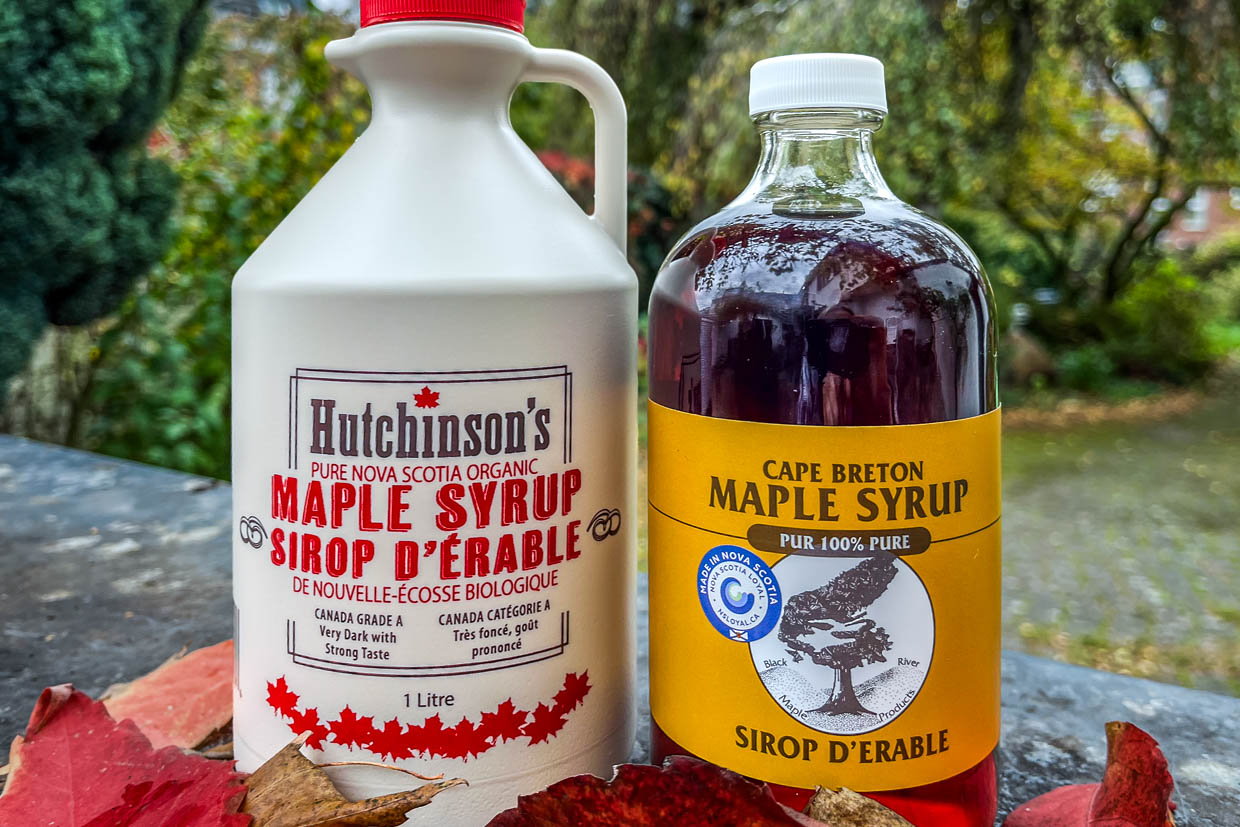
Maple syrup from Québec and Nova Scotia
The figures tell a clear story. In 2025, three-quarters of global maple syrup production came from Canada, with nine-tenths of that coming from Québec. But the sweetness of the sugar maple does not belong to Québec alone. It has also been harvested in Nova Scotia since time immemorial. On Cape Breton Island, we visited two places that keep this tradition alive. Even back in the summer, we found it difficult to stock up on our own supply of maple syrup. In many shops, genuine syrup from Nova Scotia was sold out. The best souvenir from Atlantic Canada was in short supply. Now I know why.
Mary Louise Bernard on the milk of Mother Earth
It is not known who first tasted the tree sap. What is known is this: the Indigenous peoples of eastern Canada knew about and used the syrup. They used it to sweeten food and for healing. They showed the French settlers, the Acadians, how to collect the sap. Later, the Scottish settlers also adopted this knowledge.
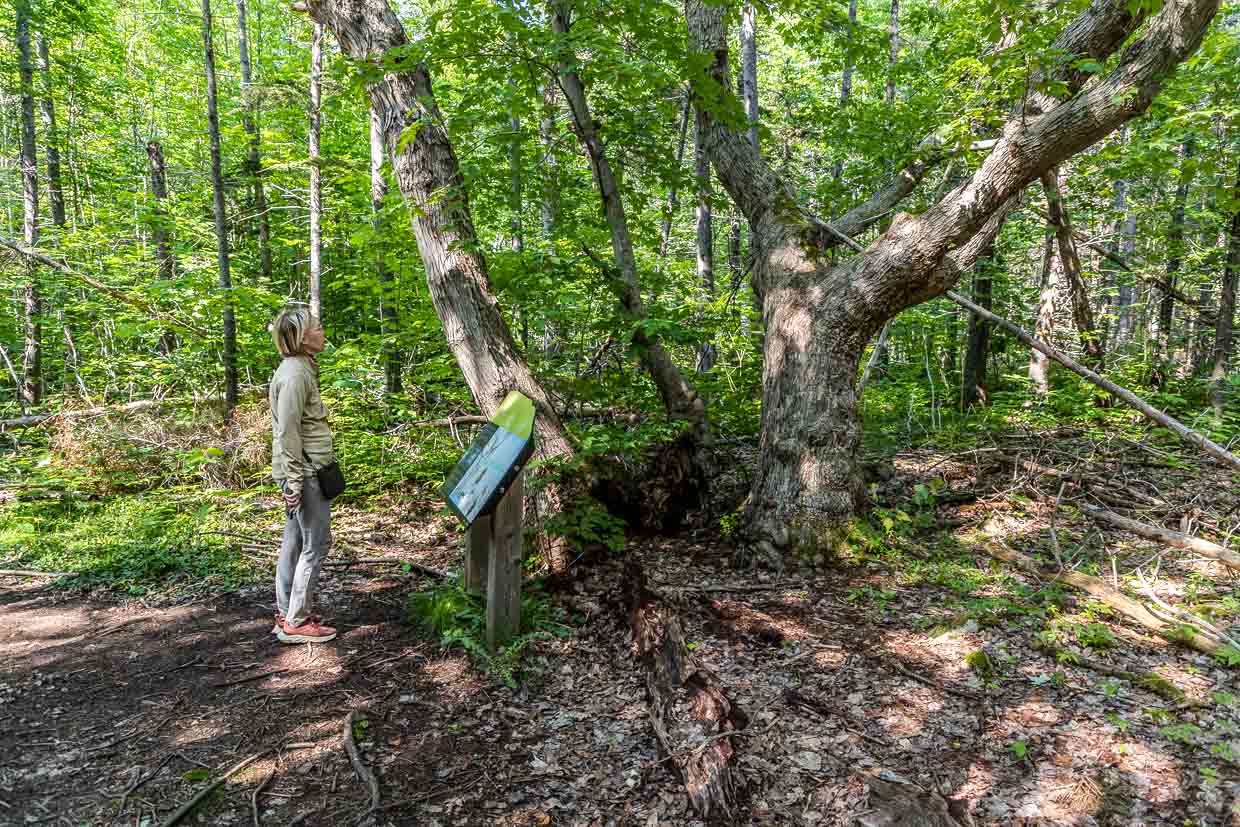
A legend tells of this discovery. In the Grande Anse Valley, within Cape Breton Highlands National Park, a trail with information boards now winds through the forest, recounting the story. The boards credit Mary Louise Bernard, a Mi’kmaw woman from the Wagmatcook First Nation, as the author. The story of Sismoqnapui’skwe’j, the Freshwater Woman, has been passed down through oral tradition. Bernard recounts it just as her mother told it to her.
Today, maple syrup is regarded as a delicacy throughout the world. For the Mi’kmaq, however, the sap held a different significance. Its nutrients helped them regain their strength after the harsh winter. They call it ‘Mother Earth’s milk’ and regard it as sacred.
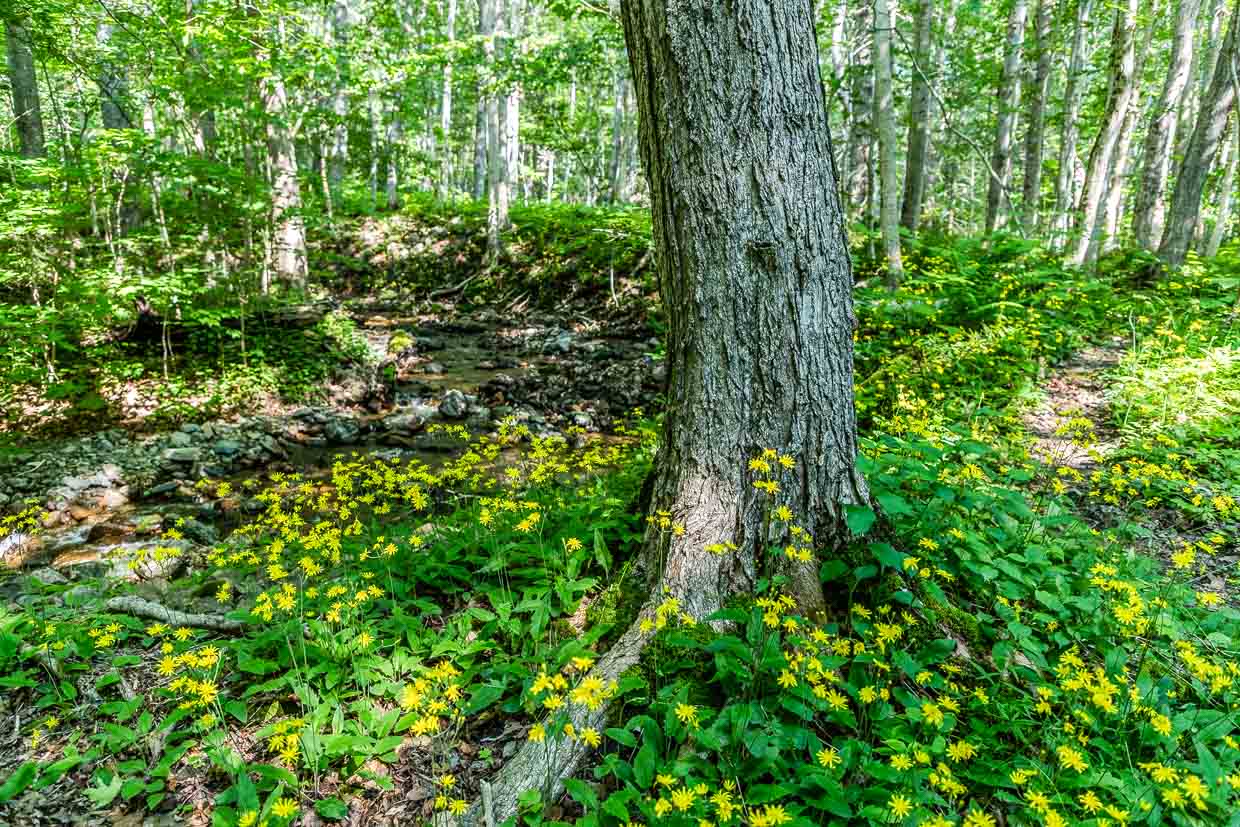
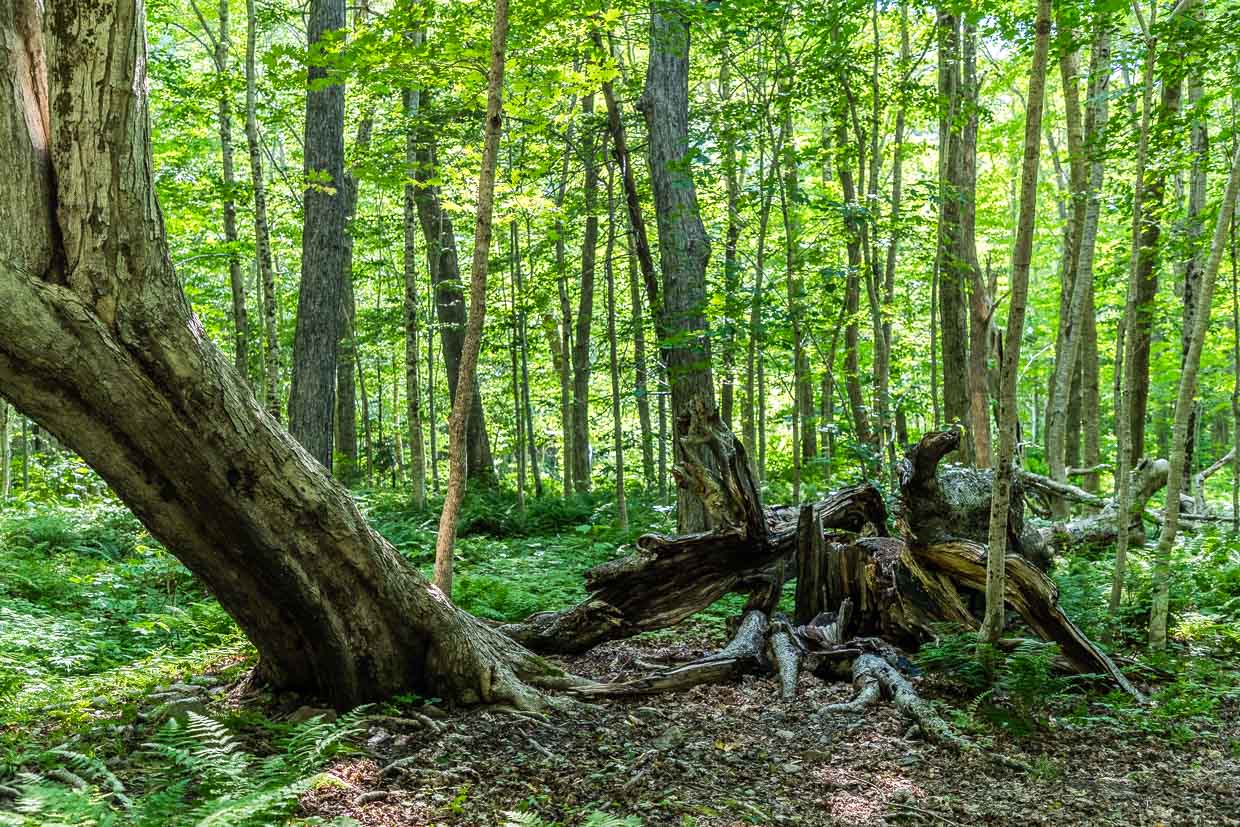
Why the Grande Anse Valley in particular? The valley is internationally renowned for its ancient deciduous forest, particularly for its almost pure stands of sugar maple. Unspoilt land such as this is considered sacred by the Mi’kmaq. When Bernard visited the valley, she sensed: This must be the home of the Freshwater Woman. A sign quotes her as saying: her people are deeply connected to water, the moon, the land and the spirit world, and continue to pass on stories and traditions to this day so that others may understand who the Indigenous people of Mi’kma’ki are.
The Legend of the Freshwater Woman
It was a harsh winter. An old man, a Kisiku, stood in the forest, his arms outstretched towards the sun. He knew this would be his final spiritual journey, and he set out alone. His granddaughter, L’nu’skwe’j, heard him leave and watched him climb the mountain. As the days grew milder and he did not return, she set off, carrying a flint in her hand that her mother had given her.
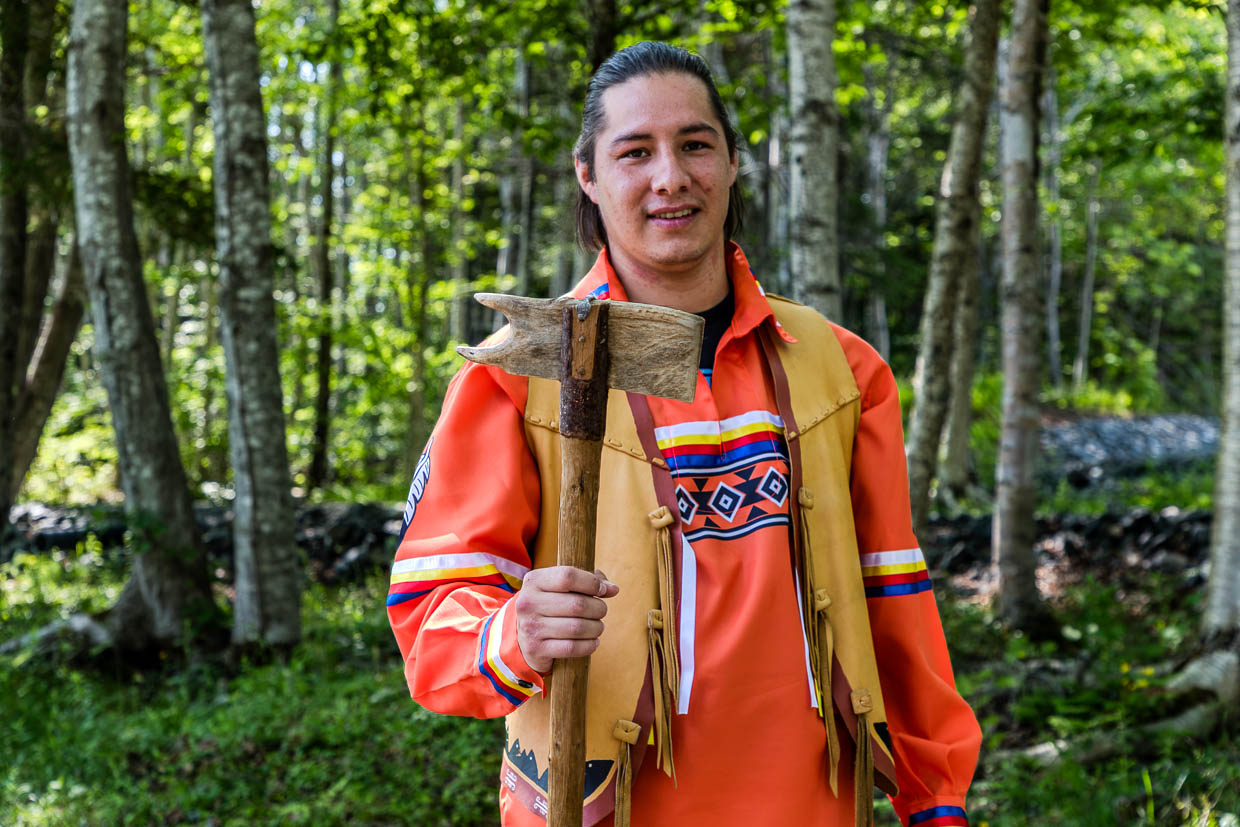
Her grandfather, weakened, built himself a shelter and struck his axe against a tree. The granddaughter found the axe. Water dripped from the handle into a hollow log. She lit a fire and cooked him a meal. As the sweet scent wafted into the shelter, the old man awoke. The food tasted unfamiliar yet delicious. He told her about his vision and gave her a sacred name, for without her the vision would have remained a dream: Sismoqnapui’skwe’j, the Freshwater Woman. “The Creator has given us a gift that everyone should share.”
Scots in the Maple Forest
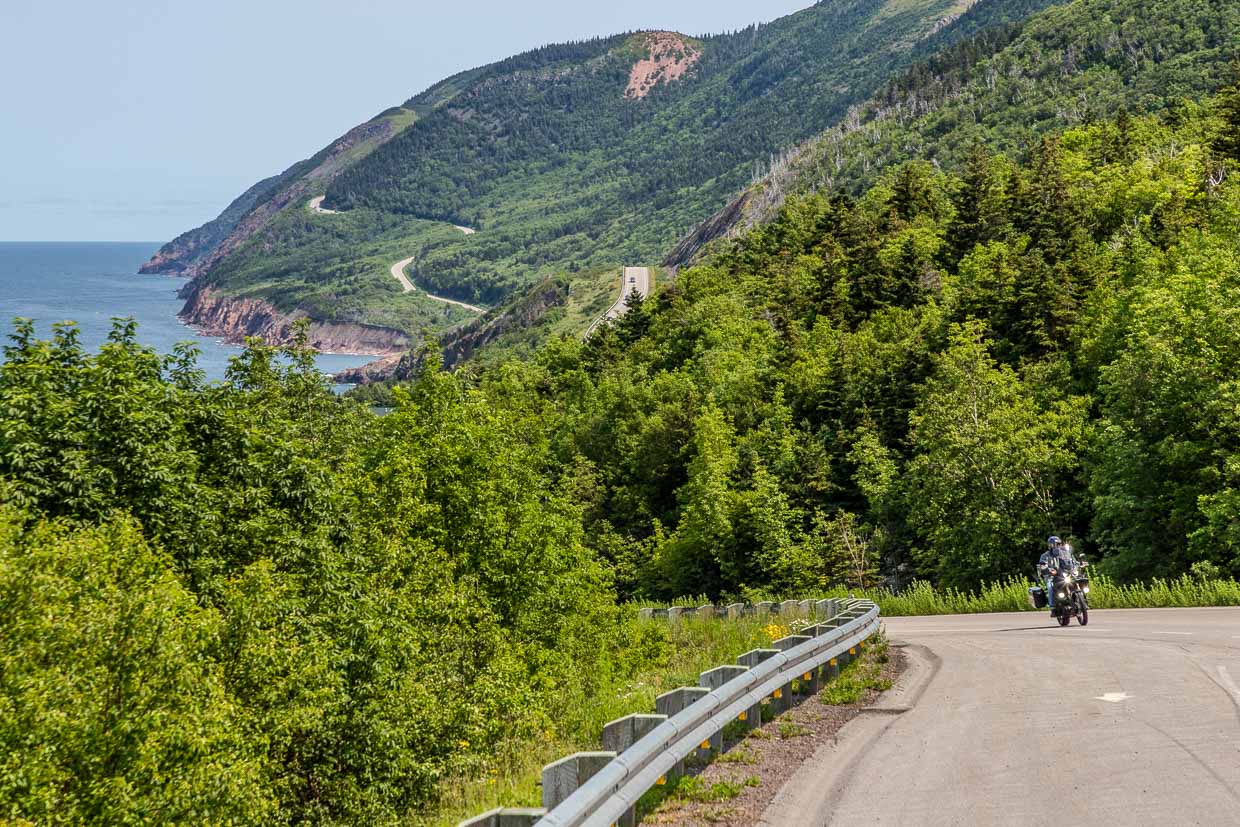
The second place that recalls the early days of maple syrup production lies on Pleasant Bay, also on Cape Breton. Here, in what is now Cape Breton Highlands National Park, Scots from the Isle of Skye – driven out of the Highlands – settled in the early 19th century. They cultivated fields, fished, hunted and cleared the forest edge. Firewood and timber – always on a small scale, always close to home. And they made maple syrup. The settlers adopted the techniques of those who had been there before them.
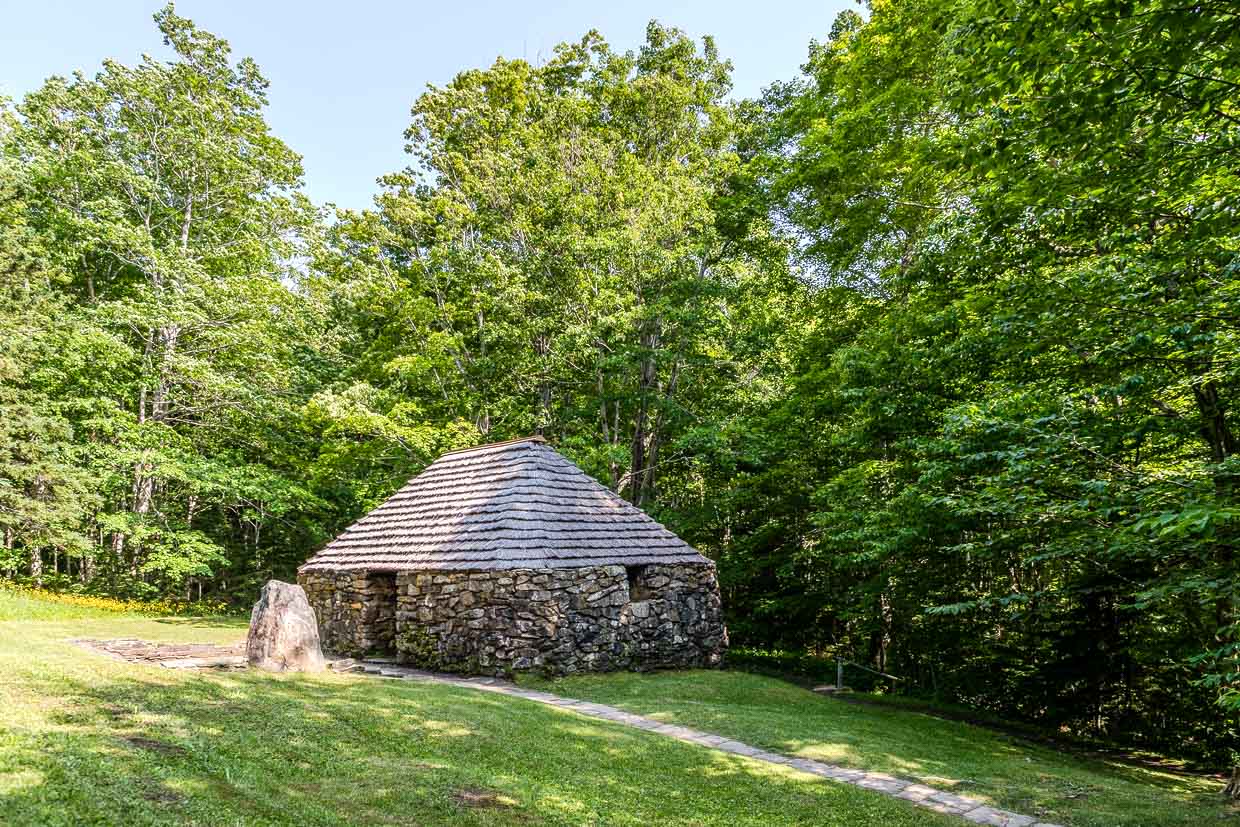
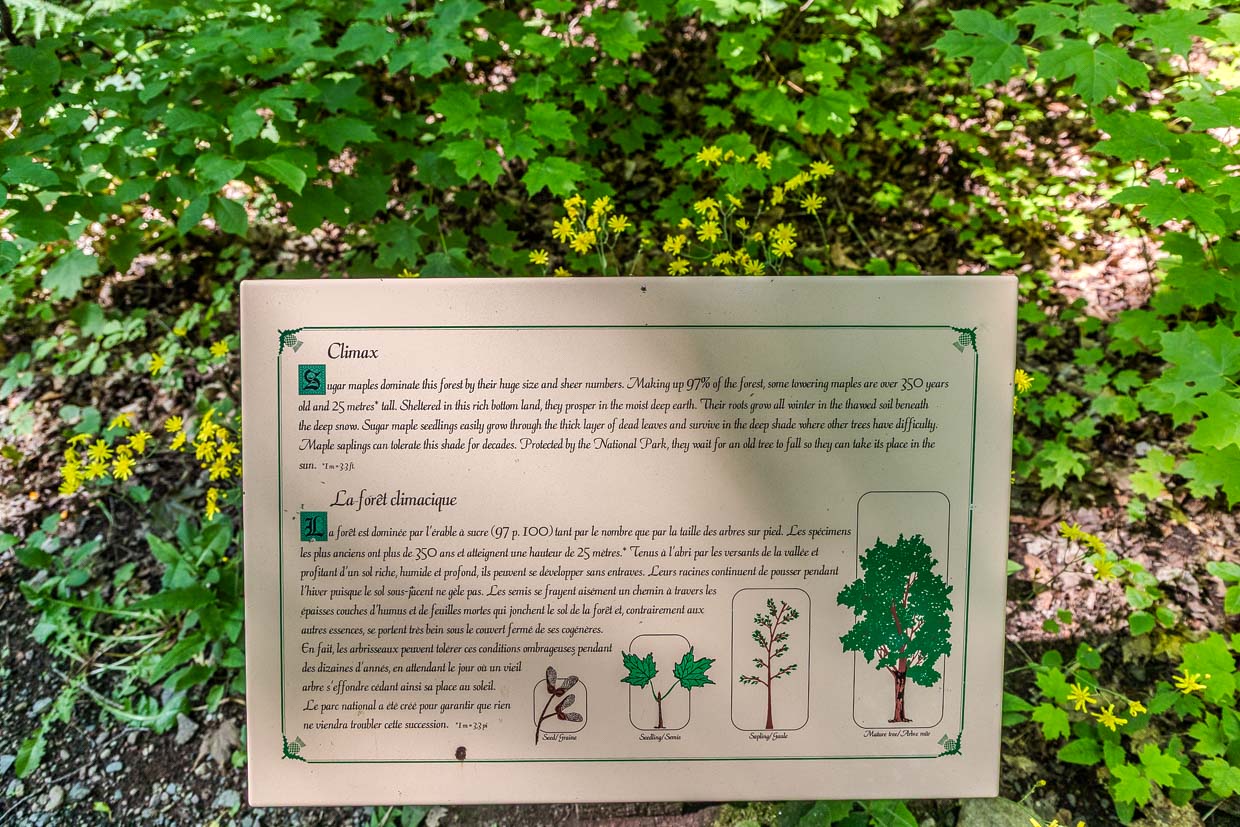
In 1934, Donald S. MacIntosh bequeathed one hundred acres of his farm to create a park in memory of his Scottish homeland. This led to the creation of the Lone Shieling, a simple stone house with a wooden shingle roof, similar to those used by Scottish shepherds and smallholders. Sugar maple accounts for 97 per cent of the forest here; some trees are over 350 years old and 25 metres tall. Their roots grow throughout the winter in the unfrozen soil beneath the snow. The seedlings survive for decades in the shade – until an old tree falls.
Four weeks’ time. The narrow tapping window
The harvesting window for tree sap is narrow. It opens between late February and mid-April and lasts four to six weeks. The sap flows when it thaws during the day and freezes at night. Ideal conditions are around five degrees during the day and minus four at night. In summer, the tree stores starch; in spring, enzymes convert this into sugar. The alternation between frost and thaw alters the pressure in the trunk, causing the sap to rise and fall. It consists of 97.5 per cent water. Early harvests yield a light-coloured syrup, whilst late ones produce a dark, full-bodied one. Once the trees begin to bud and daytime temperatures rise above 10 degrees, the season comes to an end. Stored sap ferments within one to three days. So everything has to be done quickly.
From trough to evaporator
The Indigenous people would score the trunk and collect the sap in troughs made of birch bark or wood. Later came boreholes, tubes and metal buckets. Today, plastic hoses, aided by vacuum pumps, channel the sap directly into the sugar shack. There, it used to be boiled in a cauldron over an open fire. In 1860, the evaporator was invented: it enables continuous boiling and transformed what had been a sideline into an industry. Only syrup that reaches at least 66 degrees Brix – that is, 66 per cent sugar – is authorised as maple syrup. The Canadian Food Inspection Agency (CFIA) monitors this, and the ‘Pure Maple Syrup’ label guarantees an authentic product. When it comes to the four grades of Grade A, the rule is: the lighter the colour, the milder the flavour; the darker the colour, the stronger the flavour.
The fact that syrup can become scarce is also linked to the limited tapping of the trees. A tree yields 30 to 40 litres of sap in a single season; this produces one litre of syrup. A maple tree must grow for 30 to 40 years before it can be tapped. It will then yield sap for up to 200 years. A maple syrup reserve cannot be replenished in a single season.
More about Nova Scotia
In Atlantic Canada, lobster was long considered a poor man’s food. Today, the lobster roll is a national symbol. Anyone wanting to know how the catch is made should join a night shift: Lobster Fishing in Nova Scotia shows what stock conservation means. Canada is also the land of maple syrup. Most of it comes from Quebec, but Nova Scotia also taps sugar maple trees. In Halifax, the provincial capital, there’s plenty on offer. The culinary guide to Halifax points you towards the best places to eat. But the city offers more than just food. The sightseeing guide ranges from the 7 Virtues perfume workshop to the immigration tour at the Museum of Immigration at Pier 21. Halifax has also been the scene of several tragedies. When the Titanic sank in 1912, it was the nearest major port. Many of the victims were brought here. At Fairview Lawn Cemetery, their graves serve as a reminder of the disaster. The skies are becoming clearer. The Deep Sky Eye Observatory offers views of the Milky Way at North America’s first Starlight Destination. Stargazing at sea level here means: mosquito repellent for the Milky Way.
This research was supported by Visit Nova Scotia