
In Tanabe, we mainly encounter people with rucksacks and hiking boots. The small town in the Japanese prefecture of Wakayama is the starting point for one of the most popular sections of the Kumano Kodo pilgrimage route. There are restaurants, accommodation, souvenir shops and an Umeshu bar where you can sample regional plum liqueurs. But the umeshu will have to wait. On this sunny October day, the conditions are ideal for the hike to Hongu Taisha Shrine. The Tanabe City Kumano Tourism Bureau provides pilgrims with detailed maps and the Kumano Kodo pilgrimage pass to collect the coveted stamps. It also provides information on bus timetables, weather and equipment.

Start in Tanabe
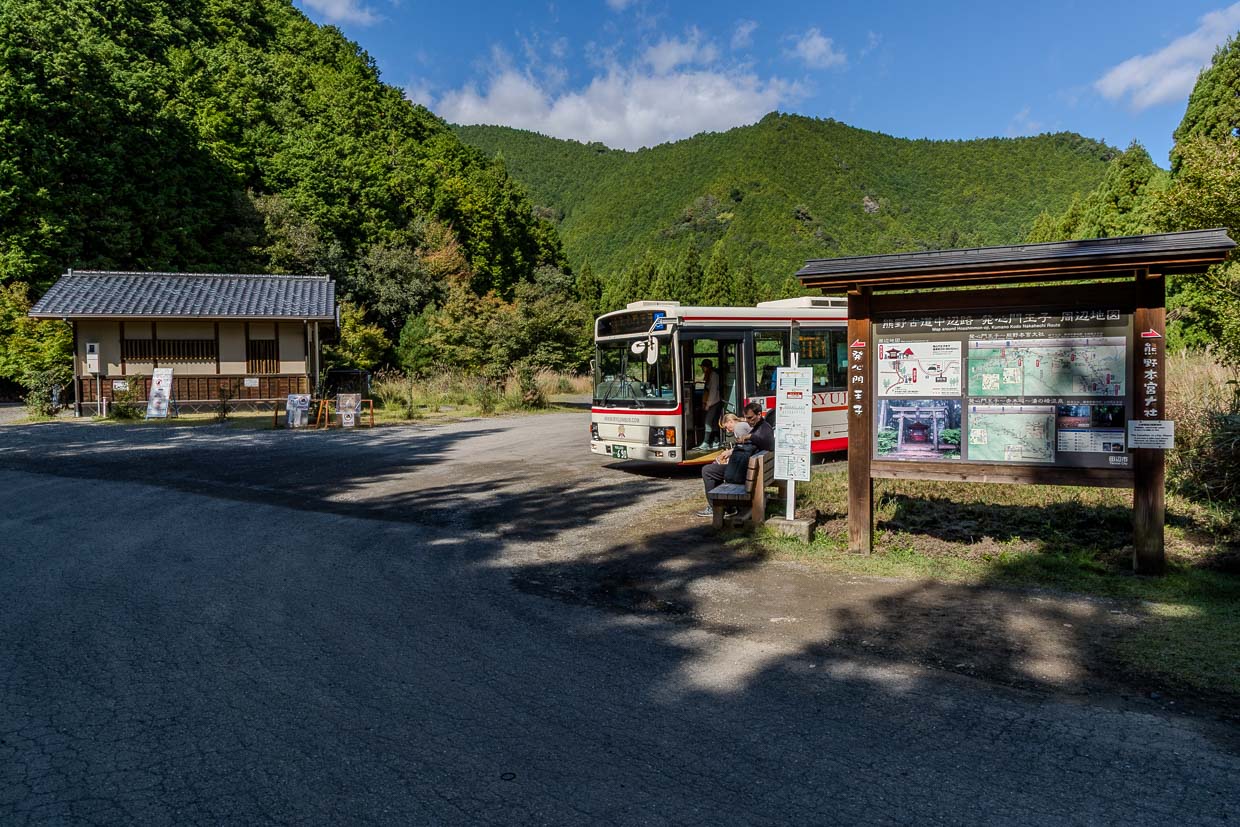
The Ryujin Bus Kumano Hongu Line bus takes us to the Kii Mountains in around two hours. The route takes us along winding roads, through dense forests, past rice fields and small villages – an atmospheric introduction to the spiritual hike. We disembark near Hosshinmon-oji, the ancient gateway to spiritual awakening. Even here, in the hilly Kii mountain forest, there are vending machines – typical of Japan. The thoughtfulness of the Japanese is also evident on the road: there is never a shortage of drinks, snacks or spotlessly clean public toilets.
The entrance: Hosshinmon-oji as a spiritual portal
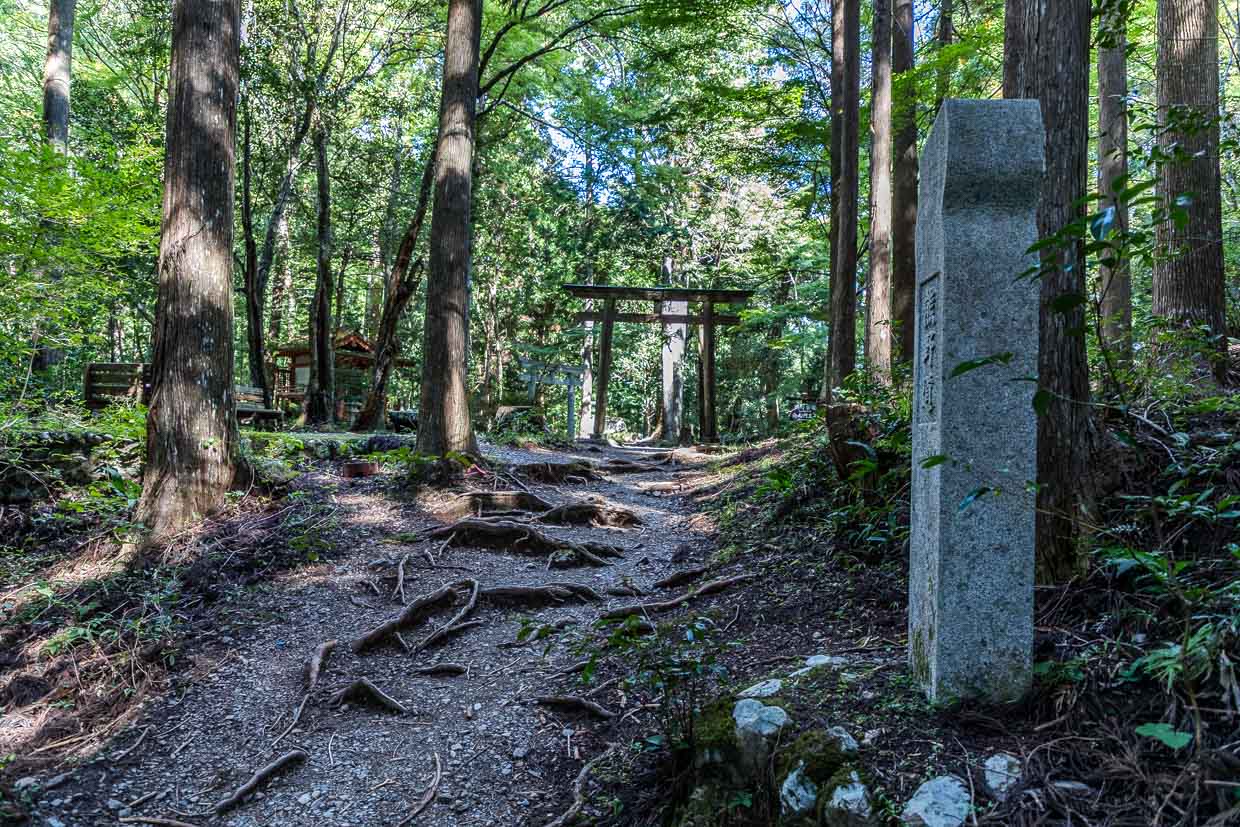
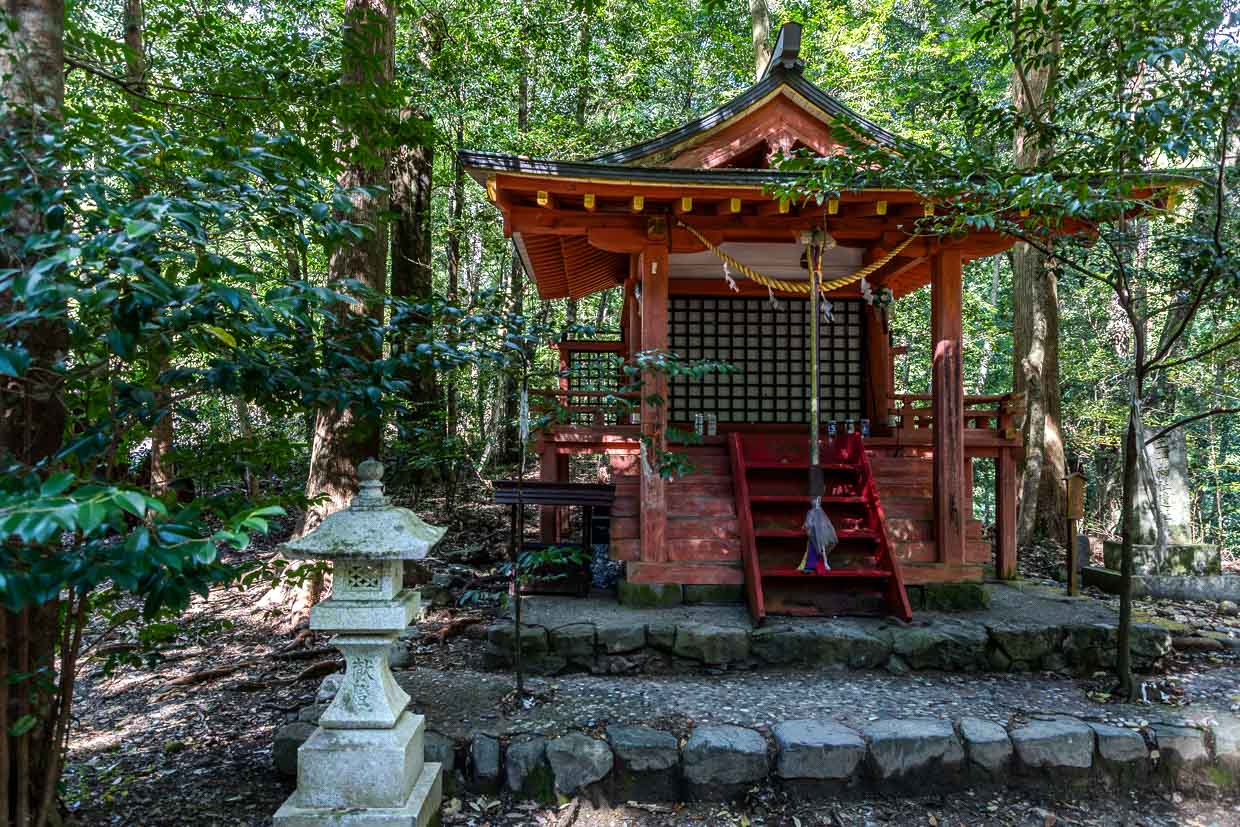
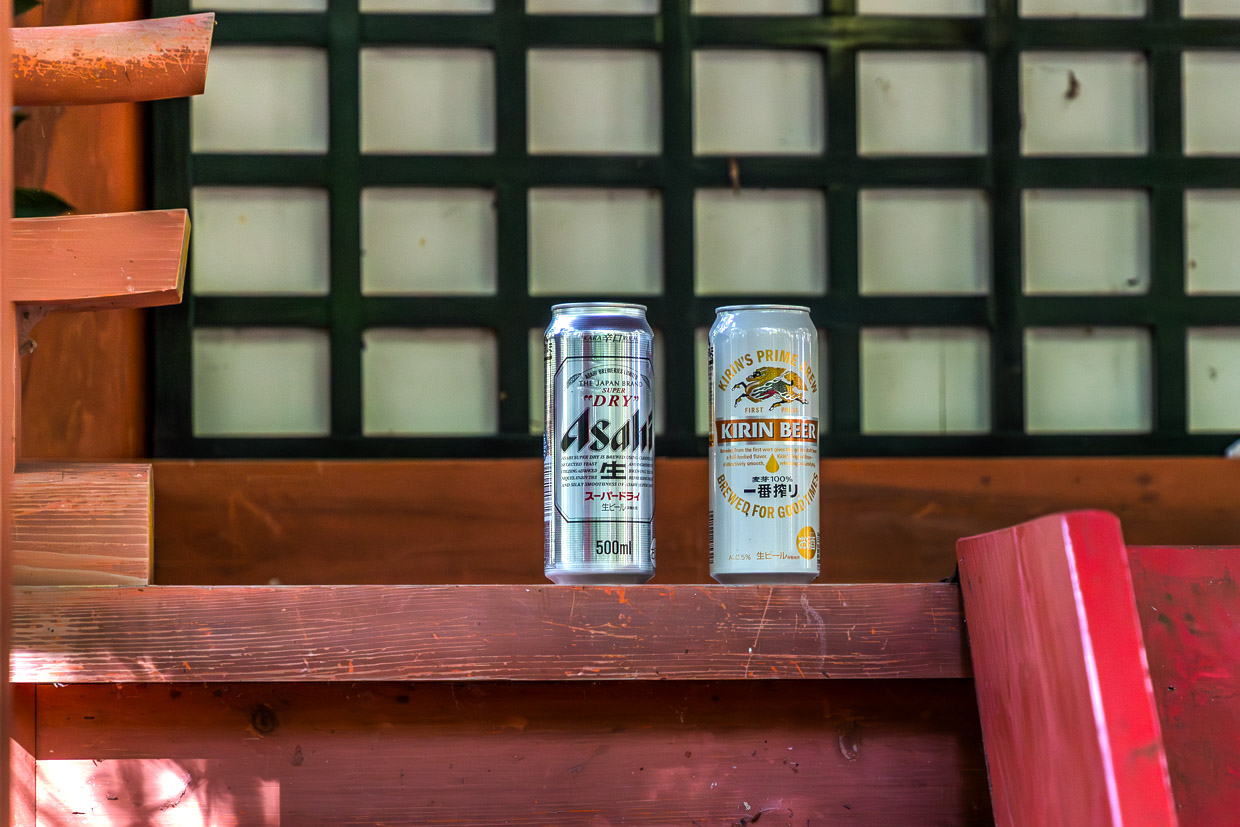
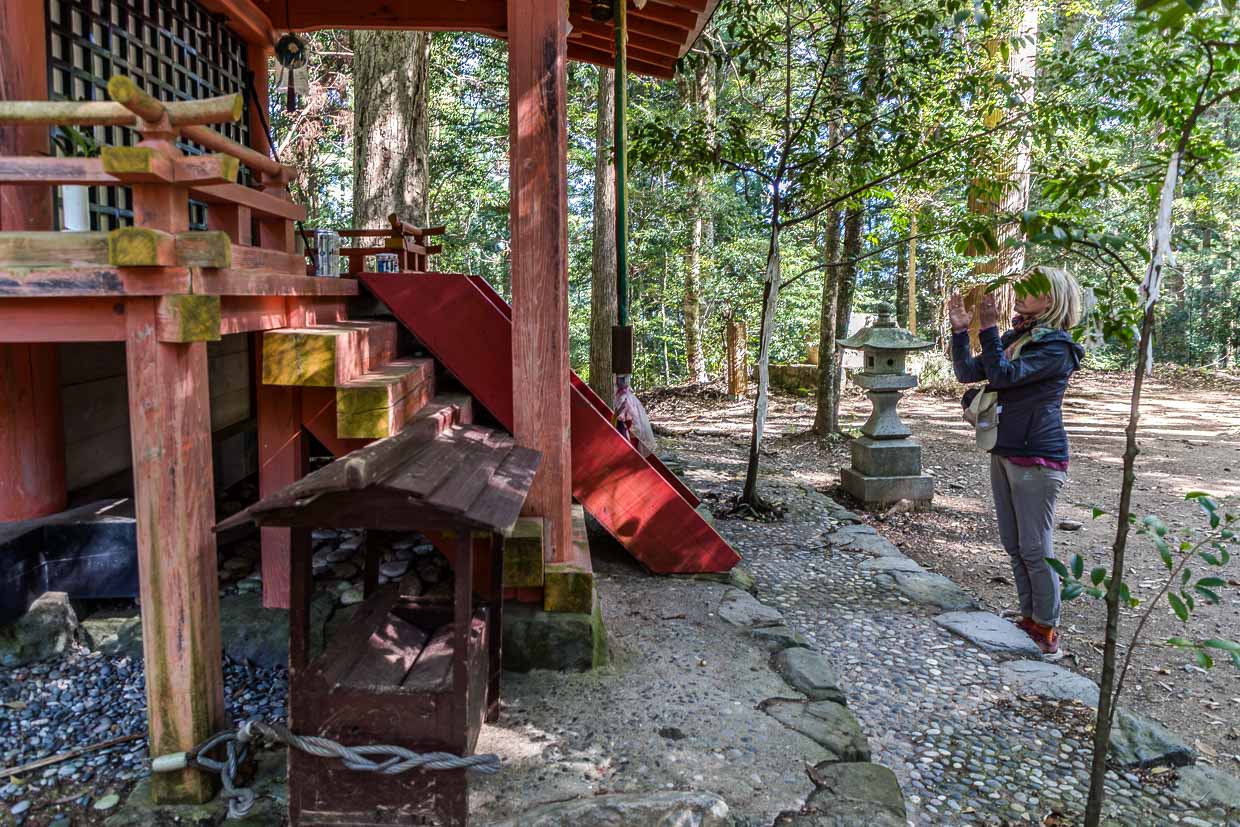
Hosshinmon-oji is one of the most important places in Kumano Kodo and marks the outer entrance to the sacred precinct of the great shrine Kumano Hongu Taisha. Historically, the gates along the pilgrimage route served as markers for religious ritual phases, explains our guide Kennis Wong. The Hongu Taisha includes over 3,000 smaller Kumano shrines, which are scattered throughout Japan. The Hongu Taisha has been considered a spiritual centre since the 6th century. I approach the small shrine at Hosshinmon-oji with awe and the first explanations from Kennis – and am taken aback. Who leaves beer cans here?
Offering as thanks to the gods
The beer cans are not rubbish, but offerings. They are deliberately placed as modern shinsen to honour the kami (gods), such as the Inari kami, who stands for wealth. Brands such as Asahi or Kirin can be seen at local shrines in particular. Alcohol symbolises joie de vivre, community and abundance. The cans, often open or empty, complement sake as a contemporary gift. The Shinto principle of sharing everyday goods with the gods is reflected in this. Kennis’ explanation reassures me. Rubbish at the shrine? Unimaginable, especially in a country where even in big cities the streets remain clean despite the lack of rubbish bins. Now I can concentrate on my first prayer at the Kumano Kodo.
This is how nirei-ni-hakushu-ichi-rei works
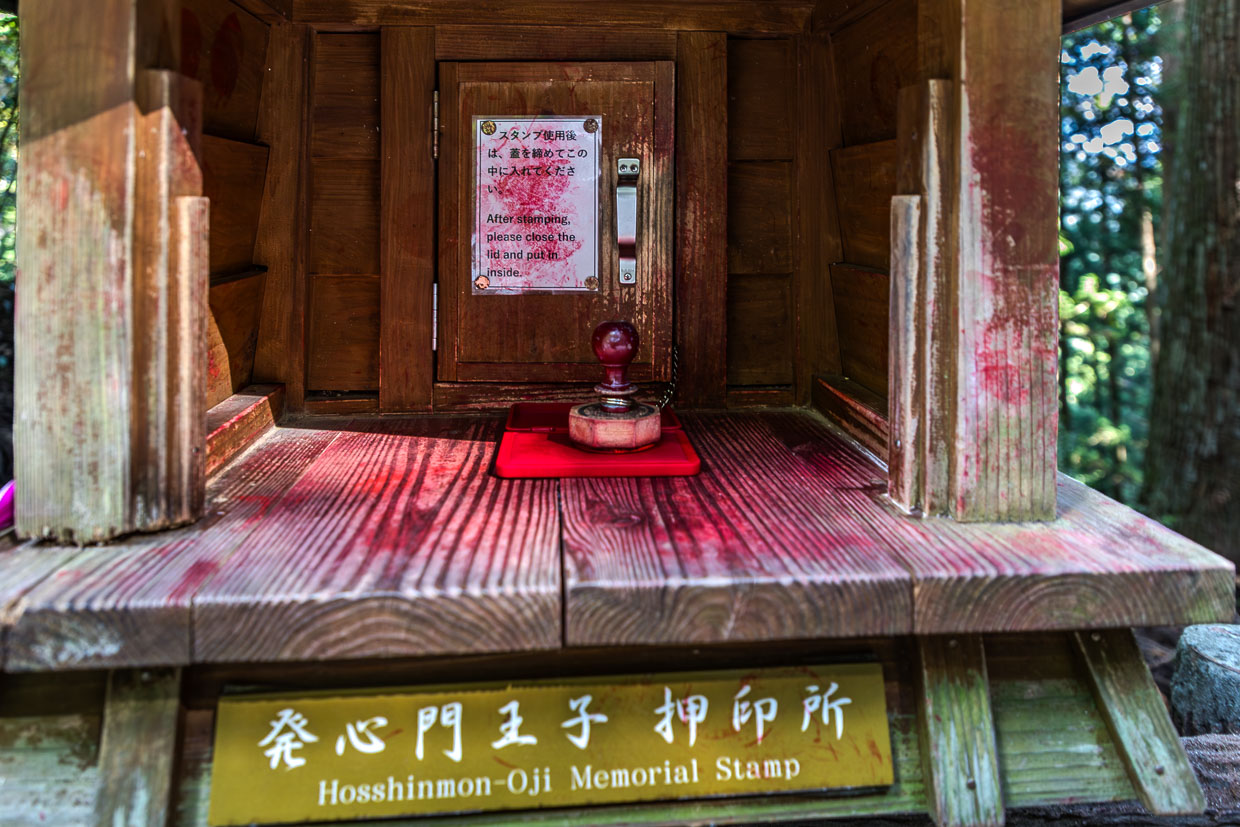
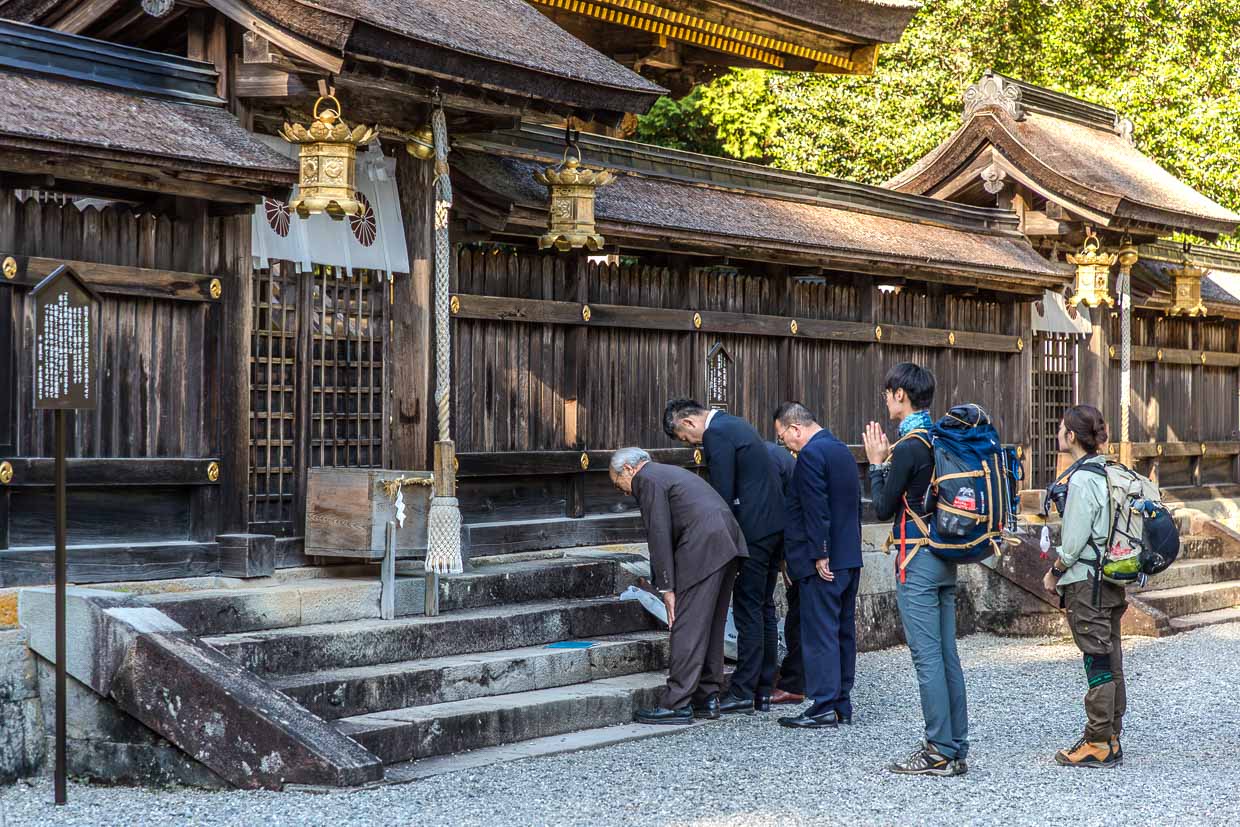
Praying at a Shinto shrine follows a fixed ritual that expresses respect, purification and connection to the kami. It begins with a donation of 5 yen into the wooden offering box, the saisenbako. I pull hard twice on a thick rope to drive away evil spirits and draw the kami’s attention to me. Then follows the sequence nirei-ni-hakushu-ichi-rei: bowing twice, clapping twice, a short prayer or a wish, followed by a final bow. In contrast, collecting stamps in the pilgrim’s book is more playful than spiritual. Before setting off on the forest path, I quickly put the first stamp in my Nōkyōcho.
Through dense forest: nature and atmosphere
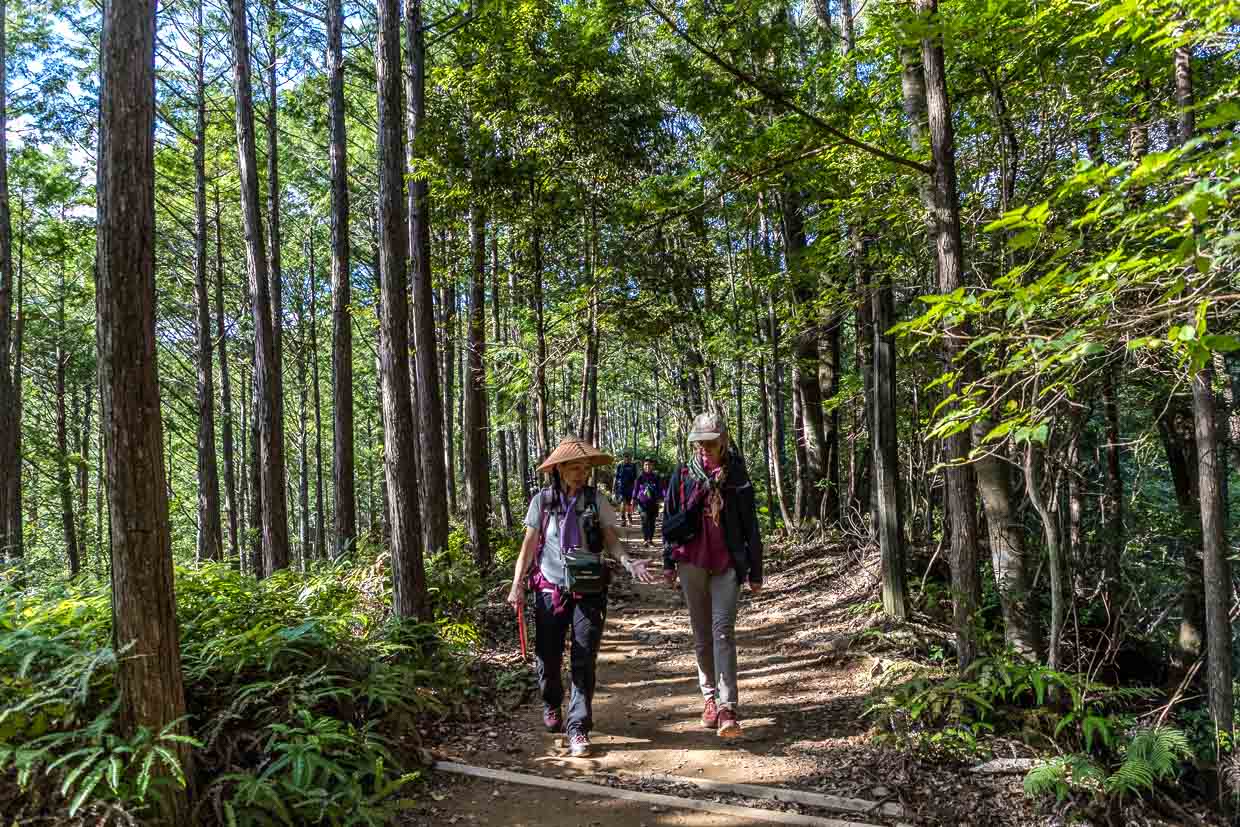
We immerse ourselves in a subtropical jungle, a sea of evergreen giants: Japanese cypresses (hinoki), mighty cedars (sugi), laurel trees, surrounded by ferns, mosses and orchids. Rays of sunlight break through the canopy of leaves, painting patches of light on the moss-covered ground and creating a mystical, almost unreal atmosphere. It smells of resin and damp earth. The Kii mountain forest, a UNESCO World Heritage Site, invites you to meditate in the morning.
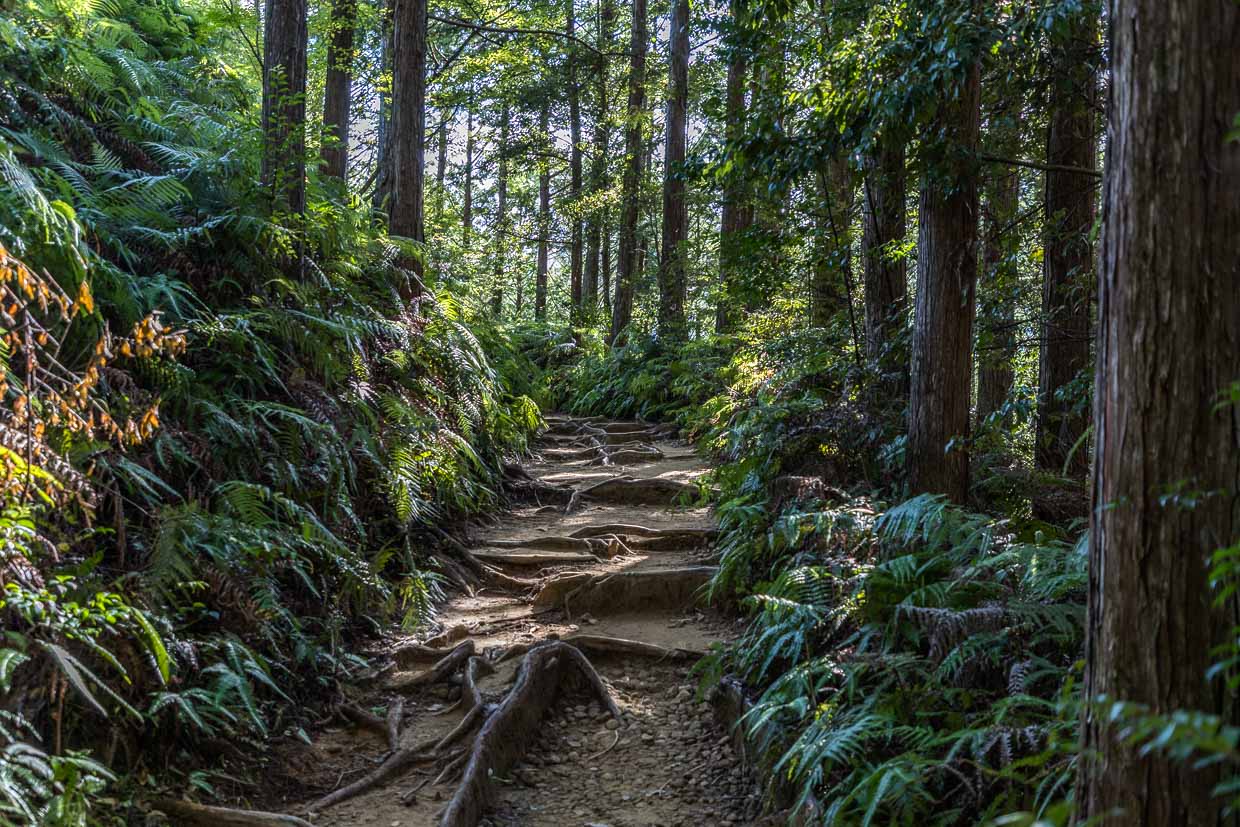
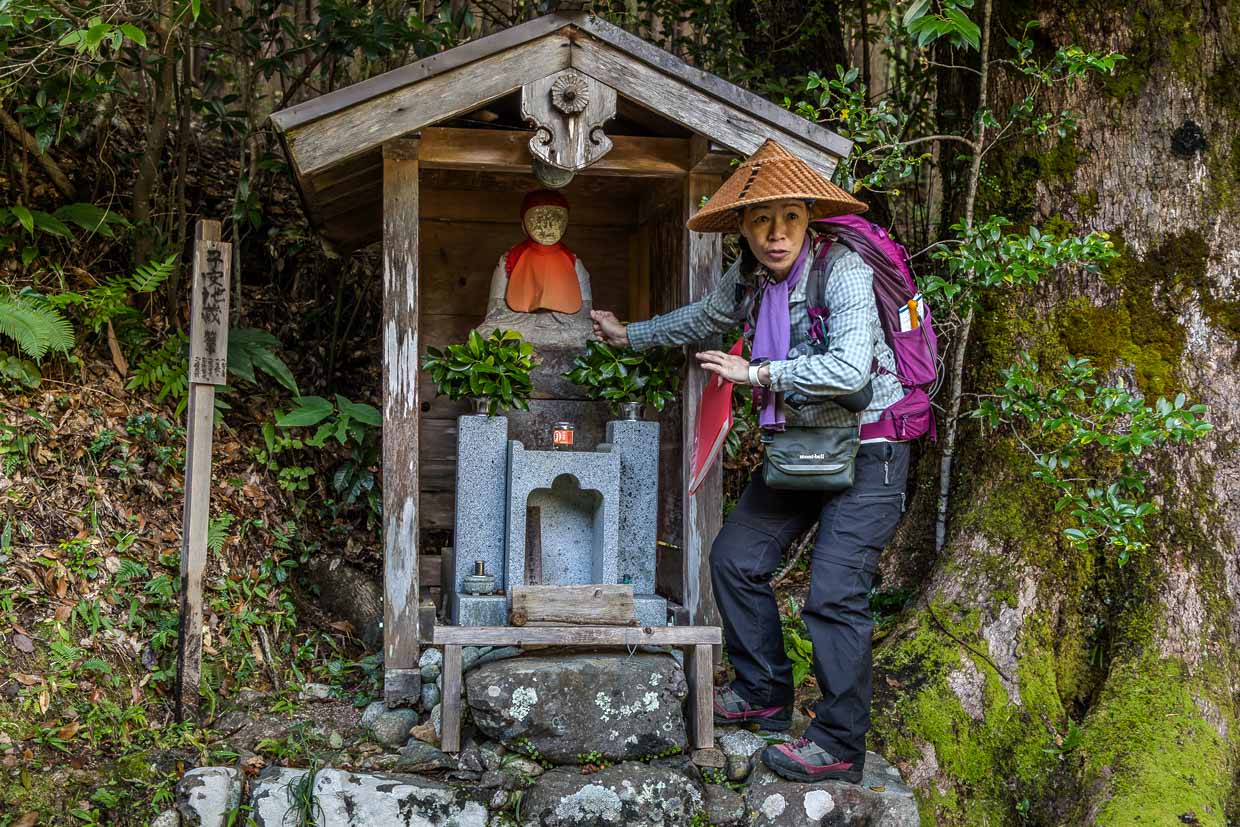
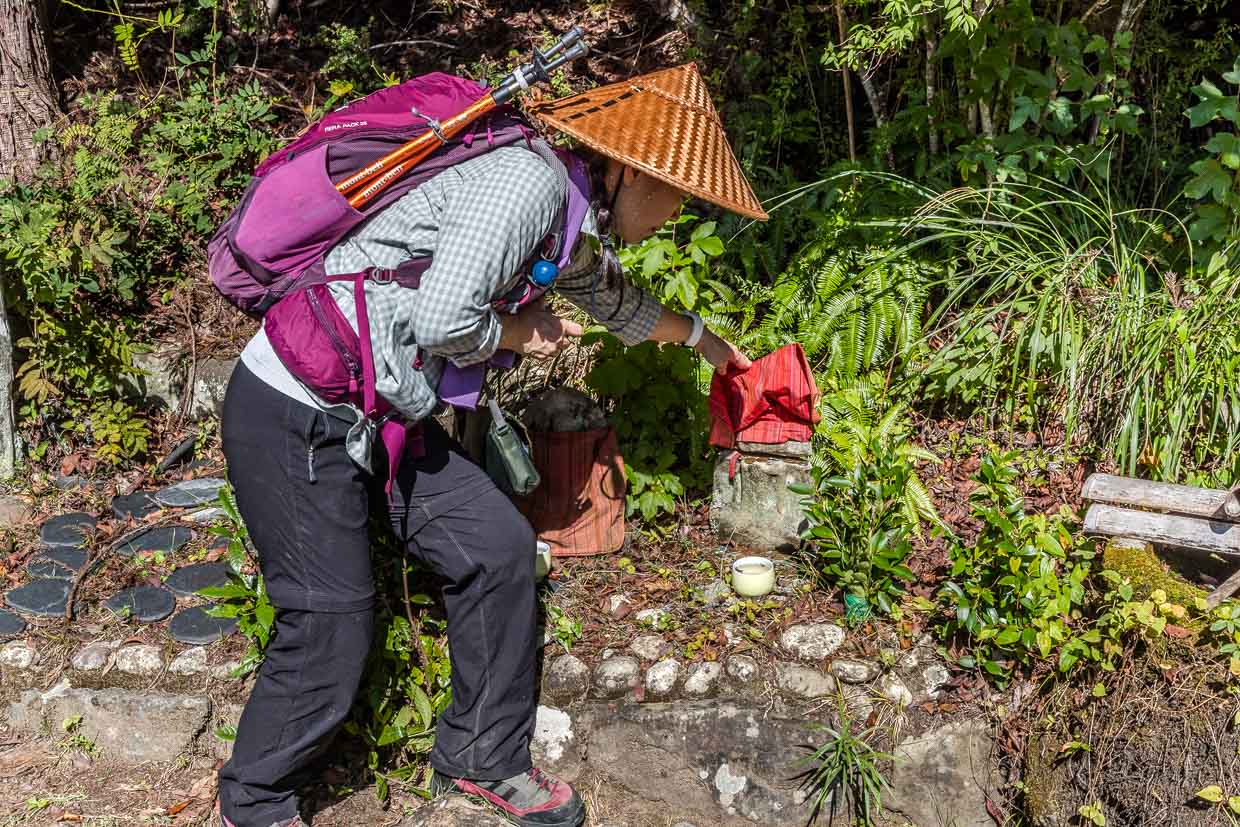
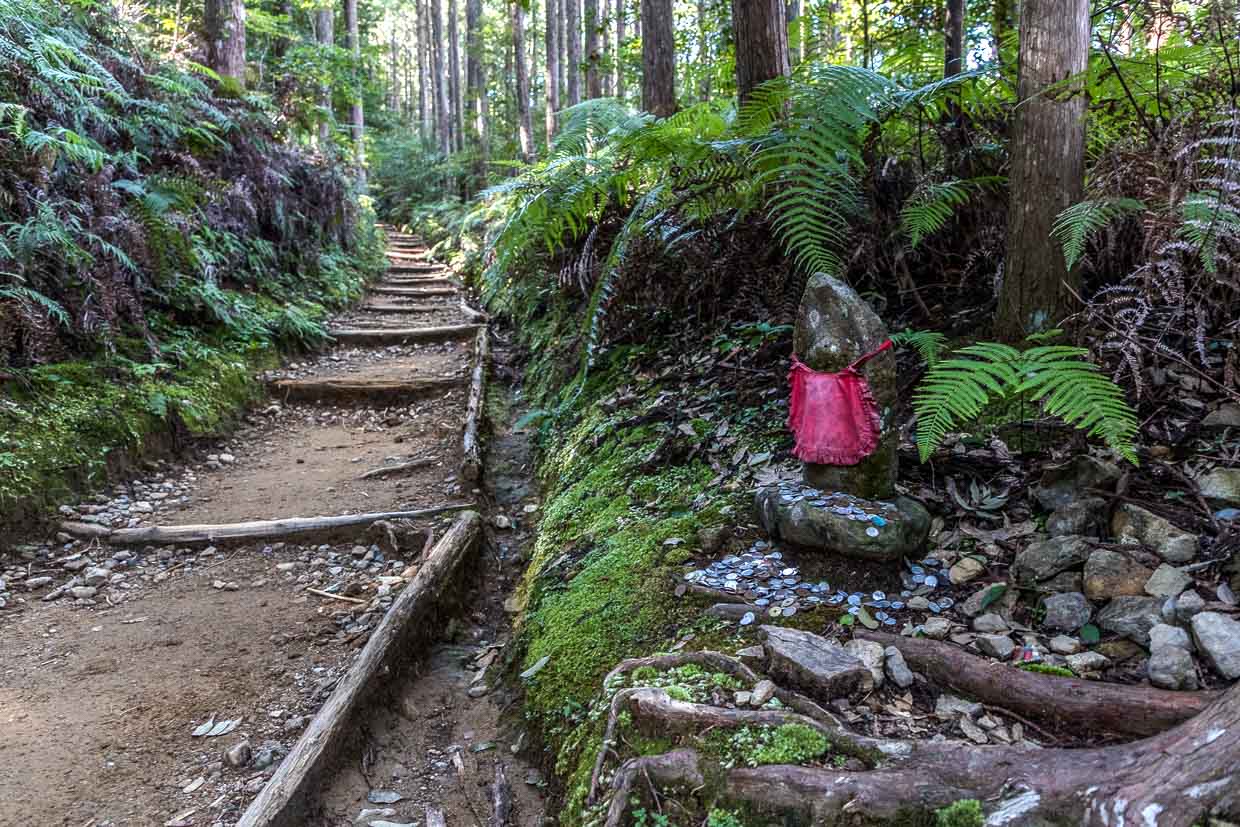
We soon come across traces of pilgrims from centuries past: weathered stone lanterns (tōrō) entwined with moss, small jizō statues with red caps silently watching over travellers and the ruins of tiny oji chapels, once places of rest and prayer. Over 100 used to line the Kumano Kodo. We walk along paths criss-crossed by thick tree roots and smooth stone paths, the ishi-ji. They are polished by the footsteps of countless pilgrims from the Kamakura and Muromachi periods, when up to 300,000 believers travelled here every year. These paths tell of asceticism, faith and nature worship: emperors such as Go-Shirakawa, samurai and farmers sought purification, penance and proximity to the sacred Kumano Sanzan shrines here.
Between traces of pilgrimage and cultural landscape
The further we descend, the more often views open up of villages with half-timbered houses, rice fields and tea plantations that lie like a mosaic in the valleys. Sacred Goshinkō trees, giant cedars, protect the villages and are themselves under protection. Faded stone inscriptions with sutras, pilgrim markers and shrines to Inari, the god of travelling, line the path. In Fushiogami, we discover a small junk stall: rice bowls, chi gong balls, used kimonos – all self-service and on a trust basis. Elsewhere, dried persimmon fruit and kindling are offered on the same principle.
The villages are quiet. Many suffer from an ageing population, which explains the fallow fields. Once a week, a bus runs from Fushiogami to the nearest town – the only connection for shopping and visits to the doctor. Otherwise, the residents rely on the Jizō figures along the pilgrimage route, who often have special tasks, such as helping with toothache or back pain.
Forest bath by the wayside
On a slightly sloping forest path, our guide Kennis suddenly changes direction and climbs up an embankment. After a few metres, we reach the forest beds: three logs with crossbeams at the head. Most hikers walk past them, Kennis tells us. But this place is an insider tip on her route. Even without a spiritual attitude, you can feel the beneficial power of nature here.
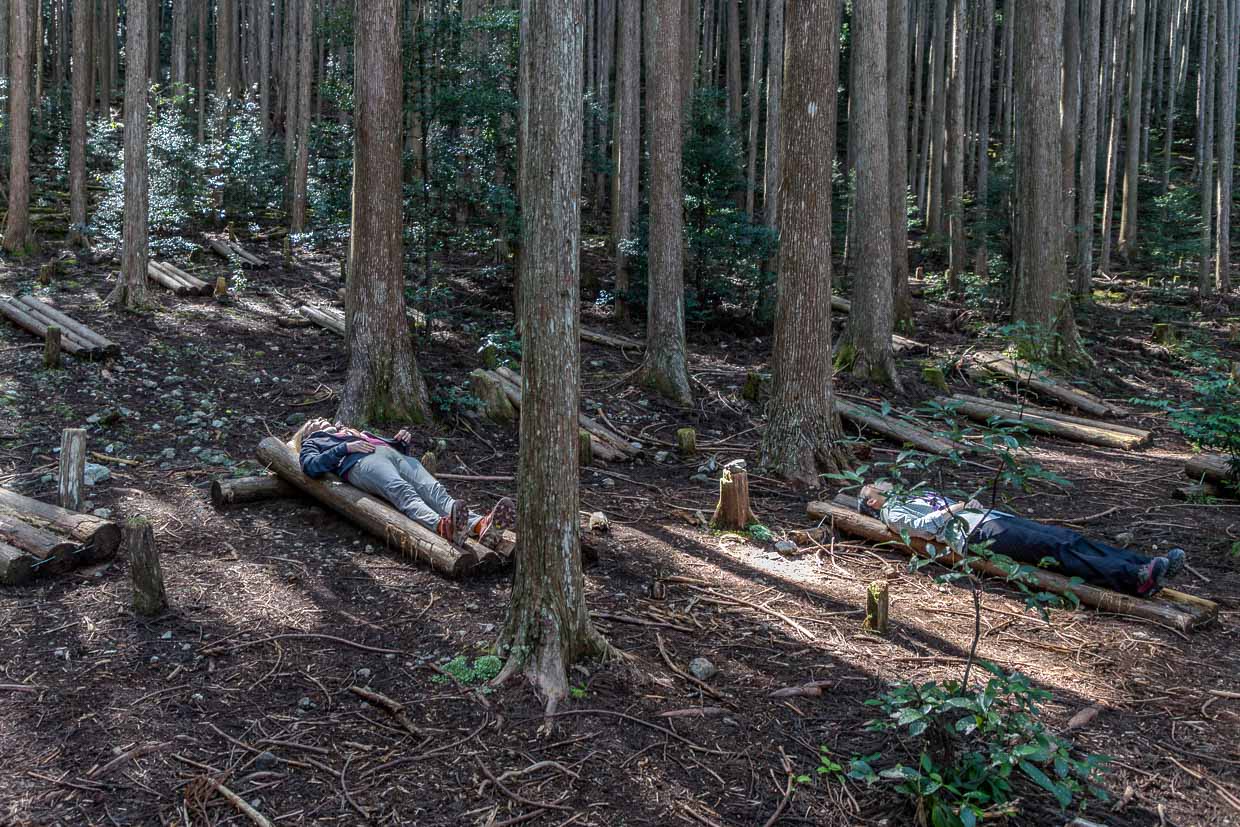
I lie down and gaze into the tops of the cypress trees. They sway in the wind, a bird of prey flies from tree to tree. With my eyes closed, I hear the rustling of the leaves and the cry of a crow. The Kii forests with their mystical atmosphere seem to have been made for shinrin-yoku, forest bathing. Pilgrims have always sought purification, meditation and the transition to the divine here. In the 1980s, as the stress of urbanisation increased in Japan, the Ministry of Agriculture launched an advertising campaign and reminded people of the healing power of nature. Shinrin-Yoku became known worldwide in 2004, the year the Kii forests were listed as a UNESCO World Heritage Site.
For a cup of tea at the Takahara Café
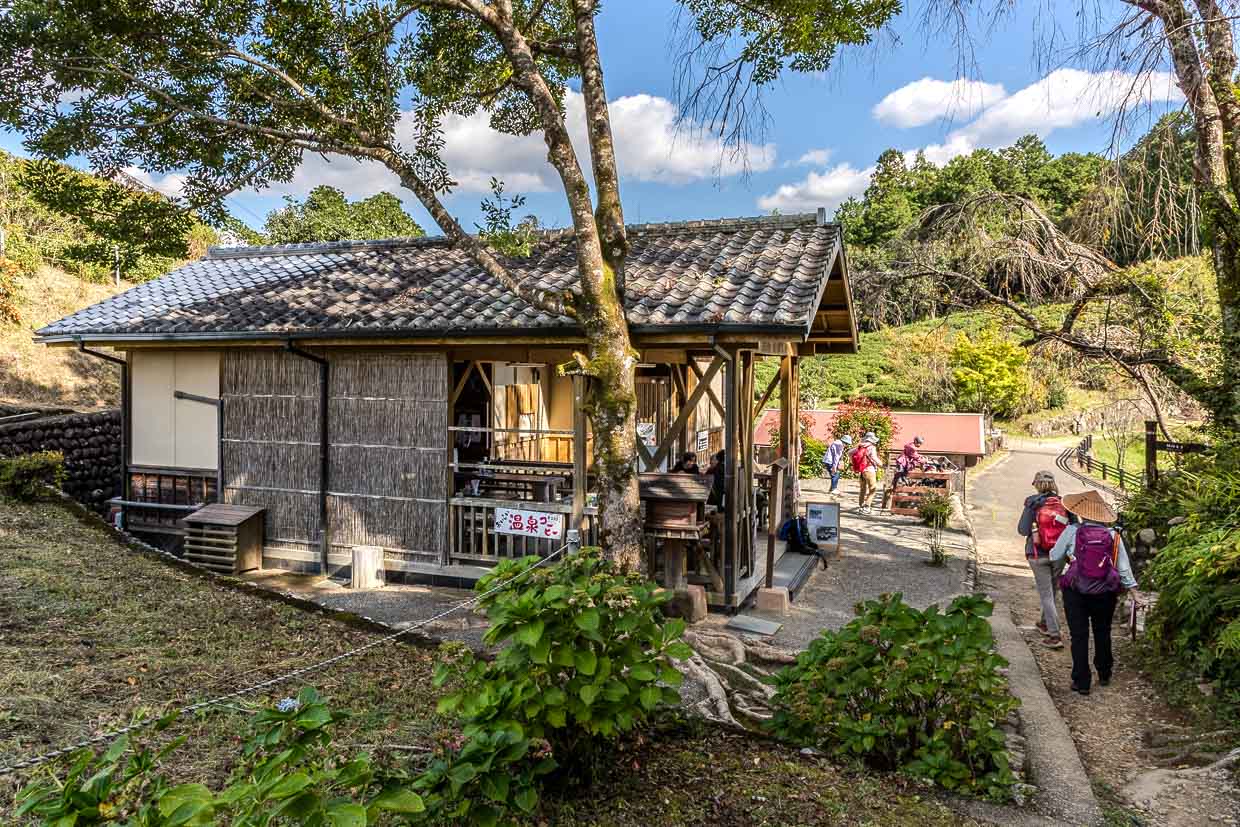
There are only seven kilometres between Hosshinmon-oji and Hongu Taisha, but it takes us more than four hours. Not because the path is so difficult – it leads more downhill than uphill and is easier than many other stretches of the Kumano Kodo. But there is a lot to discover and the pilgrims’ rituals need to be understood. Shortly before the last section of forest, we come across the Takahara Café. Here, the tenants prepare tea and coffee with water from the onsen spring in nearby Yonomine. If you like, you can enjoy the food you have brought with you.
Arrival at Kumano Hongu Taisha Grand Shrine
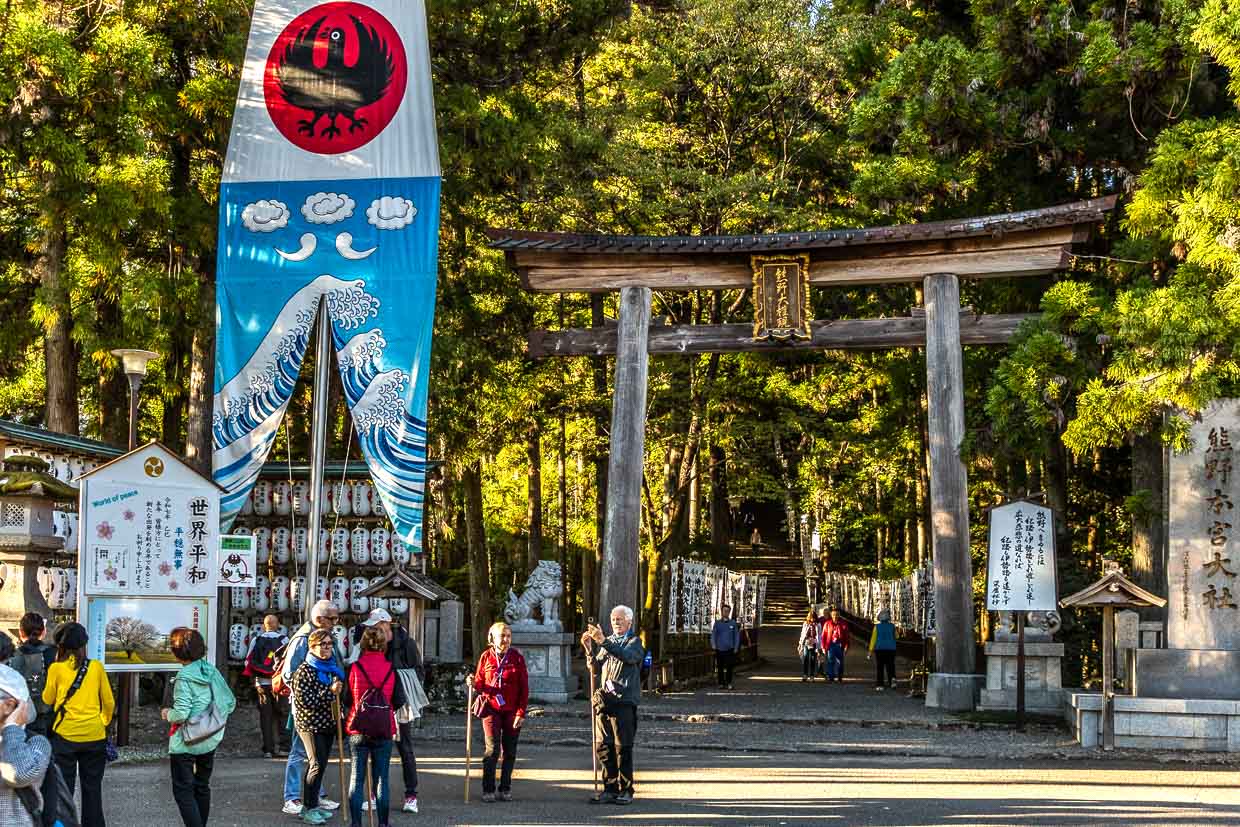
On this route, you approach the centrepiece of the hike, the Kumano Hongu Taisha Grand Shrine, from behind. Four main shrines are at the centre of worship at Kumano Hongu Taisha, the main shrine of the Kumano Sanzan. Pilgrims traditionally visit each of the four shrines, pray and perform rituals such as clapping three times (naisai). Originally, the shrine in Oyunohara was even larger: it had 12 shrines in five complexes before flooding forced its relocation in 1889.
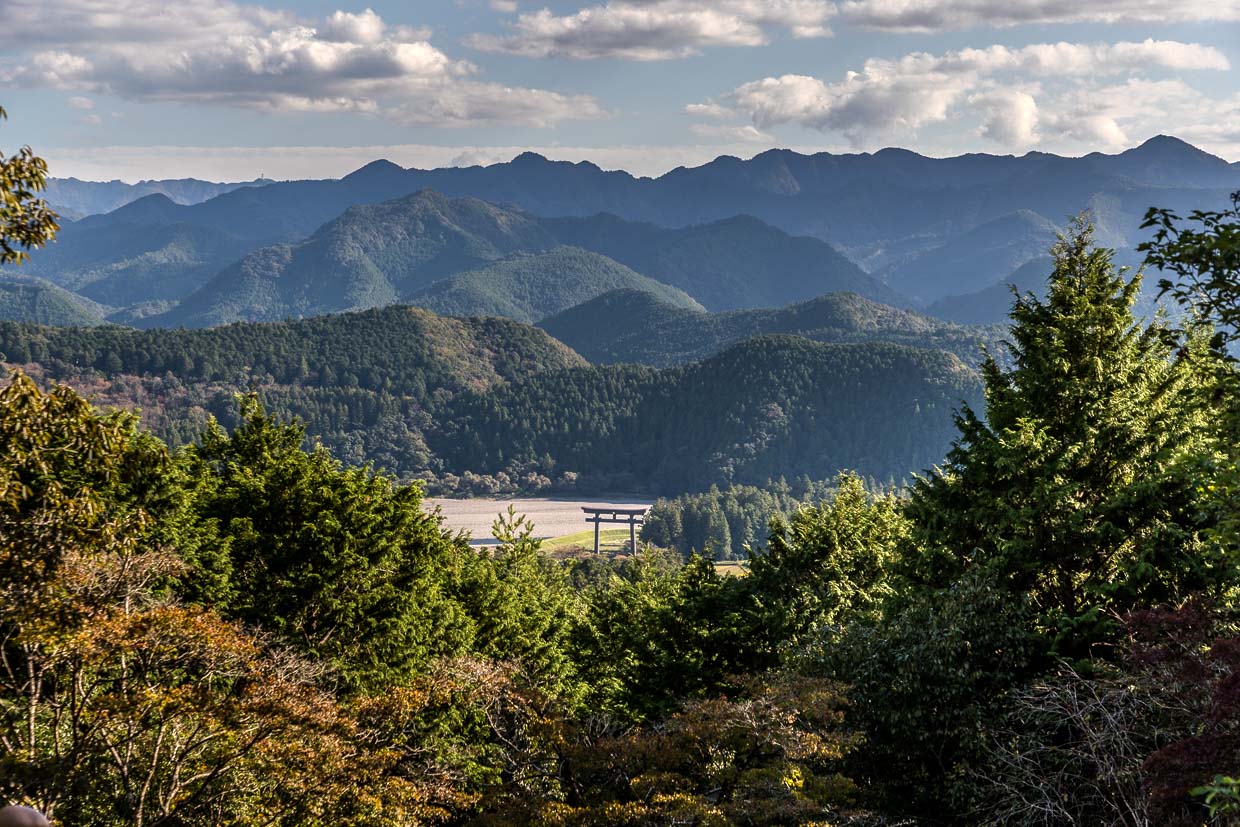
A final, sacred path of 10 to 15 minutes leads us to the great Oyunohara Torii Gate, which we had already spotted from the mountains. This freestanding torii – the largest in Japan at 33 metres – rises up from the white gravel and marks the old location of the shrine. The Hongu Taisha once stood on a sandbank where the Kumanogawa and Otonashi-gawa rivers meet. The flood of 1889 destroyed almost all the buildings. Two years later, the remains were moved to a hill and four of the original 12 lower shrines were rebuilt.
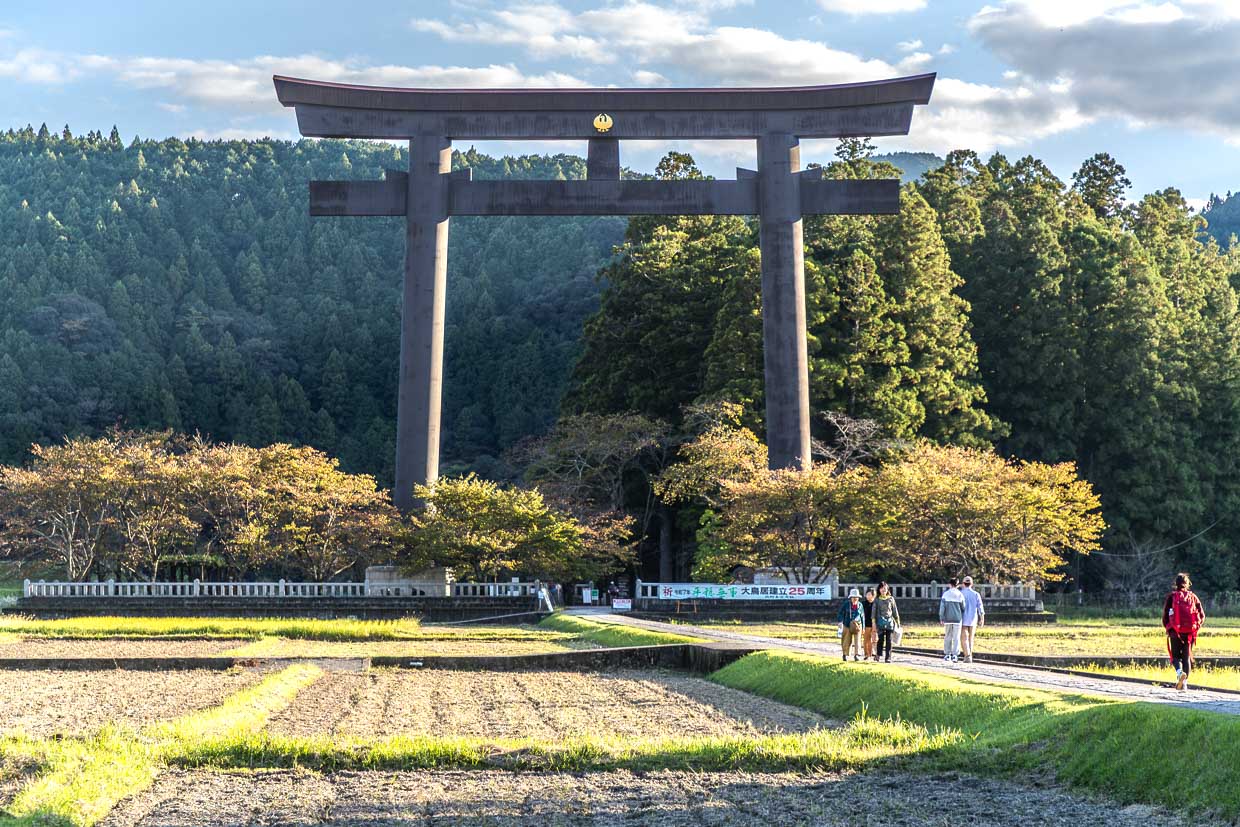
The hike from Hosshinmon-oji to Kumano Hongu Taisha and Oyunohara Torii Gate is considered one of the easier tours of Kumano Kodo and is described on official websites as a half-day hike. Athletic hikers can complete it in two hours of pure walking time. But who wants to hike hard here? There is so much to discover and learn. It took us over four hours, including breaks for photos, forest bathing, drinking tea, rummaging at flea market stalls, looking at the Jizo figures with their red bibs and caps and learning the correct sequence of prayers at the shrine. Because where, if not here, is the path the goal?
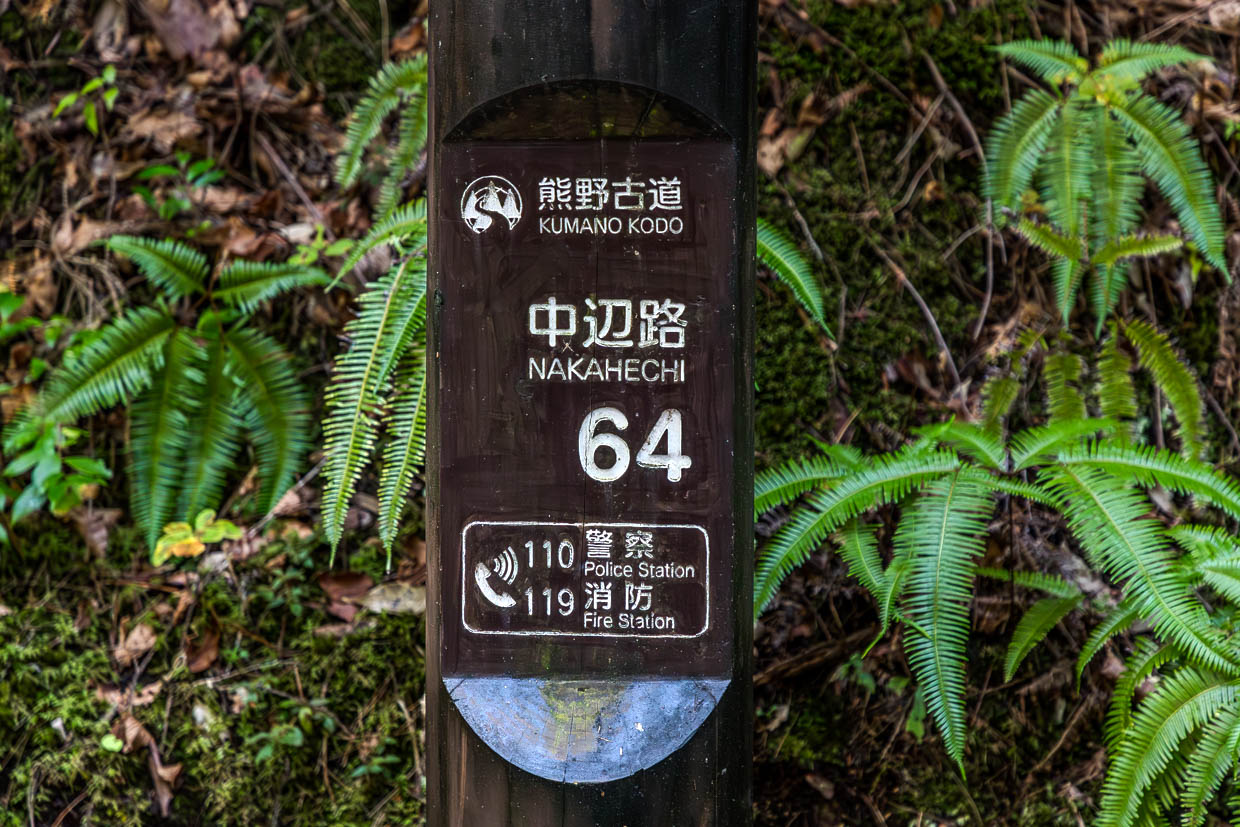
From Oyunohara Torii Gate, buses return to Tanabe or Yunomine Onsen, one of the oldest hot springs in Japan. It has been located in the Kii Mountains of Wakayama, near the Kumano Hongu Taisha, for around 1800 years. It was used by pilgrims over 1,000 years ago as a purification centre before visiting the shrine. Today, travellers tend to look forward to an onsen bath after their hike. In the centre of Yunomine, there is a yuzutsu cooking basin where you can cook vegetables or raw eggs to make onsen tamago – convenient for locals. Pilgrims travelling through, on the other hand, look forward to an onsen bath in one of the ryokans or hotels and a classic kaiseki meal in the evening.
On our tour of the town, we meet the tenants of the Takahara café again. The back of their pick-up truck is full of canisters of freshly bottled onsen water. It’s October, high season. Tomorrow, too, many hikers will be stopping for a cup of tea.
The research trip was supported by Visit Wakayama