
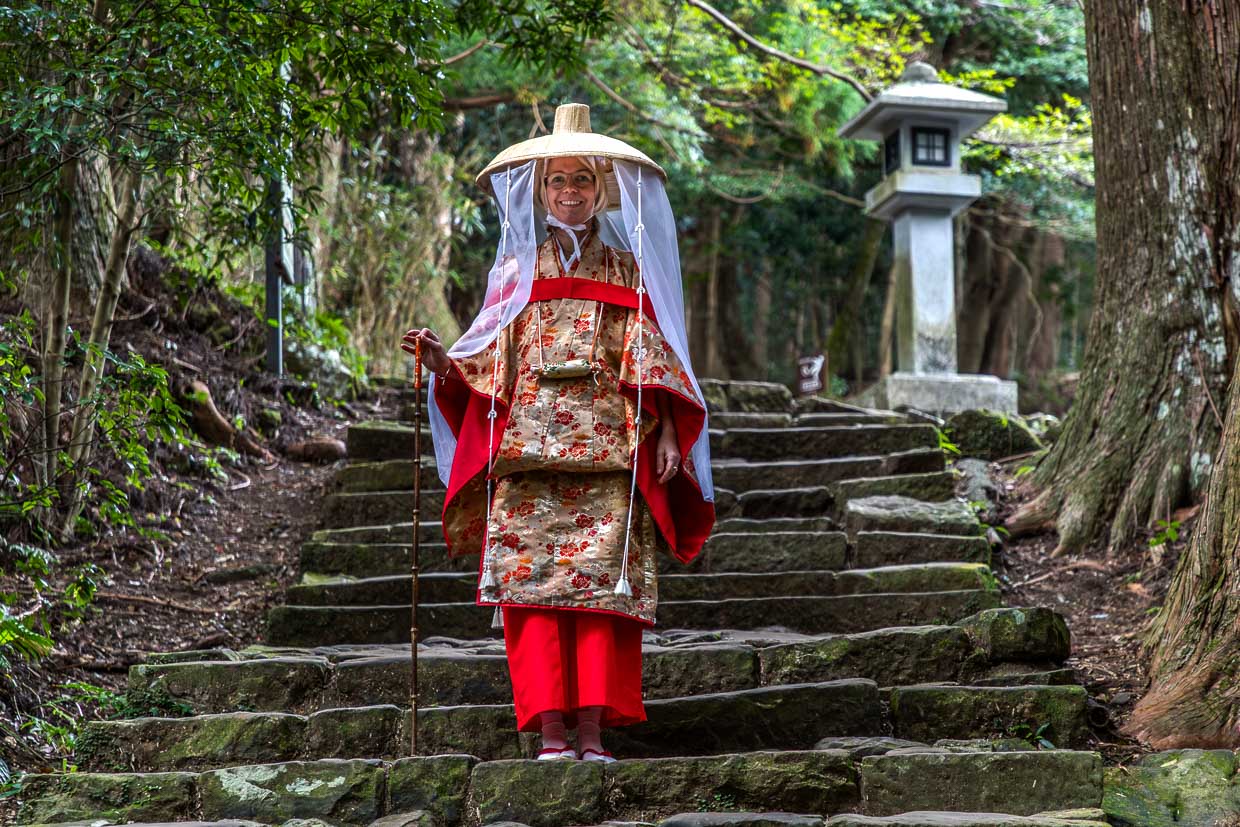
Historical hiking on Japan’s most famous pilgrimage trail – that’s possible on the Kumano Kodo Daimon-zaka with a kimono experience. Such offers are familiar from Kyoto, the old imperial city. But while tourists there, with or without kimono, crowd through the narrow streets of the old town, I was able to climb the stone steps towards Kumano Nachi Taisha almost undisturbed in a pilgrim’s robe from the Heian period (794-1185) on Kumano Kodo.
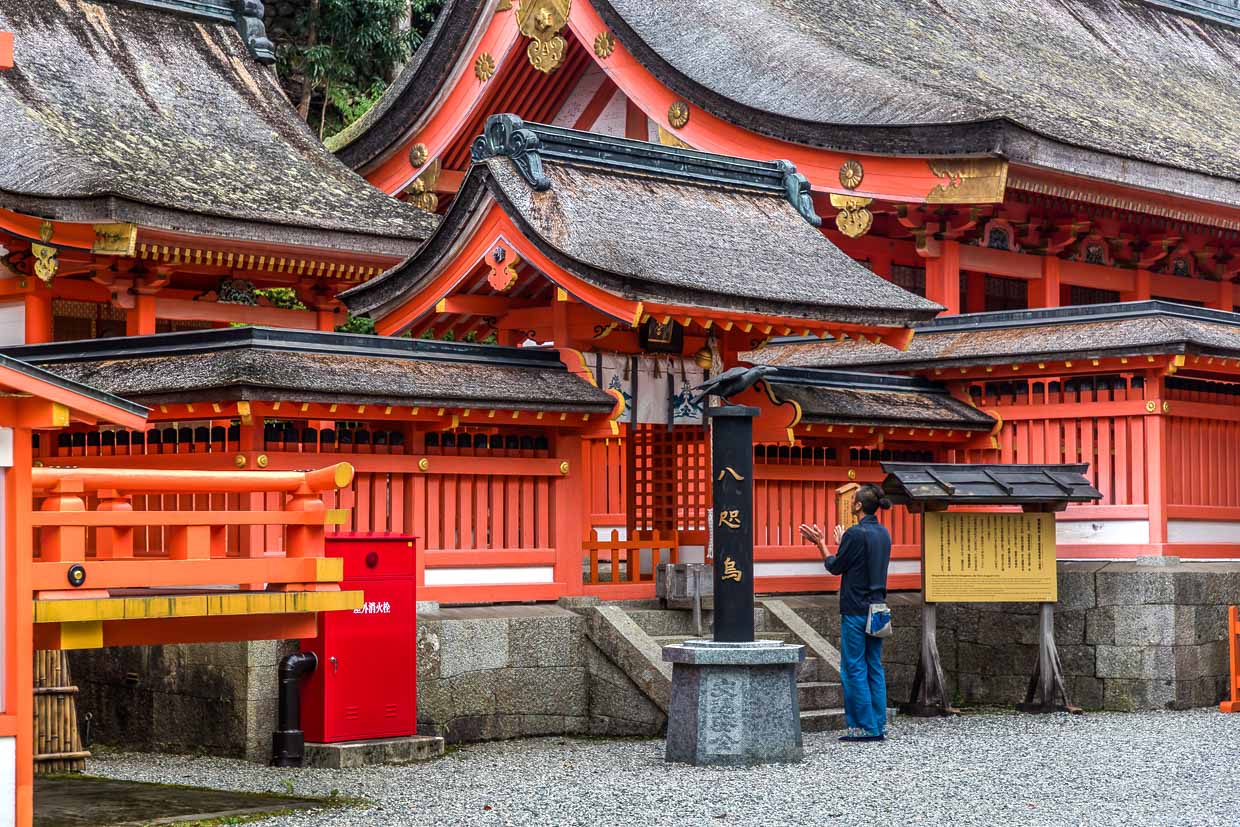
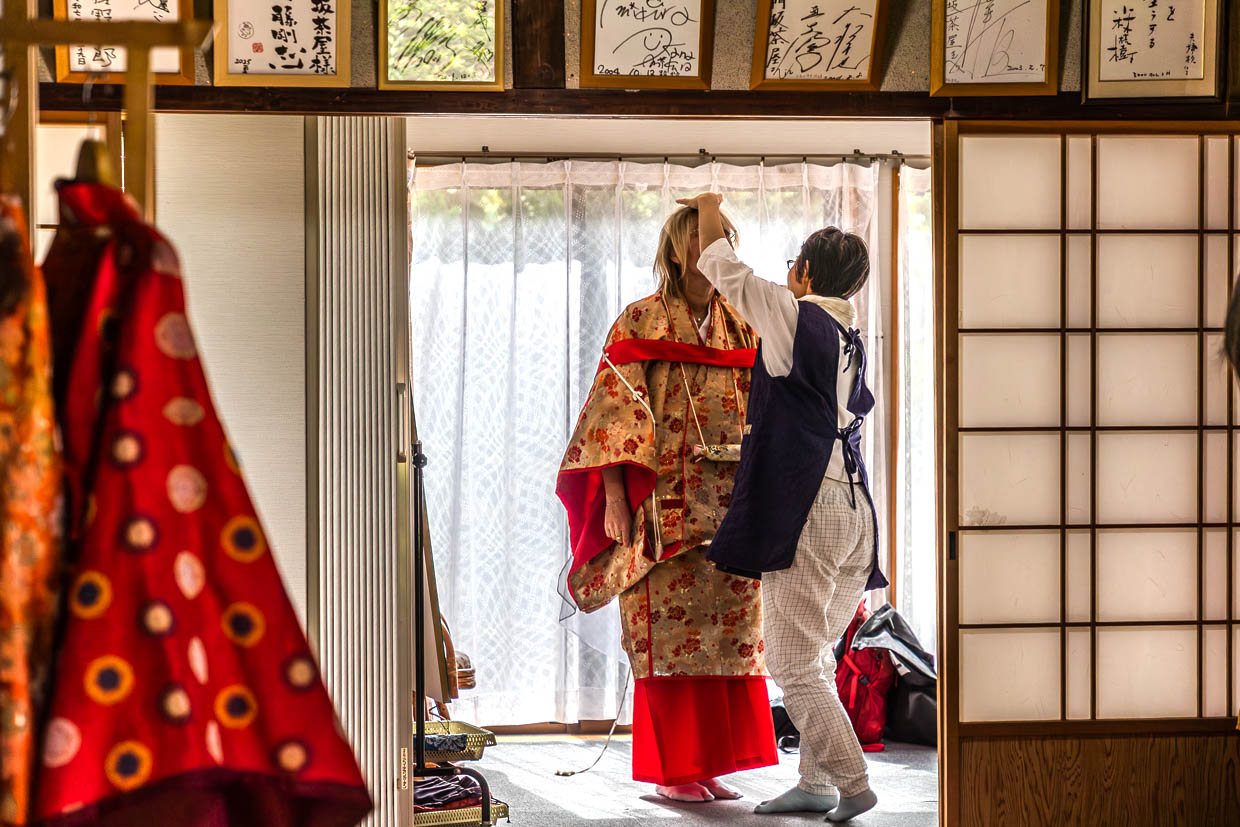
Here, kimono rental is neither silly tourist fun nor disrespectful cultural appropriation. It offers the chance to relive the hardships of earlier pilgrimages. The robes, which can be rented in small houses at the entrance to Nachi Taisha, resemble the robes once worn by noblemen on pilgrimage. My comfortable outdoor clothing – from hiking boots to a fluffy fleece jacket – was left behind in the dressing room. Only my own underwear is allowed to stay. The staff help with the transformation: layer after layer is wrapped and fastened. The white undergarment is uniform, but the magnificent outer garment is chosen from a variety of patterns and colours.
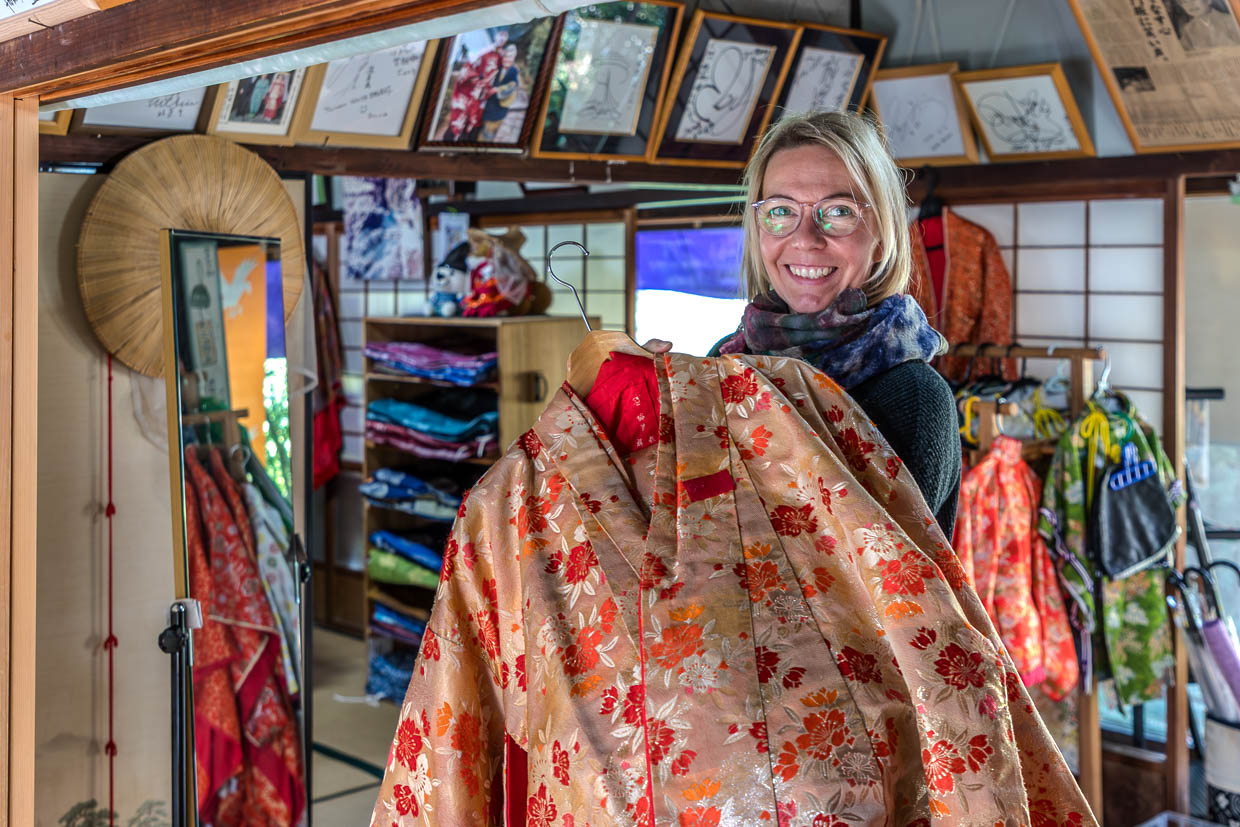
While I was changing, I thought about the kimono wearers, cosplayers and black lolitas that enliven Japan’s big cities. I admire the naturalness with which people in Japan celebrate fashion and wear traditional clothing. For example, the yukata, a light cotton bathrobe that men and women wear not only on the way to the hotel’s own onsen, but also at breakfast and dinner in the hotel restaurant. So put on your kimono, tabi socks and geta sandals – and head out onto the stony pilgrimage path.
On old paths: Daimon-zaka
The Daimonzaka-chaya, where the Heian kimonos are rented, is ideally located. Once you have made it down the steps from the house onto the pilgrimage path in your kimono outfit, it is only 500 metres to the first perfect photo spot. Despite the cultural experience, the transformation into a pilgrim of the Heian era should also be captured in photos. But these 500 metres dragged on: I only made progress at a snail’s pace. In the tabi socks with the extra compartment for the big toe and the slippery sandals, I could barely find my footing. The many layers of fabric restricted my steps and the veil obscured my vision.
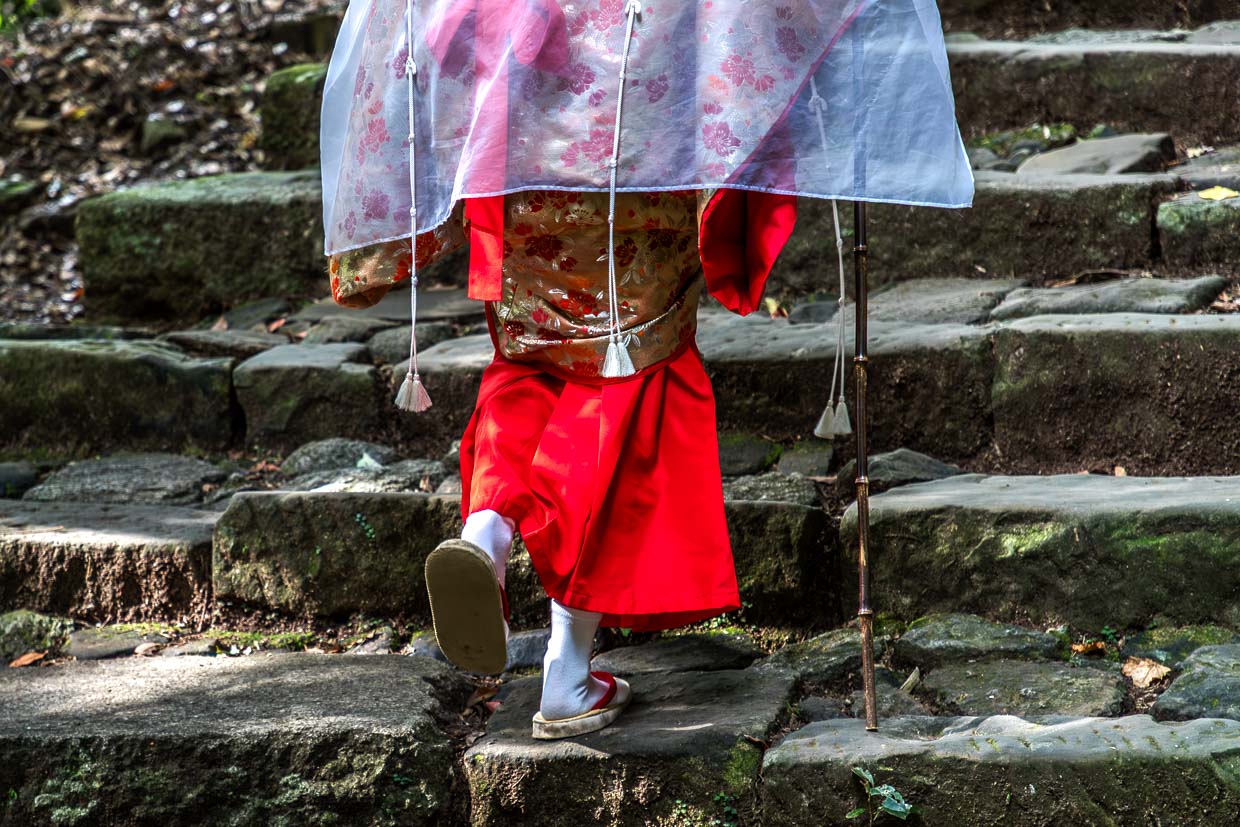
At first, I didn’t notice much of the majestic cedar tree avenue. I gathered up the kimono fabric with both hands to master the next stone step without stumbling. My eyes remained fixed on the ground. A kake-mamori, a protective amulet designed to protect women on pilgrimages from danger, dangled in front of my stomach. After just a few metres, I realised that pilgrimages over 1,000 years ago were a hardship. My goal was just to find the nearest stone lantern for a good photo. The pilgrims of that time covered up to 20 kilometres a day. But the length of a day’s journey also depended on what they were wearing. Noble ladies of the court in heavy robes managed far fewer kilometres, but had porters and horses to support them. I didn’t want it to get that far. After a few steps, my steps became more confident.
Clothes make kilometres
In the Heian period, ordinary people wore simple, functional garments made of hemp or coarse cotton, usually in earthy colours or white, which symbolised purity. Instead of many layers, one or two layers of kimono-like clothing sufficed, often combined with trousers or wrap-around skirts. Straw hats and simple straw sandals, known as wajari, completed the outfit. A straw cloak protected them from the rain, and pilgrims could walk 15 to 20 kilometres a day in this loose and light clothing in the very hilly and densely forested Kumano region.
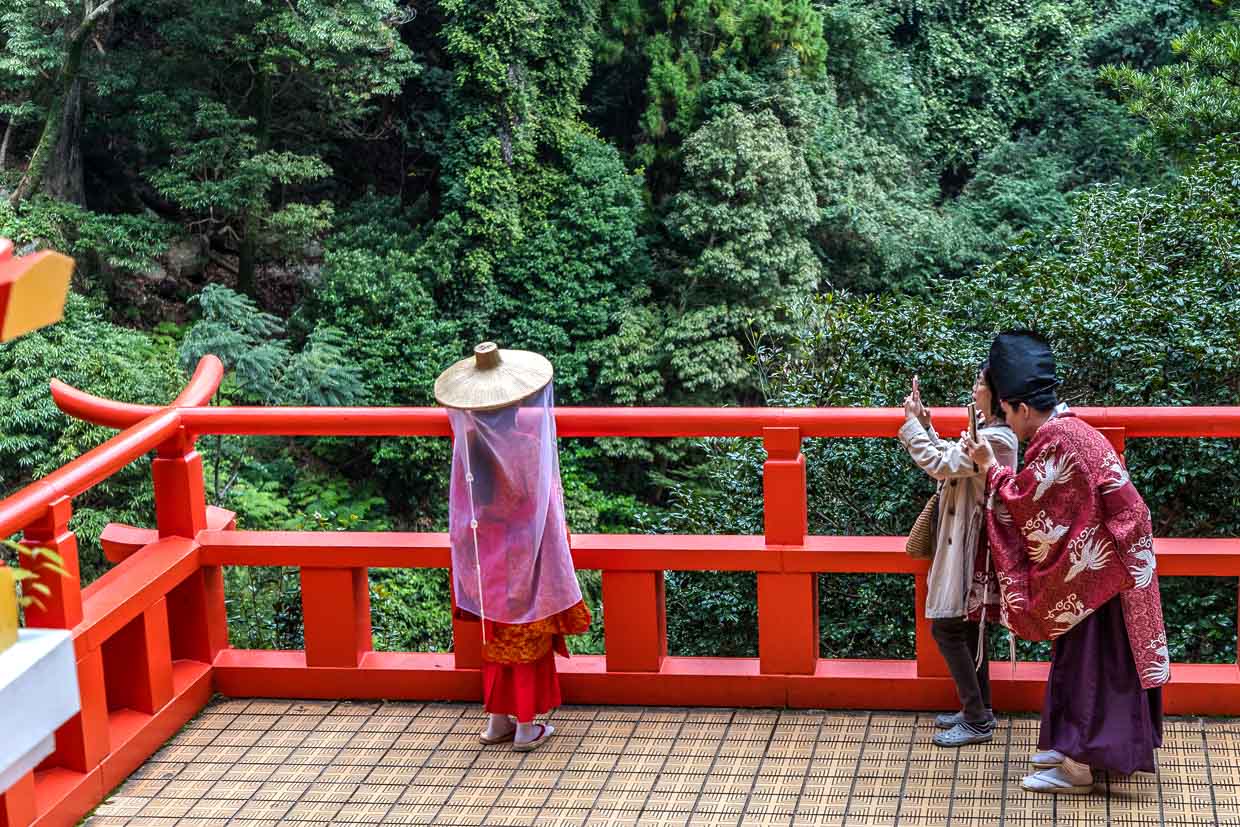
Noblewomen and wealthy pilgrims travelled in elaborately layered robes such as the jūnihitoe, which consisted of several layers of silk worn on top of each other. These were finely colour-coordinated and could weigh up to 20 kilos. Noble men wore formal robes such as kariginu or other court attire, complemented by embroidered belts and headdresses. The historical Heian pilgrim costume, which can be rented today at Daimon-zaka, is based on this courtly travelling attire – not the clothing of the common people.
Kimono catwalk
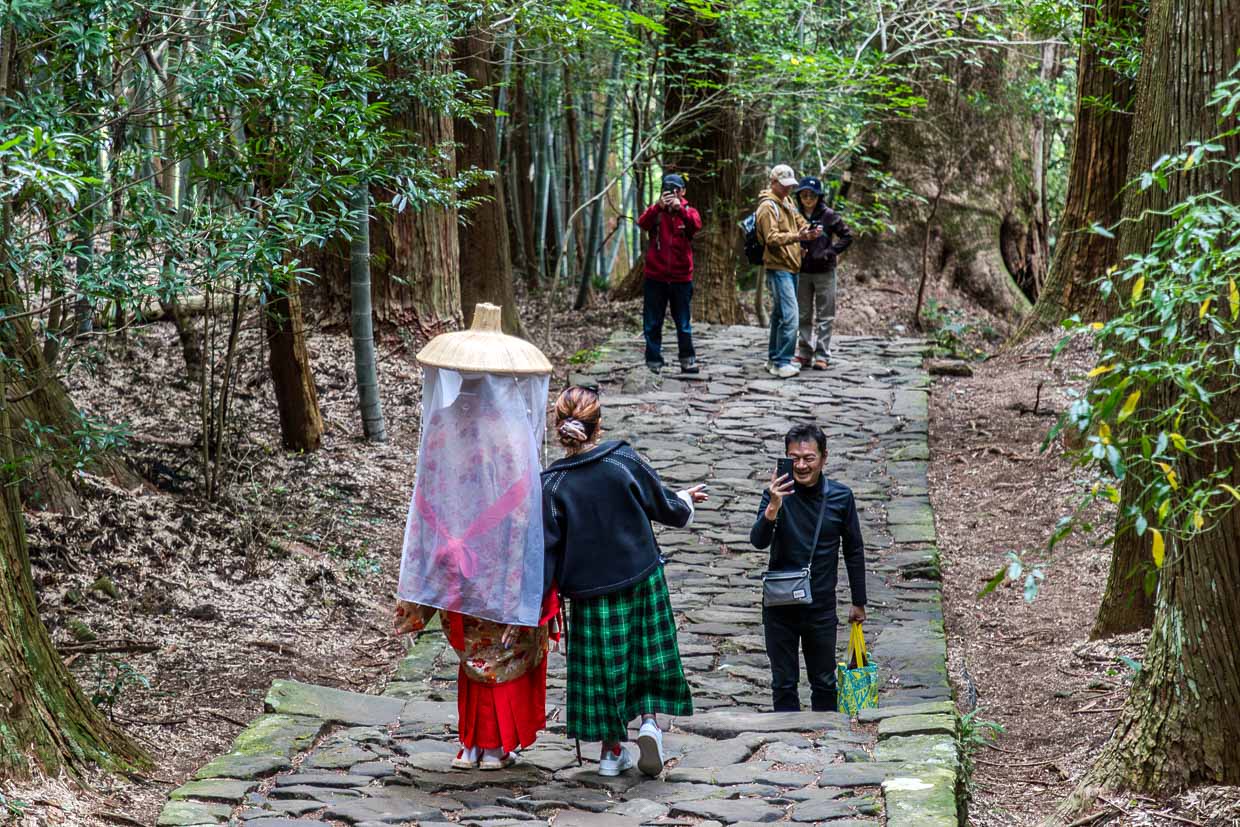
On the way back to the costume shop, the peace and quiet was over. Undressed tourists came towards me and I became a popular photo subject. Some hid behind the thick trunks of the cedar trees and thought they could take a secret photo of me. Others rushed up to me and asked for a selfie with the blonde kimono woman. By now, I had a better handle on my many accessories and was amused by this brief moment of fame.
Between elegance and hardship
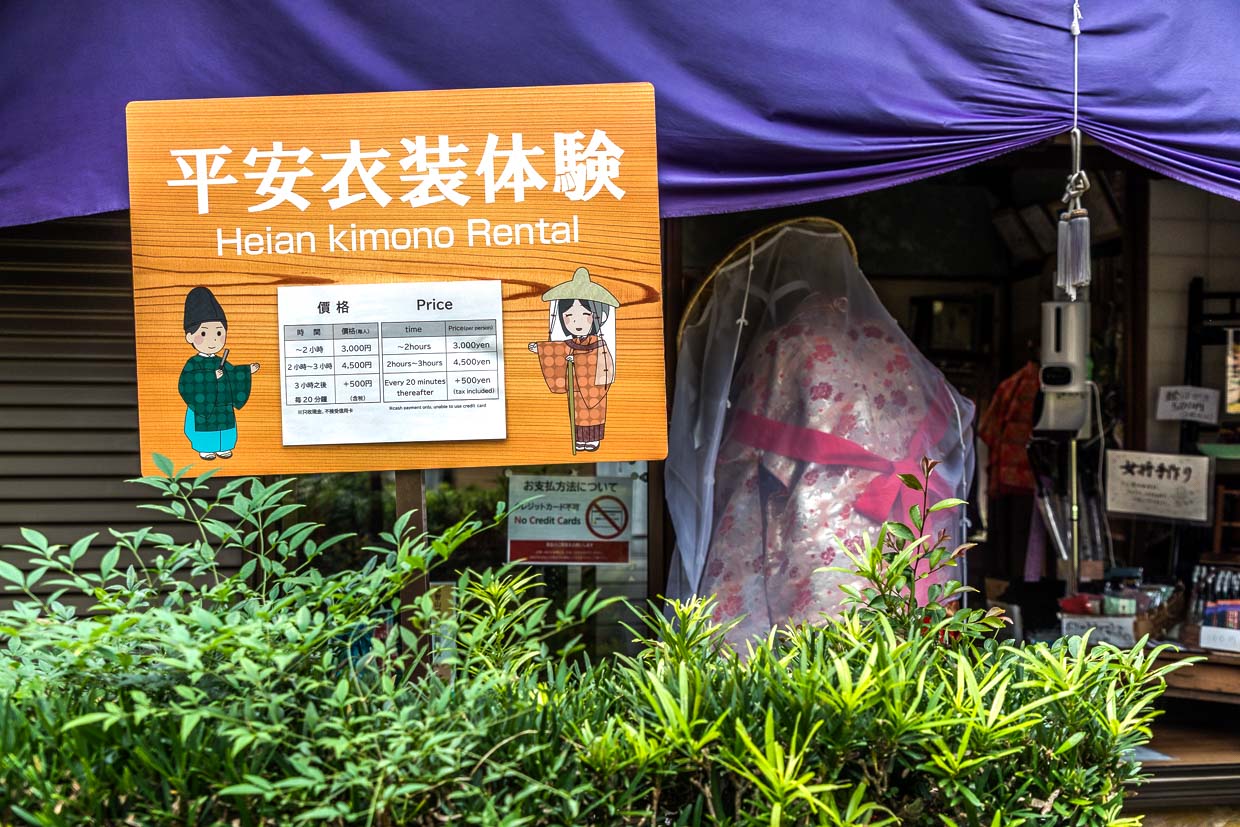
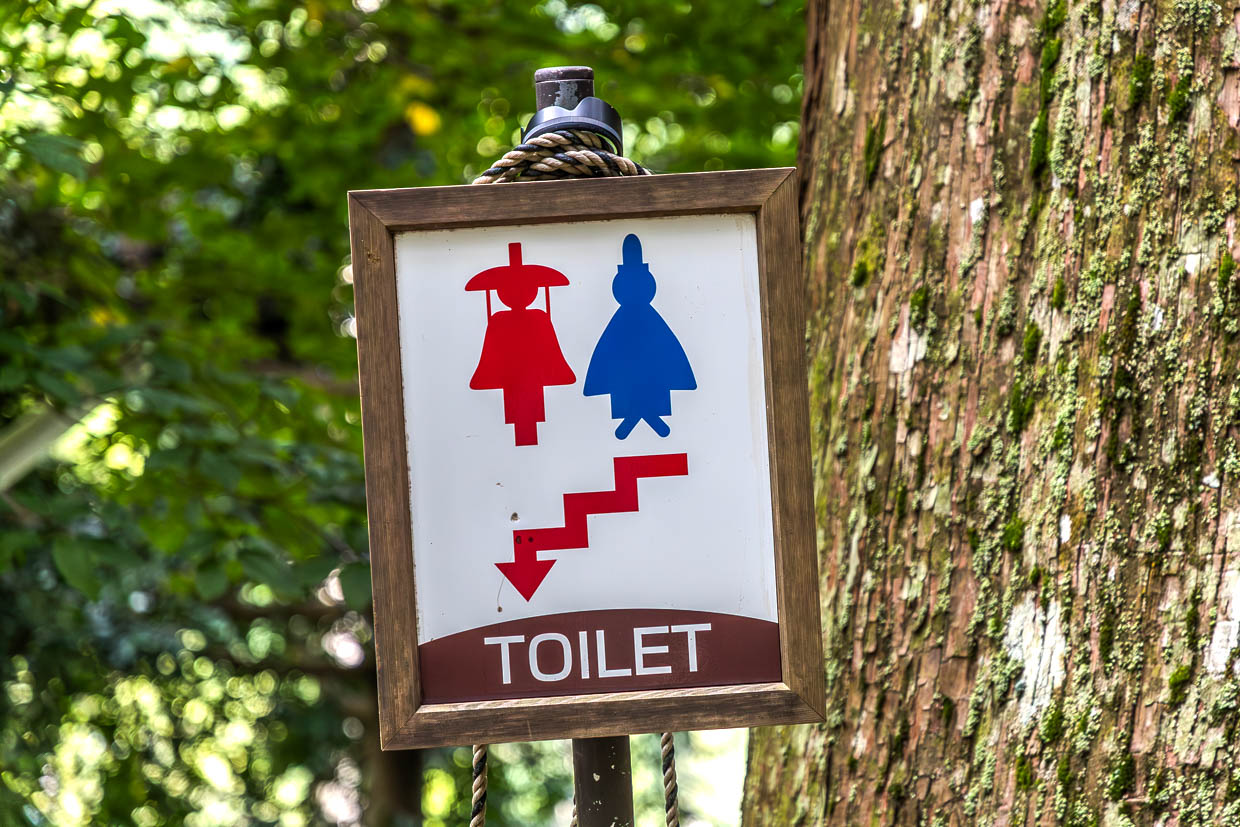
The kimono experience on the Kumano Kodo is very popular with tourists. Prices start at 3,000 yen per person. That’s just under 20 euros for a basic two-hour rental. It is significantly more expensive with a guide or photo package. A guide explains the significance of the pilgrimage and the peaceful coexistence of Shintoism and Buddhism. Instagram motifs are combined with cultural depth. After many steps, the Shinto Kumano Nachi Taisha Shrine and the neighbouring Buddhist Seiganto-ji Temple await the tourists – just like the pilgrims once did. Something that didn’t exist 1,000 years ago: well-maintained toilets for kimono wearers.
The research trip was supported by Visit Wakayama