Duisburg is real – this is the slogan of Duisburg Kontor, the city’s marketing organisation. Its goal is ambitious: Duisburg wants to be among the world’s top cities by 2030. Not just in the Ruhr region, not just in NRW – right at the top. “Duisburg – good luck”, one might wish. But anyone strolling through Duisburg today quickly realises that there is more going on here than just a smartly lit industrial backdrop. Hardly any other city in the Ruhr region has pursued structural change as consistently as Duisburg has since the 1990s.
Steel expedition
Where blast furnaces once glowed, urban trails are now being created through the city. Visitors meet artists, architects, designers and makers. The next steps are planned: in 2027, Duisburg will be part of the International Garden Exhibition Ruhr Area – with the RheinPark, a former industrial wasteland on the Rhine. But the centrepiece of the transformation remains the Duisburg-Nord Landscape Park. Over a million people visit the area in Meiderich every year.
Monte Schlacko, blast furnace fleas and Hollywood
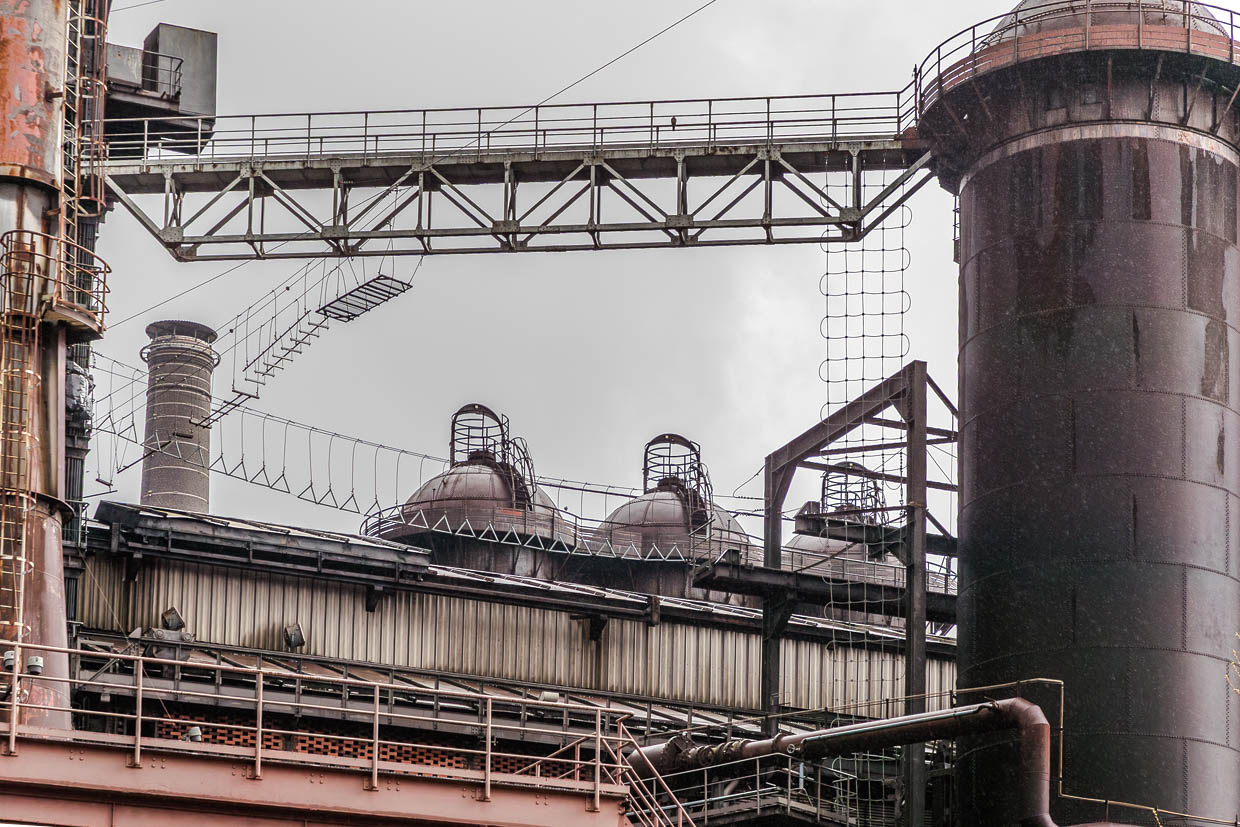
The Duisburg-Nord Landscape Park is a prime example of structural change. Here, the path from iron ore to steel becomes an adventure route. Visitors climb in the high ropes course between towers and ore bunkers, dive through car wrecks in the former gasometer or stroll through the extensive grounds. The majority of the area consists of green spaces and vegetation. These include spontaneously grown meadows, fallow land with pioneer plants and renaturalised zones. The endangered natterjack toad spawns in the puddles of an old ore bunker, while youngsters climb steep concrete walls in the neighbouring bunker. Only 15 of the 180 hectares are paved. In between, relics such as blast furnaces and railway tracks rise up as steel accents. The park is freely accessible around the clock
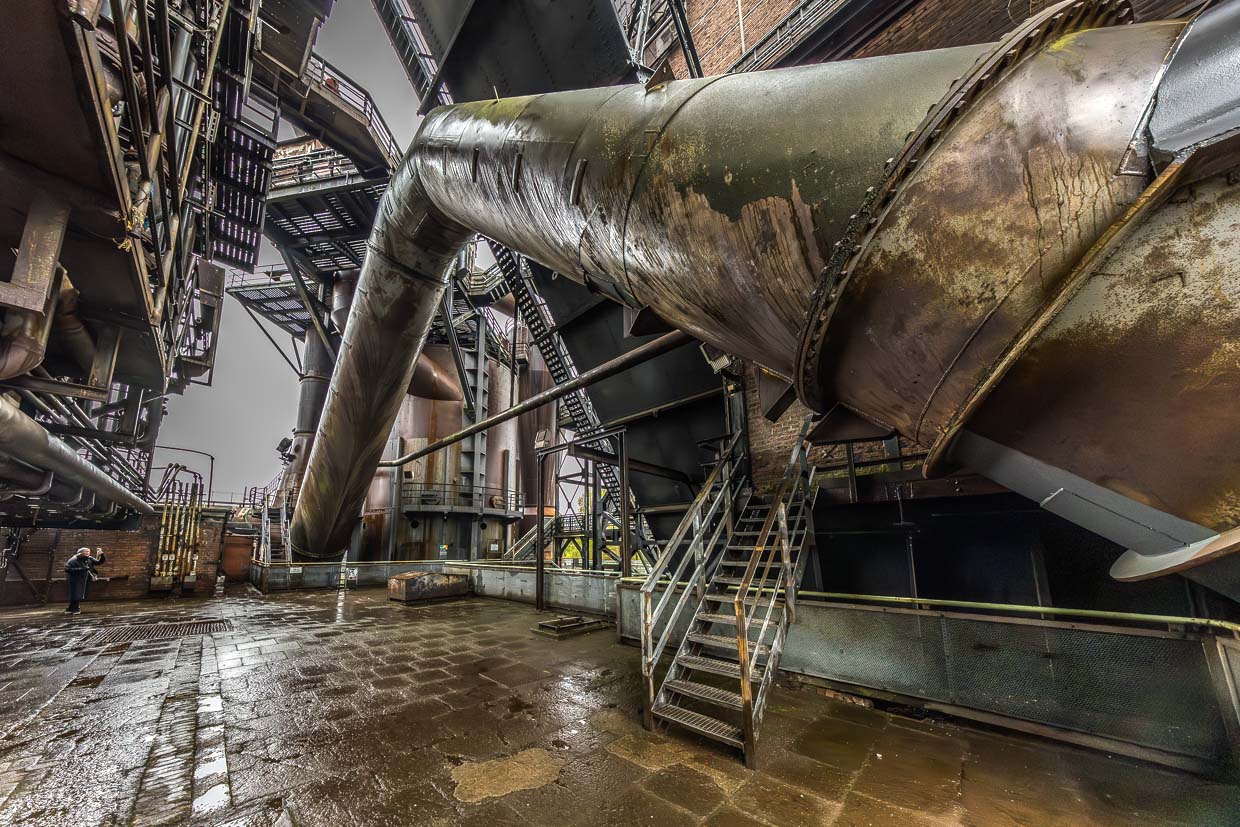
Manuela Sass, tour guide, is undeterred by the heavy rain. She talks enthusiastically about the attractions of the park, which has been a stage, adventure playground and place of remembrance at the same time since it opened in 1994. Film crews love it – from Manta, the film to the Hollywood prequel to The Hunger Games. Guided tours of Blast Furnace 5 are a reminder of the hard labour of the steel workers. Sass stands at the fox that separated pig iron from slag and describes how workers stood at the blast furnace for twelve hours – their work protection consisted of wooden shoes and a felt hat to protect them from the blast furnace fleas, the sparks. Blast furnace 5, the most modern in the Thyssen steelworks, produced special pig iron at up to 2,000 degrees from 1973. It was shut down in 1985 – after just twelve years, a victim of the steel crisis.
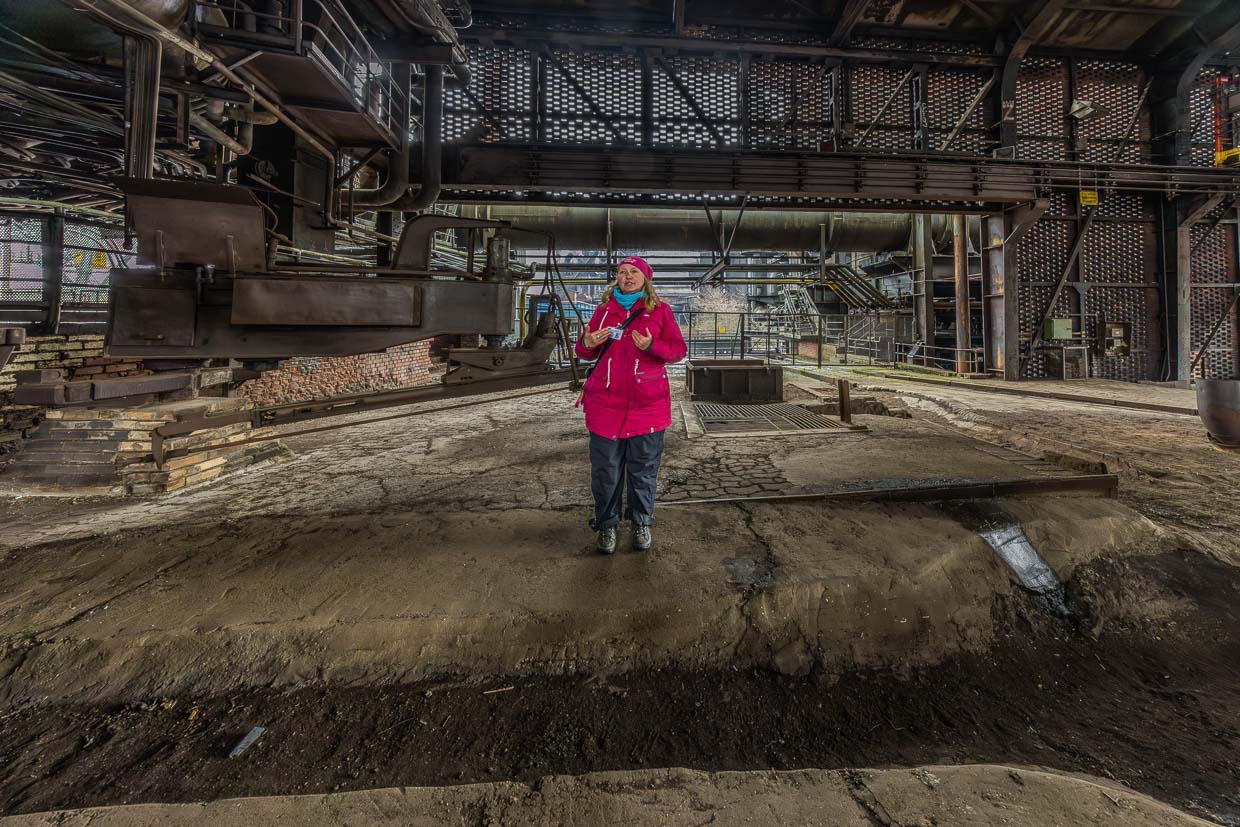
Miners at work
Duisburg was the mining town of the Ruhr region. It is also the world’s largest inland harbour, home to the Duisburg-Nord Landscape Park and the second-largest attraction in the Ruhr region after the Zollverein Coal Mine Industrial Complex. “We didn’t have a chance – but we took it,” says Kai A. Homann from Duisburg Kontor with a laugh. In fact, the grey backdrop of smoking chimneys is long gone. The Landscape Park and the inner harbour stand for successful structural change. Other neighbourhoods will follow. Duisburg has learnt to deal with the legacy of heavy industry – it wasn’t always like this.
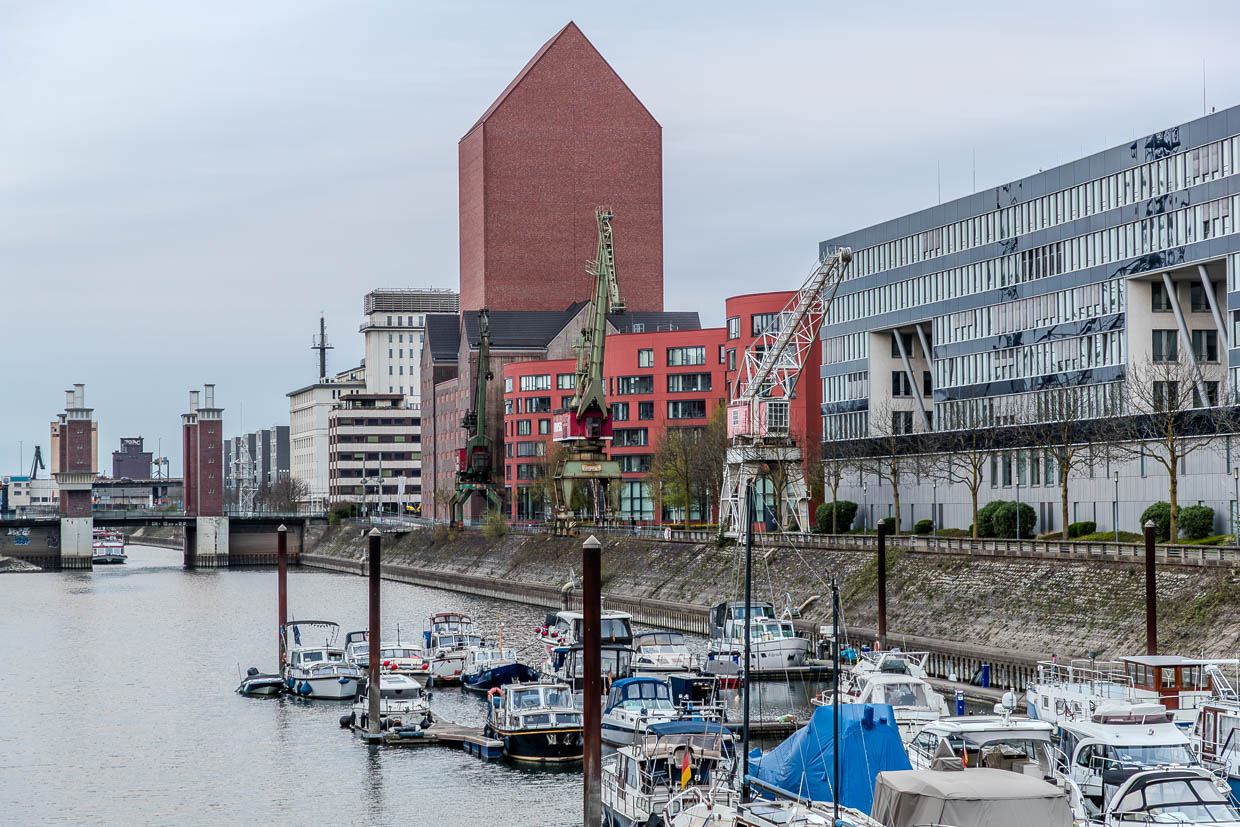
Merkator and the old town wall
Another chapter shows that Duisburg dares to do new things and lose old ones: Where Gerhard Mercator’s house once stood is now a teachers’ car park. Bad decisions are part of a city’s history. But Mercator, who made Duisburg the centre of cartography in the 16th century, is honoured in many places: the Mercatorhalle bears his name, as does an island in the inner harbour. Markus Lüpertz’s monumental head, The Echo of Poseidon, watches over the harbour from Mercator Island to ensure that nothing goes wrong here.
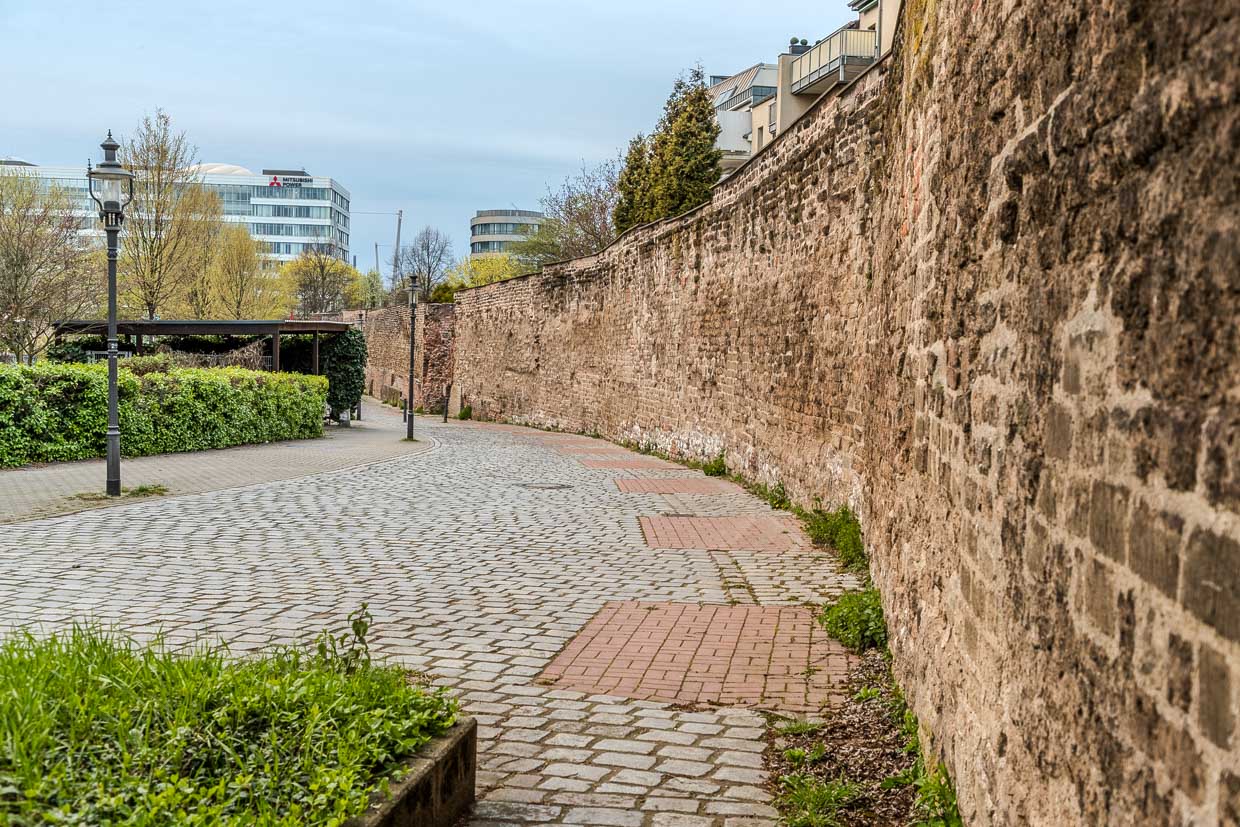
An astonishing number of metres of the old city wall have been preserved. It has protected the old town since the 12th century, was extended until the 14th century and included towers, moats and gates. While other cities used their walls as quarries, Duisburg’s wall was left standing out of convenience, city guide Frank Switala surmises. Today, it is one of the oldest preserved city walls in Germany. It is being skilfully integrated into new projects: the Holzhafen quarter, another piece of the puzzle in Norman Foster‘s masterplan, will be built in 2026. Housing, restaurants and leisure on the waterfront – embedded in the historical backdrop.
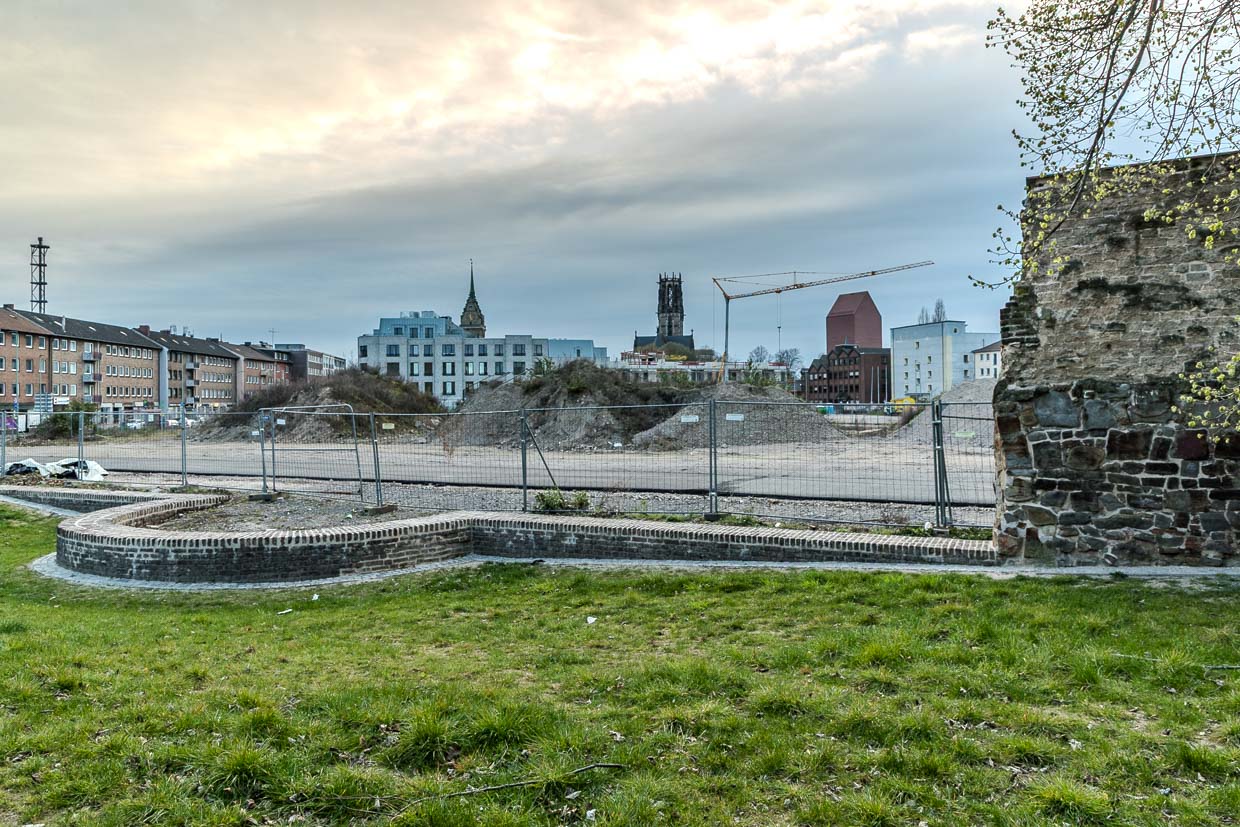
Structural change at its finest
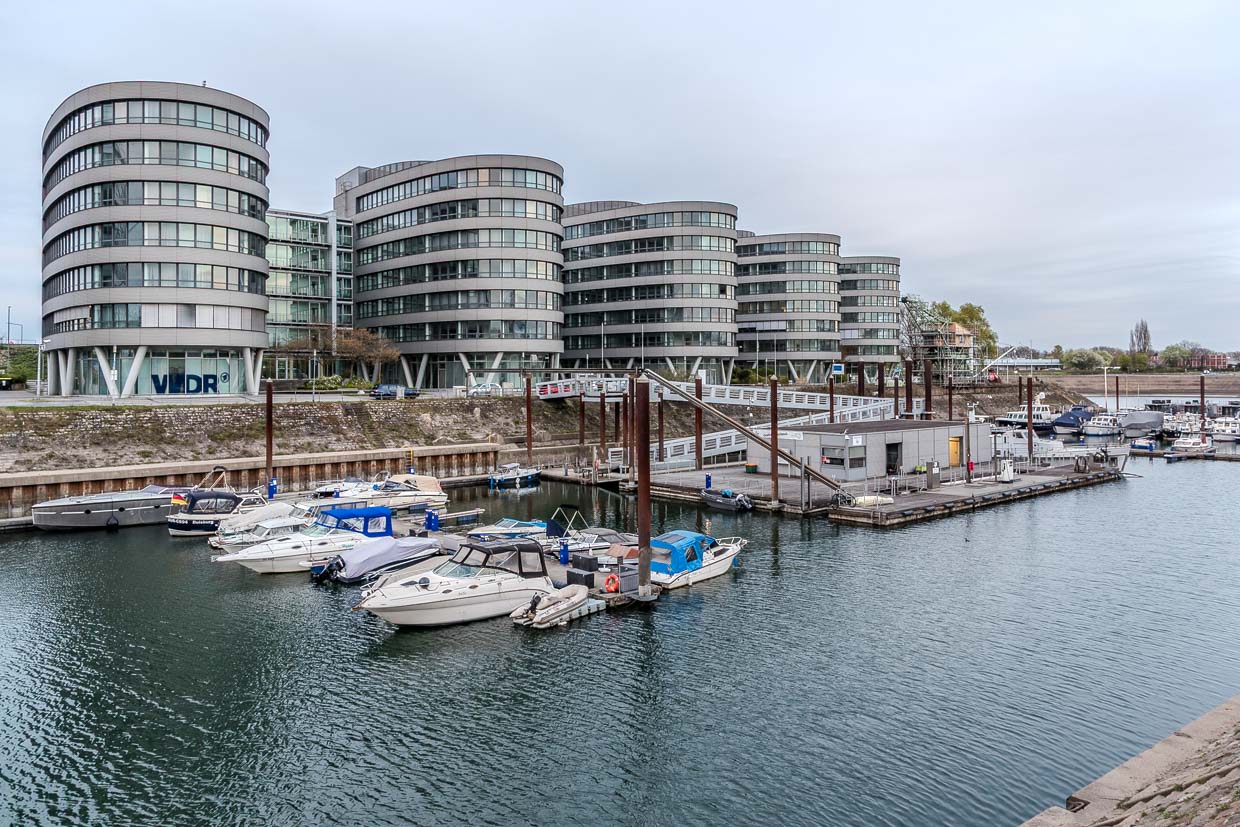
Duisburg shows how to reinvent itself at the inner harbour. This is where the North Rhine-Westphalia State Archive is located, an imposing windowless brick building that was opened in 2014. The state’s memory is stored on 148,000 metres of shelving. Duisburg was awarded the contract rather unexpectedly – against competition from cities such as Cologne and Düsseldorf. The signature of Sir Norman Foster can be found throughout the entire inner harbour. Architect Nicholas Grimshaw set elegant accents with the Five Boats and architects Herzog & de Meuron transformed the old Küppersmühle into a museum with works by Gerhard Richter, Anselm Kiefer and Georg Baselitz.
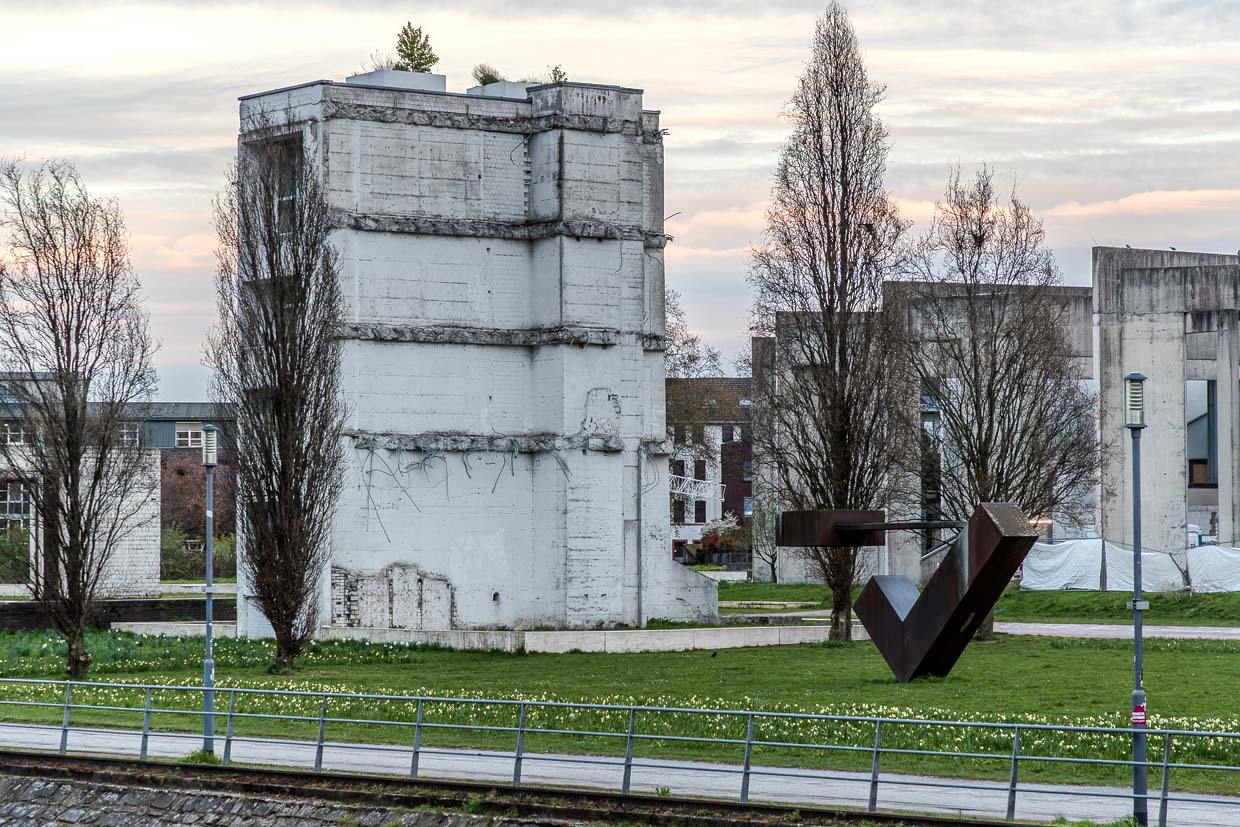
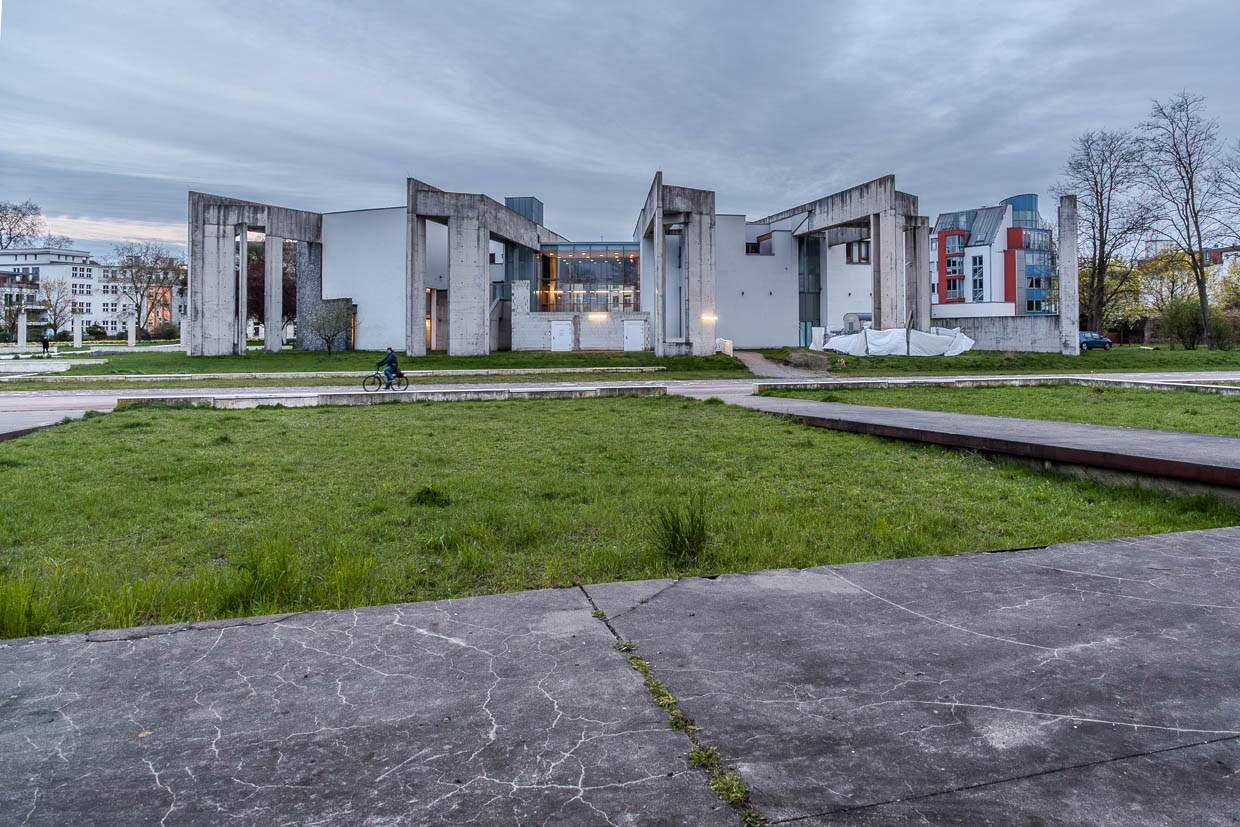
Not far away is the Garden of Remembrance, designed by Israeli artist Dani Karavan. Industrial fragments, concrete skeletons and symbols of faith merge into a poetic landscape. He has left the remains of former warehouses and post-war architecture standing, transformed into observation towers, stages and landscape elements with mountain pines – a symbol of industrial history and remembrance. The New Synagogue, designed by Zvi Hecker, looks like an open book. It serves the Jewish community of Duisburg-Mülheim-Oberhausen with over 2,800 members.
Duisburg originals: Schimmi, Olga, Gerda
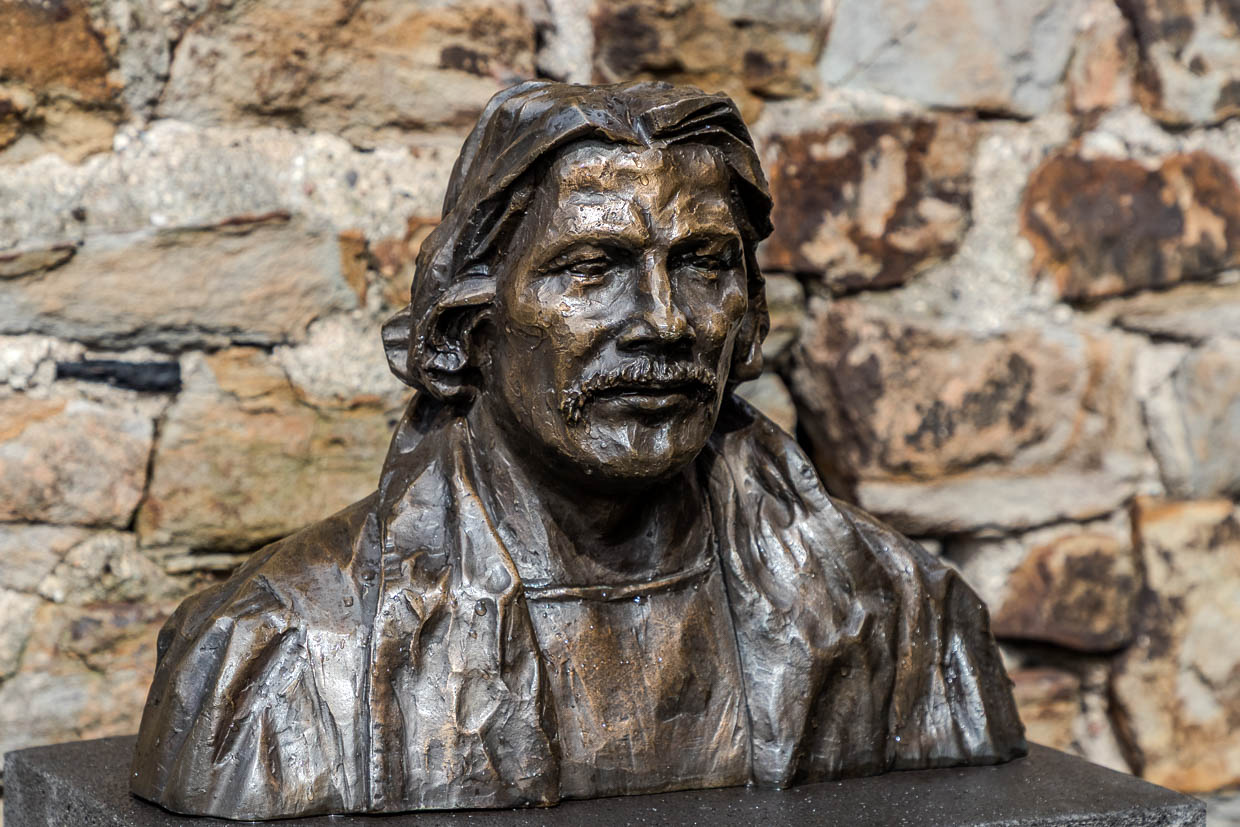
You can meet him again in the Duisburg-Ruhrort district: Horst Schimanski, the legendary TV detective who epitomised Duisburg’s rough soul. In Horst-Schimanski-Gasse, Hübi’s serves currywurst with cult status, and the Schimanski memorial has long been part of the city’s history. The fans of the swearing investigator did not let up. To this day, the temporary street sign Schimmi-Gasse hangs next to a König-PIlsener lantern.
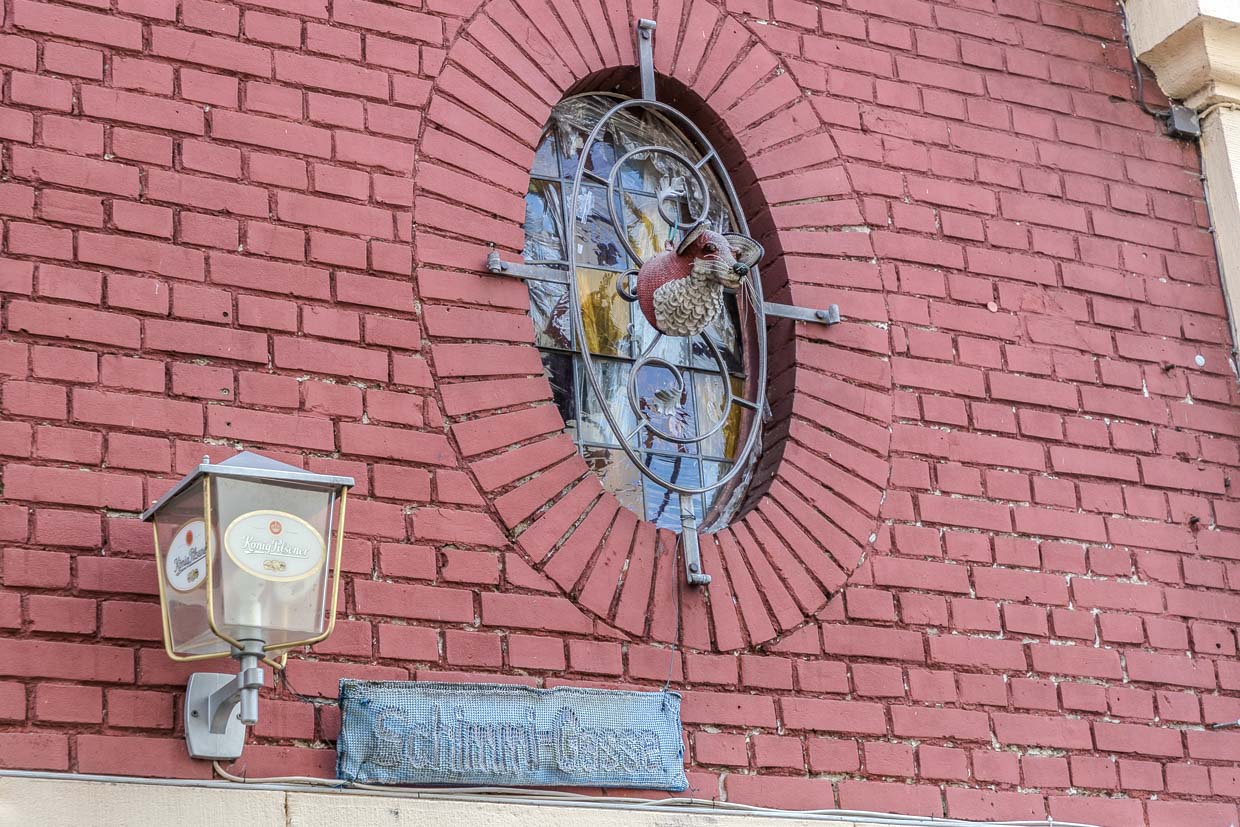
Before Horst-Schimanski-Gasse received an official street sign in 2014, there was a long-standing dispute between fans and the city council. A fox’s head hangs from a window in Schimmi-Gasse and looks mischievously at the goings-on below. Since 2022, it has also been looking at a memorial bust for the fictional television character.
Pub cult around Gerda and Olga
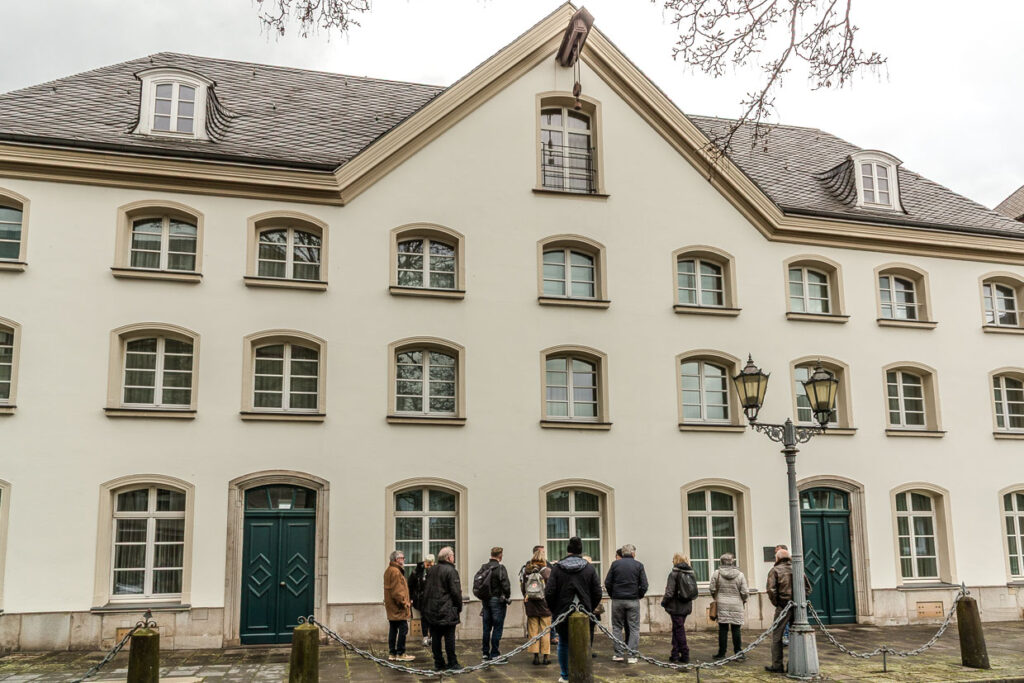
Ruhrort is like a burning glass of the world, says tour guide Frank Switala: unemployed people live here alongside millionaires, Catholics alongside Protestants, workers alongside industrialists. Haniel still has its headquarters here today. The family holding company has been managing its business from Ruhrort since 1756. Haniel is a founding member of the Ruhrort-Plus initiative, which aims to make the district climate-neutral by 2029.
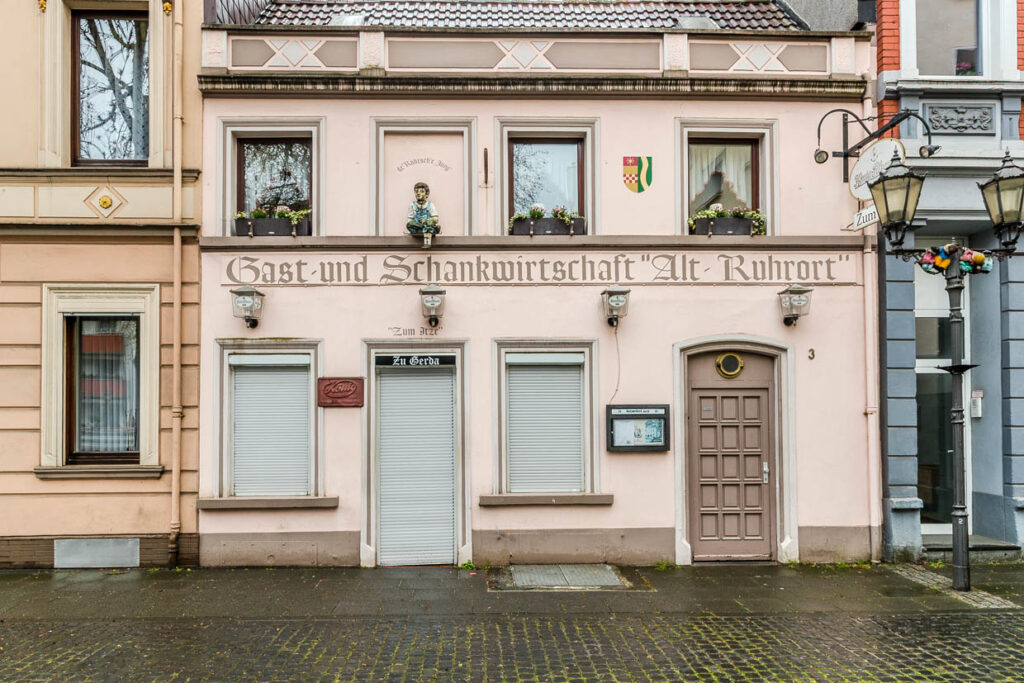
Ruhrort was once the St Pauli of the Ruhr area. In 1959, there were 125 pubs here on an area the size of nine football pitches. Today there are only five. One of them, Alt-Ruhrort, served as a Schimanski filming location. Gerda Verbeck ran the Schifferkneipe pub for 33 years. It is still a meeting place for locals today – even though Gerda stopped working behind the bar a few years ago for reasons of age. The look of the pub with its skipper accessories, wooden panelling and meatball display case is still there. Aunt Olga’s establishment, once a meeting place for sailors, musicians and dancers, is now history. The shop was a pub, club and red-light establishment all in one. Even the young Udo Lindenberg was drawn to Tante Olga. Olga, a woman with a heart, helped those in need and was buried in 1986 by the people of the Ruhr like a state funeral. Today, her former pub is an inconspicuous residential building.
All right – with currywurst!
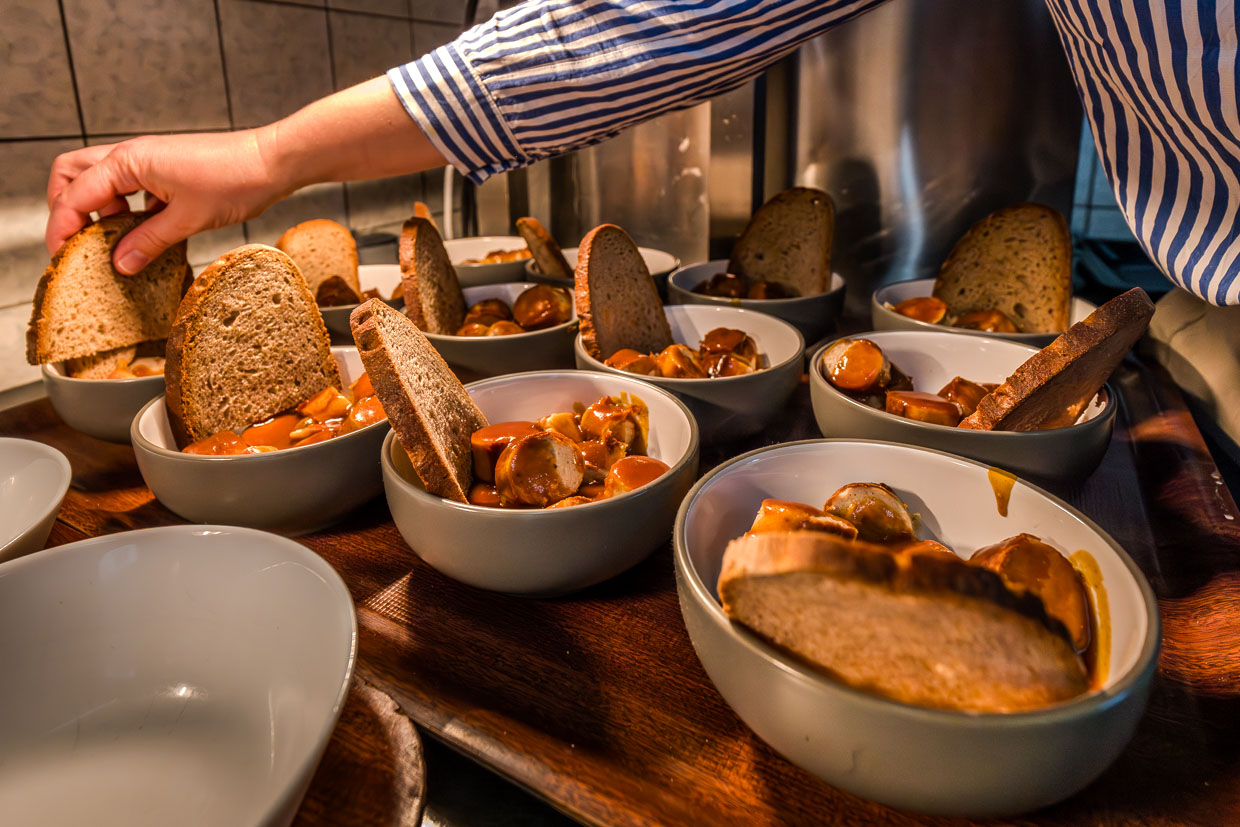
“Come back from your shift – there’s nothing better than currywurst!” Herbert Grönemeyer’s hymn to the currywurst lives on in Duisburg. Whether at Hübi in Ruhrort or at Peter Pomm in Marxloh: here the sausage comes from the butcher, the sauce is homemade. Peter Pomm even claims to have invented the currywurst in 1938. A visit to Duisburg without a currywurst? Possible, but not desirable.
Duisburg, really varied
Duisburg has more bridges than Venice, the second largest mosque in Germany and Europe’s wedding hotspot with 52 bridal fashion shops in one street. Water, steel, art, currywurst – the city loves its contradictions. And it has learnt to turn industrial wasteland into stories. Real stories. Stories worth discovering.
The research was supported by Duisburg Kontor