
The woman in the black lace dress sits upright, her expression serious. The portrait on the huge gable wall in the working-class neighbourhood of Bairro das Alagoas in Peso da Régua fills the entire surface. It was painted by street artist António Conceição: Antónia Adelaide Ferreira, known as ‘Ferreirinha’, lived from 1811 to 1896 and is still regarded today as an icon of the Douro.
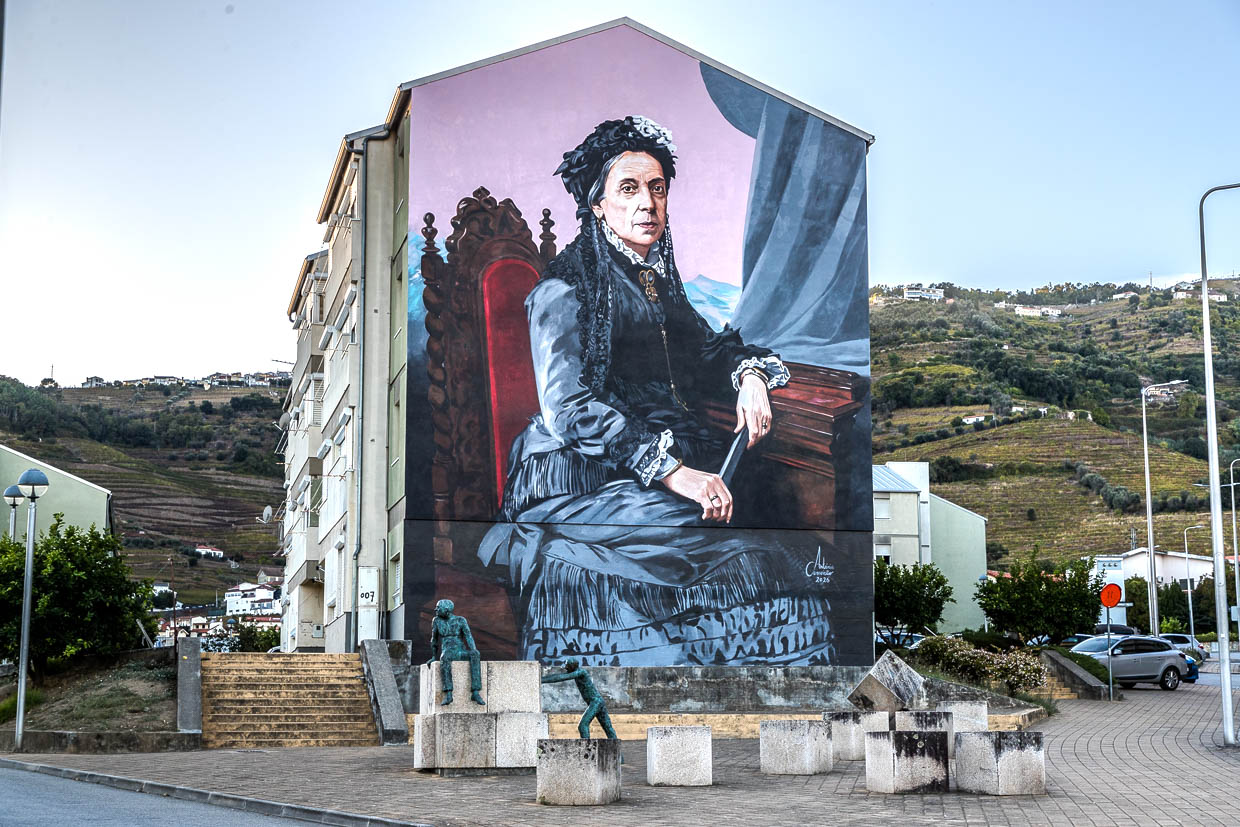
The mural was created in September 2026. It marks the start of the Roteiro de Arte, the art trail of Peso da Régua, the wine-growing village some 100 kilometres east of Porto. Further murals and sculptures are set to follow. With this portrait of ‘Ferreirinha’, the local council aims to commemorate the resilience of this famous local figure. Antónia Adelaide Ferreira guided the winegrowers of the Douro through the devastating phylloxera plague in the 19th century. In times of great existential fear, the businesswoman always found a solution.
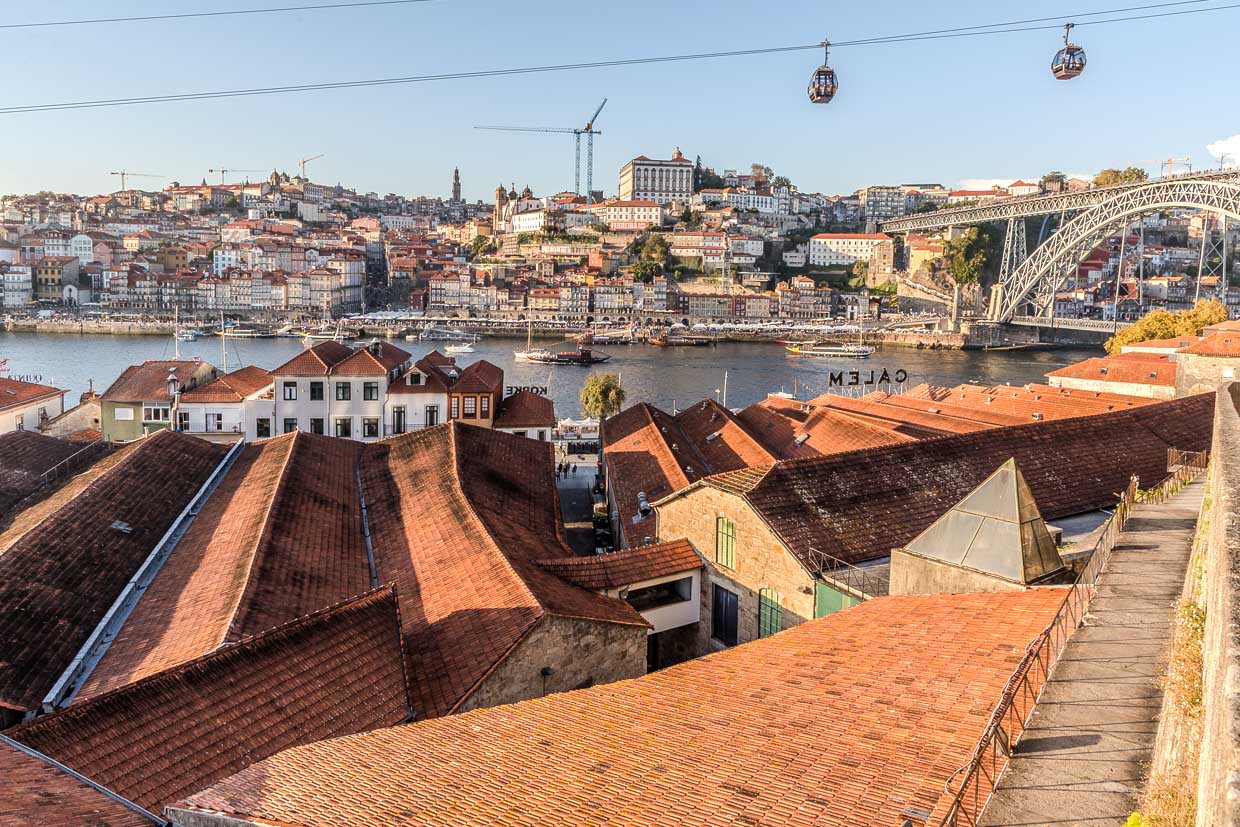
Port wine: full warehouses, shrinking markets
The Douro is once again in crisis. Before each harvest, the Interprofessional Council of the IVDP (Institute of Vine and Wine) determines how much must may be turned into port. This quantity is known as the ‘benefício’. It is based on stock levels and sales forecasts, as explained by the business portal ECO. For 2026, the Council has authorised 76,000 pipas, each holding 550 litres. In 2016, the set benefício was still 114,900 pipas. Grapes outside the quota fetch significantly less. According to ECO, they fetch between 150 and 400 euros per pipa as ordinary Douro wine, whilst Port grapes fetch an average of around 1,000 euros. In recent years, winegrowers have complained about traders’ full warehouses and prices below production costs. This is because the harvest on the steep slopes of the Douro is still carried out by hand. Very hot summers with little rainfall also take their toll on the vines.
The woman in the black dress knew crisis
Antónia Ferreira grew up as the only daughter at Quinta de Travassos. Her mother was very strict, whilst her father paid Antónia a great deal of attention. At the age of eighteen, she wrote him letters about the grape harvest and carpenters, in such detail that the curator of the exhibition ‘A Life of Her Own’, Natália Fauvrelle, described her curiosity as ‘highly unusual’ in the 2011 exhibition catalogue. In 1834, she married her cousin António Bernardo. He lived the life of a city dweller, loved the theatre and balls, and took on risky business ventures. He died in Paris in 1844. She was only 33 and had to settle his debts. She sold and leased off property, had herself appointed head of the household by the family council, and focused on what she knew best: wine. The historian Isabel Cluny sees this as a life choice, not a stopgap measure.
The battle against phylloxera in the Douro Valley
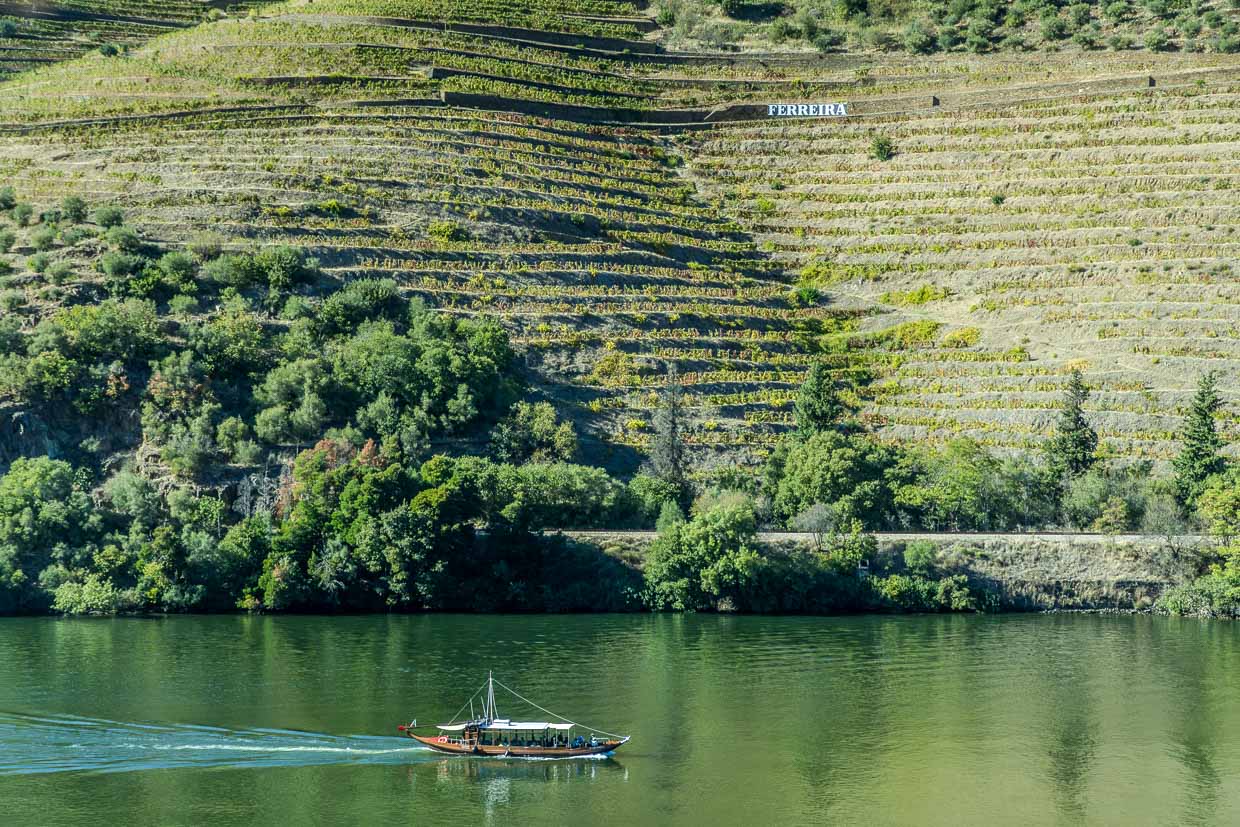
The phylloxera was first discovered in Europe in 1863. Starting in the south of France, it ate its way through the continent’s vineyards in the years that followed. It appeared in the Douro in the late 1860s. Its impact there was devastating in the 1870s. Antónia Ferreira was in her mid-sixties at the time. Many farmers wanted to give up. She resisted this. On her quintas, she planted phylloxera-resistant American rootstocks and grafted them with the desired local varieties. From the late 1870s onwards, this became the standard method of salvation in the Douro. Dona Antónia Ferreira travelled to England to learn about modern control methods and subsequently spearheaded the replanting programme in the Douro. At the same time, she bought quintas from farmers who had been forced to give up their land due to the epidemic, thereby supporting the regional wine industry. In the 1880s, she planted a new vineyard on the granite slope of Quinta do Vale de Meão in the Douro Superior. It was a risky venture on barren soil.
There were also turbulent times in her private life
Her private life was no less turbulent. In 1853, the Duke of Saldanha, then head of government, wanted to marry his son to her daughter Maria da Assunção, who was only eleven years old at the time. Antónia refused. Shortly afterwards, as she herself recounts, her own son and a group associated with Saldanha’s son attempted to abduct her daughter from the Quinta de Travassos. However, the girl was already in Régua. A court later acquitted Saldanha. Antónia went to London with her daughter. Whilst there, Dona Antónia attended the 1855 World’s Fair in Paris to showcase her wines, and in 1856 she married Francisco José da Silva Torres, a long-standing employee of her company. The fact that she could make decisions without consulting the family council was a form of freedom for her, writes Isabel Cluny in the exhibition catalogue. Antónia Ferreira’s son and her mother disapproved of the new marriage.
An icon of the Douro
When Dona Antónia Ferreira died on 26 March 1896, she was the region’s largest vineyard owner. Her fortune amounted to just under six billion réis. Thousands followed the funeral procession from Régua. It stretched for almost four kilometres. Ninety-five priests celebrated Mass. Her will stipulated a simple funeral. The newspapers called her the ‘Mother of the Poor’.
The Douro, flowing dresses and pockets full of gold
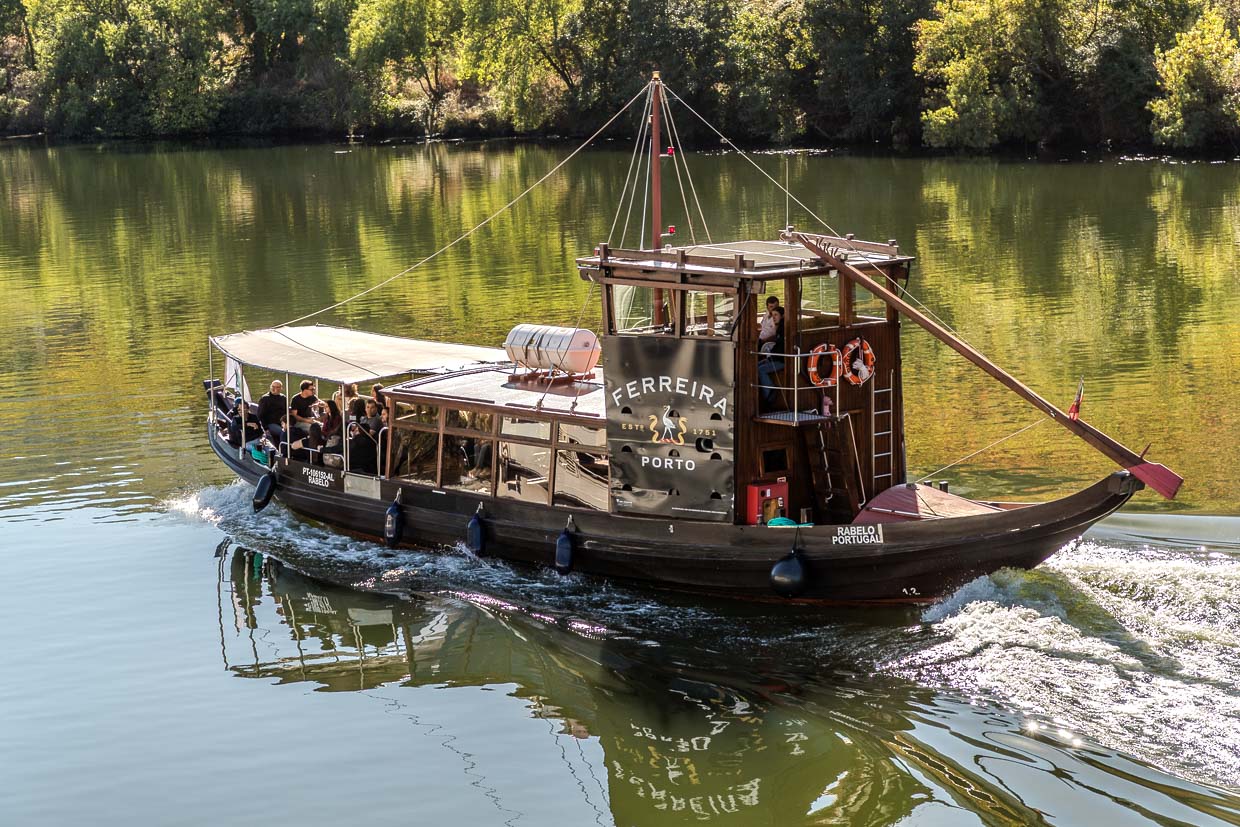
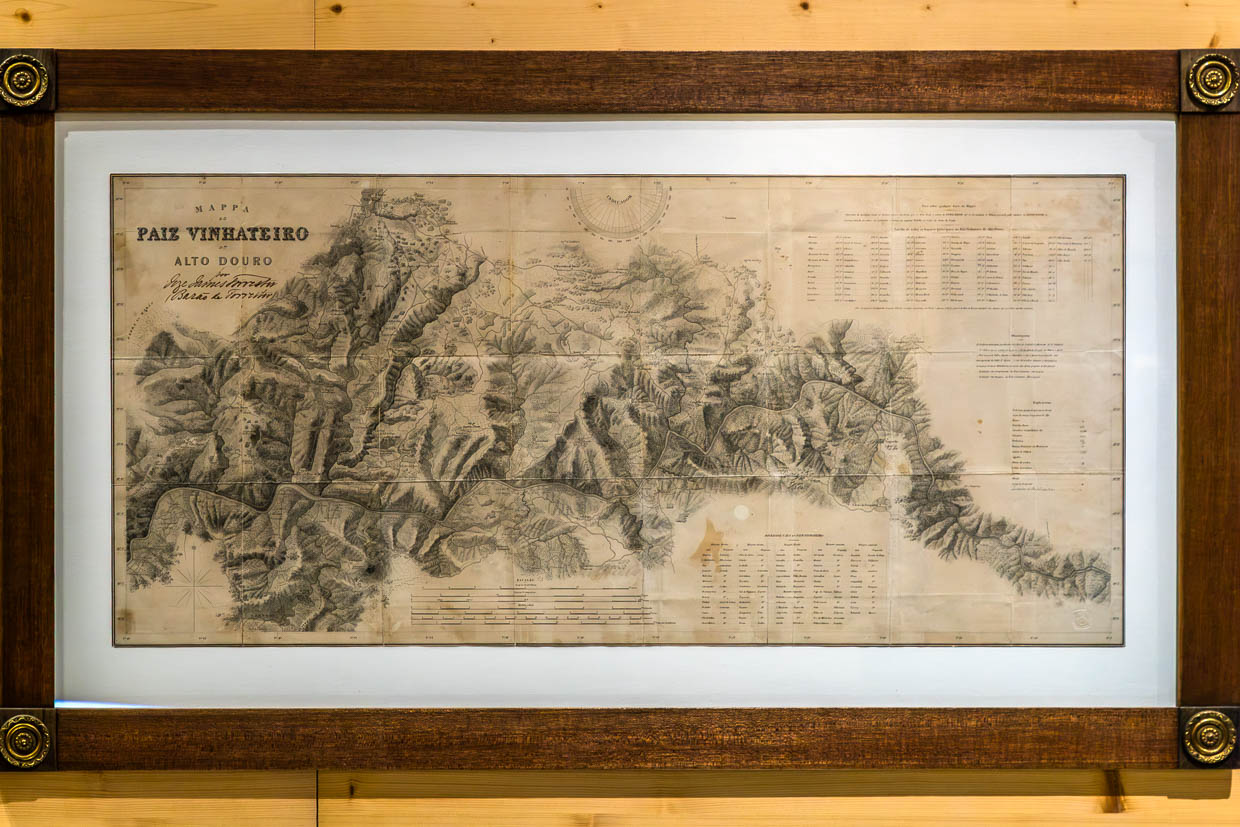
The Douro had almost ended her life back in 1861, 35 years earlier. On 12 May 1861, she was travelling down the river with guests, from Quinta do Vesúvio towards Porto. Also on board were her second husband, her daughter, her son-in-law and Joseph James Forrester. The Englishman had mapped the Douro from the Spanish border region to its mouth and had been awarded the Portuguese title of baron in 1855 for his work. At Cachão da Valeira, a rapid that had only been made navigable a few years earlier, the boat capsized. Forrester drowned. His body was never found. Silva Torres, her daughter and son-in-law escaped unharmed.
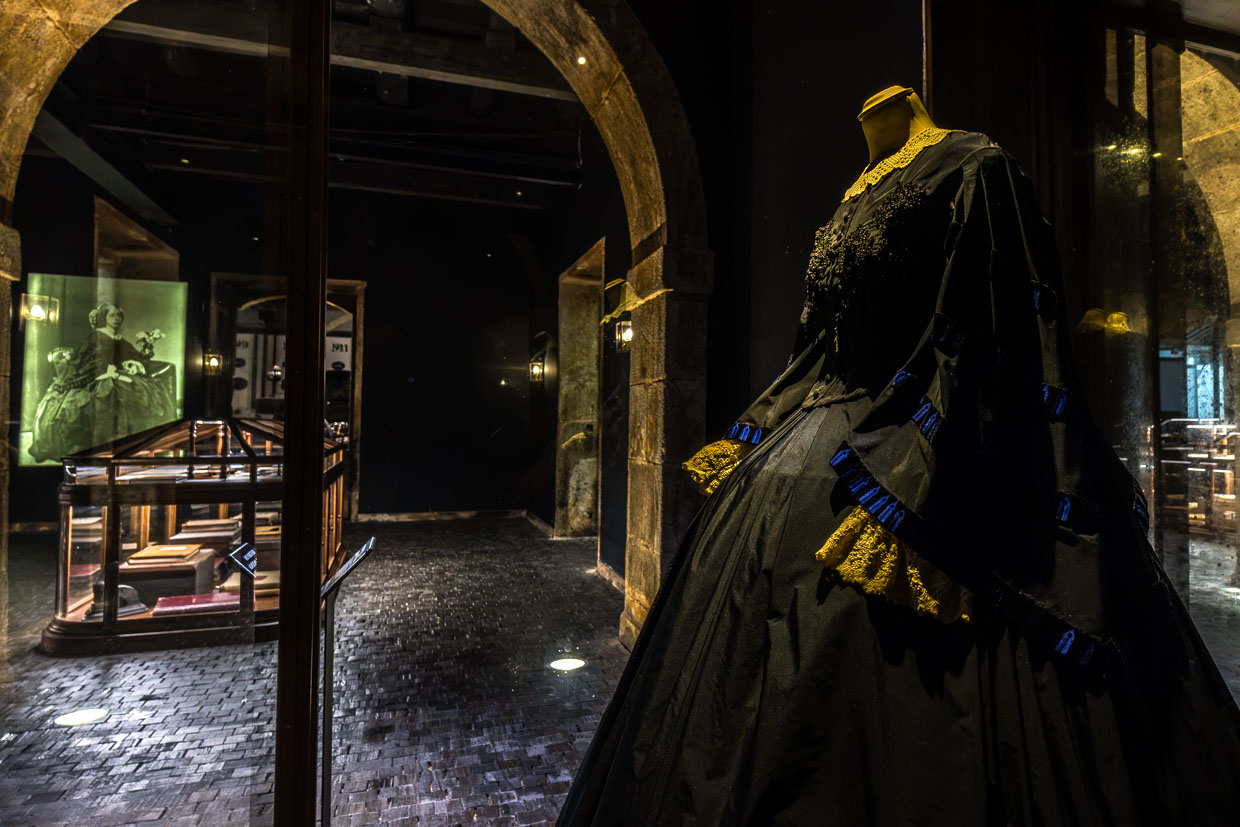
Then the legend begins. Antónia’s wide skirts kept her afloat like a balloon. Forrester is said to have been wearing a belt full of gold coins, which pulled him under. Both stories are still told on the Douro to this day. There is no evidence to support them. She may well have been wearing the skirts. This detail speaks volumes about the era. Women’s clothing was restrictive; on that day, it did the opposite. The only thing that is certain is the outcome: the man who had surveyed the Douro did not return, whereas the successful businesswoman on the Douro did.
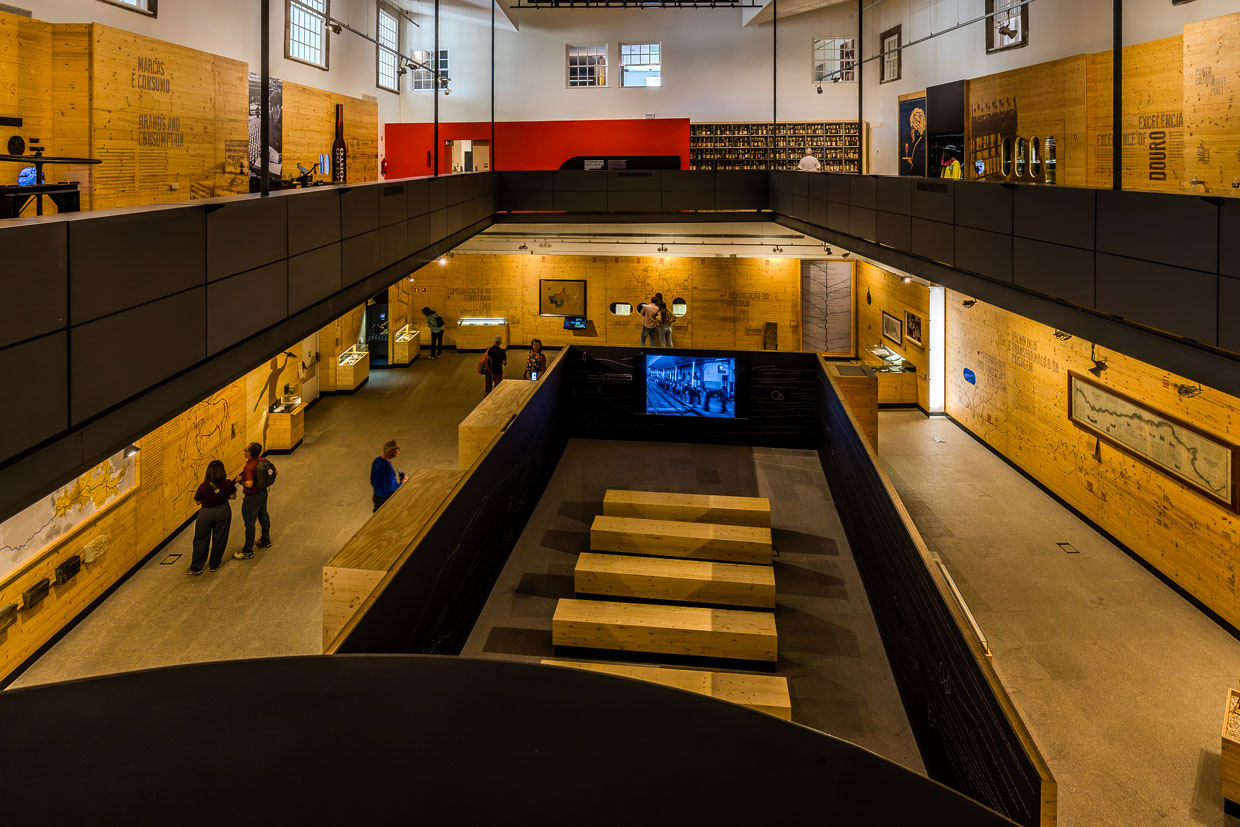
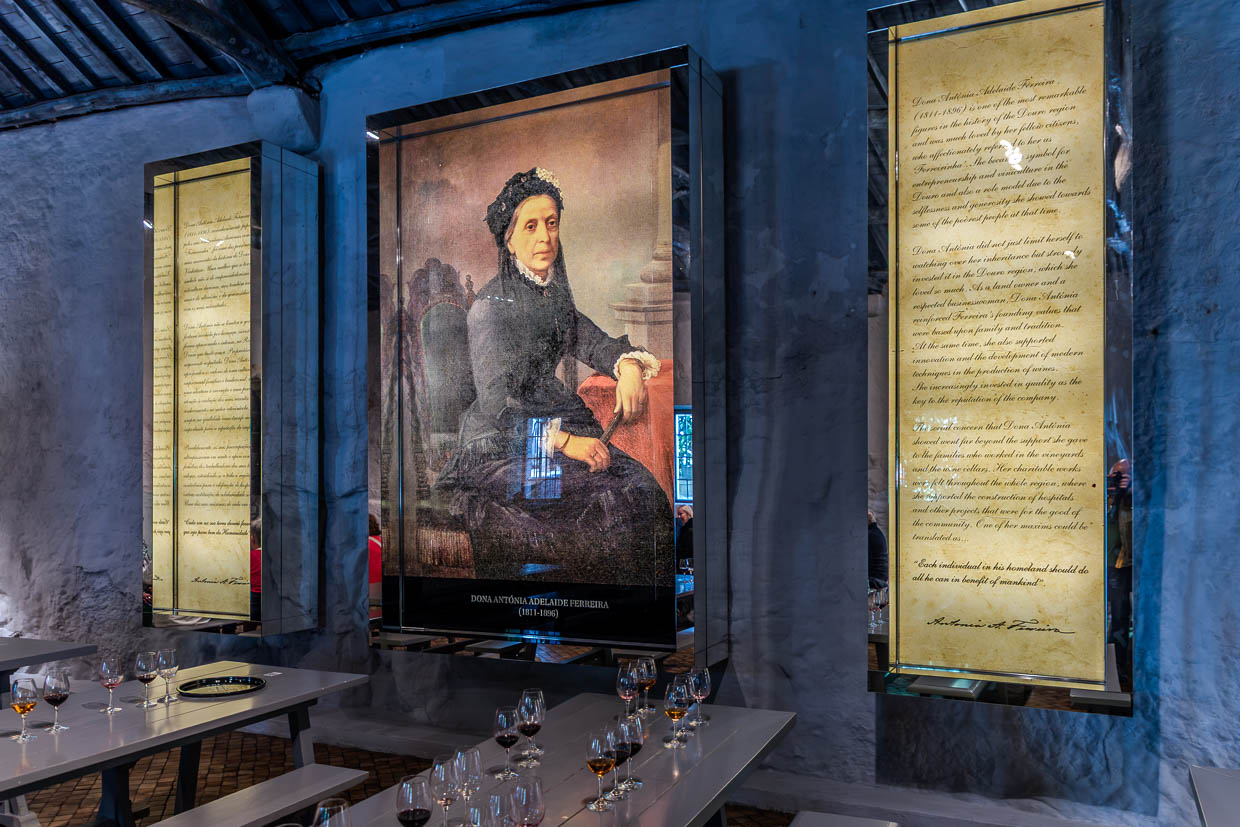
Anyone wishing to trace Dona Antónia’s life and work today will find two main points of reference. At the Museu do Douro in Peso da Régua, her story forms part of the permanent exhibition on the development of the Douro and its wine industry. Among other things, visitors can see the work carried out in the vineyards, the production and transport of port wine, and the social and economic changes in the region. In this context, Dona Antónia is portrayed as a significant entrepreneur, wine producer and champion of the Douro. On display are historical documents, photographs, maps and artefacts that illustrate her work and her influence on the region. The museum also covers the phylloxera epidemics and the revival of viticulture.
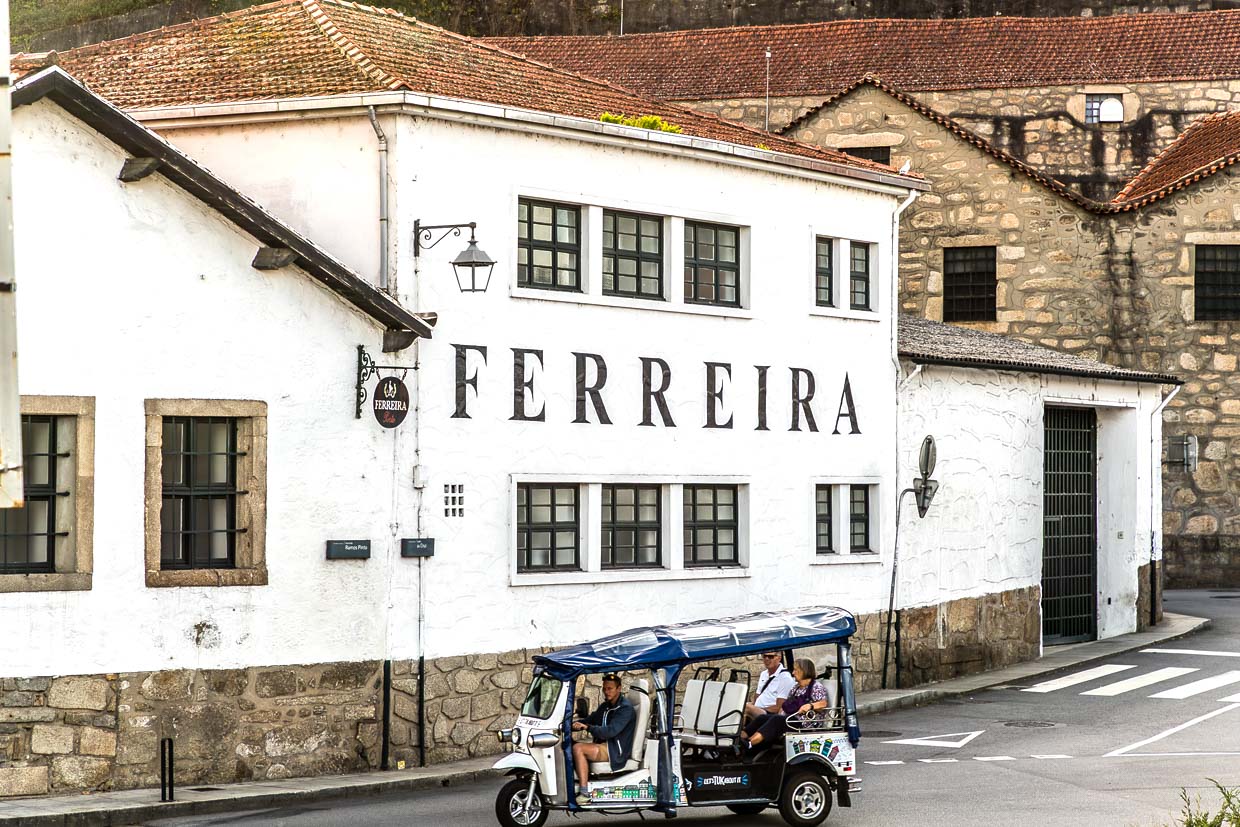
A second important site is the Caves Ferreira in Vila Nova de Gaia, opposite Porto. The Ferreira brand is now part of the Portuguese wine company Sogrape. The tour takes visitors through Casa Dona Antónia, which commemorates the businesswoman and her family, then on to the historic storage areas with their large wooden casks, and finally to the Vintage Museum. There, visitors learn about the history of the Ferreira house, the development of port wine and the significance of older vintages. Particularly striking is the connection between the living and reception rooms and the underground, historic cellars where the port matures. A dedicated Dona Antónia tour lasts around an hour and a half and concludes with a tasting of five ports bearing her name.
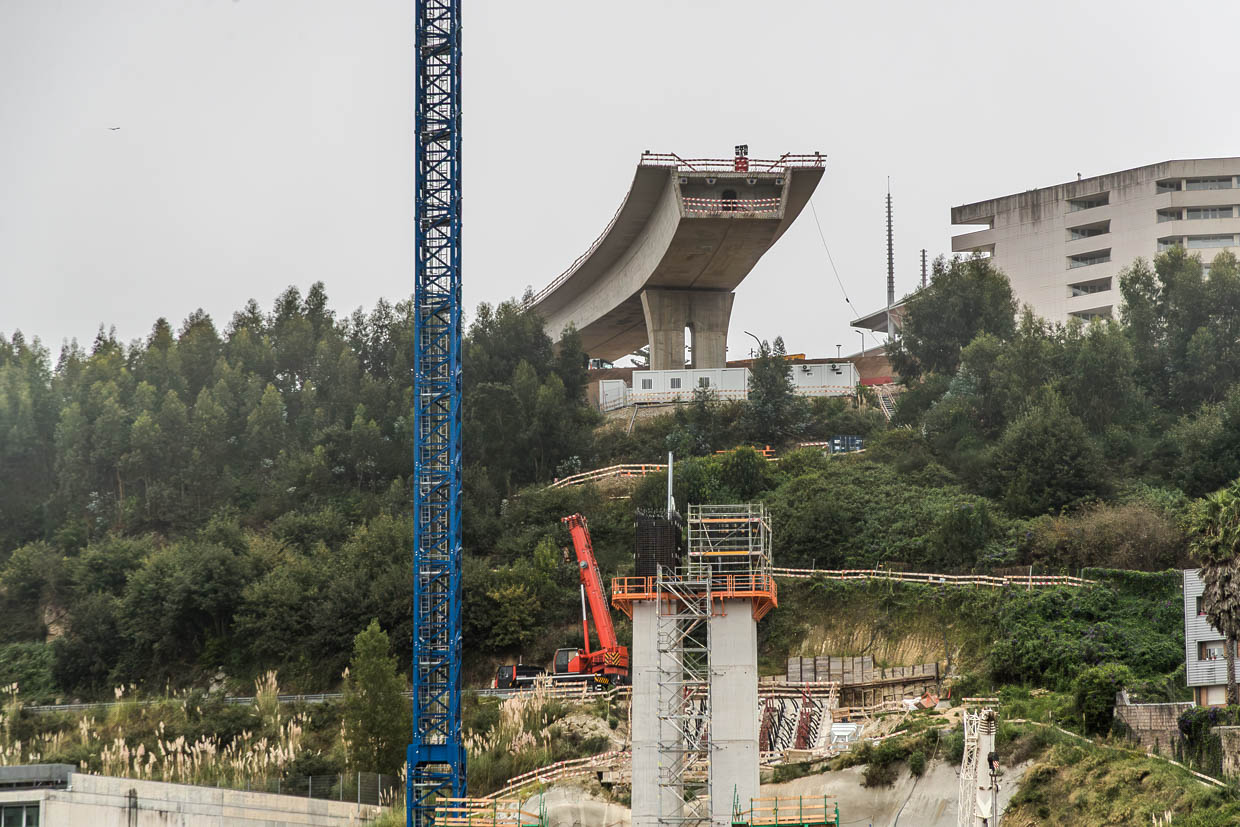
And then there is another bridge under construction in Porto. It is called the Ponte Ferreirinha – the name was chosen by an online vote organised by the ‘Jornal de Notícias’. It connects Campo Alegre with Arrábida and is designed for the metro, pedestrians and cyclists – for people, not cars. That sounds very much to Dona Antónia’s taste. The bridge is due to be completed in 2028.
The Queen’s favourite. A bygone era.
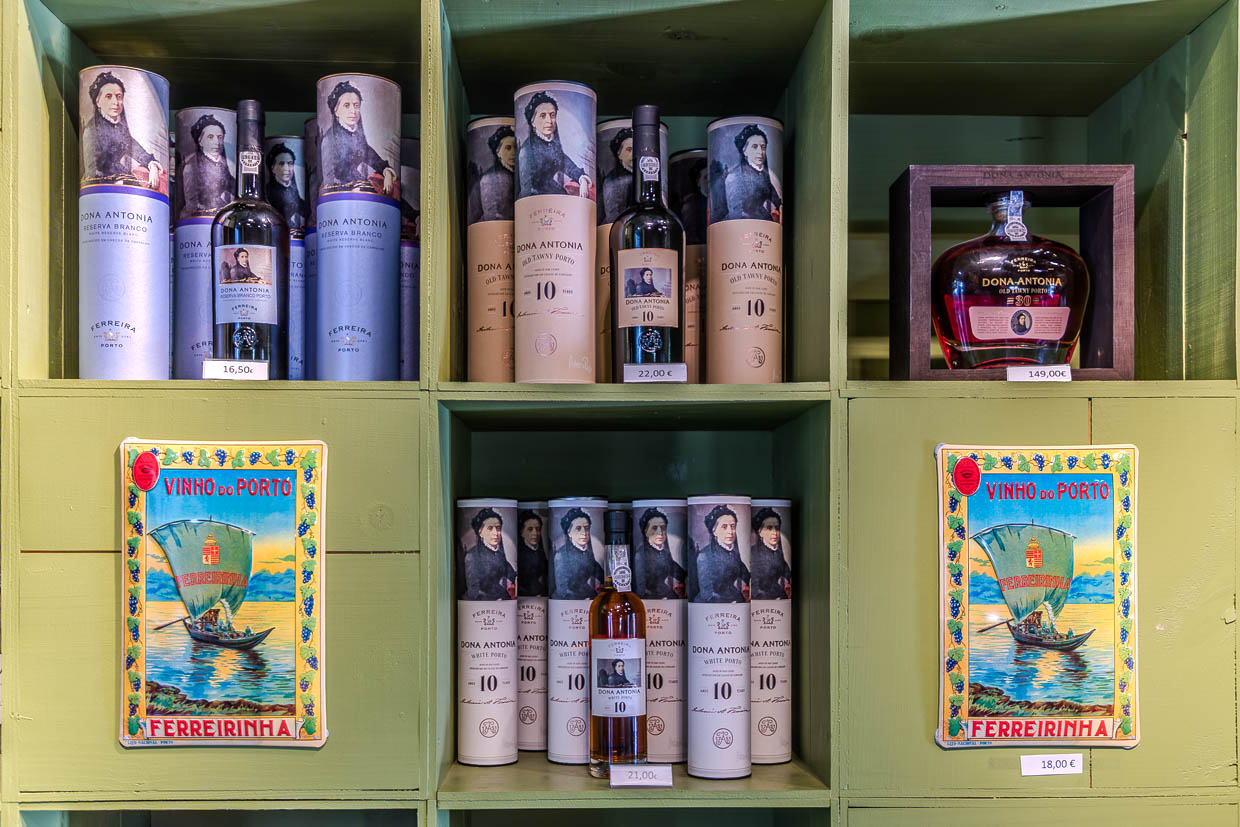
Port wine itself has an image problem these days. Queen Elizabeth II was a fan of port. In London’s gentlemen’s clubs, it was the drink of the moment alongside sherry. Those days are over. Younger consumers are drinking fewer classic fortified wines. Demand is falling. The industry’s trade journal, *The Drinks Business*, estimates sales at 7.3 million cases in 2023, down from 8.7 million in 2013. Younger people are opting for lighter, cooler drinks. Producers are responding with cocktails. White Port & Tonic has become a summer classic. Cockburn’s sells Portonic in cans across twelve countries. Croft has launched a Pink Port, whilst Graham’s has introduced ‘Blend No 12’, a blend designed for bars. Churchill’s and Quevedo are promoting their products with colourful labels. The industry is focusing on premium products, selling fewer bottles at higher prices.
Times of crisis then and now
And Antónia? During the phylloxera crisis, she demonstrated what it meant to offer help in her day. She built schools, nurseries and hospitals in Régua, Vila Real, Lamego and Torre de Moncorvo, supported the Misericórdias and had Silva Torres’ name immortalised at the Régua Hospital with a bequest of 30 million réis. When farmers were forced to give up their land, she bought it. According to marketing researchers Carlos Melo Brito and Paulo Moreira, this was a sound business move for her. However, she prevented the land from falling into British hands, ensuring that the former owners were retained as managers or were leased the land. She stockpiled wine when prices were low. And she refused to sign exclusive contracts with the major exporters. Today, the stockpiles held by the big houses are the problem facing small winegrowers. In the Douro, people are wondering – and not without reason – who will take on the role of Ferreirinha. The mural in Régua poses this question without answering it.
The Douro as seen from the water
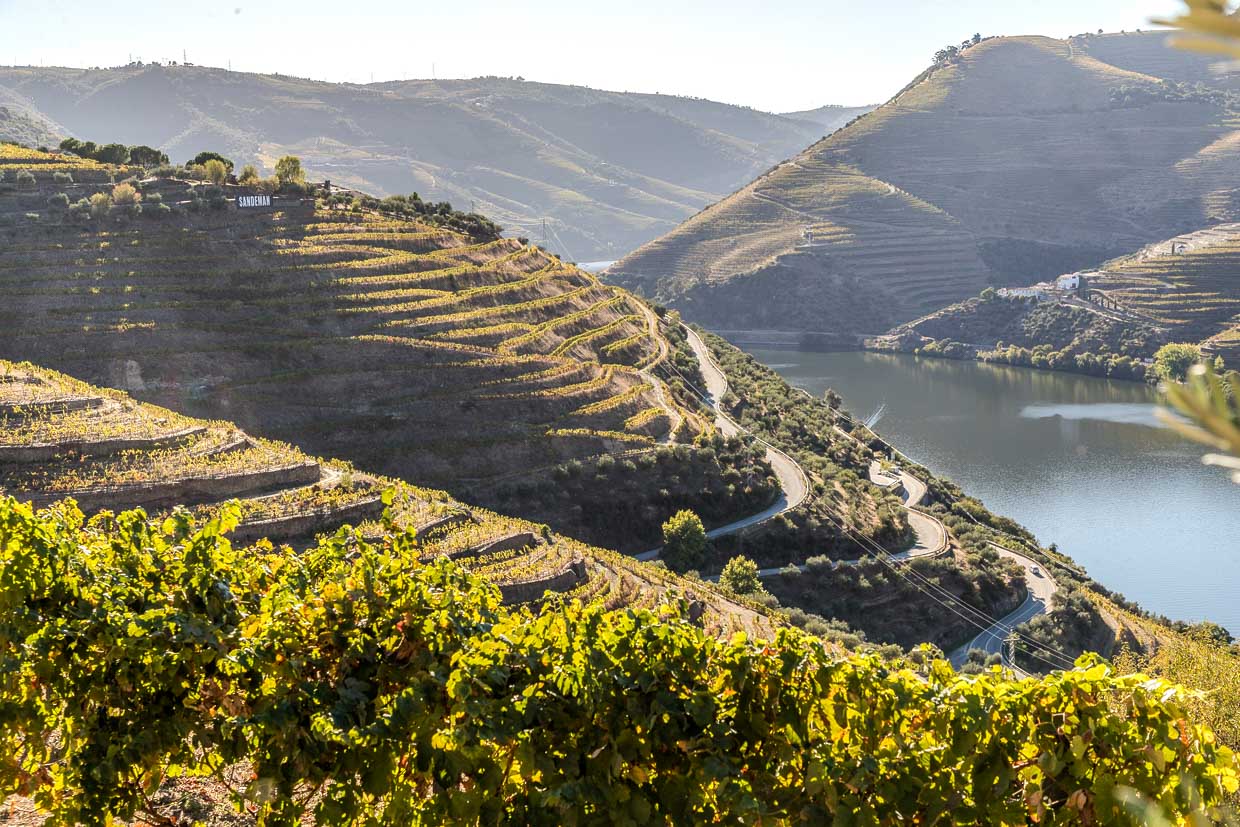
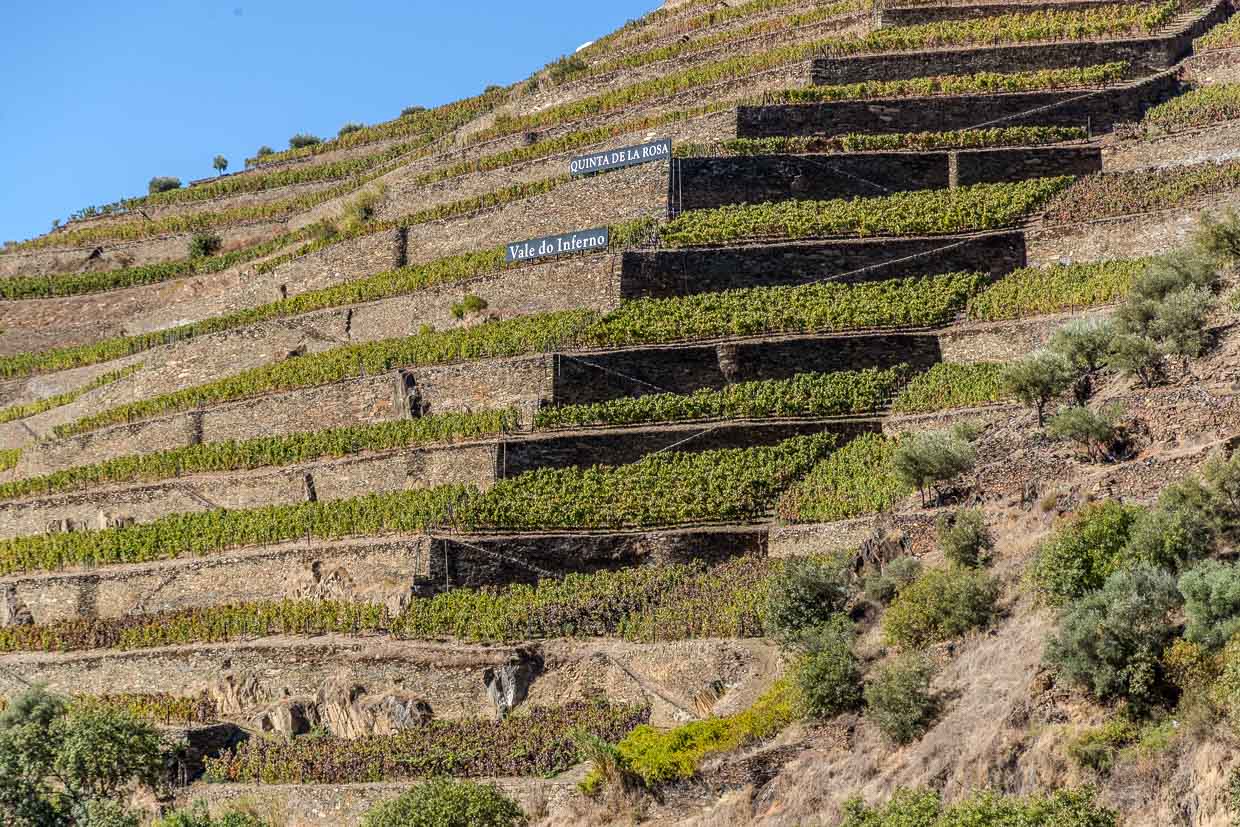
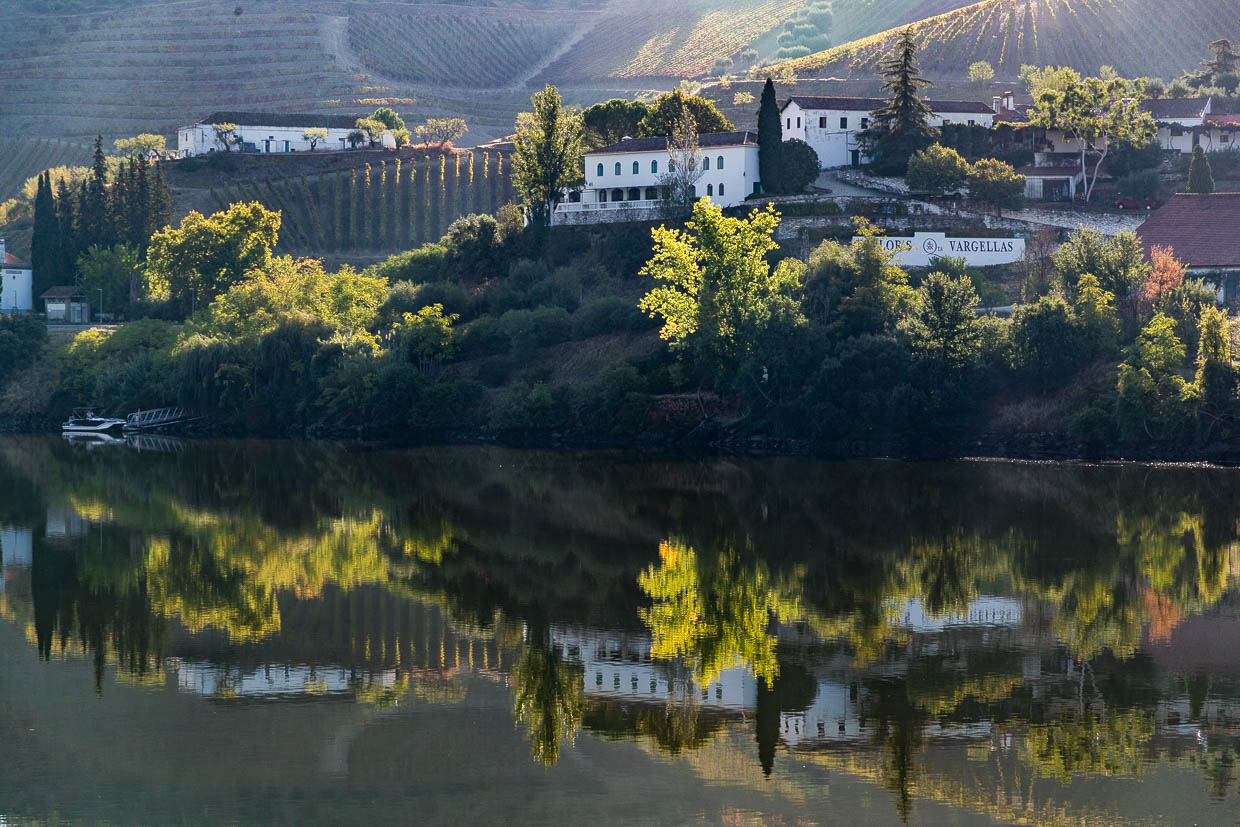
Antónia Ferreira spent most of her life on the Douro, between Porto and Peso da Régua. That is where her quintas were located. Following the phylloxera plague, she had new vineyards planted, most recently in the Douro Superior. Her landscape is best understood from the river.
We are travelling for seven days on the MS Douro Spirit, operated by Thurgau Travel, from Porto to Barca d’Alva on the Spanish border and back. The route follows the course mapped out by Baron Forrester. Five barrages with locks lift the ship, flanked by brutalist-style dam walls, a good 130 metres upstream: it is thought that Baron Forrester drowned at the Valeira lock, where a reservoir now stands. On land, we visit wineries, such as the Palácio de Mateus near Vila Real and Sandeman’s Quinta do Seixo. We see azulejos – the famous Portuguese blue-and-white tiles – in the railway stations of Porto and Pinhão. A day trip takes us from Barca d’Alva to Salamanca. Travelling downstream, vineyards, olive trees and white quintas pass by once more. Humans have left their mark on the Portuguese Douro. Yet above Porto there are no major cities and hardly any industry. You see villages, fields, woodland and a historic railway line. The barrages have tamed the wild river. Between them, however, it appears unspoilt and picturesque.
This feature was supported by Turismo do Porto e Norte and Thurgau Travel


