
At the weekend, I sat in the auditorium of my sons’ former school, the Erasmus-Gymnasium in Grevenbroich. The hall was filled to capacity. On the programme was the musical reading Deutschland, siehst du das nicht? by the Opus 45 ensemble with actor Roman Knižka. The audience travelled through the dramatic years 1929 to 1933, the downfall of the Weimar Republic. For two hours, the charismatic Knižka recited texts by Erich Kästner, Mascha Kaleko, Kurt Tucholsky, Viktor Klemperer and Dorothy Thompson.
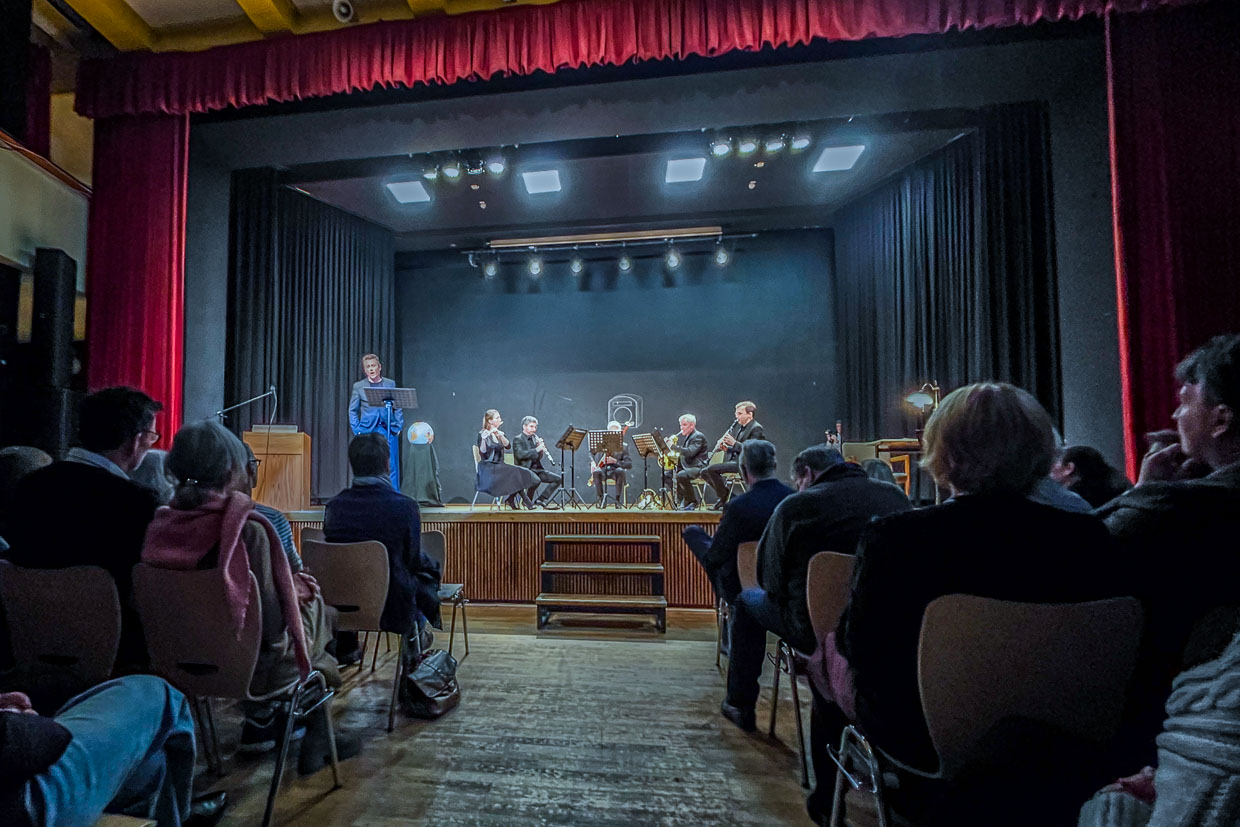
Sometimes Knižka thundered out propaganda slogans with a rolling R, capturing people in their growing poverty. Sometimes he danced like Charlie Chaplin with a beach ball, as in the film The Great Dictator, and at the end, looking at the colourful ball, he grunted: “Venezuela.” This was not the only obvious parallel to the present day. What paved Hitler’s way to power? The inability of the other parties to find a compromise. The evening was a sharply worded warning of radicalisation, violence and the creeping disintegration of democratic norms.
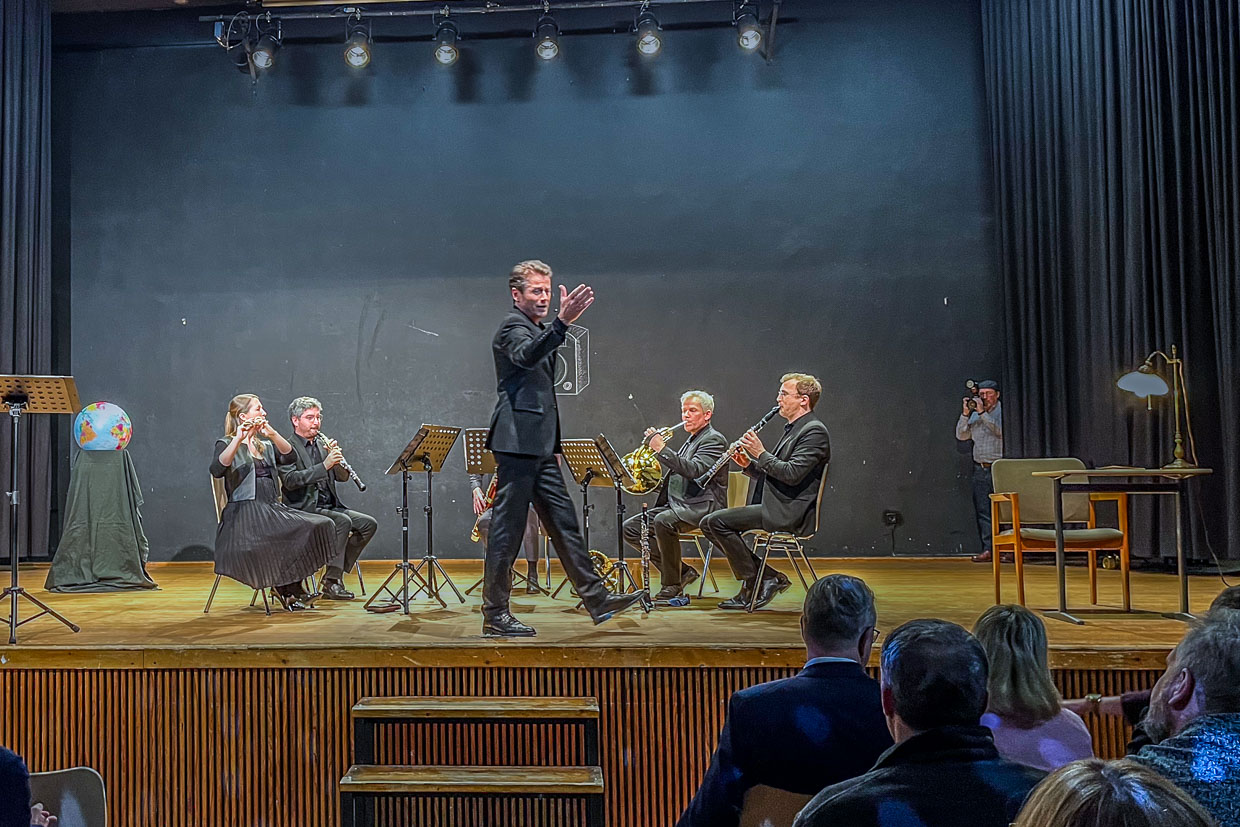
The artists combined literature and music into a harmonious whole. They performed works by Hanns Eisler, Kurt Weill, Erwin Schulhoff, Paul Juon and Jean Françaix – complemented by swing by Cole Porter and hits by the Comedian Harmonists. One passage, adapted to the venue, added a special touch: whether Aschersleben, Bochum, Osthofen or Grevenbroich – it didn’t just happen elsewhere, but all over the country. Roman Knižka, supported by Ulrich Herlitz, the dedicated chairman of the Grevenbroich History Society, described some local events and the mood in the town in the early 1930s.
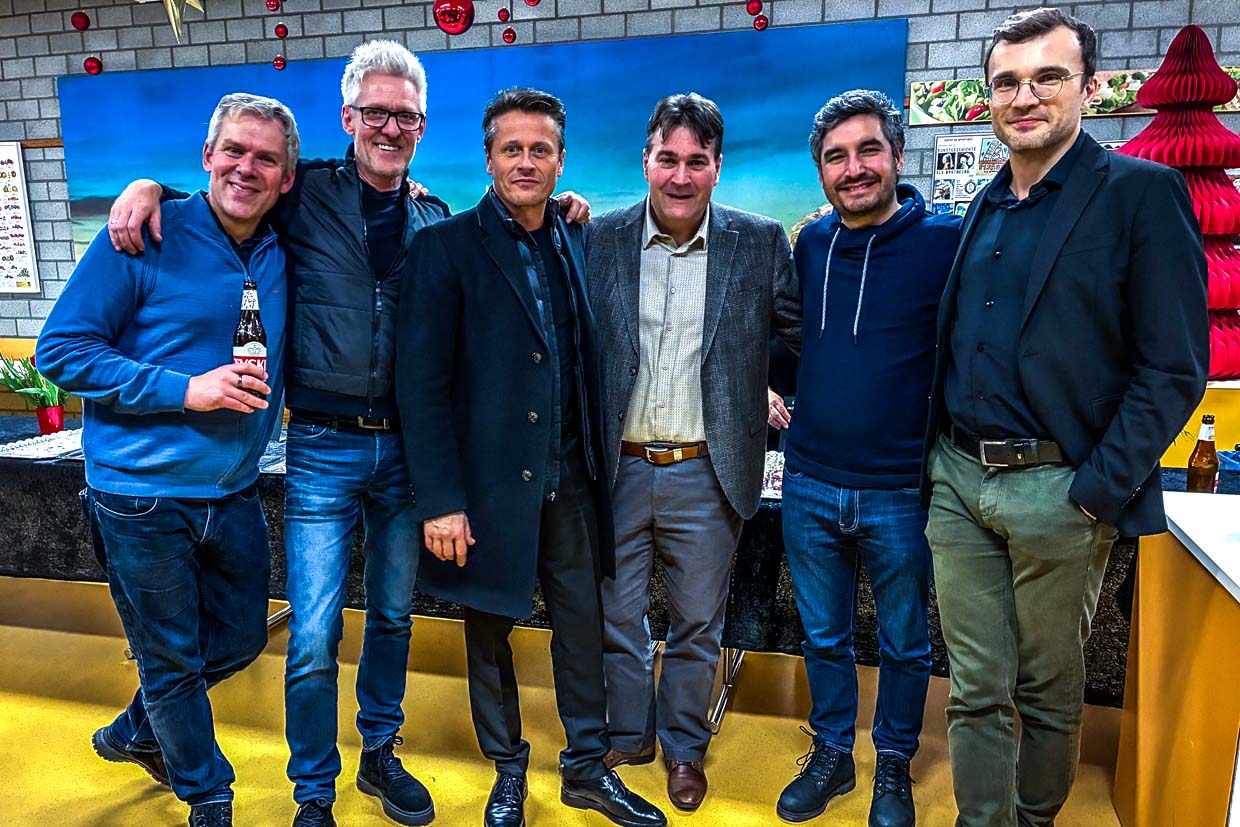
In Grevenbroich, the programme was framed by a get-together before and after the reading. There was plenty to talk about. Especially great: the musicians from Opus 45 and Roman Knižka mingled with the guests after the performance in the school canteen – for an after-work beer, so to speak.
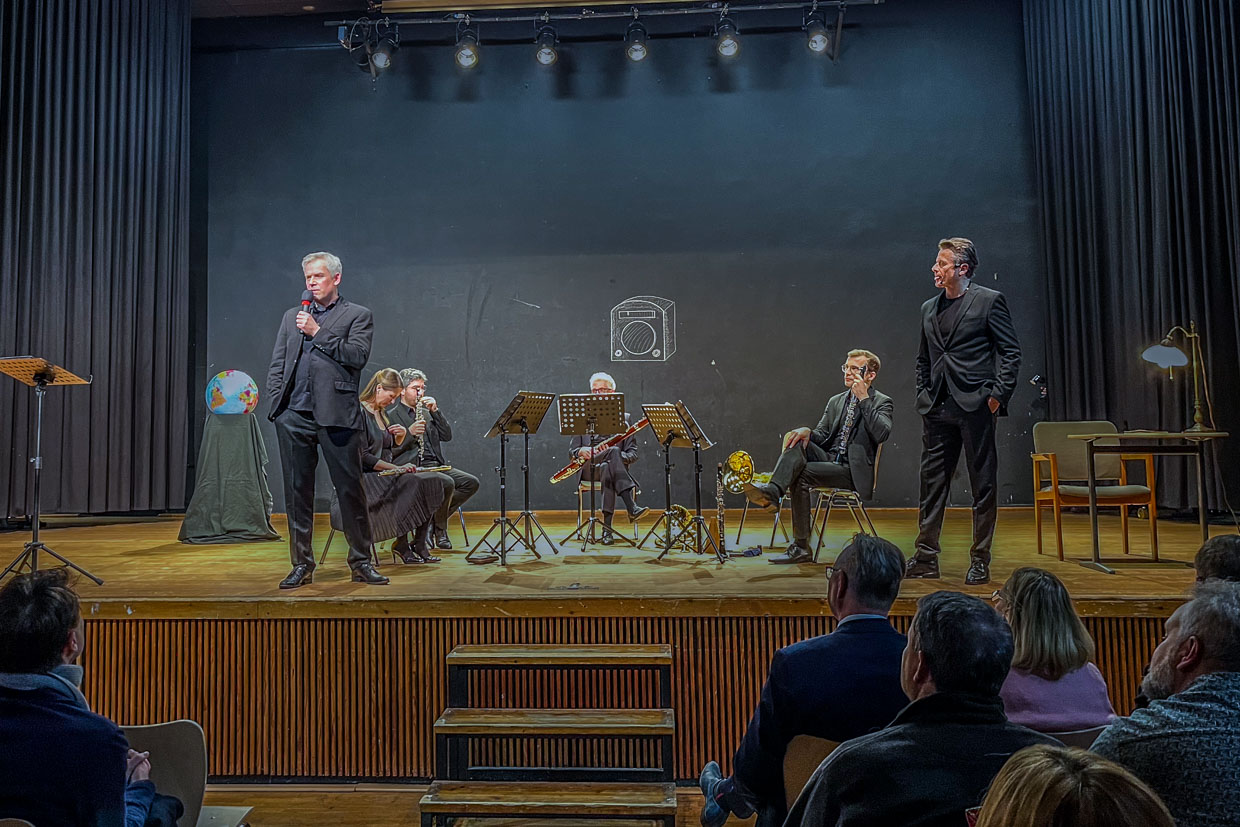
I learnt from ensemble member Benjamin Comparot that Opus 45 has been working across disciplines for years. Eight literature concerts have been created, including programmes on the Nazi resistance and life in the years 1945 to 1949. The ensemble puts on up to 120 performances a year. They tour the country, visiting small and medium-sized towns in all directions – sometimes with police protection in the East. They also perform the programme Deutschland, siehst du das nicht? at schools. This week, to my delight, again in Grevenbroich. When I asked how attentive the pupils were, Comparot replied: “The programme is not cut, and the young people are often more attentive than adults. They ask questions, are curious and are usually well prepared in class. I think that’s good news.
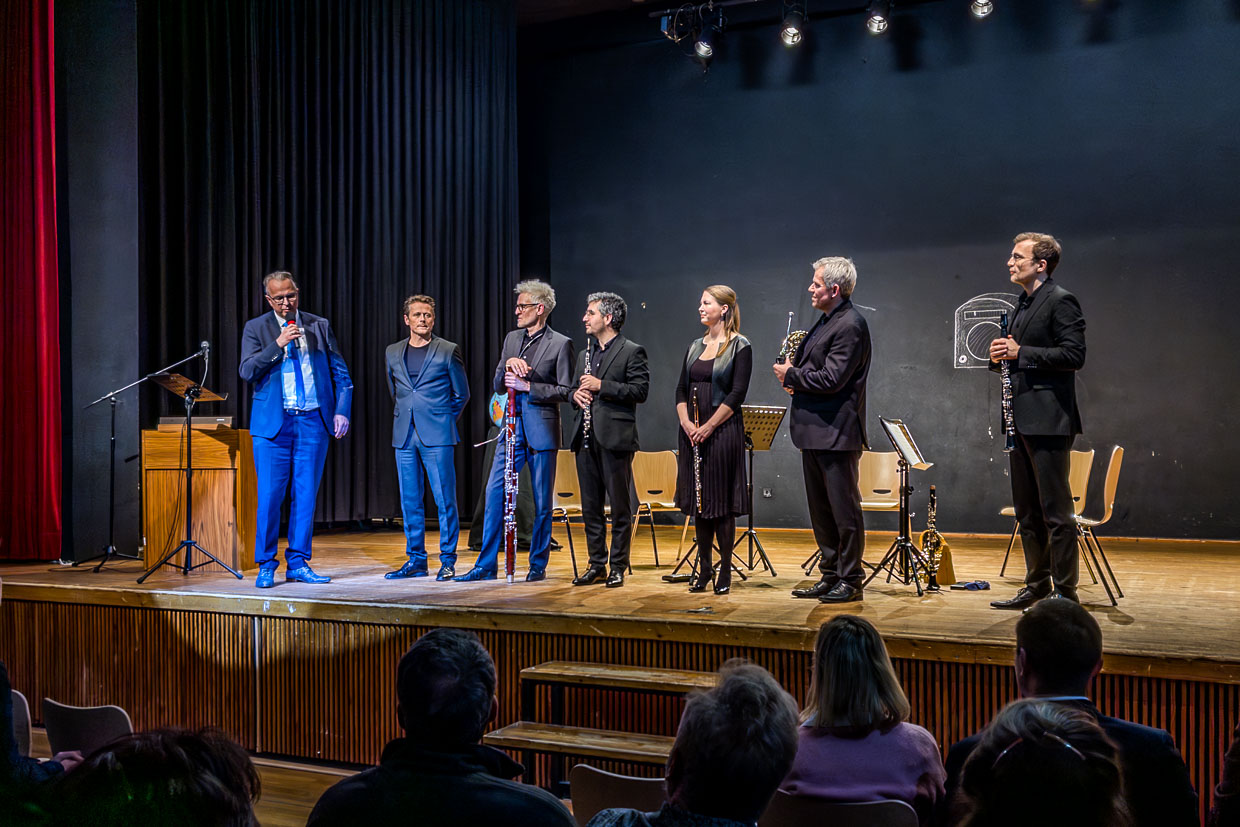
The Rhein-Kreis Neuss district paid for the strengthening of democracy. The Municipal Integration Centre (KI) financed the event, which organised a literary concert by Opus 45 for the third time. Promoting democracy is one of its core tasks. Admission was free. That’s how you strengthen democracy right on your doorstep! District director Brügge held out the prospect of another guest performance by the ensemble. Highly recommended! If you don’t want to wait until autumn or live elsewhere in the German provinces, you should take a look at the ensemble’s repertoire