
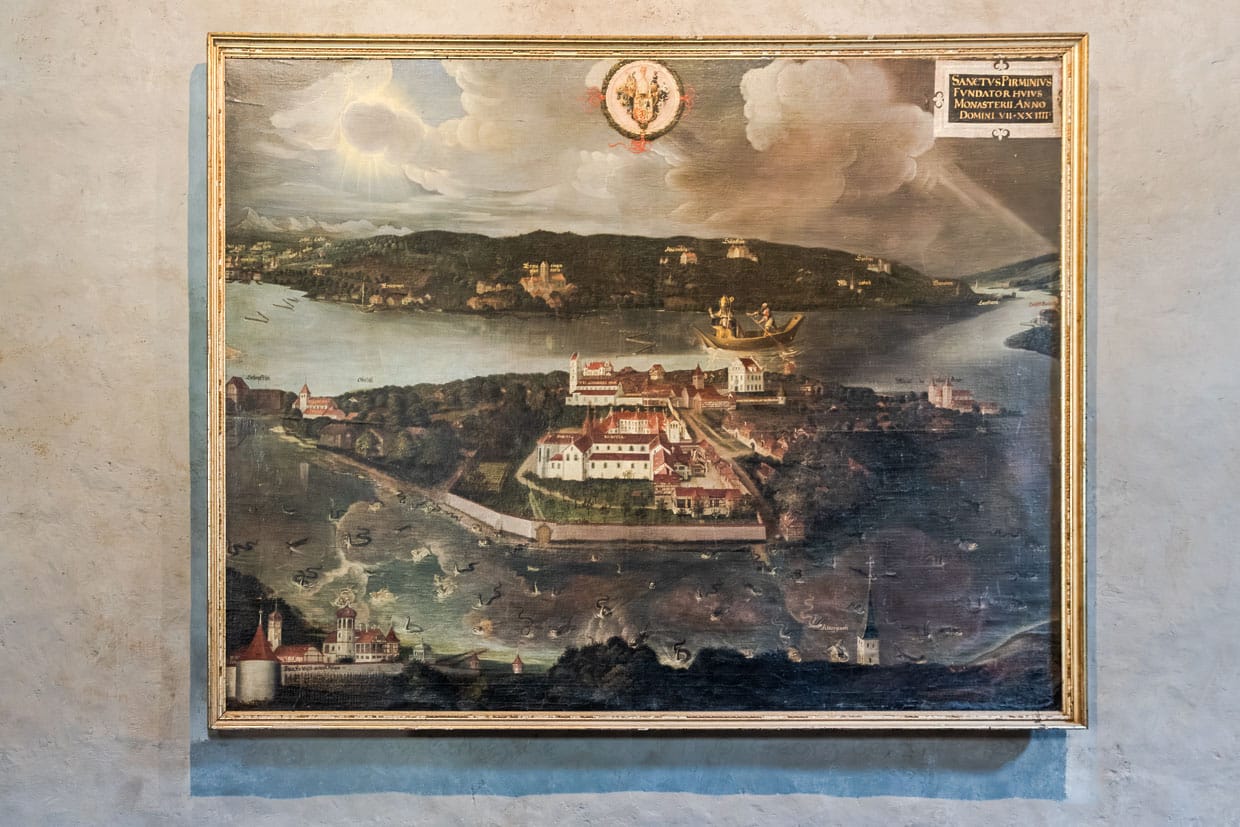
Reichenau, the largest island in Lake Constance, can look back on over 1,300 years of history. It has been a UNESCO World Heritage Site since 2000. On the “Reiche Aue”, favoured by a mild climate and Lake Constance as a huge water reservoir, professional vegetable growing began around 1850. However, as is so often the case, the monks laid the foundations. When Bishop Pirmin set foot on the island in 724 and founded Reichenau Monastery, he created an important spiritual centre of the Middle Ages.
Wine and words
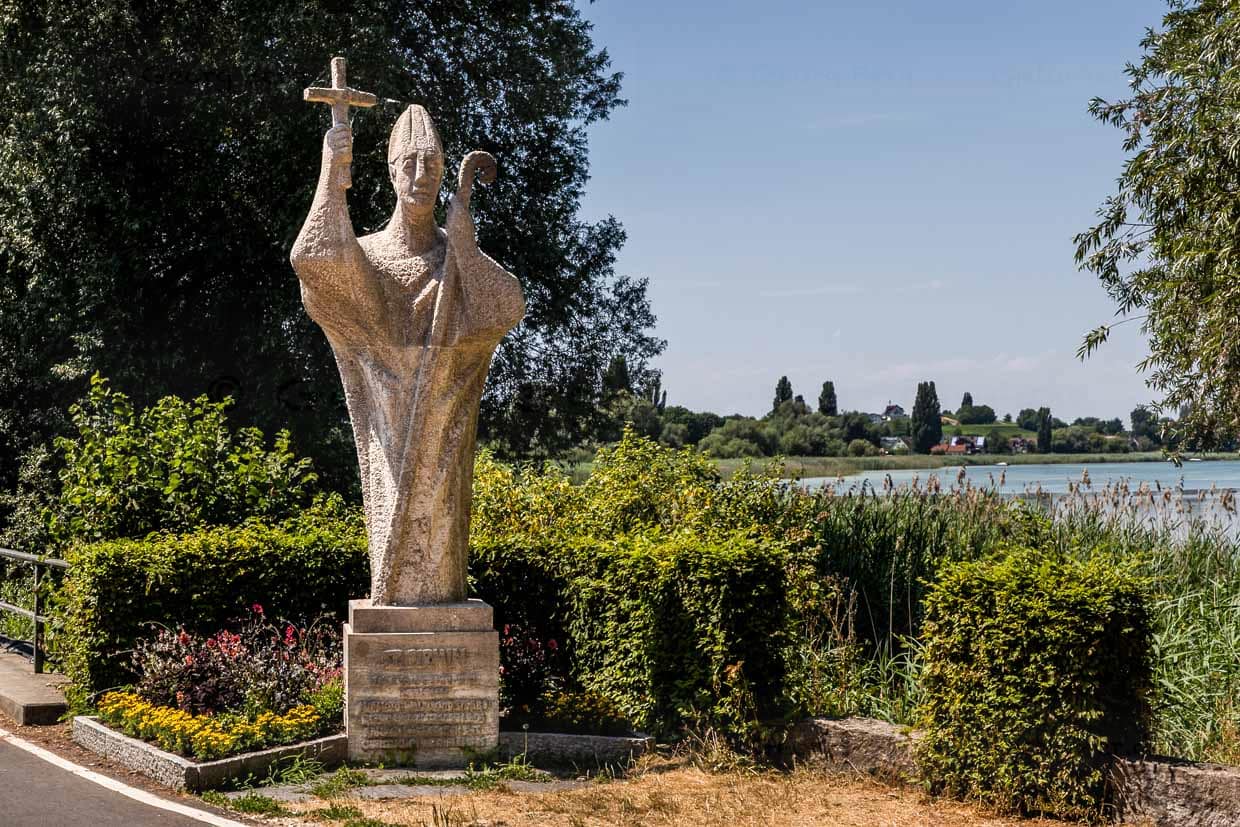
Since the 19th century, a dam lined with poplars has connected the 4.5 kilometre long and 1.5 kilometre wide island with the mainland. The vast vegetable fields, greenhouses and vineyards, which supply a large proportion of the regional vegetables for Baden-Württemberg and Bavaria, are characteristic of the island. The first wine was planted by Benedictine monks in 818. 100 years earlier, according to legend, Bishop Pirmin had driven monsters out of Lake Constance. He saw a “rich meadow” on the island, which is now called Reichenau, and founded a Benedictine abbey there.
Think tank of the Middle Ages
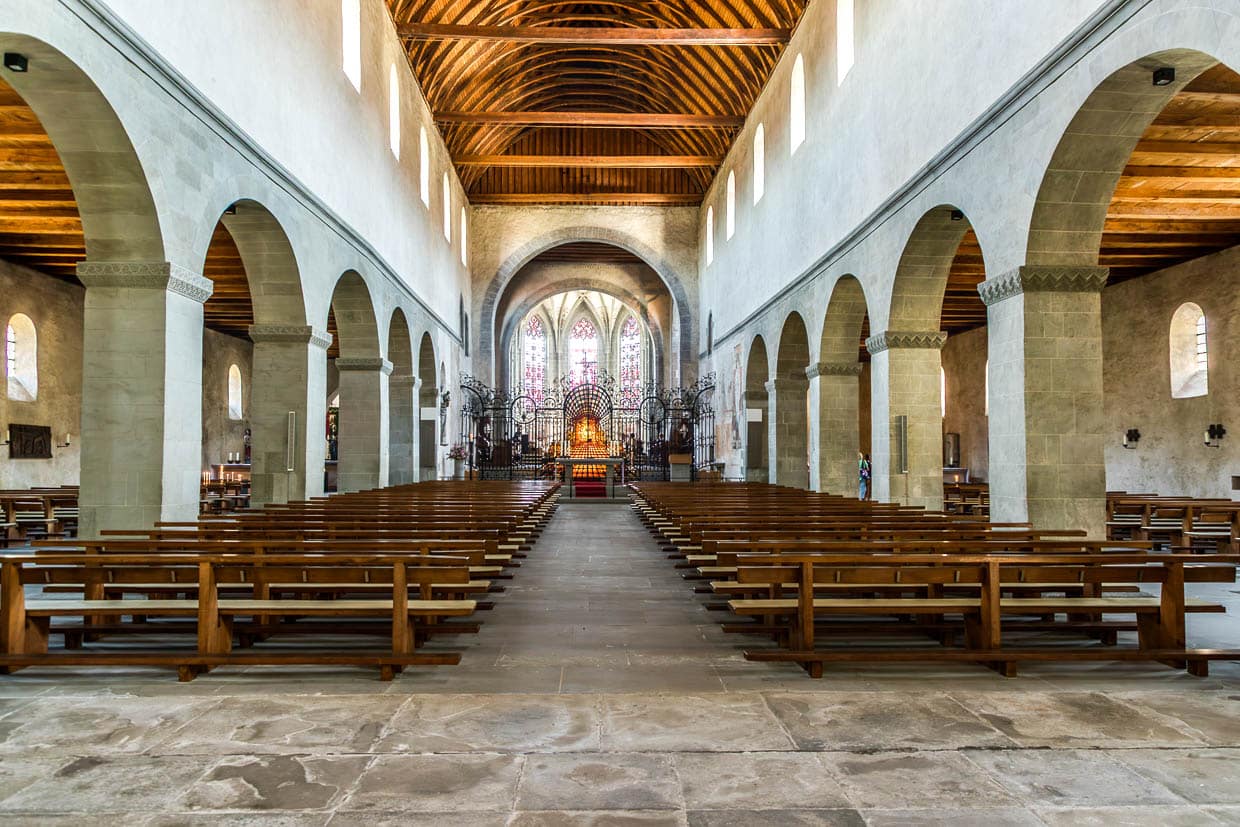
Anyone visiting sleepy Mittelzell today would hardly suspect that an intellectual centre of Europe flourished here in the early Middle Ages. Book illumination, science and education made the island the cradle of Western culture. There are still three Romanesque churches on Reichenau that have been preserved almost unchanged: St Mary and St Mark’s Minster and the churches of St George and St Peter and Paul. Together with the former Benedictine abbey, they form the monastery island of Reichenau, which has been a UNESCO World Heritage Site since 2000.
Hortulus – The poem about horticulture
He is hardly known in many parts of Germany, but on the island of Reichenau and in the western Lake Constance region, schools, streets and herbal teas bear his name: Walahfrid Strabo. The ninth-century Benedictine monk was one of the most important scholars and poets of his time. He became famous above all for his didactic poem Liber de cultura hortorum – the book on gardening. This work in verse form is the oldest treatise on horticulture written on German soil. Walahfrid was born around 808 near Reichenau and joined the monastery there at an early age. His career took him to Aachen, where Emperor Louis the Pious appointed him abbot of Reichenau Monastery in 838 for his services as a court poet. His poem about horticulture was probably written during this time.
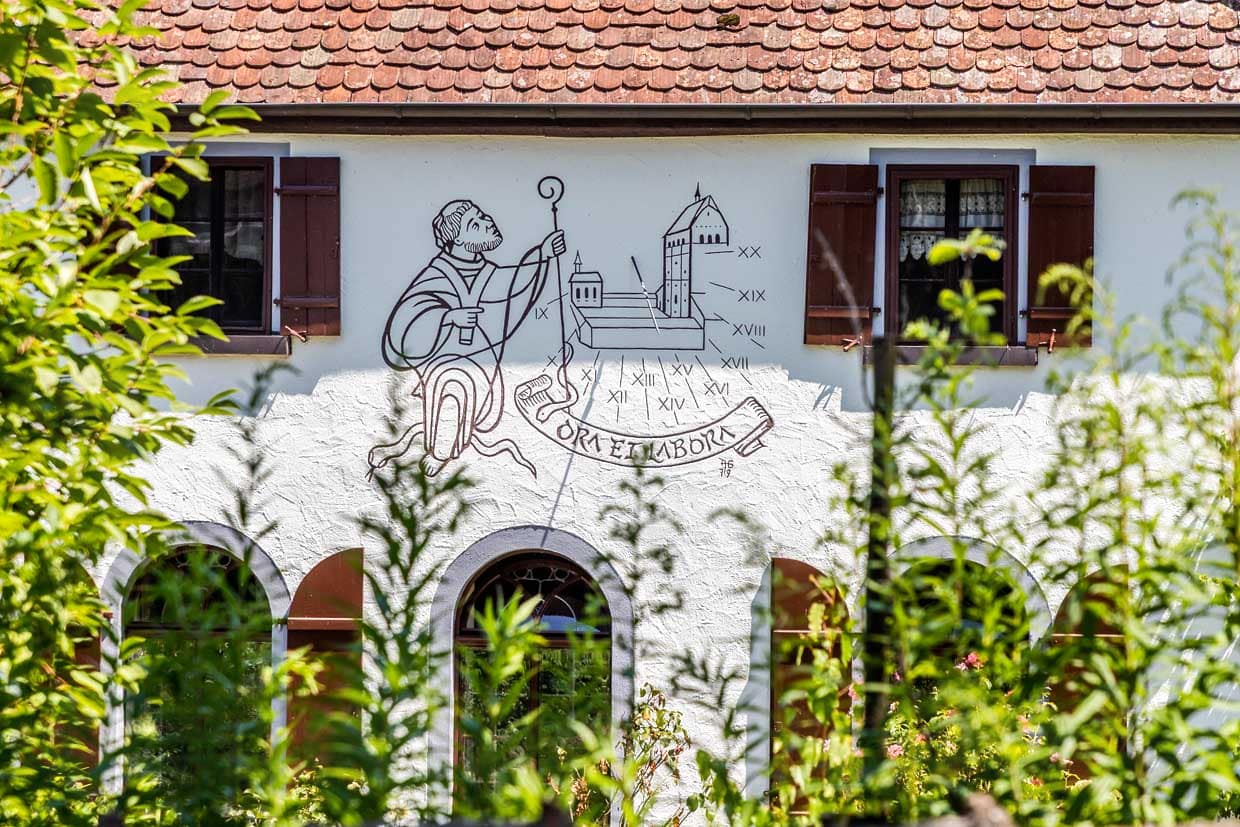
The work, later known as Hortulus – translated as “little garden” – is considered a masterpiece of medieval poetry. In 444 Latin verses, Walahfrid describes 24 herbs and useful plants, including rose, radish, mint, fennel, chervil and sage. He describes their appearance, fragrance, flavour and medicinal properties. At the same time, he tells of the labour-intensive work of the gardener and the cycle of nature through the changing seasons. In doing so, he orientated himself on the style of the ancient poet Virgil and let his verses flow in the regular rhythm of hexameter. They are still worth reading and instructive today. He wrote about the universal medicinal plant sage:
Sage blooms brightly at the entrance to the garden,
Sweet of odour, full of working powers and healing to drink.
It has proved useful in curing many a human ailment,
It deserves to stand forever in green youth.
But it harbours pernicious discord within itself: for the flowers
If not restrained, it cruelly destroys the stem,
Lets greedy envy die the old branches. (Walahfrid Strabo, Hortulus)
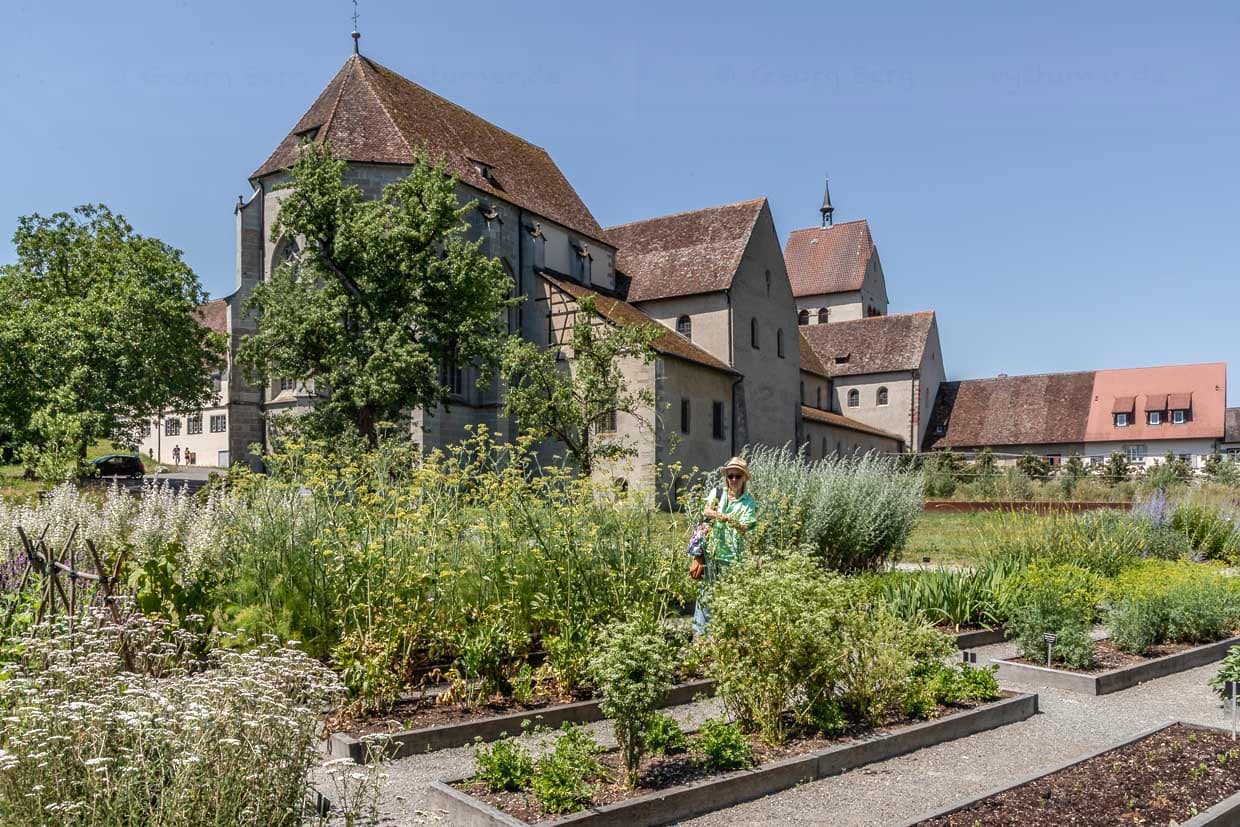
Strabo’s herb garden is located at the Minster of St Mary and St Mark in Mittelzell. It is freely accessible and can be visited without paying admission. There are only a few depictions of the monk on Reichenau. A small path leading from the lakeside to the monastery garden bears his name, and the Steckborn tiled stove in the cathedral treasury shows a depiction of him. As abbot of Reichenau Monastery, which was an important centre in the Carolingian Empire at the time, Strabo also took on diplomatic duties. On one such trip, he drowned in the Loire in 849 at the age of just 40. According to church records, he was buried on Reichenau, but the exact location remains unknown. Detailed literature on the Hortulus is available at the tourist office in Mittelzell.
Reichenau vegetable island
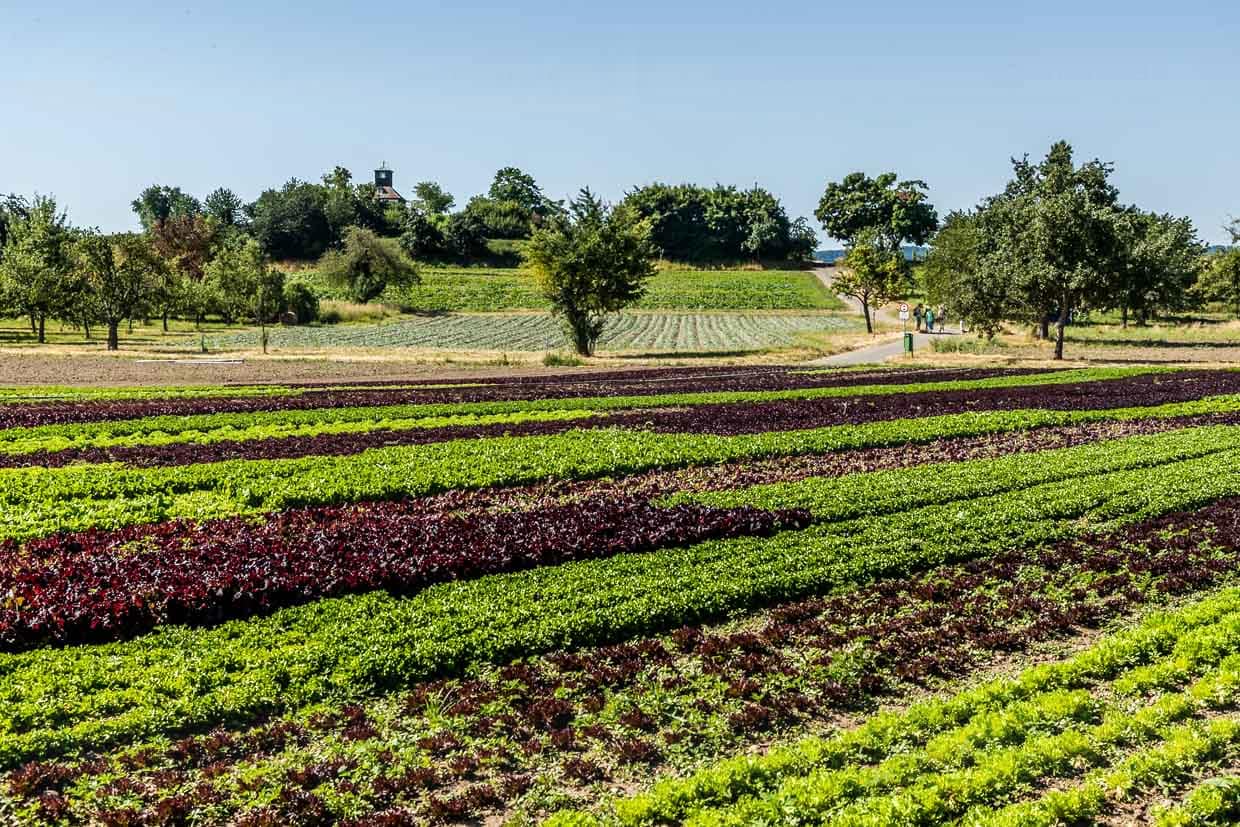
In summer, a patchwork of oak leaf, lollo rosso and lettuce spreads across the vegetable fields of Reichenau. In 2024, 39 farms were still growing around 70 different types of vegetables there, including 2.1 million heads of lettuce. A large proportion of the regional vegetables come from the island’s gently rolling fields and greenhouses. Kohlrabi, cauliflower, broccoli, fennel and herbs thrive in the open fields. But there are also fallow fields and empty greenhouses. More and more family farms are giving up vegetable growing. At the same time, young organic farmers are venturing into the future: they are focussing on trendy vegetables such as sweet potatoes, ginger and lemongrass – and on a large scale.
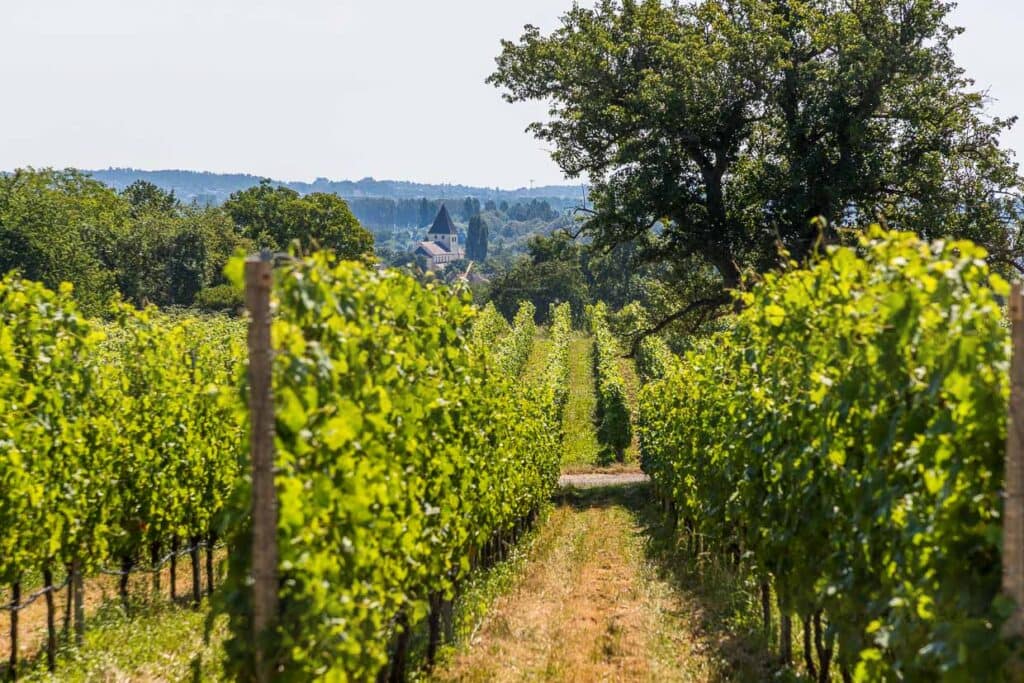
Viticulture on Reichenau looks back on over 1200 years of history, closely interwoven with the monastery tradition. Monks planted the first vines in the 9th century. Today, the Müller-Thurgau variety dominates, developing fruity, spicy flavours of apple, grapefruit and nutmeg in the mild climate. An ingenious irrigation system with 60 kilometres of pipes, four lake pumping stations and 1,500 water taps supplies the vineyards.
View over to Switzerland
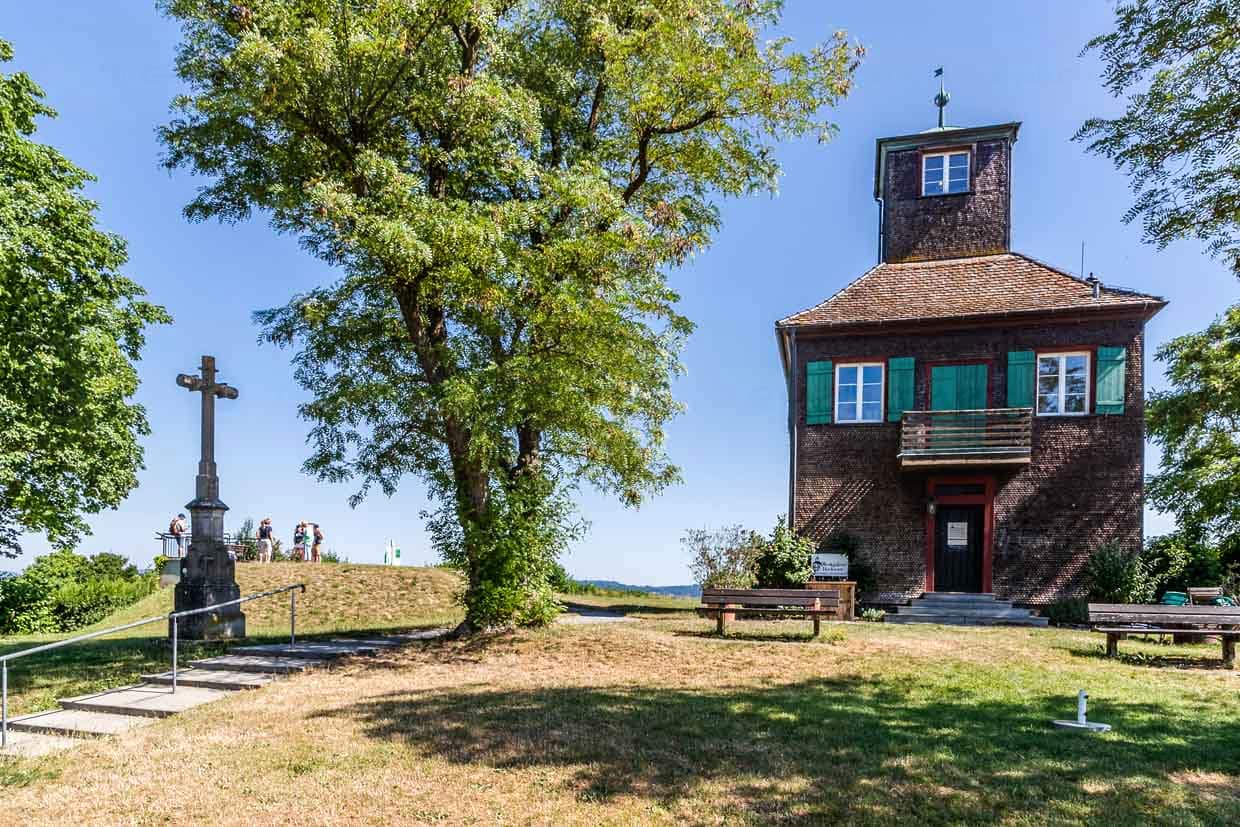
The Hochwarthaus, built in 1839 as a tea house, towers 40 metres above the island at its highest point. From here, the view sweeps across Untersee, the vegetable fields and the Rhine. With a bit of luck, the ceramics studio will be open and you can drink tea and look as far as the Swiss side, as it once was. Opposite is Arenenberg Castle, once the exile home of Louis Napoleon Bonaparte and his mother Hortense de Beauharnais. Louis is said to have fired cannons from Arenenberg in the direction of Reichenau for training purposes.
Thurgau farm gardens
In the canton of Thurgau, farm gardens worth seeing have been combined to form a route that can be explored on foot, by bike or by car. There are no written plans or documents relating to the Thurgau farm gardens. The garden was always part of the farmhouse, an indispensable part of life. Knowledge about planting, tending, harvesting and propagating plants was passed on orally from mother to daughter. The origins of cottage gardens go back to the earliest written instructions from the 9th century: Walahfrid Strabo’s Hortulus and Charlemagne’s Capitulare de villis, which describes 90 plants.
Information on the Thurgau Farmers’ Garden Route and the monastery island of Reichenau
The research trip was supported by Regio Konstanz Bodensee Hegau