
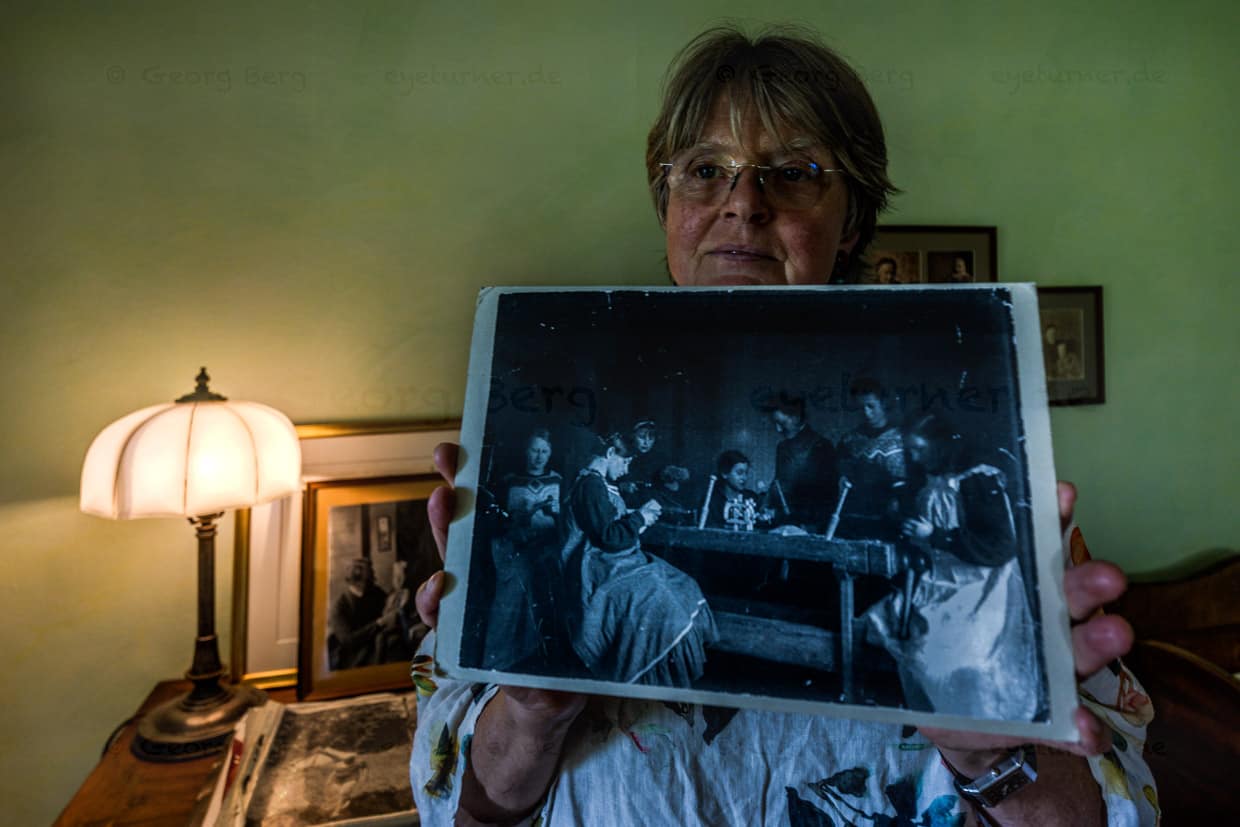
Mia Hesse was more than just the first wife of the writer Hermann Hesse. She was also Switzerland’s first professional photographer. Around 1900, she led a self-determined, modern life in Basel. Against her parents’ wishes, she married Hermann Hesse, who was nine years younger and still unknown at the time. Following a trend, the couple moved from the city to the countryside. She built the house, he laid out the garden. Thanks to Eva Eberwein’s commitment, the Mia and Hermann Hesse House in Gaienhofen on the Höri peninsula was saved from demolition and is now open to the public.
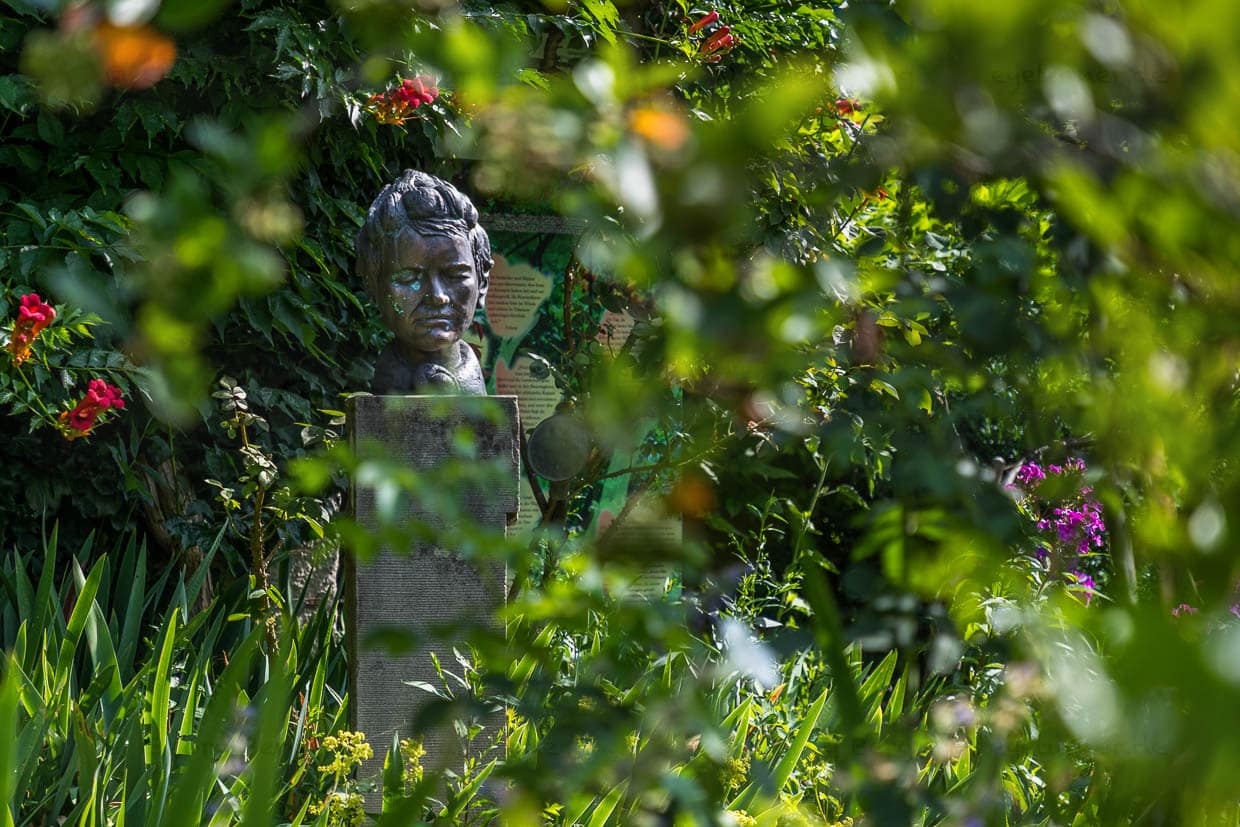
The house on the heights
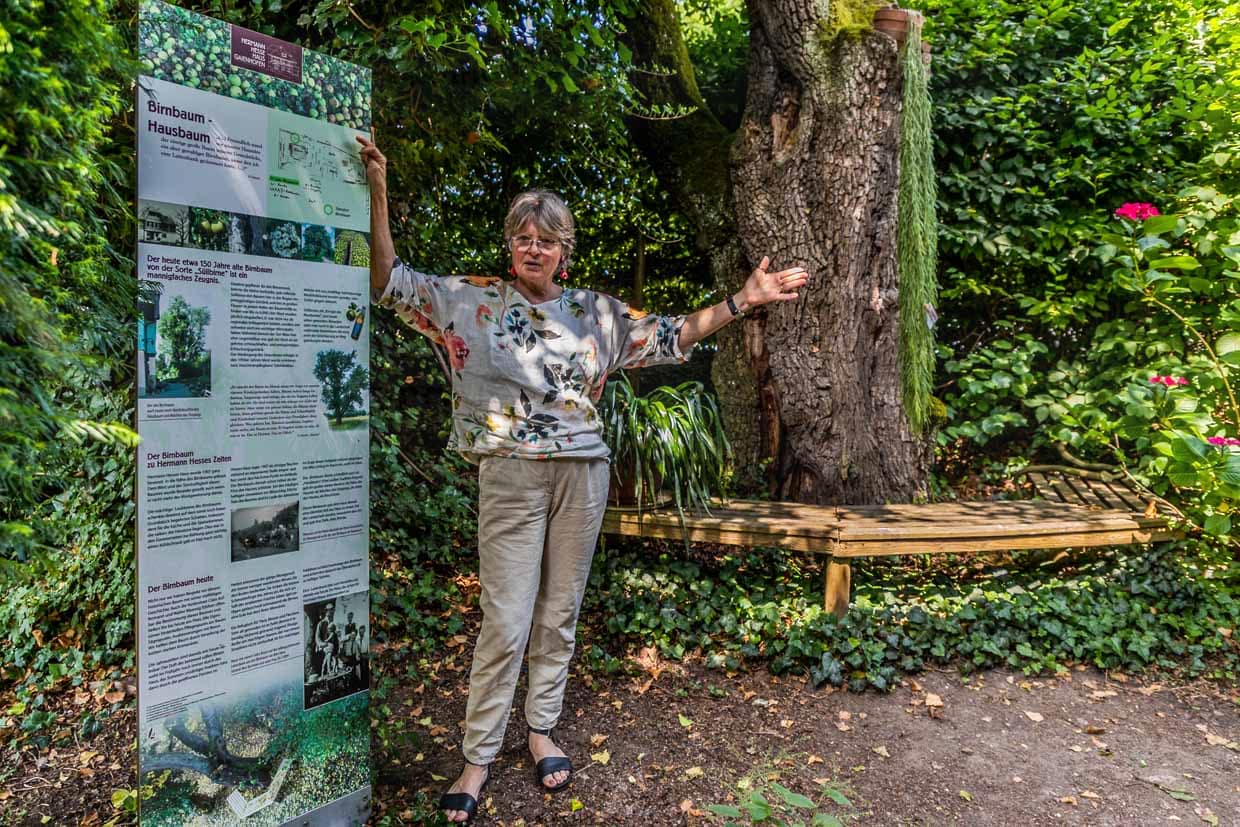
The Mia and Hermann Hesse House is located on the Höri peninsula on the western shore of Lake Constance, just ten kilometres by car from Radolfzell. It stands on a hill to the west of the village centre, hidden in the greenery of the large garden. From there you can still look down to the lake. There are now many houses on the hillside and Hermann-Hesse-Weg is a sought-after residential area. But when Mia and Hermann Hesse chose the plot in 1907, their Swiss country-style house stood like a lighthouse on the hillside after just a few months of construction. Hermann Hesse declared an old pear tree to be the house tree.
Preserving, researching, remembering
Eva Eberwein is often regarded as the custodian of the Hesse House. But this description does not do justice to her multifaceted commitment. In conversation, she explains that she has known the house since she was a child. Summer holidays with her aunts in Gaienhofen made it familiar to her. When the Hesse family, who by then had three sons, sold the house in 1912, it changed hands several times, fell into oblivion and fell into such disrepair that it was almost demolished. In 2003, however, Eva Eberwein and her husband Bernd bought the old country villa. They renovated it in keeping with its listed status, reconstructed the north and south gardens, planted the flower beds with wild herbs and tended the trees that Hermann Hesse once planted. After the renovation, the house is entered in the Baden-Württemberg register of monuments as a cultural monument of special significance in 2004.
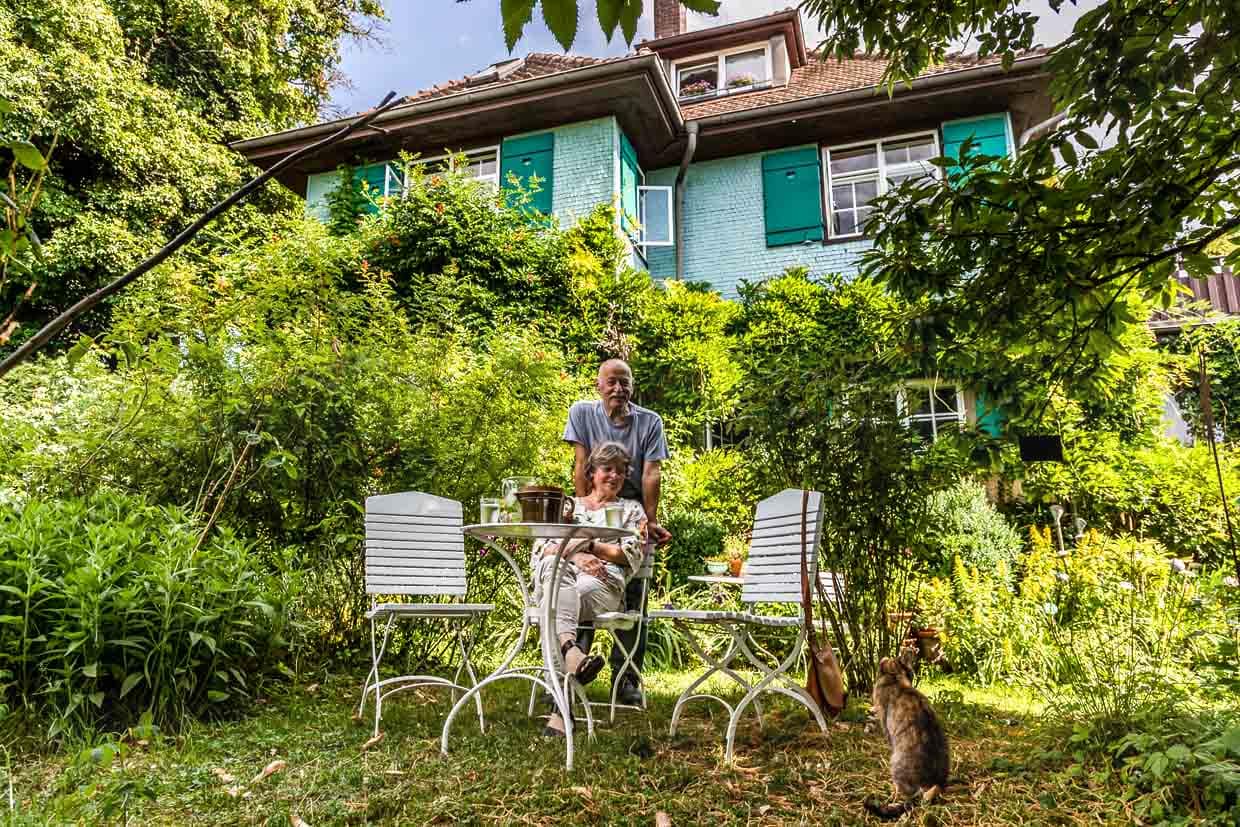
Eva Eberwein immerses herself more and more in the history of the house and the life of the Hesses in this place. The project takes up so much time that the biology graduate gives up her job. She is the first to pay special attention to Mia Hesse, the lady of the house. In 2019, she gives the house the name Mia and Hermann Hesse House. Previously, it was only known as the Hesse House and ignored Mia Hesse.
Mia Hesse and the dream of country life
When I learnt about Mia Hesse’s life, I immediately asked myself: How could this happen? Why did a woman who had achieved an extraordinary level of independence for her time around 1900 swap the city for a remote village on Lake Constance? Mia Hesse gave up her photo studio in Basel in order to realise the ideals of country life. Eva Eberwein places this decision in the social context of the time. In her publication Mia Hesse – Gaienhofener Alltag neben Hermann Hesse, she writes: “But now away from Basel, out of the city and into the countryside: Hermann and Mia Hesse were following the ideals of many of their contemporaries. The life reform around 1900 characterised people with its ideals. It was a rejection of Wilhelmine opulence and the overloaded pomp of the Wilhelminian era in favour of the original.”
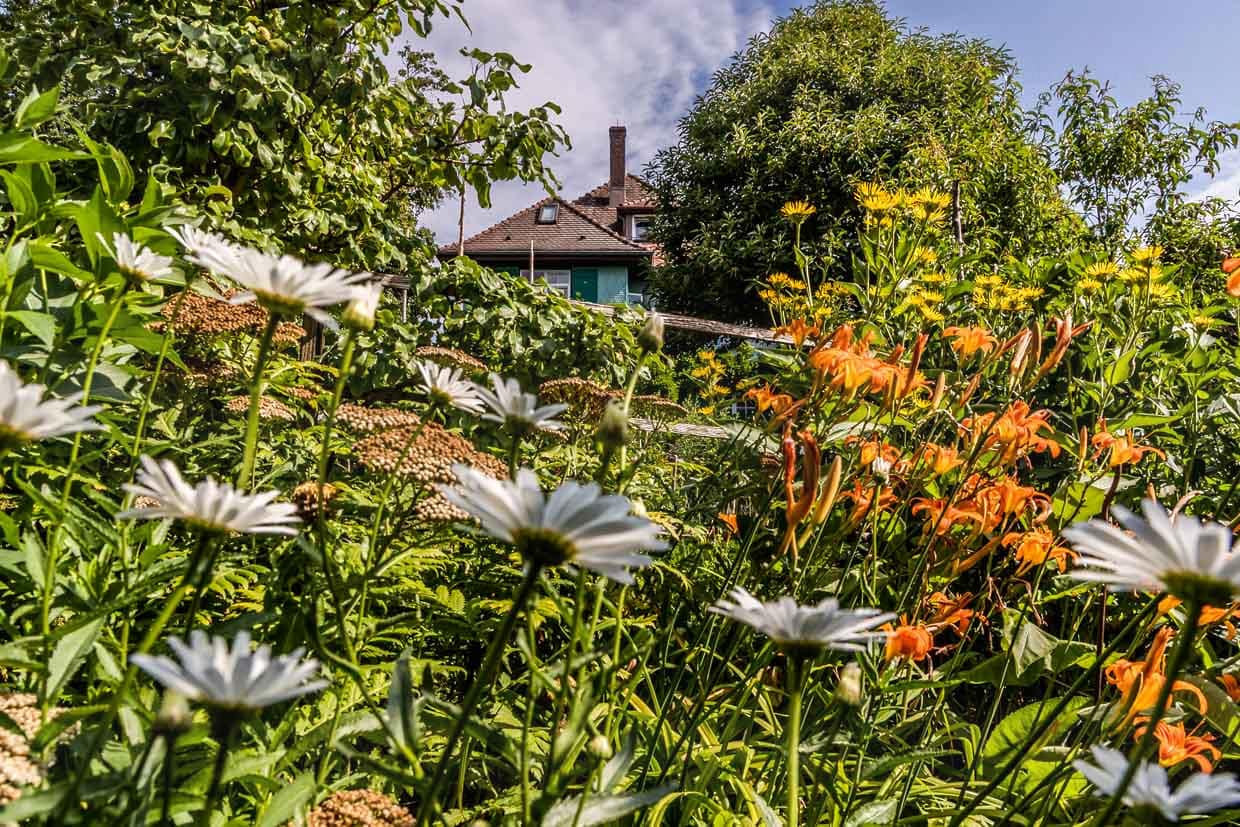
At that time, all areas of life changed fundamentally. The corset disappeared from wardrobes, a healthy diet of muesli, malt coffee and vegetarian food was introduced, and health food shops sprang up. According to Eva Eberwein, this spirit of optimism, this rethink and the desire for a different life also affected the young Hesse couple. Mia Hesse, energetic and determined, was the driving force.
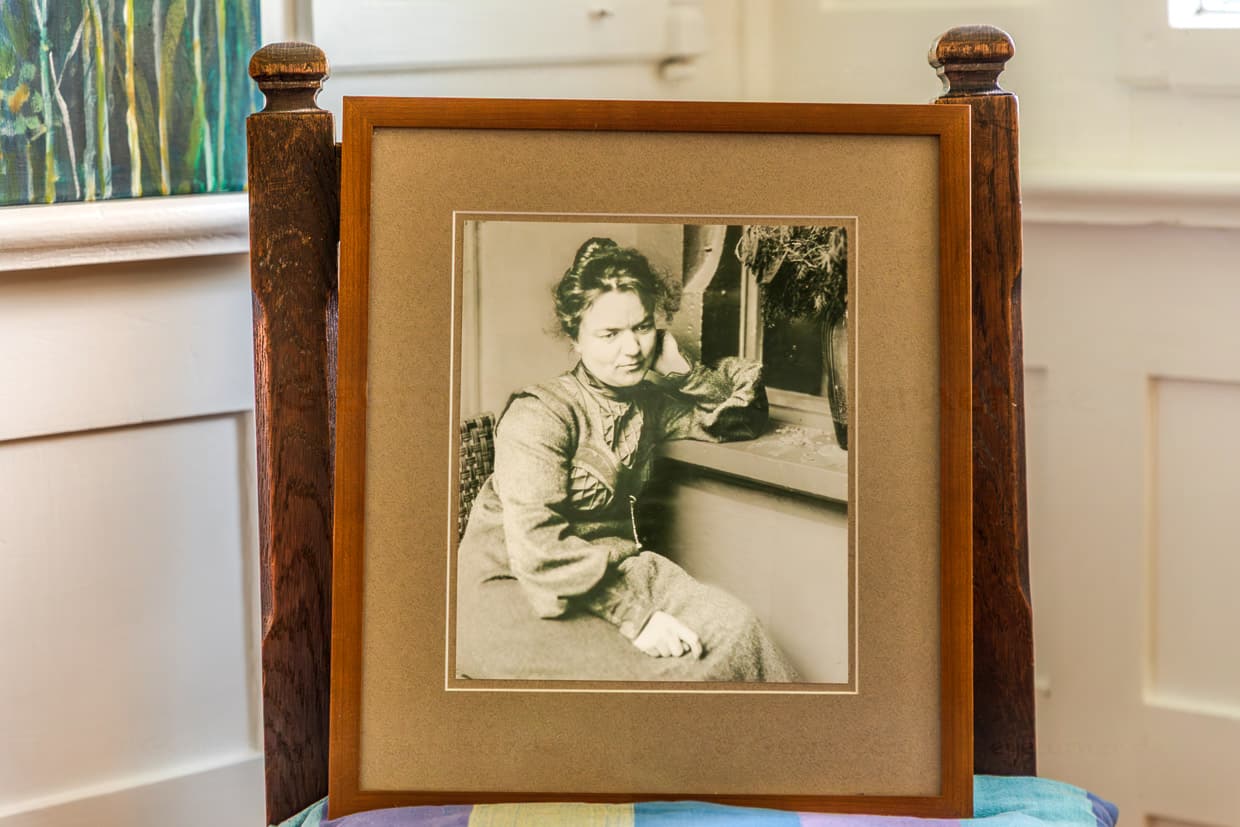
Mia Hesse and the stagnation of the soul
Hermann and Mia Hesse lived on a farm in Gaienhofen for three years. Their circumstances were modest, but they were happy as a couple. Then they decided to build their own house – the house that bears their name today. The architect was a relative of Mia’s and most of the money came from her family’s fortune. Mia contributed ideas, supervised the construction and took on what today would be called site management. Officially, Hermann Hesse was listed as the builder in the documents, which later led to the house bearing only his name. However, as a married woman, Mia Hesse only had limited rights to make decisions or dispose of the property.
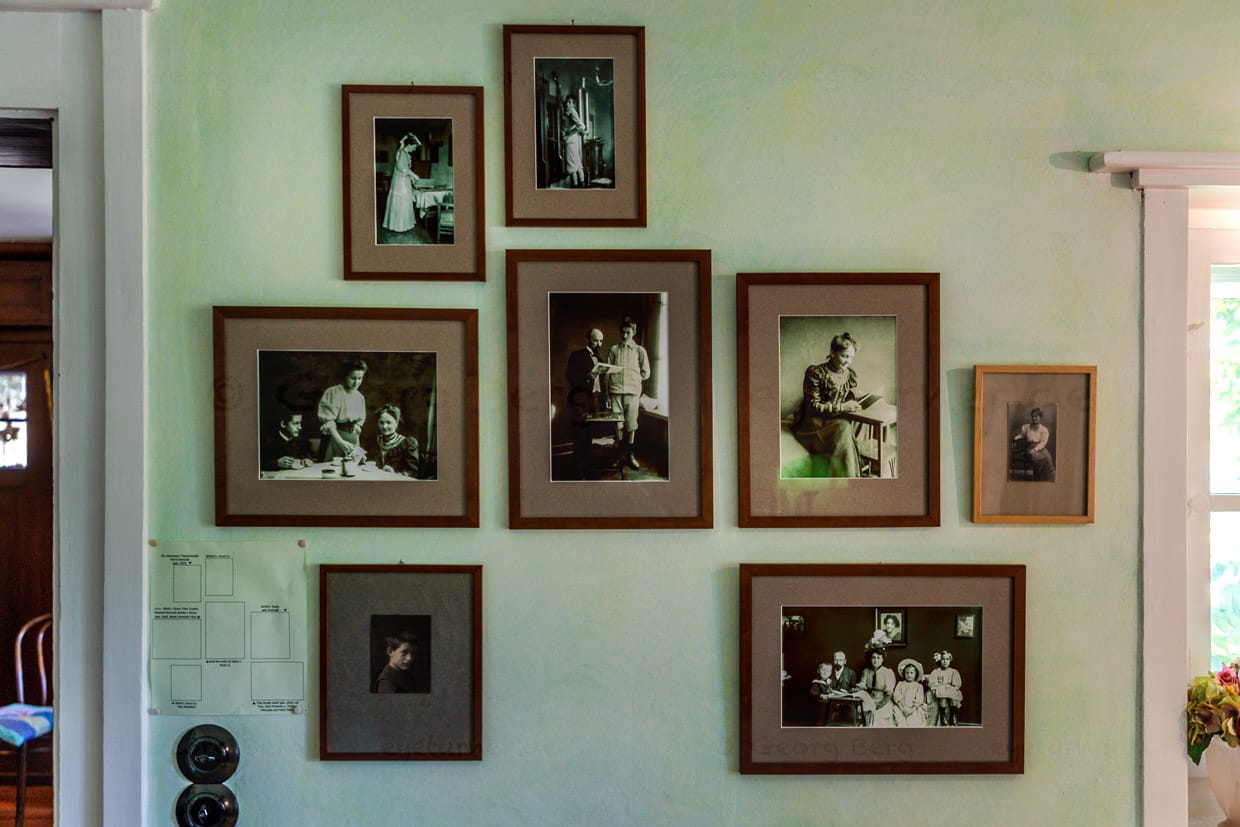
Hermann Hesse dreamed less of a house than of a garden. He meticulously planned and planted it. Everything could have been perfect: a modern house, a flourishing garden, the birth of his second son in 1909. But the photos that can be seen today during viewings show Mia Hesse looking sad. Eva Eberwein, standing in the Hesses’ former nursery, describes their situation: Hermann Hesse had become increasingly recognised as a writer since the success of his novel Peter Camenzind (1904). His life was dominated by reading trips, health cures and travelling for the sheer pleasure of being on the road. Mia remained on the sidelines. Some years he was away for five months at a time. She remained tied to the house on the hill, gave birth to three children in six years, put down her camera and sank into loneliness and depression.
The reform idea of a simple country life became a trap for Mia Hesse. In 1912, they sold the house and moved to Bern. A nervous breakdown in 1919 was followed by hospitalisation and divorce in 1922.
A new building pressurises house and garden
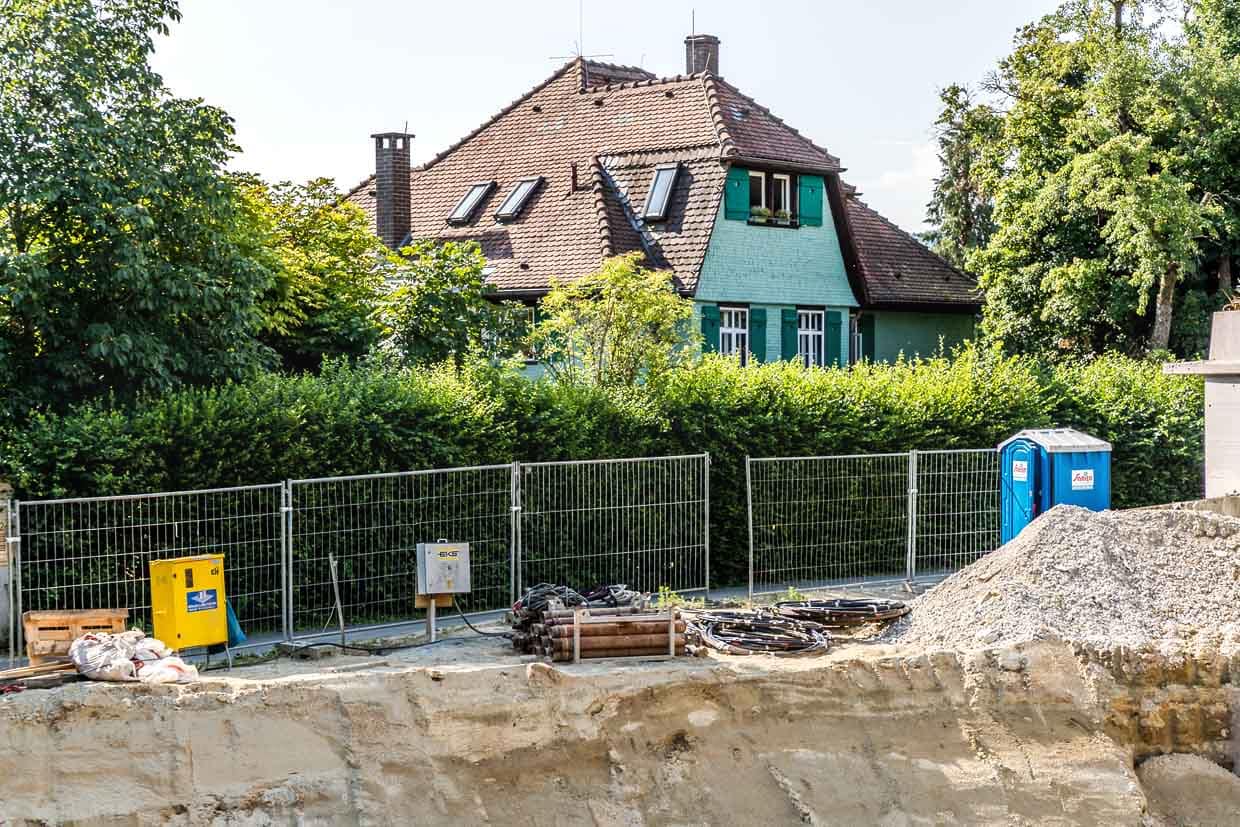
Since summer 2025, a multi-storey apartment building with an underground car park has been under construction on an elevated hillside plot. Despite protests and a petition, the building project was approved and has the address Hermann-Hesse-Weg 1 of all places. Eva Eberwein, the support association and many Gaienhofen residents fear – supported by expert opinions – that the eight-metre-deep earthworks will cut through water-bearing layers. This could put hedges, trees and flower beds in the north garden of the Hesse House under drought stress. The new building will tower over the listed building and visually overwhelm it. The image of the solitary building on the hill will be destroyed and the impression that Hermann Hesse once described will be lost. He praised the location of his property with the words: “The location is very beautiful, spring water very close, three minutes to the village with a wide view on two sides.
House visit
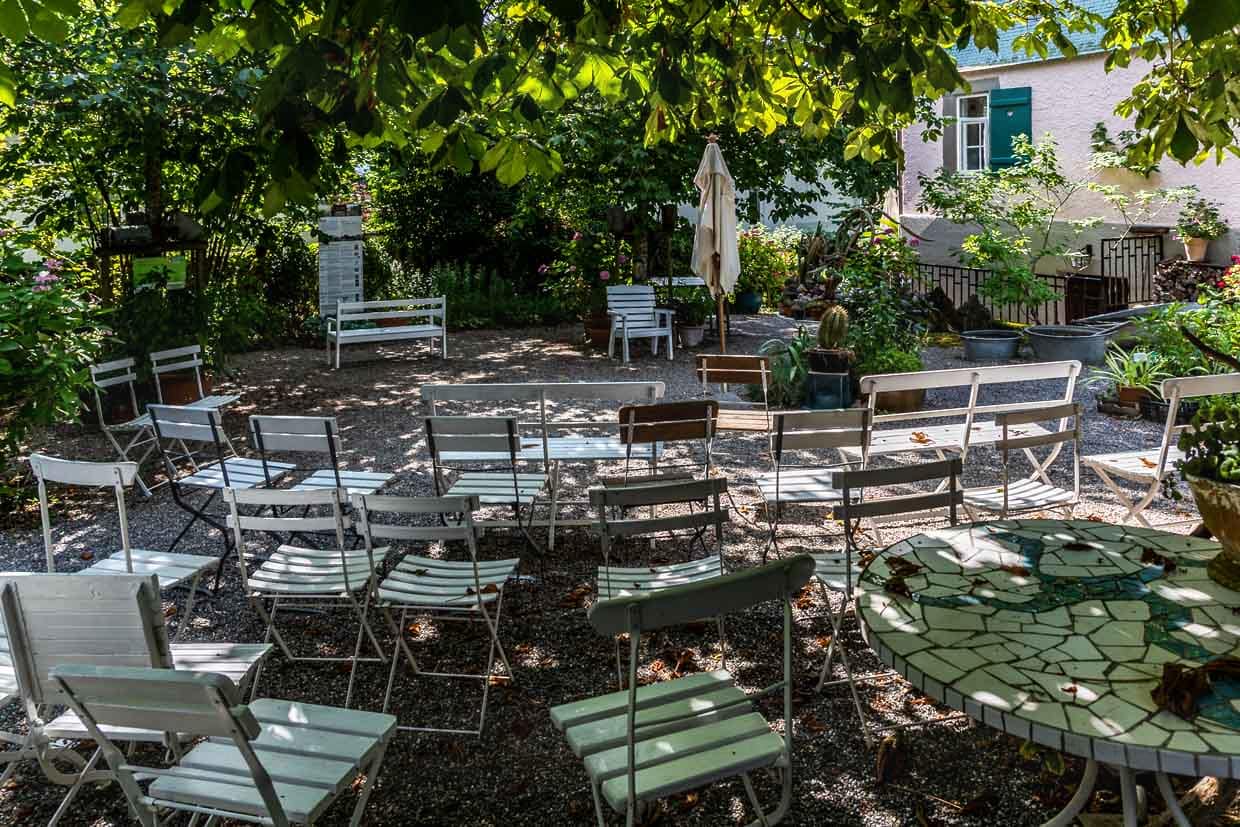
The Mia and Hermann Hesse House in Gaienhofen preserves original details such as Hesse’s tiled stove in the study and a historic garden with reconstructed north and south gardens, flower beds, fruit trees and wild herbs. Visits are only possible by appointment. There are also fixed dates, such as the meeting under the chestnut tree between April and October, Fridays to Sundays at 12.30 pm or individually arranged dates for groups. Owner Eva Eberwein guides visitors through the house and garden. The tours last around one to two hours, cost €12 per person and sometimes offer additional programme items such as lectures, film tours or wild herb explorations.
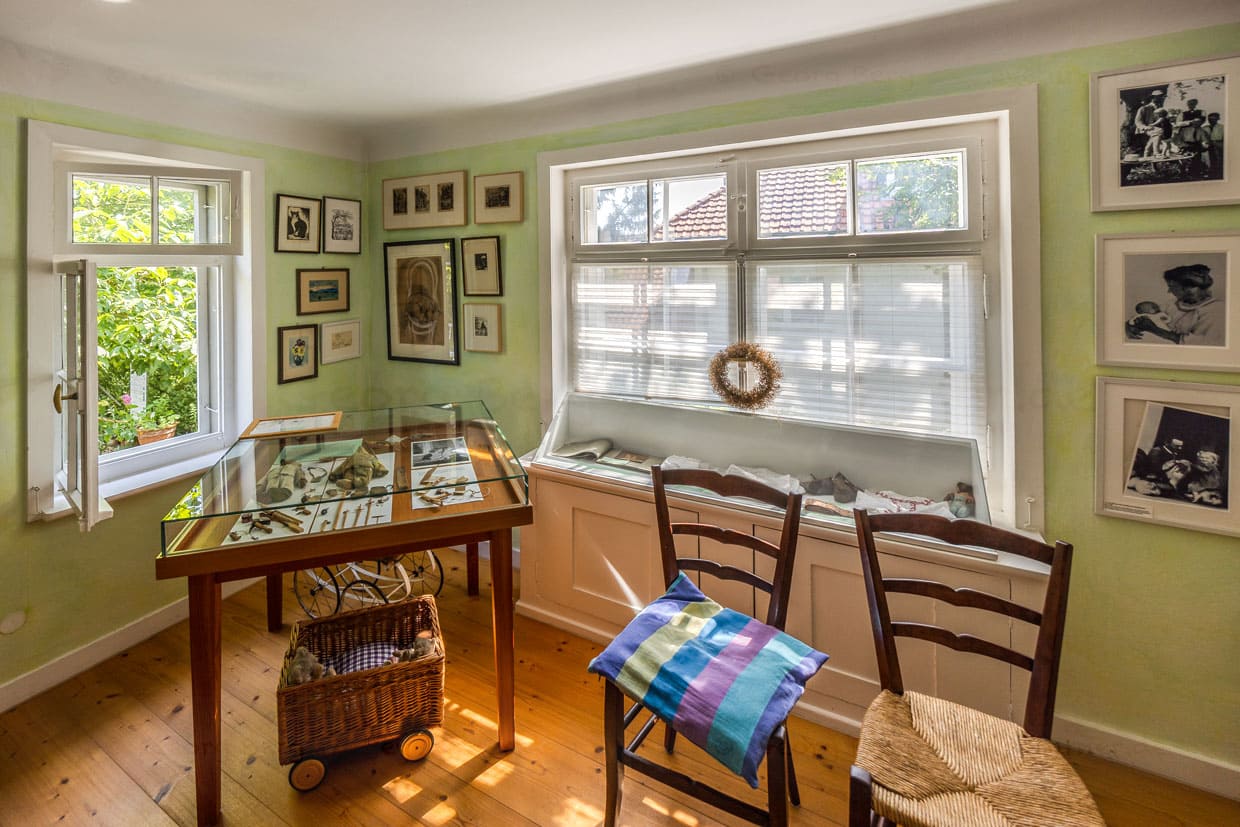
A visit can be combined with a visit to the nearby Hesse Museum in the village. However, the everyday life of the Hesse family around 1900, Mia Hesse’s photography, the reform lifestyle and the only garden designed by Hesse herself can only be experienced here. The guided tours provide insights into these themes and show rarely exhibited objects. They also shed light on the Gaienhofen period, which echoes in Hesse’s works.
Around Lake Constance
Lake Constance is a paradise for garden lovers. In addition to the famous island of Mainau, there are many lesser-known gardens. Hermann Hesse cultivated his garden in Gaienhofen, while the poetic Benedictine monk Walahfrid Strabo planted a herb garden on the vegetable island of Reichenau. On the Swiss side, the Thurgau Farmers’ Garden Route leads through blooming landscapes. At Arenenberg, Queen Hortense and her son Prince Louis Napoleon created a landscape garden based on the ideas of Prince Pückler-Muskau and left behind a castle full of Napoleonic exile history.
The research trip was supported by Regio Konstanz Bodensee Hegau