
The Black Loyalist Heritage Centre’s leaflet is bilingual, in English and French. This fits with our image of Canada – two languages, two founding powers. Yet on our journey, we also learn how the European settlers treated the Indigenous First Nations. And we discover that Canada has a Black history in Birchtown, near Shelburne, Nova Scotia. It tells the story of people who began their lives as enslaved people and went on to found their own settlement there. Their history stretches all the way back to Sierra Leone.
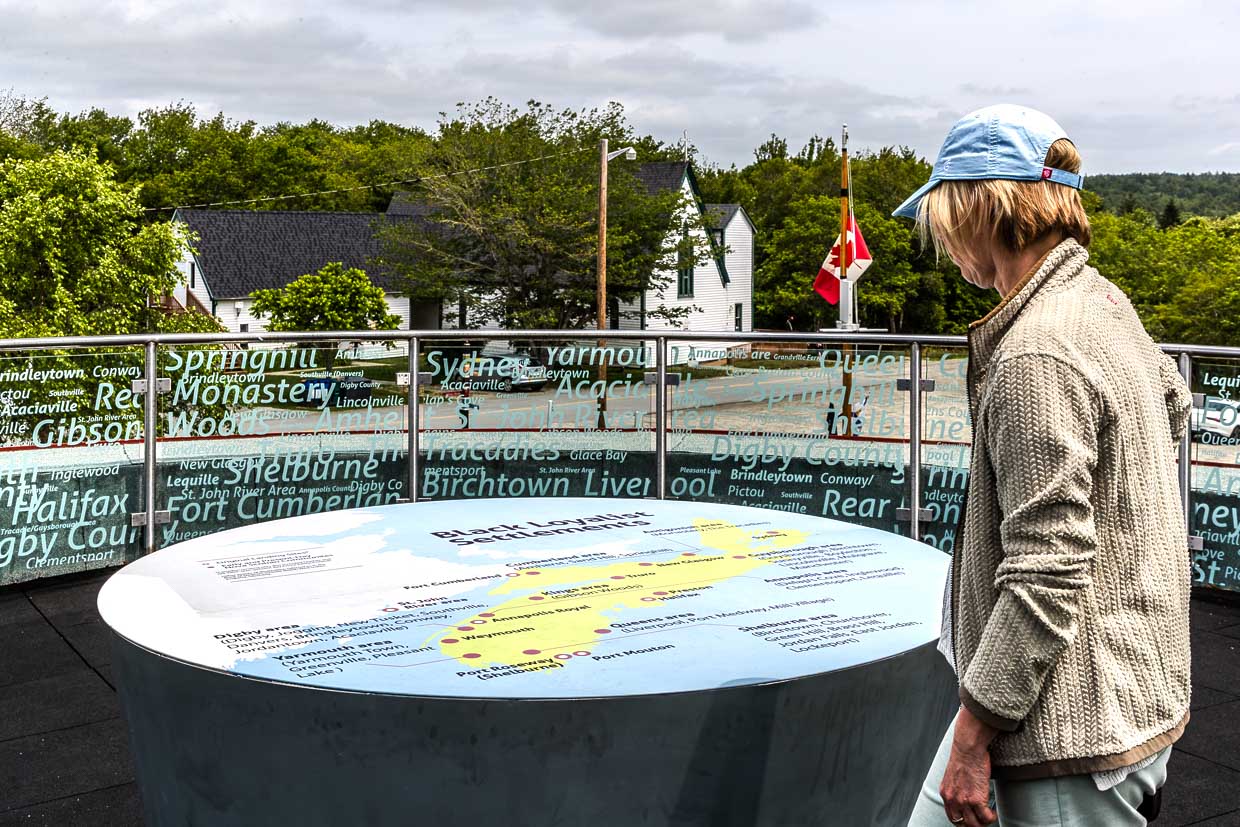
A floor made of glass
At the Black Loyalist Heritage Centre, visitors walk across a glass floor. Beneath it lies the excavation site of old Birchtown. In the late 18th century, it was the largest free Black settlement in British North America. The centre does not merely tell the story of this place; it stands upon it.
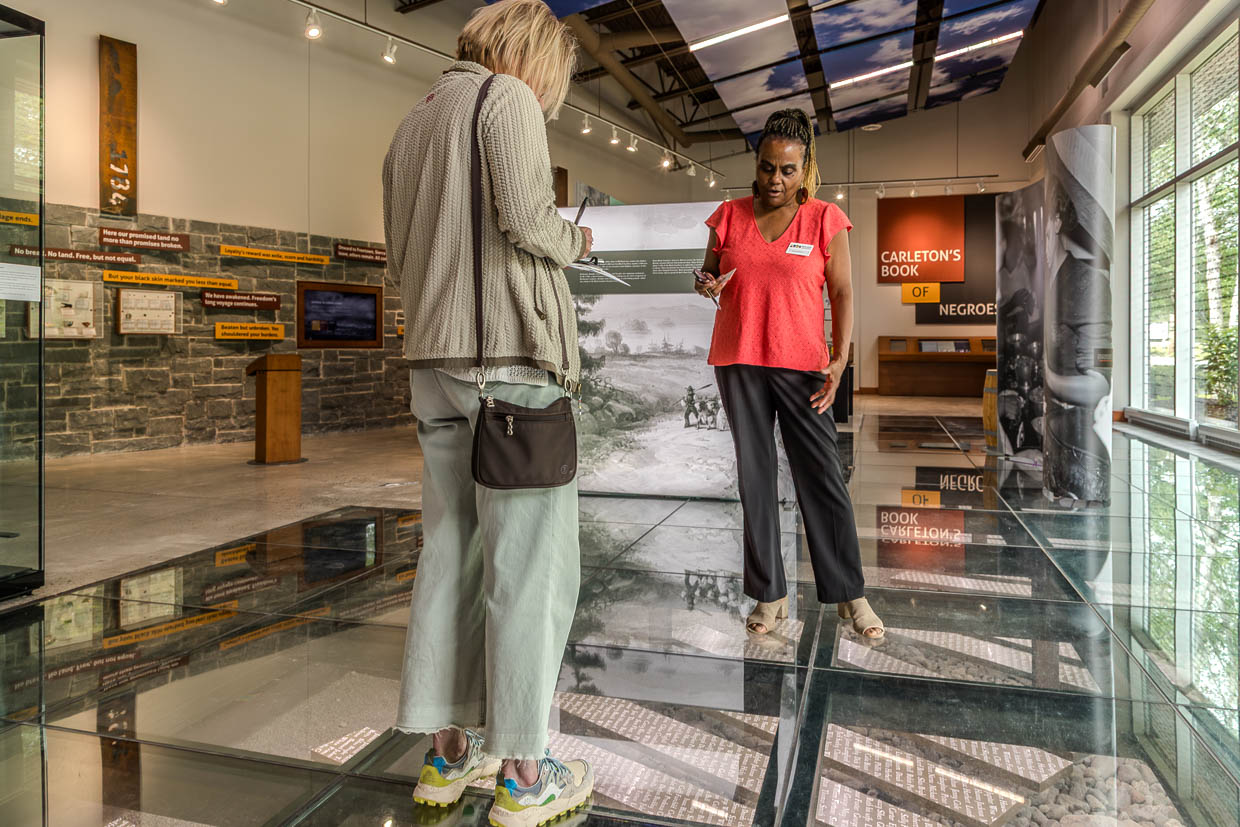
Colourful ribbons hang on the walls, bearing short phrases written by the new arrivals. They speak of hope and disappointment. One reads: “Port Roseway. Birchtown. Harbour of hope.” Another: “But your black skin marked you as less than equal.”
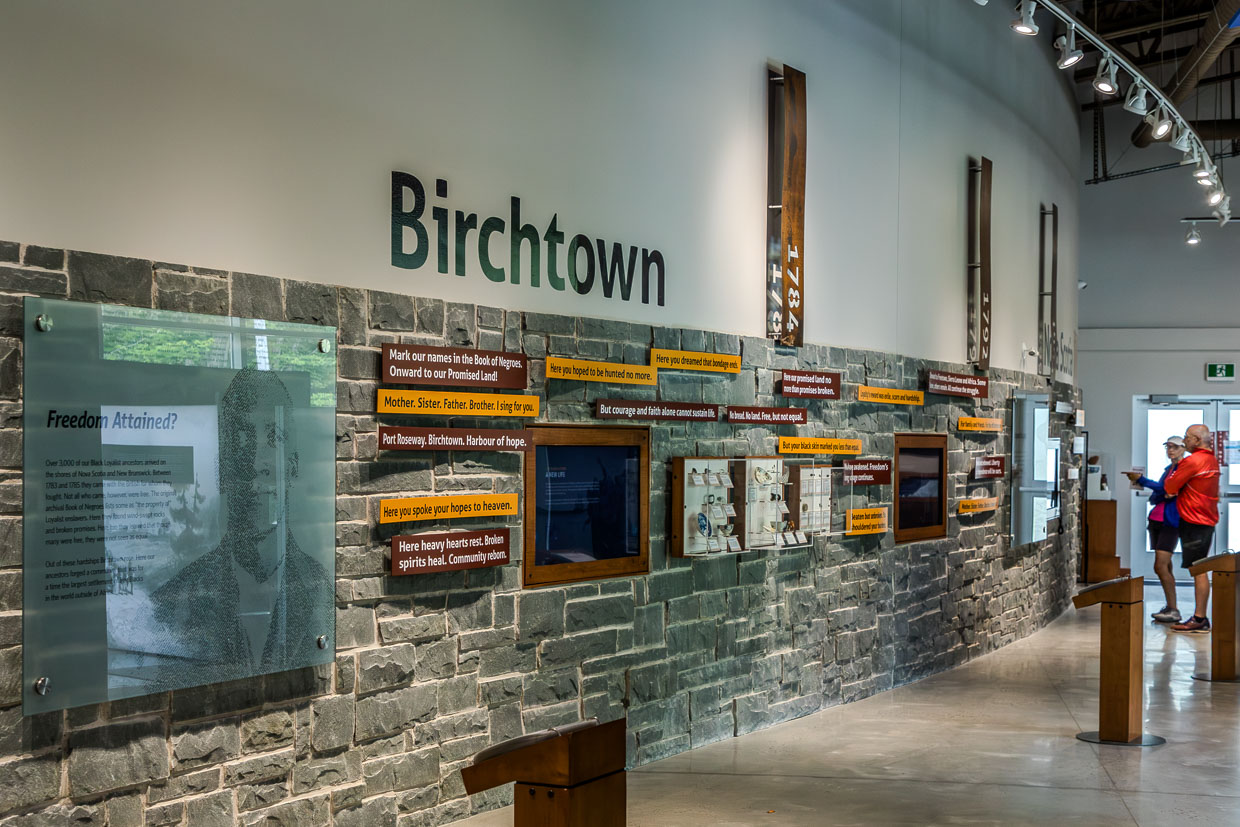
Loyal to whom?
The name is puzzling. We are familiar with Loyalists from the American Revolution. But Black Loyalists? The answer lies in a display case. During the War of Independence, the British had promised enslaved people their freedom if they fought for the Crown. After the war ended in 1783, British officials issued manumission certificates and kept a register, the Book of Negroes. It lists over 3,000 names. Anyone listed in it was allowed to leave the country. Around 3,500 Black Loyalists came to Nova Scotia. The register can be searched online; the Nova Scotia Archives’ website displays both the manuscript and a transcription.
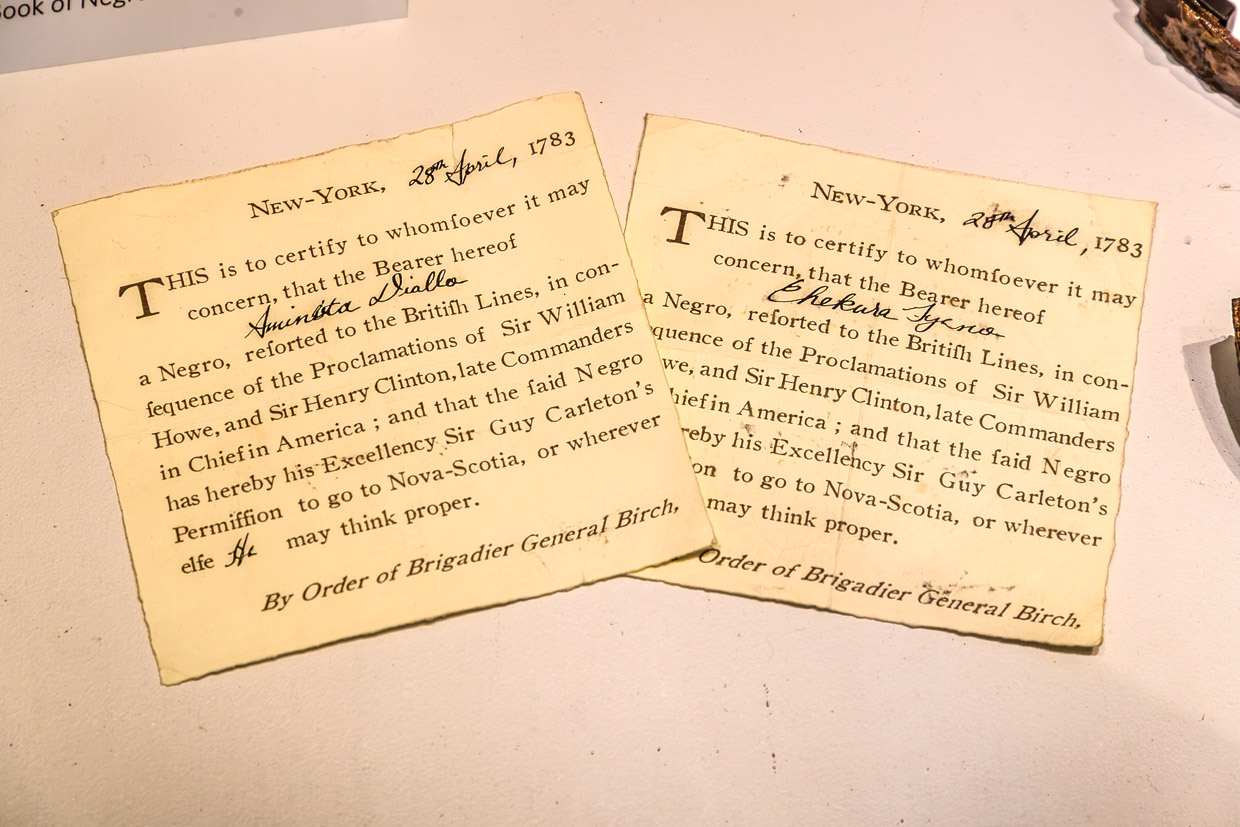
Andrea Davis, the centre’s director, guides us through the exhibition. She describes what happened after their arrival. The land allocated to the new arrivals was stony. Wages remained far below those of white workers. Freedom existed on paper, but scarcely in everyday life. Unrest soon broke out in Shelburne.
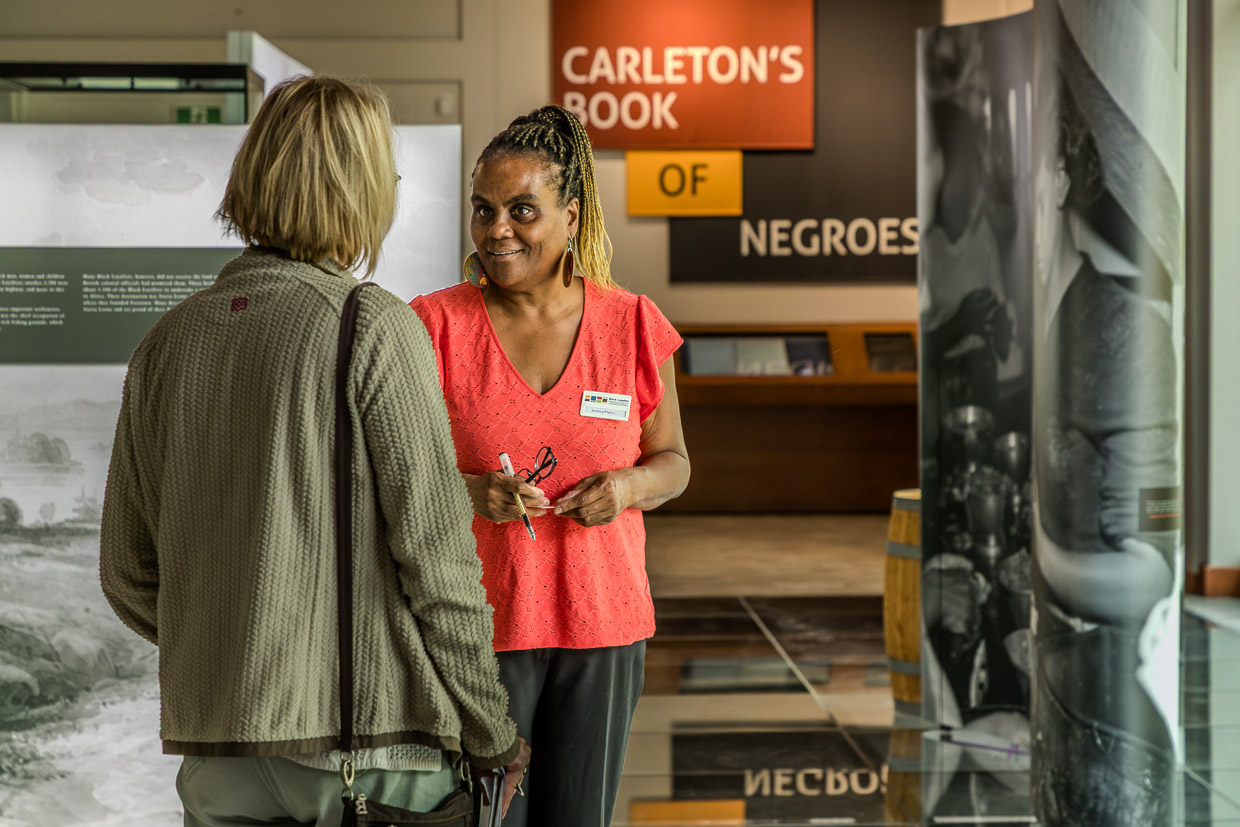
This is not a distant past. Davis is from the area. She is one of the descendants known here as African Nova Scotians. She worked in Toronto and returned in 2022 to run the centre. Here, it is not a stranger explaining the history. Here, someone is speaking about their own family.
Sierra Leone – destination and origin
The conversation reminded me of Freetown, where I learnt what freedom meant to former slaves. Freetown, the capital of Sierra Leone, has ‘freedom’ in its name. It was founded in 1792 by settlers from Nova Scotia. For Andrea Davis, Sierra Leone is a destination. She has never been there. But in two or three years’ time, she plans to travel there with her family. She wants to understand why, in 1792, so many people set out from Birchtown and other places in Nova Scotia – and what became of them on the other side of the ocean.
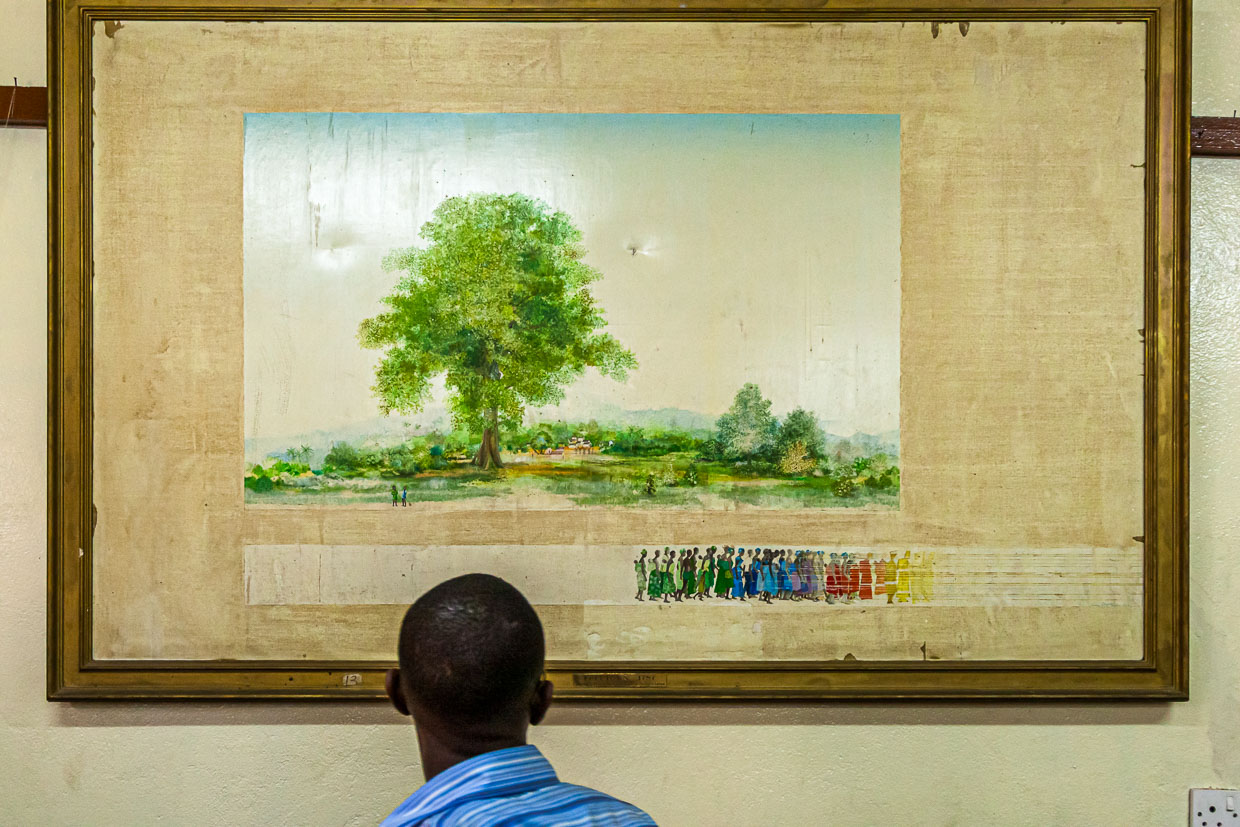
I was in Sierra Leone in 2016. I can describe to her a country she doesn’t yet know. She tells me a story I didn’t know at the time. Suddenly, we’re no longer talking about a museum. She mentions that she has a piece of the Cotton Tree at home. And I realise: Freetown was founded by people from Nova Scotia.
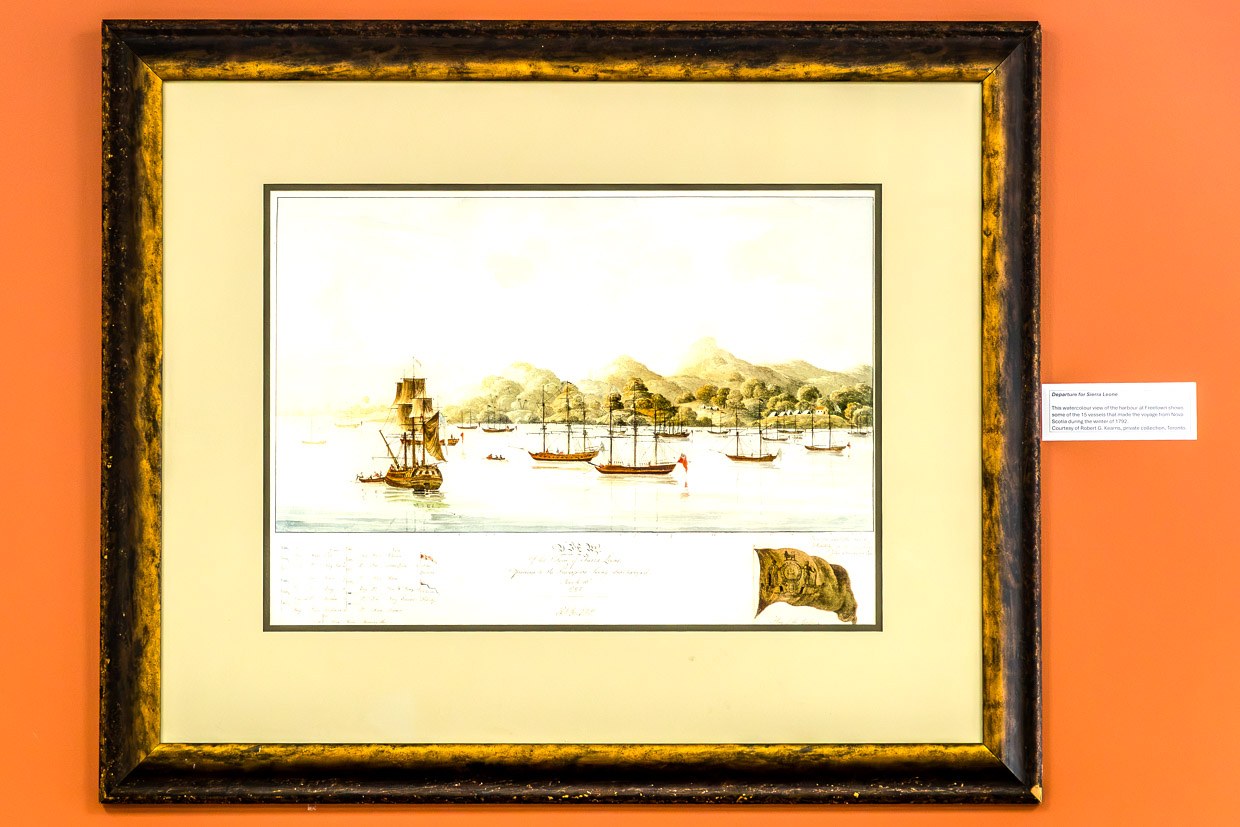
She leads us into the meeting room. Books fill the shelves; pictures adorn the walls. I’d expected a side room. It’s the room where we spend the longest time. On the wall hangs a framed view: ships in the harbour of Freetown, winter 1792. Around 1,200 people left Nova Scotia that year. The Black Loyalist Thomas Peters had been pleading in vain for land for years. In London, he found a partner in the Sierra Leone Company – they were looking for settlers. In March 1792, the new arrivals founded Freetown.
Strong women
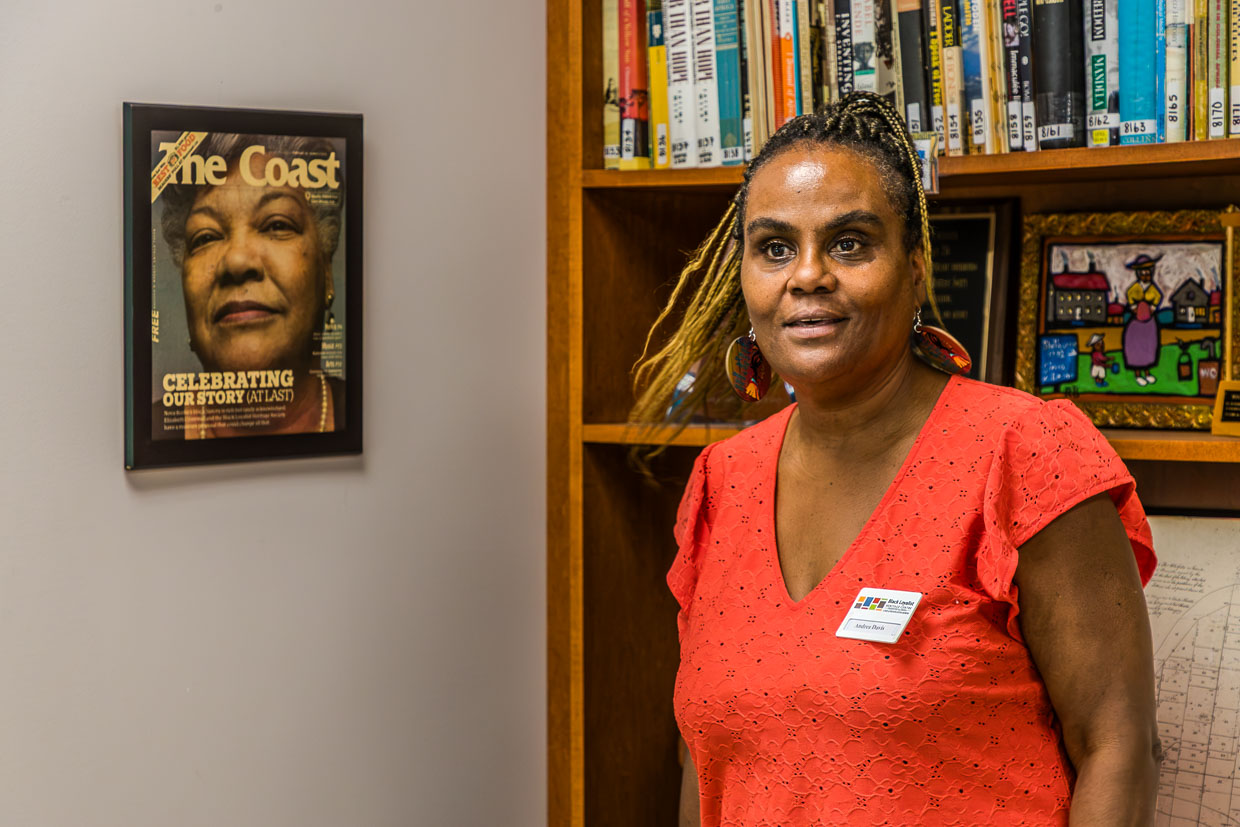
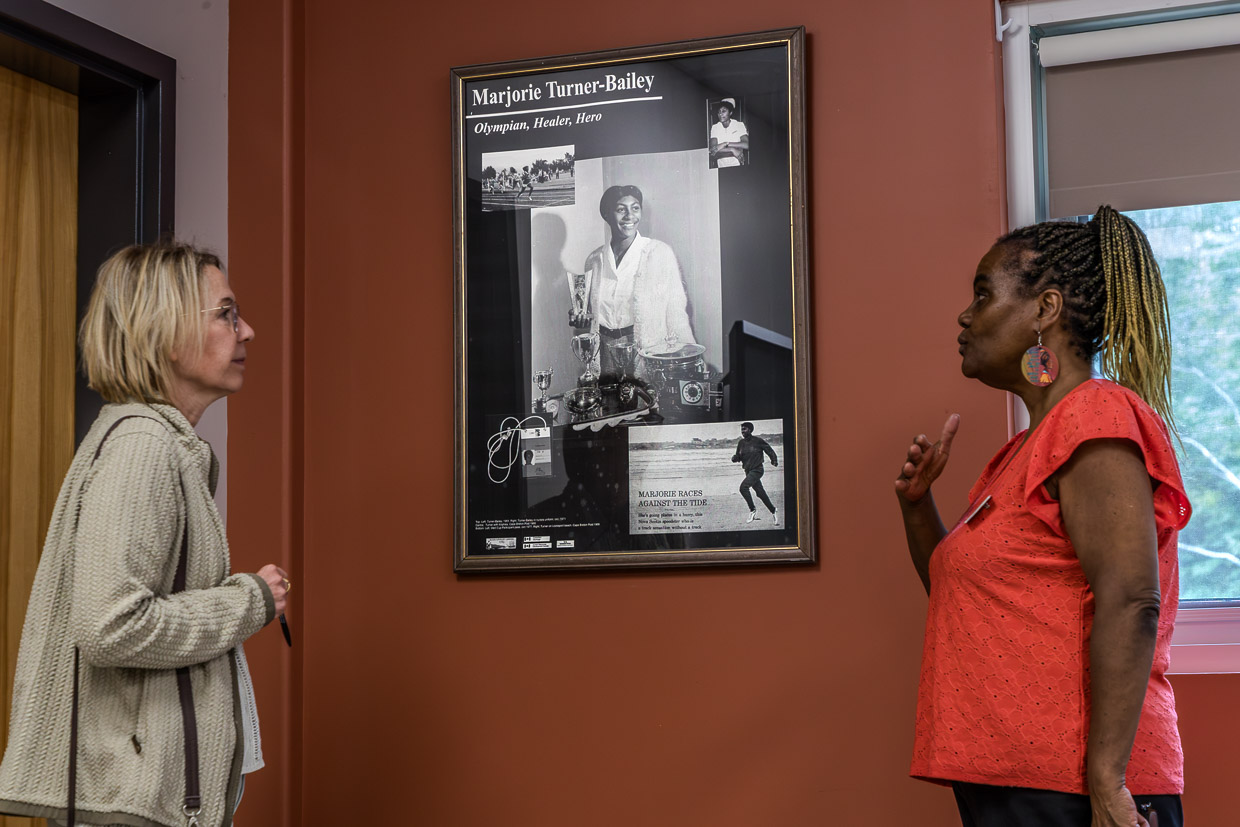
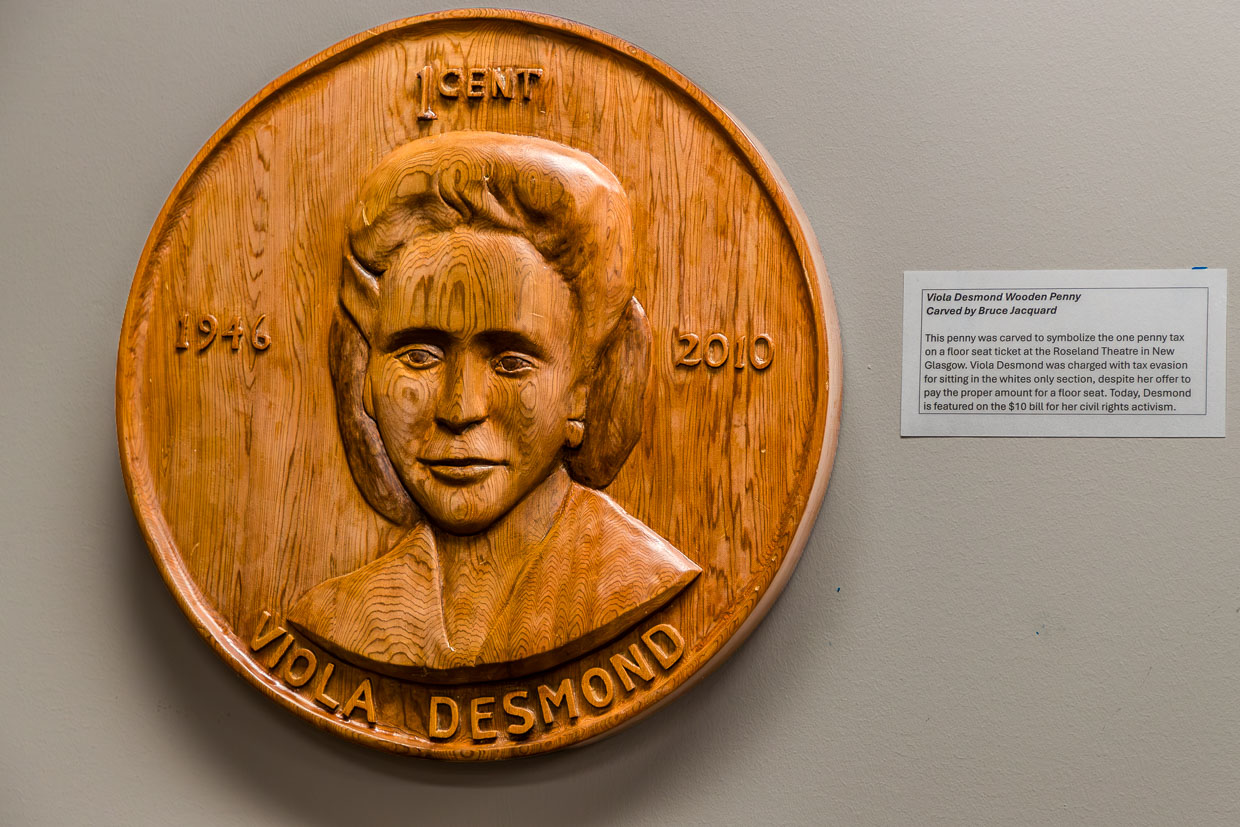
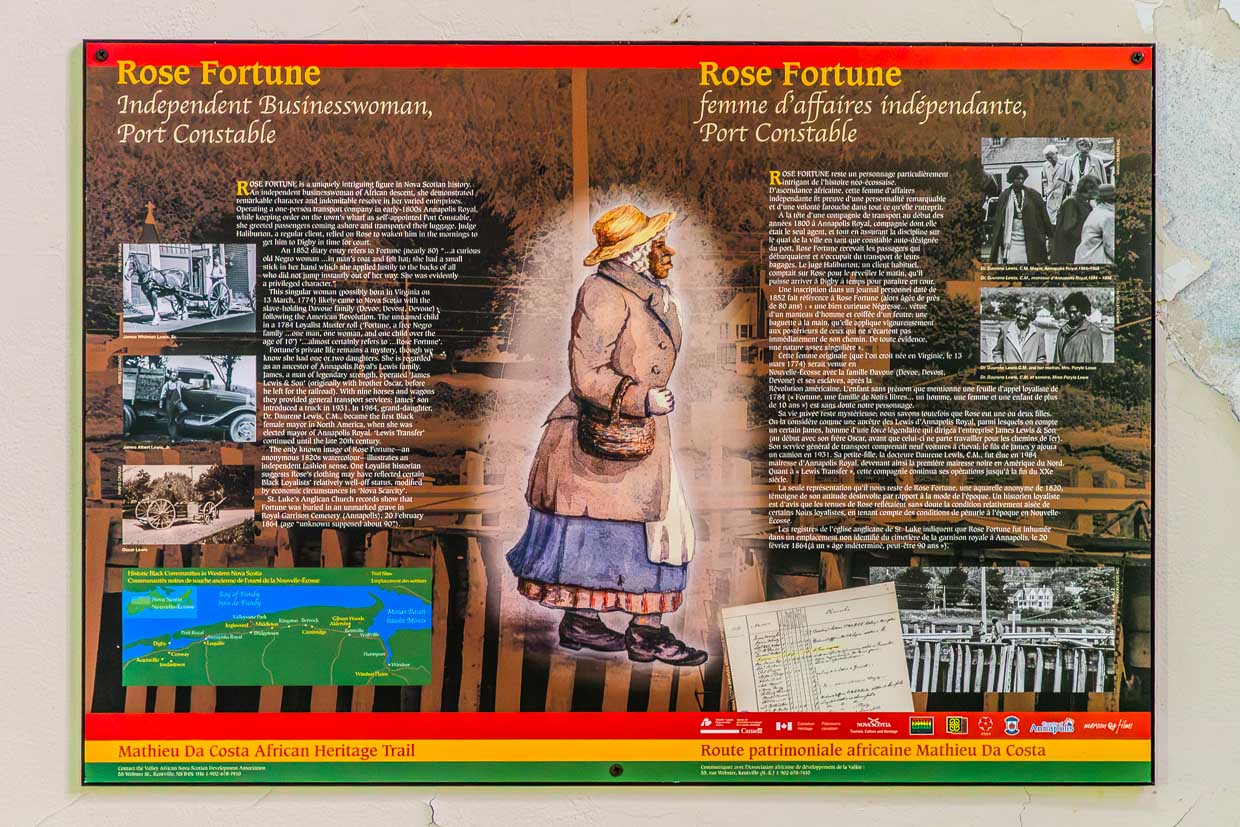
Andrea Davis cites Elizabeth Cromwell, the founder of the Black Loyalist Heritage Society, as her role model. Further on, we encounter other women: the runner Marjorie Turner-Bailey; Viola Desmond, who in 1946 refused to give up her seat to a white person at the cinema; and Rose Fortune, who kept order at the harbour in Annapolis Royal and is regarded as Canada’s first female police officer. They are all descendants or contemporaries of this history.
A name in correspondence
In Birchtown, something else occurs to me. My father, Gustav Berg, studied in Bonn in the early 1950s. There he met Frank Fraser from Sierra Leone. The two of them exchanged long letters. After my father’s death, my mother, Marianne, continued the correspondence. In 2016, I went to Sierra Leone to look for him. I found no trace of him. The name was too common.
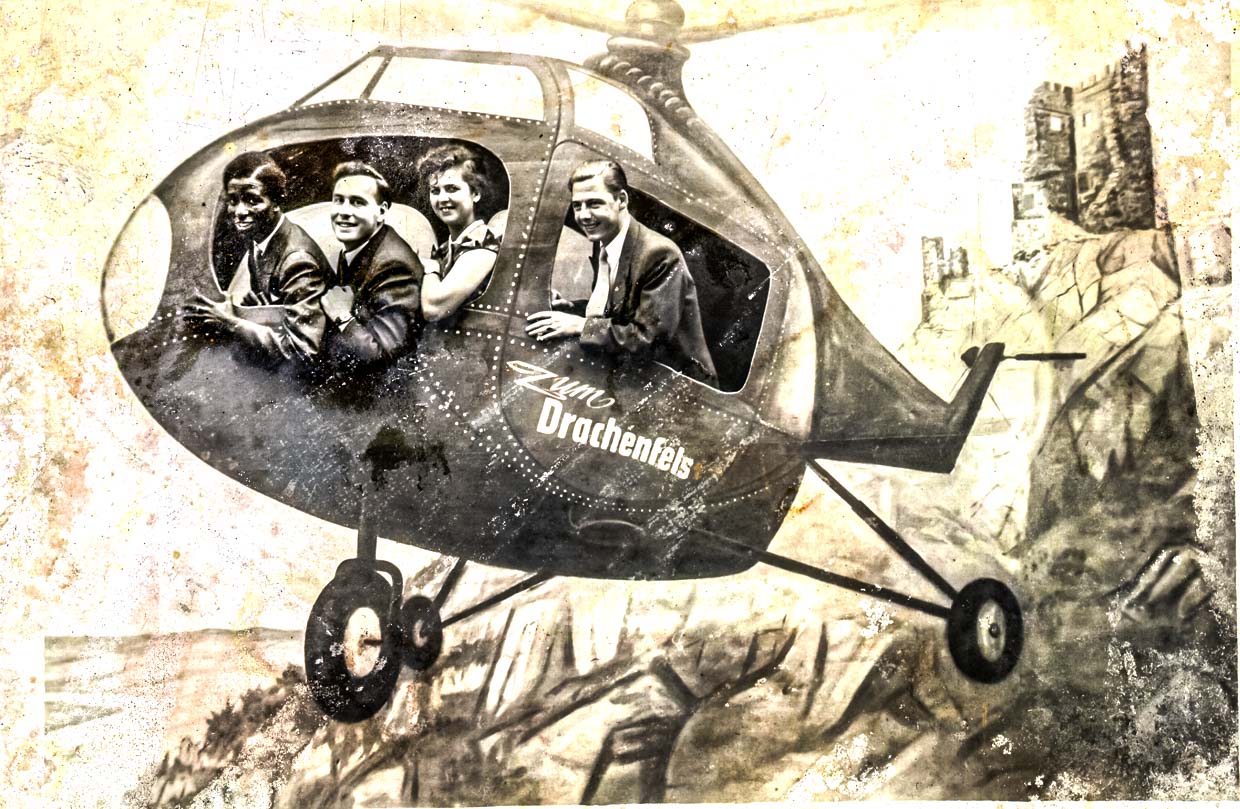
In the small church in Birchtown stands a plaque entitled ‘About the Names’. It lists names from the registers of the Black Loyalists. People who left more than 200 years ago have left behind more there than Frank Fraser did for me. All that remains of him is a name, a photograph and a memory of the letters.
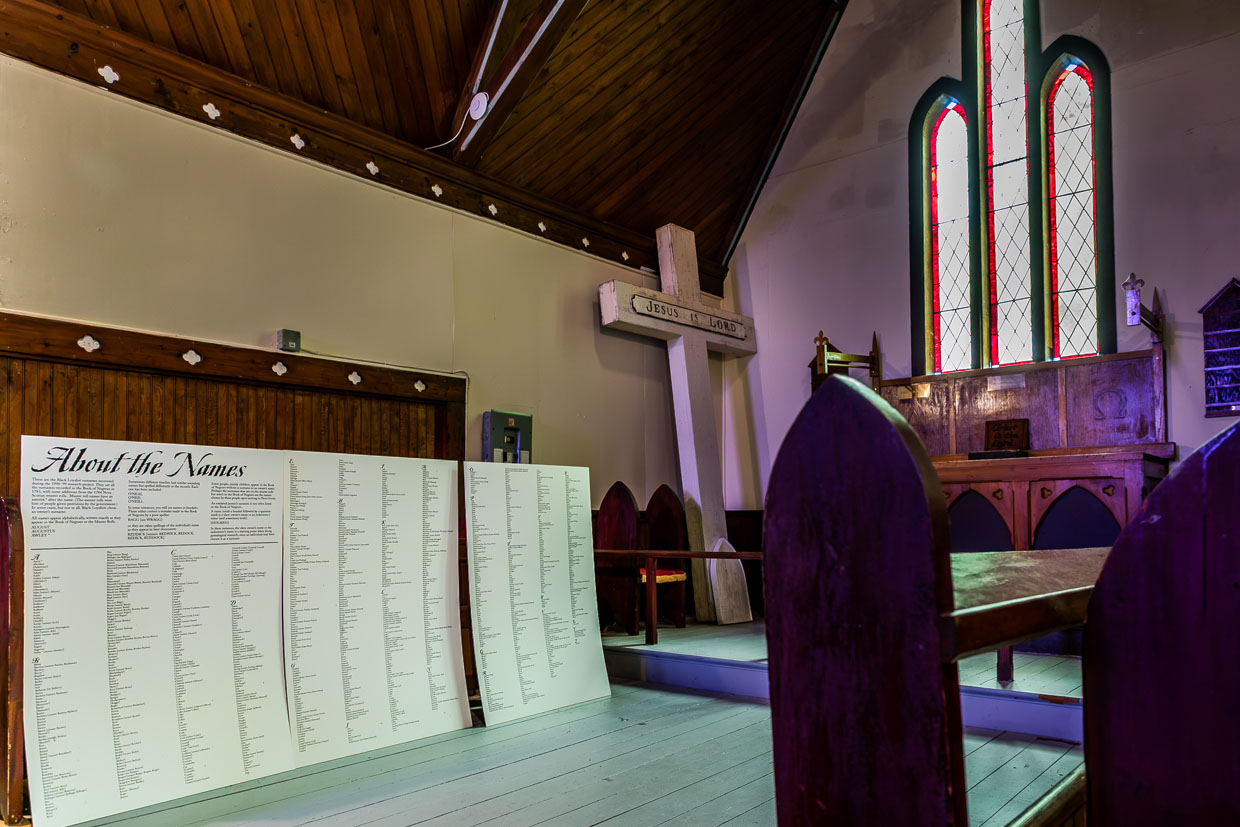
When Andrea Davis arrives in Freetown, she will be searching for names. The Book of Negroes recorded the names of over 3,000 people who, despite promises of freedom, were effectively listed as property. Andrea’s family can be traced back eight generations to a Black Loyalist who arrived in Nova Scotia in 1783. She wants to find out why many other families left Birchtown as early as 1792 and how they fared on the other side of the water.
More about Nova Scotia
If you want to know how the Mi’kmaq, Acadians, Scots and Black Loyalists came to shape modern-day Nova Scotia, read The Settlers of Nova Scotia. From Birchtown to Freetown explains why families set off for Africa in 1792. In Atlantic Canada, lobster was long considered a poor man’s food. Today, the lobster roll is a national symbol. Anyone wanting to know how the catch is made should join a night shift: Lobster Fishing in Nova Scotia shows what stock conservation means. Canada is also the land of maple syrup. Most of it comes from Quebec, but Nova Scotia also taps sugar maple trees. In Halifax, the provincial capital, there’s plenty on offer. The culinary guide to Halifax points you towards the best places to eat. But the city offers more than just food. The sightseeing guide ranges from the 7 Virtues perfume workshop to the immigration tour at the Museum of Immigration at Pier 21. Halifax has also been the scene of several tragedies. When the Titanic sank in 1912, it was the nearest major port. Many of the victims were brought here. At Fairview Lawn Cemetery, their graves serve as a reminder of the disaster. The skies are becoming clearer. The Deep Sky Eye Observatory offers views of the Milky Way at North America’s first Starlight Destination. Stargazing at sea level here means: mosquito repellent for the Milky Way.
The research was supported by Visit Nova Scotia


