
A theatre for the dead? Such halls once existed in many European cities. Montpellier, Bologna and Uppsala still have theirs today. Montpellier and Bologna are vying for the title of the oldest medical school, whilst Uppsala only joined their ranks centuries later. Their halls demonstrate what a dissection table can do – and what it cannot.
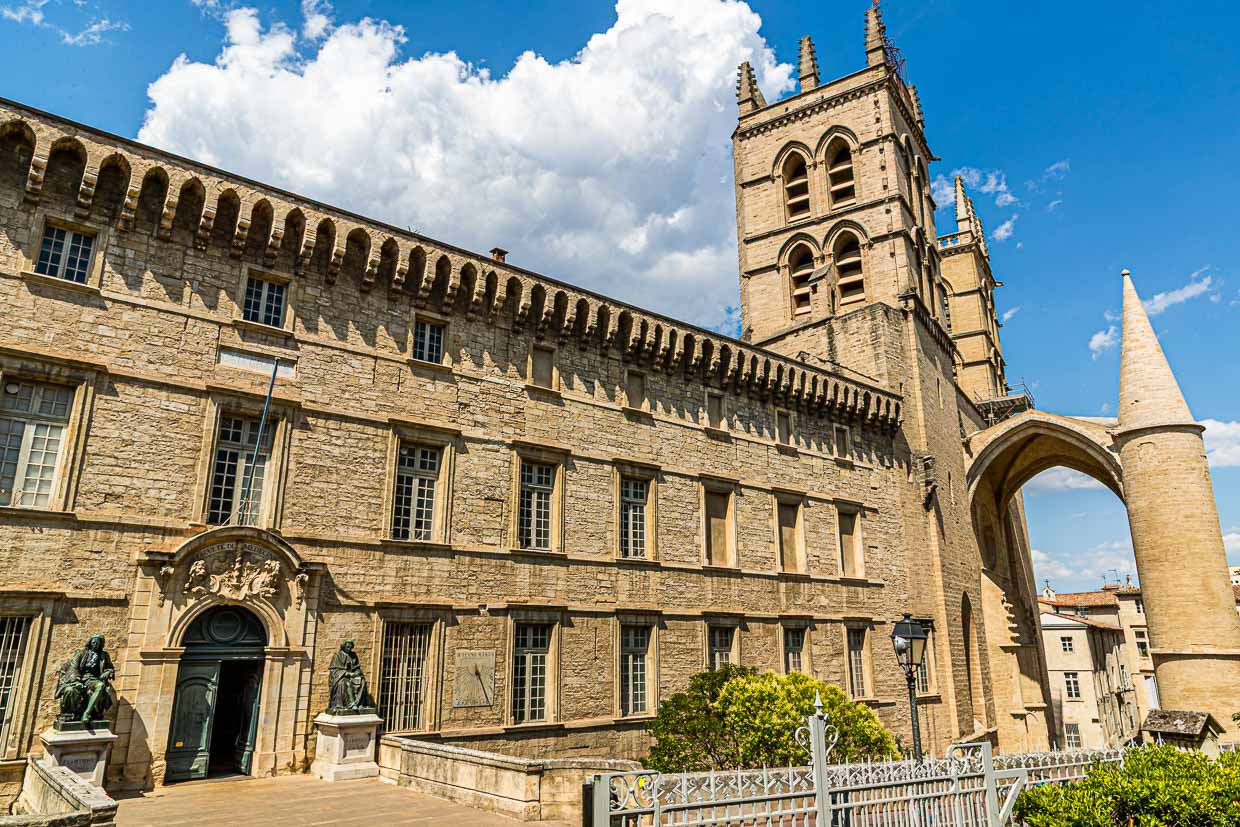
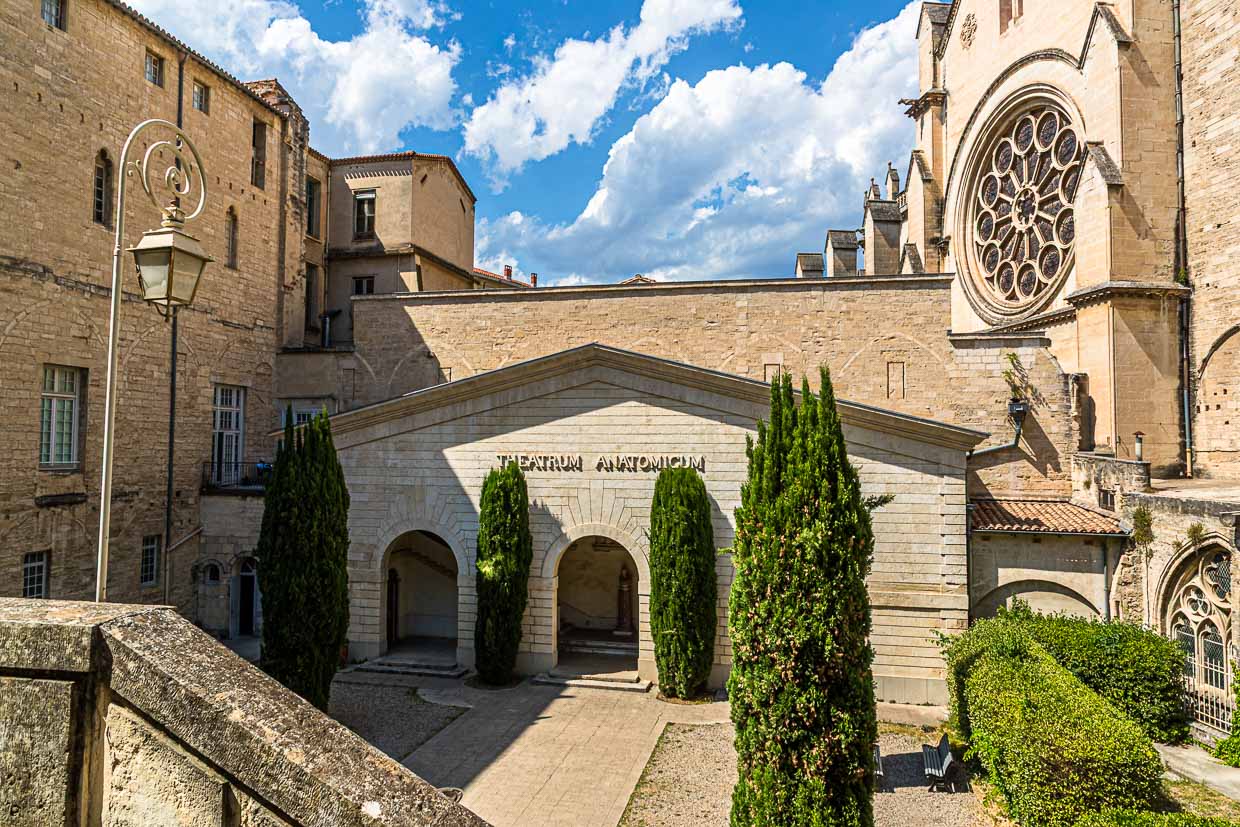
At the entrance to the Faculté de Médecine in Montpellier, two bronze figures sit on pedestals. On the left is François Gigot de Lapeyronie (1678–1747), a surgeon. On the right is Paul-Joseph Barthez (1734–1806), who formulated the doctrine of the life principle, known as vitalism. The faculty claims to be the oldest medical school in the world still in operation. In the adjoining courtyard, a columned portal bears the inscription ‘Theatrum Anatomicum’.
Bologna: from textbook to wooden lecture theatre
Mondino de Liuzzi ( died 1326) taught at the University of Bologna and conducted public dissections. In 1316, he wrote his anatomy book, the *Anathomia*, the first European anatomy book since antiquity to be based on human dissections. It remained a standard work for centuries. In it, Mondino followed Galen of Pergamon, the 2nd-century Greek physician who advised Emperor Marcus Aurelius in Rome.
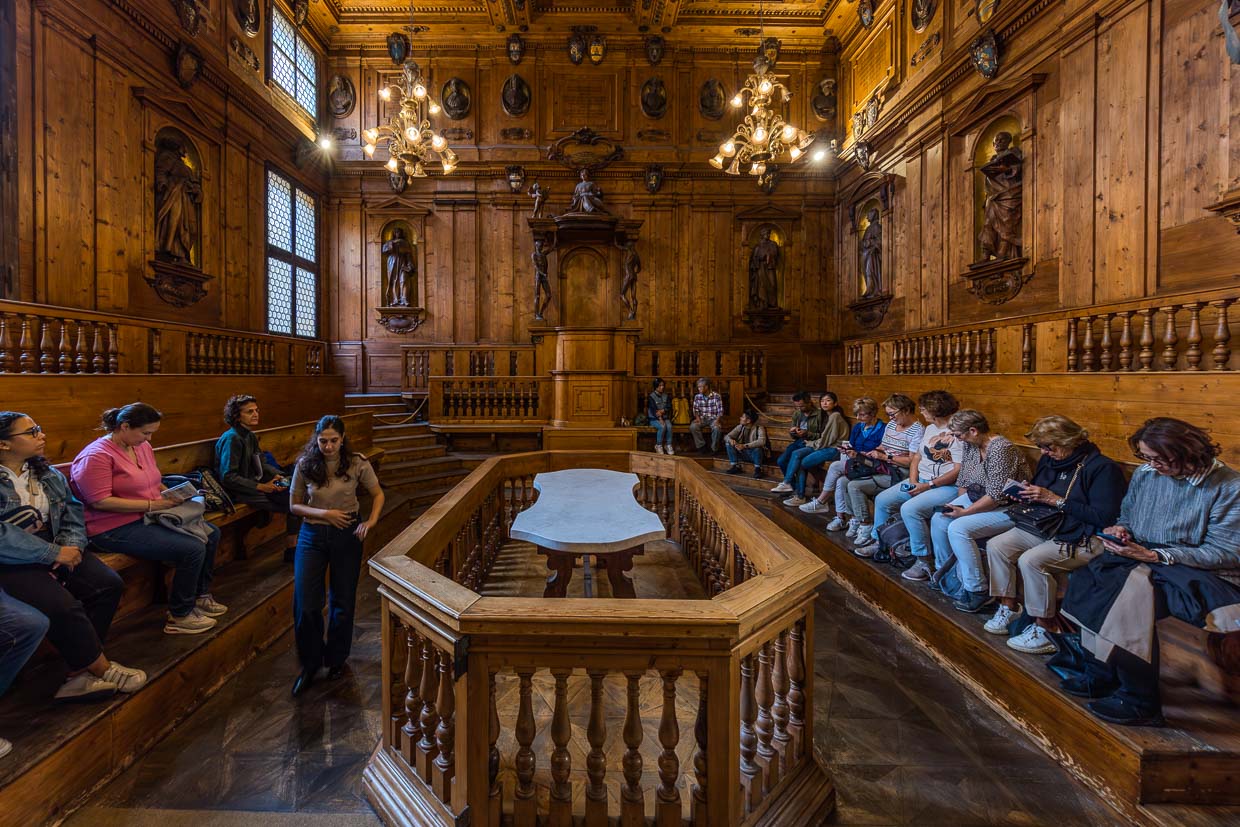
The present-day anatomy theatre was built more than 300 years later. The Palazzo dell’Archiginnasio, built in 1562/63, housed the university until 1803. Antonio Levanti designed the Teatro Anatomico in 1637 and built it entirely from fir wood. In the centre stands the dissection table, surrounded by tiered wooden benches for the audience. At the head of the room, the professor’s chair is enshrined beneath a canopy, flanked by two flayed wooden figures, the Spellati, based on a design by the sculptor Ercole Lelli from 1734. The ceiling depicts Apollo, the patron god of medicine, surrounded by fourteen constellations.
Uppsala: A dome for anatomy
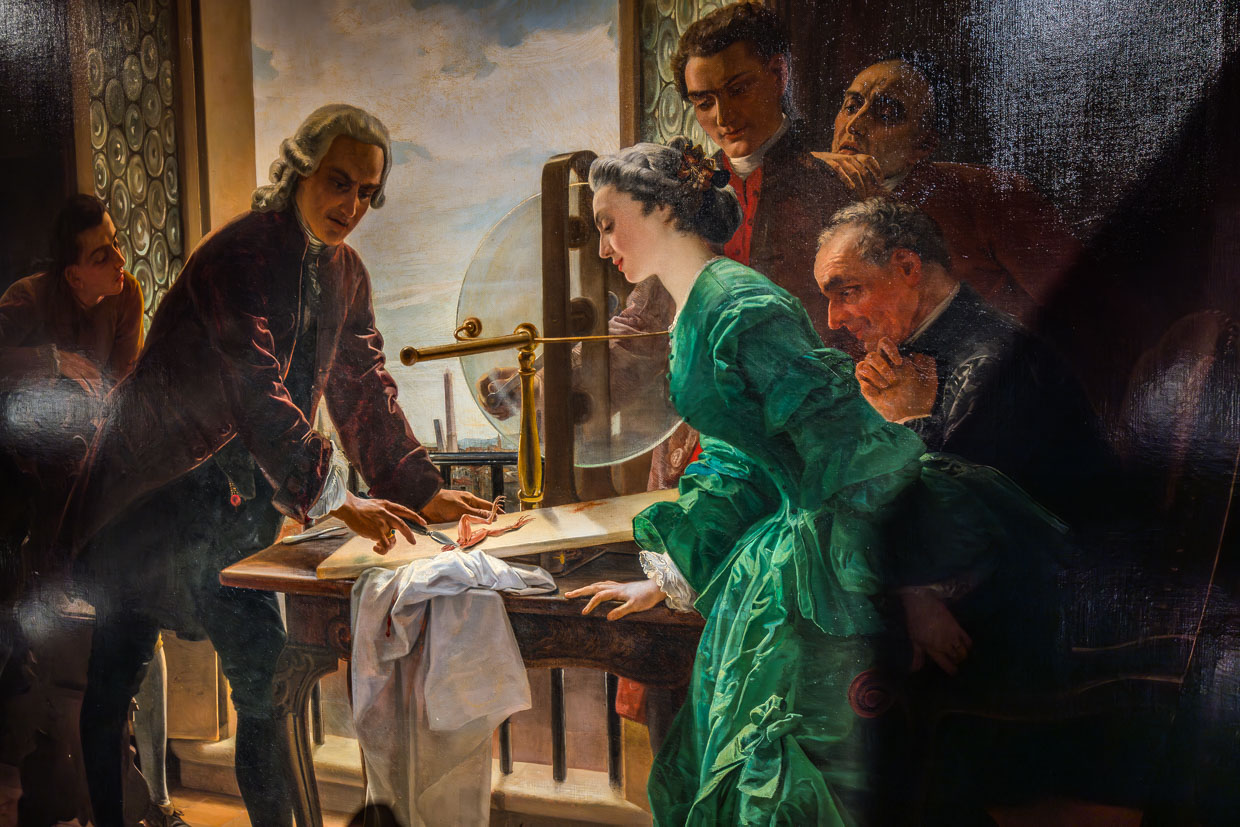
Olof Rudbeck the Elder, born in 1630 and died in 1702, discovered whilst a student in Uppsala a network of fine vessels – the lymphatic vessels – which transported a colourless fluid known as lymph. In 1652, he presented his discovery at the court of Queen Christina of Sweden. Rudbeck is regarded as the first Swede to have made a scientific discovery of international significance.
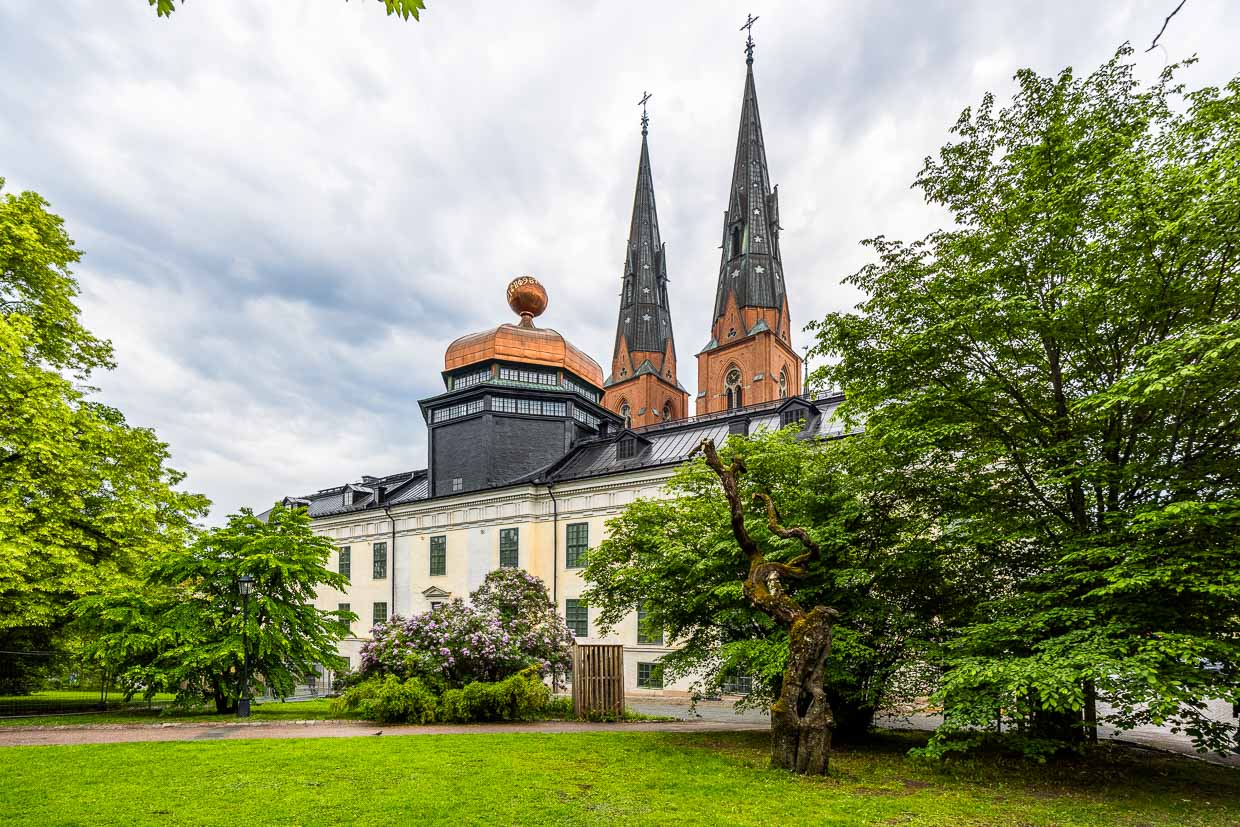
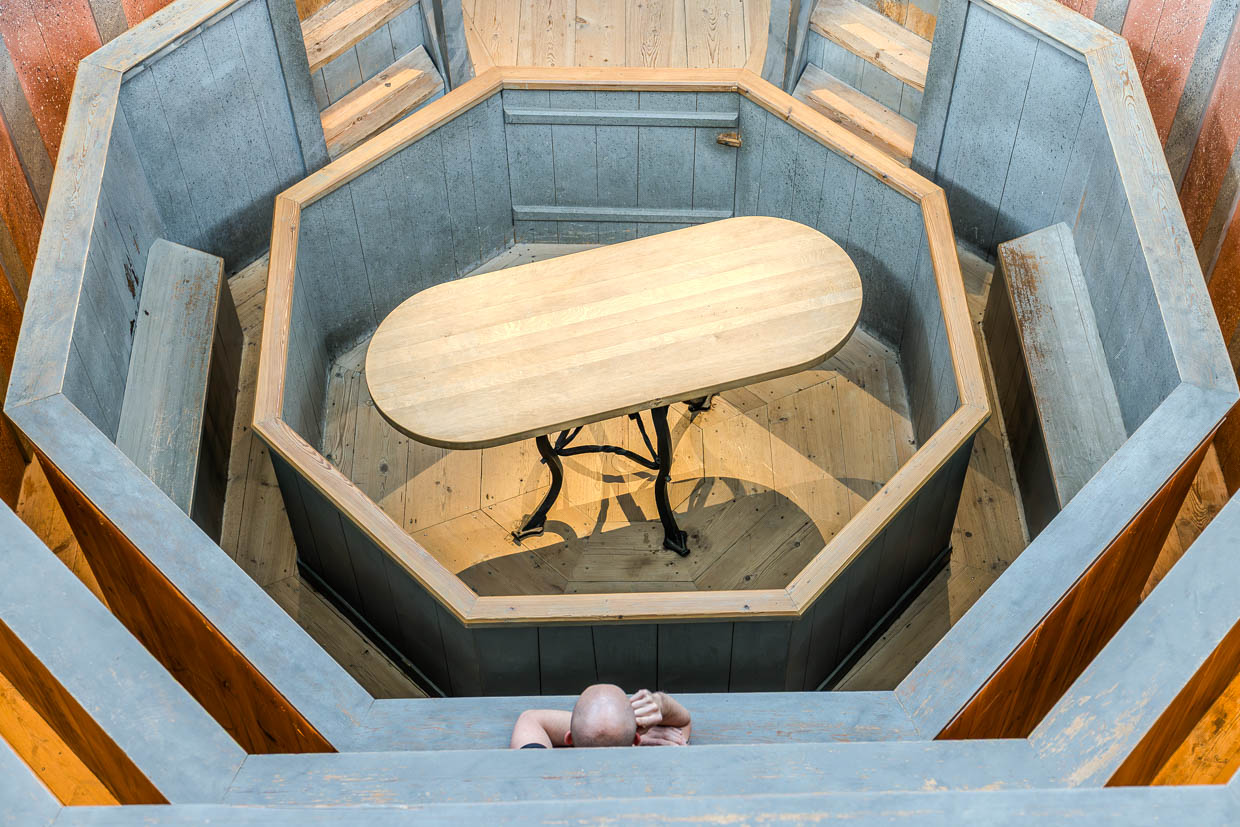
The Anatomy Theatre followed a decade later. From 1660, Rudbeck held one of the university’s two chairs of medicine. He was familiar with its model, the Anatomy Theatre in Leiden, from his student days. In 1662–63, he added a dome housing an amphitheatre to the Gustavianum university building. The building had been erected in 1625 for the university, which was founded in 1477.
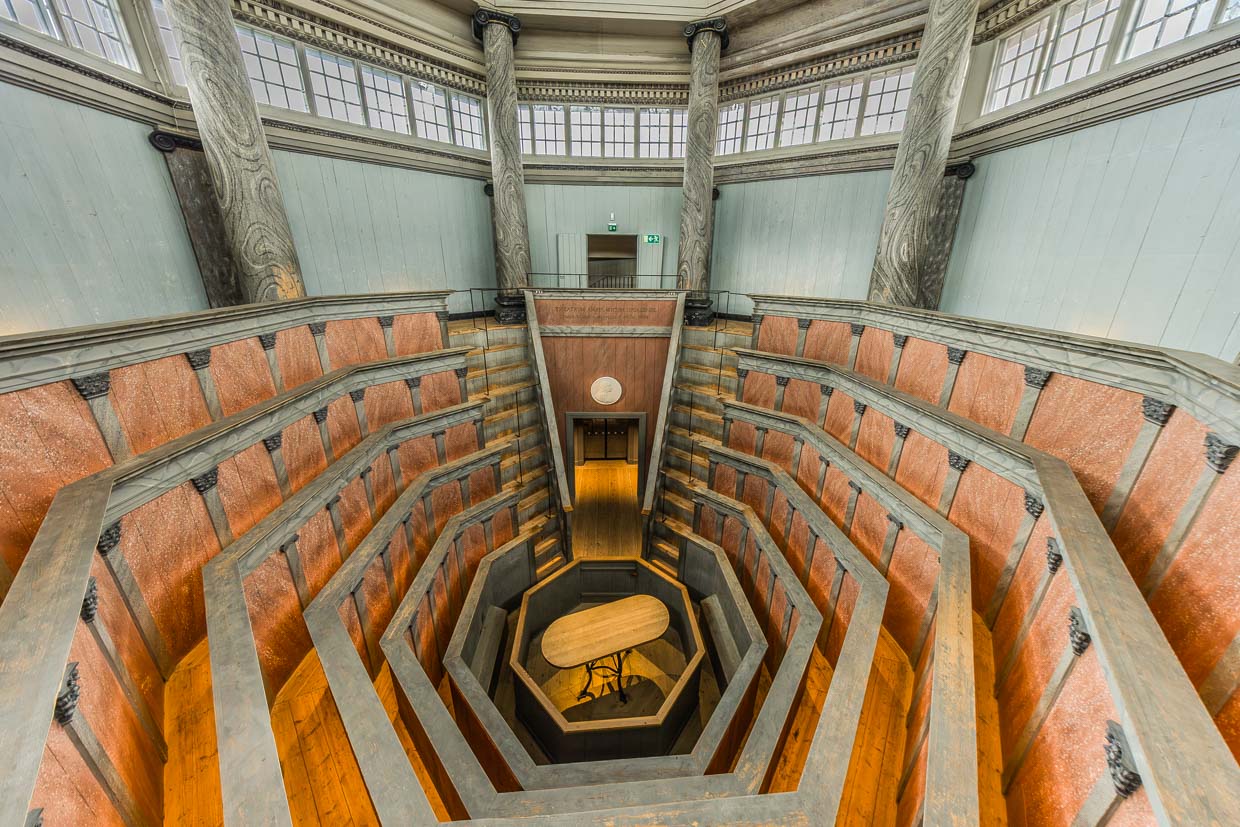
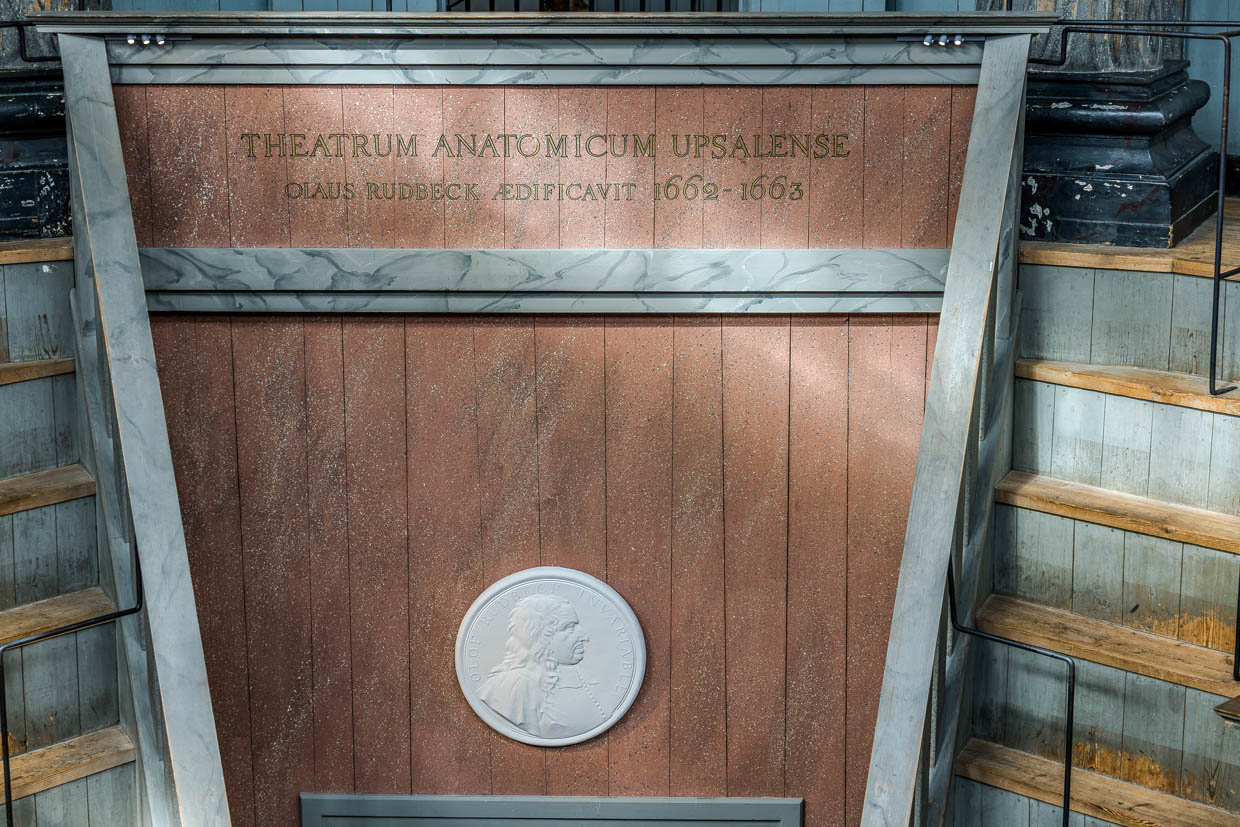
An inscription above the entrance names Rudbeck as the builder: ‘Olaus Rudbeck ædificavit 1662–1663’. The hall later lost its original function. In the mid-19th century, the tiers were demolished; in the early 20th century, a zoological museum moved in. Restoration work based on Rudbeck’s original drawings began in 1950, and the hall was re-inaugurated in 1955. During the renovation of the building between 2019 and 2024, the roof was fitted with a new copper dome.
Roles according to rank
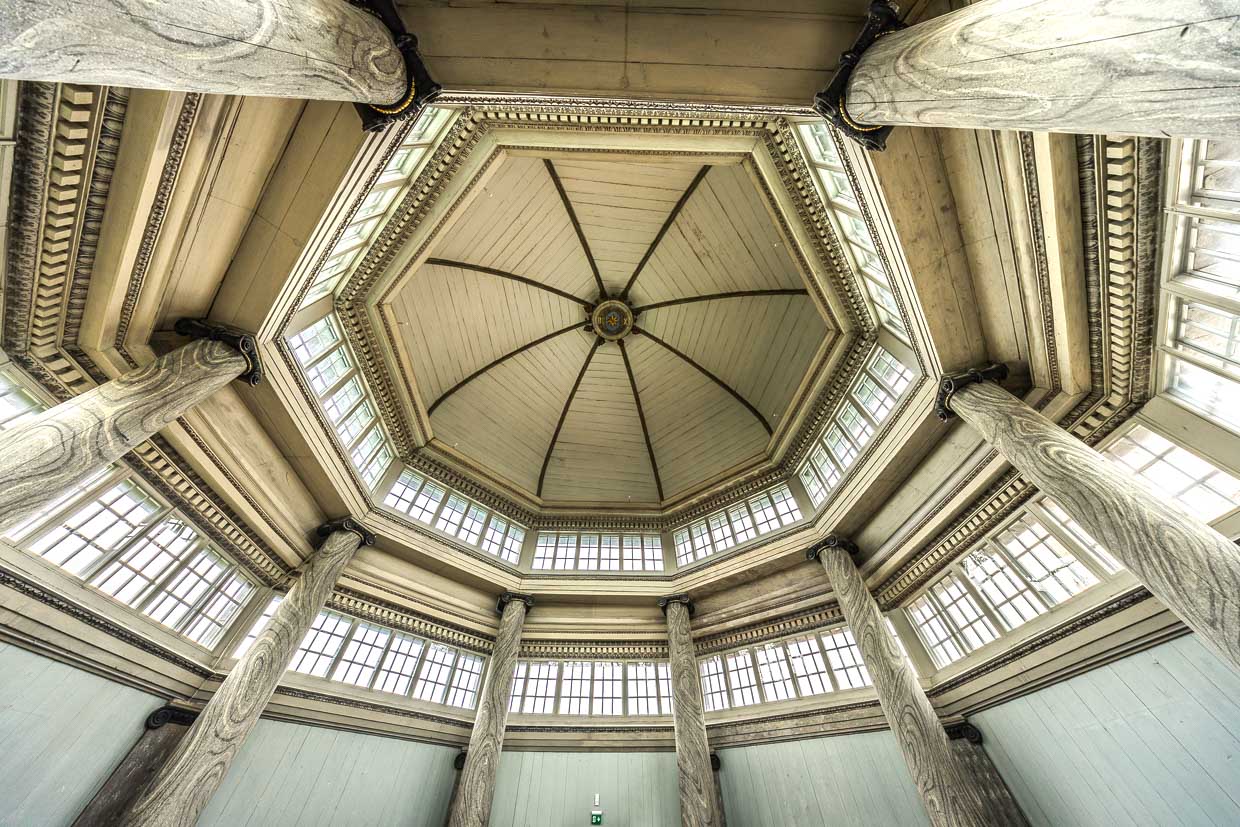
The dissection was an event with fixed roles. A reader read from the textbook, a surgeon performed the dissection, and a guide explained what could be seen. The bodies usually came from those who had been executed. Preference was given to strangers in the city with no relatives; later, the poor and those who had taken their own lives were also included. Afterwards, the body had to be buried with dignity, and a mass was said for the soul of the deceased. Alongside students and professors came dignitaries, the nobility and townspeople. They usually paid an admission fee; in Padua, however, entry was free. Seating was arranged according to rank. Work took place in winter because the cold preserved the bodies for longer. Wood, as a building material, absorbed the odour. Light was scarce: in windowless Padua, candles were lit to heat the room, whilst in Uppsala, light was allowed to stream in from above through the dome.
From spectacle to education
The theatre did not lose its purpose overnight. As early as the 18th century, critics complained that one could barely make out anything during public dissections and called for dissections to be reserved for students alone. This led to the creation of dissection theatres, which evolved into anatomical institutes in the 19th century. New questions led to other venues. In 1761, Giovanni Battista Morgagni sought the causes of diseases through autopsies, and pathological anatomy gained in importance. The finest tissue structures were examined away from public events.
The final performance
These three locations illustrate the changes that took place. Bologna used its hall until 1803, when the university moved out. Montpellier built its own dissection theatre with a colonnaded entrance between 1802 and 1804. In Uppsala, the tiers were demolished in the mid-19th century. The stage disappeared, and dissection moved to the dissection room.
This research was supported by Montpellier Tourism, Bologna Welcome and Destination Uppsala.


