
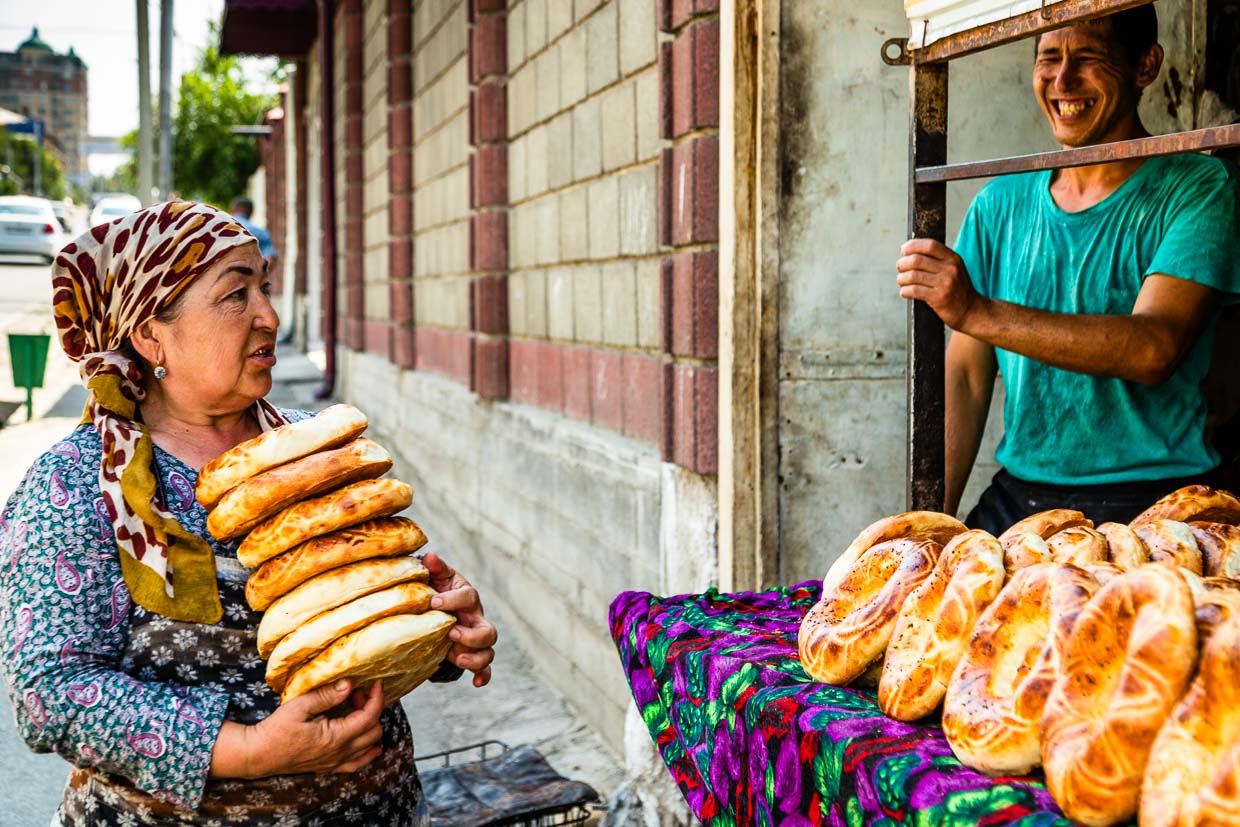
Kyrgyzstan, August 2019. My journey along the Pamir Highway begins and ends in Osh, in the Fergana Valley . Ahead of us lie a good 2,000 kilometres through Kyrgyzstan and Tajikistan. Early in the morning, I stroll through the town. Women are carrying bread home – not one loaf, not two, but whole stacks. Intrigued, I stop in front of a bakery. Before the road beckons, Osh smells of bread.
A window full of bread
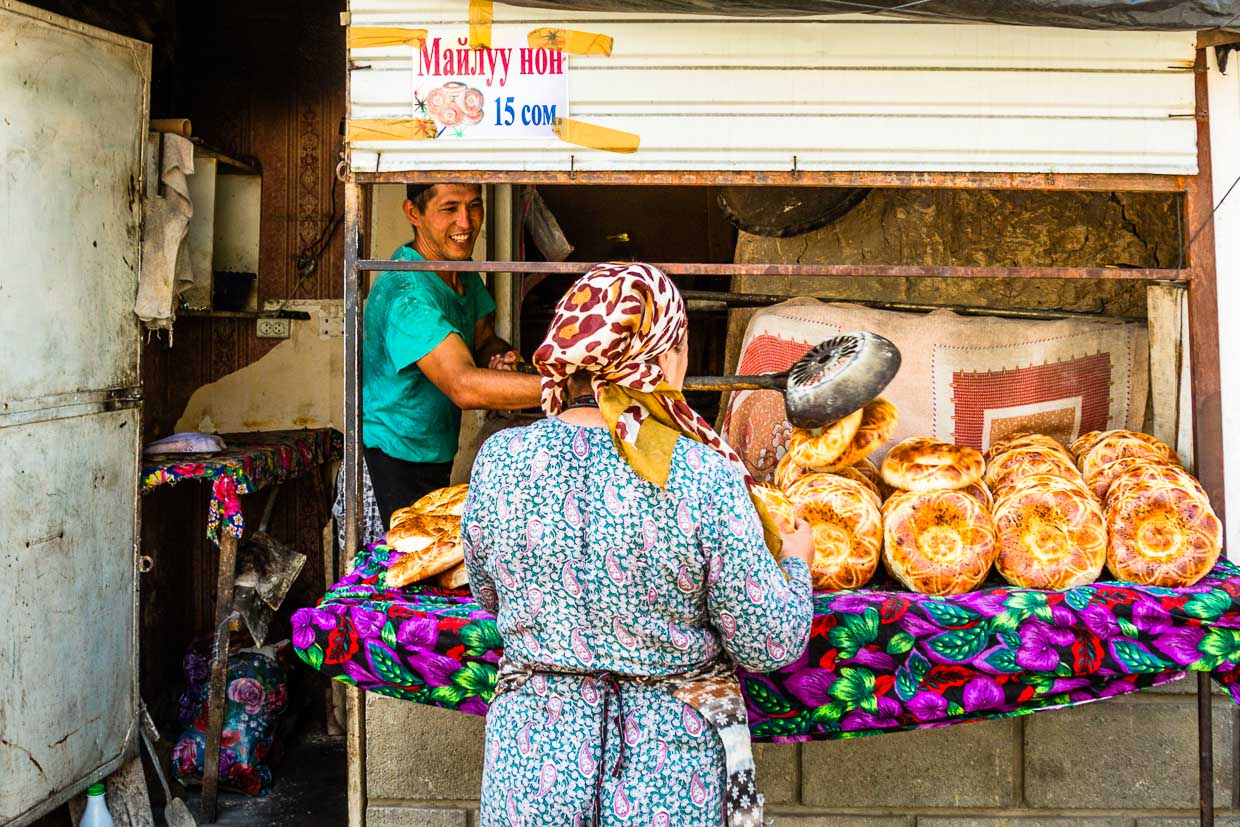
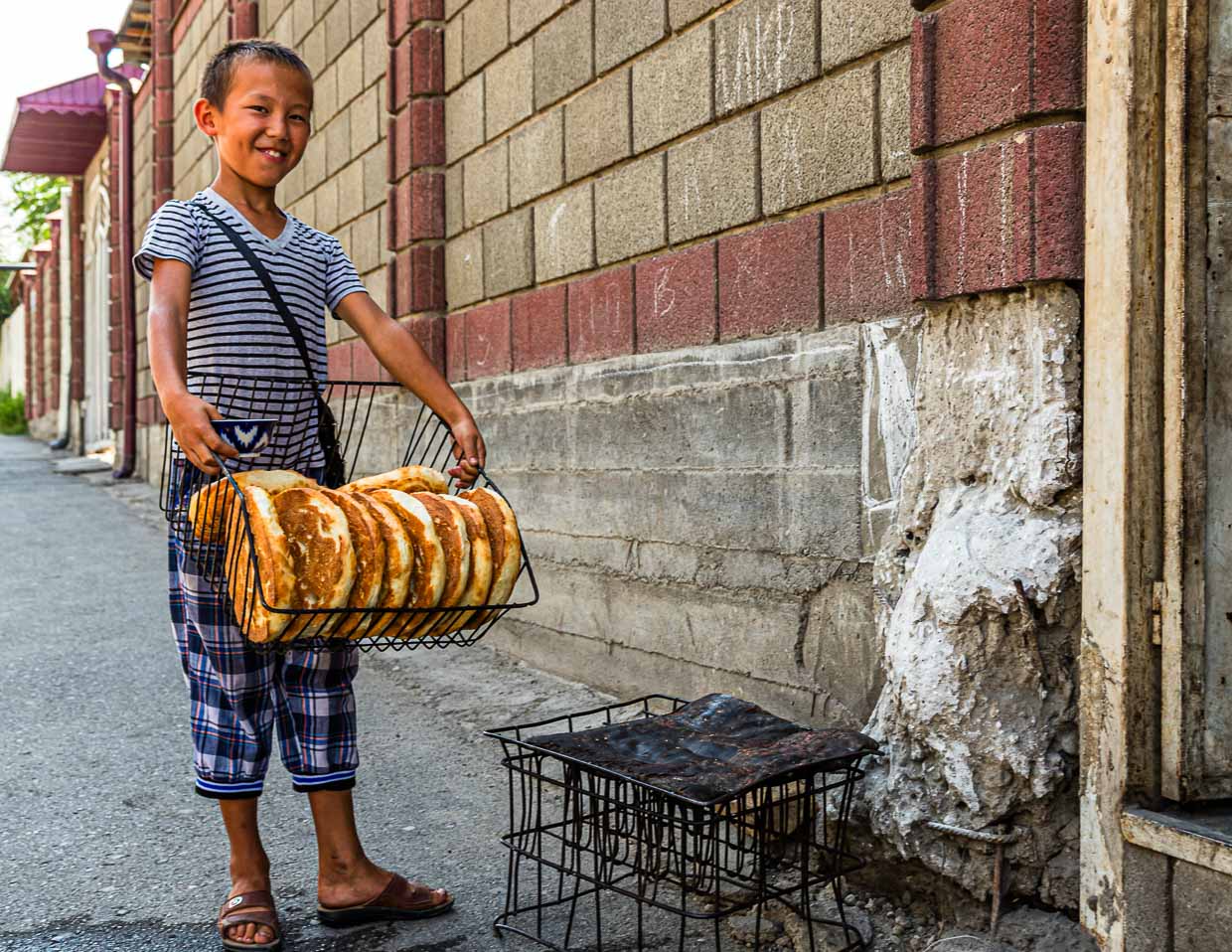
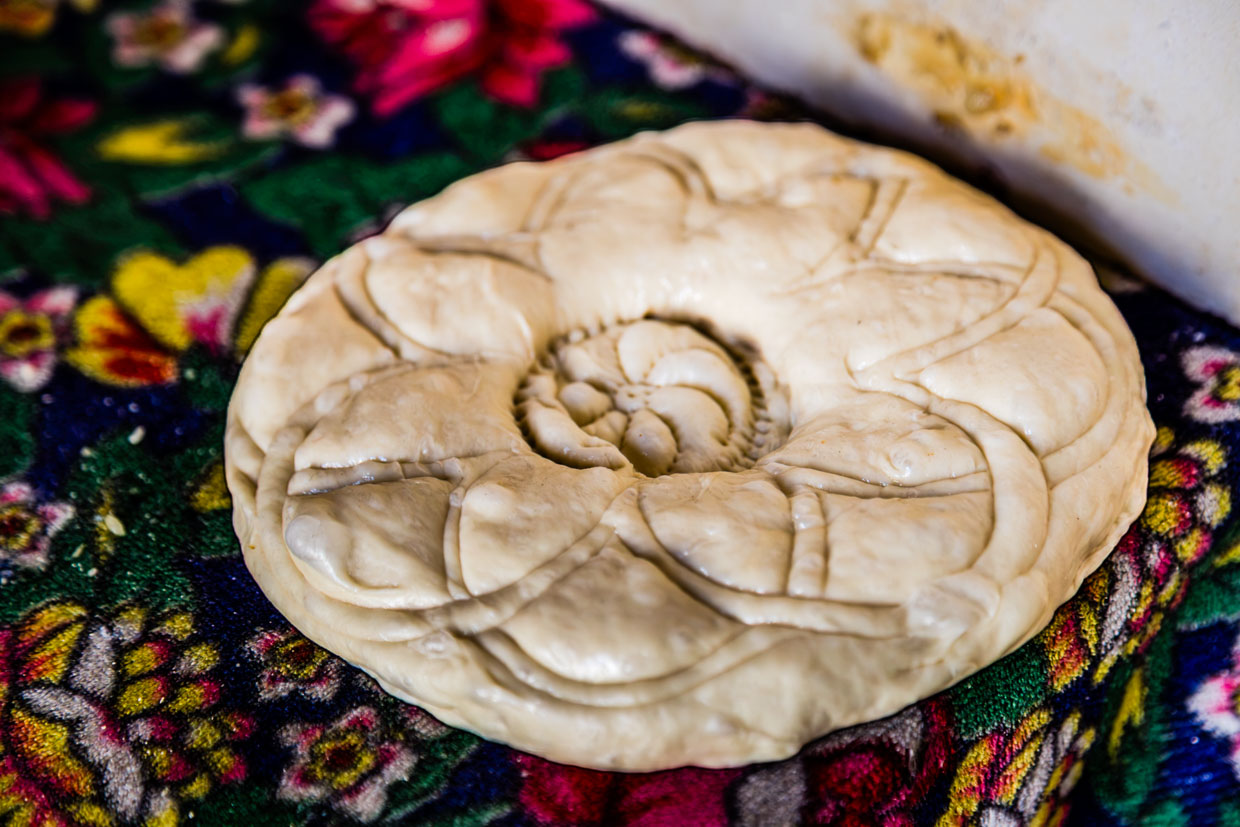
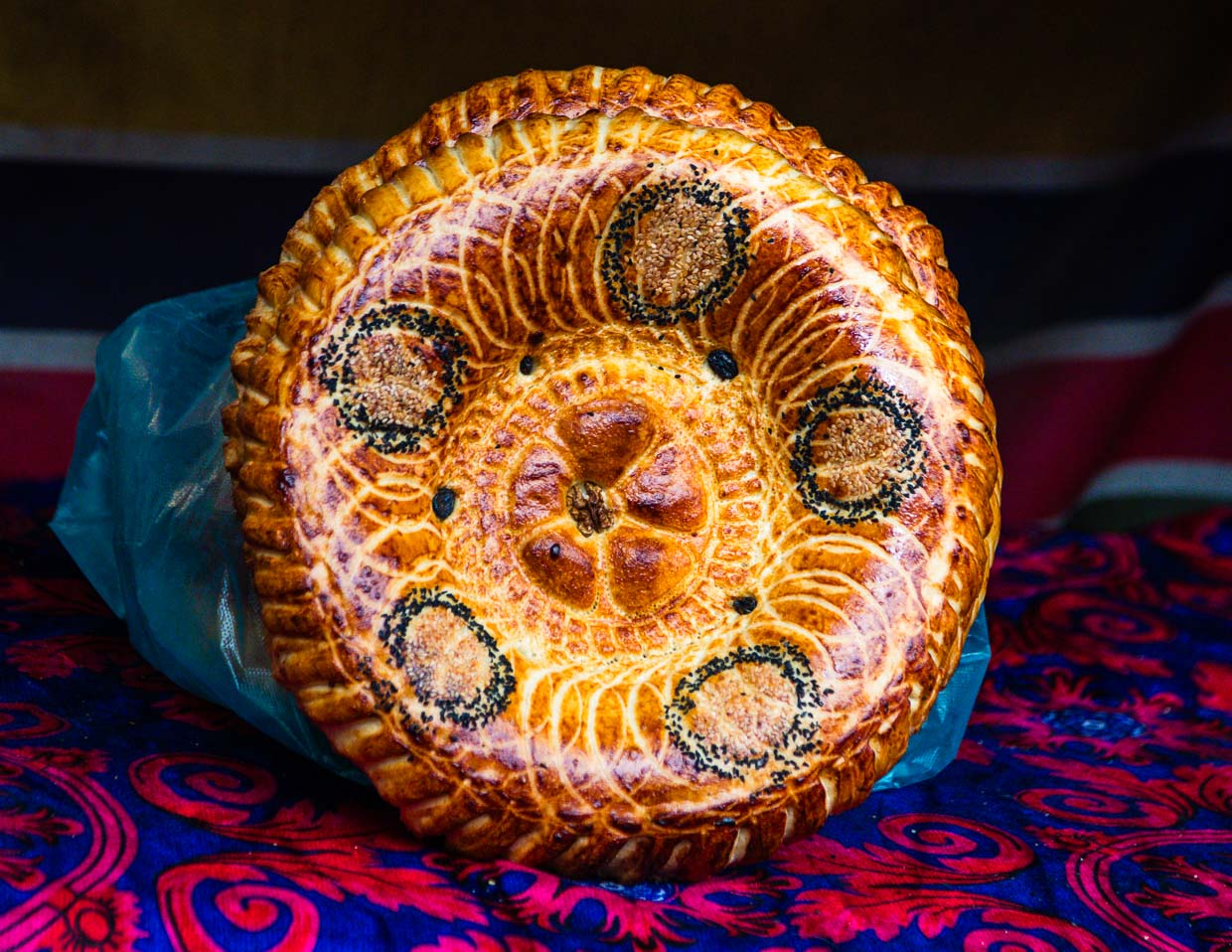
In a side street, I spot a shop window with a sign above it. Dozens of round flatbreads with a spiral pattern lie on a colourful cloth in front of it. The baker, in a turquoise shirt, stands in the doorway, smiling. Customers come, buy, and leave. Time and again, he retrieves fresh loaves from the oven using a basket. A boy delivers baskets full of bread into the alley.
Two rooms, one oven
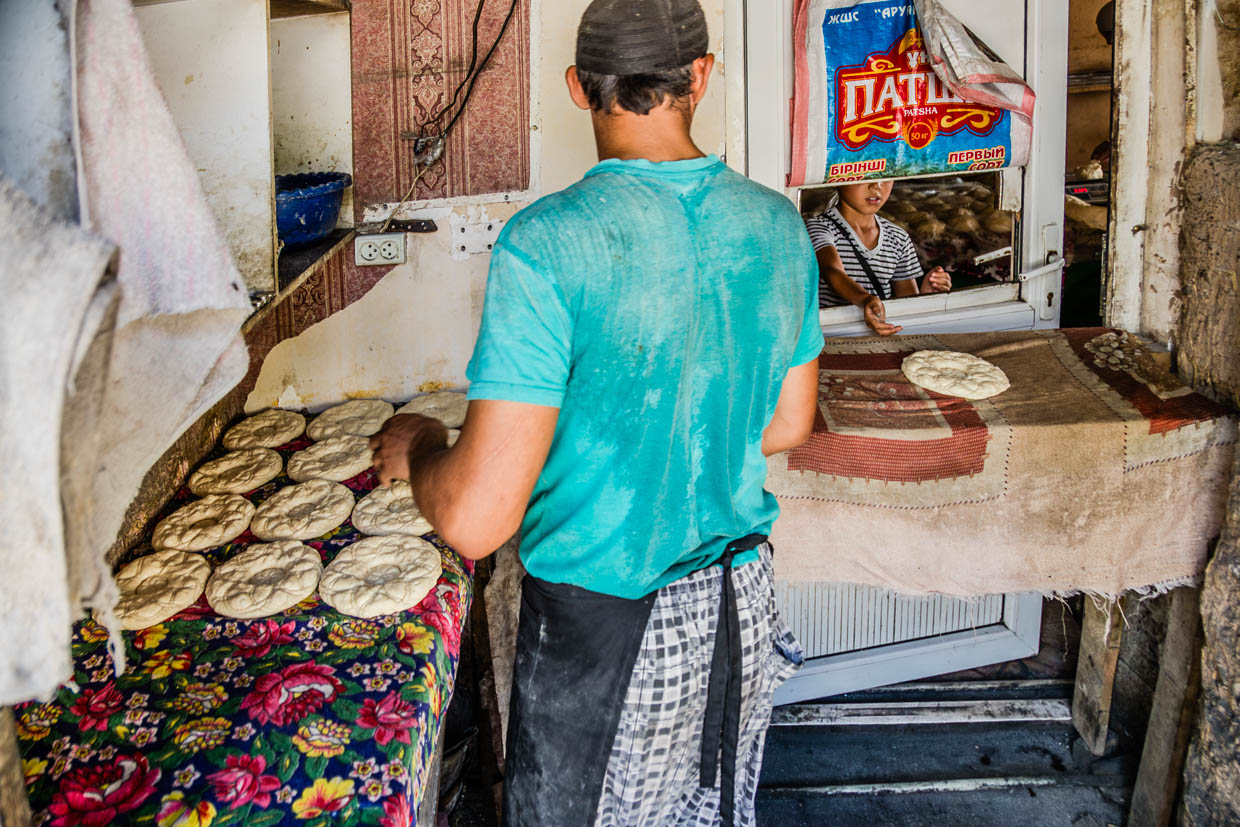
The work is spread across two rooms. In the back room, a baker weighs out the dough pieces. The dough is firm, made from white wheat flour, water and salt. Sourdough – khamir moya in Uzbek – is traditionally used to make it lighter. The dough pieces rest briefly under cling film before being shaped. They prove for thirty minutes in the warmth next to the oven. Beforehand, the baker presses a pattern into the centre. Only the edges rise in the oven. The holes allow steam to escape and also serve as a signature: every bakery has its own pattern.
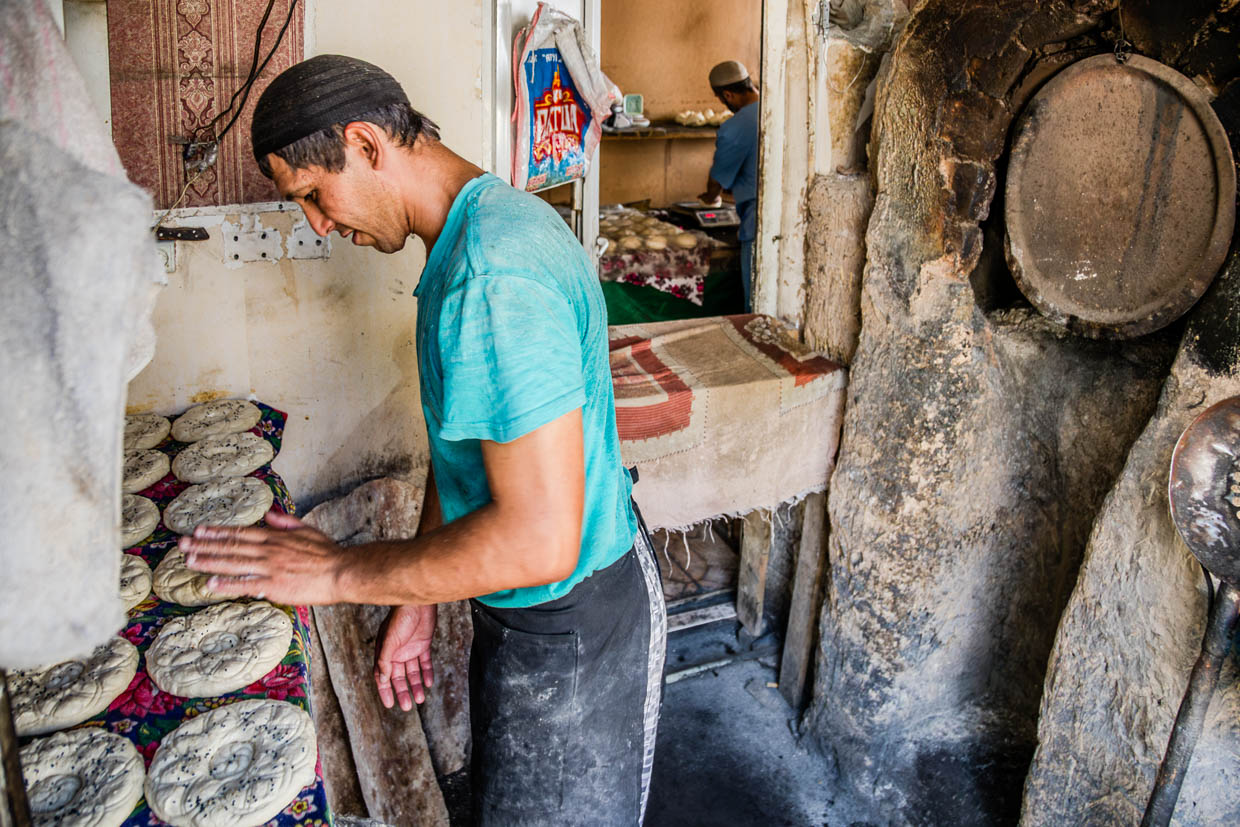
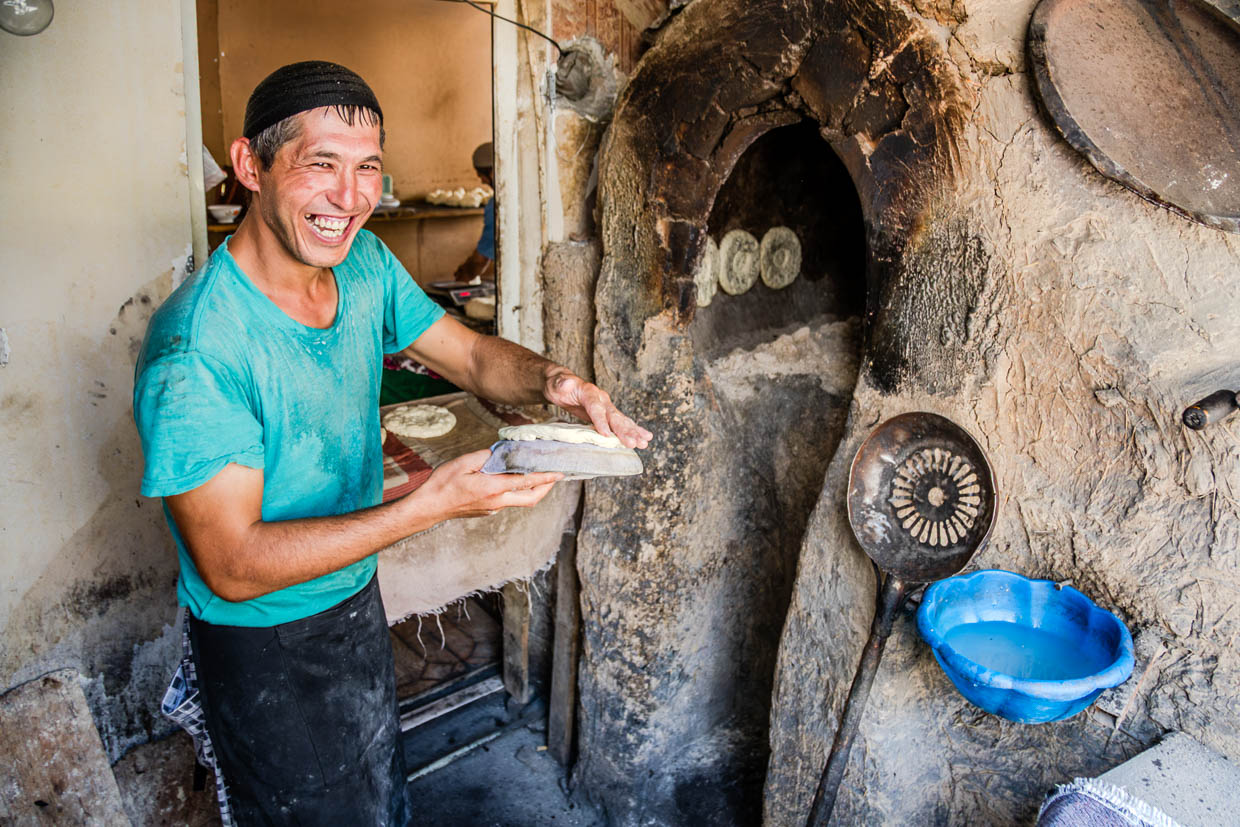
In the front room, the second baker takes over. He sprinkles the loaves with black cumin. Then he places a loaf on a round cushion, leans into the oven and slaps it against the wall with the back of his hand.
The tandyr
From the alleyway, the first thing I see is the oven. It stands in an extension in front of the stone house and dominates the space. A broad belly of clay, lightly plastered, with cracked edges. Around the opening, the clay is black with soot. A rusty tin lid leans against it. Iron rods protrude from the clay; a blue bowl of water hangs beside them. Leaning against the wall is a long pole with a basket at the end, large enough for two loaves. The oven opening is a high arch through which a man can reach in with his upper body. Looking inside, one sees stones on the floor, embers on top of them, and the flatbreads on the wall, glowing in the heat. The oven is made of clay mixed with sheep’s wool.
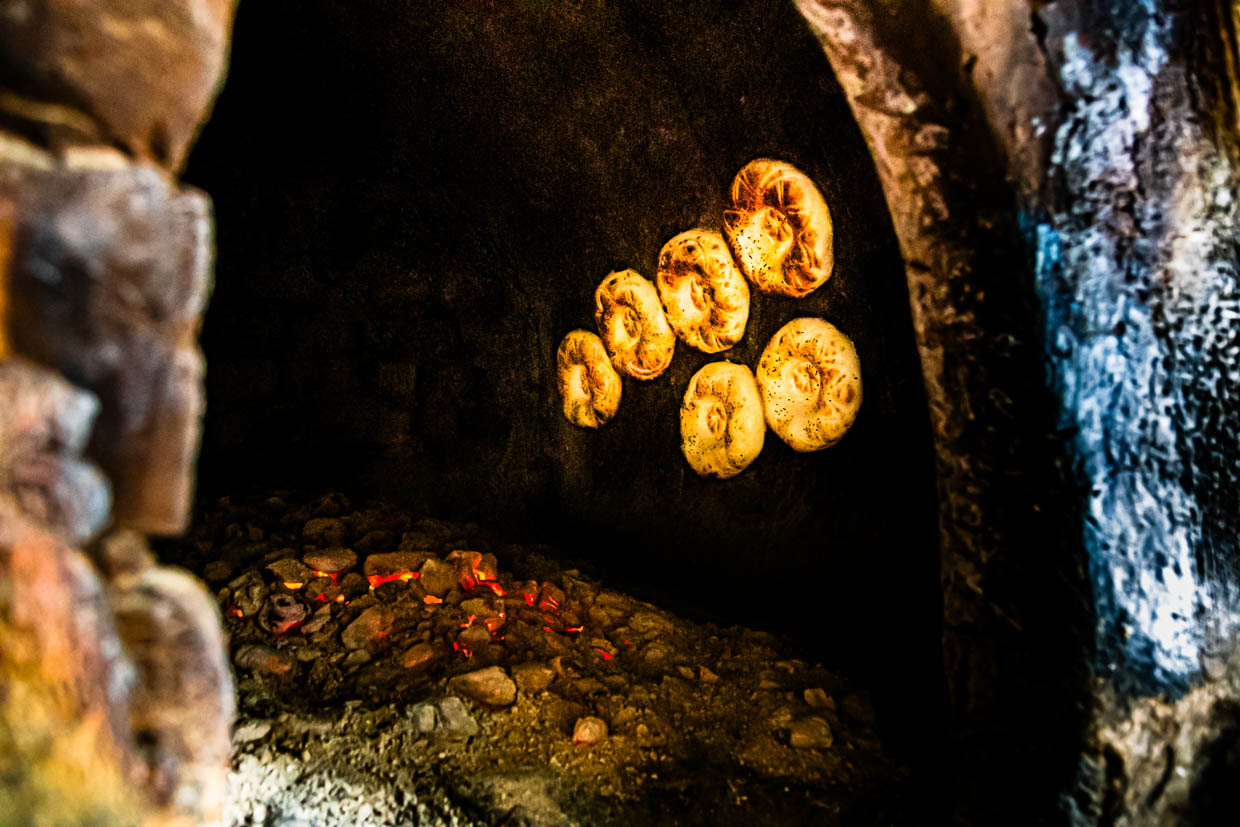
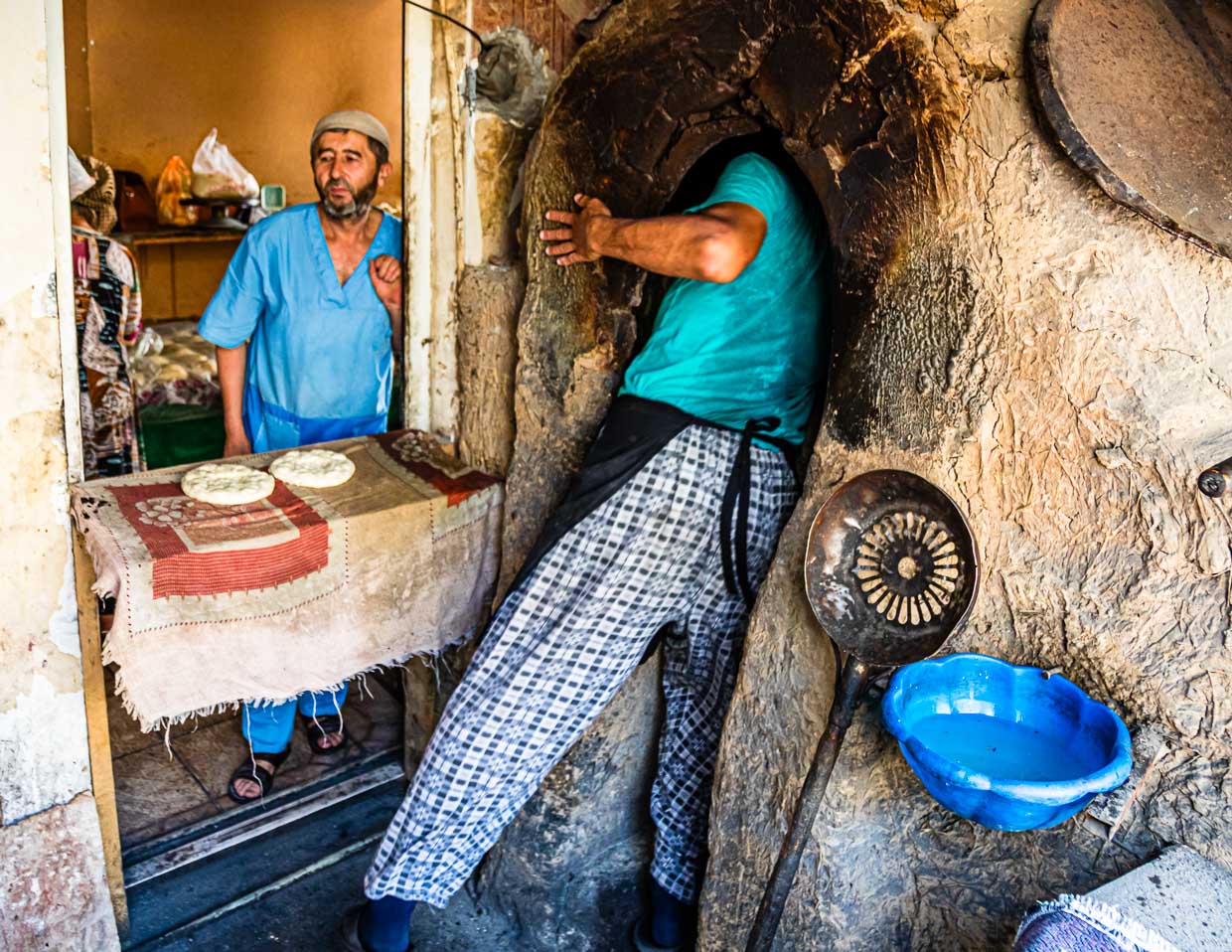
The oven is heated with wood. Now only a pile of embers smoulders on the floor. The clay wall stores the heat and releases it evenly, even though the flames have long since gone out. In Uzbek bakeries, the oven reaches a good 300 degrees. The baker presses the flatbread against the wall with the pad. The damp underside makes it stick to the hot clay. If it were dry, it would fall off immediately. Within seconds, the surface browns and holds its shape. After a few minutes, the bread is ready.
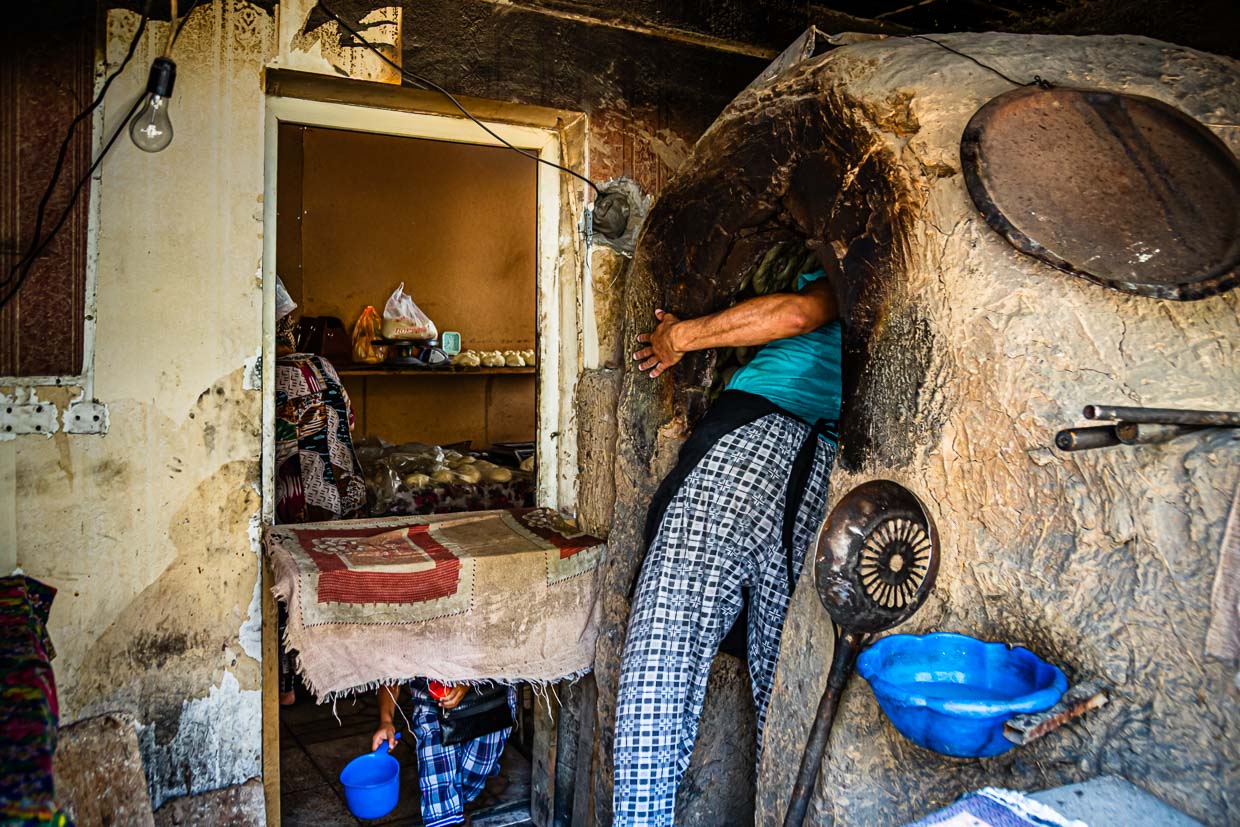
The baker leans deep into the oven. The cushion protects his hand from the heat. He keeps his arm in the oven only briefly, then pulls it back. Once the bread is ready, he lifts it off the wall with a catching basket and places it on the display.
Where the bread comes from
This bread does not have a single place of origin. The oven is ancient. Archaeologists have found remains of tandoors in the Indus Valley, dating back to the third millennium BC. The word ‘tandoor’ comes from the Persian word ‘tanūr’. In Central Asia, the bread is called ‘non’; in Kyrgyzstan, ‘tandyr nan’. The Uzbek variety is the most famous.
The research trip was supported by the tour operator Special-Adventure.


