
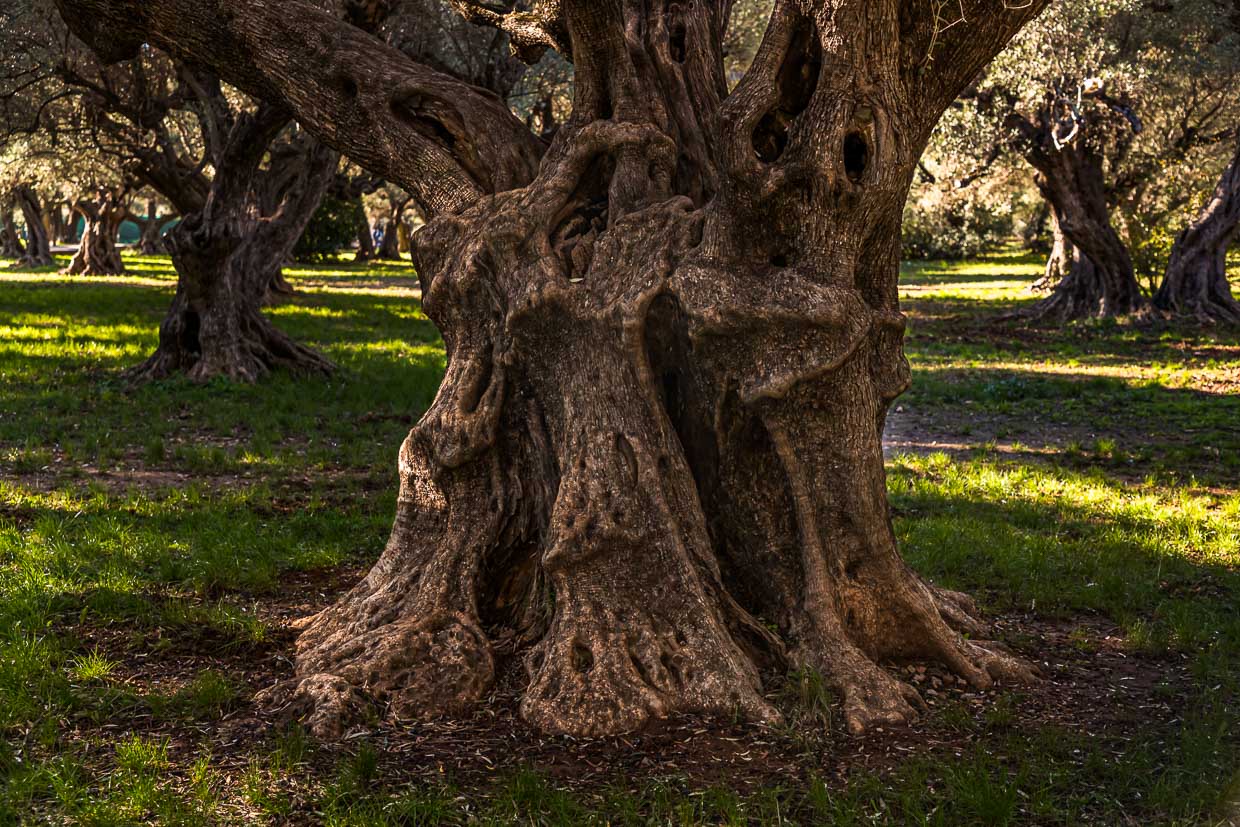
The trunks twist like coiled ropes. Knotholes pierce the bark. Roots spread across the ground as if seeking a foothold. Silvery leaves hang above them. At the foot of Mont Coudon near La Farlède, close to Toulon, stand ancient olive trees. They were spared by the frost of February 1956. Hundreds of thousands of other olive trees in Provence froze to death at that time.

The Frost of 1956
In France, from 30 January 1956, the temperature dropped by 20 to 25 degrees within 48 hours. In Marseille, the thermometer fell to minus 17 degrees; February 1956 brought Provence to a standstill. The Saint-Tropez peninsula was cut off. Up to 60 centimetres of snow fell on the Côte d’Azur. In the southern Rhône Valley, nearly 800,000 olive trees froze to death, some right down to the roots. In the Var, there were 2.5 million trees before the frost. Today, just under a third remain.
Why the olive tree does not die
Olive trees grow slowly and can live for more than 1,000 years. The tree at Vouves on Crete, estimated to be 3,500 years old, is considered one of the oldest. As it ages, the trunk becomes hollow inside whilst continuing to grow on the outside. It twists and splits open. It is then no longer possible to count the annual rings. Its age remains an estimate. It is based on trunk circumference, radiocarbon dating or ancient documents. This is also the case in La Farlède: the tourist office puts its age at over 650 years, whilst the local council estimates it at up to 600. The estimation methods differ.
If a branch dies, the tree does not die. After fire or frost, it sprouts anew from healthy tissue. The roots constantly produce new shoots. Traces of a previous fire can be seen on some of the trunks in the grove. This offers only limited protection against severe frost. The limit is generally considered to be around minus ten degrees. The feature on Europe’s northernmost olive grove near Cologne illustrates how frost shapes cultivation in the north.
The mountain behind
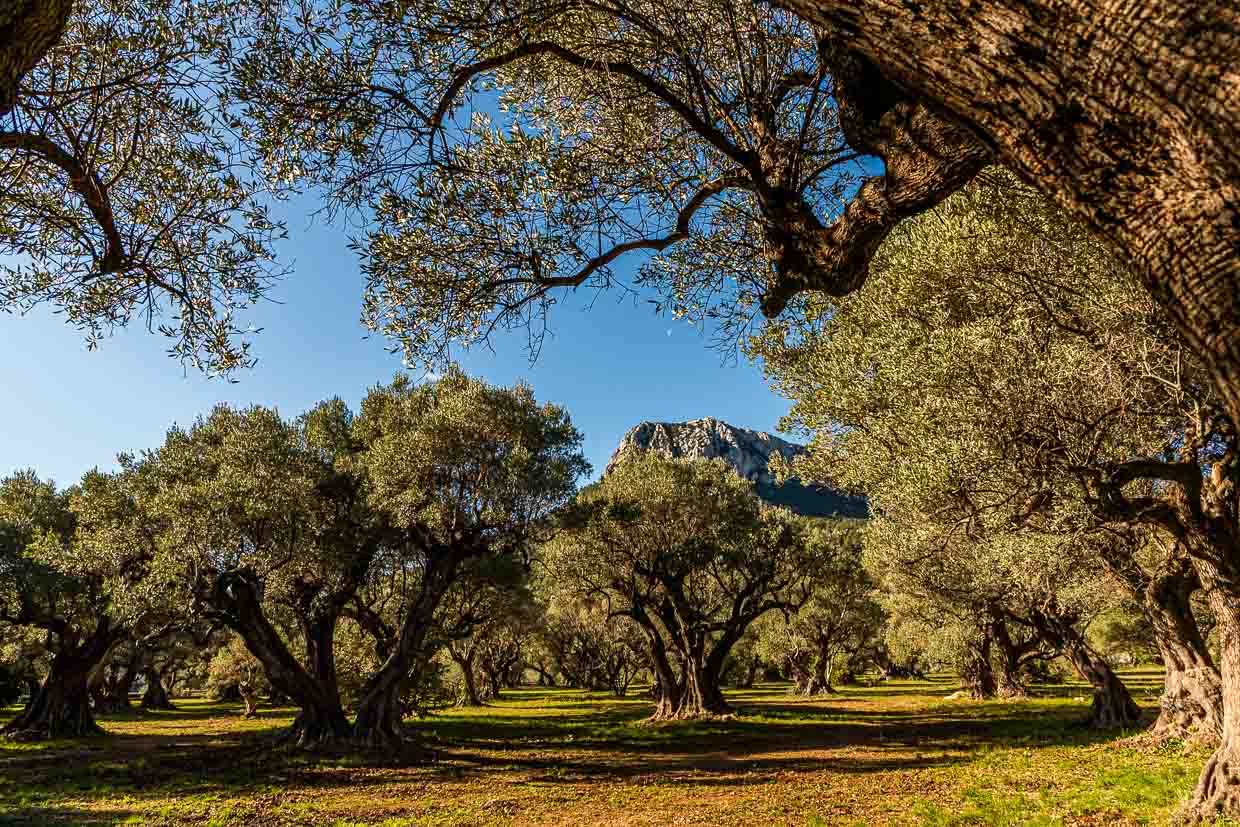
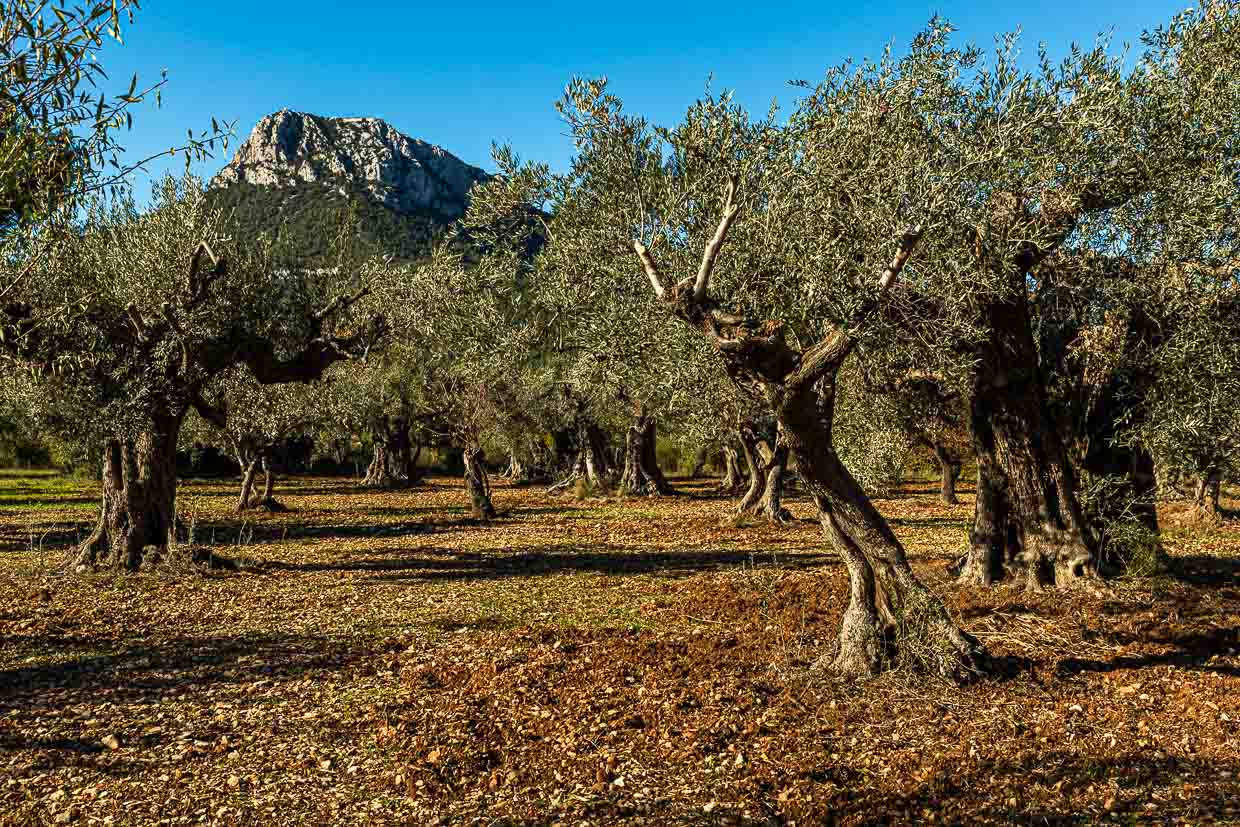
Mont Coudon is one of three mountains surrounding Toulon, alongside Faron and Caume. The local council and tourist office attribute the trees’ survival in 1956 to its protective influence. The grove lies on a small plain at its foot.
Later, people threatened the trees in other ways. In the past, a larger plantation stretched across the plain, through which the Régana stream flowed. Industrial estates and housing developments displaced most of it. In 1989, the Var department purchased the grove and declared it a natural area worthy of protection. The local council maintains it.
A grove for everyone
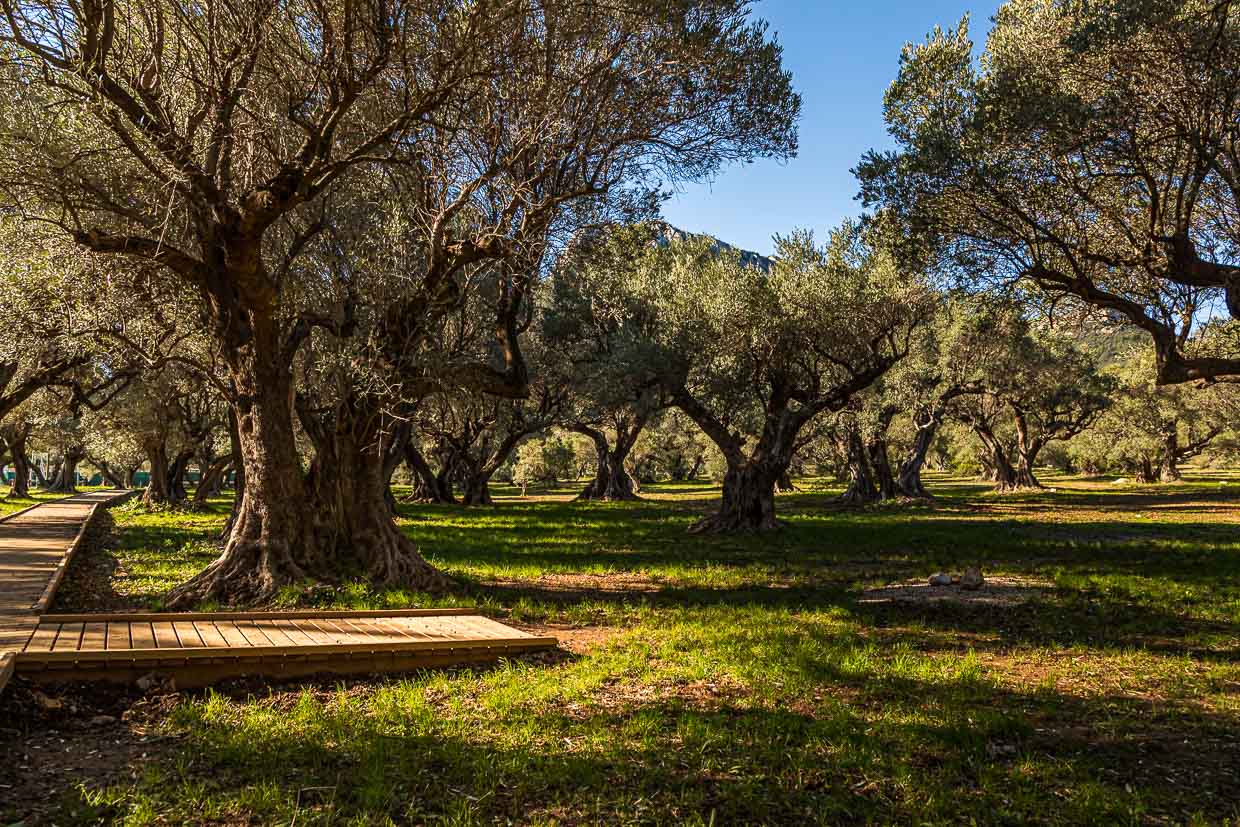
The site covers a good two hectares and, according to the local council, comprises more than 300 trees. Entry is free. The grove is accessible day and night. Since August 2019, a one-and-a-half-metre-wide wooden path has wound its way between the trunks. It is also suitable for pushchairs. In 1996, director James Ivory filmed scenes here for the film *Surviving Picasso*, starring Anthony Hopkins.
The article ‘Olive Oil from Provence’ describes how olive oil is produced in the Var. The article on Château Léoube explains how a coastal estate deals with drought and forest fires.
The research trip was supported on site by the French Tourism Board


