
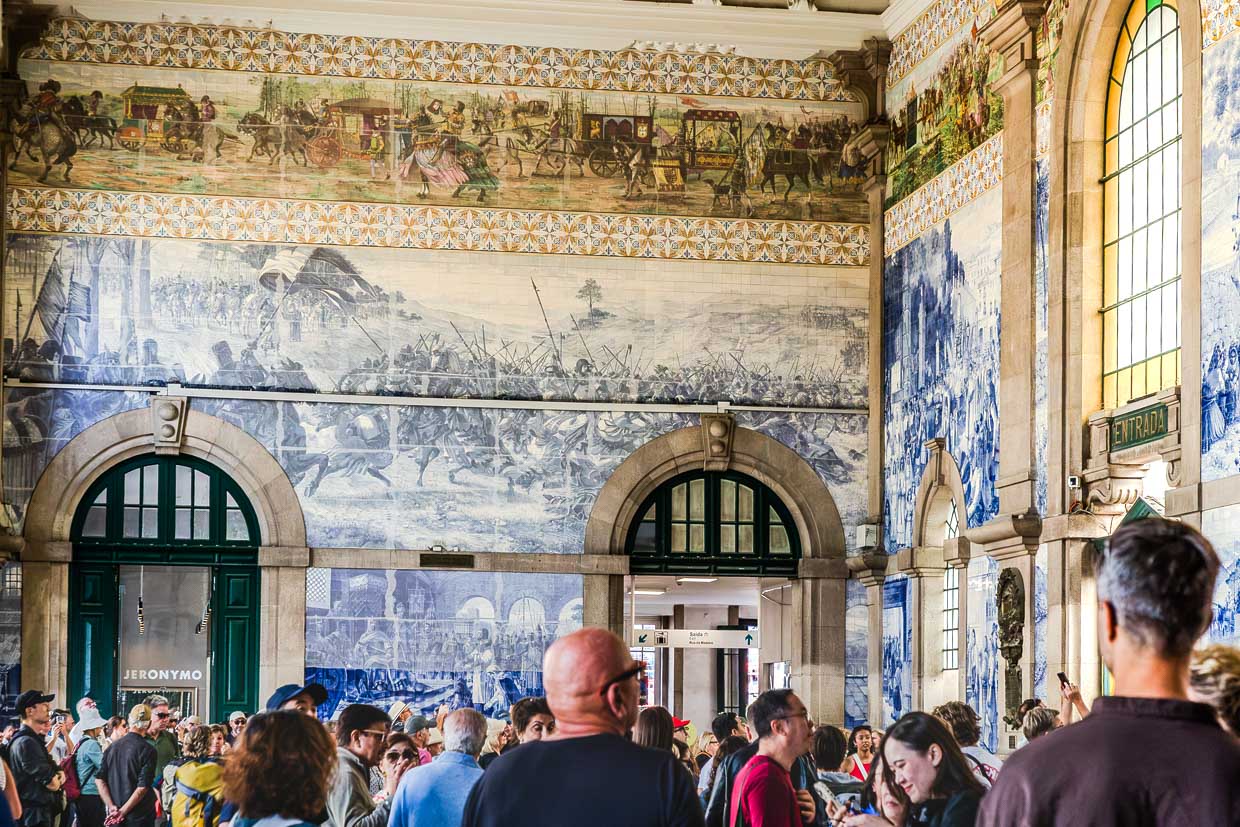
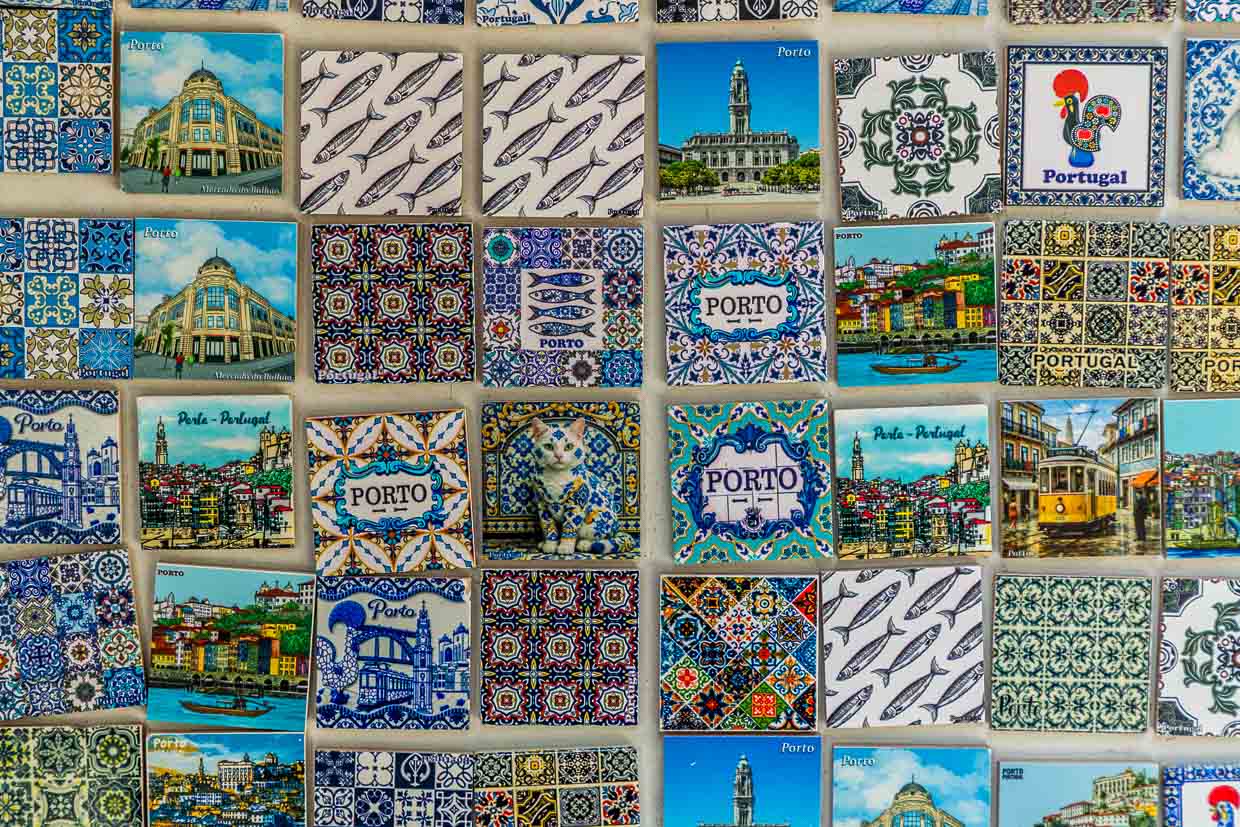
In the concourse of São Bento railway station in Porto, visitors stand shoulder to shoulder beneath blue murals. Around 20,000 tiles cover the walls. Jorge Colaço painted them between 1905 and 1916. They depict battles on horseback, a procession, a folk festival and an ox-drawn cart on the River Douro. Who commissioned them, and who were they intended to benefit? What has become of this tradition, when just two streets away you can buy magnets featuring sardines?
From an Arabic word to blue from China
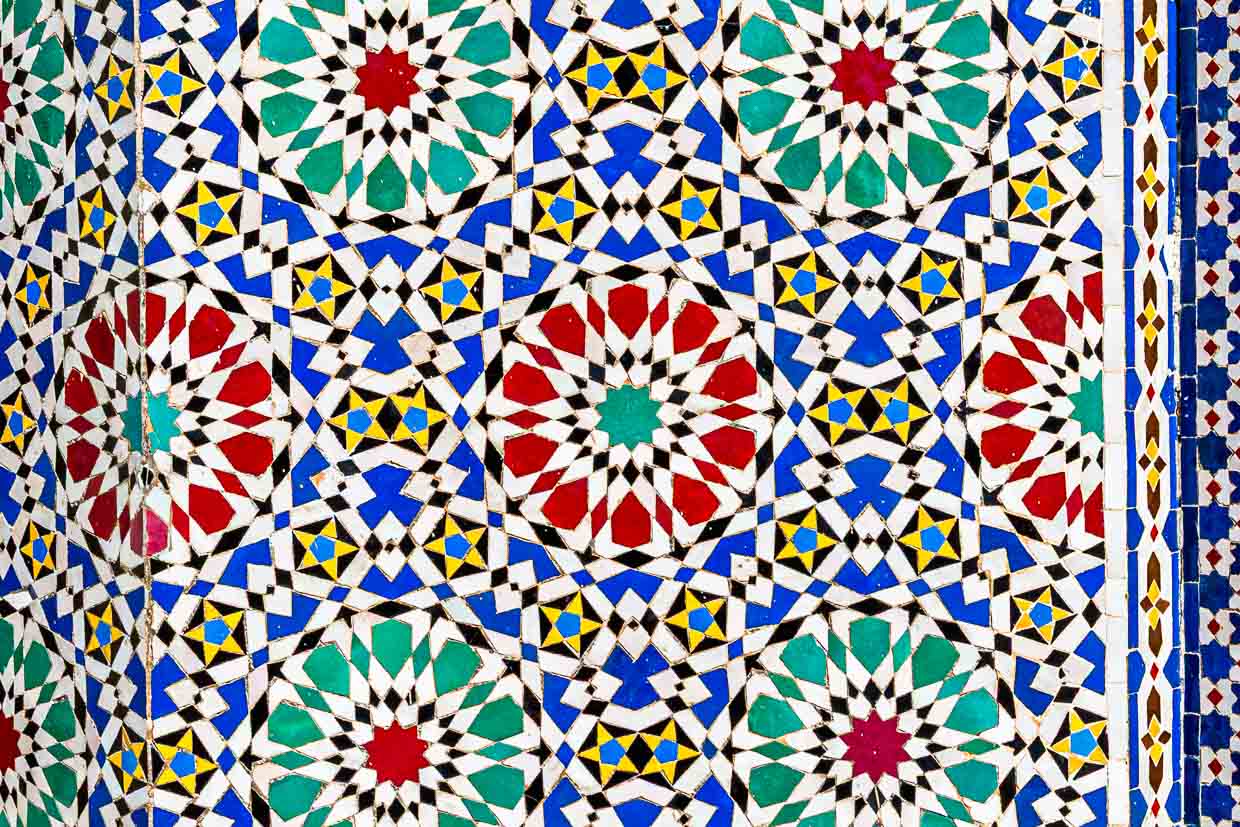
The word ‘azulejo’ derives from the Arabic ‘al-zillīj’, meaning ‘polished stone’. The Moors brought the technique to the Iberian Peninsula. Their tiles were glazed in a single colour, cut to size and assembled into geometric patterns. These mosaics are called ‘alicatados’. The technique reached Portugal when King Manuel I visited Seville in 1503. He had the Arab Hall in the National Palace of Sintra clad with such tiles.
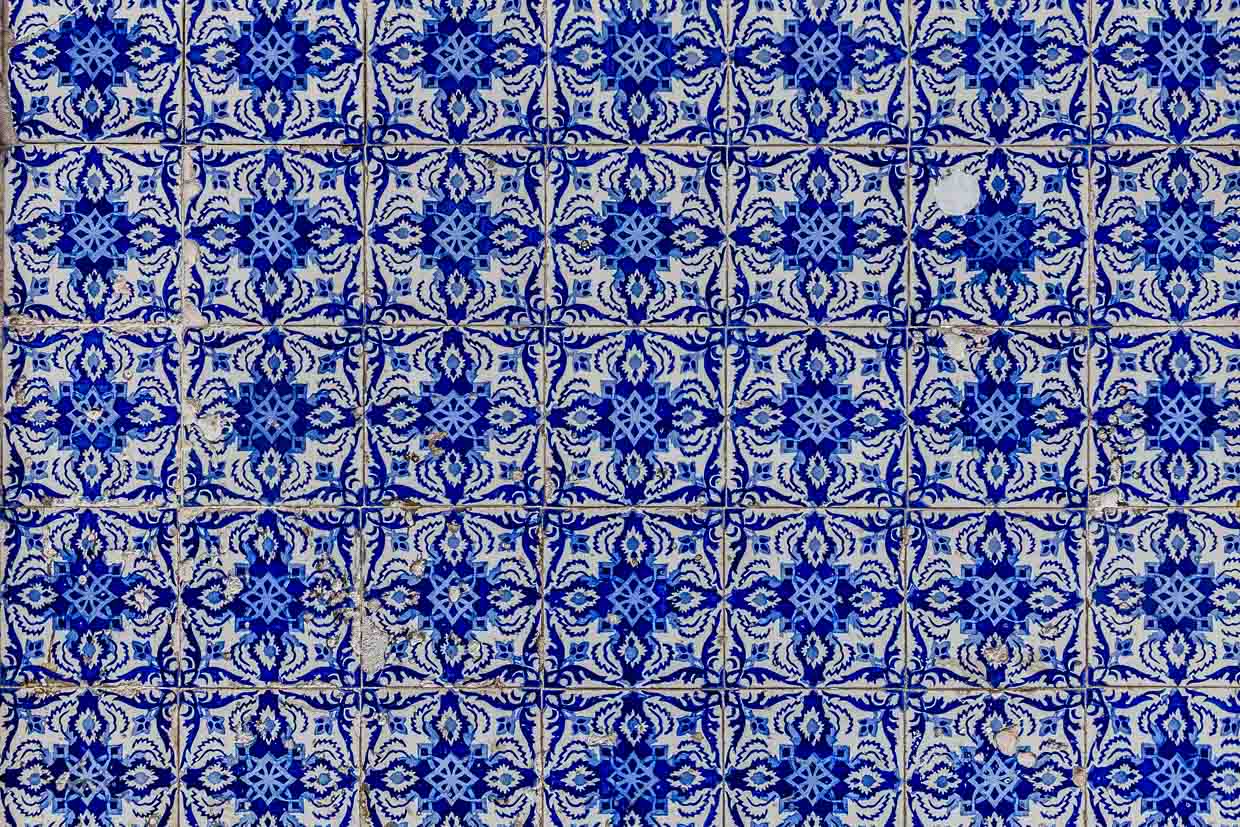
The colour blue came later and from a different direction. In the 17th century, Portugal introduced blue-and-white tiles from the Netherlands. Their colour scheme was modelled on Chinese porcelain. Porcelain from the Ming Dynasty and Delft faience served as models.
Things then moved quickly. In the early 18th century, Portugal and Brazil ordered so many tiles that the workshops switched to mass production. This period is known as the ‘Golden Age of the Azulejo’.
From the church to the street
The 1755 Lisbon earthquake changed the tile. During the reconstruction under the Marquês de Pombal, builders opted for small, simple tiles. They were cheap and protected the façades. In the 19th century, it was Porto’s turn. Returnees from Brazil had their houses clad in tiles. The tiles kept the rooms cool and dampened the noise. Porto has been adorned with tiles ever since.
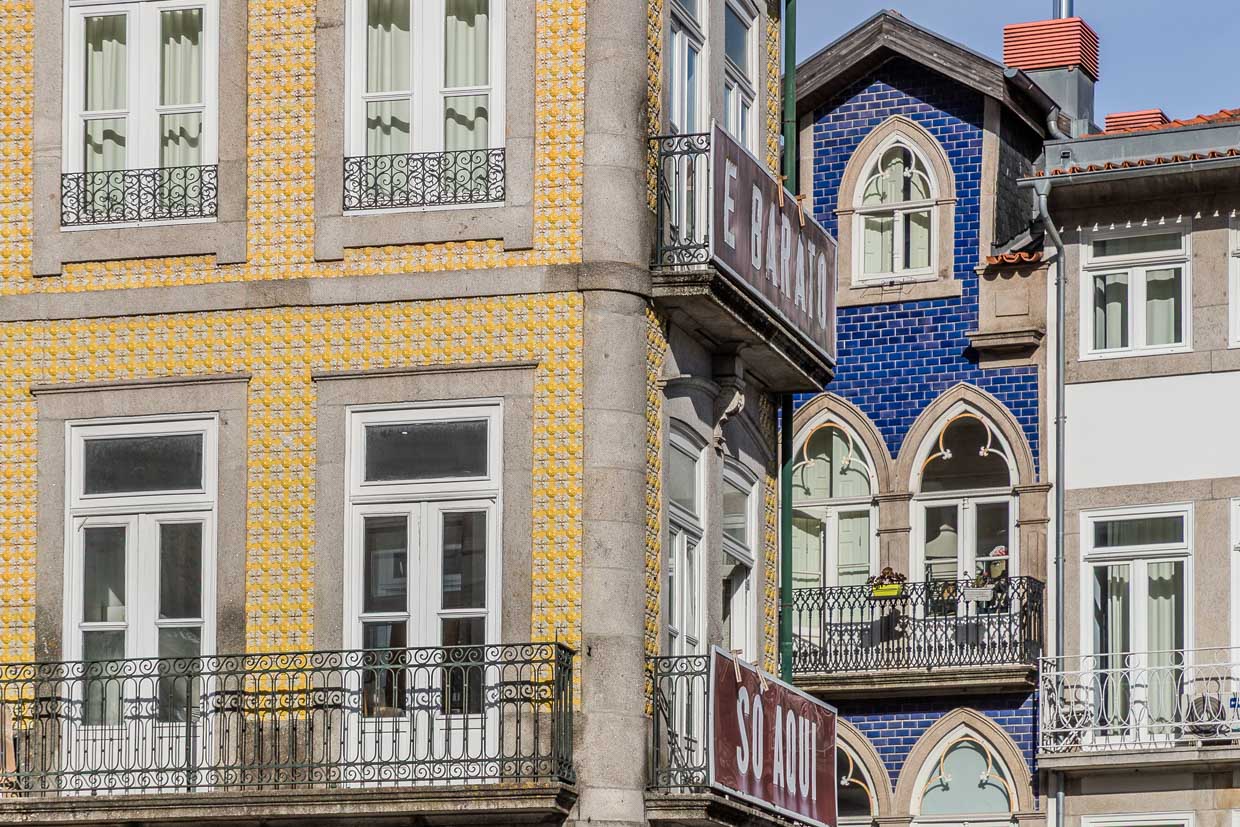
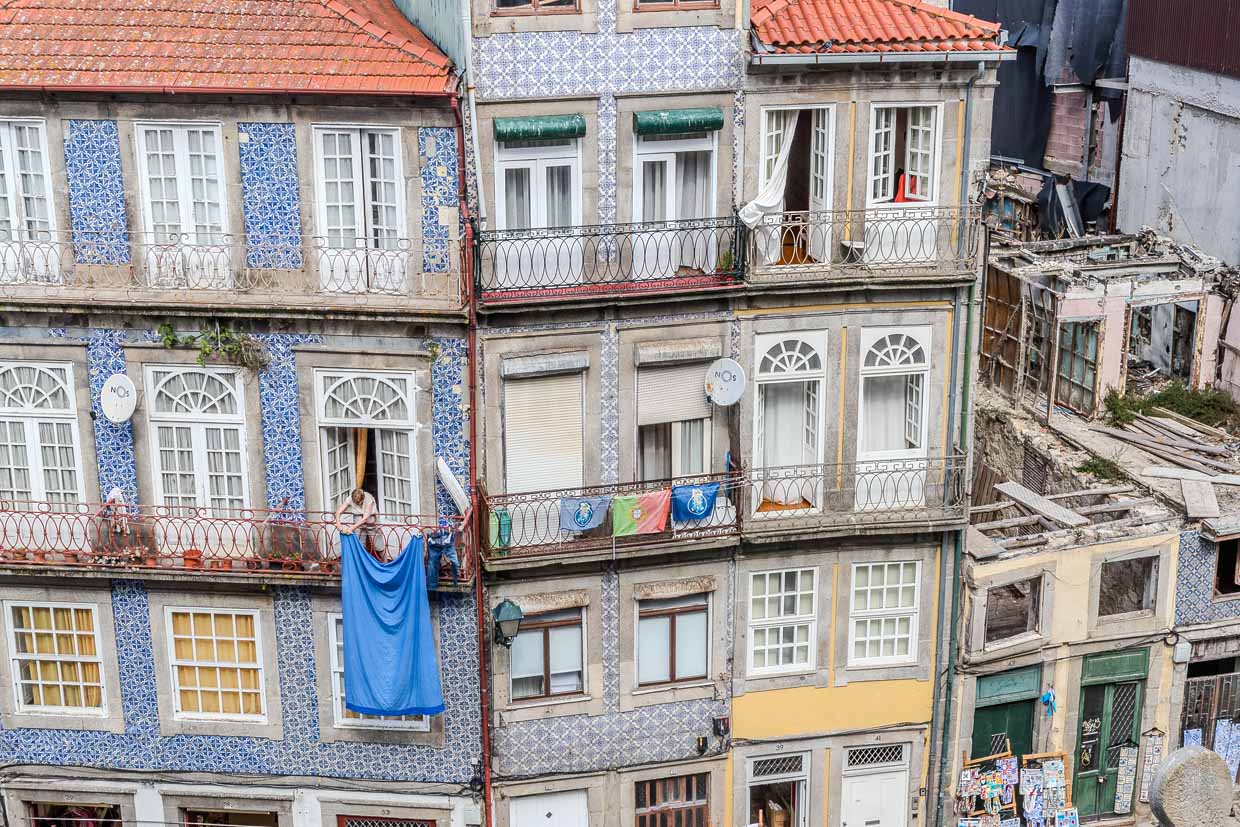
In the old town, a corner house with yellow tiles stands next to a narrow house with blue ones. A frieze featuring vases and ornamentation adorns the parapet of a green house. Facade tiles of this kind were not hand-painted by an artist but mass-produced by factories.
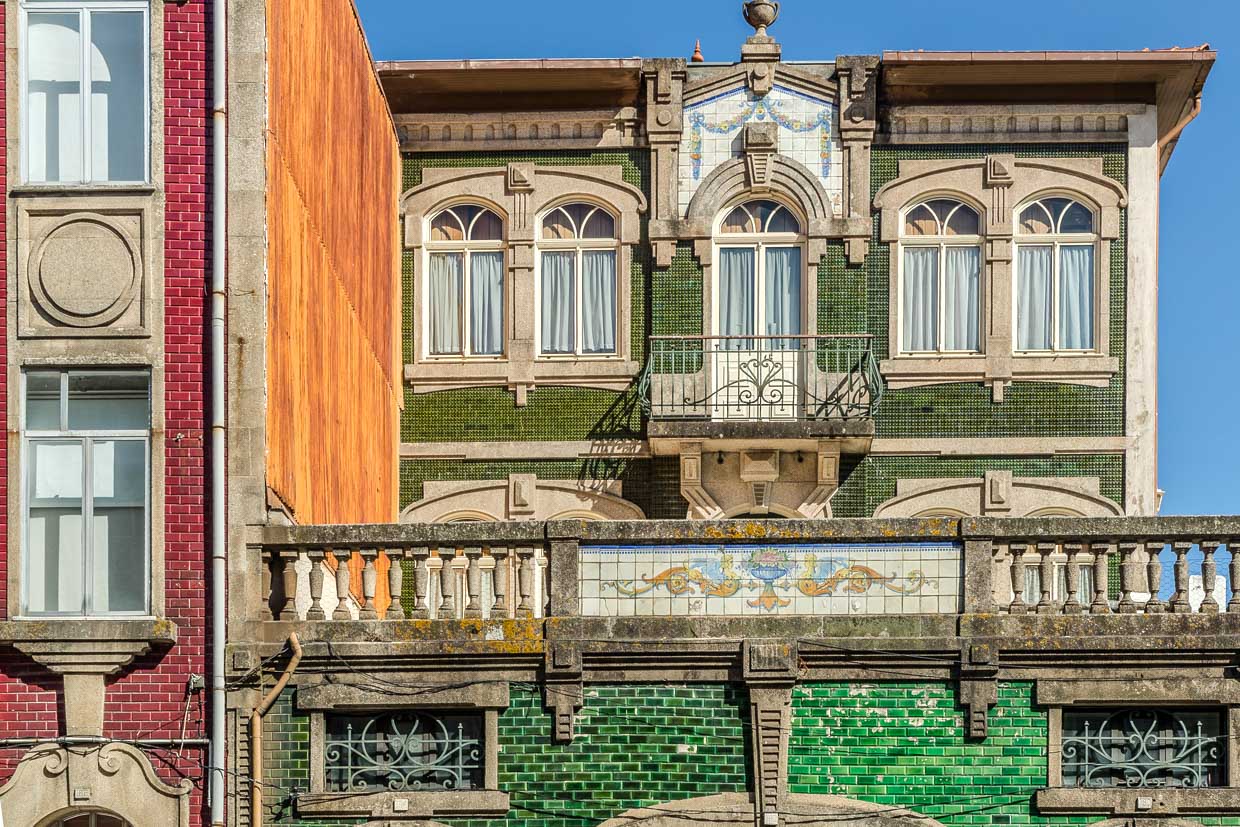
The picture-book town of São Bento
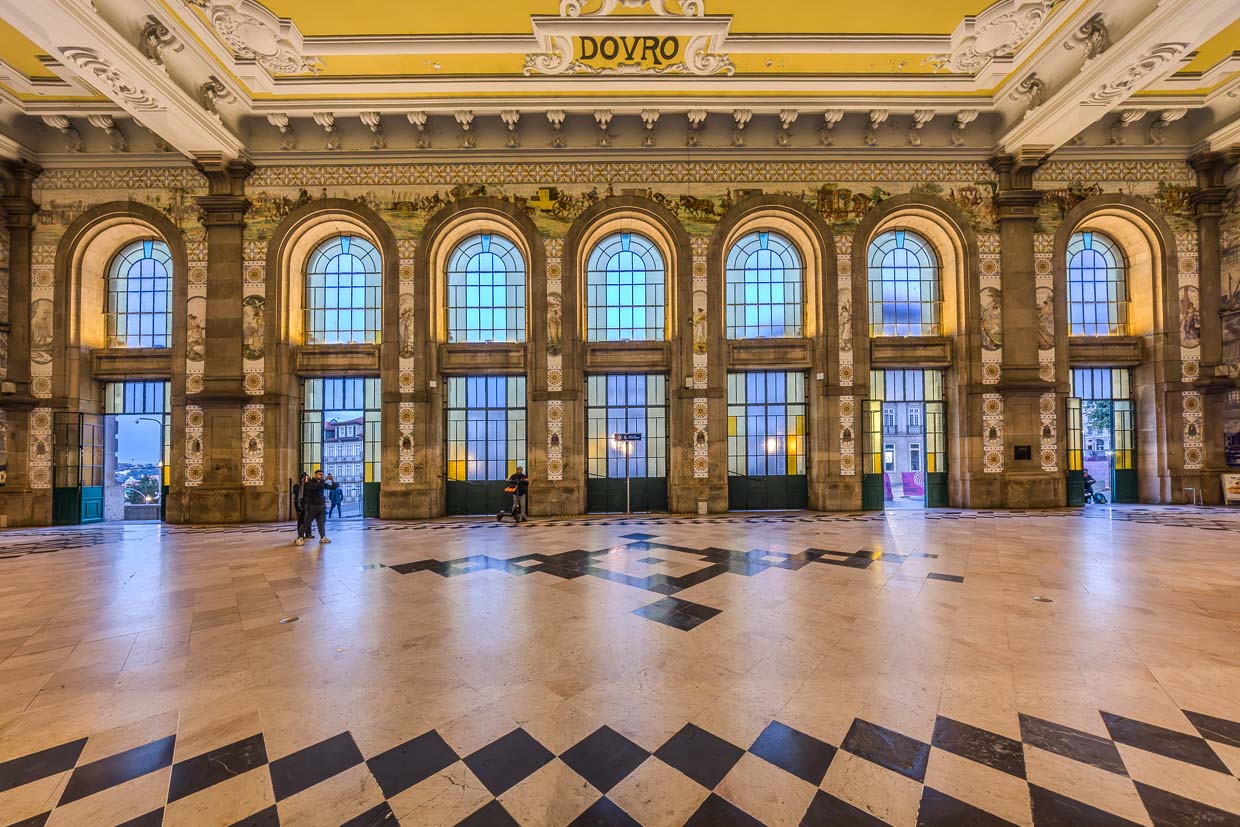
São Bento railway station was built on the site of the Benedictine monastery of São Bento da Avé Maria. The monastery was demolished in 1892. José Marques da Silva, an architect from Porto, designed the station. It was opened on 5 October 1916. Jorge Colaço adorned the concourse with the panels he had been painting since 1905. A factory in Sacavém burnt them.
Colaço was born in Tangier in 1868 and died in Oeiras in 1942. He mainly painted azulejos in the late Romantic style, which celebrates Portuguese history. This is clearly evident at São Bento. The panels depict the Battle of Valdevez in 1140, the entry of John I into Porto and the conquest of Ceuta in 1415. Above them, a colourful band featuring carriages, ox-drawn carts and horsemen tells the story of transport.
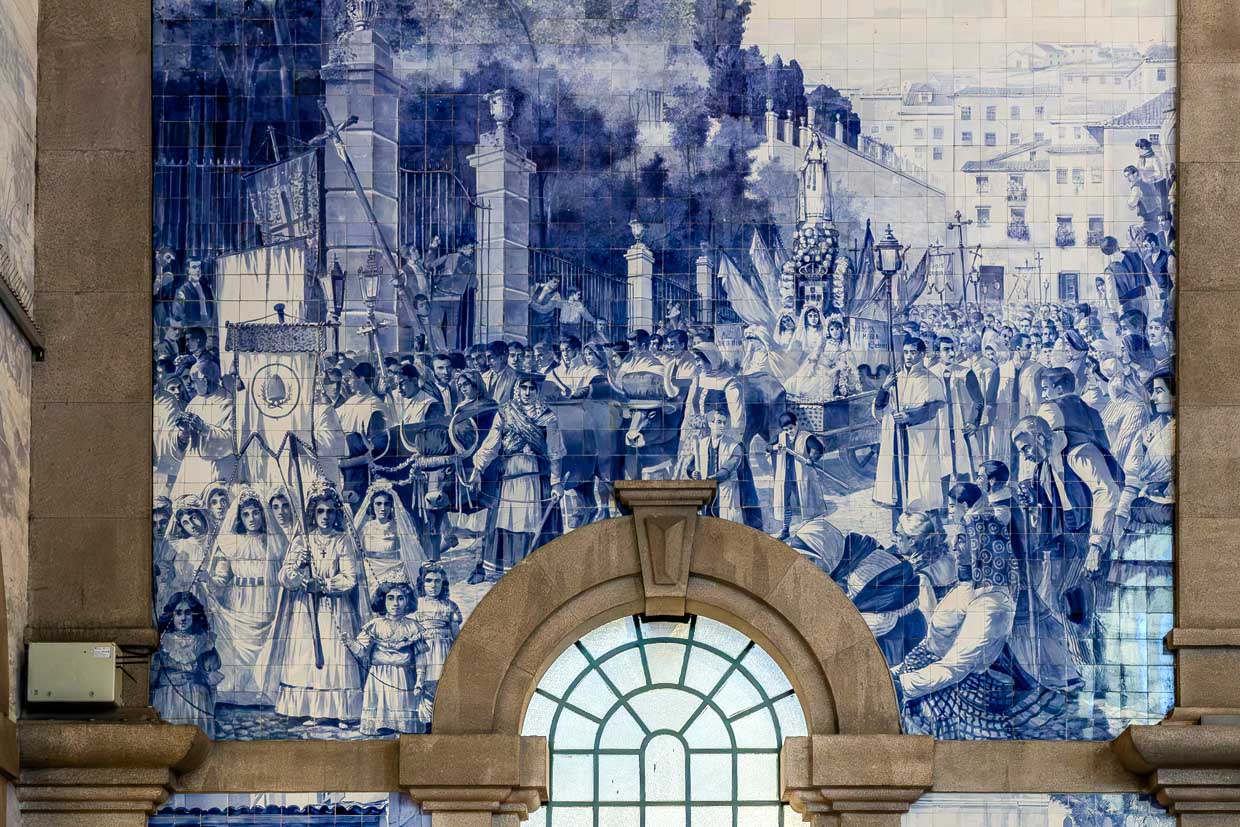
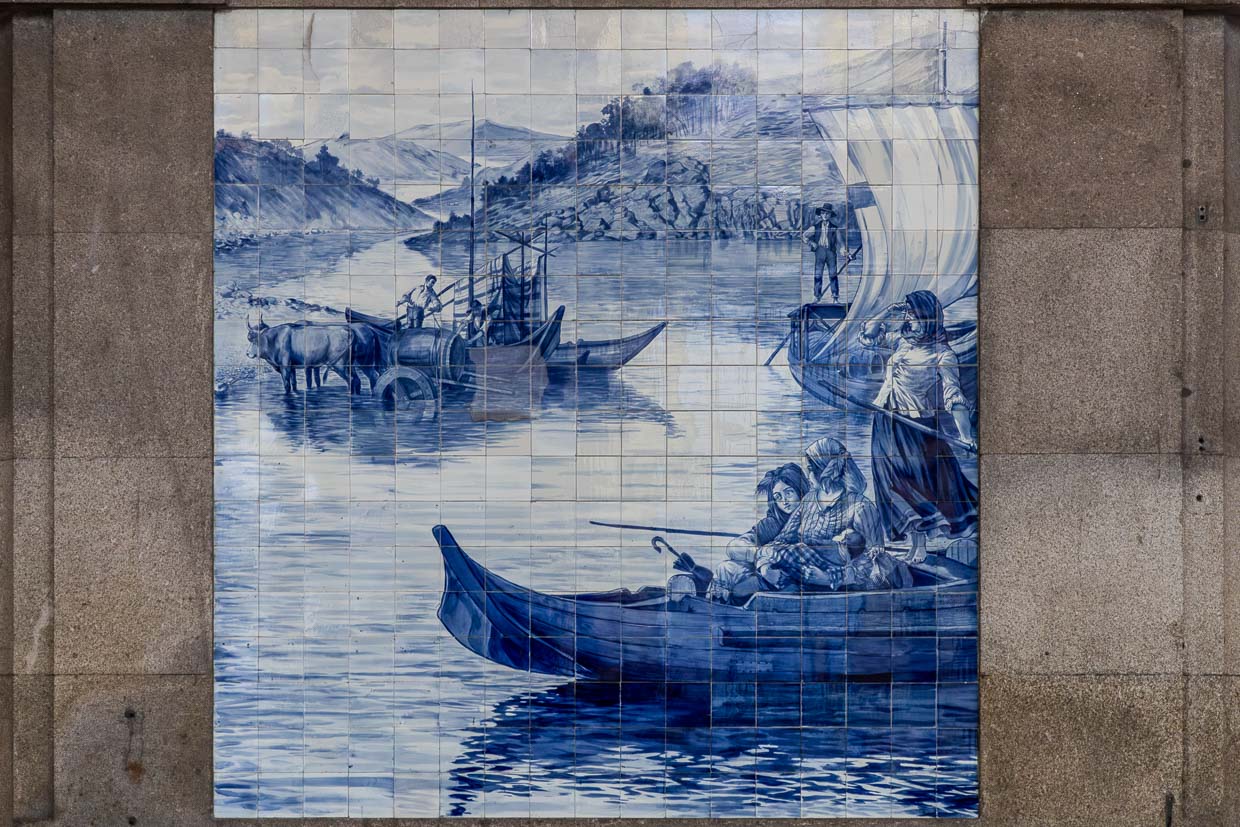
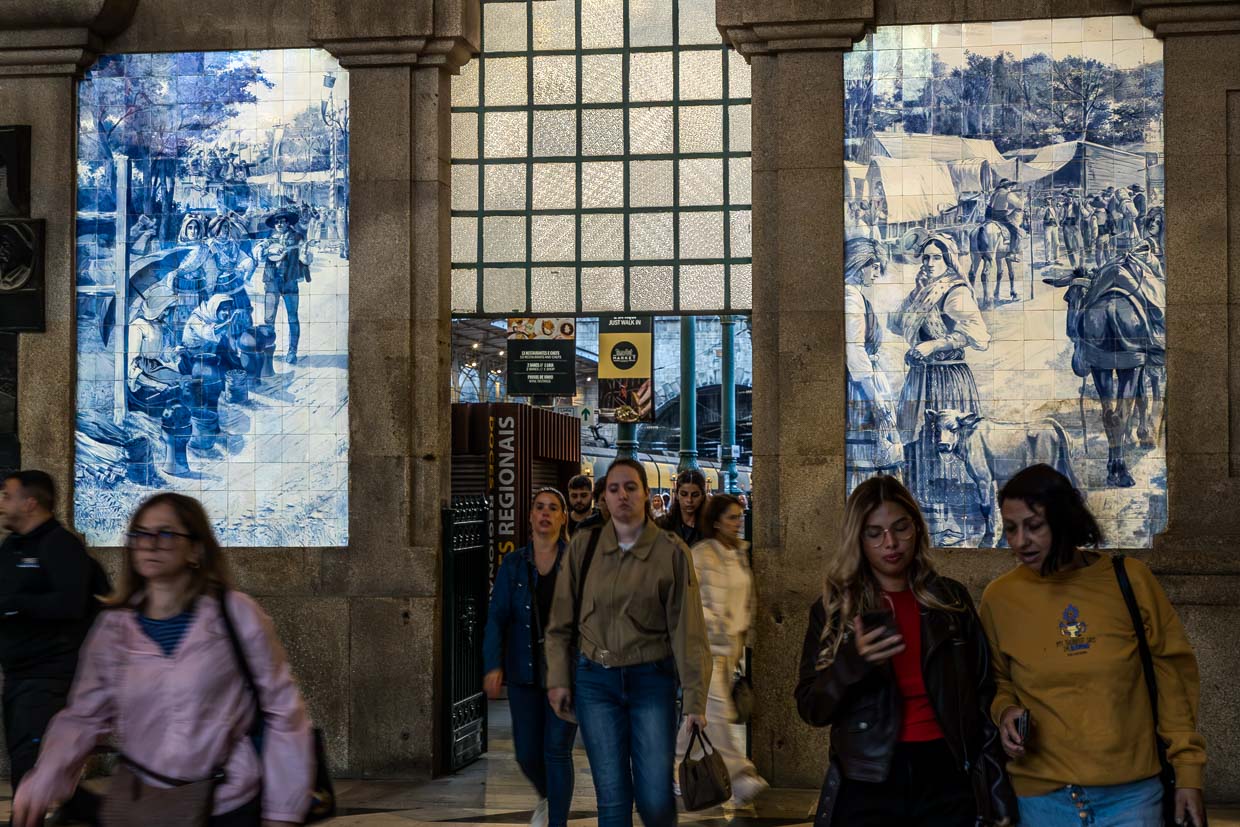
Alongside these are scenes of the countryside. One panel depicts a procession featuring children, a team of oxen pulling a statue, banners and clergy. This is thought to be the procession of Nossa Senhora dos Remédios in Lamego. A second panel shows a village festival with dancers, a guitar and an accordion. Above a tent hangs a sign reading ‘Bom Vinho e Petiscos’ – good wine and small dishes. On a third panel, a team of oxen pulls a barrel through the shallow waters of the Douro. Next to it lies a Barco Rabelo, the sort of boat that used to carry port wine barrels downstream.
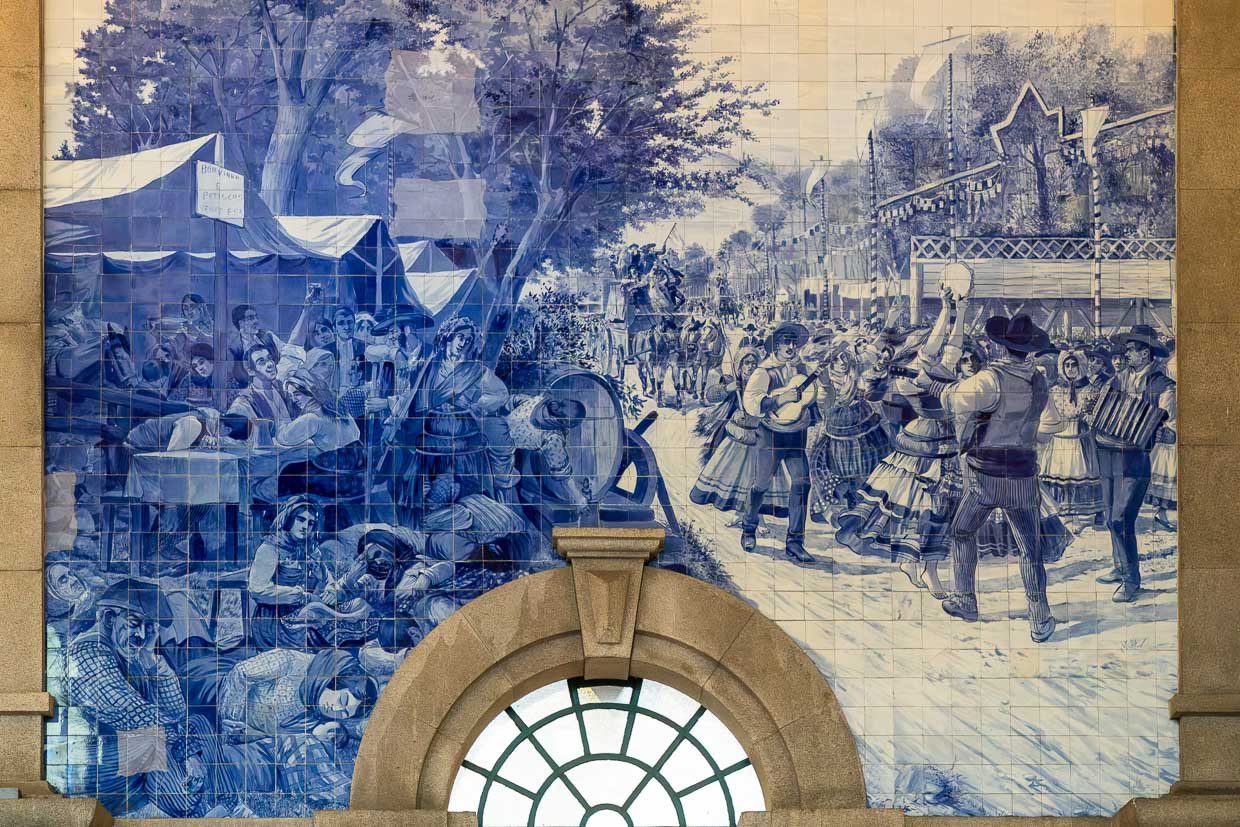
The link to the present is evident during the morning rush hour. Between two market scenes, a passageway leads to the train platforms. Signs there advertise ‘13 Restaurantes e Chefs’. The panels tell of yesterday’s market; just behind them, today’s market is in full swing.
Latin on the façade
Jorge Colaço also worked for the church. Construction of the Igreja de Santo Ildefonso began in 1709, and it was consecrated in 1739. Colaço painted the façade tiles in 1932. They depict scenes from the life of Ildefonso of Toledo, after whom the church is named.
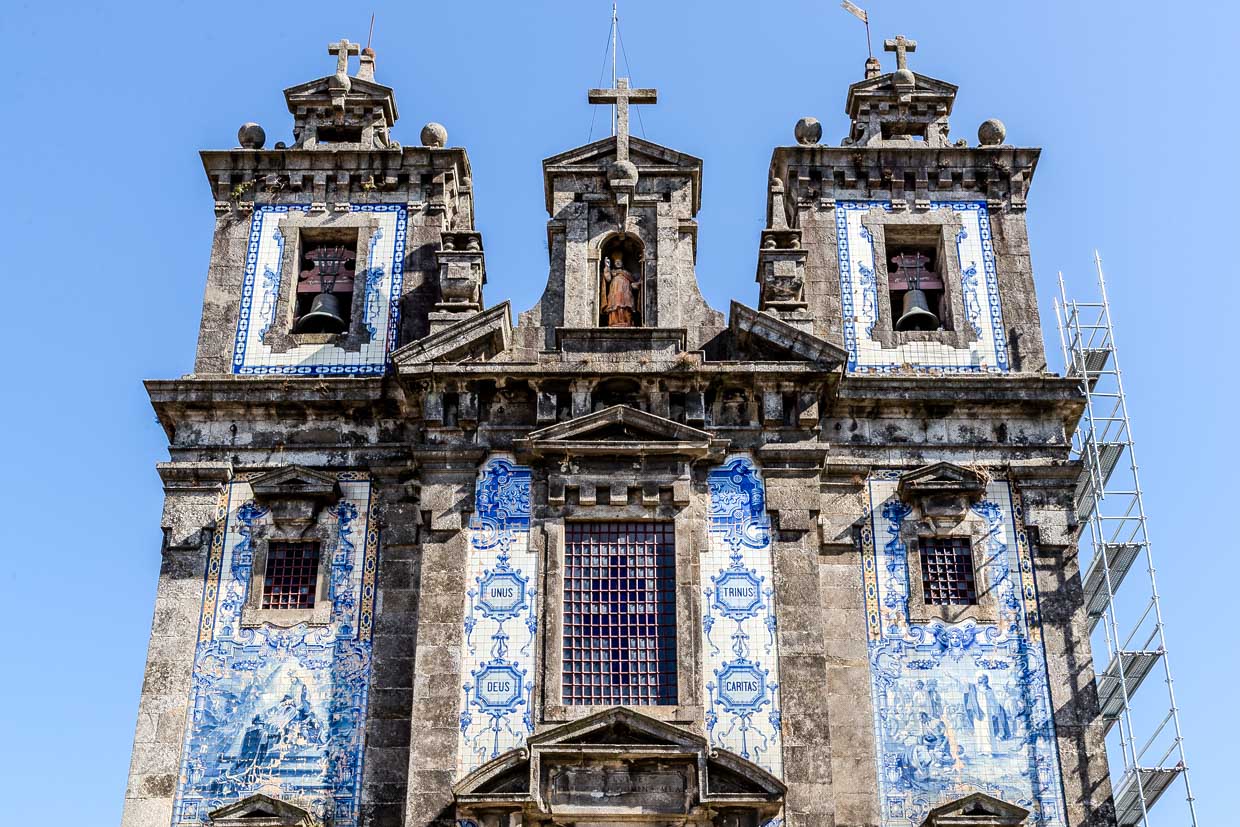
It is not history that speaks here, but the church. The cartouches bear Latin words: UNUS, TRINUS, DEUS, CARITAS. One, Triune, God, Love. A side panel depicts a sermon being delivered to a crowd. One artist, two commissions, two messages. At the station, Colaço depicts battles on horseback and everyday life; at the church, he portrays articles of faith. To the right of the façade stands a scaffold. Even the blue needs tending.
Grape harvest on the platform
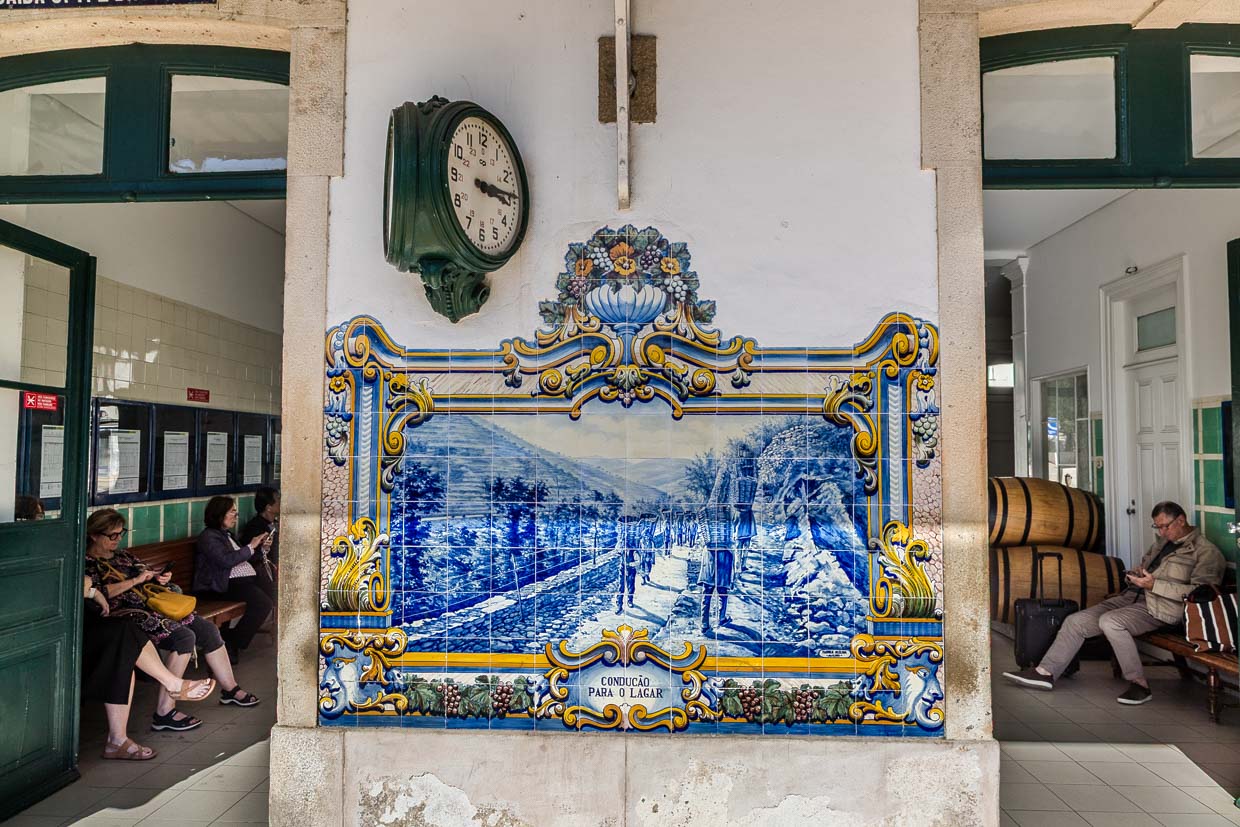
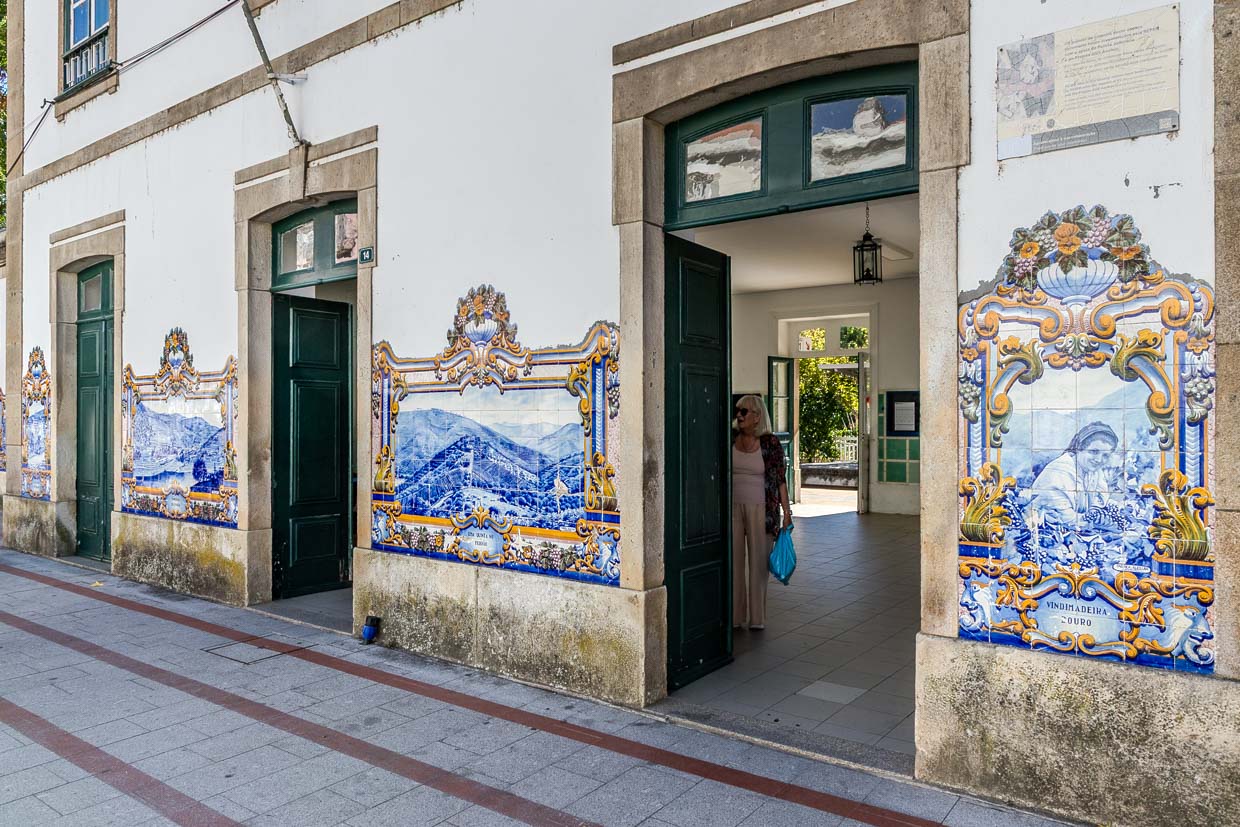
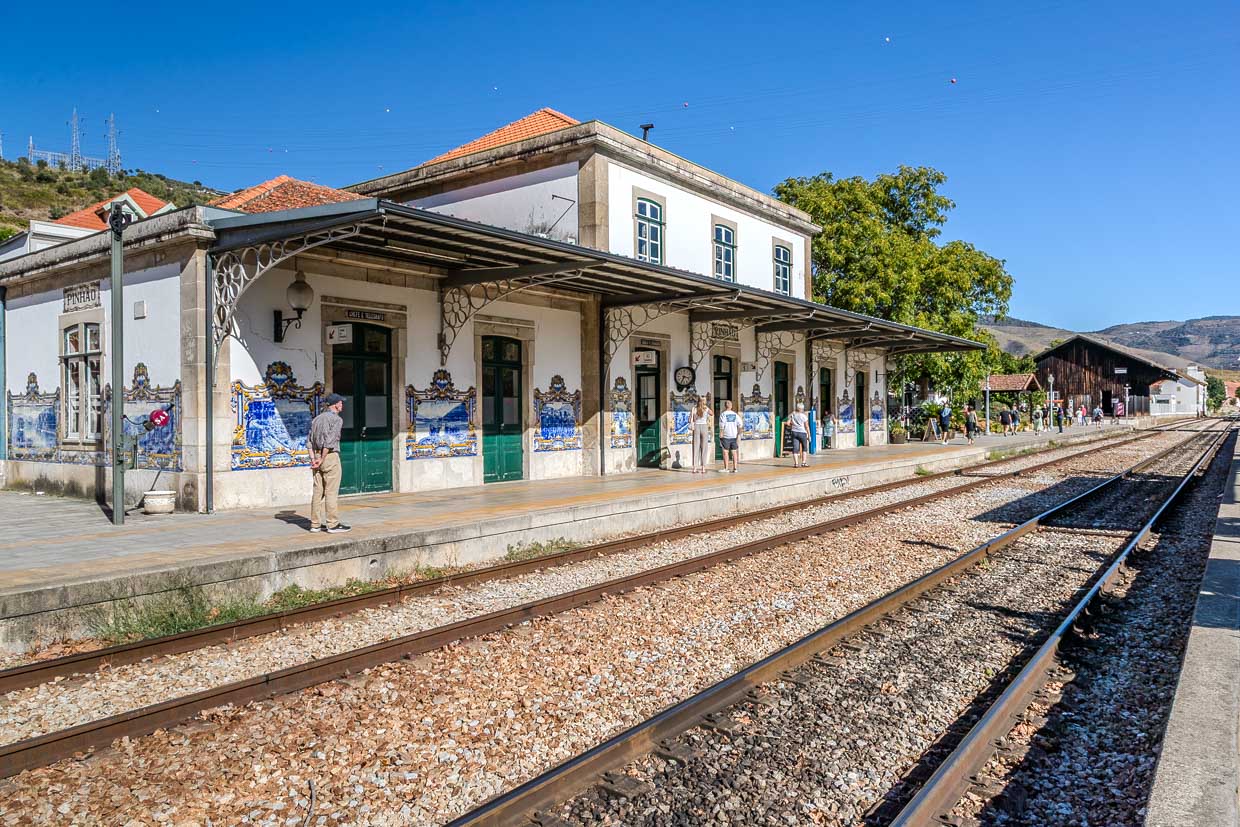
Pinhão railway station on the Douro also features tiles, though they are not by Colaço. Twenty-four panels, comprising more than 3,000 tiles, cover the walls there. The Aleluia factory in Aveiro produced them in 1937; João Marques de Oliveira and Lourenço Rodrigues Limas designed them based on photographs from the Casa Alvão studio. Here, photographs were transformed into tiles. The station itself was opened on 1 June 1880.
The panels are entitled ‘Condução para o Lagar’ (Transport to the Wine Press), ‘Vindimadeira Douro’ (Grape-Picker from the Douro), ‘Uma Quinta no Ferrão’ (A Vineyard in Ferrão) and ‘Panorama do Pinhão’. They depict grapes, barrels and vineyards. They can be interpreted as the station’s advertisement for its freight services.
A staircase made of tiles and stone
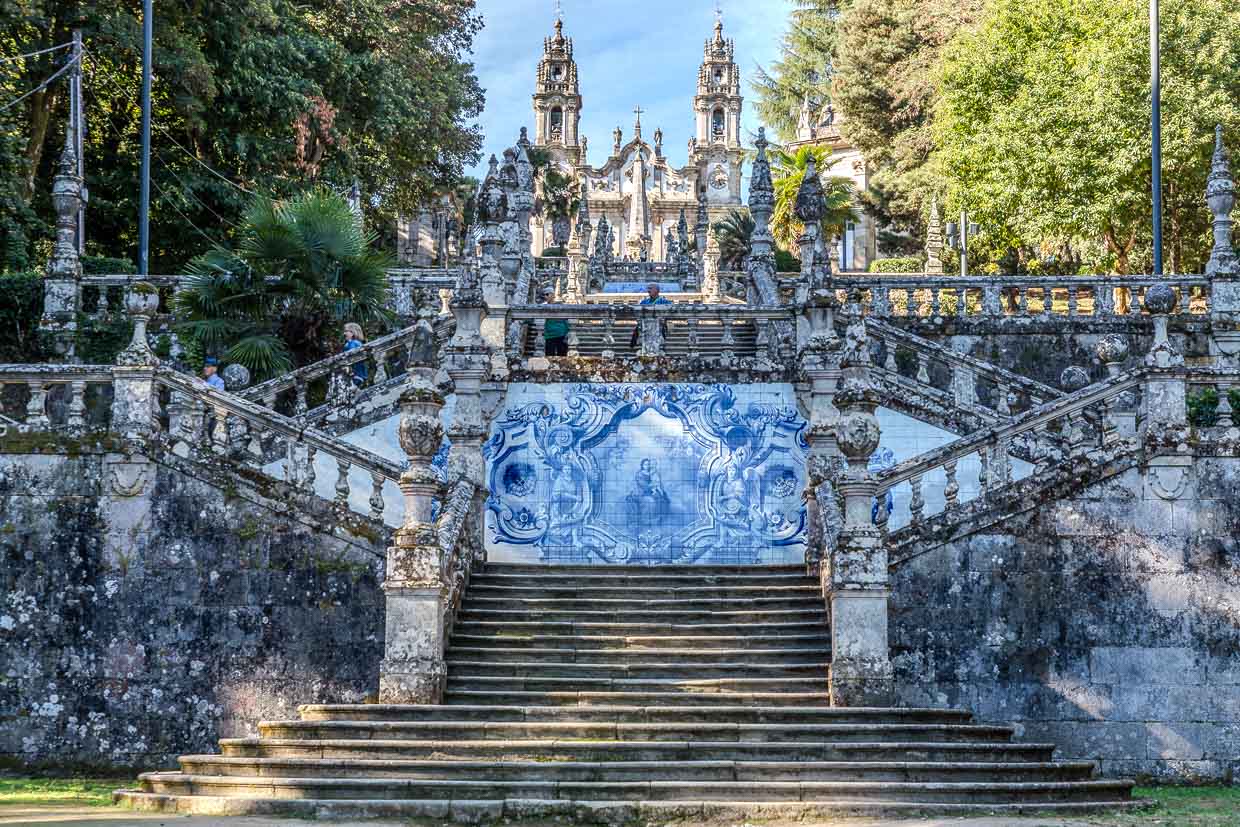
In Lamego, an open staircase leads to the Santuário de Nossa Senhora dos Remédios, the construction of which began in 1750. Azulejo panels depicting figurative scenes in decorative frames are set into the landings; inside the nave, panels depict scenes from the life of the Virgin Mary. The procession depicted on the panel in São Bento station is thought to relate to this site. The tiles allude to one another.
Who commissioned the images?
The images are aimed at people passing by: travellers at the station, worshippers outside the church, passengers on the Douro. They tell them who they are. A people with battles and festivals. A community with its beliefs. A region that harvests wine. The artist, the manufacturer and the year are usually indicated on the large tile murals – the person who commissioned them almost never is.
Tiles under film
In Porto, semi-transparent films are stuck to some of the tiled surfaces, robbing the images of their brilliance. They are intended to protect the tiles from vibration damage during construction work. The difference is particularly striking in São Bento. On the panel ‘Egas Moniz apresentando-se, com a mulher e filhos, ao rei de Leão’, the upper half appears pale beneath the film, whilst the blue in the lower half glows. The large battle scene in the opening image of this article also loses some of its brilliance at the top.
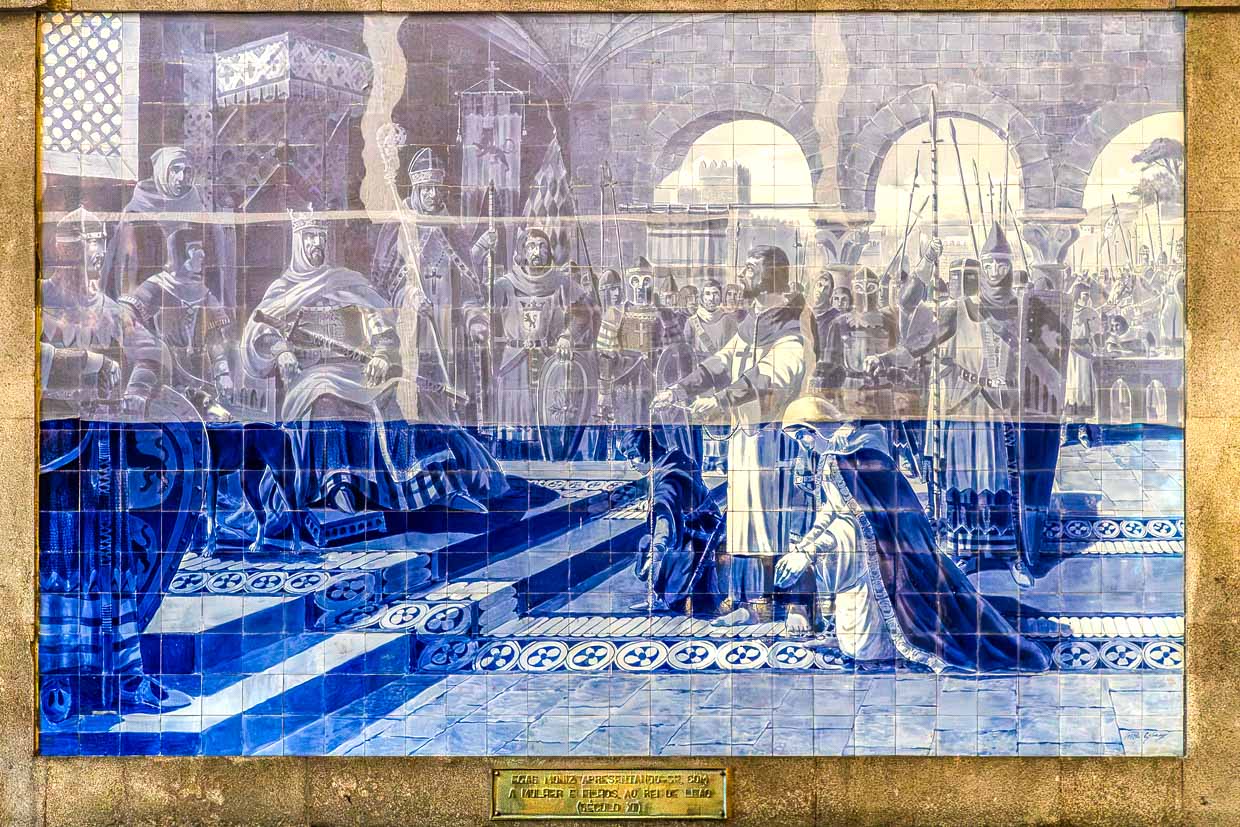
The purpose of the film is obvious. Nevertheless, it robs the wall of its brilliance precisely where the eye falls. The fact that it is needed demonstrates the value of these walls. Since 31 December 1997, the station has been classified as an ‘Imóvel de Interesse Público’, a listed building of public interest. This protection extends to the azulejo panels.
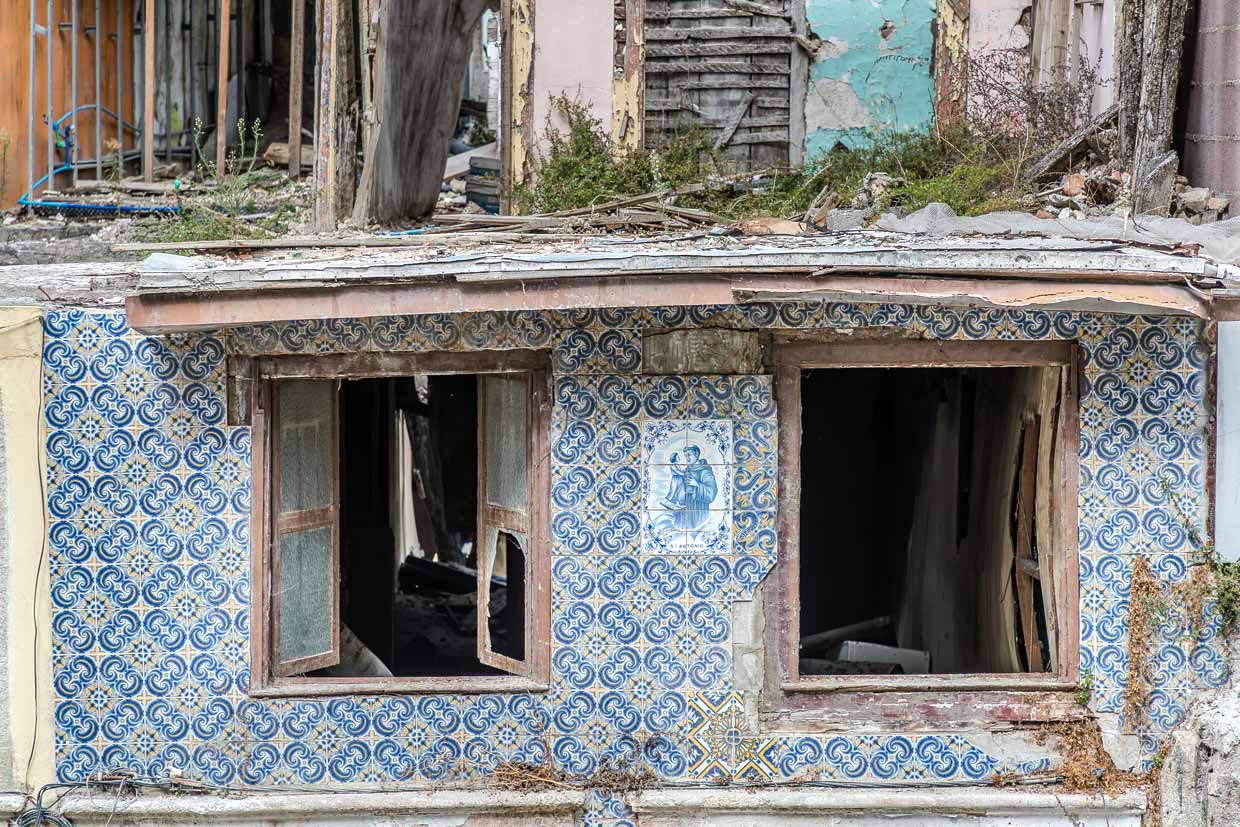
A house not far from the Sé shows what happens when nothing is protected. Its façade is adorned with blue and yellow azulejos; the windows are broken and the roof has collapsed. Between the windows hangs a panel depicting Saint Anthony.
The wit of the small tile
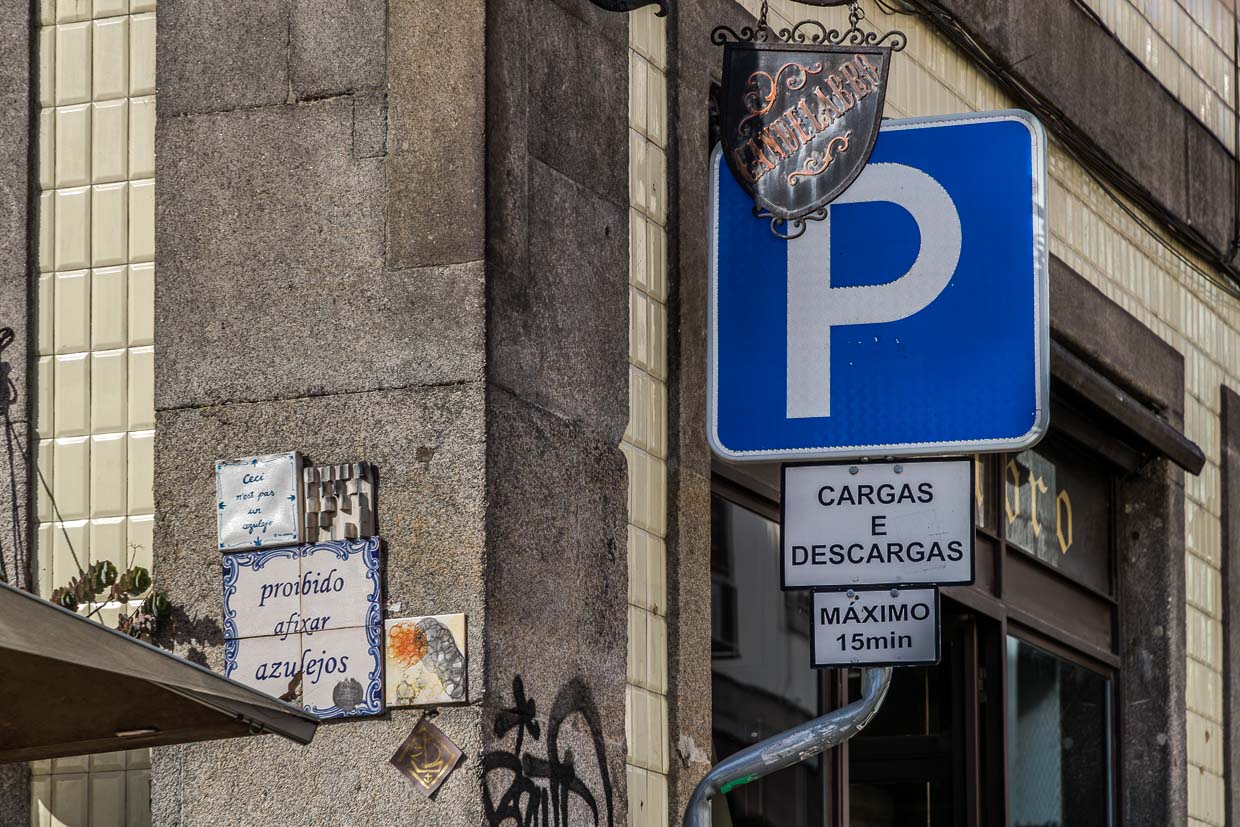
Alongside the large surfaces, Porto also features small tiles with a twist. Two tiles are affixed to a granite corner on Rua da Conceição. One reads ‘Ceci n’est pas un azulejo’, the other ‘proibido afixar azulejos’ – ‘No affixing of azulejos’. Anyone who paints a prohibition on a tile is playing with tradition. The first tile presumably quotes René Magritte: ‘Ceci n’est pas une pipe’.
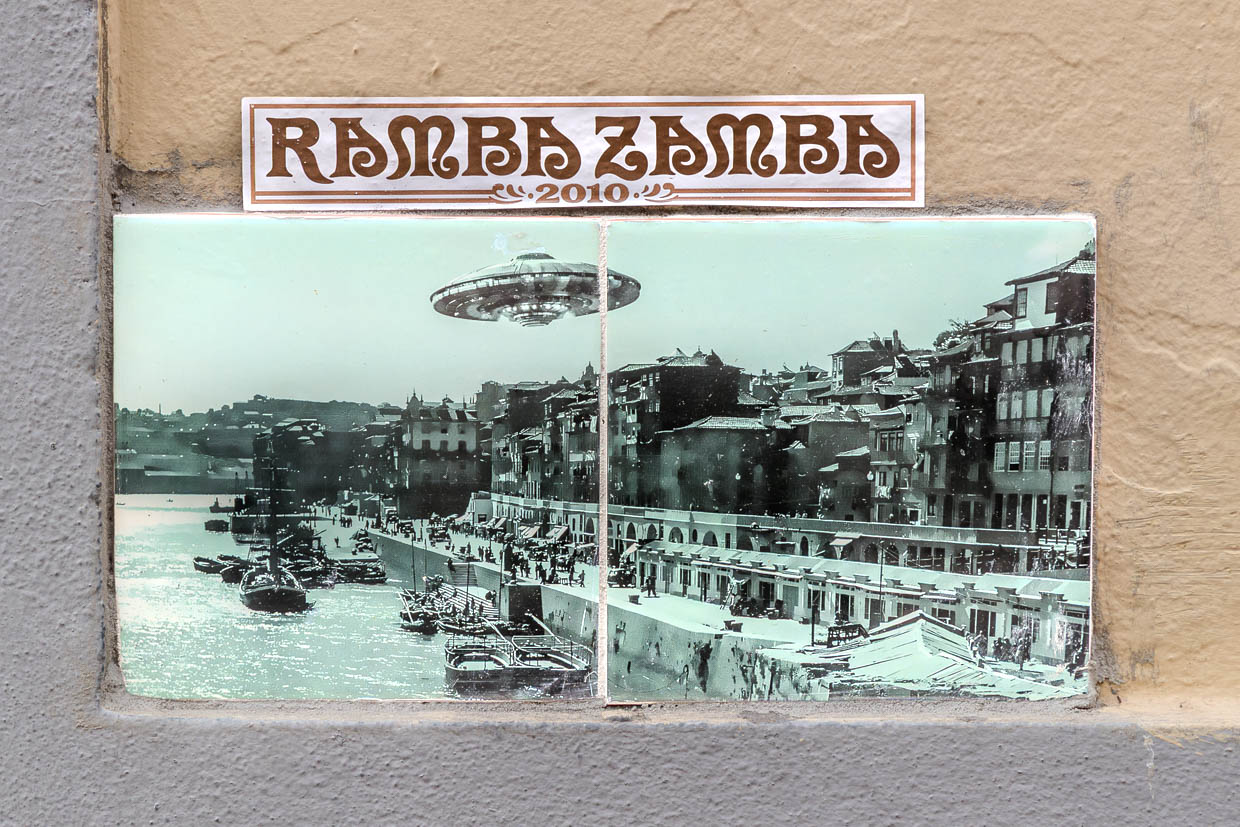
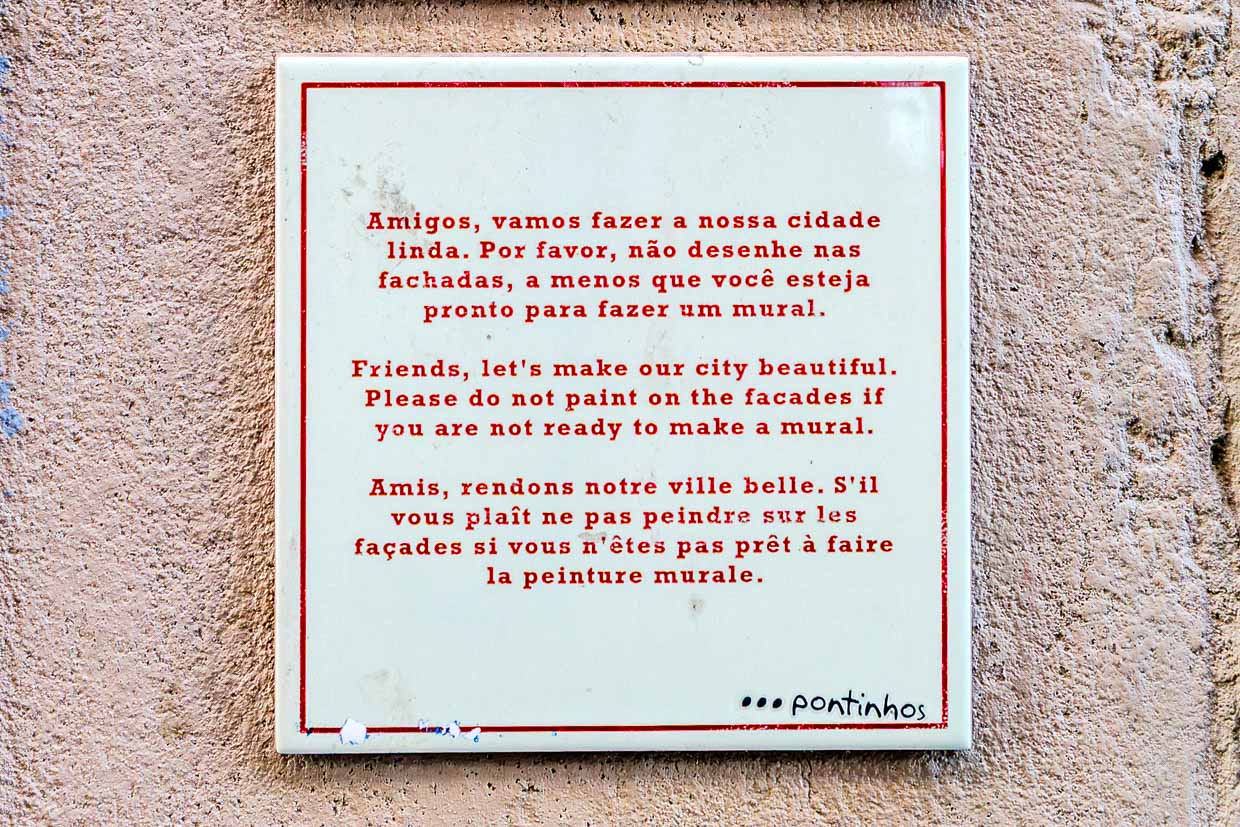
Two tiles on a house wall feature a black-and-white photograph of a riverbank with sailing boats, a quay wall and dense development, reminiscent of the Ribeira. A UFO hovers in the sky. Above it reads ‘Ramba Zamba 2010’. And Pontinhos asks that people refrain from painting on façades if they are not mature enough to do so.
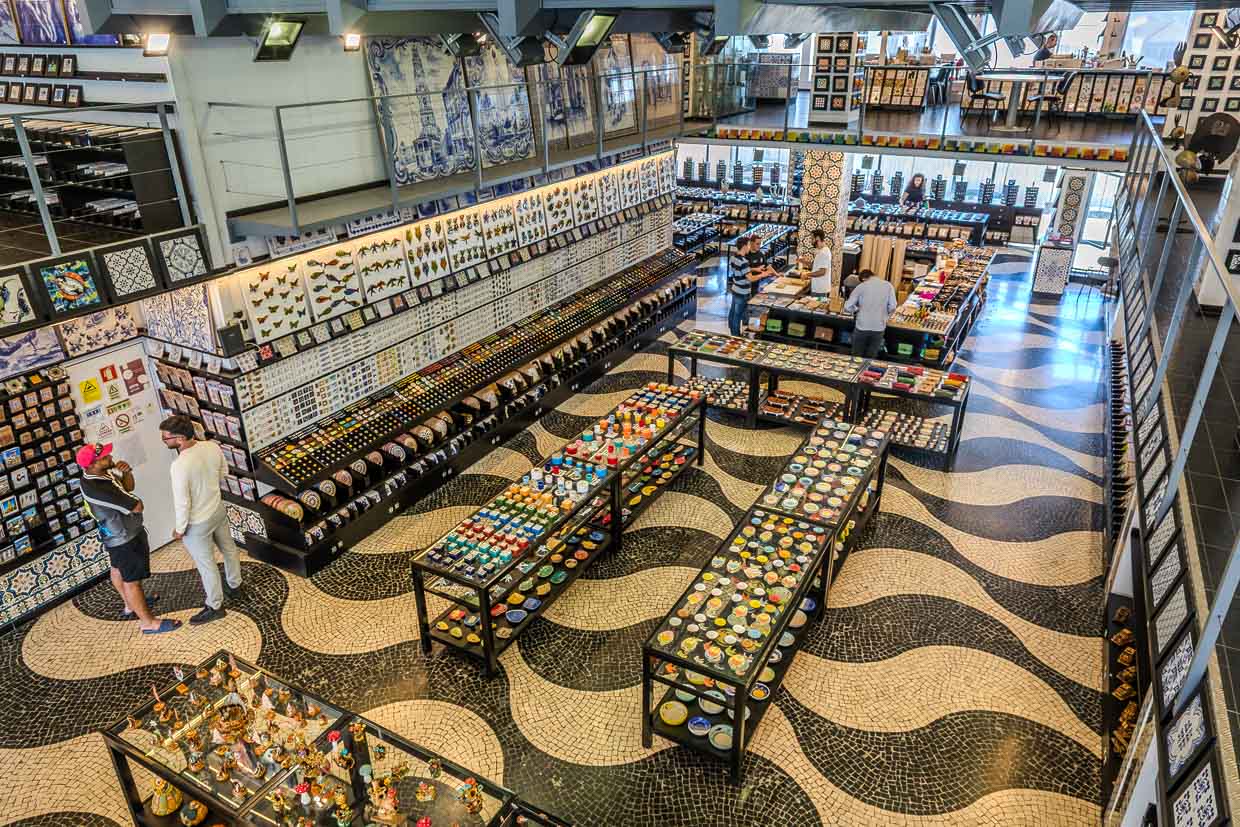
The large tile shop
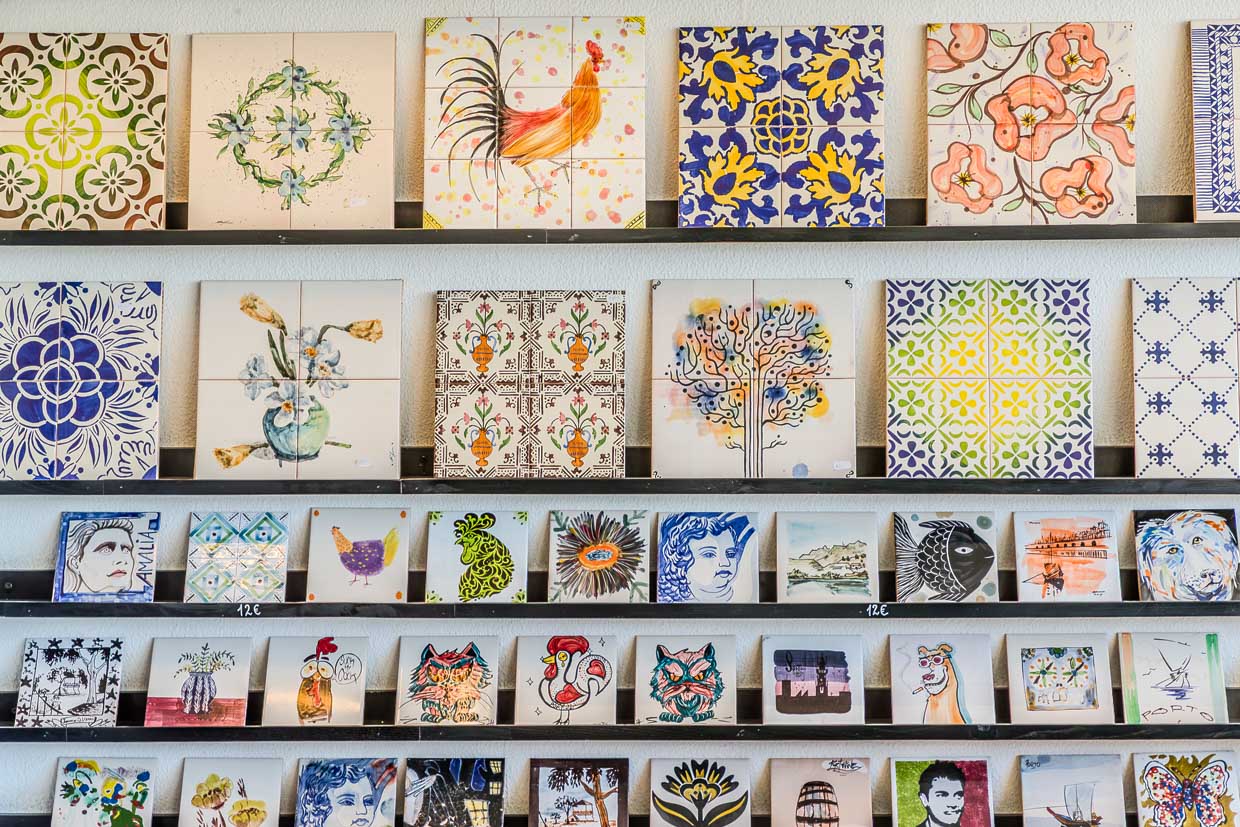
Prometeu Artesanato is a specialist tile shop in Porto. It stocks azulejos, painted plates and cork coasters featuring tile motifs. The price tags read 5, 6, 8 and 12 euros. The large pictures featuring fish and still lifes are priced at 25 euros. On the shelves sit roosters, flowers, a tree, fish, boats, cats and owls.
One tile bears the portrait of a woman with the inscription ‘AMÁLIA’, presumably the fado singer Amália Rodrigues. The rooster is reminiscent of the Galo de Barcelos, a widespread symbol of the country. According to legend, a roasted rooster crowed, thereby proving the innocence of a wrongfully convicted pilgrim.
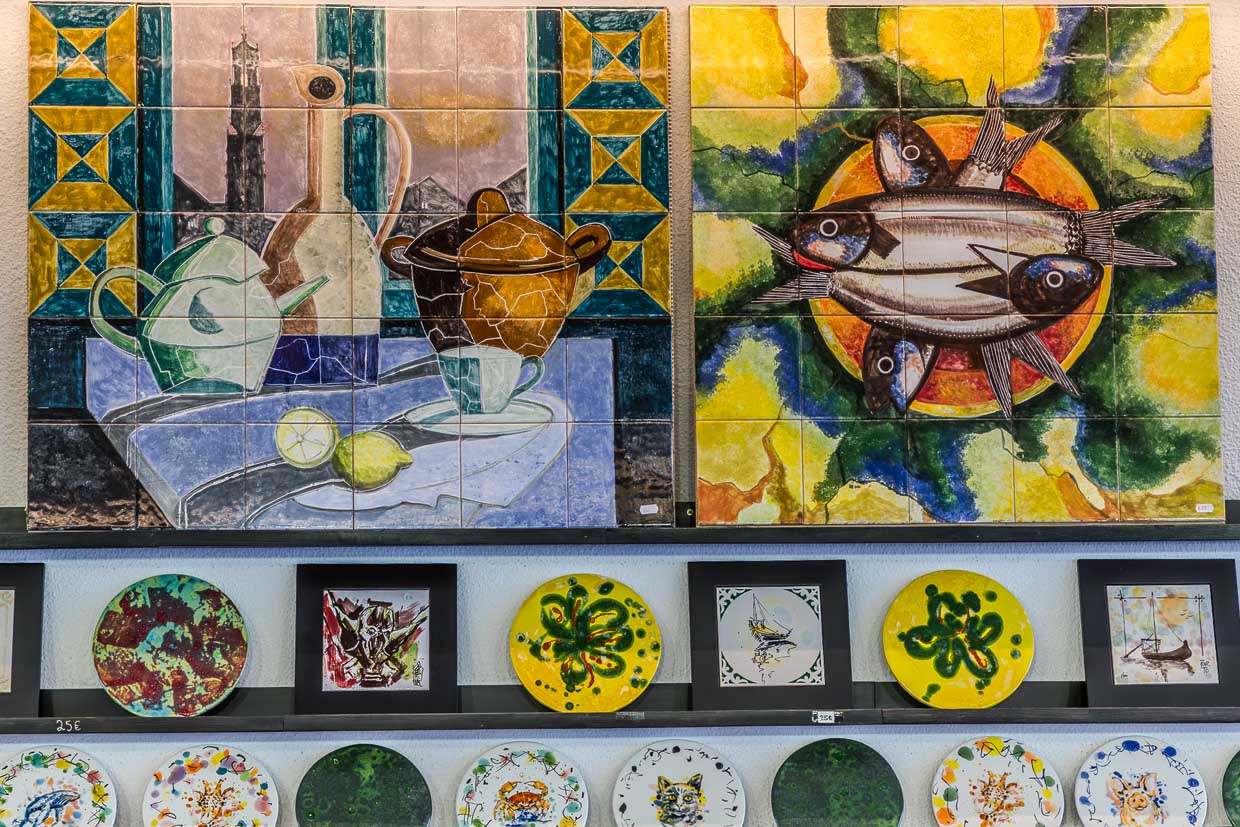
It is not in a specialist shop but in a souvenir shop that we find sardines, a red rooster, a yellow tram and a boat on the Douro. Jorge Colaço painted battles, saints and winegrowers. The souvenirs show what visitors take home with them: sardines, roosters and trams.
Who are you, Porto?
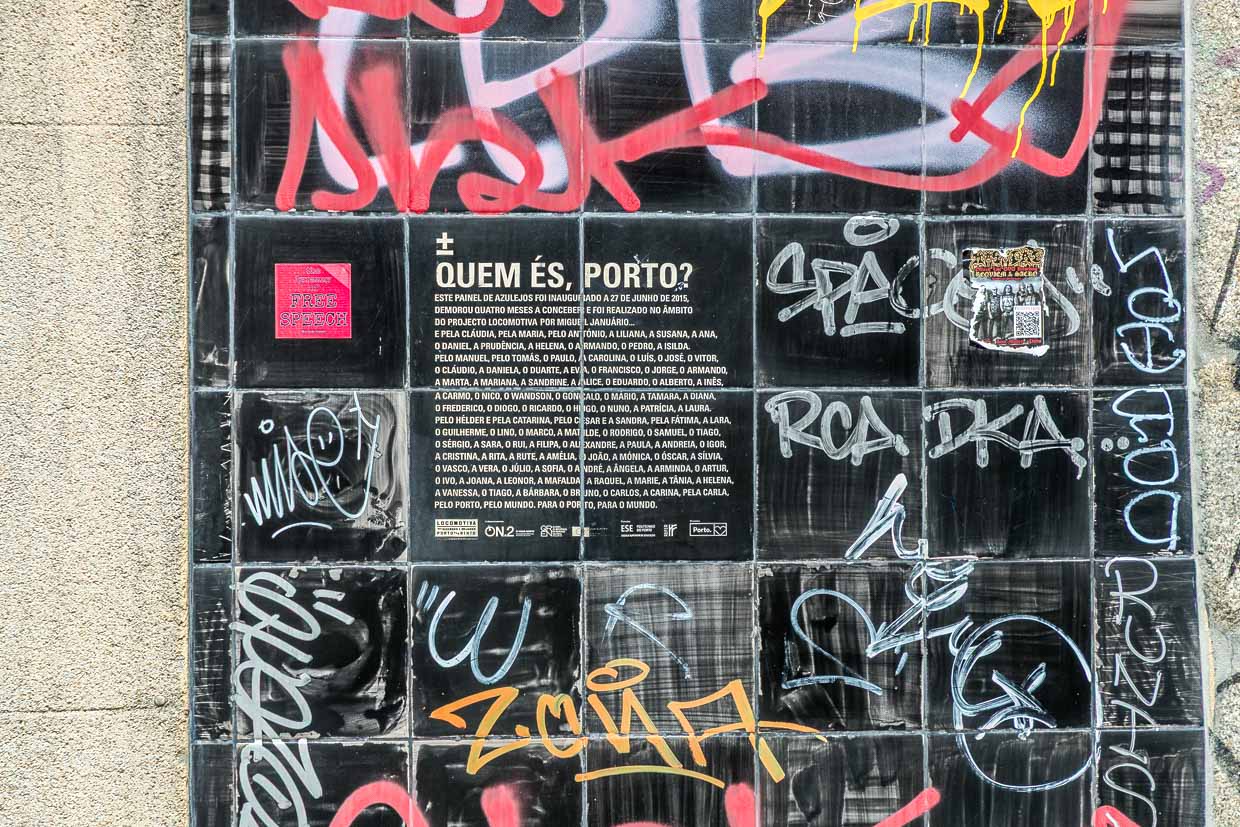
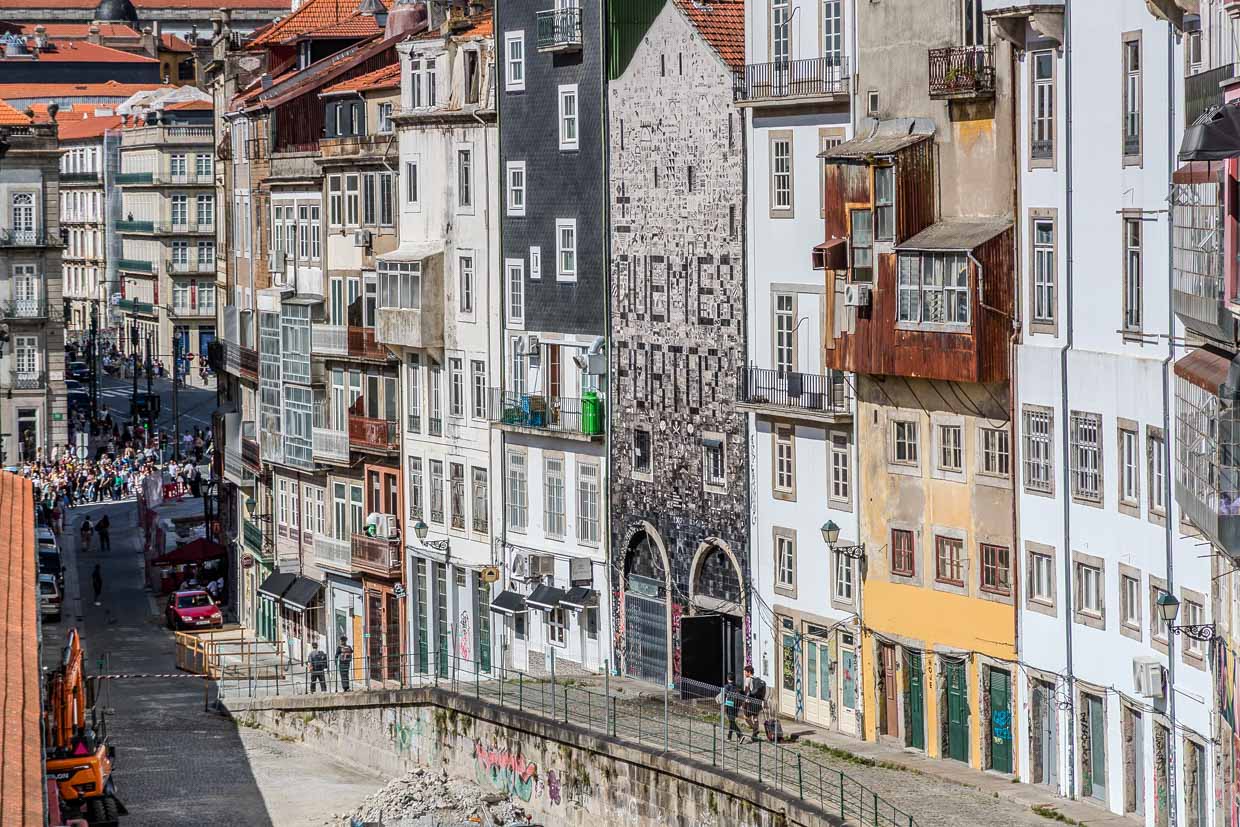
The largest tile mural we came across in Porto poses a question. On black tiles, large letters spell out the phrase ‘Quem és, Porto?’ Who are you, Porto? The mural covers the façade of a house with two round arches on Rua da Madeira near São Bento. A plaque states that it was unveiled on 27 June 2015. The design of the mural took four months to complete; it was created as part of the Locomotiva project by Miguel Januário. A list of first names follows, ending with ‘Para o Porto, pelo mundo. Para o mundo.’ For Porto, across the world. For the world.
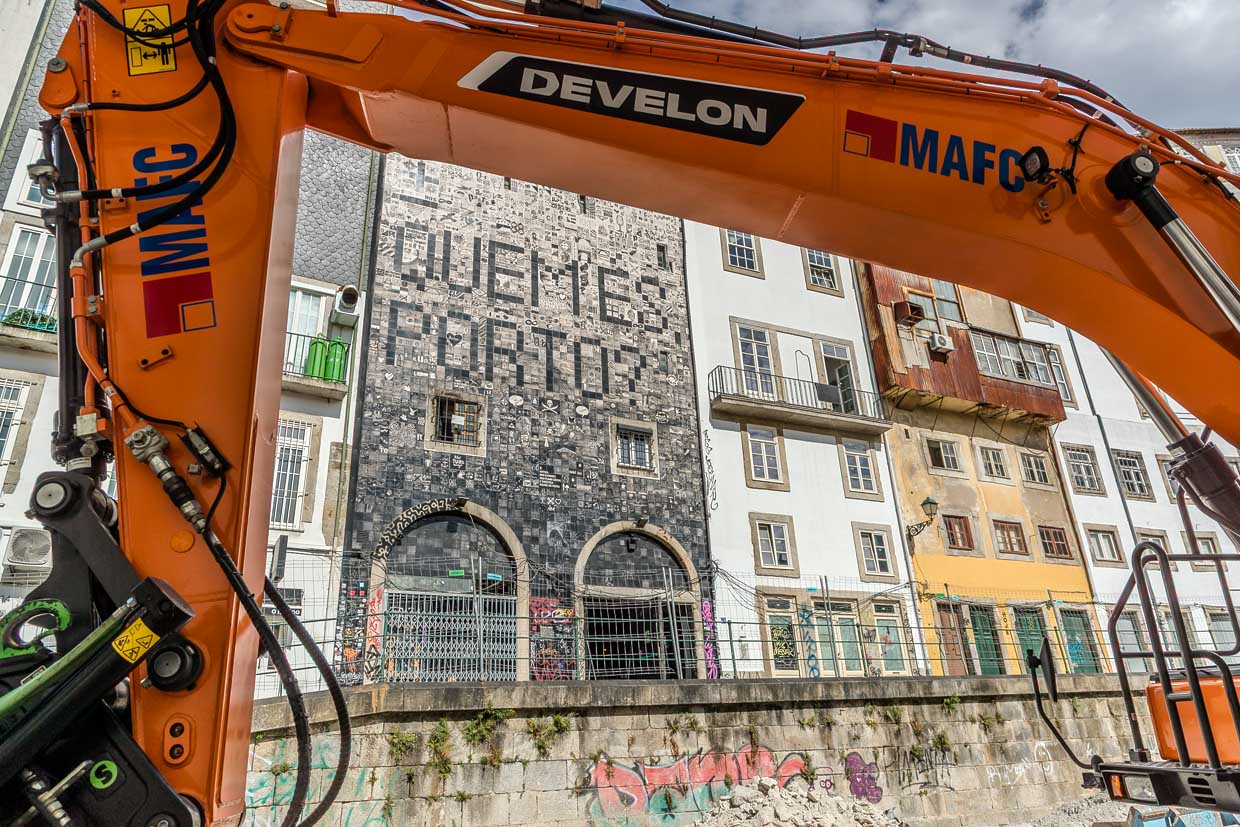
The city marketing organisation Visit Porto credits MAISMENOS as the creator, mentions 135 square metres and 3,300 azulejos, and states that locals and tourists painted them. Each tile depicts its painter’s view of the city – as a drawing or as a sentence that answers the question.
The question on the wall has a second side to it: who can still afford to live in this city? Next to the blue double doors of a yellow-tiled house hangs the sign of a holiday let agency. The façade and the holiday let share a wall. Gentrification means that visitors and affluent newcomers drive up the cost of housing and displace long-established residents.
The townspeople paint it themselves
Jorge Colaço painted on commission; in this picture, the city’s residents are painting themselves. 3,300 tiles spell out who Porto is. An excavator stands in front of the wall. Yet every sequence of tiles poses the question on the wall: Who are we, and what do we want others to see in us?
This research was supported by Turismo do Porto e Norte and Thurgau Travel


