
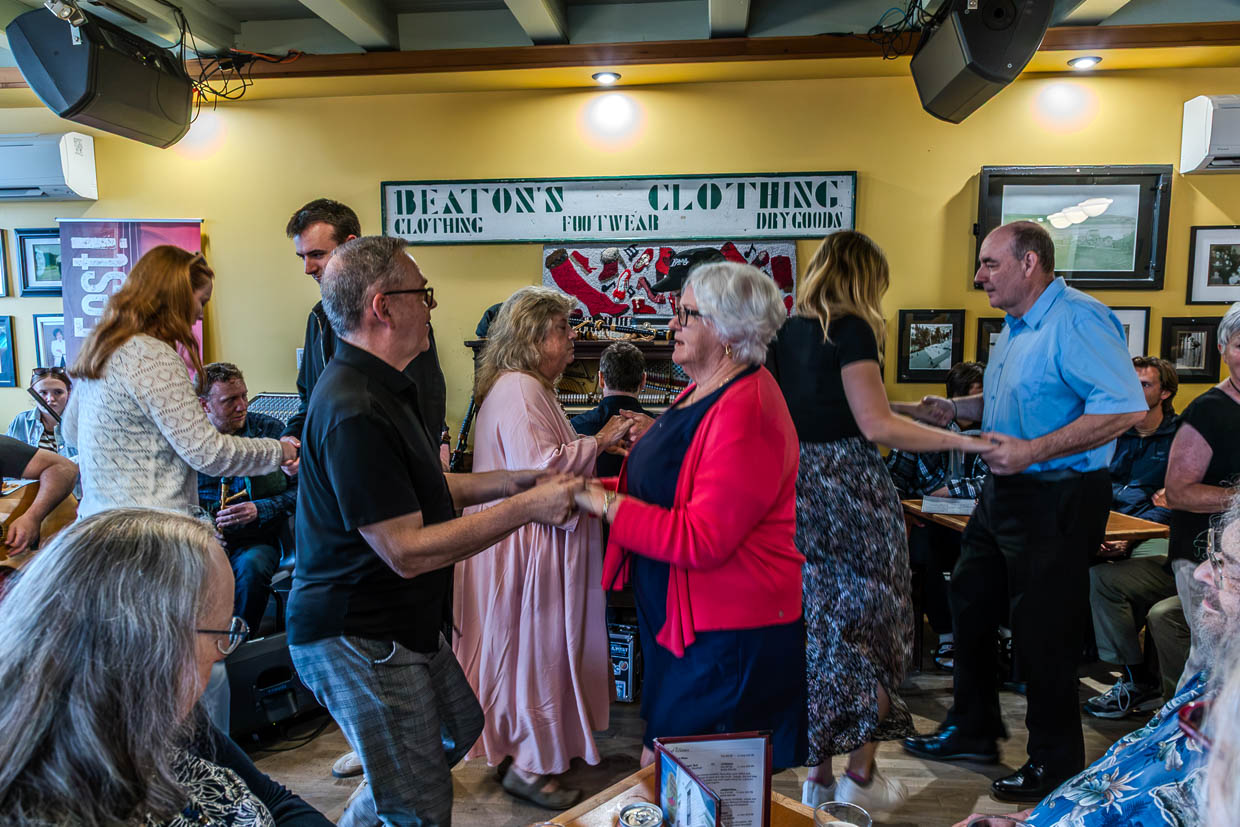
The KitchenFest on Cape Breton ended a day ago, on Sunday 5 July. Nevertheless, a band is playing at the Red Shoe Pub in Mabou. Several bagpipers are sitting close together, with a fiddler beside them. Couples are dancing amongst the tables. We drove past the pub earlier in the evening. We return around eight o’clock and stay until late into the evening.
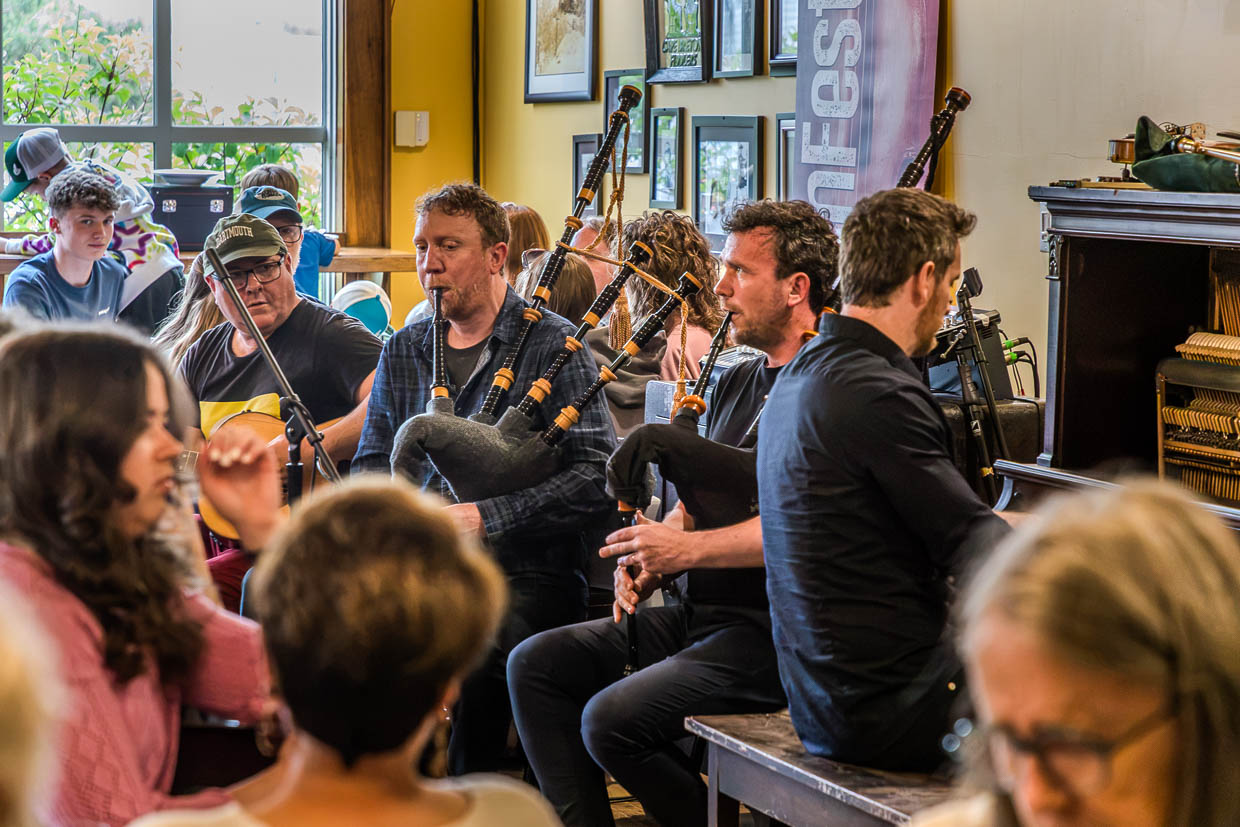
A festival with no fixed venue
In 2026, the festival celebrated its 13th edition at various venues across the island. The programme consists of concerts, céilidhs, pub nights and square dances. The slogan is printed on yellow T-shirts: “Where friends meet to tap their feet”. In other words: this is where friends meet to tap their feet.
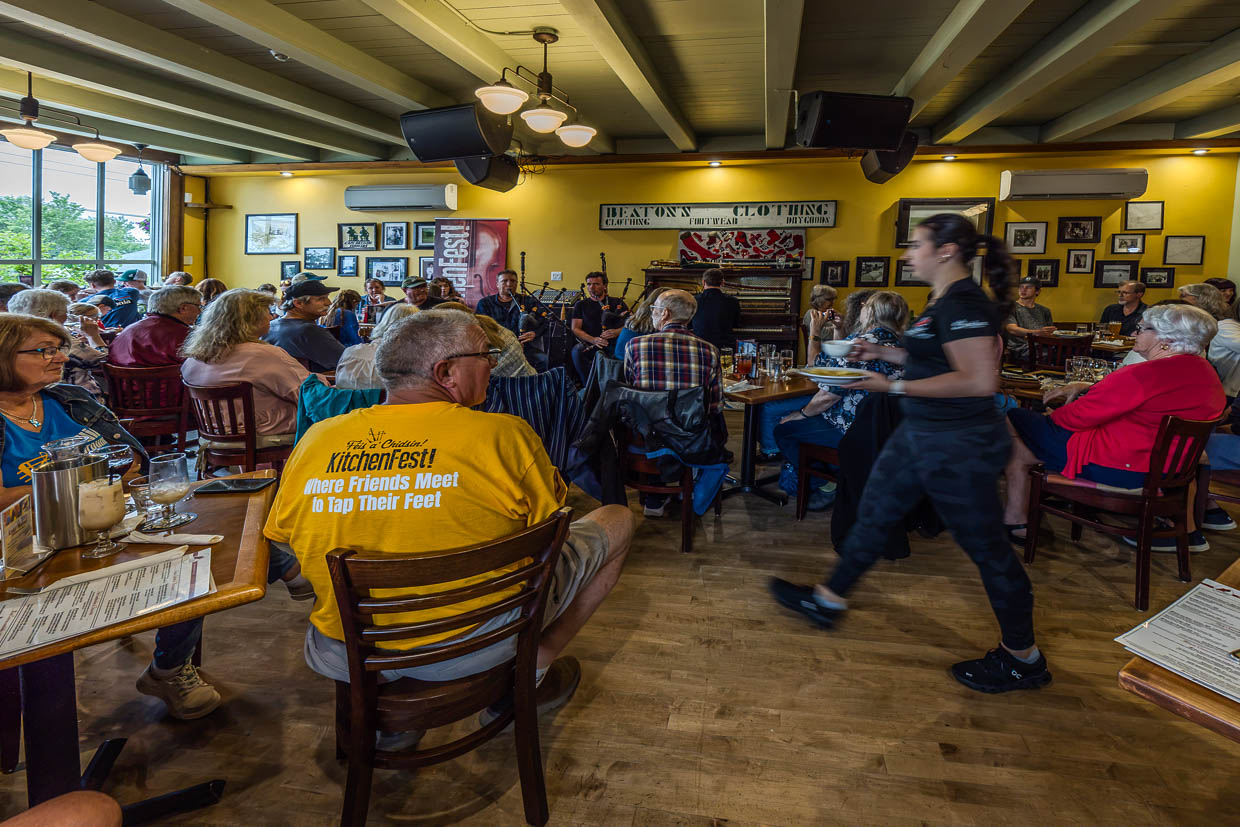
In Gaelic, an evening in Scotland or Nova Scotia where neighbours and relatives come together to sing, play and dance is called a céilidh (pronounced ‘KAY-li’; Scottish Gaelic [kʲʰeːlɪ]). In Nova Scotia, the KitchenFest organises these evenings in pubs and community halls.
A building with two signs
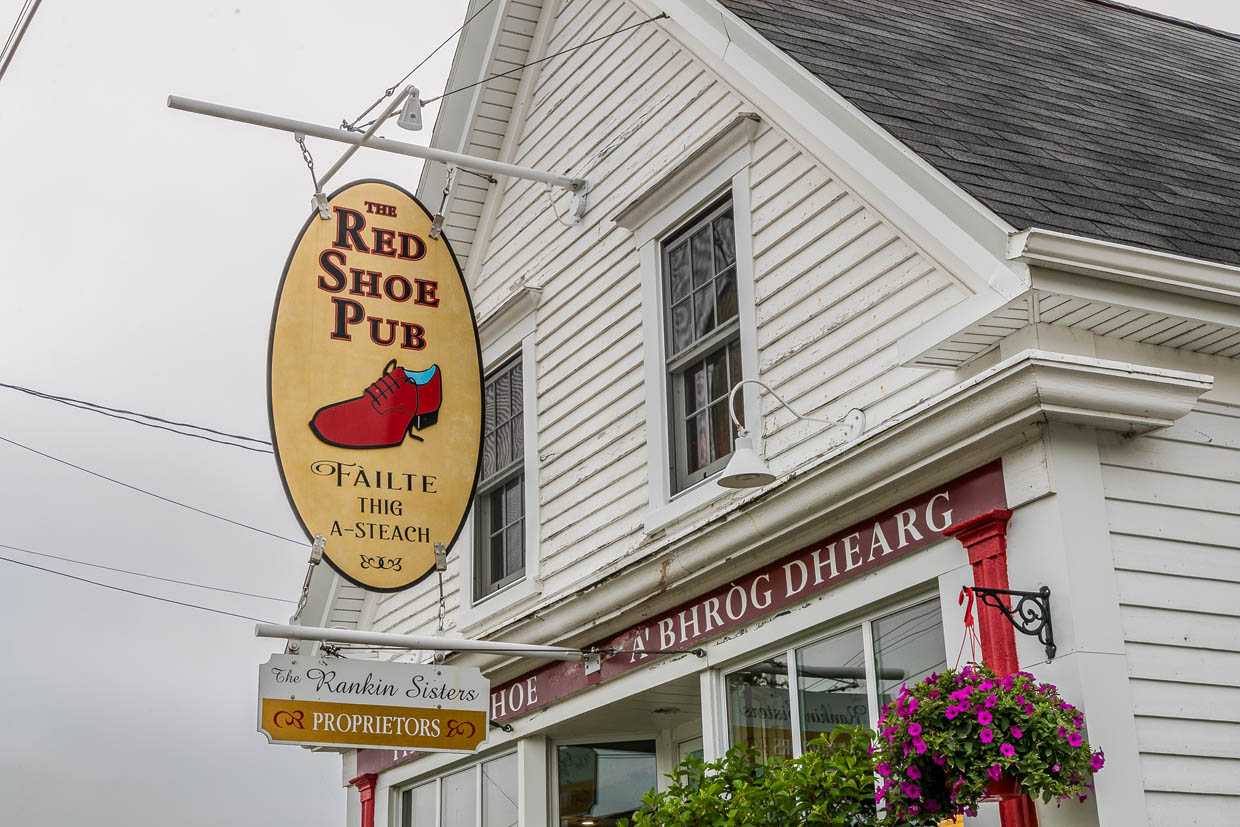
The Red Shoe Pub is situated in Mabou on Highway 19 and used to be a general store. The Rankin family have been running the pub since May 2005. The sign outside the door features a red shoe and the greeting ‘Fàilte, thig a-steach’: Welcome, come on in. A second sign lists the Rankin Sisters as the owners.
The Rankins are a well-known family of musicians on Cape Breton. In 1993, they popularised the song Rise Again, written by Leon Dubinsky. It is regarded as the island’s unofficial anthem and tells of home, solidarity and a new beginning. The title translates as “Rise Again” in German. Dubinsky wrote the song in 1984 for the musical “The Rise and Follies of Cape Breton”. At the time, the island was in the midst of an economic crisis. The song was intended to express resilience and hope. In Dubinsky’s own words, it deals with the cycles of immigration, the economic uncertainty on Cape Breton, the power of the ocean, the importance of children, and the strength of home provided by family, friends and music. Coal and steel, the island’s major employers, have not existed since 2001. The music has remained. We can see this in the pub: the place is packed, young and old are dancing together, and a visitor is filming the bagpipers on her smartphone.
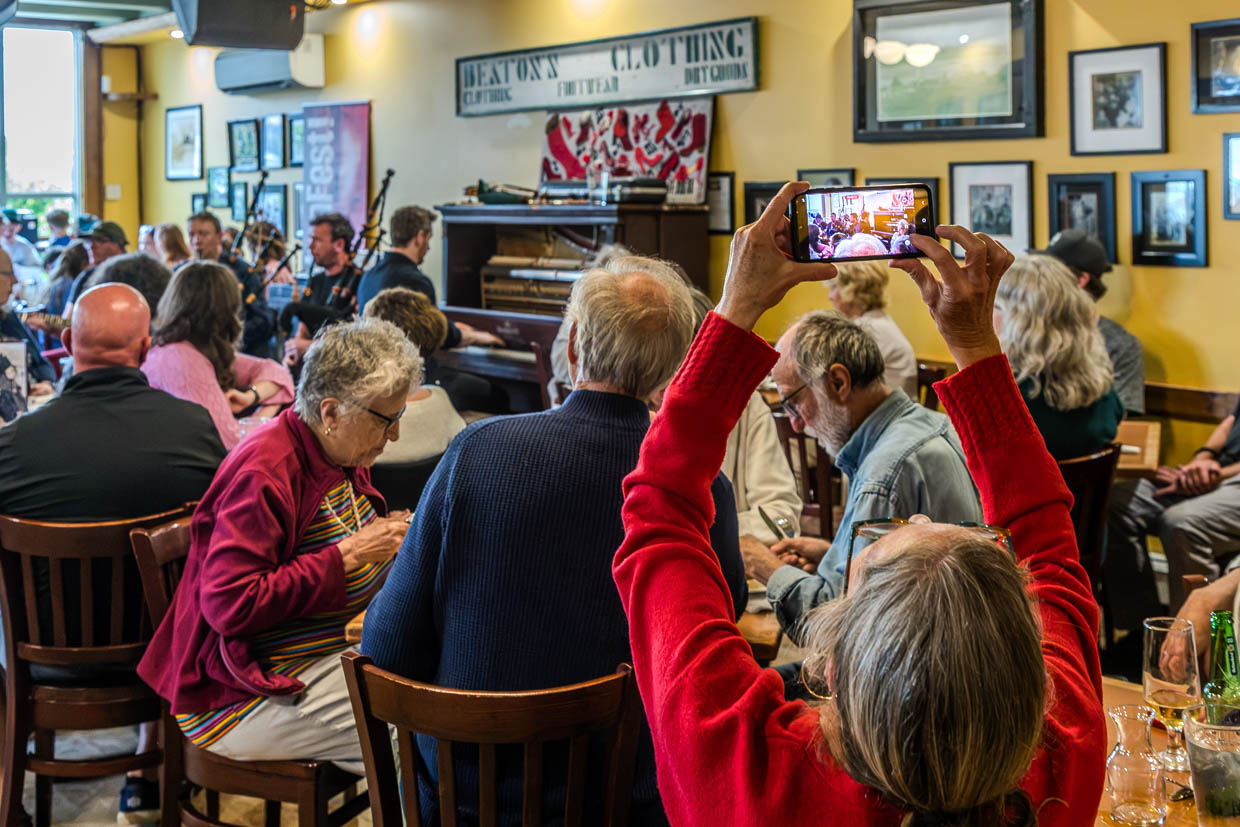
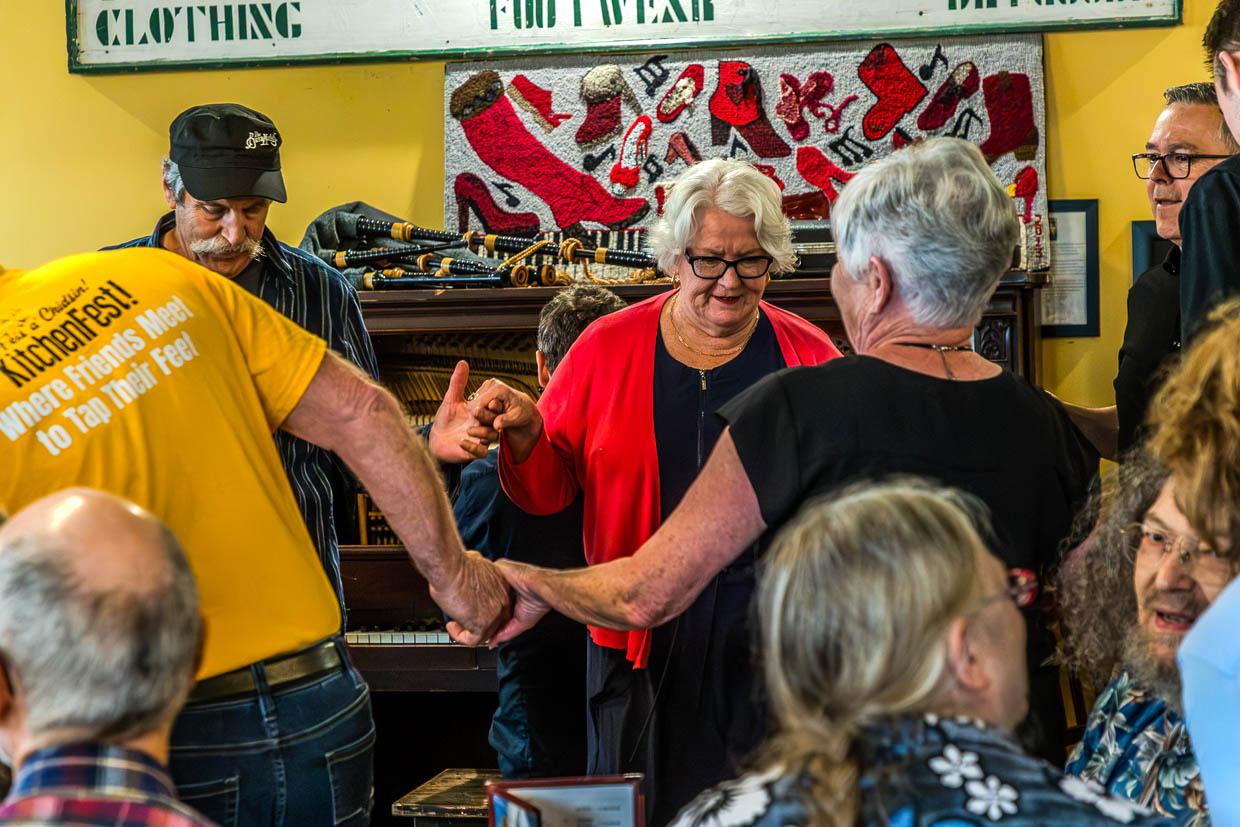
An old sign hangs on the wall in the pub: “Beaton’s Clothing, Footwear, Dry Goods”. The name Beaton is synonymous with Mabou. The Beatons are a family of fiddlers whose ancestors emigrated from Lochaber in Scotland and who are known for the Mabou Coal Mines style. In 2003, Kinnon Beaton and his daughter Andrea played the fiddle at the Red Shoe Pub, with Betty Beaton accompanying them on the piano, whilst the rest of the family sat in the room.
When the families come home
This year, the MacKenzie family have arranged to meet at the Red Shoe Pub. Kenneth MacKenzie is a piper and fiddler from Mabou; he grew up speaking Gaelic and teaches the Gaelic language and traditional music at the Mabou campus of the Gaelic College (Colaisde na Gàidhlig). His siblings have come to visit from Ottawa, Inverness and the Isle of Skye in Scotland. The family sits together at a large table and, as the evening progresses, the musicians perform in various line-ups.
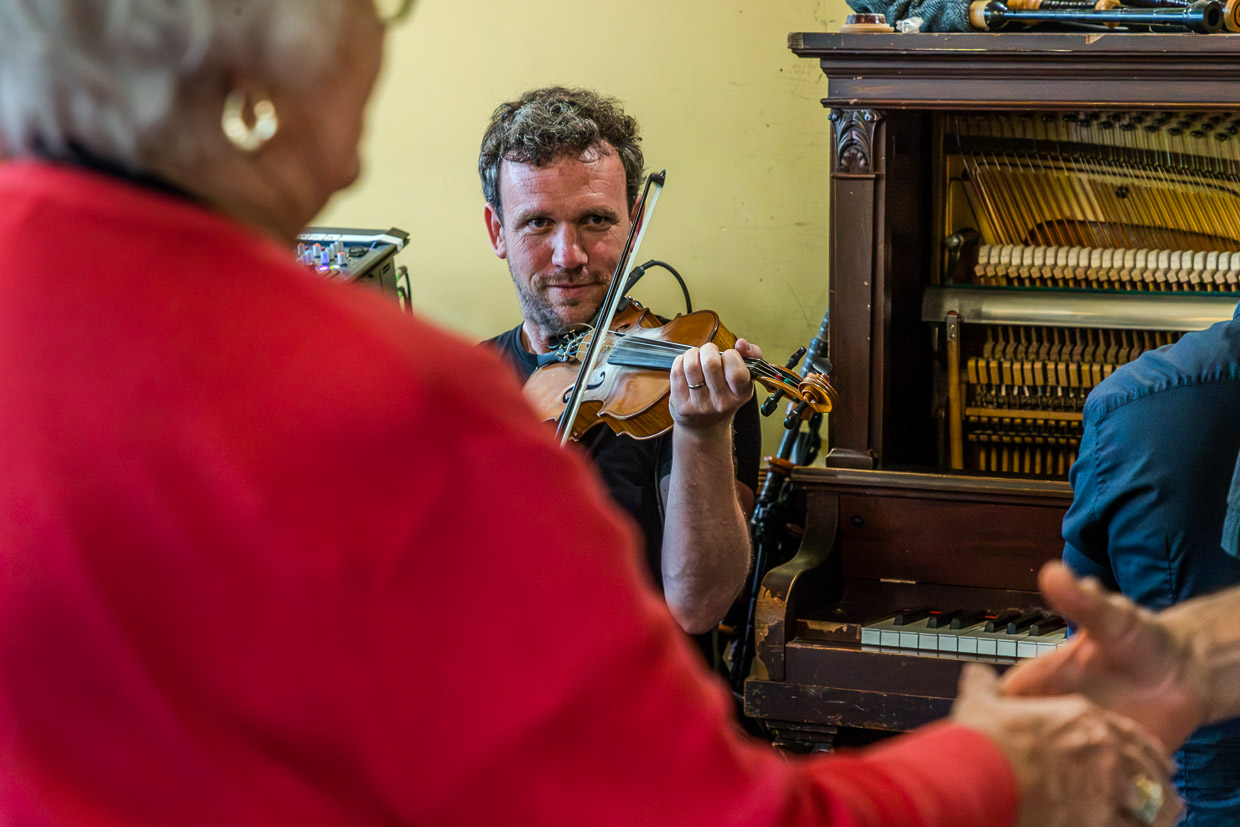
The Cape Breton fiddle is regarded as a distinct style within Celtic music. Dancing and fiddle playing go hand in hand: the dancers keep the rhythm with foot and heel taps. Two couples join hands, whilst others form a circle.
A distillery in the valley
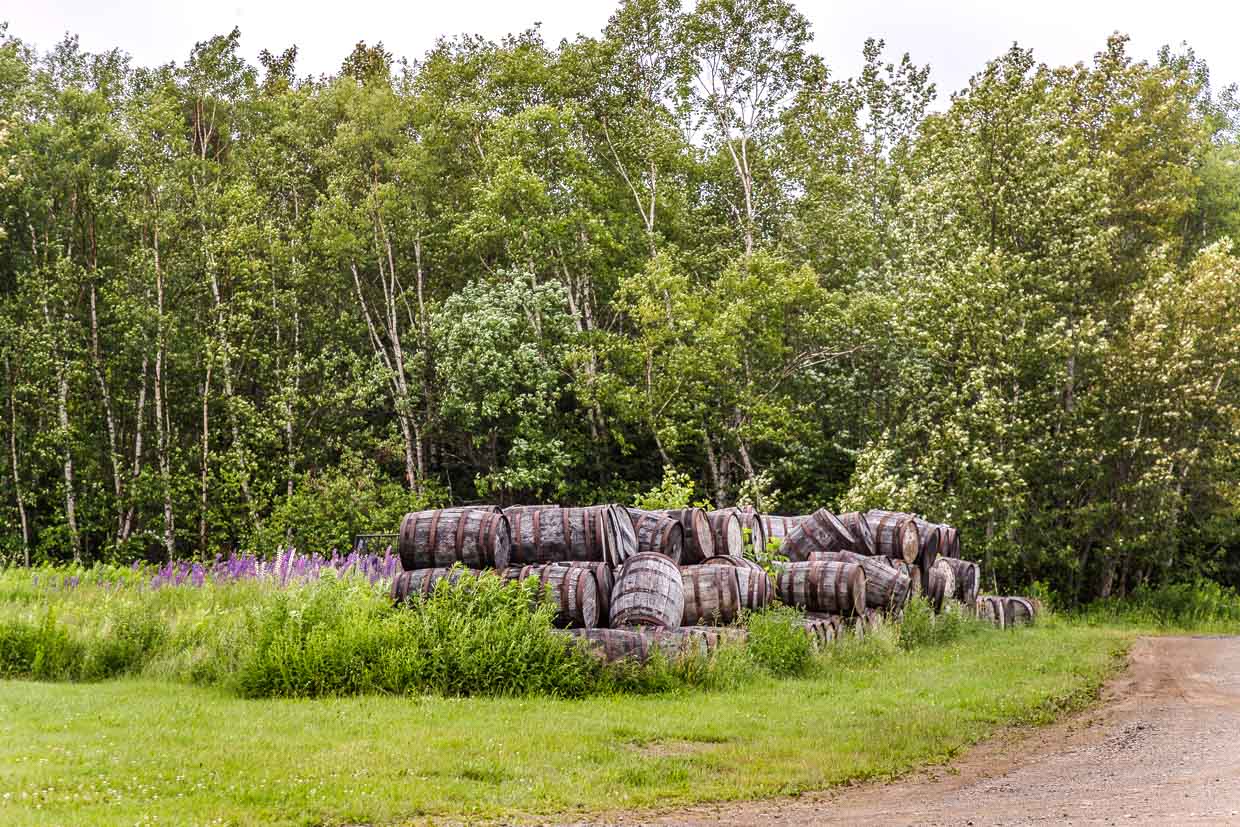
We’re staying not far from the pub, at the Glenora Inn in Glenville. The inn is situated on the grounds of the Glenora Distillery in a wooded valley in the Mabou Highlands. On the grounds, barrels are stored amongst flowering lupins. We’re given a guided tour and a tasting.
Bruce Jardine founded the distillery in 1990. He sought assistance from Bowmore Distillers on the Scottish island of Islay. Bowmore brought expertise, stills and a mash tun across the Atlantic. The stills come from Forsyths in Rothes, Scotland. In November 2000, the first Glen Breton Rare was launched: 500 numbered bottles. The distillery calls itself ‘Canada’s First Single Malt Distillery’.
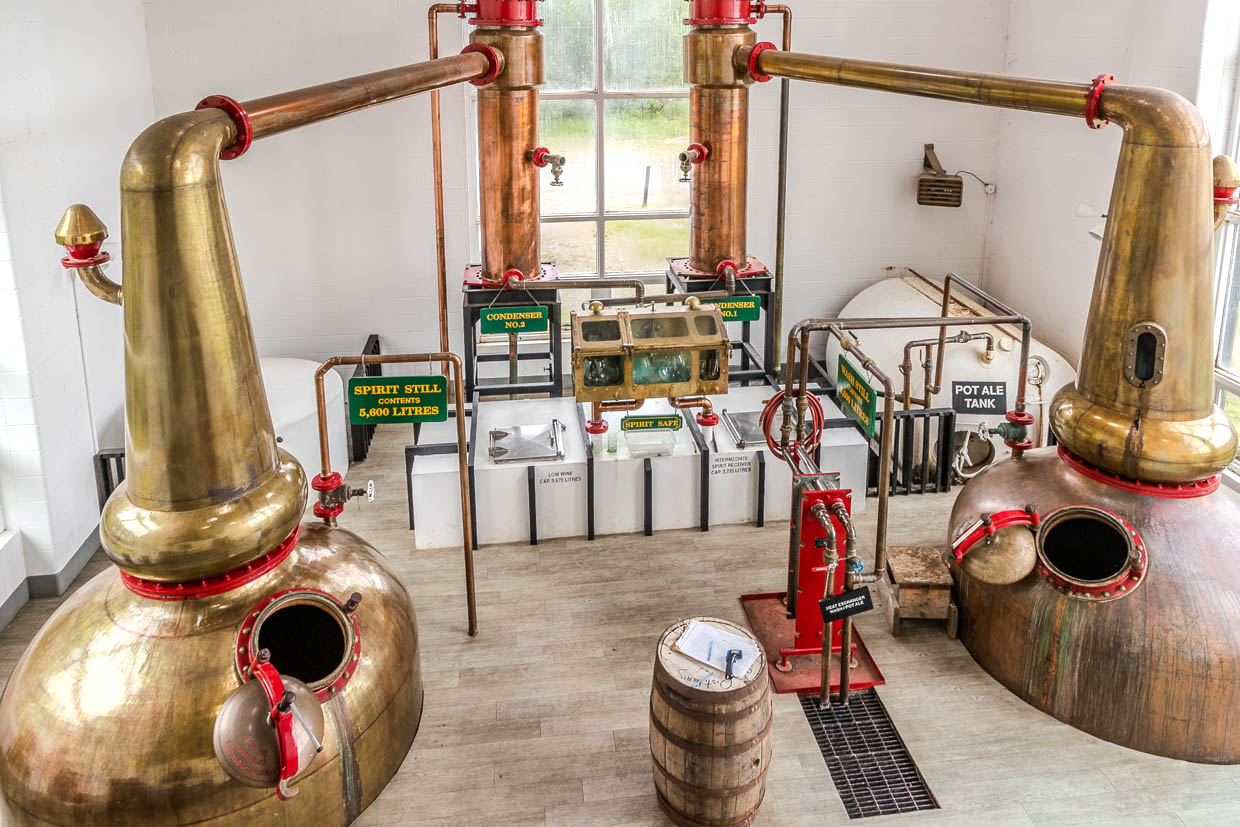
The whisky is not permitted to bear the name ‘Scotch’. The Scotch Whisky Regulations of 2009 stipulate that it must be distilled in Scotland and matured there for at least three years in oak casks of no more than 700 litres, with an alcohol content of at least 40 per cent. Glenora is situated in Nova Scotia. Nevertheless, the Scots and Canadians argued for nine years over a single word. In November 2000, Glenora registered the trademark ‘Glen Breton’. The Scotch Whisky Association lodged an objection. It argued that ‘Glen’ was synonymous with Scotch whisky in Canada, and the Federal Court initially agreed with it. On 22 January 2009, the Federal Court of Appeal ruled in favour of Glenora. On 11 June 2009, the Supreme Court of Canada dismissed a further appeal without giving reasons.
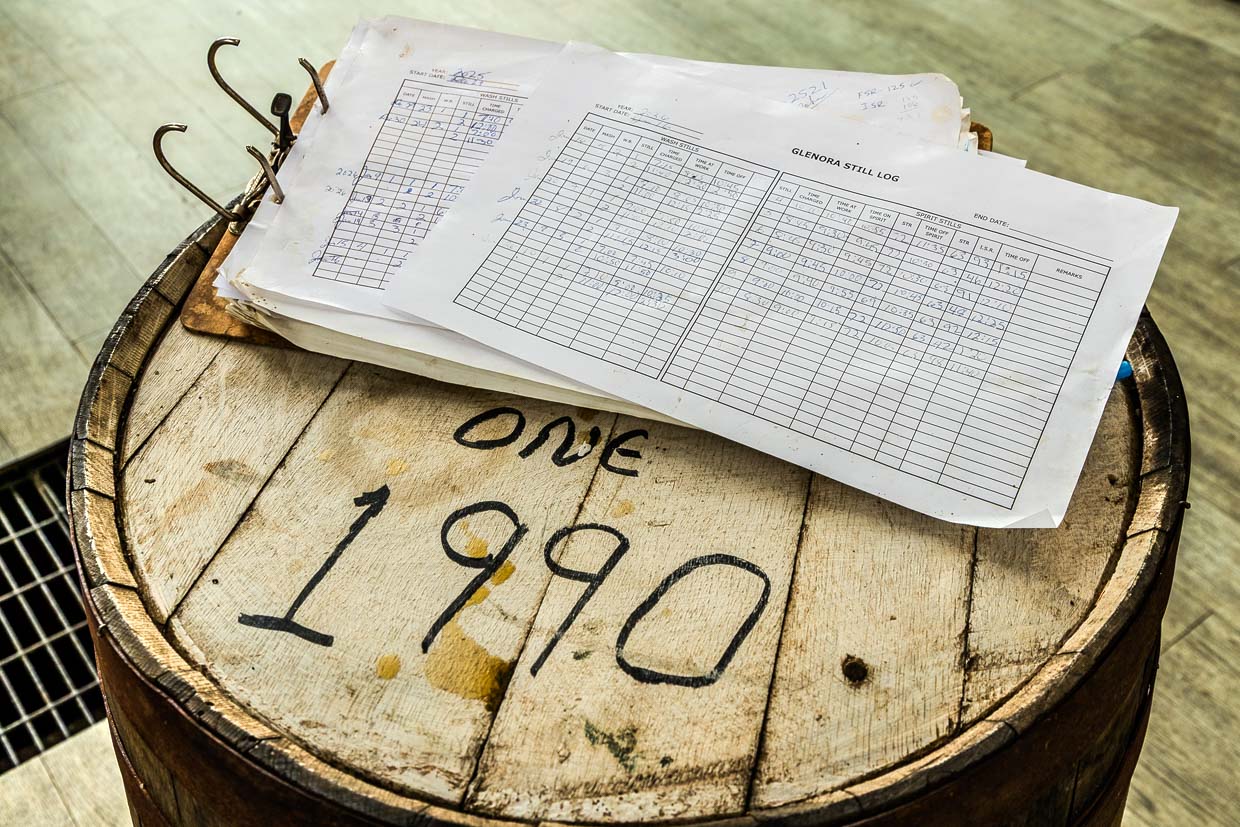
The word ‘whisky’ derives from the Gaelic ‘uisge beatha’, meaning ‘water of life’. The name ‘Scotch’ is defined by law. In music and language, there is no comparable geographical protection: they can be learnt and played anywhere.
What remains of Gaelic
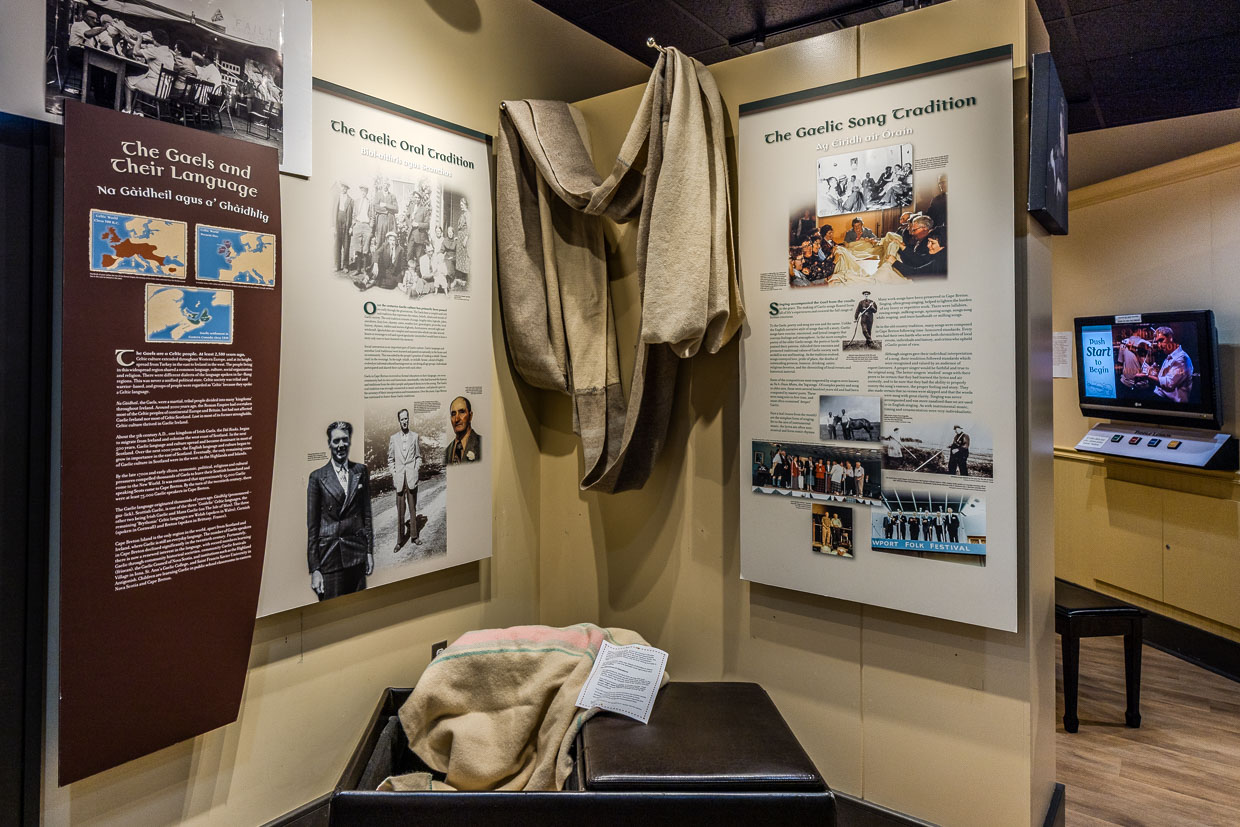
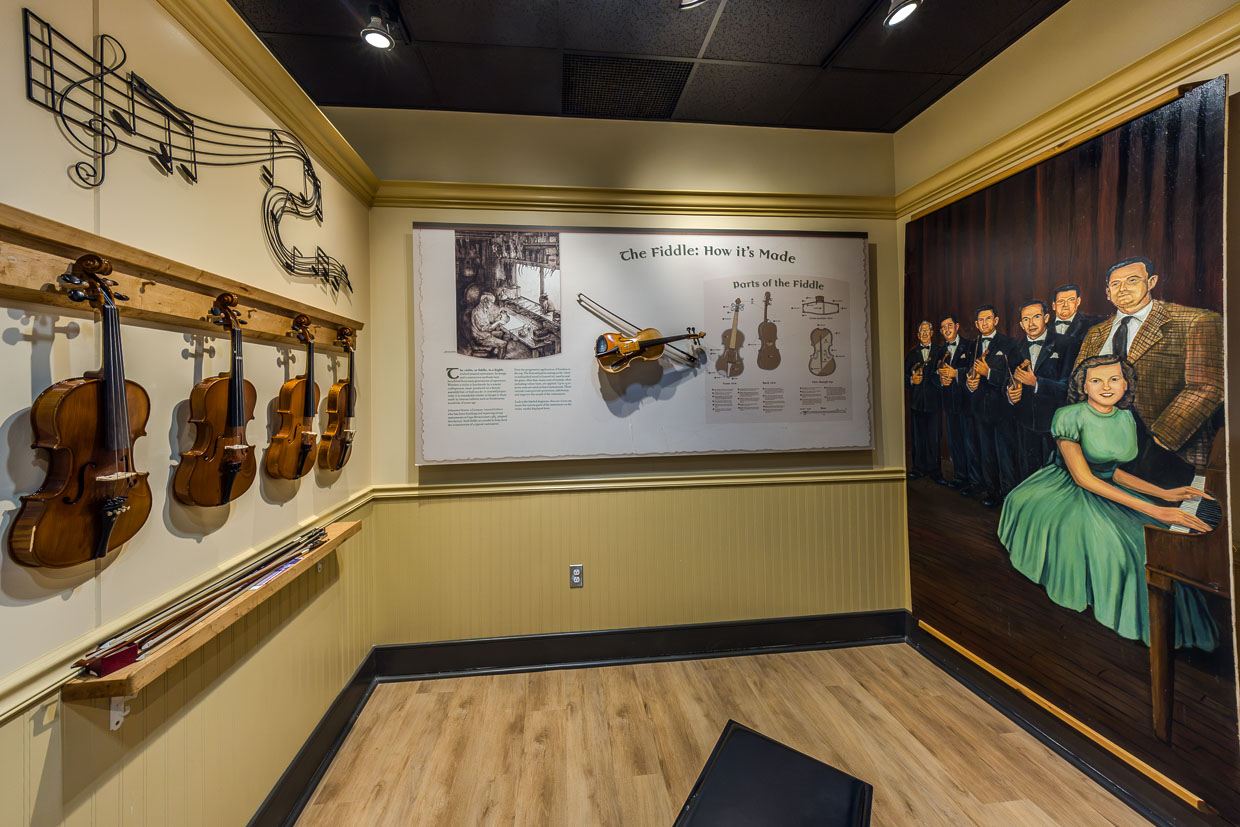
At the Celtic Music Interpretive Centre, information boards explain the Gaelic storytelling and singing traditions. The next board shows how to build a fiddle. Next to it hangs a mural: musicians, with a pianist in a green dress in the foreground.
Two days later, we find ourselves in front of the Gaelic College in St Ann’s. It was founded in 1938 by the Presbyterian minister Angus William Rugg MacKenzie, at a time when the Gaelic language was threatened with extinction. Keith MacDonald is playing the bagpipes in the car park. He is the eighth generation in his family to wear the MacDonald tartan in Nova Scotia. A noticeboard advertises the lunchtime céilidhs.

Between 1815 and 1870, more than 50,000 Gaelic-speaking settlers came to Nova Scotia. Around 1850, more than 200,000 people in British North America spoke Gaelic. In the 2021 census, 635 people in Nova Scotia stated that they spoke the language, 65 of them as their first language.
From a visit to a dance evening
The word ‘céilidh’ means ‘visit’ in Gaelic. In Scotland, it originally referred to a house call. On long winter evenings, guests would recite stories, poems and songs, pose riddles and quote proverbs. Dancing was not necessarily part of the occasion. Today, in Scotland, the ceilidh is predominantly a dance evening featuring a band and a compère.
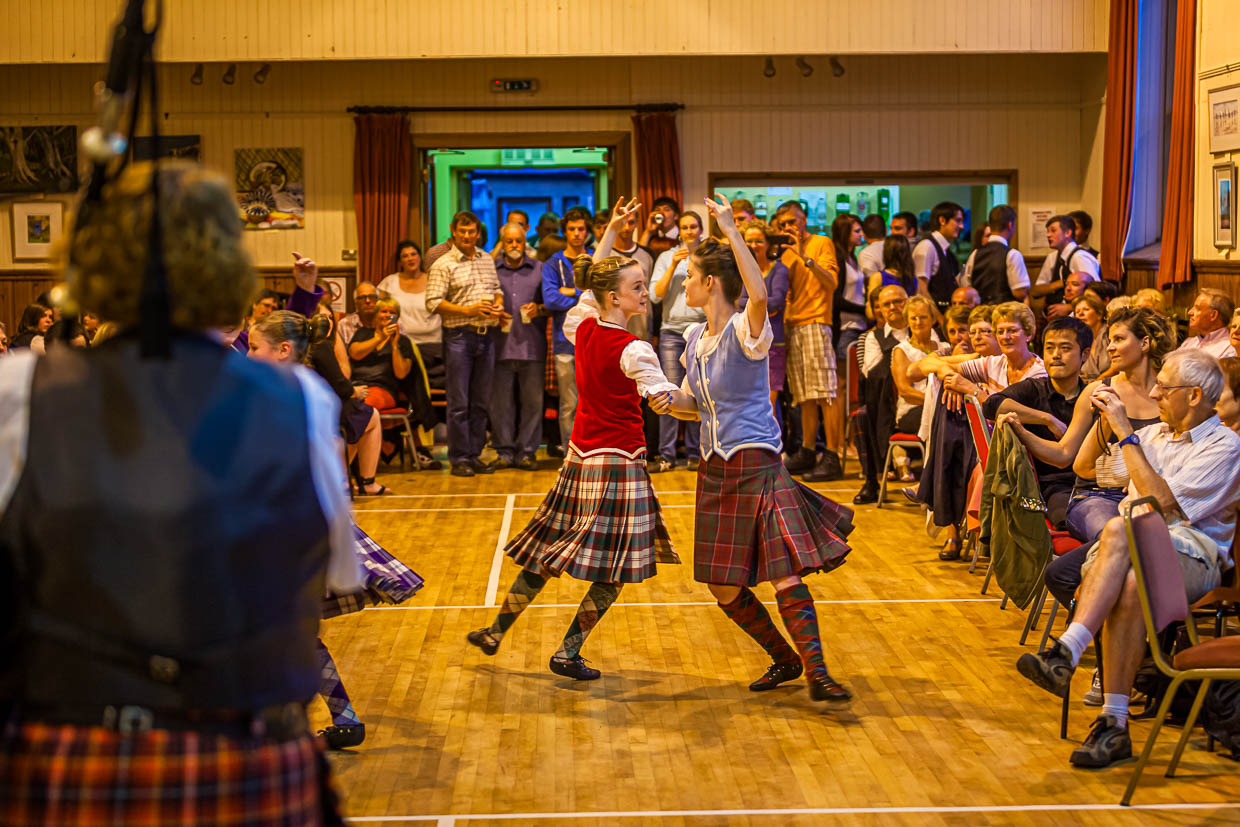
Things began in a similar way on Cape Breton. Gaelic-speaking families visited one another, and these visits kept the tradition alive: children learnt stories, songs and music from relatives and neighbours. At first, people danced at home; later in the schoolhouse; and after 1900, in the community halls. The pub in Mabou continues this tradition. It is a pub, concert hall and dance floor all in one.
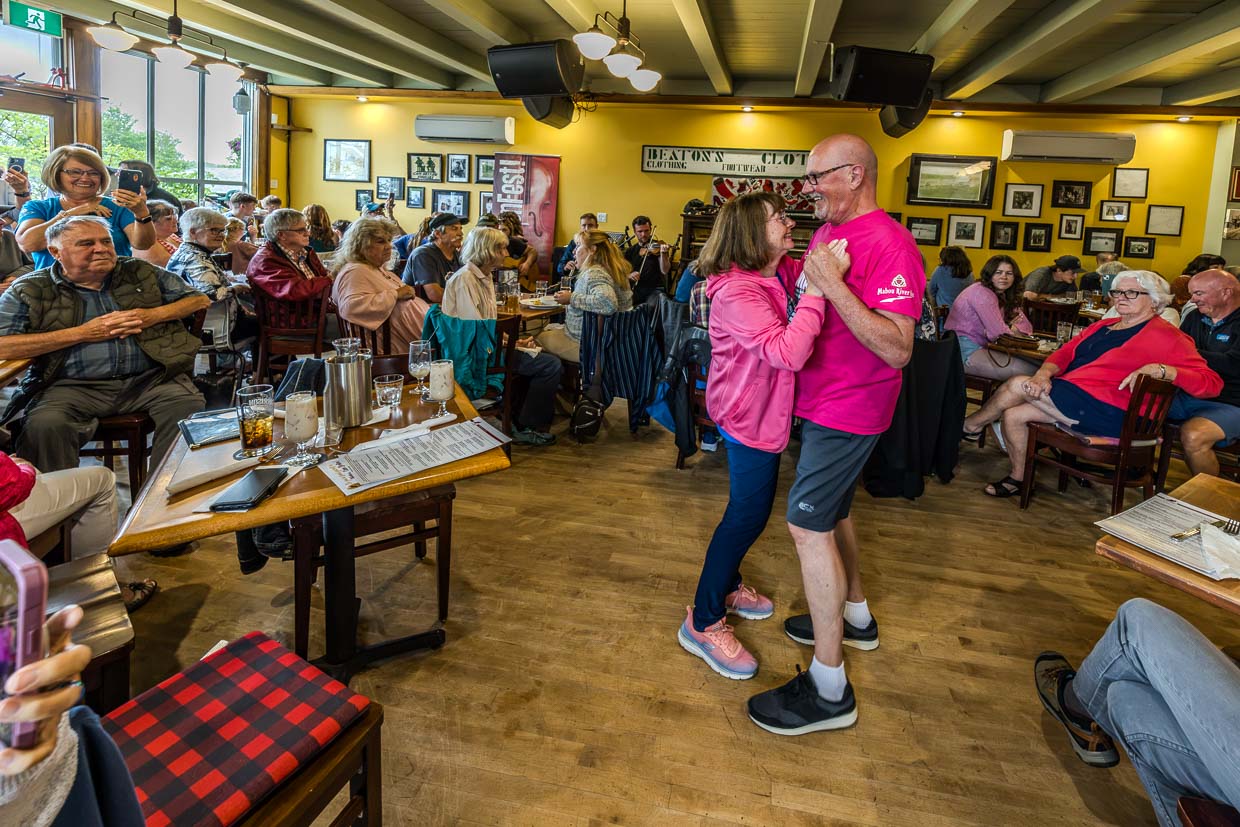
Whisky, music and language crossed the Atlantic with the emigrants and live on in Cape Breton. We had the impression that the tradition is kept alive in Cape Breton at least as vividly as it is in Scotland.
More about Nova Scotia
If you want to know how the Mi’kmaq, Acadians, Scots and Black Loyalists came to shape modern-day Nova Scotia, read The Settlers of Nova Scotia. From Birchtown to Freetown explains why families set off for Africa in 1792. The bagpipes, fiddle and Gaelic language were brought to Cape Breton by the Scottish settlers. In Atlantic Canada, lobster was long considered a poor man’s food. Today, the lobster roll is a national symbol. Anyone wanting to know how the catch is made should join a night shift: Lobster Fishing in Nova Scotia shows what stock conservation means. Canada is also the land of maple syrup. Most of it comes from Quebec, but Nova Scotia also taps sugar maple trees. In Halifax, the provincial capital, there’s plenty on offer. The culinary guide to Halifax points you towards the best places to eat. But the city offers more than just food. The sightseeing guide ranges from the 7 Virtues perfume workshop to the immigration tour at the Museum of Immigration at Pier 21. Halifax has also been the scene of several tragedies. When the Titanic sank in 1912, it was the nearest major port. Many of the victims were brought here. At Fairview Lawn Cemetery, their graves serve as a reminder of the disaster. The skies are becoming clearer. The Deep Sky Eye Observatory offers views of the Milky Way at North America’s first Starlight Destination. Stargazing at sea level here means: mosquito repellent for the Milky Way.
This research was supported by Visit Nova Scotia


