
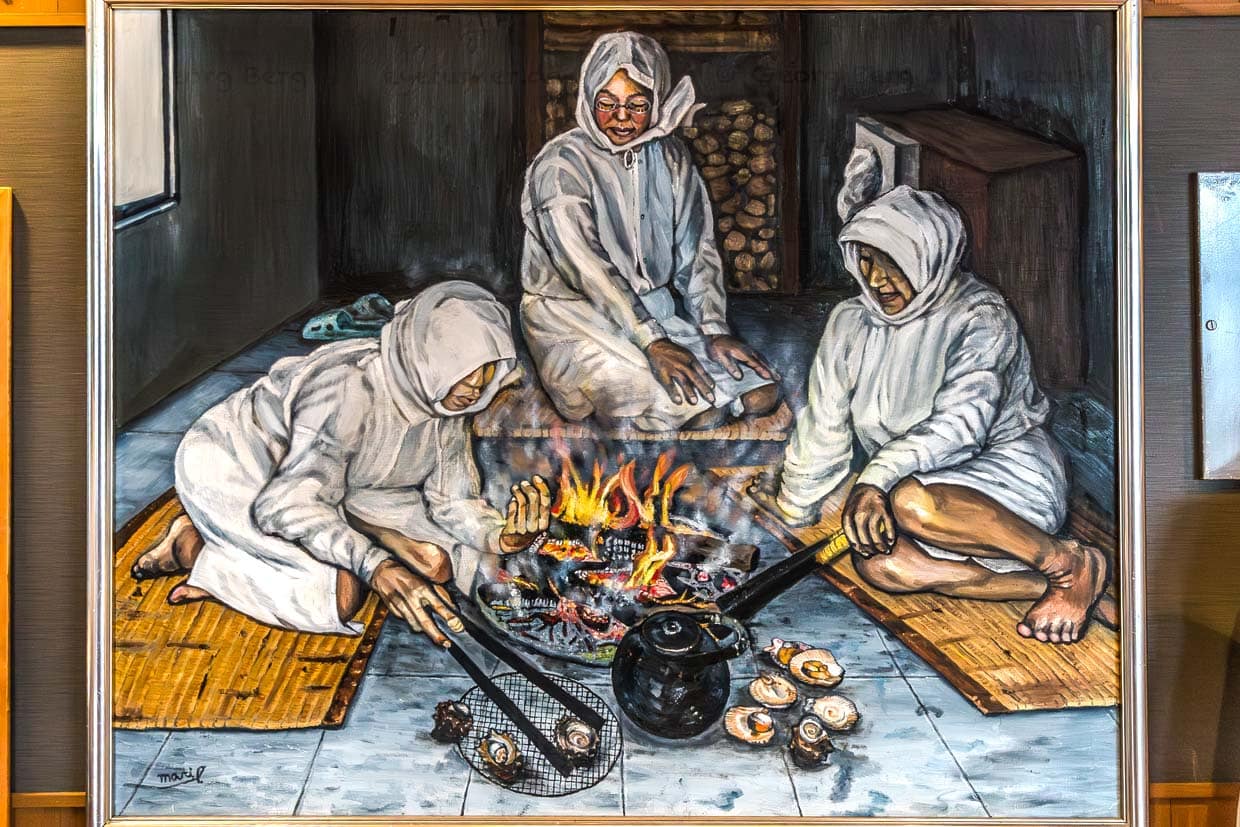
The old corrugated iron hut smells of charcoal. For decades, the fumes have eaten their way into every crack. Here, women, dripping wet, with red cheeks and clammy fingers, warmed themselves by the open fire. They were preparing lunch while the cold drained from their bodies. Kimiyo Hayashi is sitting opposite me, gesticulating animatedly and talking: This is how it was. Her mother sat here, by the fire, and dived in the deep bay every day – heavily pregnant herself, with her in her belly.
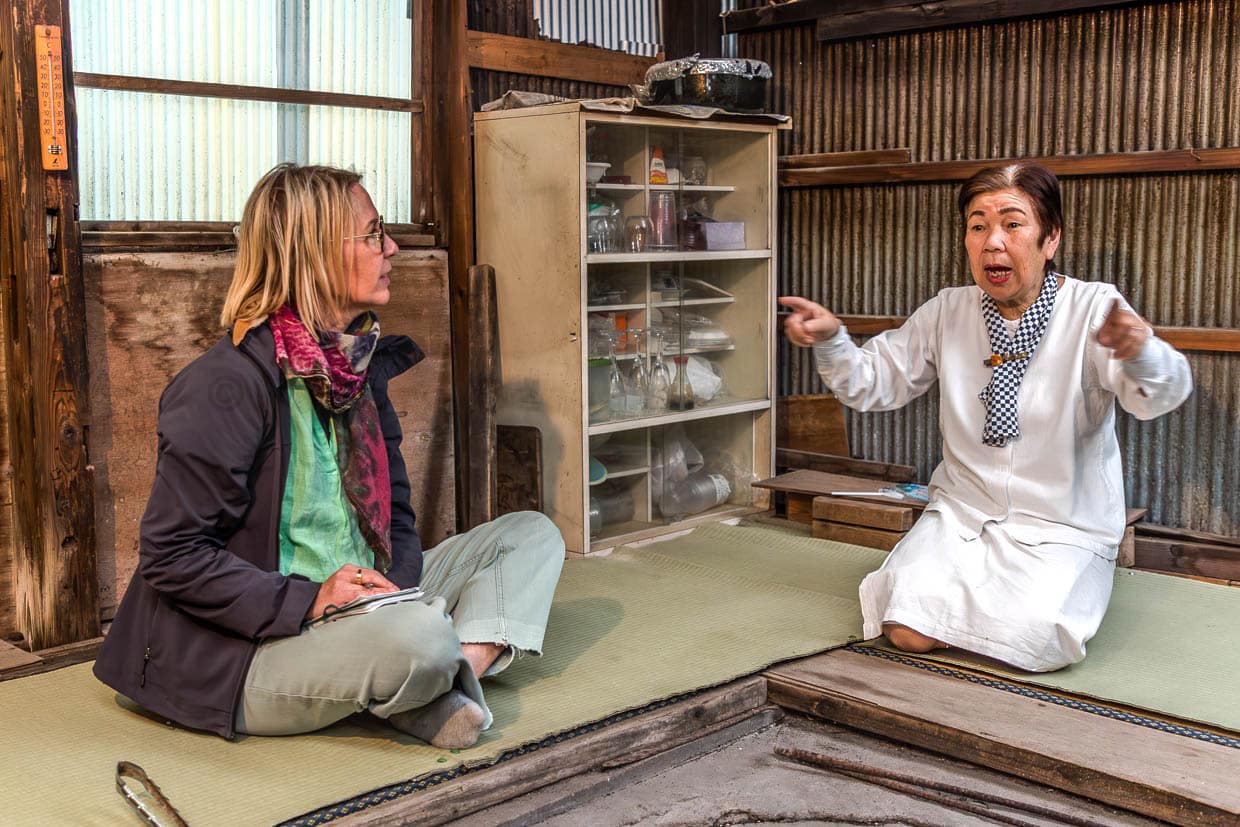
Kimiyo lets the sentence sink in before continuing. The amas dived. That was their life, their profession, their daily routine. They carried on as long as they could. Kimiyo started at the age of 15. Today she is 71 and after 56 years as an ama, she feels more comfortable in the water than on land, she says. She has never been ill. Dangerous situations? None in her quiet bay, where a shark never strayed. For her grandmother Kogika and her mother Yakako, marrying a fisherman was still crucial. Fishermen and ama were long considered the perfect couple. An ama was always a good match, jokes Kimiyo. She could provide for the family and earn money at the same time while her husband was at sea. Then she shows me her protective amulet, a golden, oval pendant. “I don’t go into the water without it,” she says. It’s a bit of a superstition, but above all it helps her to concentrate. If you don’t have the amulet, you can’t focus. And without concentration, you can’t dive in the first place.
A tradition for more than 2000 years
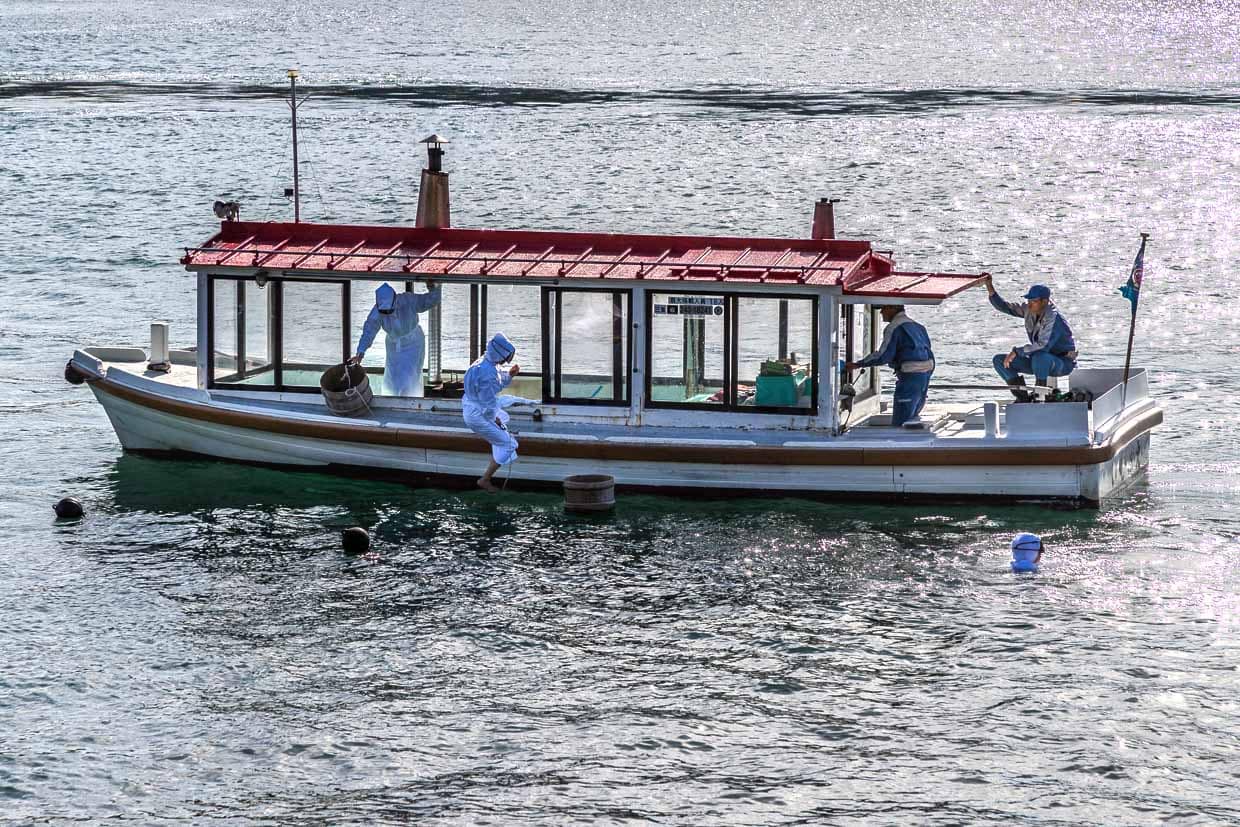
Ama – the word simply means “woman of the sea” in Japanese. According to tradition, these women have existed along the Japanese coasts for over 2,000 years. Records from the Heian period (794-1184) show that they mainly dived for abalone, which were coveted by the daimyō, the regional princes. In the past, the ama only dived in loincloths, later in the characteristic white costume that is still their working clothes today. The white is not just a tradition: it protects against sunburn, makes the diver look taller in the water and is supposed to deter sharks and jellyfish. Practical thinking, like so many things with the Ama.
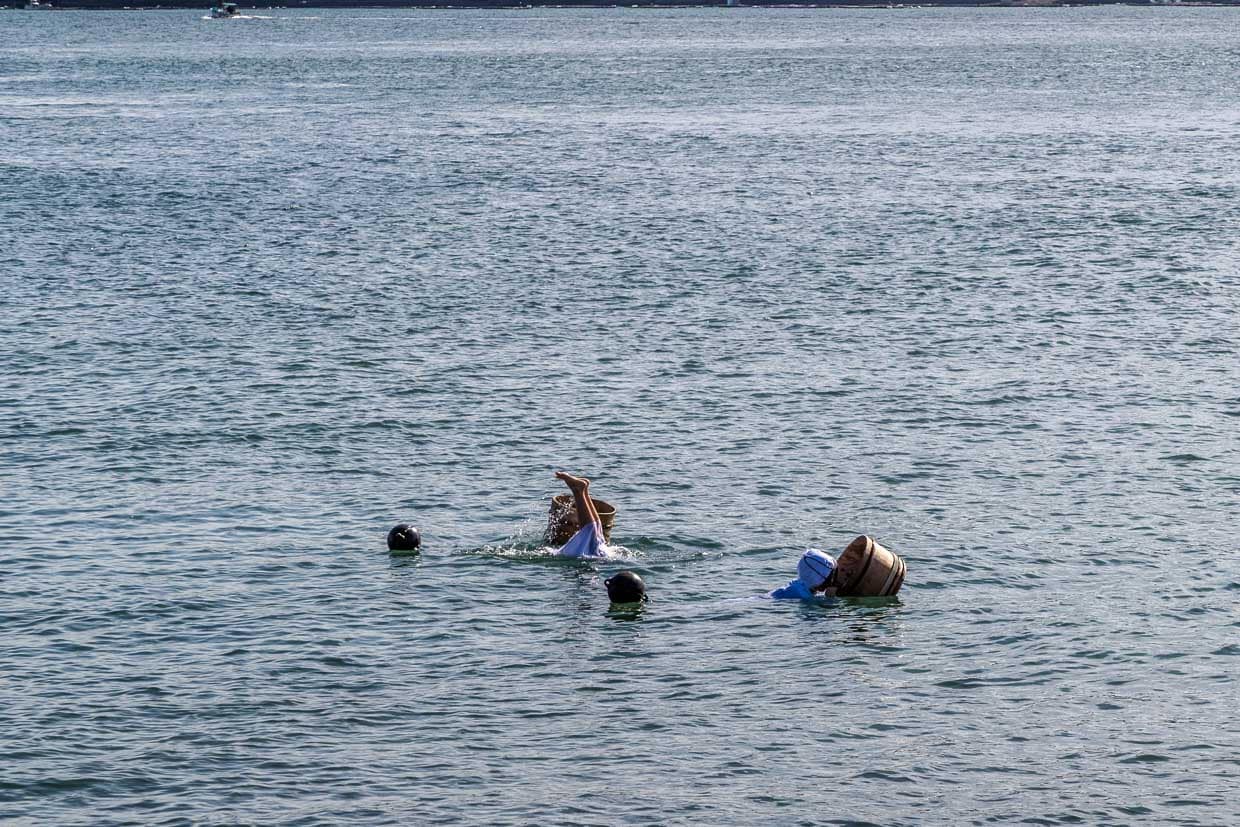
The divers’ work pushes the body to its limits. They slide vertically, head first, into the depths – down to twenty metres. They remain underwater for one minute before returning to the surface. Apnoea diving is the oldest known form of diving. The ama repeat this process 150 to 250 times during their shifts lasting several hours – regardless of the weather and water temperature. Between dives, they rest on the surface for two to three minutes.
Ancient tales explain why women practise this profession: Their higher body fat percentage and their ability to hold their breath longer are said to predestine them for it. There is no scientific proof of this. However, analyses from recreational diving show that women often enter a meditative state more easily and stay more in the moment. The natural diving reflex develops better with greater relaxation, reduces oxygen consumption and stabilises the heart rate. Perhaps this is exactly what Kimiyo means when she says that without her amulet, concentration is lacking. Your head won’t stay clear, and without inner peace you can’t have a perfect dive.
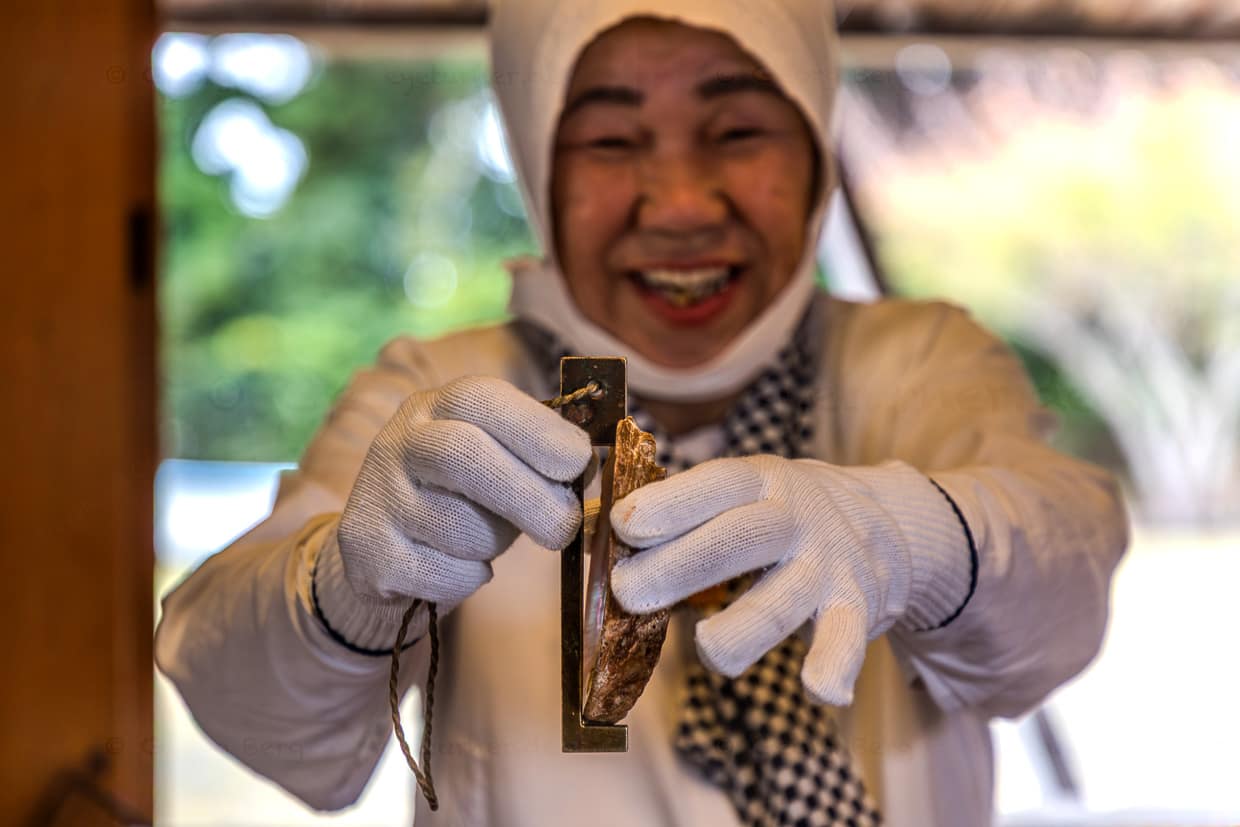
After each dive, the ama place their catch – scallops, turban snails, sea urchins, abalone – in a wooden floating basket connected to them by a rope. They dive for three to four hours a day, in all weathers, all year round. They carefully utilise the resources of the sea: mussels that are too small are thrown back into the water. They use a measuring tool to do this. In Mie Prefecture, the law prohibits the harvesting of abalone under a certain size. No overexploitation, no waste.
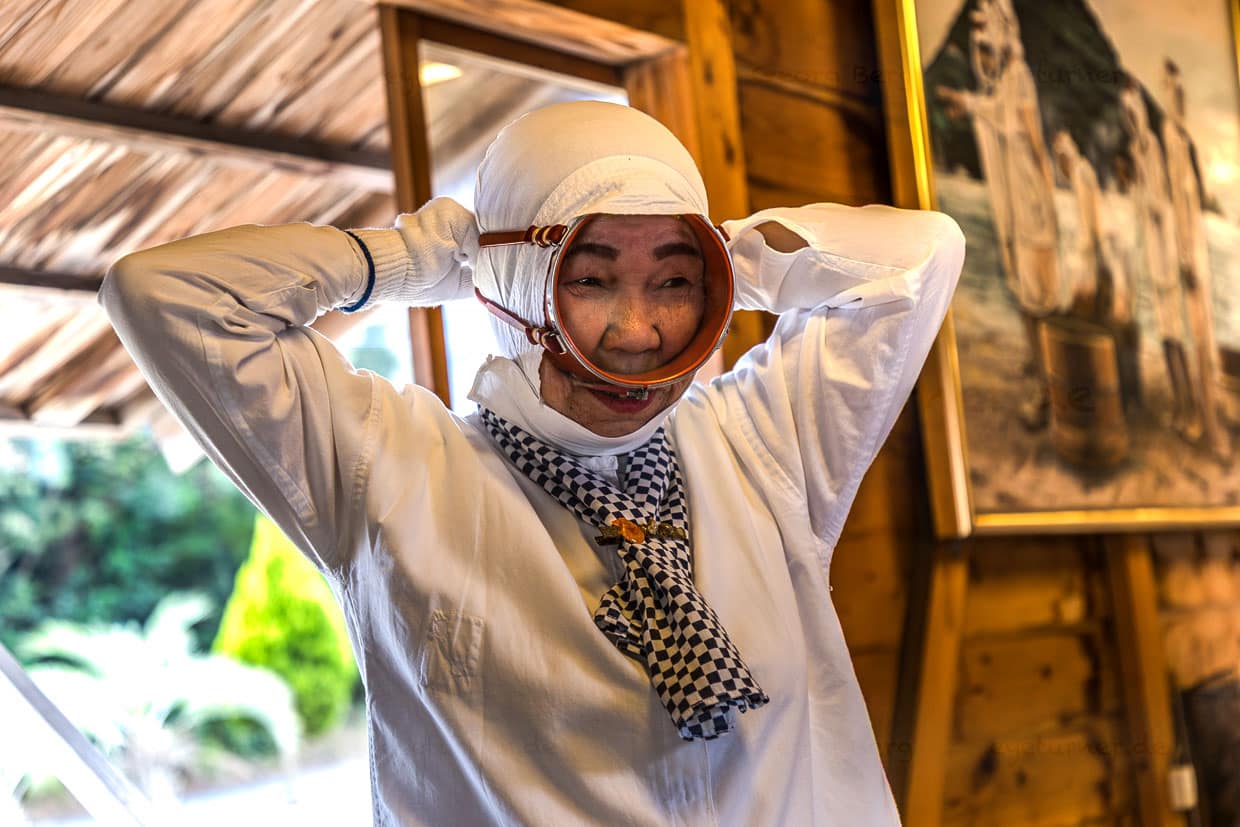
Since the Meiji period (1868-1912), the ama have worn diving goggles to see better underwater. Since around 1964, they have also been using wetsuits outside of demonstrations. Apnoea diving harbours risks. Scientists have been studying the long-term effects for over 90 years. Only those who follow the traditional safety rules can dive into old age. A speciality of their technique is the isobue, a deep, whistling exhalation after surfacing that prevents lung damage. The ama listen to the sea and their bodies, synchronising with both. It seems almost meditative – and it probably is.
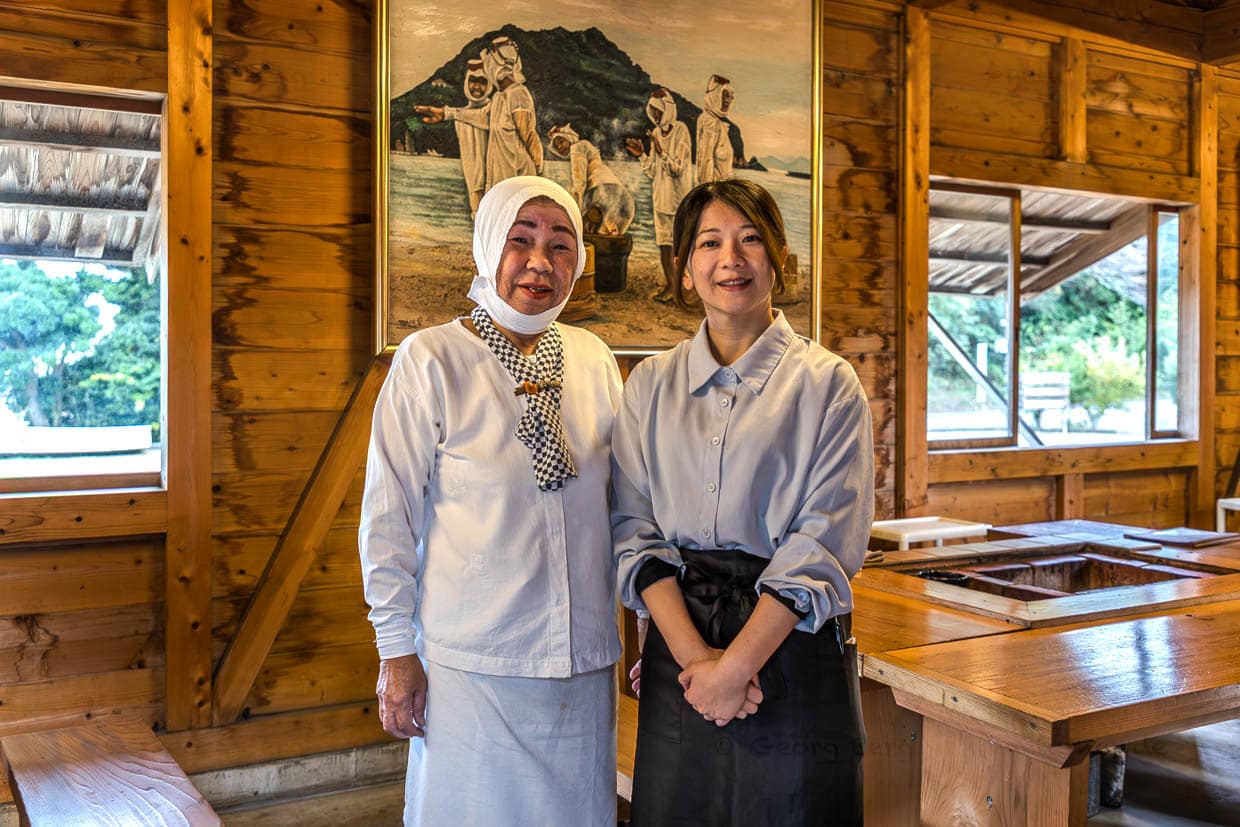
But the number of ama is shrinking dramatically. In the 1950s there were still around 70,000 divers, in 2010 there were only 2,100, and in 2025 only 1,000. The average age today is around 70. More than half of the remaining ama live in Toba and Shima in Mie Prefecture. Tourism keeps the tradition alive. Kimiyo Hayashi is still diving at the age of 71. Her oldest colleague is over 80. Sometimes women from the city dare to make a new start. They are few and far between, but there is great joy when the team is joined by women who are only 30, 40 or 50 years old. Kimiyo’s daughter has not continued the family tradition. She works in an office.
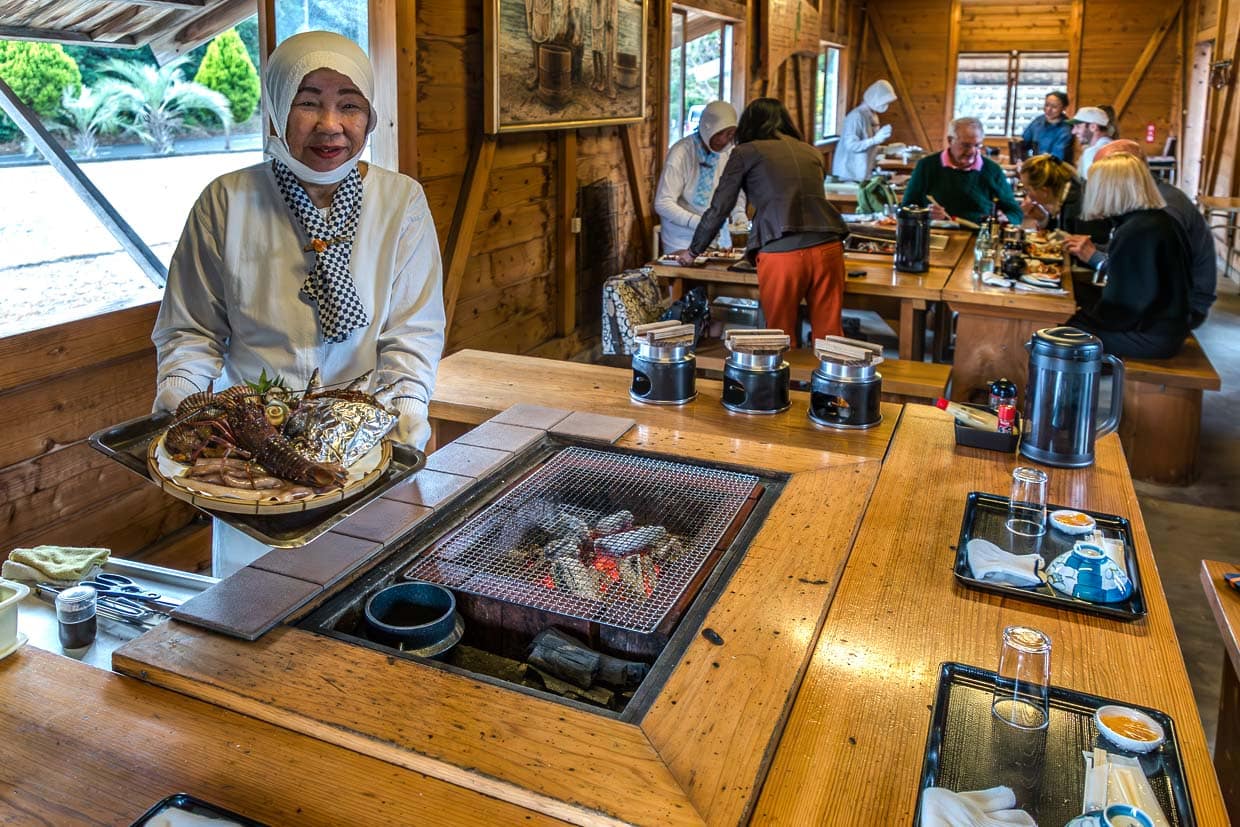
Lunch with Kimiyo. Ama Hut Experience
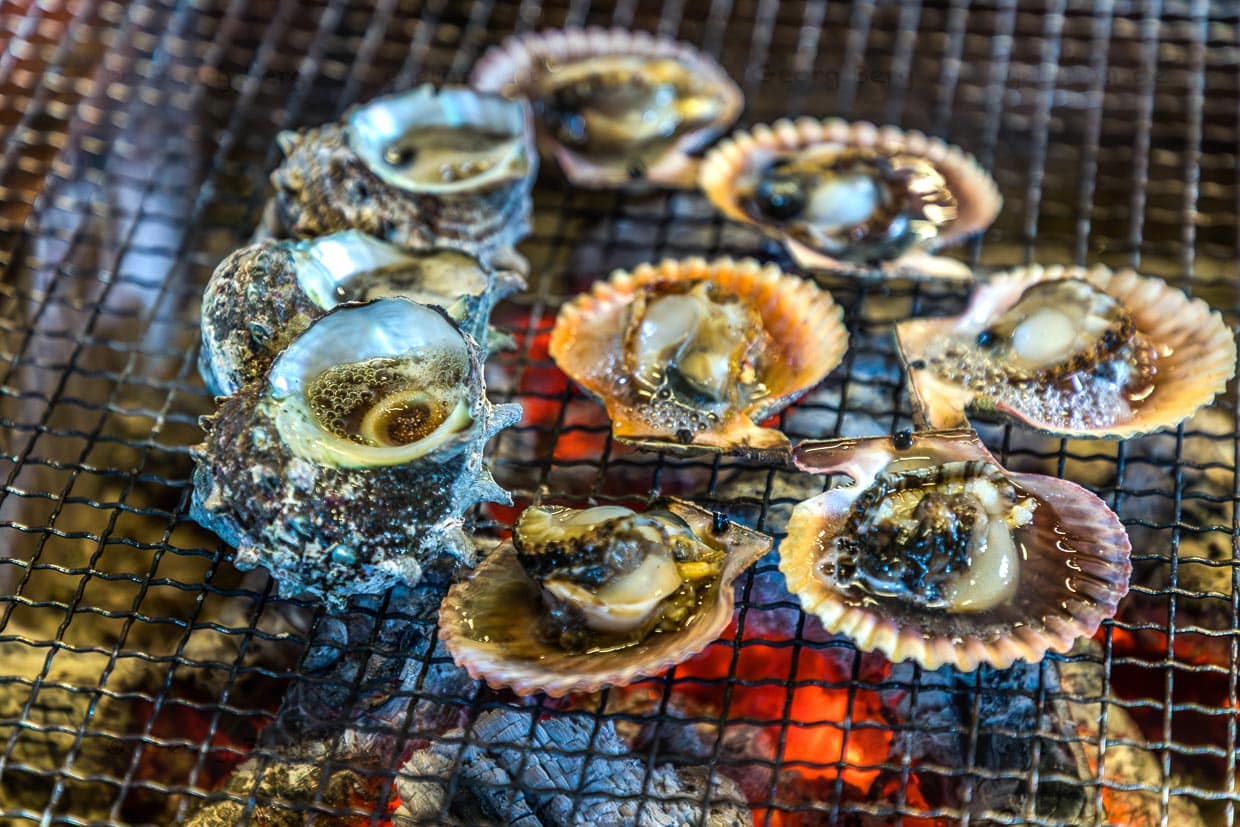
In the Satoumian Ama Hut, a replica of a traditional ama hut on the coast of Mie, visitors experience a lunch like that of the divers between two dives. Freshly caught seafood is prepared with the simplest of ingredients. We sit around an open charcoal grill. Kimiyo Hayashi stands behind it and lifts up a live Ise lobster. She then places scallops on the coals, followed by squid, turban snails, Japanese mackerel – and finally the lobster. The aroma is beguiling. The conversation comes naturally. Kimiyo tells, explains, shows – and takes time to answer every question.
Pearl king Mikimoto and the Ama
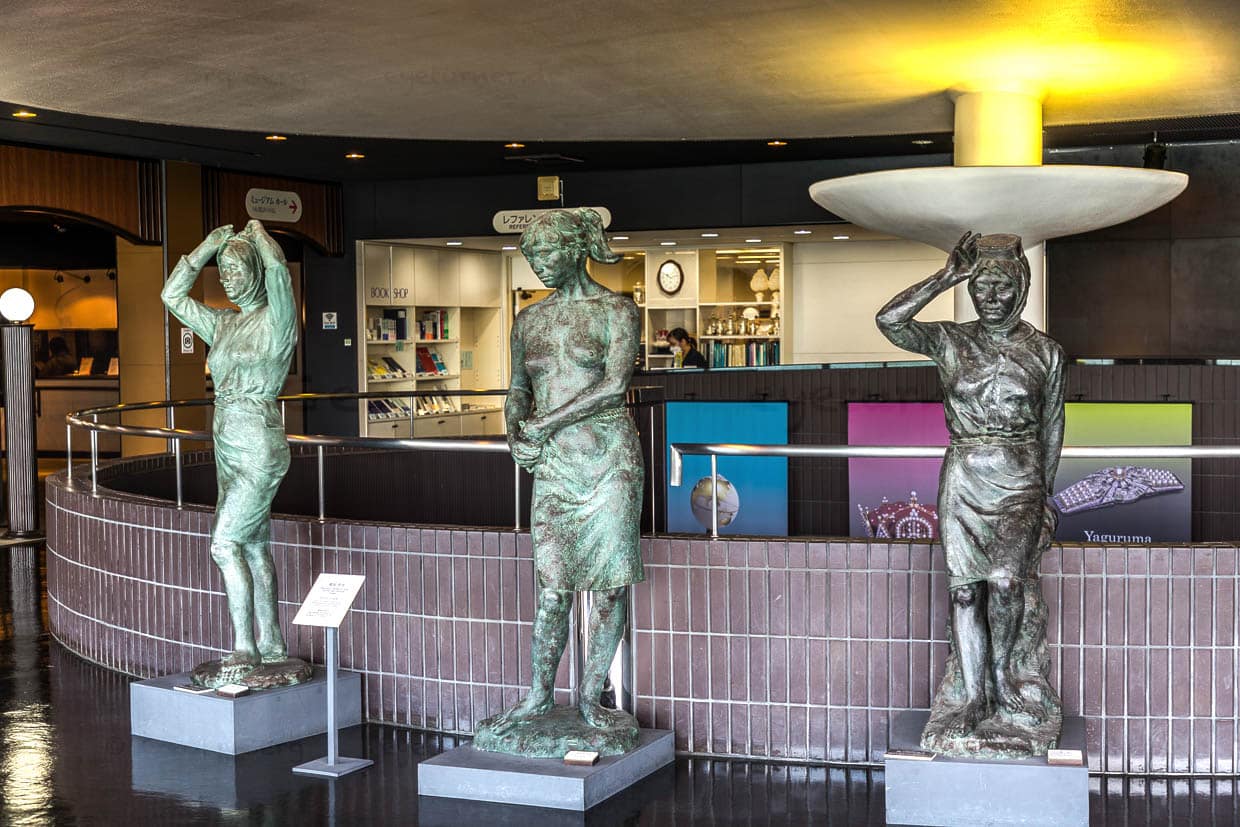
If you want to find out more about the history of the ama, continue on to Toba, to Mikimoto Pearl Island. The Pearl Museum also documents the role of the ama in pearl cultivation – a role that has long been overshadowed by the name Mikimoto. But without the ama, there would be no pearls: they took the oysters out of the sea, put them back in the water after nucleus implantation and rescued the hanging oysters during storms. No Mikimoto, no world fame without the Ama. Several times a day, female divers demonstrate their art on the museum grounds – in white professional attire. The demonstration only lasts 15 minutes, but it is enough to give an idea of the physical and mental strength required to glide vertically into the depths and resurface with the harvest. There are three statues in the museum that show the change in Ama clothing: from the unclothed diver of the early days to the white costume with diving goggles. Three women made of stone – each of them tells a story that the museum only sketches.
Do the ama have a future?
Back in the warped corrugated iron hut by the sea. I ask Kimiyo how things are going with the offspring. She sighs. The topic is on her mind every day. Almost all her colleagues are over 70 and her daughter has opted for the office job – warm, safe, without salt water in her hair. Kimiyo says this without reproach. She understands, but it hurts. It is difficult to pass on the tradition or find trainees. In Mie Prefecture, most ama now live from tourism. Catching seafood alone is hardly worthwhile any more: industrialised fishing has decimated the stocks, climate change is causing sea temperatures to rise and the seagrass meadows to shrink – the basis for everything the ama harvest. The only prospects for good pay are in tourism. But even here it is difficult to inspire women to take on the role of guardians of this ancient tradition.
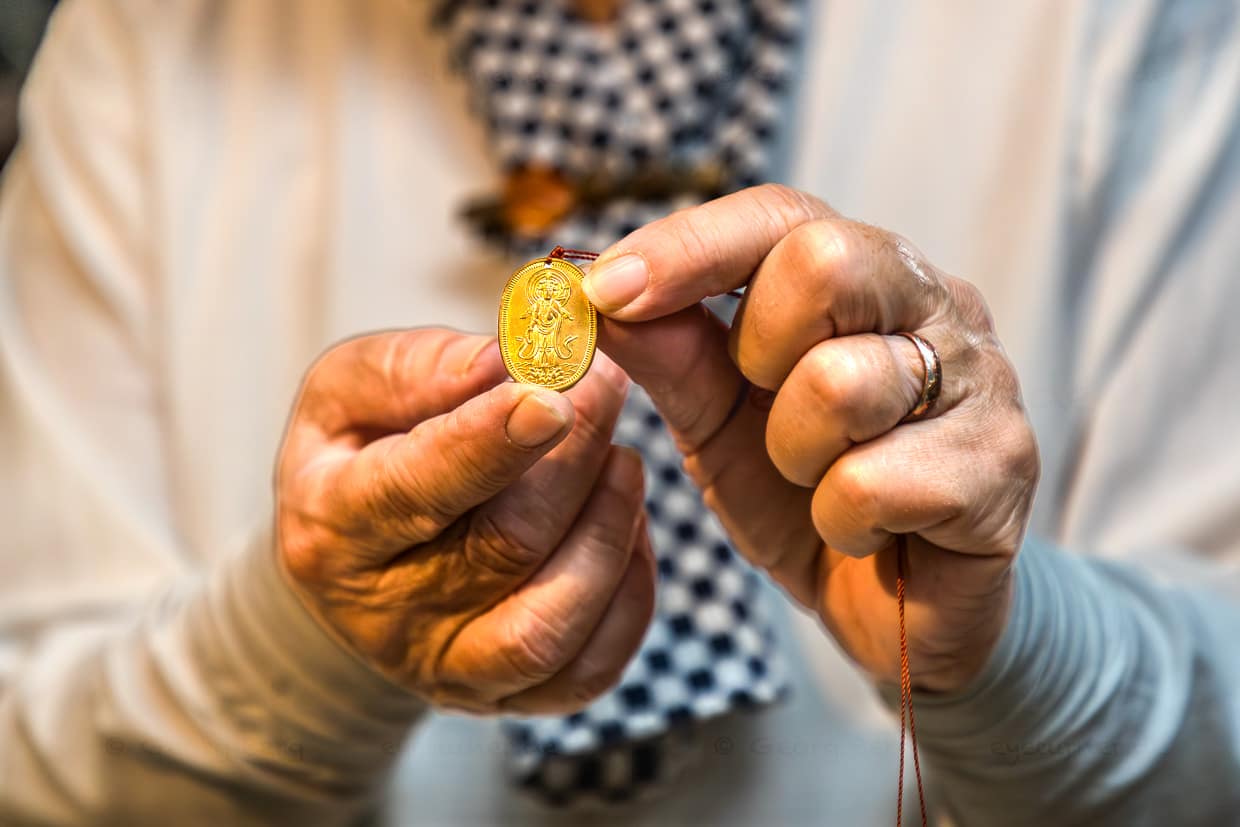
Kimiyo has reinvented her role. Today, she acts as an ambassador for Ama culture, speaks at events and gives interviews – even internationally. She tells the story of these women because she knows that this helps to preserve the tradition. The ama symbolise the emancipated Japanese woman: women who have looked after themselves, fed families and kept a coastal culture alive for thousands of years without the world noticing. Will recruiting offspring help? Kimiyo shrugs her shoulders. Maybe. Sometimes young women come from the cities, fascinated by tradition, looking for a new start. But they are few and far between. Kimiyo stands up, picks up her amulet and looks at it briefly. Then she puts it away. Tomorrow morning she will dive again.
For the Ama Hut Experience at Satoumian, you reserve a table in advance and choose from various lunch options. There is no joint dive, but in the spirit of nature conservation, you can clear the beach of plastic waste together before eating – a problem that is occurring on more and more coasts around the world.
More episodes from Japan
Spiritual, culinary, fascinating. On our trip through the Japanese prefectures of Wakayama, Mie and Nagano as well as the cities of Osaka, Nara and the Hakone region, we hiked pilgrimage routes and ancient trade routes, bathed in hot springs and drifted through the street food streets of Osaka and packed lots of red tins from Nagano into our suitcase. There is no way around octopus there – especially not a takoyaki, the legendary dough ball with a tiny piece of octopus inside. In Tanabe, another world opens up: that of Umeshu, the amber-coloured plum liqueur, the nuances of which you can get to know in a small bar. If you can still walk afterwards, it is best to head straight for the famous Kumano Kodo pilgrimage route – and if you want to do it in style, wear a kimono. Yunomine Onsen is home to the oldest onsen in Japan, where hot water has been bubbling up from the earth for 1800 years for cooking, bathing and relaxing. You can learn about the history of the ama, the women of the sea, their tradition and their endangered craft in Mie. If you are looking for a souvenir, you can choose an oyster in Ise-Shima. You can only find out what’s inside at the Pearl Picking. In Ise itself, Japan’s most important Shinto shrine holds a secret that has been kept for twelve hundred years – by rebuilding it every twenty years. The somewhat quirky bag charm culture, in which soft toys dangle from bags, is a nationwide phenomenon.
The research trip was supported by Iseshima Tourism and Convention Organisation