
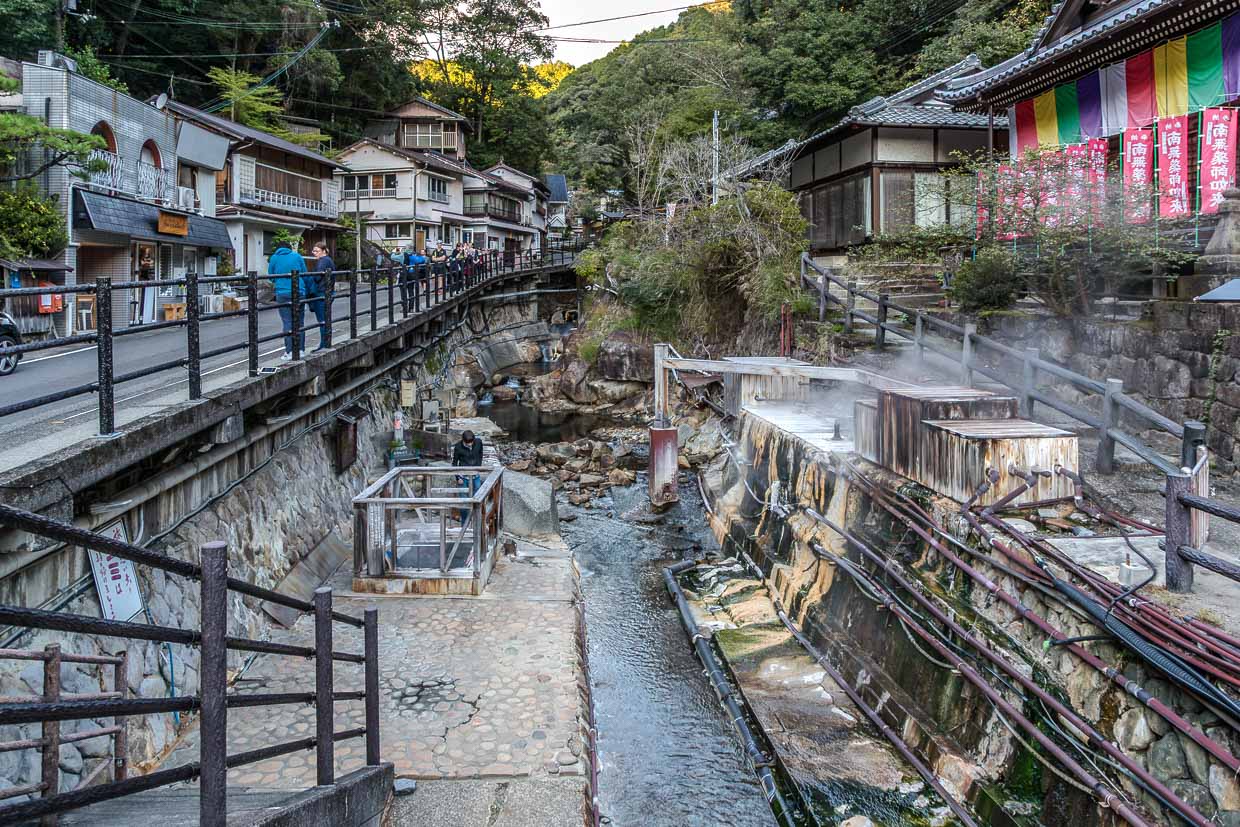
Steam hovers over the village street, accompanied by the smell of sulphur. Countless pipes and conduits run along the small mountain stream Yunomine, which gives the village its name. They seem to melt into the amber-coloured deposits of the mineral-rich water. It’s not pretty, but the pipes supply private houses, hotels and ryokans with hot onsen water. In Yunomine Onsen, close to the Kumano Kodo pilgrimage route, you can experience onsen culture in all its diversity. For 1800 years, locals have been using the hot water, which is around 90 degrees, for bathing, heating – and even cooking. Guests can try it all: from bathing to onsen tamago, cooking raw eggs in the yuzutsu, a public cooking area in the centre of the village.
The boom began in the Edo period
The history of Japanese onsen dates back to prehistoric times. The first written records date back to the 8th century. At that time, the volcanic water was used for religious rituals, purification and healing. However, it was not until the Edo period (1603-1868) that the onsen culture experienced a boom. Guest houses (ryokan), pilgrimages and healing cures popularised the hot springs.
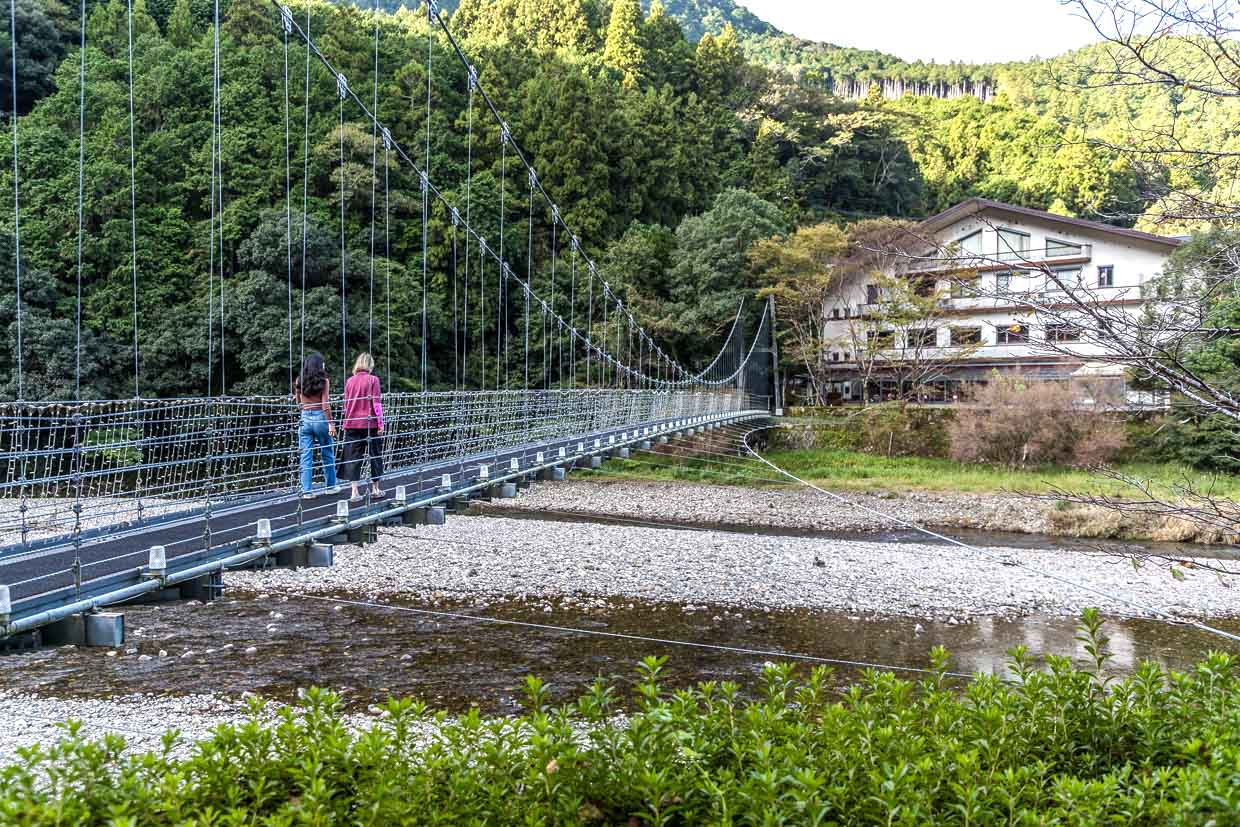
Today, there are over 3,000 official onsen in Japan that fulfil strict quality criteria. They are used for relaxation, promote healthy skin and joints and offer tourists an authentic experience. Hotels and inns near the springs offer communal baths that are segregated by gender. Alternatively, private onsen can be booked for a specific time.
Egg boiler XXL
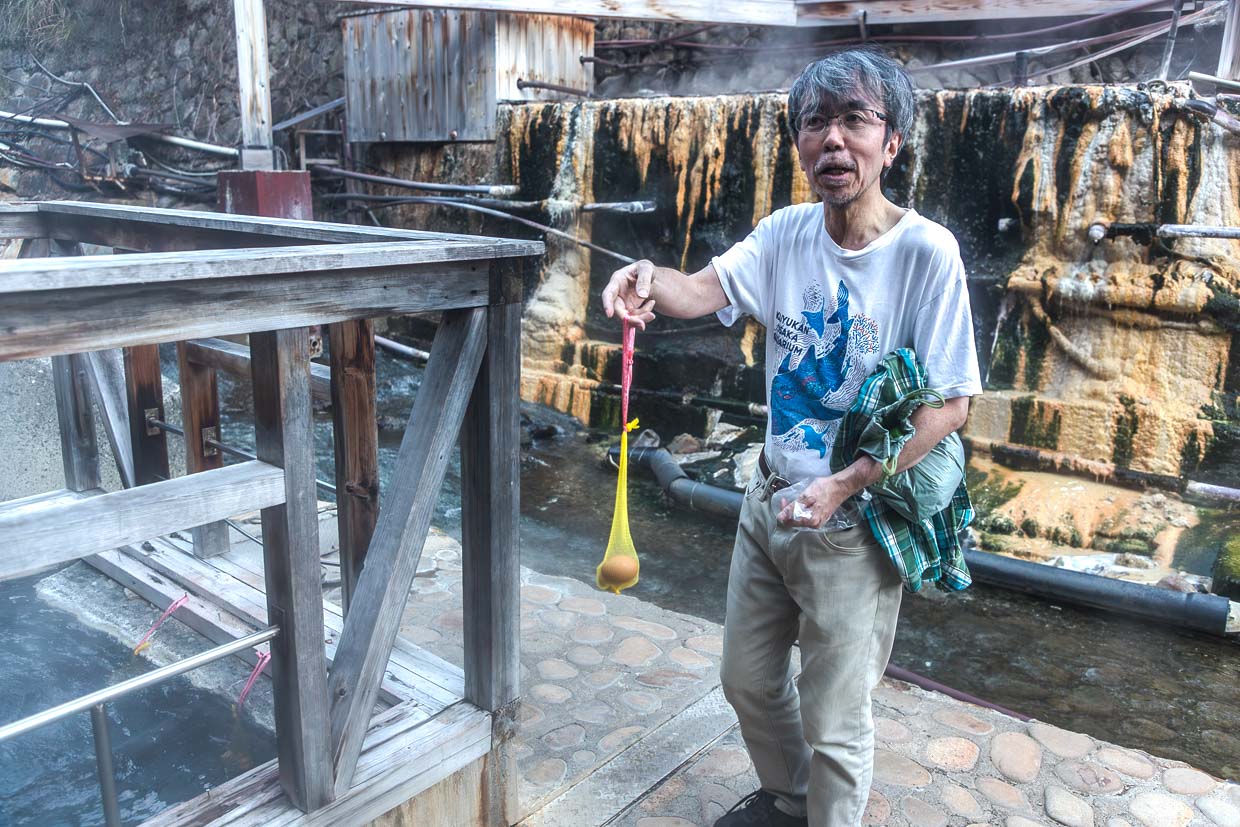
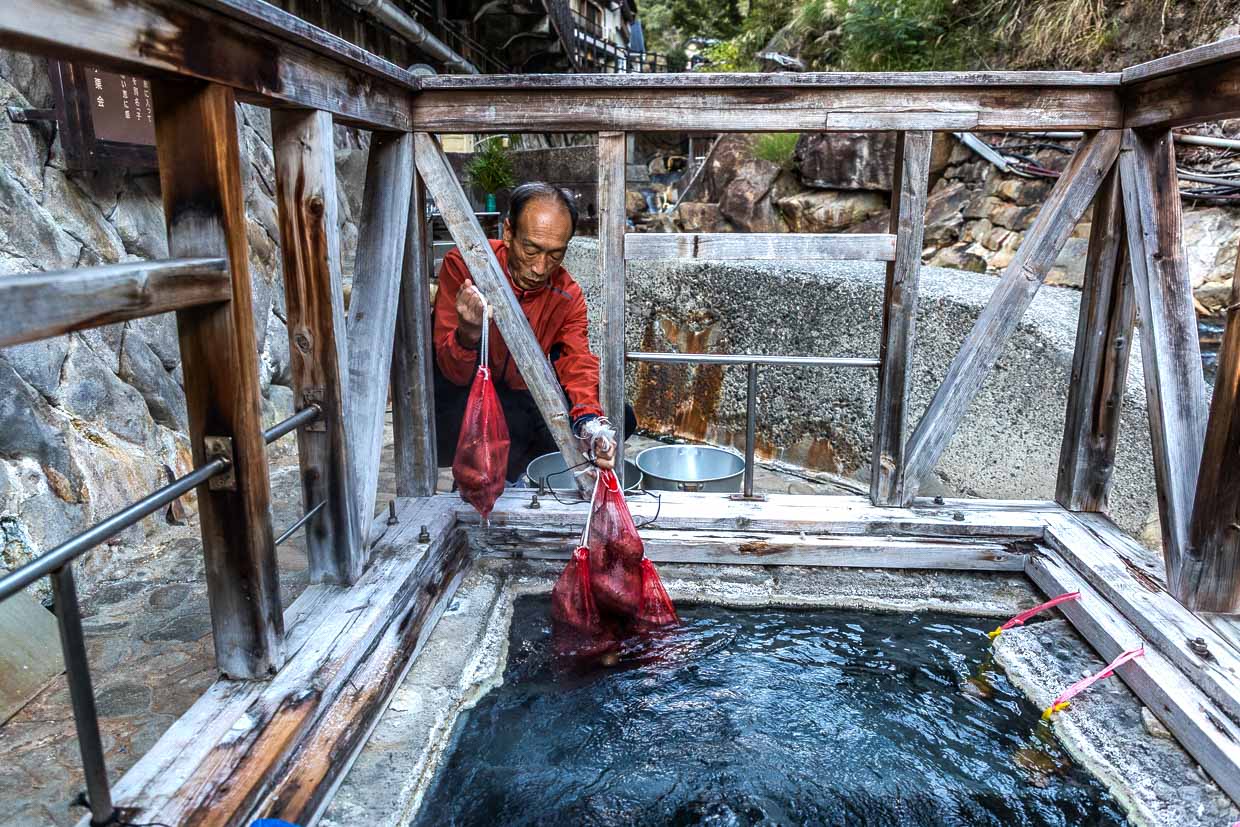
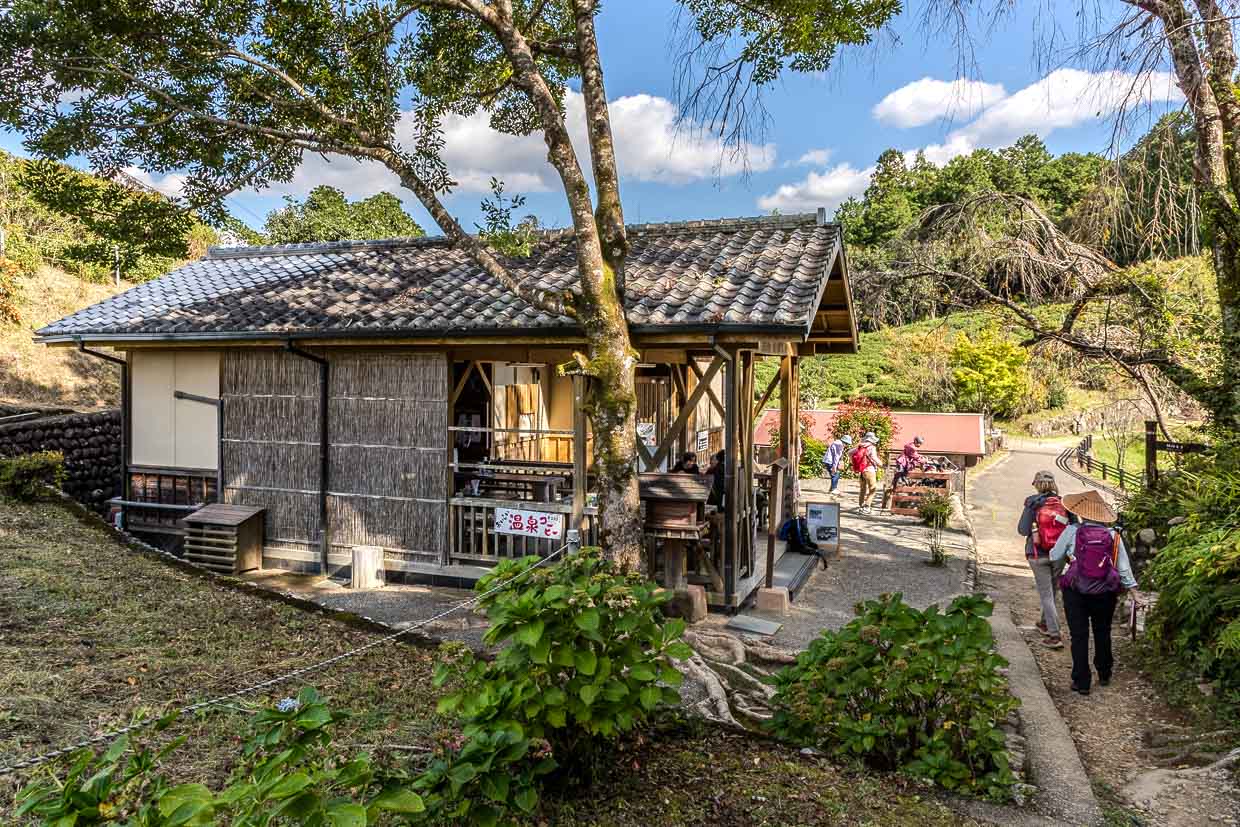
In the centre of Yunomine Onsen is a public spring pool where you can cook eggs and vegetables. It serves as a communal cooking area for onsen tamago. The Yunomine Onsen shop sells eggs and potatoes, pre-packed in small nets. Nails are hammered into the wood around the edge of the pool to which the nets are attached. A soft-boiled egg takes around twelve minutes, vegetables such as spinach or bamboo shoots cook more quickly. In autumn, the locals also cook chestnuts in the yuzutsu. In the past, the hot earth around the springs was used to bake root vegetables – similar to the way Icelanders bake their rye bread.
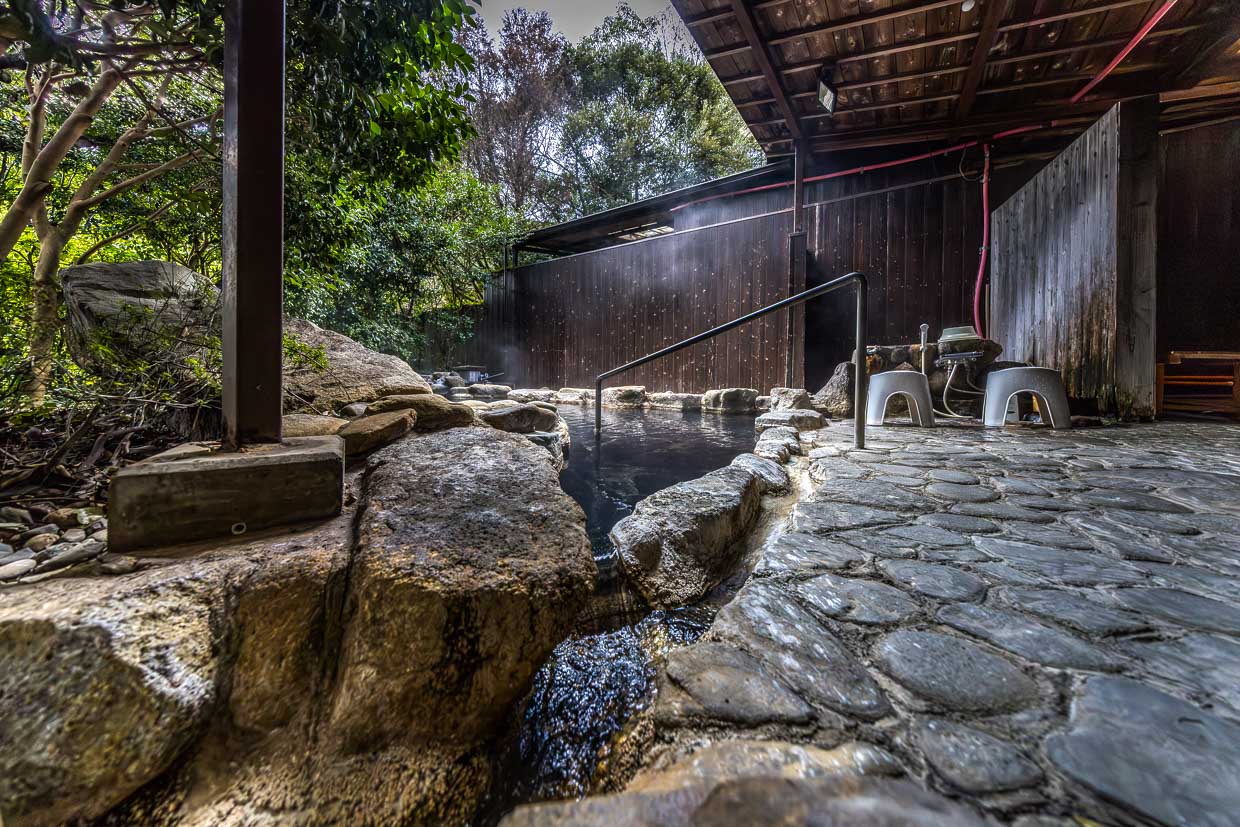
The onsen attractions in Yunomine are lined up one after the other. Tsuboyu is located above the cooking centre, by an old stone bridge. This tiny hot spring bath in a wooden hut on the riverbank is the only onsen in the world that is a UNESCO World Heritage Site. Pilgrims have been purifying themselves here before visiting the Kumano Hongū Taisha for 1800 years. Legends tell of healing powers, such as the recovery of the samurai Oguri Hangan, which was immortalised in the Kabuki theatre . The mineral-rich water is said to change colour seven times a day. The bath can accommodate two to three people and is used in 30-minute shifts. Tickets can be purchased in the bathhouse opposite the cooking area. Reservations are not possible – first come, first served. You can try your luck from 6 a.m. and cleanse yourself like the pilgrims once did before visiting the shrine.
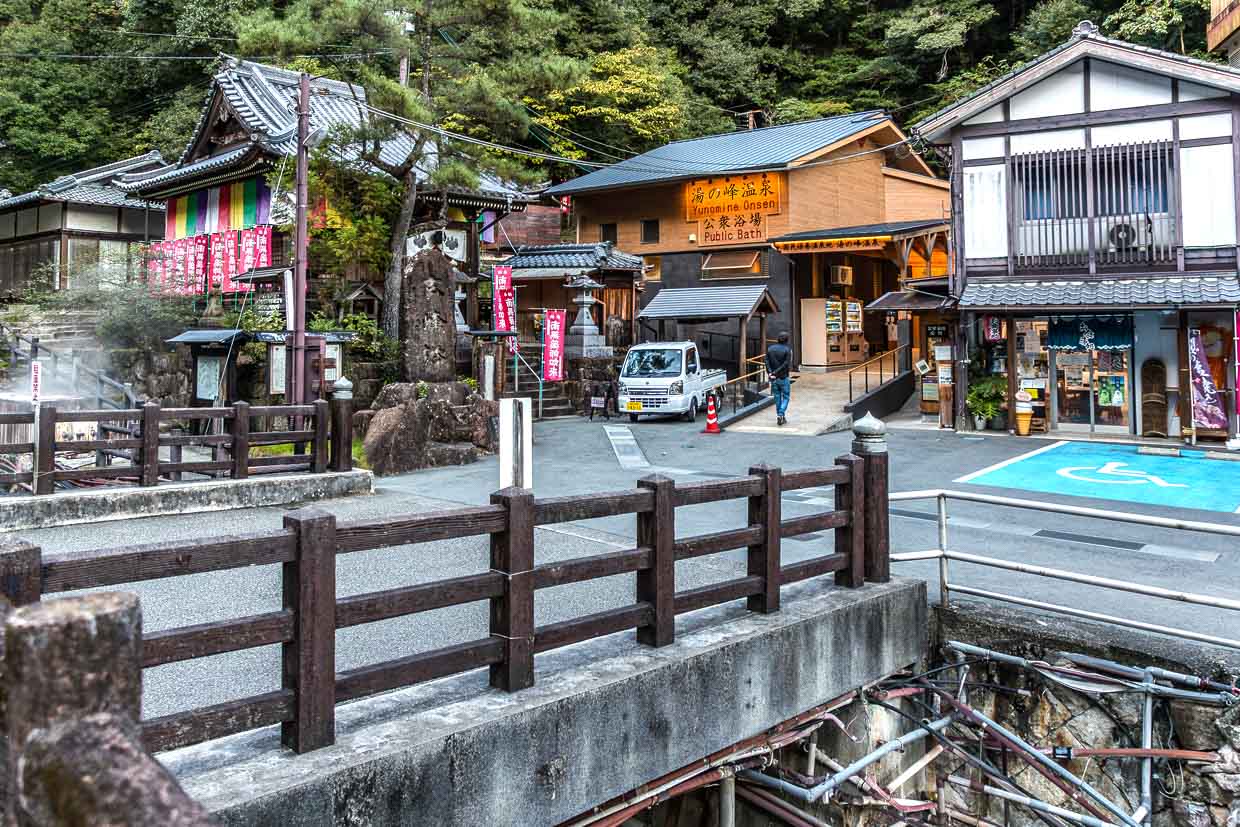
Japanese wellness programme in the Hot Spring Valley
The valleys on the Kii peninsula with their dense cedar and cypress forests attract many Japanese people. Large hotels, such as those built in Watarase since the 1980s, are ideal for family celebrations. There is often not enough space at home and the hostess usually stays at work. Groups therefore often meet in the hotels. A classic kaiseki menu is served in the evening. Beforehand, guests relax in the onsen and then traditionally appear for dinner wearing a yukata and slippers. Foreign guests can also adopt this tradition. A matching set is waiting in the room. Those who prefer to come in everyday clothes will not be looked at the wrong way. Unlike in the West, where people dress up for dinner, in Japan the food takes centre stage. After a day of hiking with a visit to the onsen, guests can look forward to a kaiseki menu with up to twelve courses.
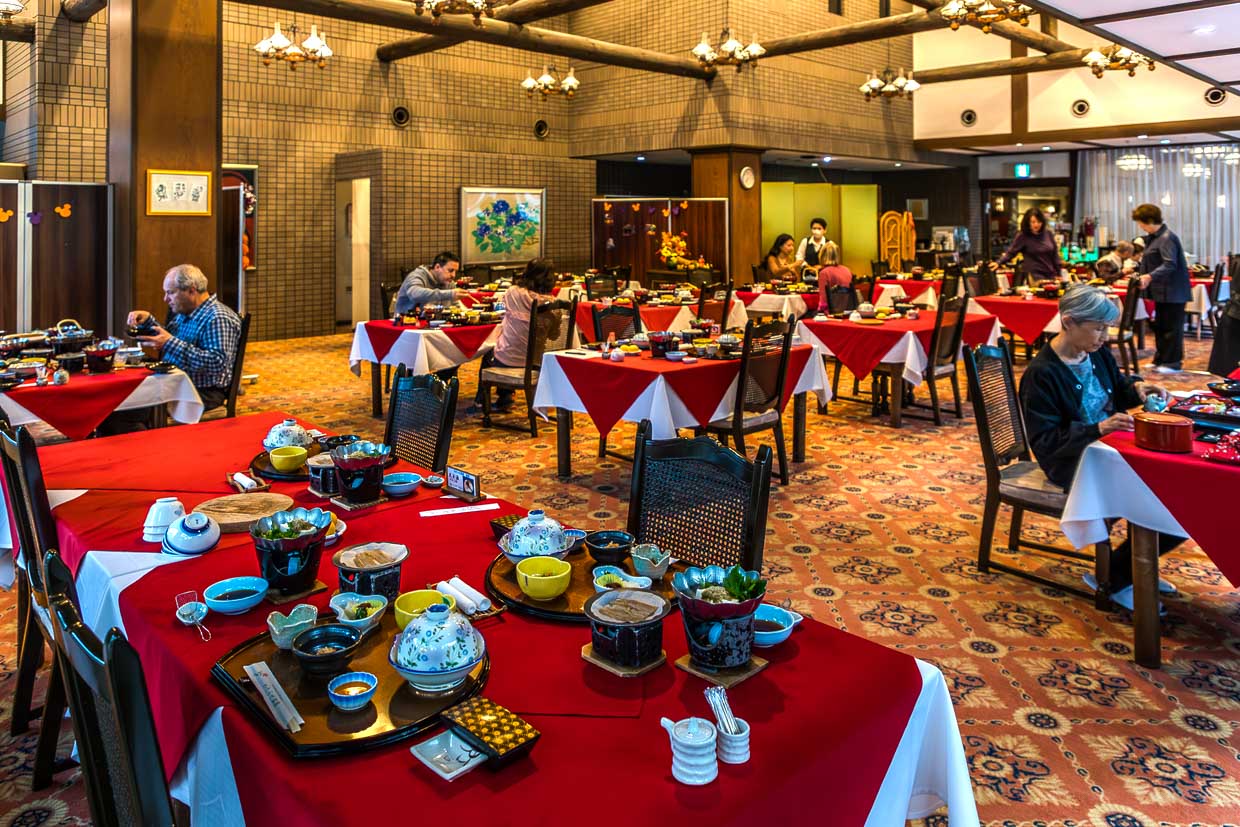
A typical kaiseki dinner consists of seasonal, regional ingredients and emphasises harmony and craftsmanship. The Japanese appreciate dining in their own room or a separee – for them a sign of exclusivity. Europeans often feel differently: eating alone in your room feels more like a punishment. Those who prefer to dine in company should make this wish clear.
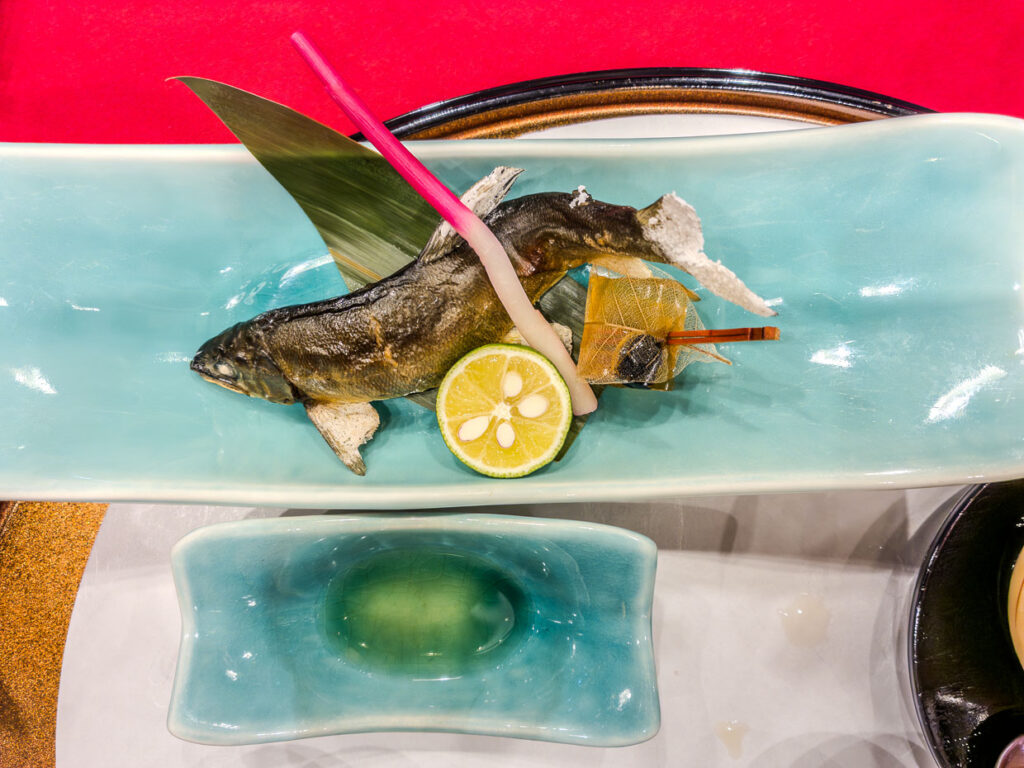
A kaiseki meal lasts up to two hours. It thrives on the balance of flavours, textures and perfect presentation. The sequence of courses depends on the season and local produce. In Wakayama, this includes fish and vegetables from the region. A clear soup with silken tofu, raw fish with wasabi and grilled brown trout are typical dishes. The trout, from the rivers of the Kii Valley, is served in such a way that it looks like a fish in water while still on the plate.
Onsen water inside and out
The mineral-rich water of Yunomine Onsen can be drunk and bathed in. The internal application begins on the pilgrimage route along the Kumano Kodo. At Takahara Café, on the way from Hosshinmon-oji to Hongu Taisha Grand Shrine, tea and coffee are prepared with water from Yunomine. It gives dishes an umami flavour. Even umeshu, the popular plum liqueur, is made here with spring water. In the hot spring valleys of the Kii Peninsula, historical sites tell of the importance of the onsen, while today’s bathing culture delights visitors from all over the world.
More episodes from Japan
Spiritual, culinary, fascinating. On our trip through the Japanese prefectures of Wakayama, Mie and Nagano as well as the cities of Osaka, Nara and the Hakone region, we hiked pilgrimage routes and ancient trade routes, bathed in hot springs and drifted through the street food streets of Osaka and packed lots of red tins from Nagano into our suitcase. There is no way around octopus there – especially not a takoyaki, the legendary dough ball with a tiny piece of octopus inside. In Tanabe, another world opens up: that of Umeshu, the amber-coloured plum liqueur, the nuances of which you can get to know in a small bar. If you can still walk afterwards, it is best to head straight for the famous Kumano Kodo pilgrimage route – and if you want to do it in style, wear a kimono. Yunomine Onsen is home to the oldest onsen in Japan, where hot water has been bubbling up from the earth for 1800 years for cooking, bathing and relaxing. You can learn about the history of the ama, the women of the sea, their tradition and their endangered craft in Mie. If you are looking for a souvenir, you can choose an oyster in Ise-Shima. You can only find out what’s inside at the Pearl Picking. In Ise itself, Japan’s most important Shinto shrine holds a secret that has been kept for twelve hundred years – by rebuilding it every twenty years. The somewhat quirky bag charm culture, in which soft toys dangle from bags, is a nationwide phenomenon.
The research trip was supported by Visit Wakayama