
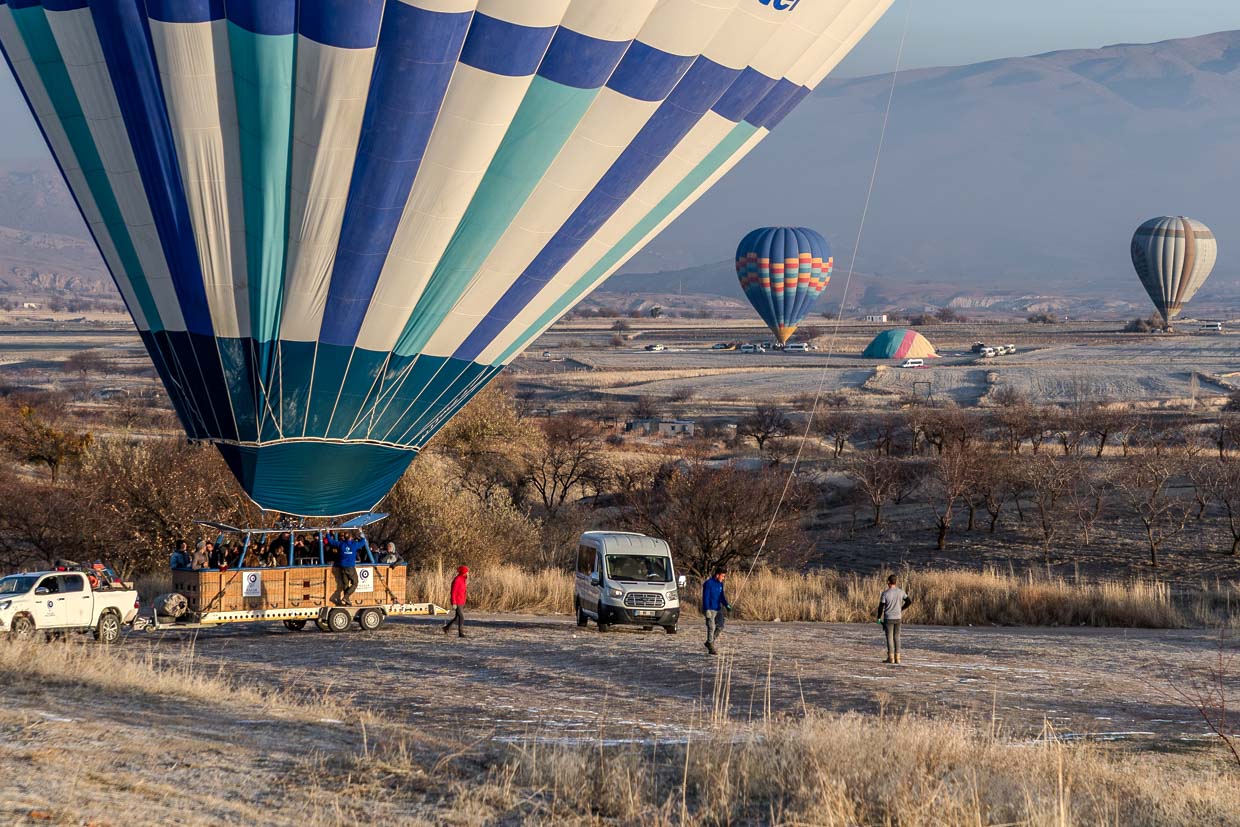
At 6 a.m., our tour group waits for a shuttle bus, shivering in the cold. The weather is ideal for the planned balloon flight. The starting point of our balloon flight depends on the wind direction and the bus driver knows his destination. After a short journey, we get off shivering on a dirt track. Minus six degrees.
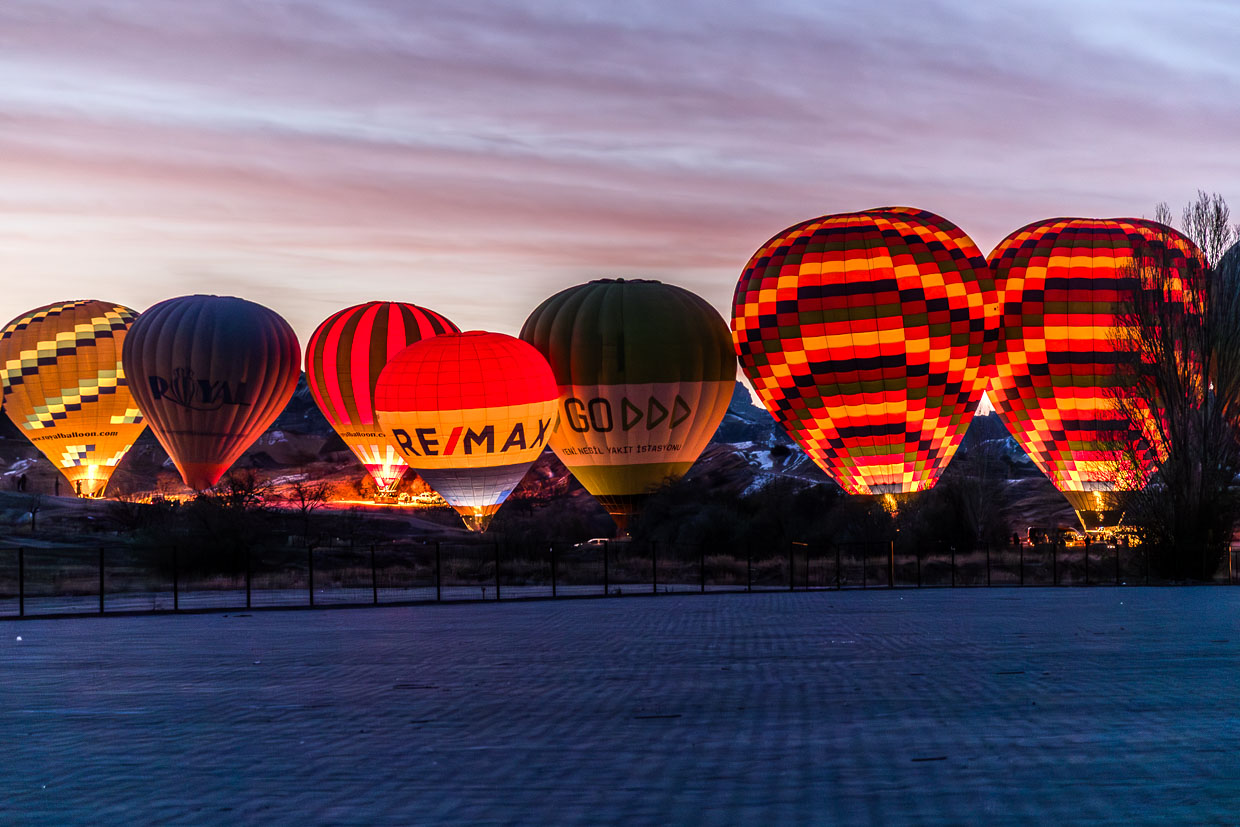
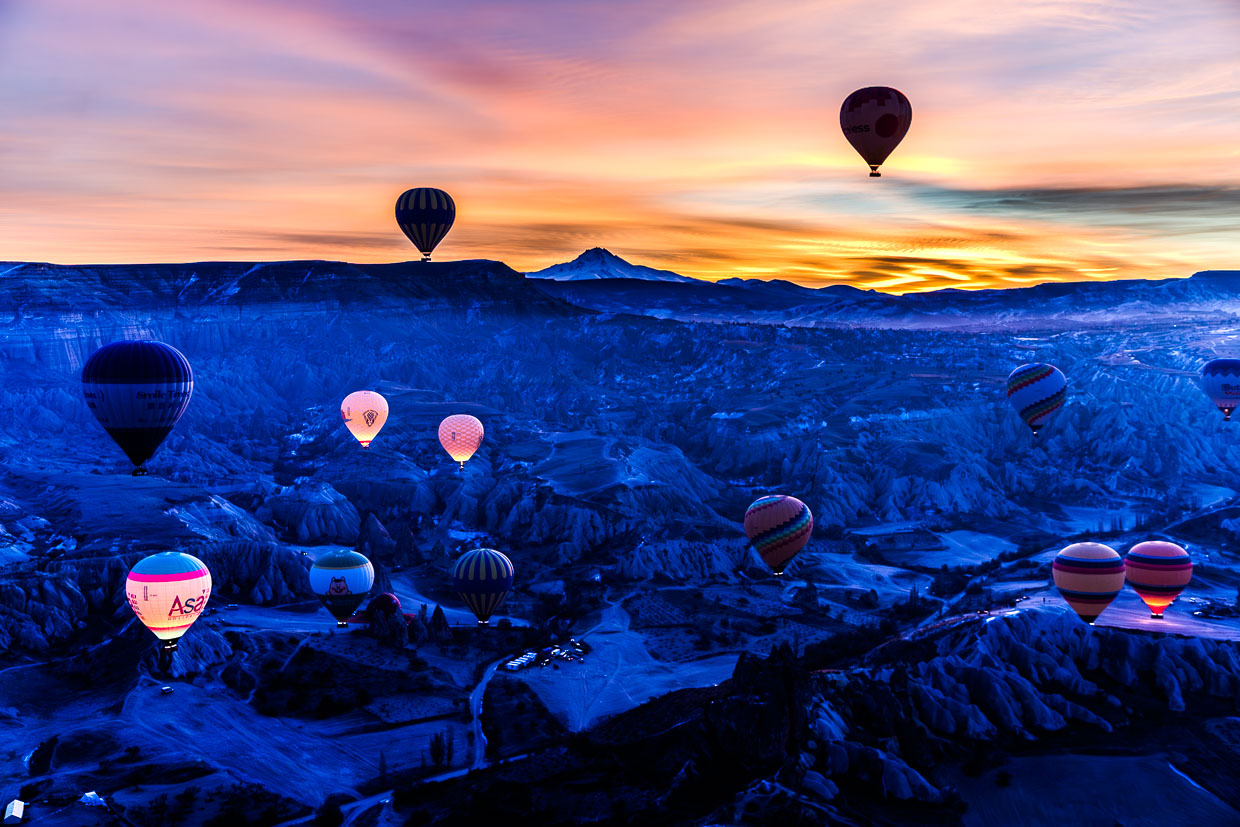
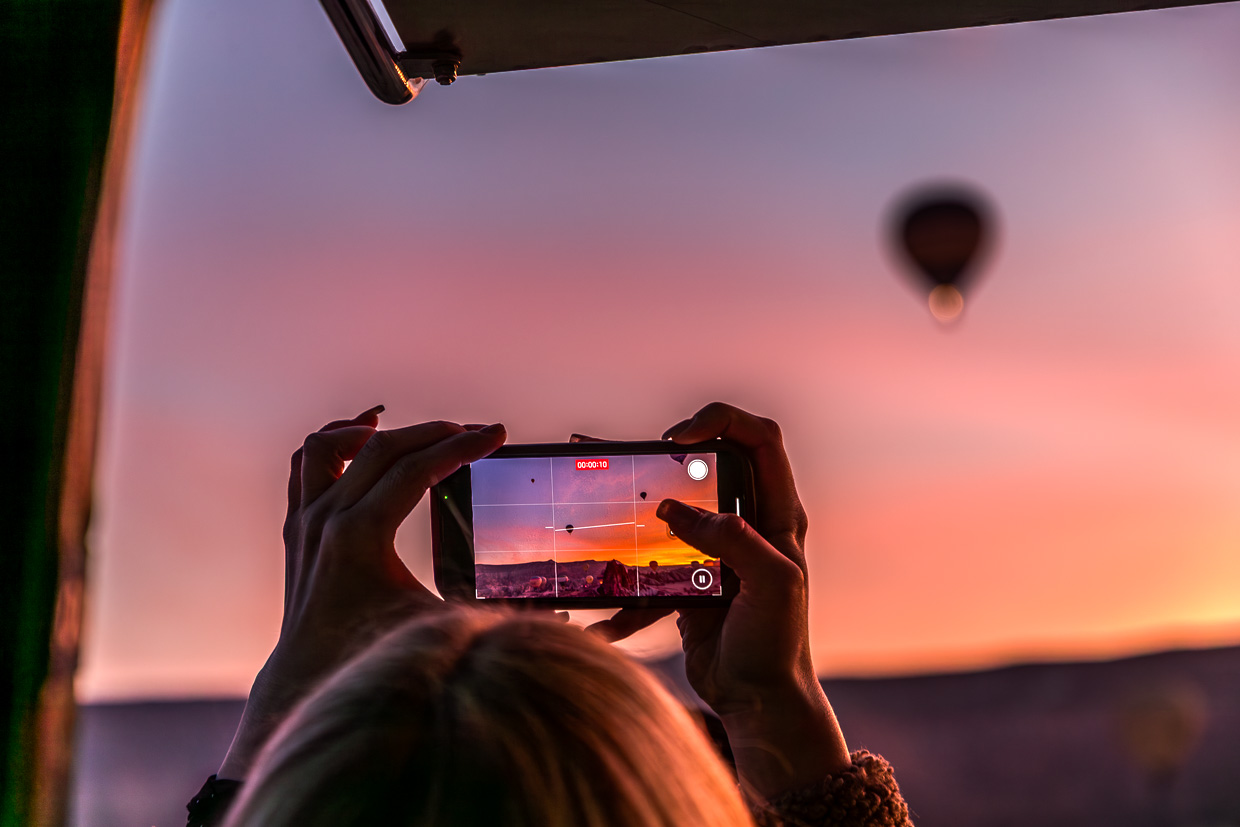
On the dark horizon, a sight you can hardly imagine: an armada of huge balloons in preparation. First fans fill the horizontal envelopes, then the gas burners raise the colossi. The rhythmic hissing shatters the silence. Guests and employees of the providers rush back and forth, taking photos, searching for “their” balloon in the dark. Around 3,000 to 4,000 people are preparing for the flight at the same time.
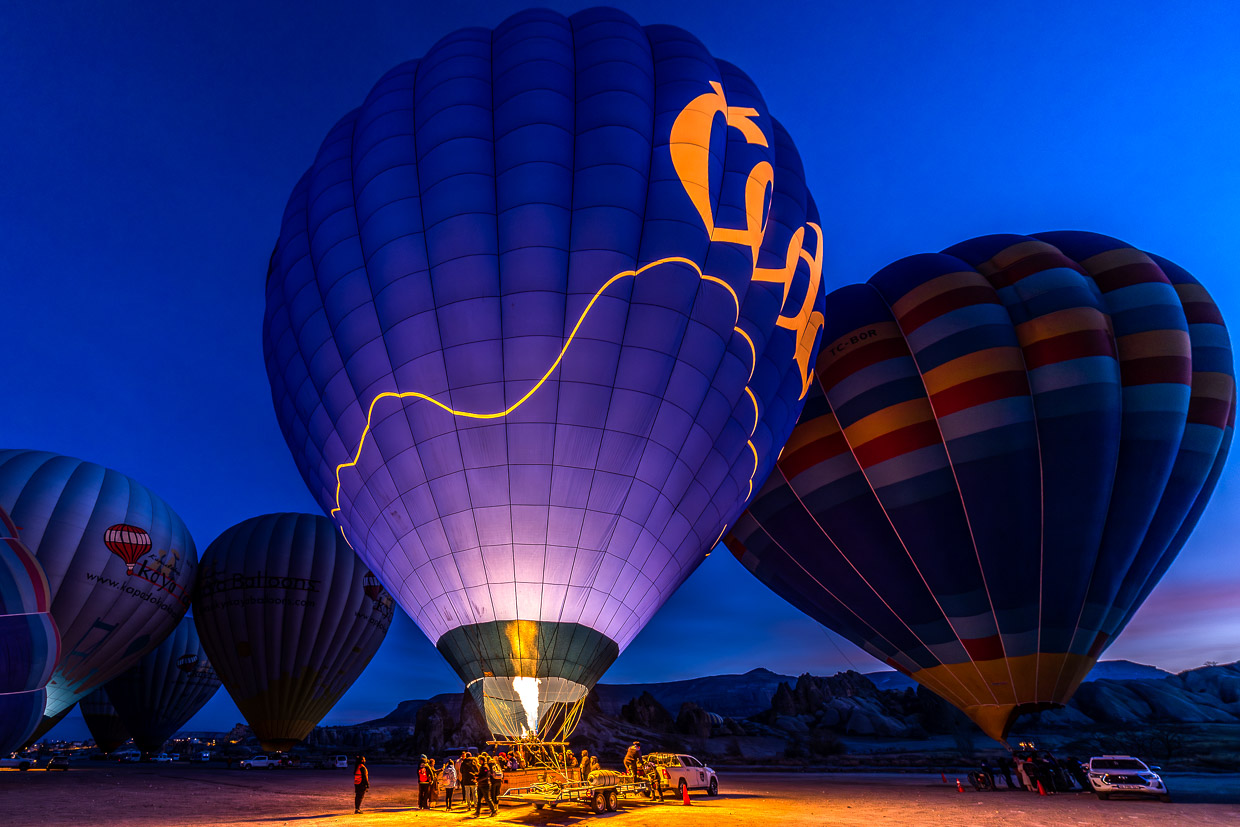
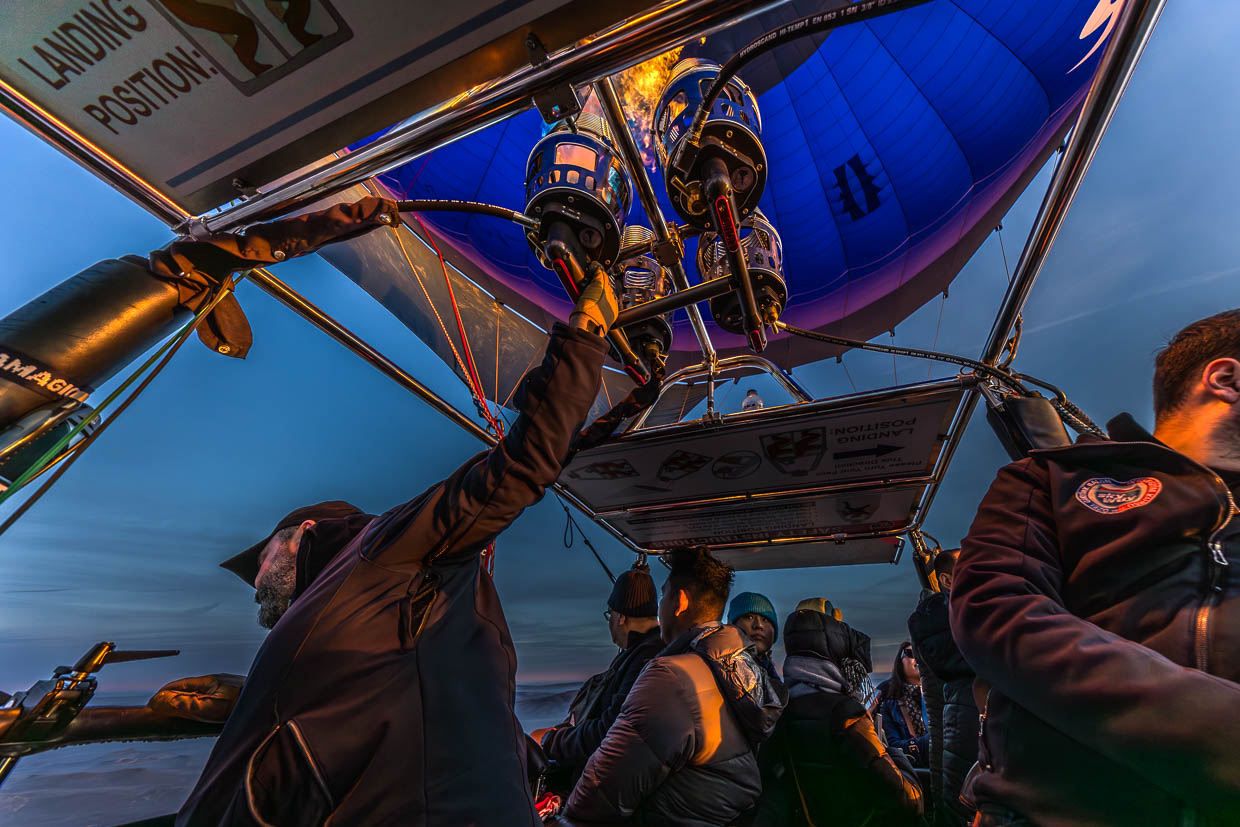
The baskets are divided into four to eight compartments. There are about 20 passengers in our basket, plus two pilots. Standard. Operators with larger baskets take up to 32, smaller VIP flights a maximum of eight. Those in the centre stay there: It is almost impossible to change seats during the flight. The segments prevent everyone from crowding to one side.
In the basket: cramped, cold and without freedom of movement
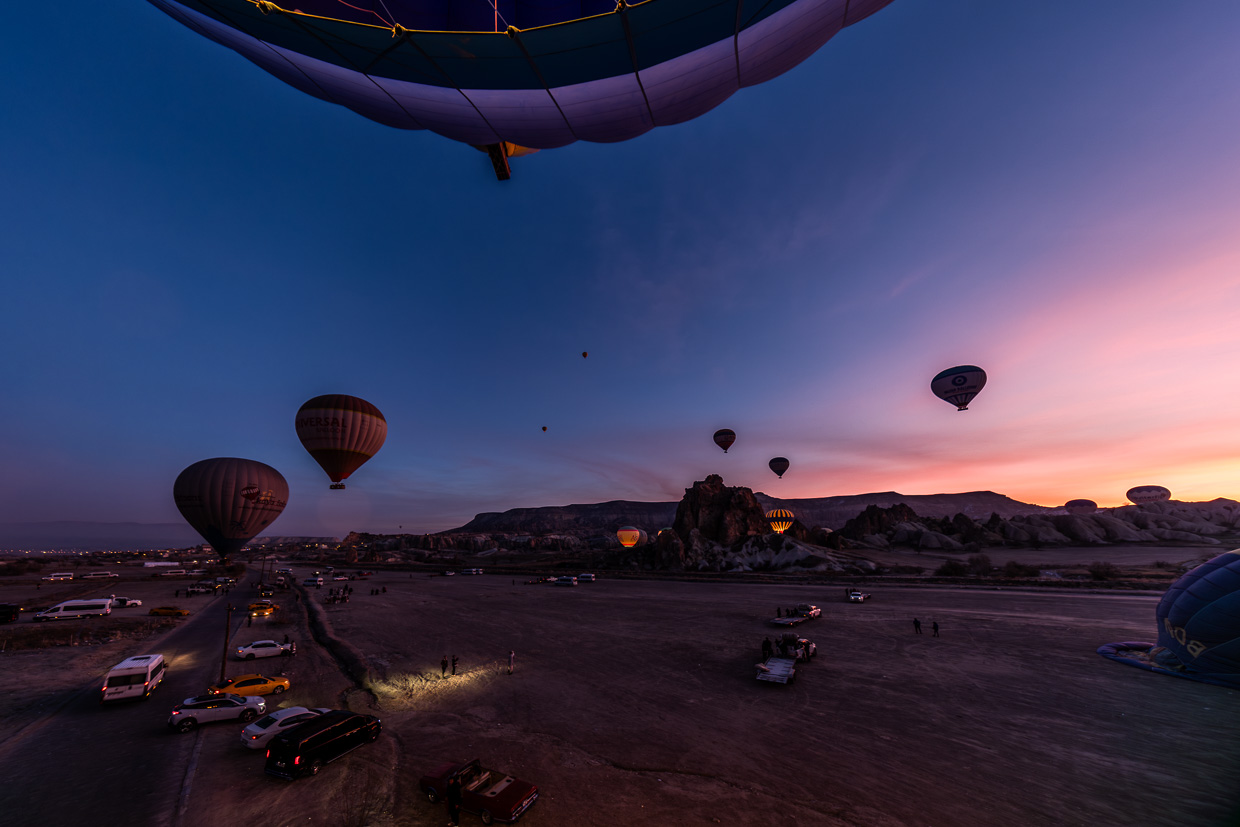
The take-off takes place in the dark. Nobody can see where they are going at first. The burners of other balloons flare up in the sky from time to time. Our burner could be warming, but a metal plate keeps the heat out. Most of the guests are wearing double underwear – and are still freezing. Orientation comes with the first light. The balloon rises gently, almost imperceptibly. No engines, just the hissing of the burner. The pilot steers the balloon over the altitude alone, as a different wind blows in each layer.
The story: From two pioneers to the world capital
Commercial ballooning in Cappadocia began in 1991, when the English pilot Kaili Kidner and her Swedish husband Lars-Eric Möre carried out the first regular flights and founded Cappadocia Balloons. There had already been attempts in the 1980s, presumably by Australian balloonists. But it was Kidner and Möre who turned it into a business. What began with one balloon grew into the largest balloon operation in the world. Today, there are 27 licensed companies with around 250 registered balloons. The Turkish Civil Aviation Authority allows a maximum of 156 balloons per day, spread over time slots. Since 2013, a slot system has regulated traffic and prevented collisions. New licences are no longer issued. Balloons are flown on around 220 to 250 days a year – depending on the weather.
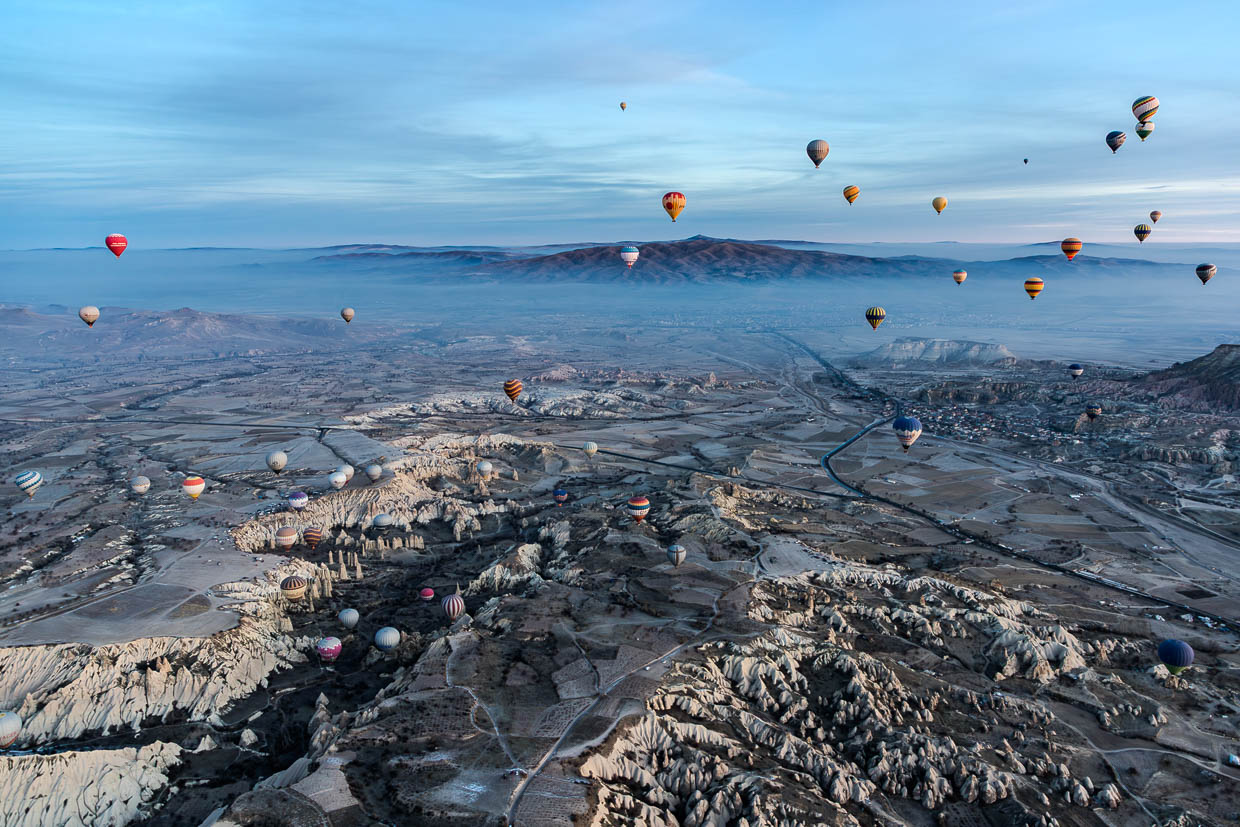
Currently, 3,000 to 4,000 tourists take to the skies every day. In the last ten years, there have been almost 5 million passengers. Around 40 per cent of all balloon flights worldwide take place here. An entire industry depends on it: pilots, ground crews, drivers, hotels.
From 1,300 metres to the boom
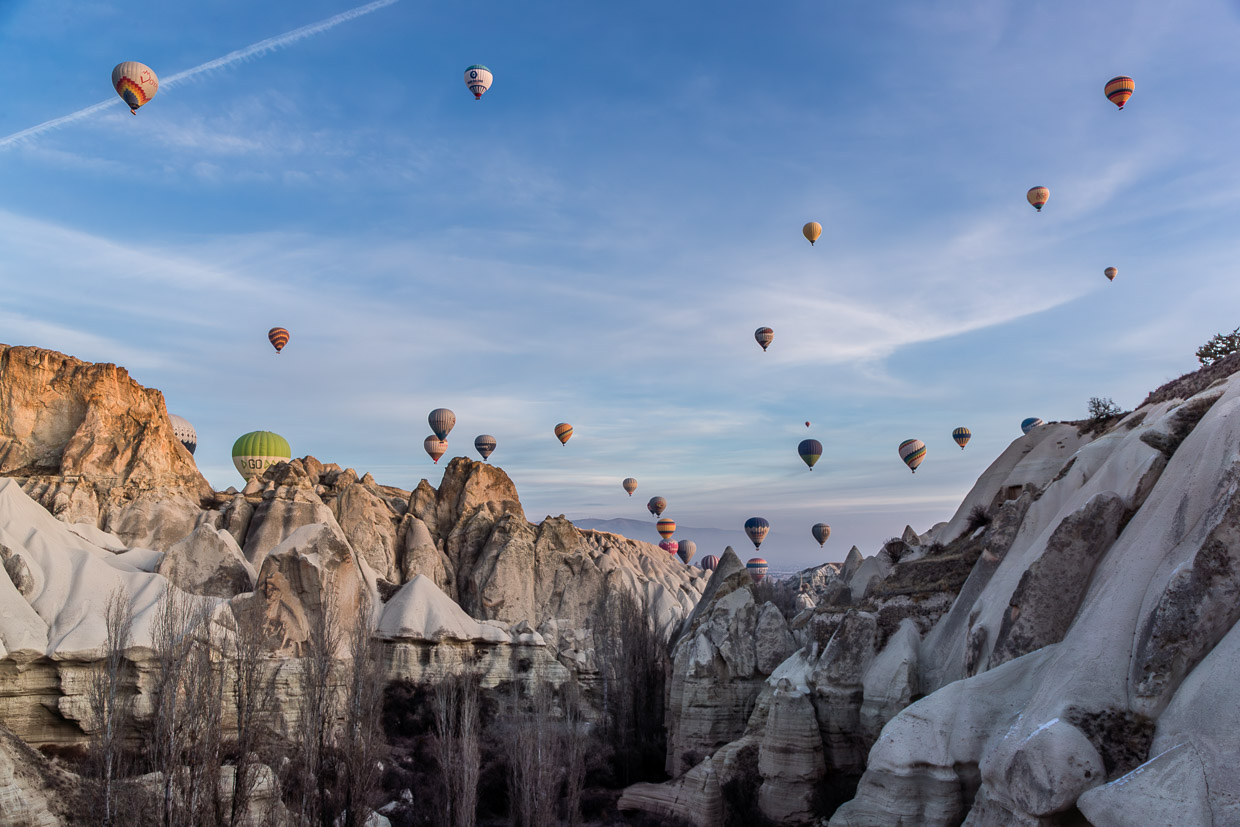
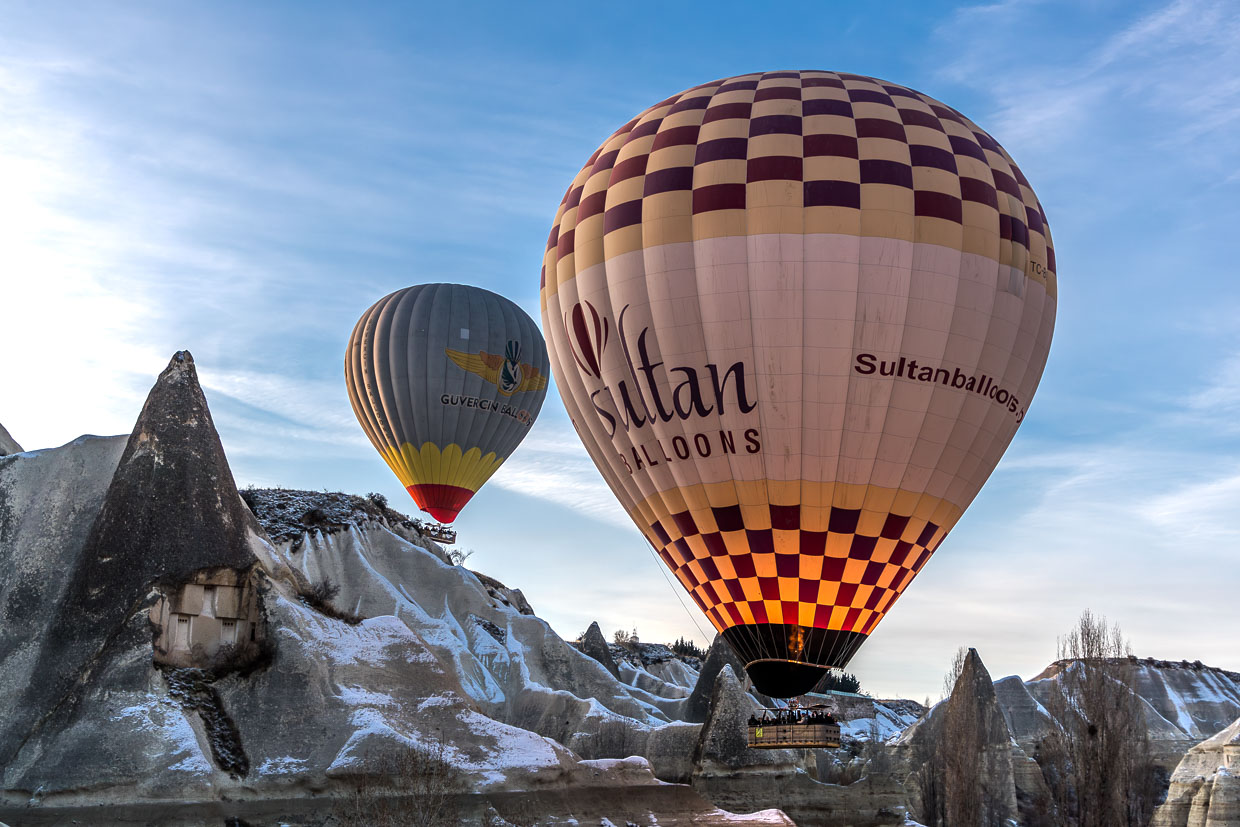
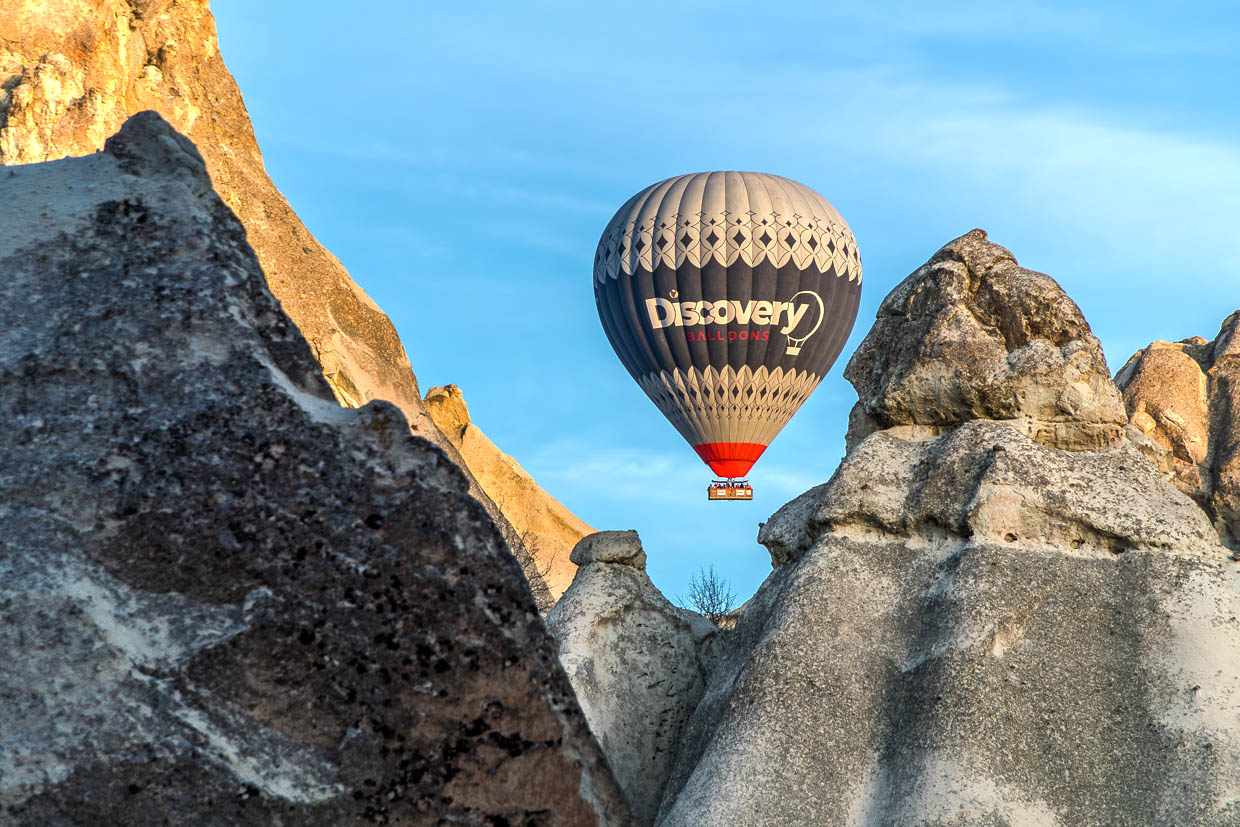
From a height of 1,300 metres, the panorama is spread out. The fairy chimneys – bizarre rock towers made of volcanic tuff – look like a geological map from above. Cave churches, monasteries chiselled into the rock and underground cities emerge. Then the descent. The pilot steers between the rock cones, lower than the highest formations. Suddenly we are no longer hovering above the landscape, but in it. I reach out and grab the branch of a tree.
The paradoxical effect of mass
You can’t see your own balloon. But dozens of other balloons in front of the rising sun provide a spectacle. The mass heightens the experience. That’s the irony: what looks like mass tourism increases the intensity. The images that made Cappadocia world-famous show exactly that: not solitary contemplation, but collective amazement.
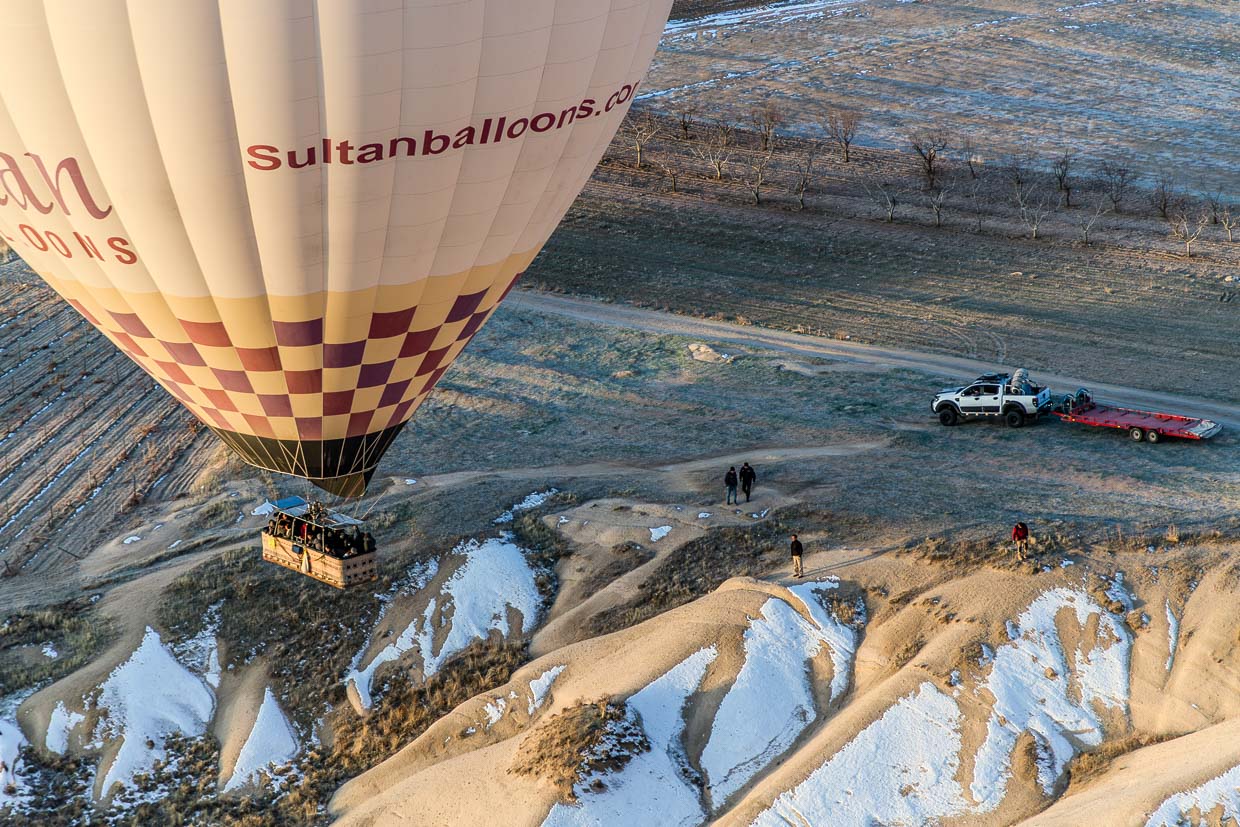
After exactly one hour, the descent begins. The ground crew are waiting with the trailer. The basket touches down gently on the trailer. No hard jolts. Professional routine after thousands of similar landings.
Tradition or tourist product?
Cappadocia is steeped in thousands of years of history. Hittites, Byzantines and early Christians left their mark. Underground cities offered refuge, cave churches bear witness to deep piety. Ballooning has nothing to do with this. They are an invention of the late 1980s and early 1990s. An industry thrives on it. Over 100 balloons take off every day, weather permitting. It is not authentic, but a mass business with magical moments.
Nevertheless, I enjoyed it. I enjoyed the experience. When we returned to the hotel after landing and had breakfast there, it all seemed like an unreal dream. The cold, the crowds in the basket, the fleet of balloons in the dark sky. But the photos show what I saw.
The research was supported by GoTürkiye